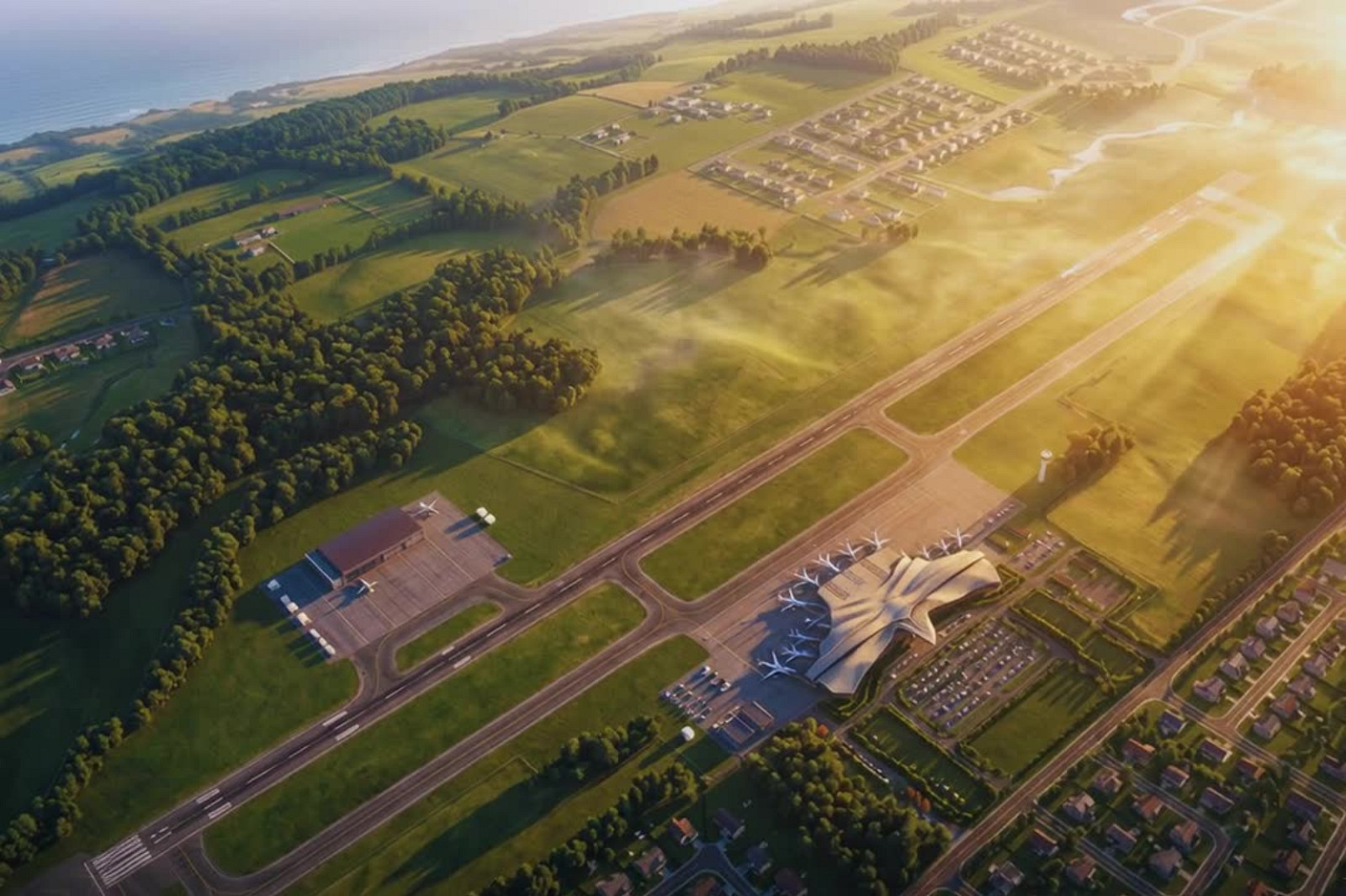
SOUAIR: Southern Airport of the Orient Seas


Project idea
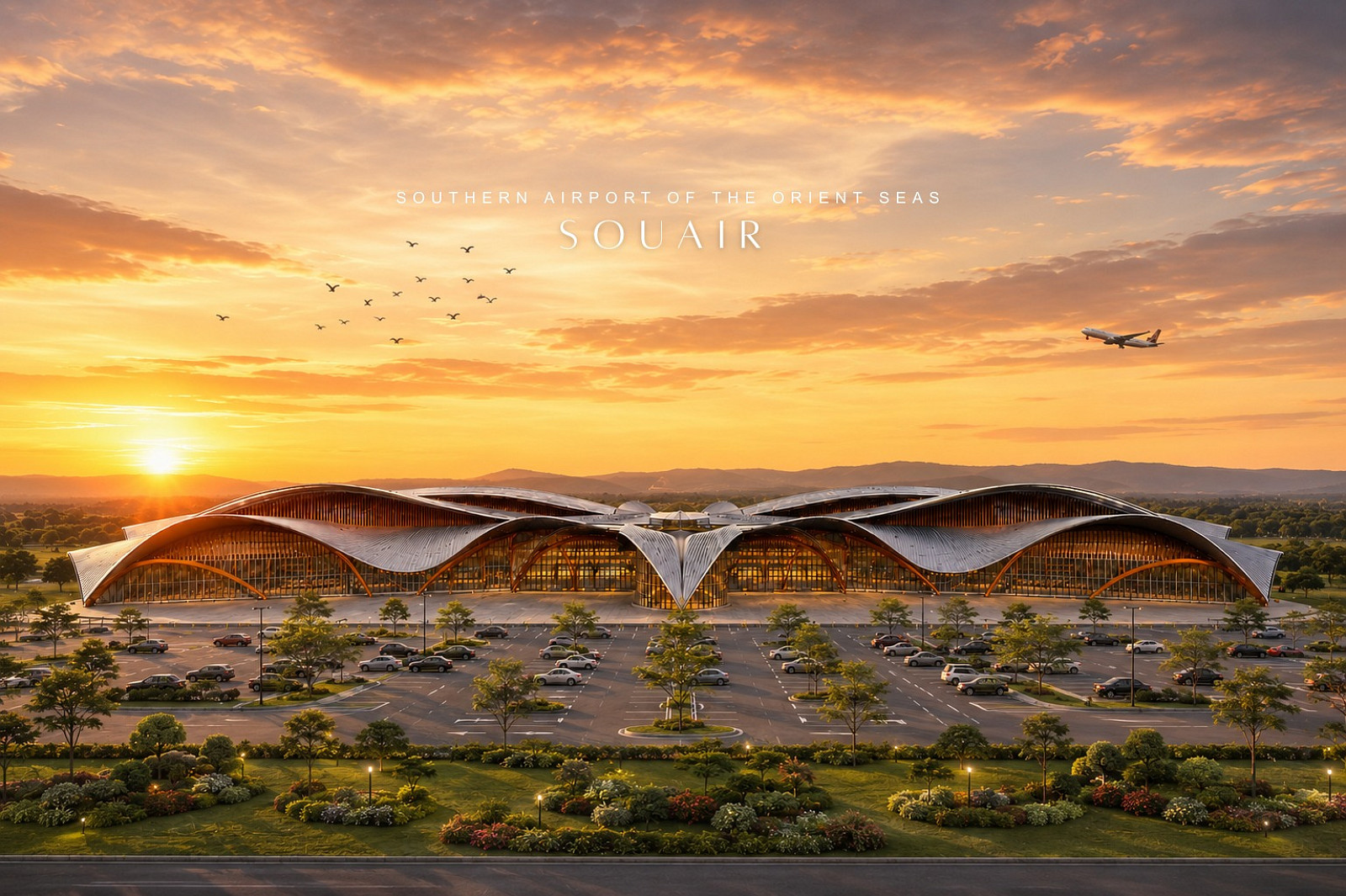
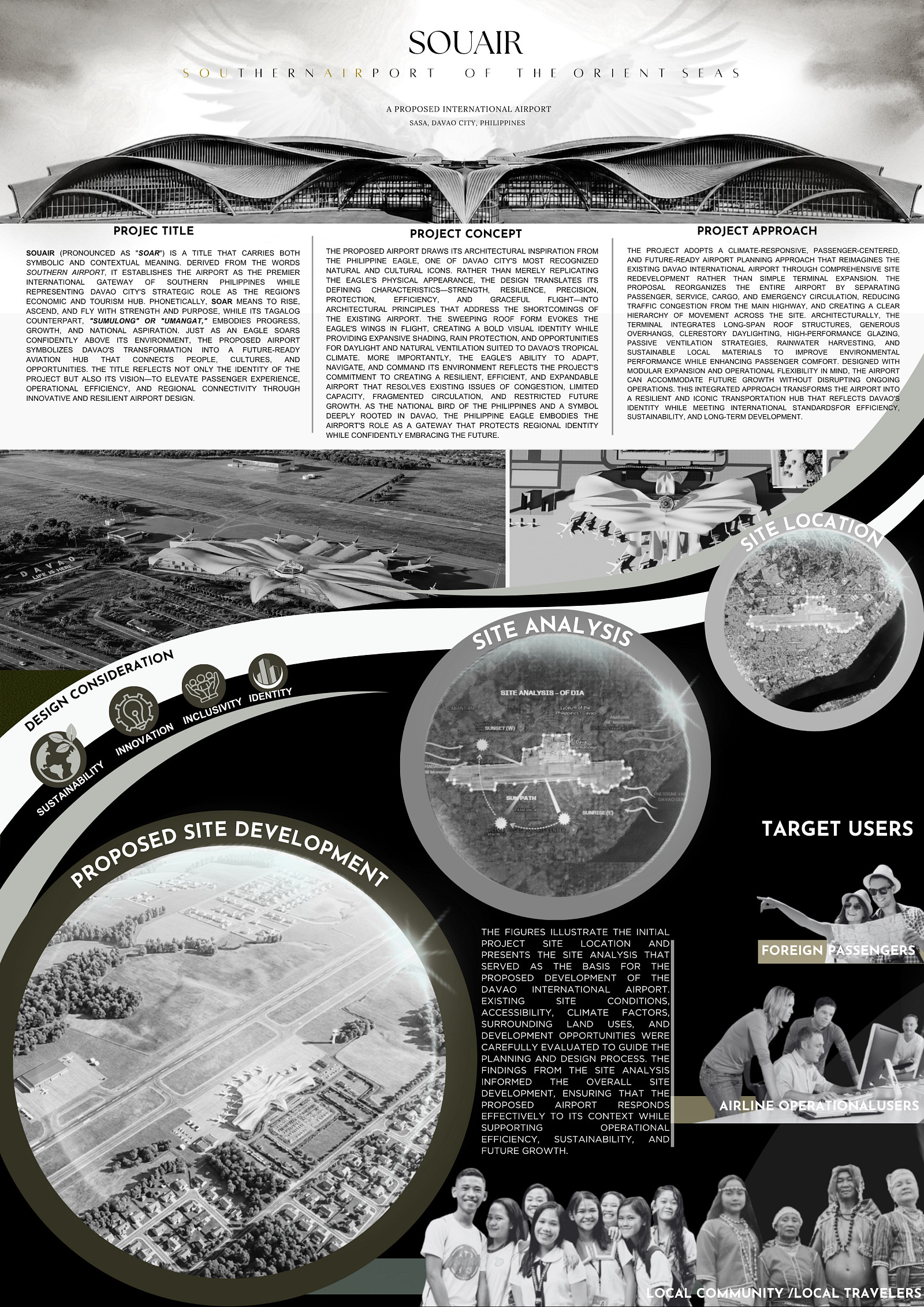
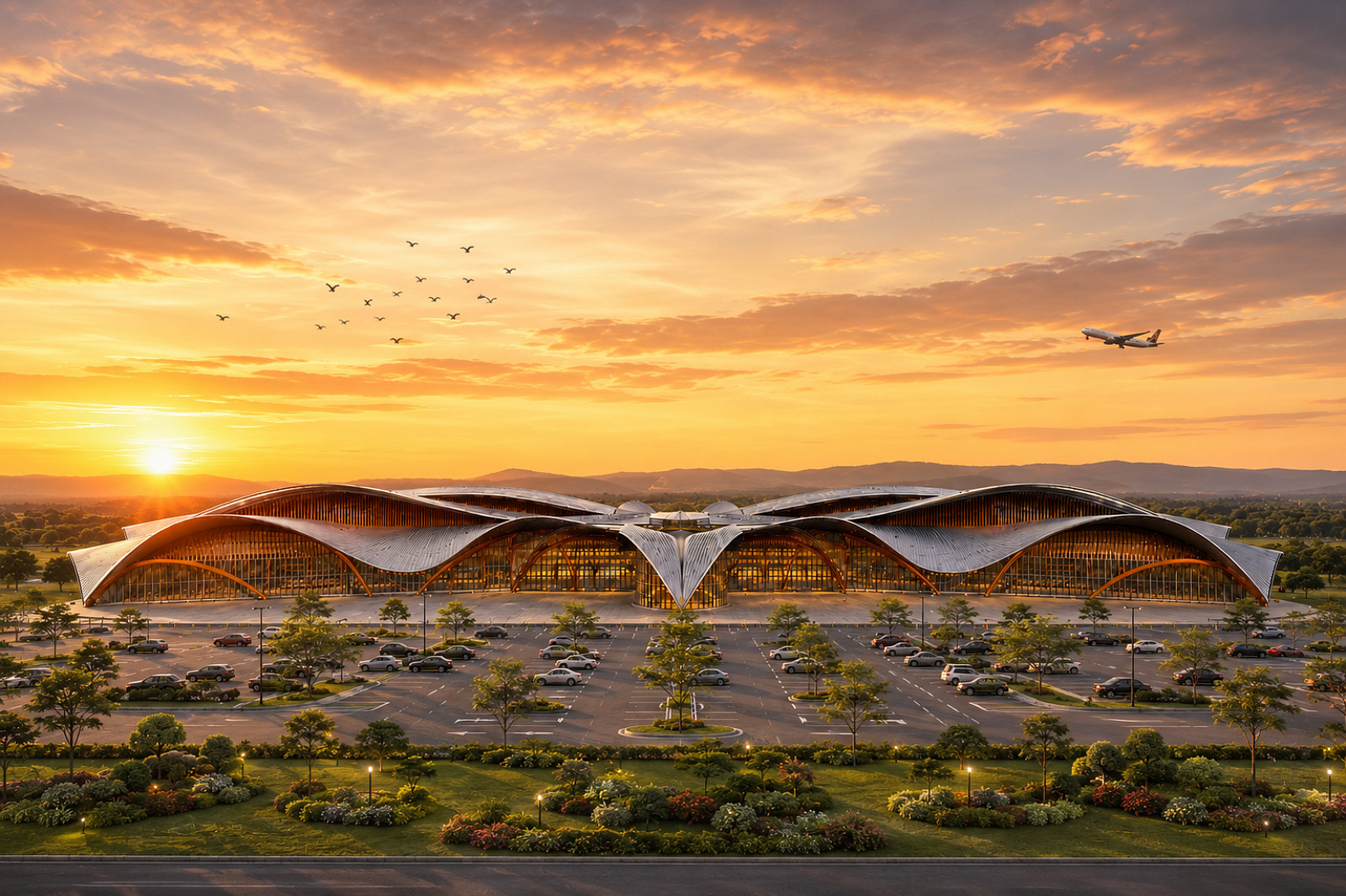
The name SOUAIR (Southern Airport of the Orient Seas), pronounced as "SOAR," embodies the universal act of rising and taking flight. In Filipino, it resonates with the ideas of "Paglipad," "Pag-angat," and "Pagsulong"—symbols of hope, progress, and the collective journey of every Filipino toward greater opportunities. Its word composition, Southern Airport, reinforces Davao City's role as the principal gateway of Southern Philippines while celebrating its strategic importance in connecting the nation to the rest of the world. It is a proposed redevelopment of the existing Davao International Airport or also known as Francisco Bangoy International Airport in Davao City, Philippines, envisioned as a response to increasing passenger demand, traffic congestion, aging infrastructure, and the airport's underdeveloped spaces for future expansion. More than replacing a terminal, the project seeks to redefine the country's southern gateway into a resilient, future-ready, and culturally rooted international airport that reflects the identity and aspirations of Mindanao to whole nation.
Project description
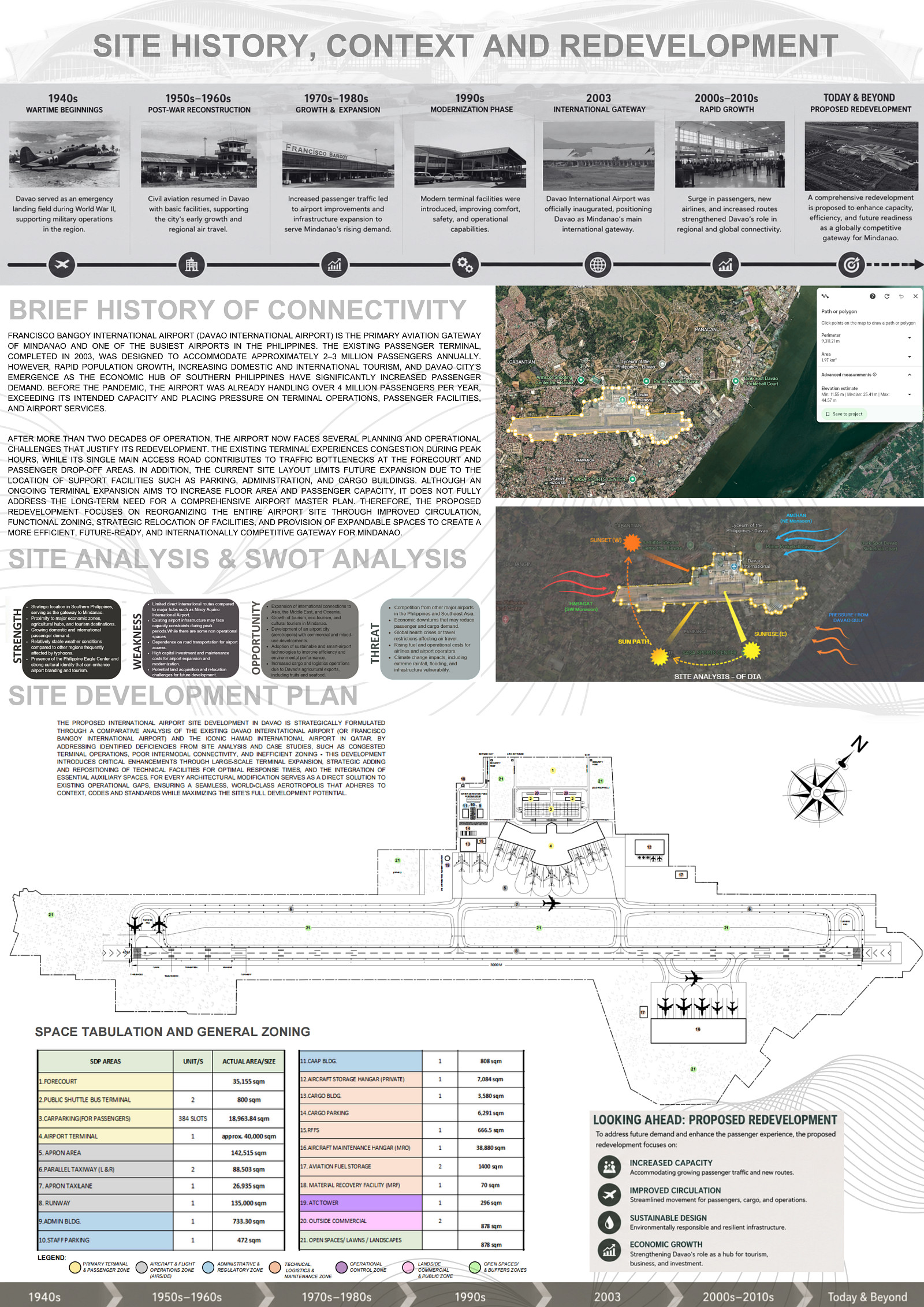
SOUAIR is envisioned as the comprehensive redevelopment of the existing Davao International Airport / Francisco Bangoy International Airport into a next-generation international aviation hub that reflects the growth, identity, and aspirations of Southern Philippines. Rather than simply expanding the existing terminal, the proposal reimagines the entire airport through a comprehensive master plan that addresses decades of spatial limitations, operational inefficiencies, increasing passenger demand, and the urgent need for resilient aviation infrastructure. Recognizing that the existing airport was originally designed for approximately 2–3 million passengers annually yet has already exceeded its intended capacity, the project responds to overcrowding, traffic congestion, fragmented circulation, and constrained opportunities for future expansion. More importantly, SOUAIR demonstrates how aging airports in rapidly urbanizing regions can be transformed into adaptive, people-centered, and future-ready transportation hubs without replacing existing critical infrastructure.
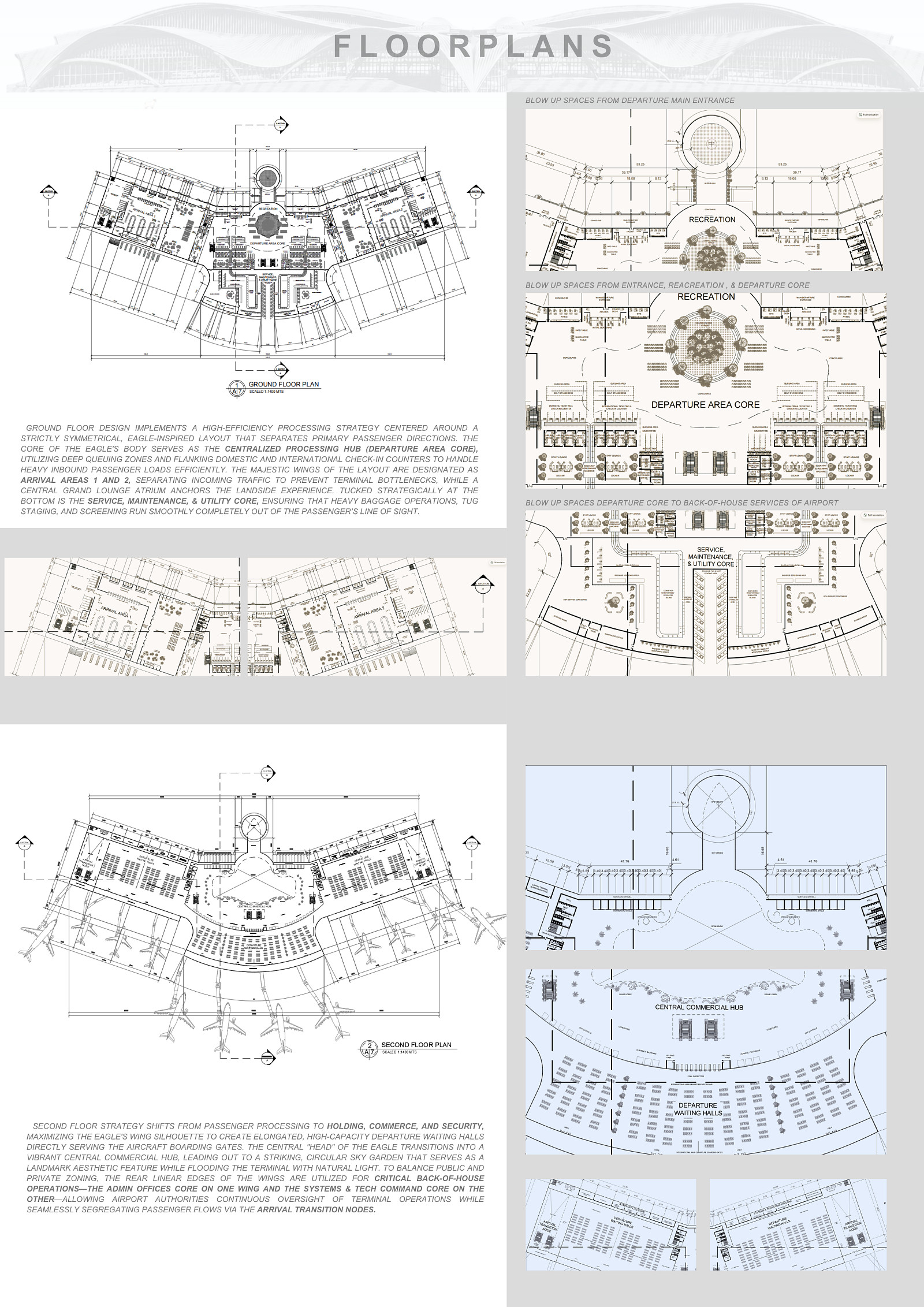
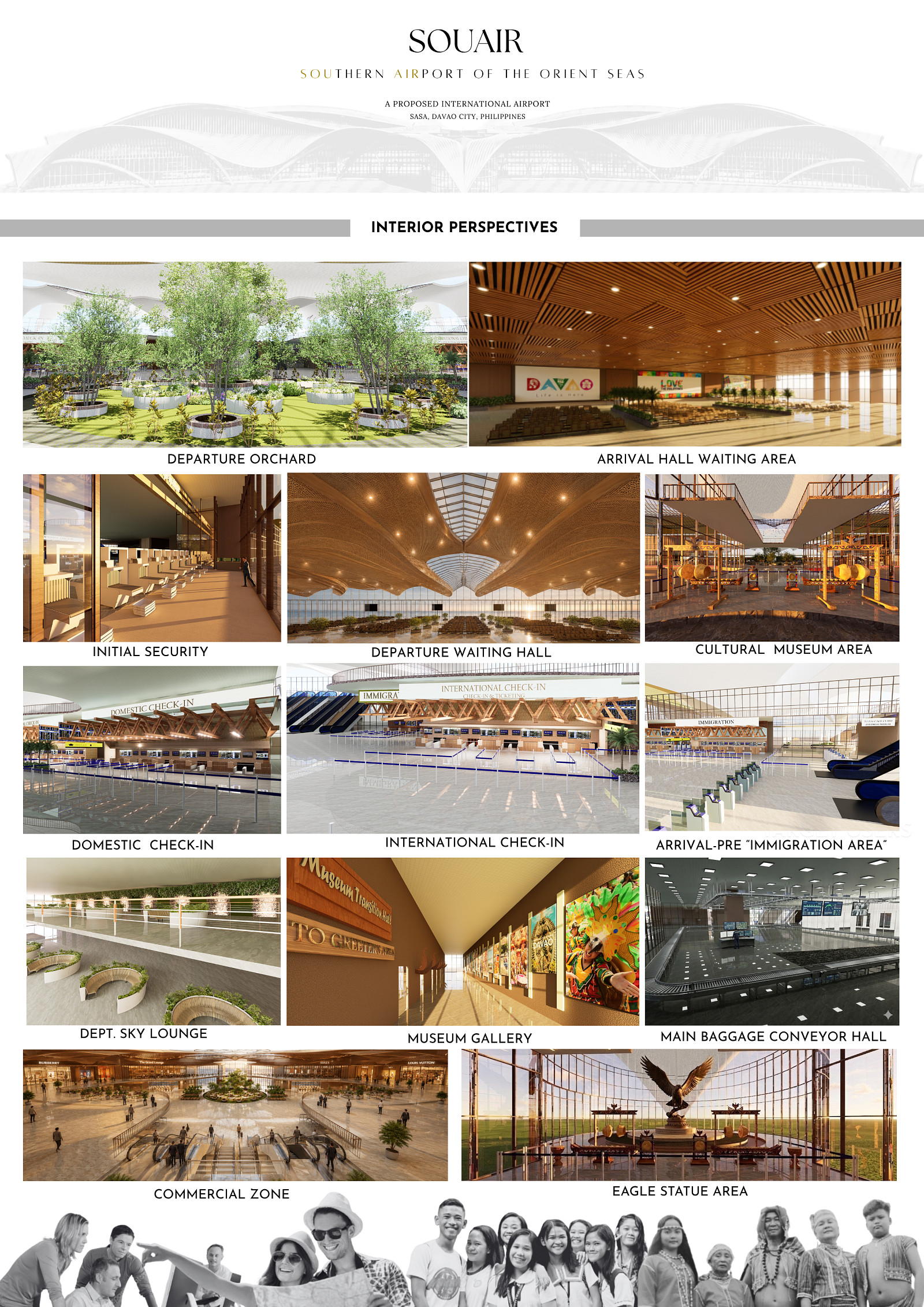
The redevelopment introduces a new expandable terminal and a reorganized airport master plan that prioritizes operational efficiency, passenger comfort, and long-term resilience. Passenger, cargo, operational, emergency, and service functions are strategically separated to eliminate circulation conflicts, while multimodal transportation hubs, structured parking, commercial spaces, landscaped public forecourts, and future expansion zones create a seamless journey from city to aircraft. Guided by the principles of SDG 9 (Industry, Innovation and Infrastructure), SDG 11 (Sustainable Cities and Communities), SDG 13 (Climate Action), and SDG 8 (Decent Work and Economic Growth), the proposal integrates climate-responsive architecture, passive environmental design, resource-efficient planning, and flexible infrastructure that can adapt to future aviation demands. Beyond serving as the gateway to Mindanao, SOUAIR establishes a globally relevant model for the sustainable redevelopment of existing international airports—demonstrating how infrastructure can preserve cultural identity, strengthen regional economies, reduce environmental impact, and enhance global connectivity. As a symbol inspired by the Philippine Eagle, the project proves that architecture rooted in local heritage can generate solutions with international significance, contributing to a more resilient, inclusive, and sustainable future for aviation worldwide.
Technical information
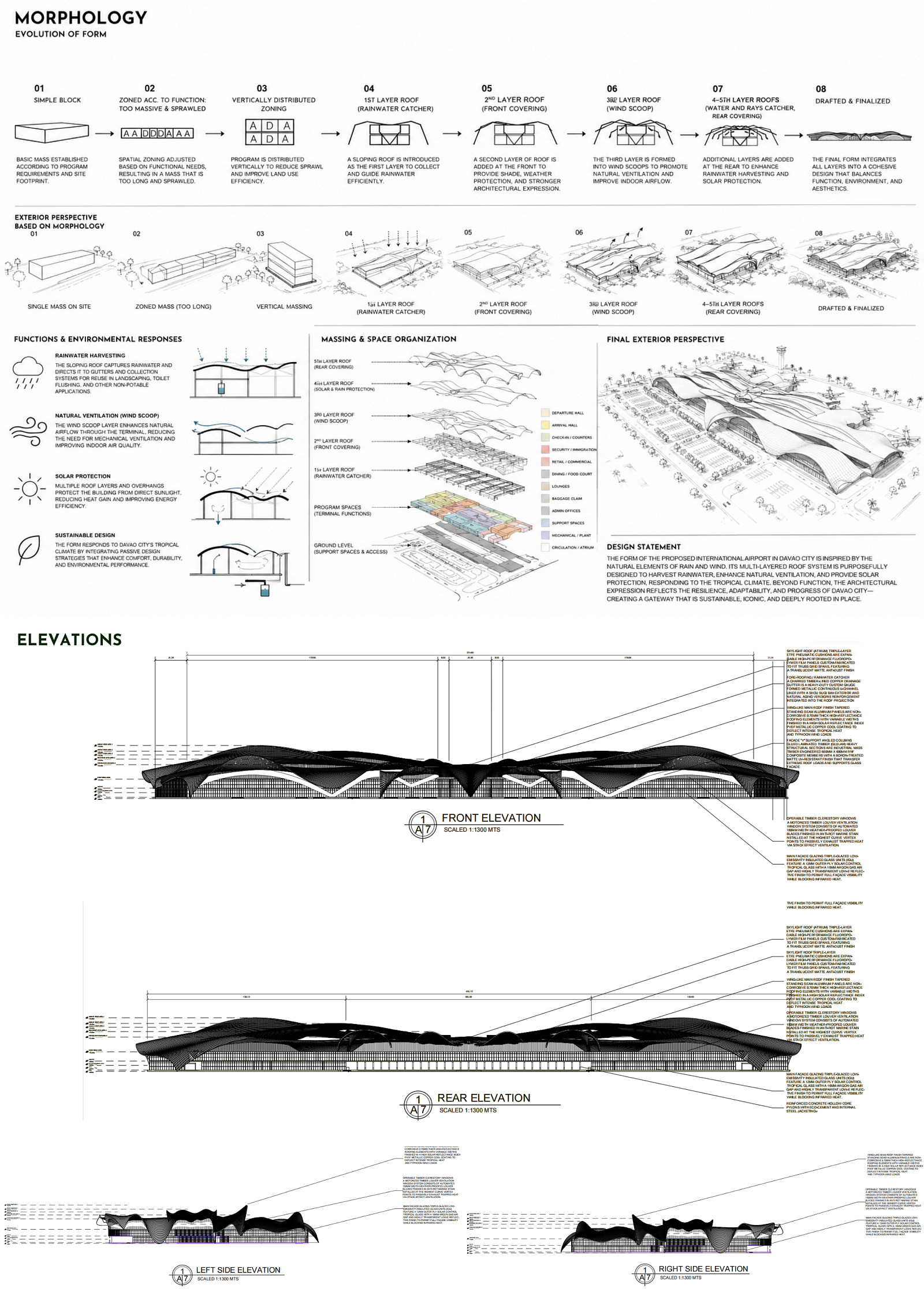
The proposed airport adopts a climate-responsive and modular structural system designed for long-term adaptability and operational efficiency. The terminal utilizes long-span steel space frames combined with reinforced concrete cores to create large column-free spaces that support flexible passenger movement and future expansion. The sweeping roof form incorporates deep overhangs, clerestory glazing, insulated roofing systems, and high-performance glass to maximize daylight while minimizing solar heat gain. Passive ventilation, rainwater harvesting, permeable landscaping, and energy-efficient building systems contribute to reduced environmental impact and lower operational costs. The site redevelopment also introduces separate circulation networks for passengers, airport operations, cargo logistics, and emergency services, ensuring compliance with international airport planning principles while improving safety, accessibility, and overall airport performance. Designed with practicality and resilience in mind, the proposal balances iconic architecture with efficient airport operations, creating a future-ready gateway capable of serving the growing demands of Mindanao to global stage for decades to come.

Copyright © 2026 INSPIRELI | All rights reserved. Use of this website signifies your agreement to the Terms of Use, Privacy Policy, and use of cookies.