AQUA LUNG


Project idea
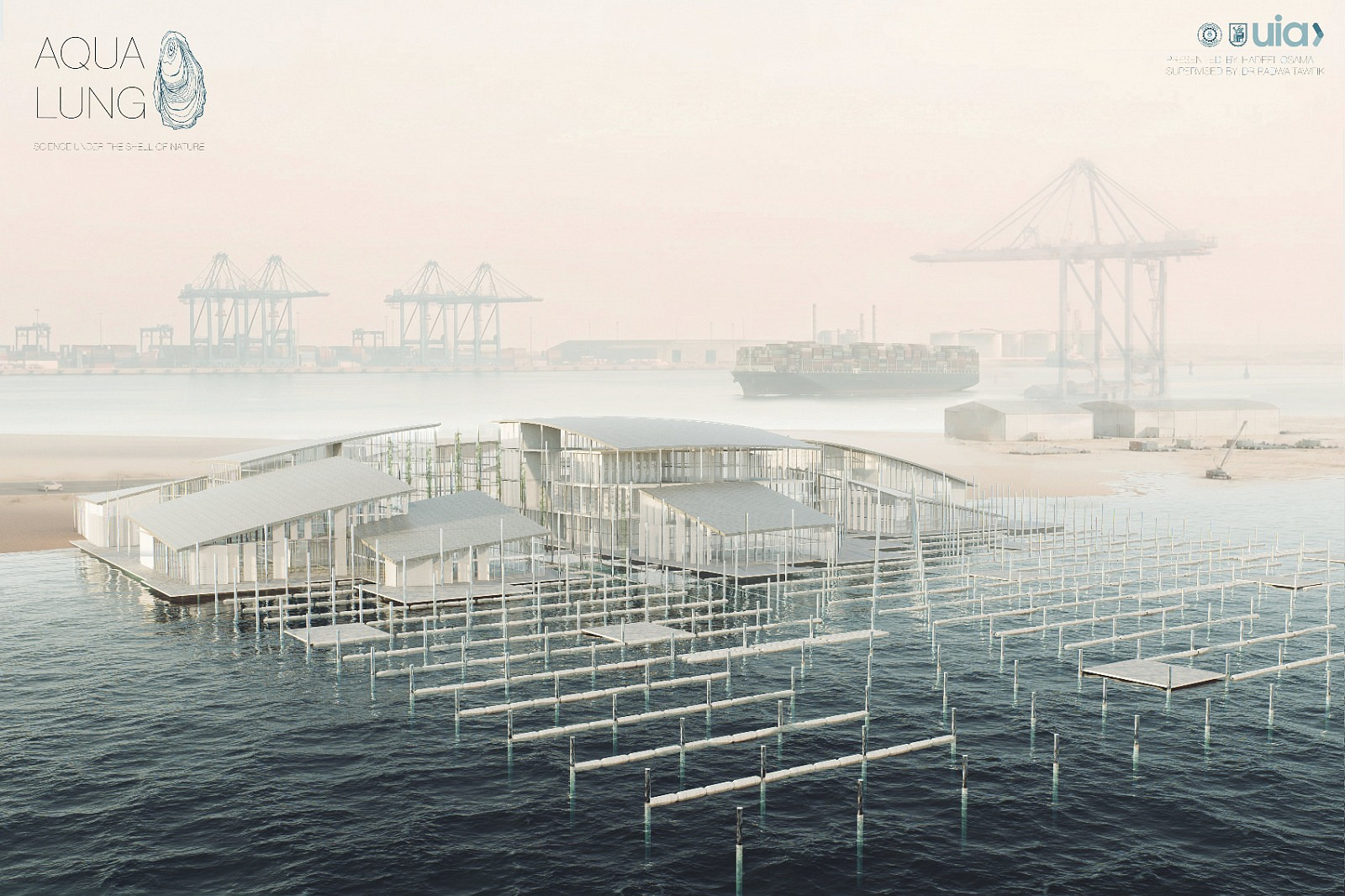
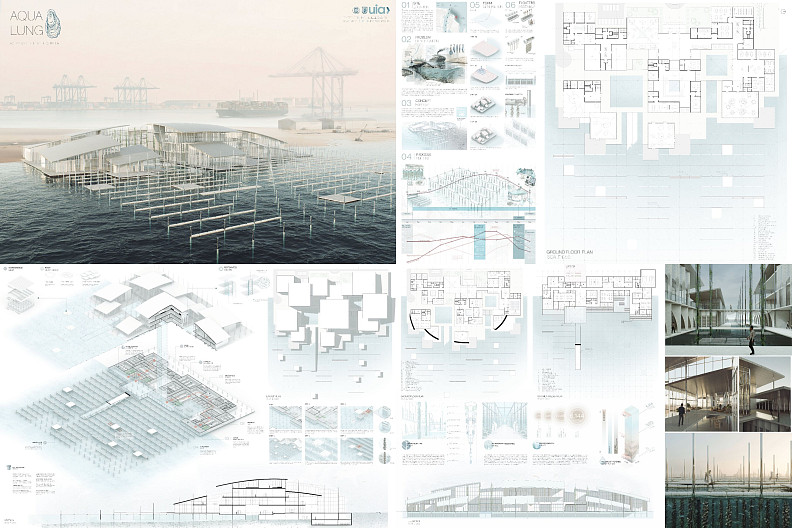
Aqua Lung is a marine research and environmental restoration center located on the eastern shoreline of Port Said at the Mediterranean entrance of the Suez Canal. The project is strategically positioned where the prevailing eastward coastal current carries polluted water from the canal directly across the site, allowing the architecture to interact with contaminated water at the point of its natural movement.
Aqua Lung acts as a living environmental filter that restores marine ecosystems through natural biological processes. The project combines marine research, oyster cultivation, environmental monitoring, public education, and ecological restoration within a single architectural framework.The project aims to establish a new model of regenerative coastal architecture that addresses marine pollution while creating a platform for scientific research, environmental education, and long term ecological restoration along one of the world's most important maritime gateways.
Project description
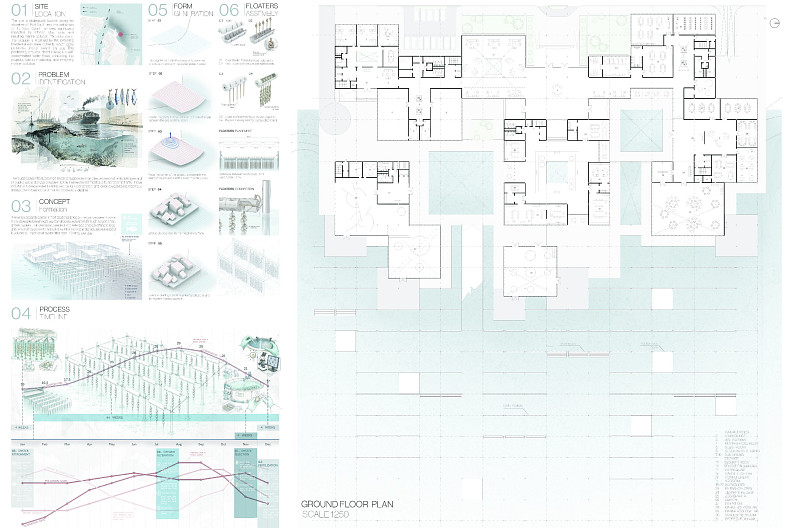
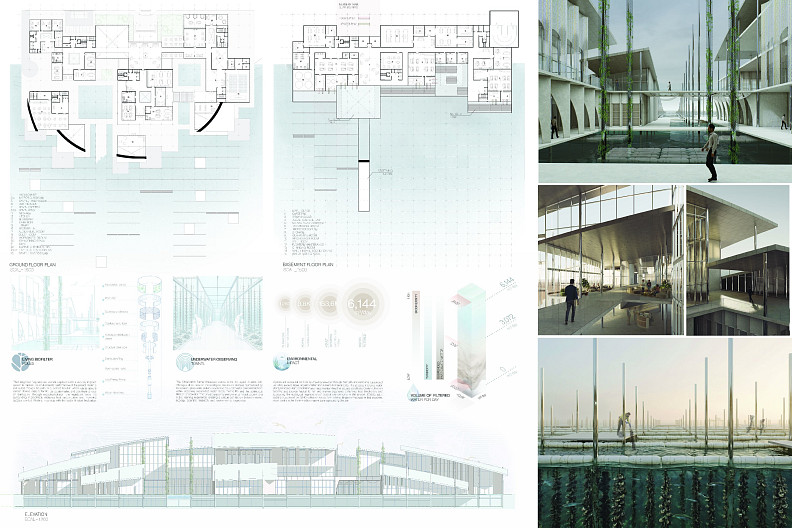
Aqua Lung is a marine research and environmental restoration center located on the Mediterranean coast of Port Said. The architecture is generated from an 8 × 8 m modular grid that unifies both the built environment and the marine infrastructure. On land, the grid organizes the architectural layout and structural column system, while offshore it extends into the sea to form the oyster filtration field, creating a continuous relationship between architecture and the marine ecosystem.
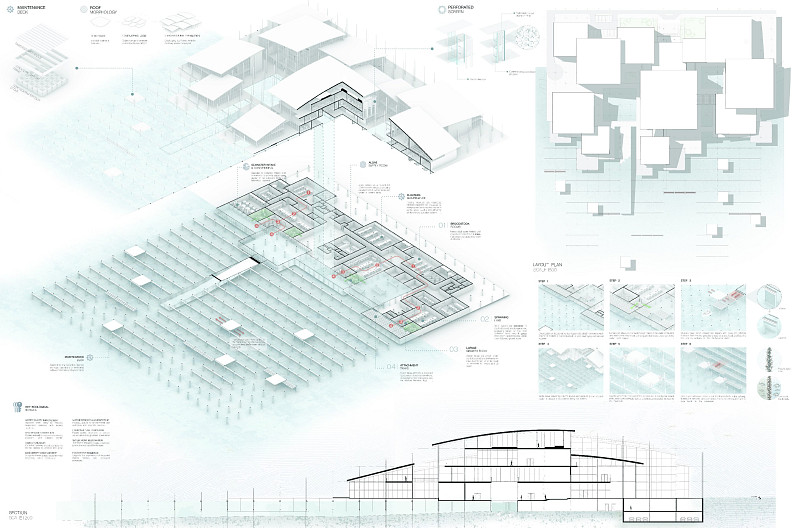
The building is composed of modular research blocks covered by an organic roof inspired by overlapping fish scales, expressing the project's philosophy of "Science Under the Shell of Nature." The center integrates marine research laboratories, water quality monitoring facilities, educational spaces, visitor areas, oyster cultivation infrastructure, and public spaces within a unified environmental framework.
The environmental strategy is based on a modular oyster cultivation system. The process begins in the basement, where oyster larvae are attached to clean suspended ropes inside controlled nursery tanks. Once the oysters reach maturity, the ropes that are installed on HDPE floaters deployed within the offshore filtration grid. As polluted seawater carried by the eastward coastal current from the Suez Canal passes through the site, the oyster fields naturally remove suspended solids, algae, excess nutrients, and organic pollutants, continuously improving water quality before the water continues along the Mediterranean coastline.The oyster fields also restore marine biodiversity by creating reef-like habitats that provide shelter and breeding grounds for numerous marine species.
The project transforms environmental restoration into an architectural experience by connecting research, education, and ecological infrastructure within a single integrated system. Visitors are able to observe the oyster cultivation and water filtration process through public spaces and the underwater observation tunnel, strengthening the relationship between people and the marine environment. By combining architecture with natural biological processes, Aqua Lung demonstrates how the built environment can actively contribute to restoring coastal ecosystems while serving as a landmark for scientific innovation and environmental awareness.
Technical information
The roof is formed as a reinforced concrete shell supported by reinforced concrete columns on an 8 × 8 m grid.The offshore filtration infrastructure consists of marine grade stainless steel piles supporting a modular oyster cultivation system. High density polyethylene (HDPE) floaters carry suspended polypropylene ropes seeded with oyster larvae in controlled nursery tanks before deployment into the filtration field.
Documentation

Copyright © 2026 INSPIRELI | All rights reserved. Use of this website signifies your agreement to the Terms of Use, Privacy Policy, and use of cookies.