Muwal Center for Egyptian Performing Arts


Project idea
The project is a contemporary Cultural Center that celebrates Egyptian folk arts and traditions through an immersive architectural experience. Rather than functioning as a conventional cultural building, the project transforms the visitor's journey into a continuous sequence of cultural interactions inspired by movement, music, and performance.
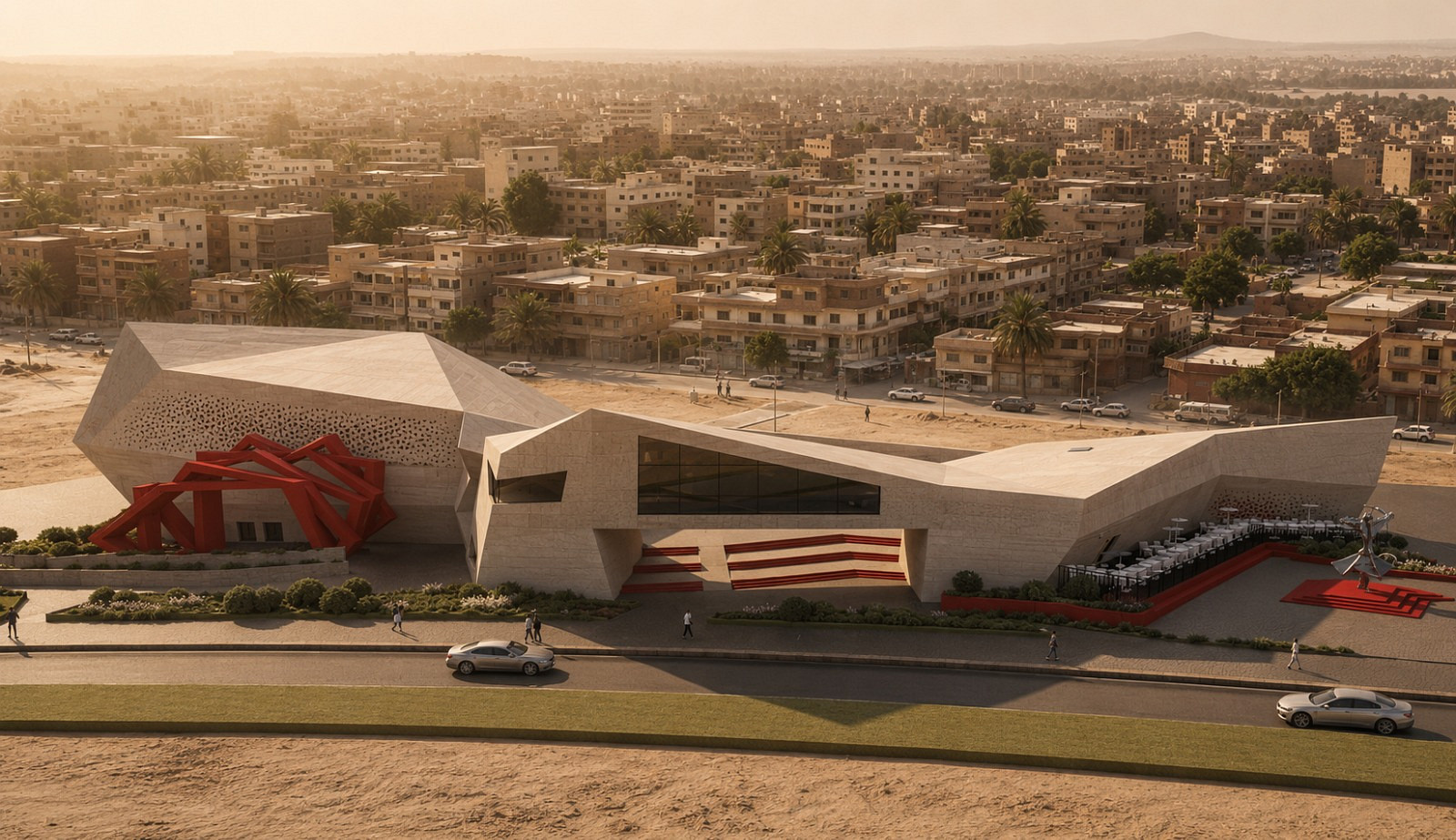
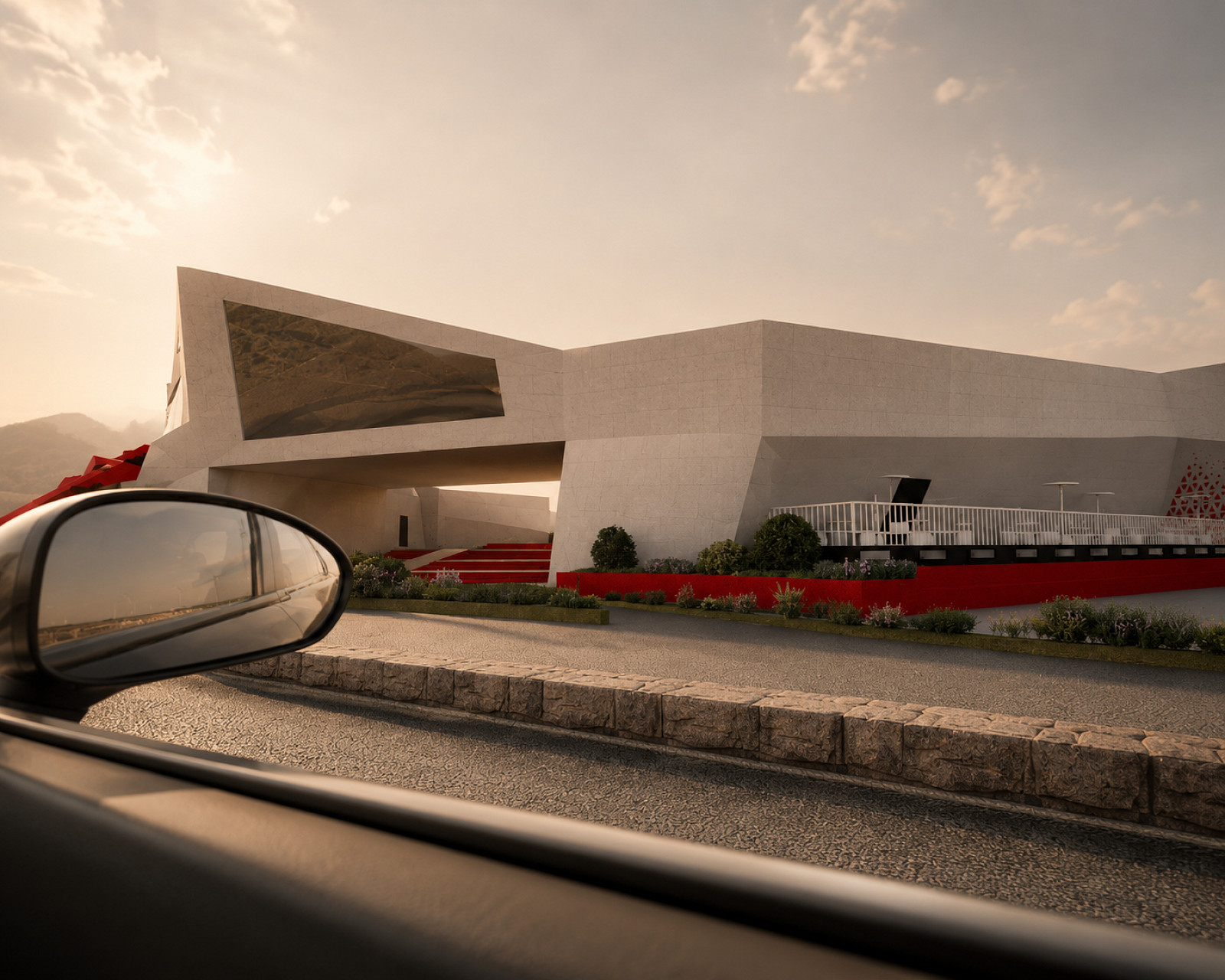
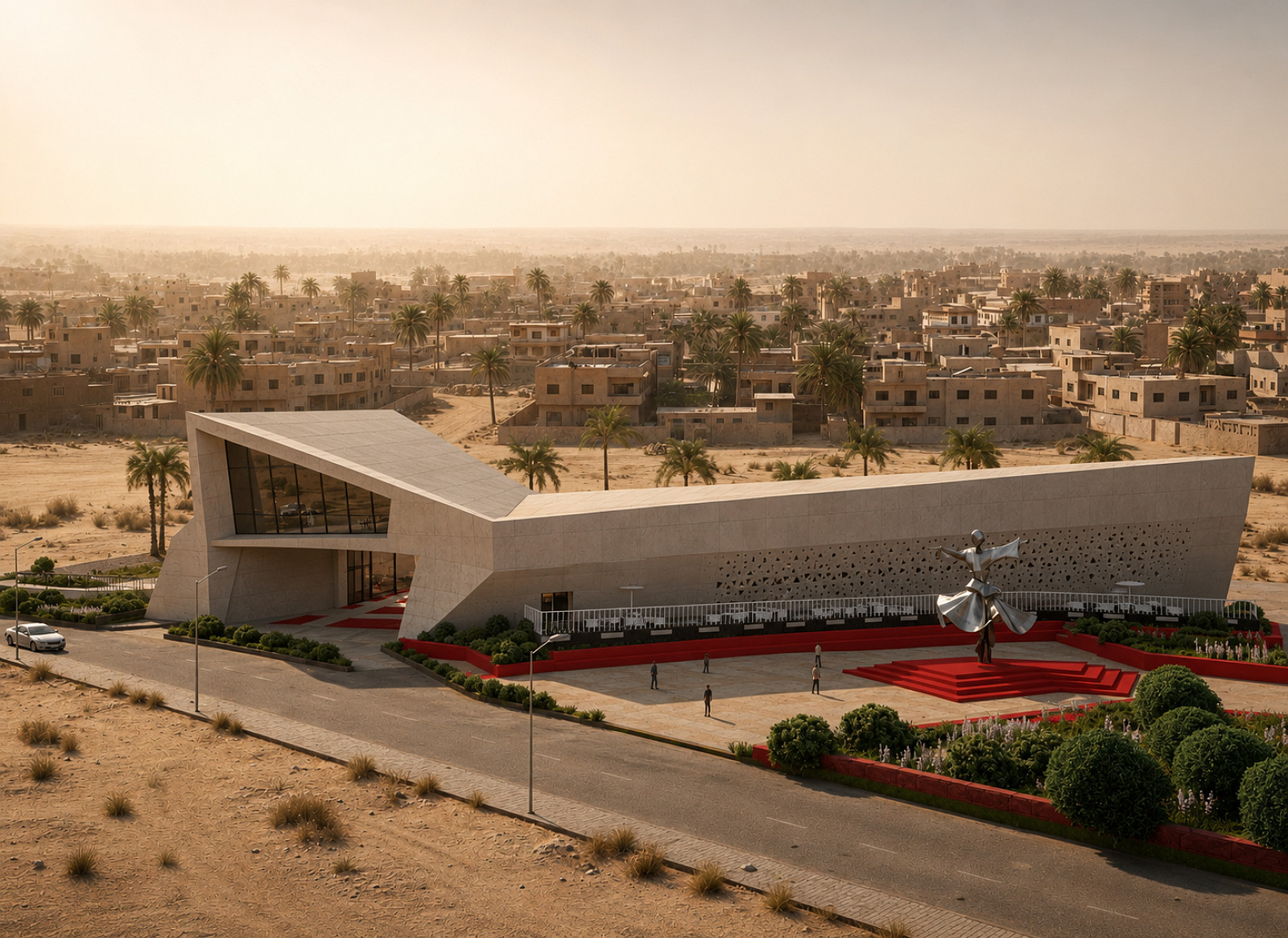
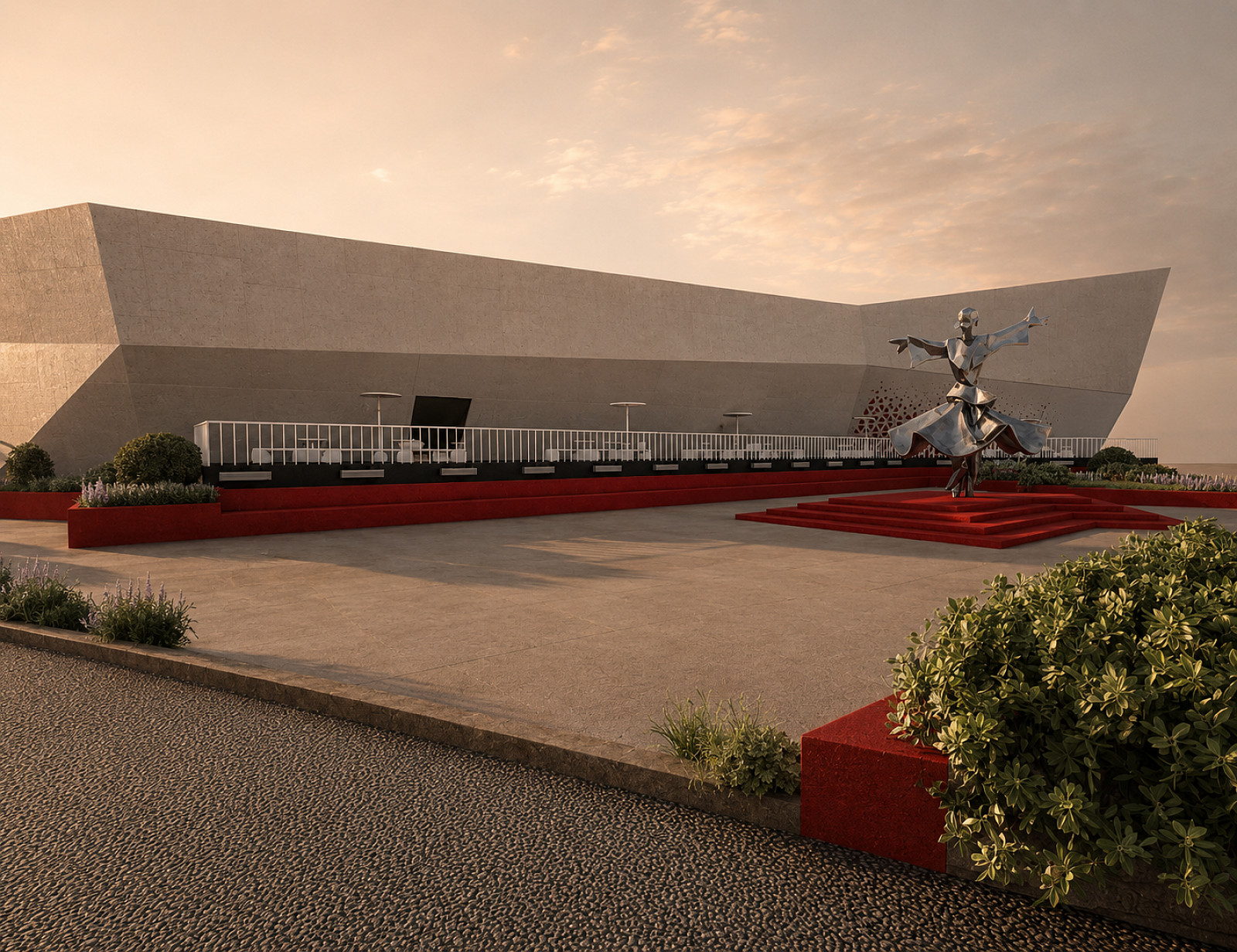
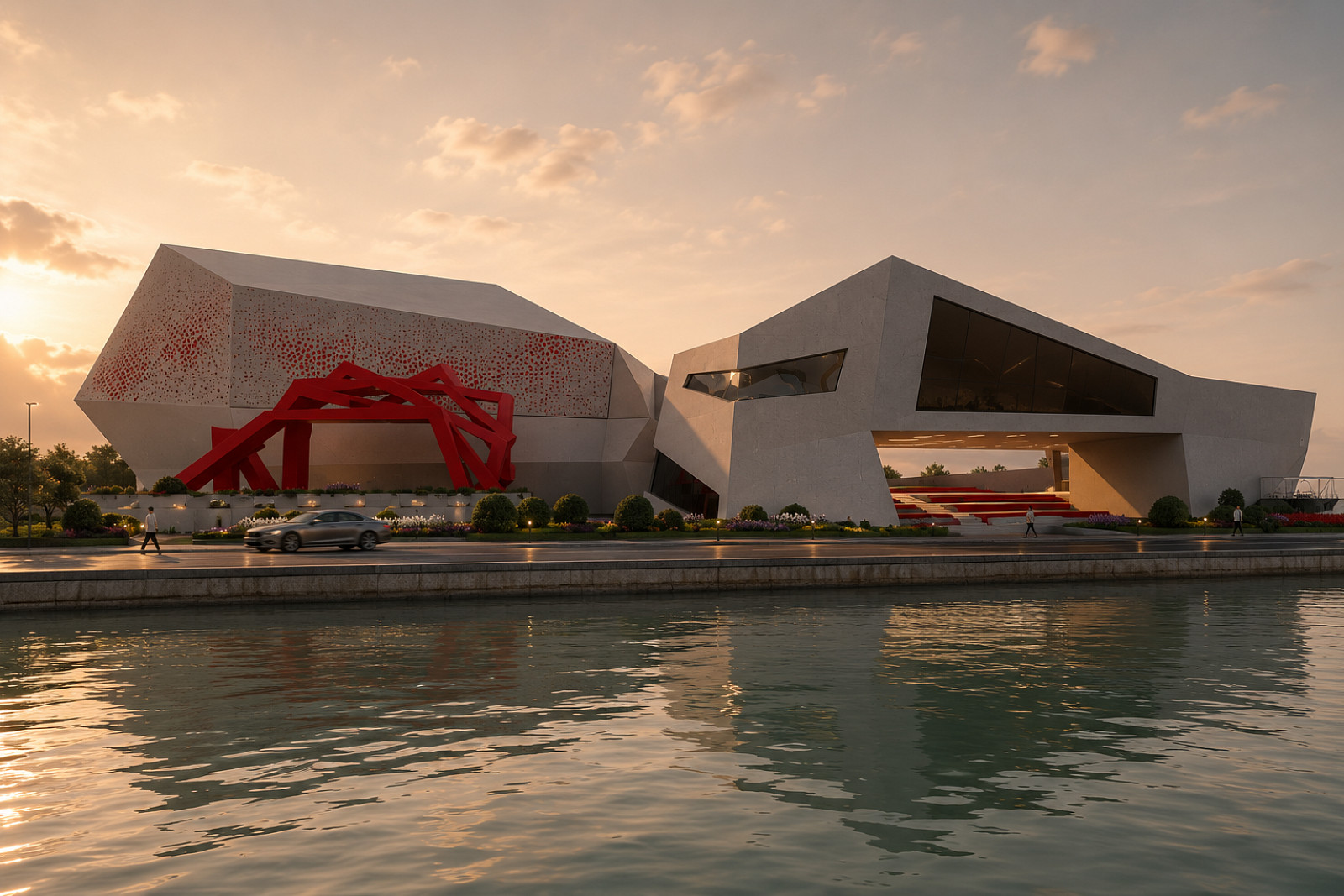
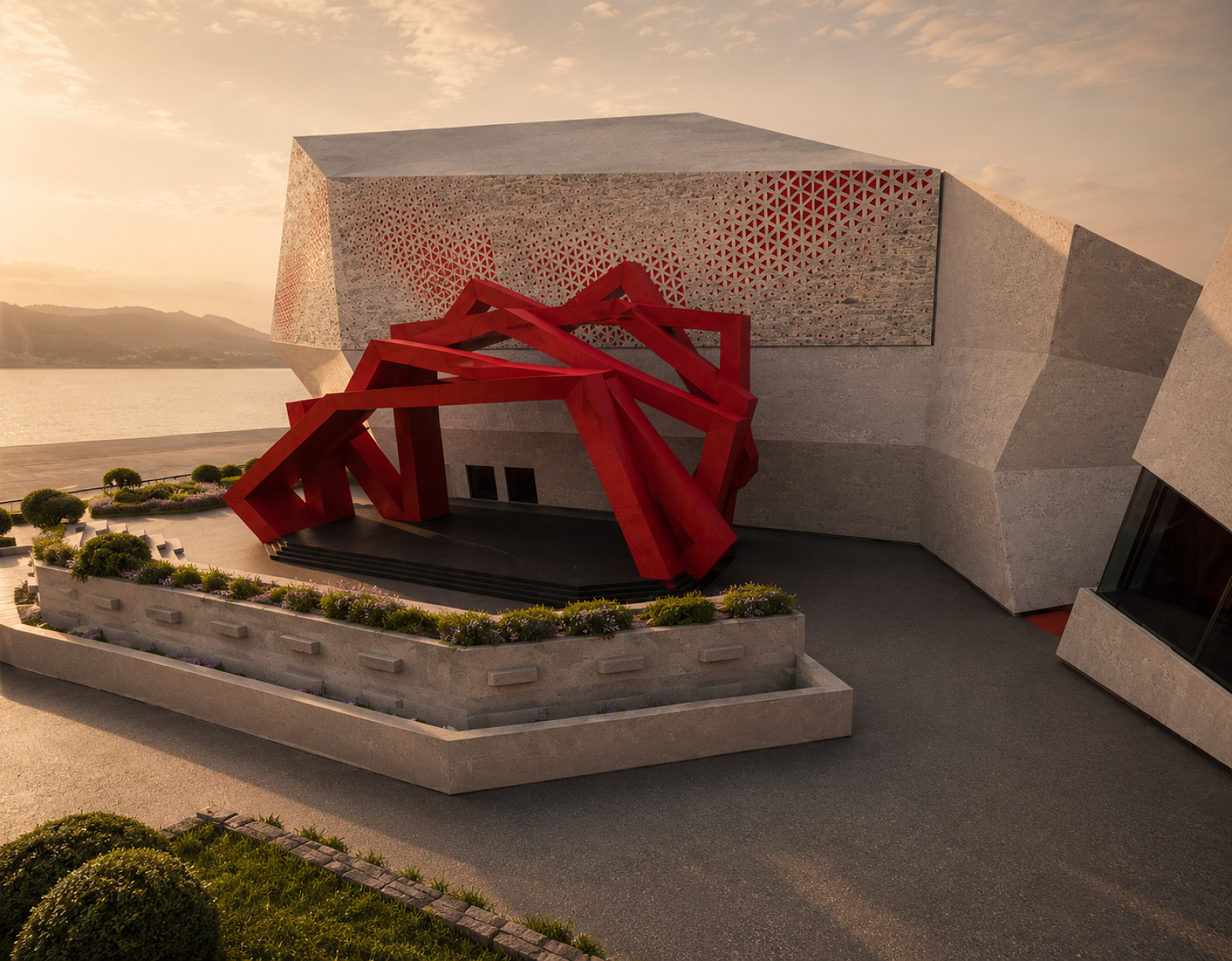
The architectural language is influenced by Deconstructivism, expressing the dynamic energy of Egyptian folk dance through fragmented masses and sharp geometric forms. The red architectural elements are inspired by the vibrant colors commonly found in traditional Egyptian folk ornaments and decorative motifs, creating a strong visual identity that reflects the spirit of local heritage.
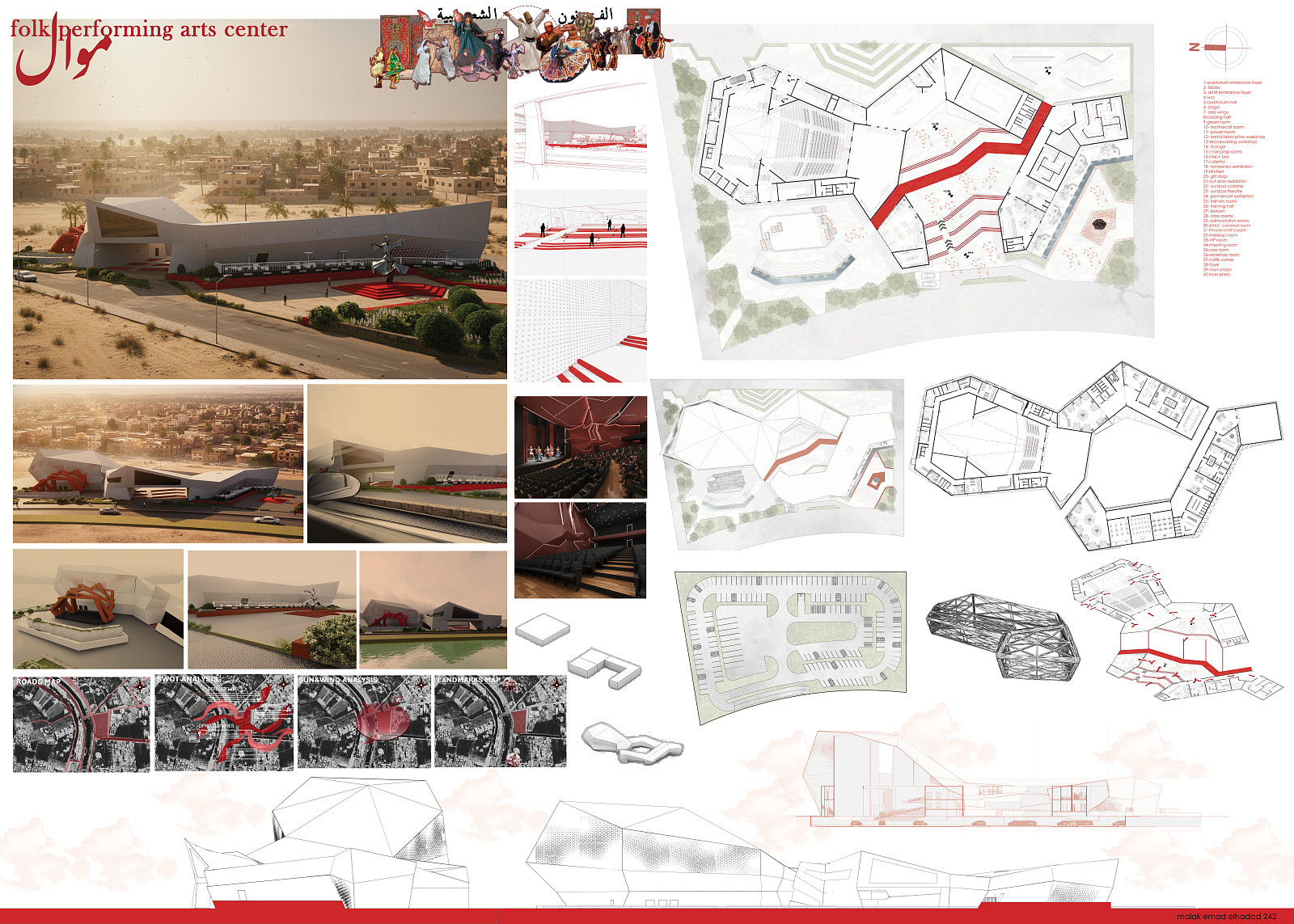
The visitor experience begins at the interactive musical stairs located at the main entrance. As visitors step on the stairs, they trigger traditional Egyptian folk melodies, introducing them to the atmosphere of the project from the very first moment. The sequence then continues through a central courtyard that connects visitors to the café and exhibition spaces. A pedestrian bridge leads toward the landscaped outdoor area, which functions as an open-air exhibition space and amphitheater for cultural performances. Finally, the circulation continues through a series of stairs leading to the main theater and the remaining cultural facilities.
The project emphasizes movement as the main design concept, where architecture becomes a narrative journey rather than a static destination. Every transition between spaces is carefully designed to gradually immerse visitors in Egyptian culture before reaching the main performance hall.
Accessibility was an essential design principle throughout the project. A comprehensive system of ramps provides barrier-free access to every level, ensuring that all visitors, including people with disabilities, can experience the entire cultural journey equally.
Project Objectives
Celebrate and preserve Egyptian folk arts and cultural heritage.
Create an interactive cultural experience rather than a conventional museum visit.
Encourage social interaction through integrated indoor and outdoor public spaces.
Strengthen the connection between architecture, music, movement, and performance.
Ensure full accessibility and inclusive design for all users.
Project description
The project is a contemporary Cultural Center dedicated to preserving and promoting Egyptian folk arts through education, performance, and public engagement. It is designed as a multifunctional cultural destination that accommodates a wide range of artistic and community activities.
The project includes a main theater for performances, an open-air amphitheater, permanent and temporary exhibition galleries, workshops for traditional arts and crafts, educational spaces, rehearsal studios, administrative offices, a library and cultural resource area, a café, retail spaces for local handicrafts, and landscaped public areas that encourage outdoor cultural events and social interaction.
The spatial organization follows a continuous circulation sequence that guides visitors through interactive, exhibition, and performance spaces, creating an engaging cultural journey. Outdoor spaces are integrated with the building to extend cultural activities beyond the enclosed areas and provide flexible venues for festivals and public events.
The project also adopts universal design principles by providing barrier-free circulation through ramps and accessible routes, ensuring equal access for all users, including people with disabilities.
Technical information
The project is supported by a space truss structural system, allowing large column-free spans while following the project's dynamic deconstructivist geometry. The structural system was carefully integrated with the architectural form, enabling the fragmented masses and cantilevered elements while maintaining structural efficiency.
The building envelope combines architectural concrete, natural stone cladding, and high-performance glazing. Selected façade areas incorporate perforated architectural panels inspired by traditional Egyptian decorative patterns. These porous panels filter daylight, improve natural ventilation, reduce solar heat gain, and create a dynamic play of light and shadow throughout the interior spaces while enhancing occupants' thermal comfort.

Copyright © 2026 INSPIRELI | All rights reserved. Use of this website signifies your agreement to the Terms of Use, Privacy Policy, and use of cookies.