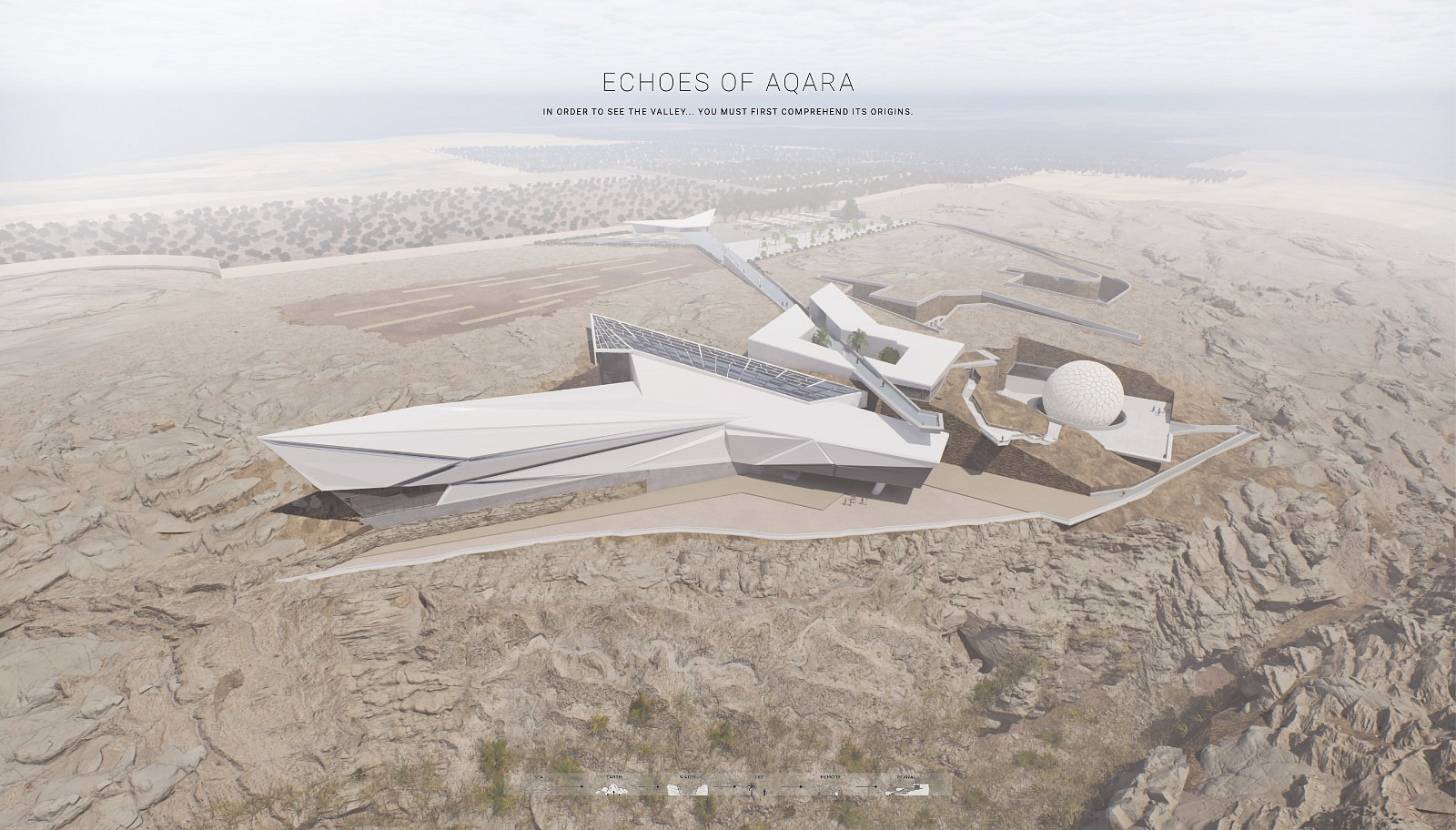

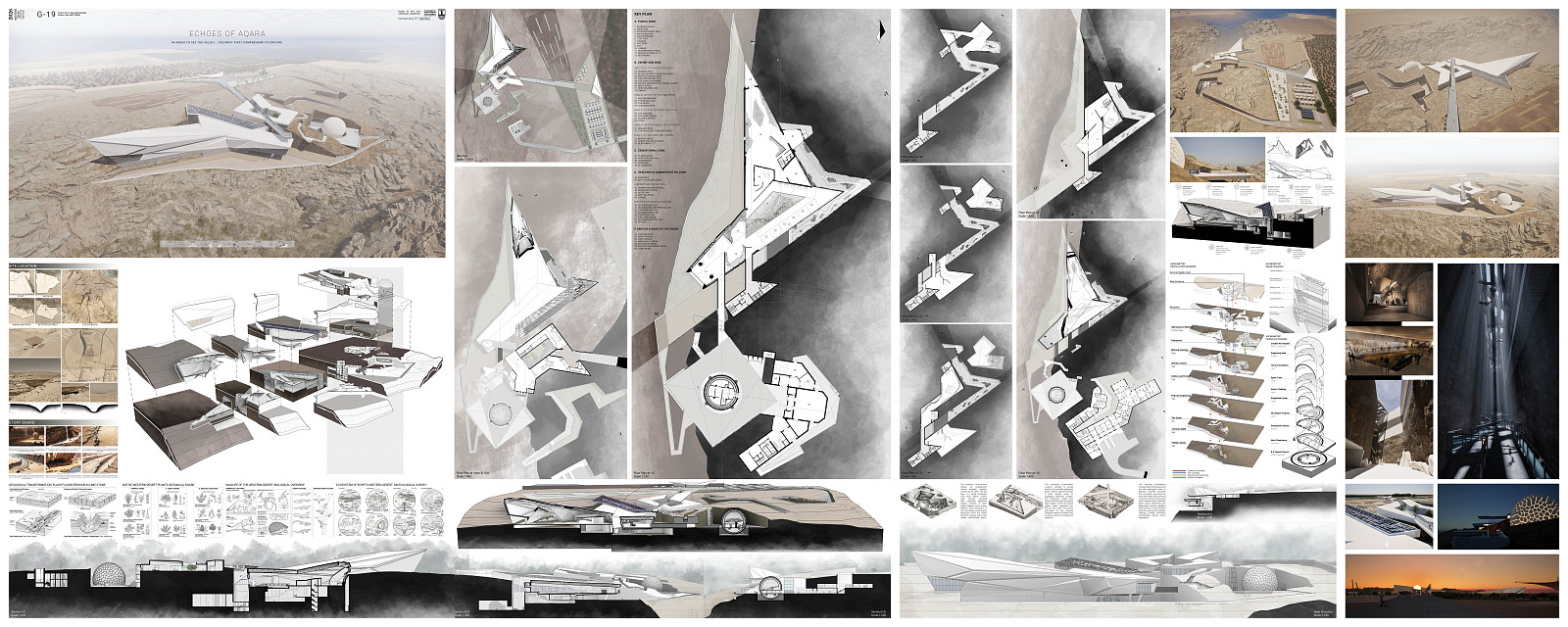
ECHOES OF AQARA (An Interpretation center)


Project idea
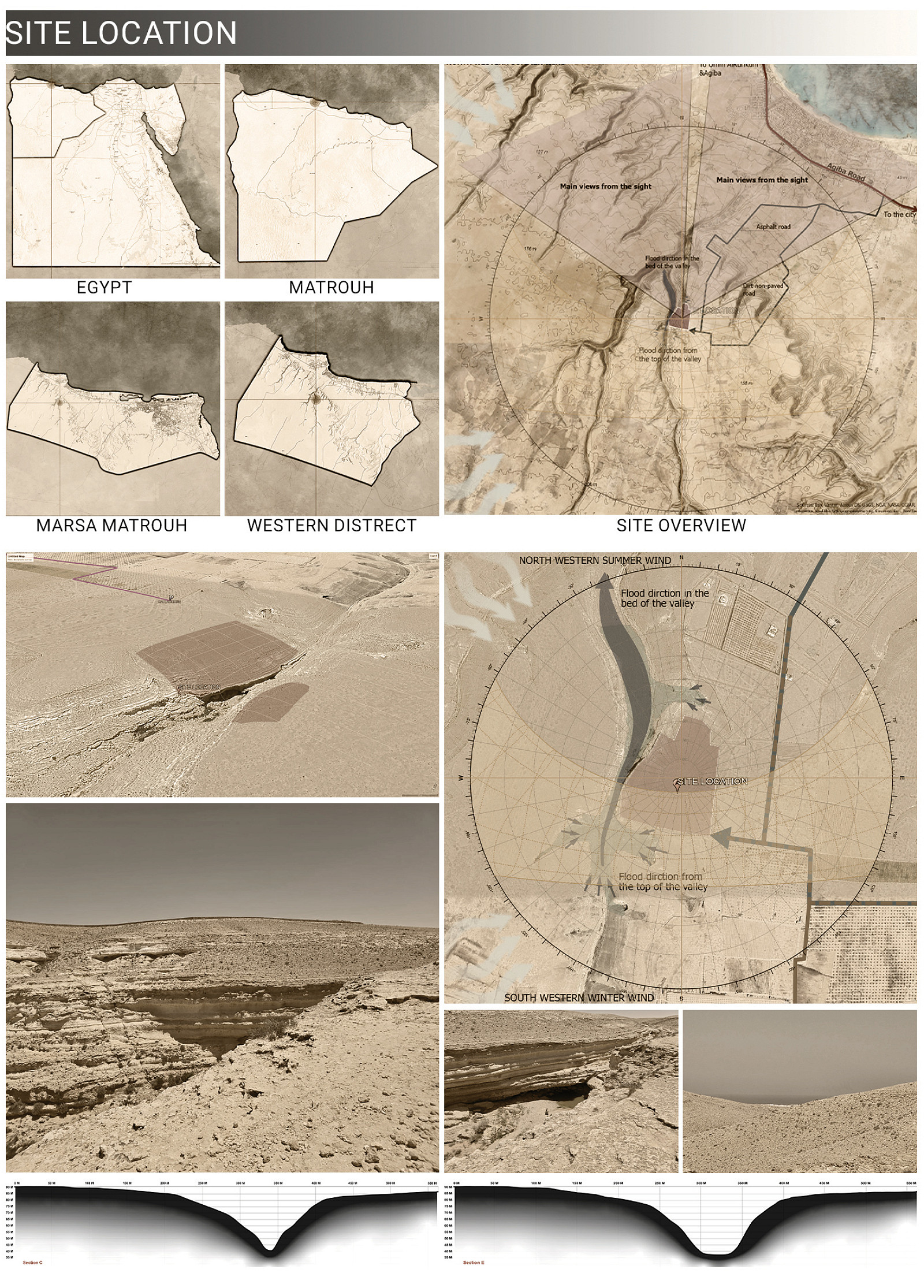
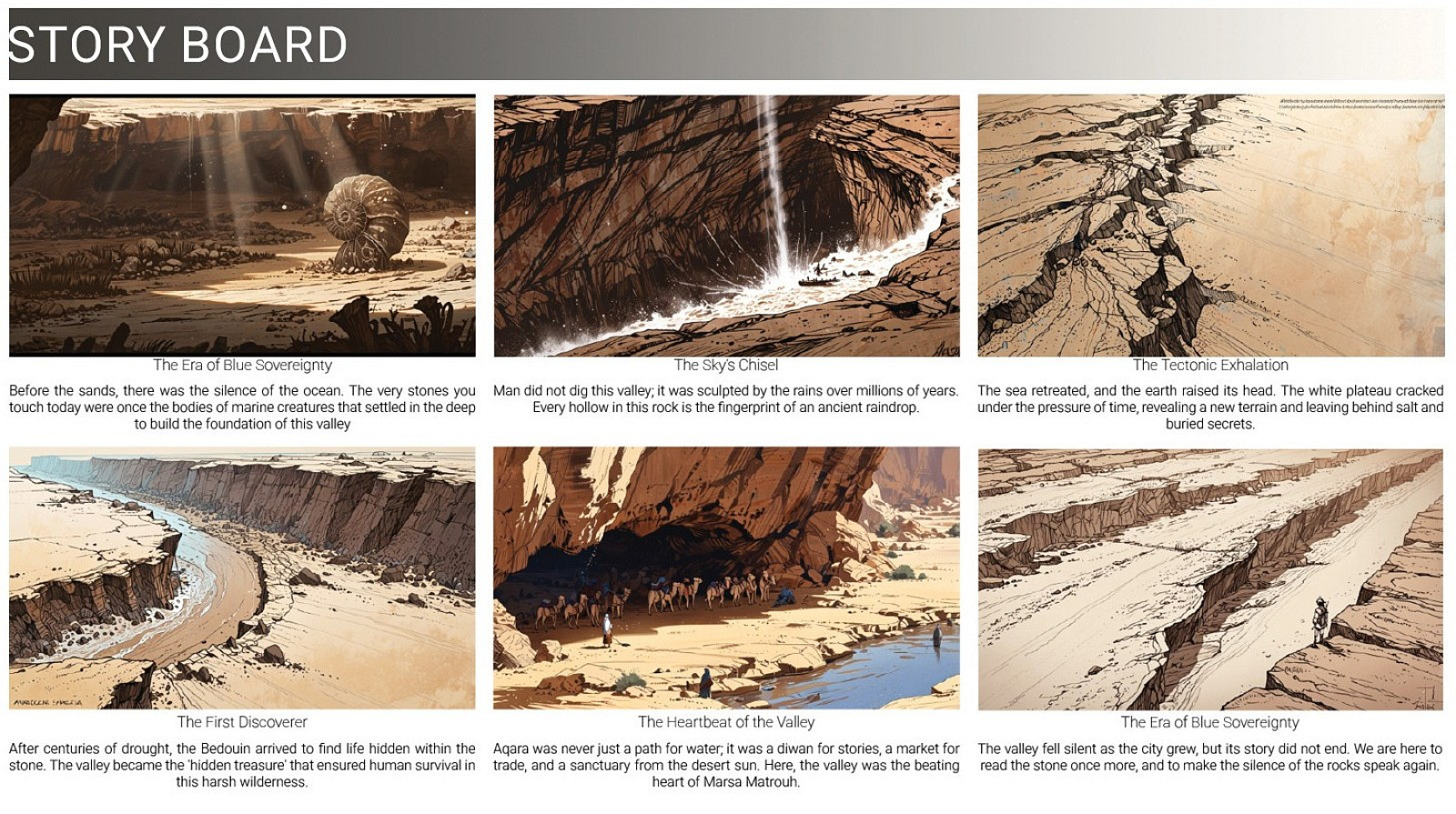
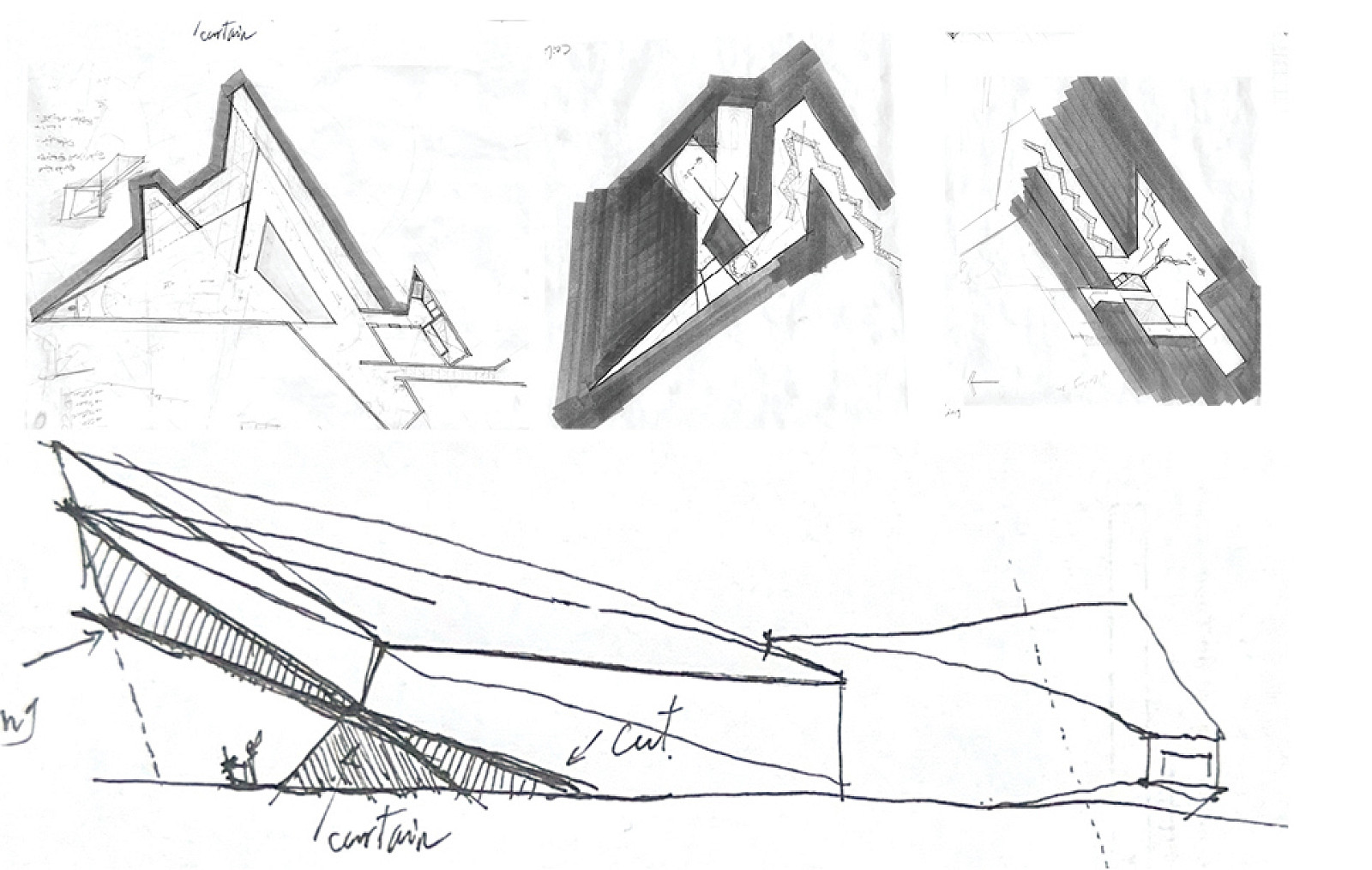
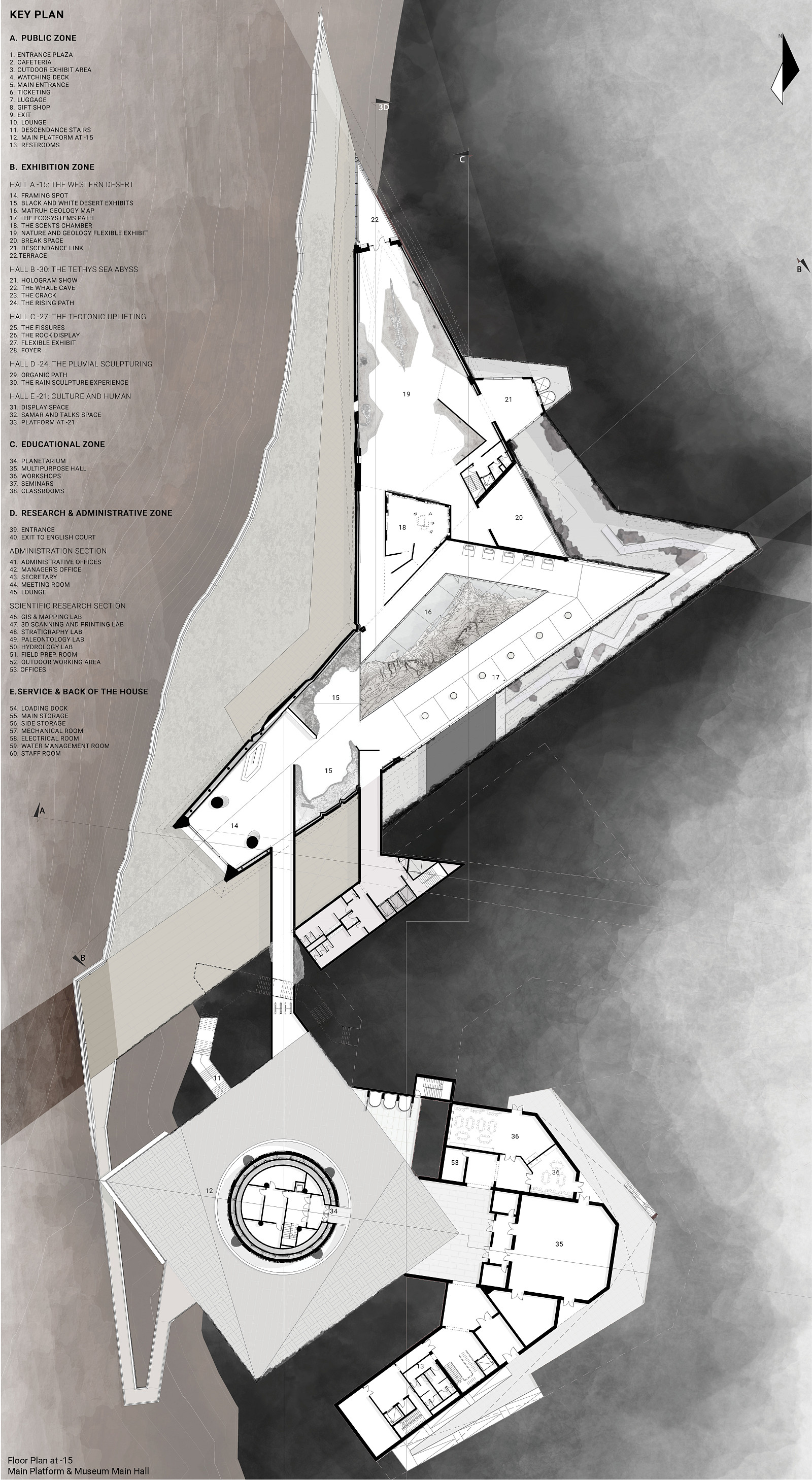
Located in Marsa Matrouh, Egypt, Aqara Valley was once a vital water source and a vibrant centre of life for local Bedouin communities. Over the past century, however, modernisation, shifting migration patterns, and the decline of traditional desert lifeways have relegated this once-essential terrain to a forgotten landscape. The primary challenge this project addresses is the gradual erasure of the valley’s profound memory—a loss that spans its human history, ecological richness, and ancient geological origins. The project is deeply inspired by the concept of deep time and the raw geological forces that shaped the Western Desert. The narrative looks beyond the immediate past to trace a continuous lineage from the primordial Tethys Sea, through violent tectonic uplifts and dramatic water erosion, to the eventual arrival of human civilisation. Architecturally, the inspiration is drawn from the act of excavation. The building is conceived not as an object placed upon the landscape, but as a void carved directly into the mountain—a natural extension of the earth and a physical manifestation of the layers of time. It is an immersive architectural museum and interpretation centre designed to rediscover and preserve the identity of the valley. There is a critical need to create a space where past and present converge—a living archive that reconnects people to the land. By creating a descending and ascending spatial timeline, the project satisfies the need for an experiential sanctuary where visitors can physically walk through millions of years of history, understanding the valley not just as a location, but as a complex social, cultural, and environmental ecosystem.
Project description
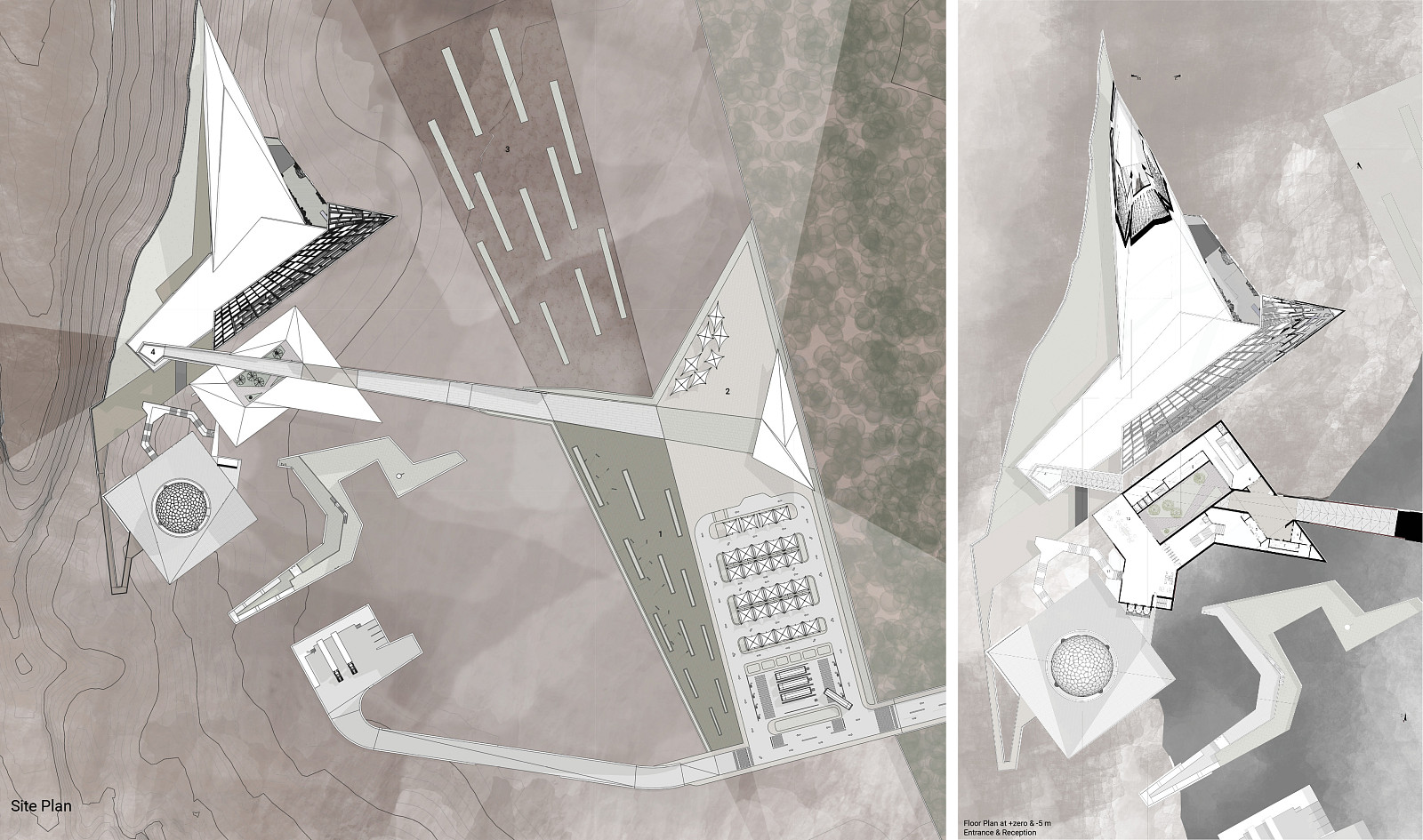
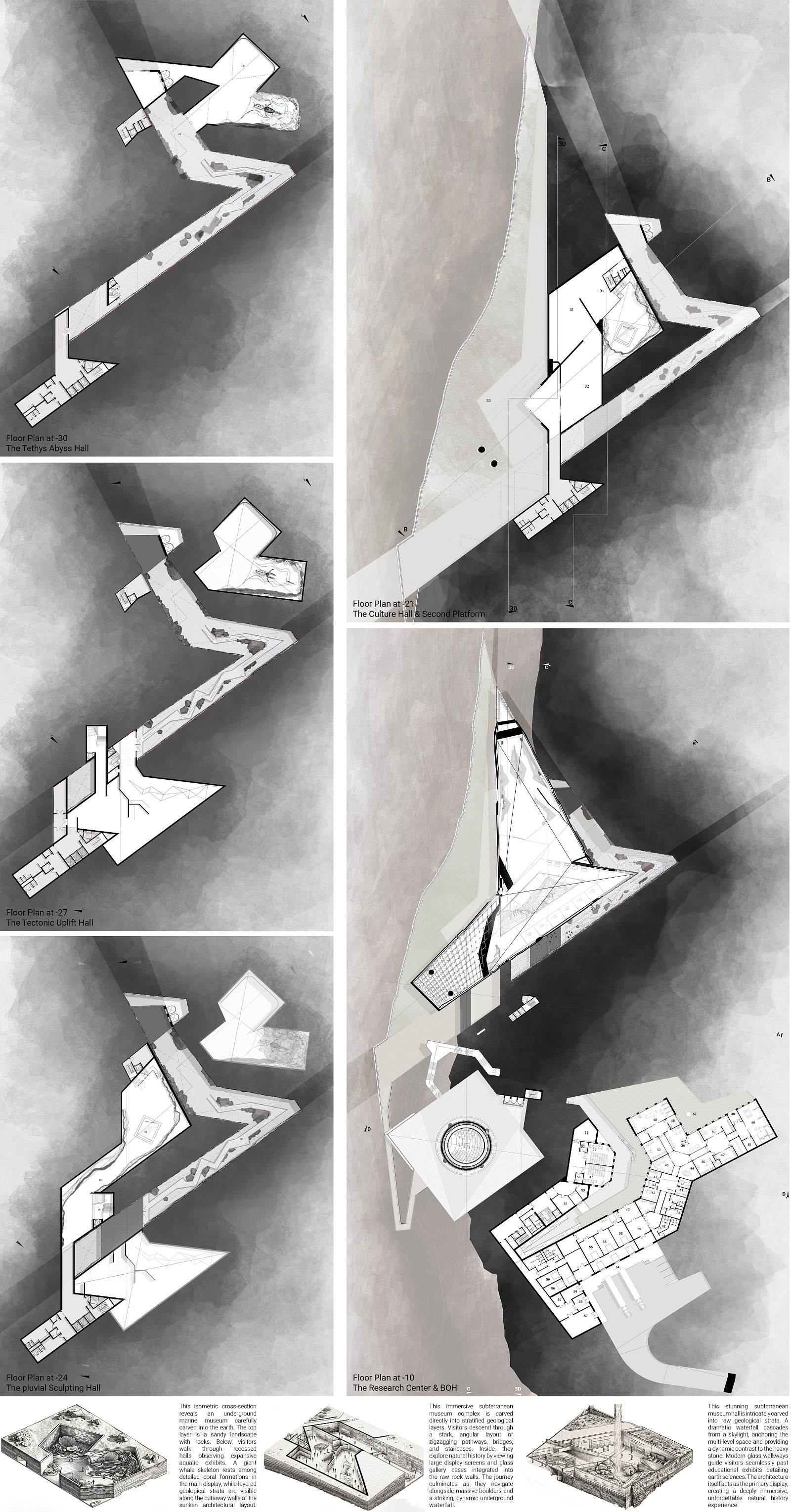
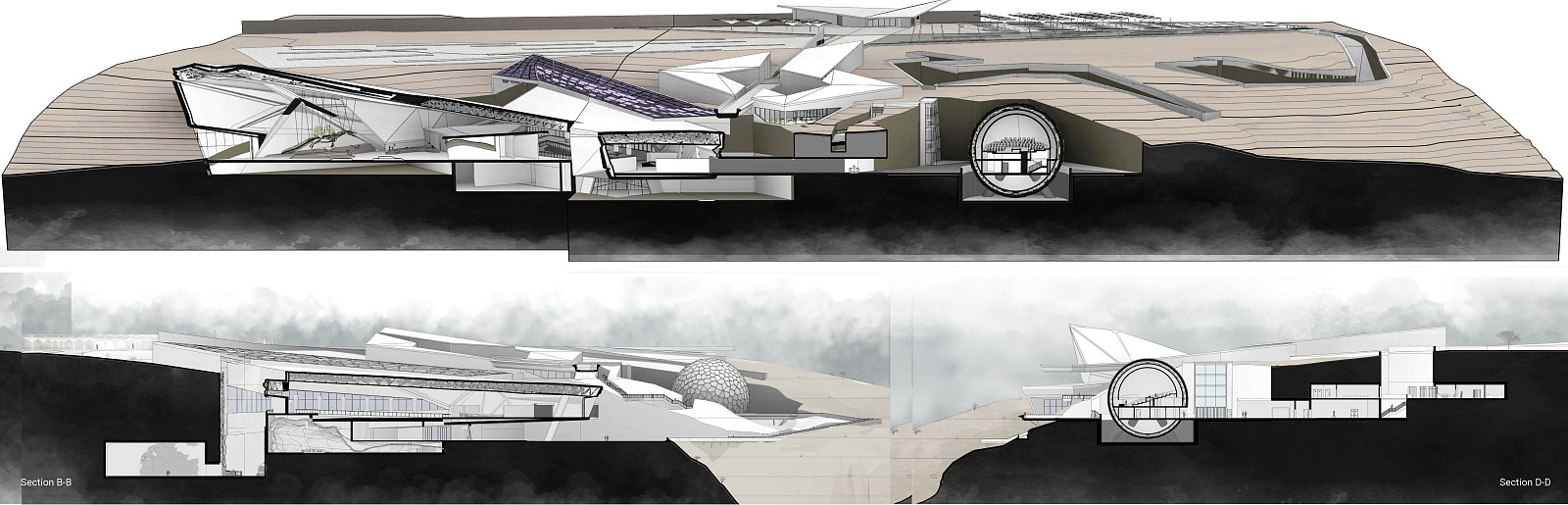
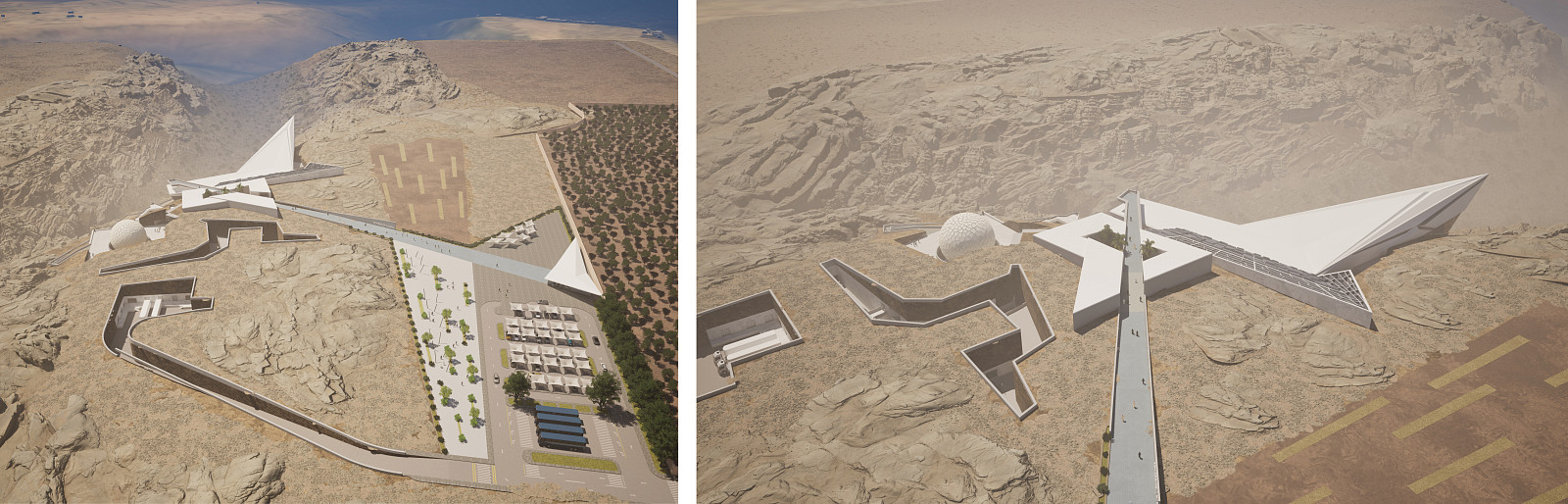
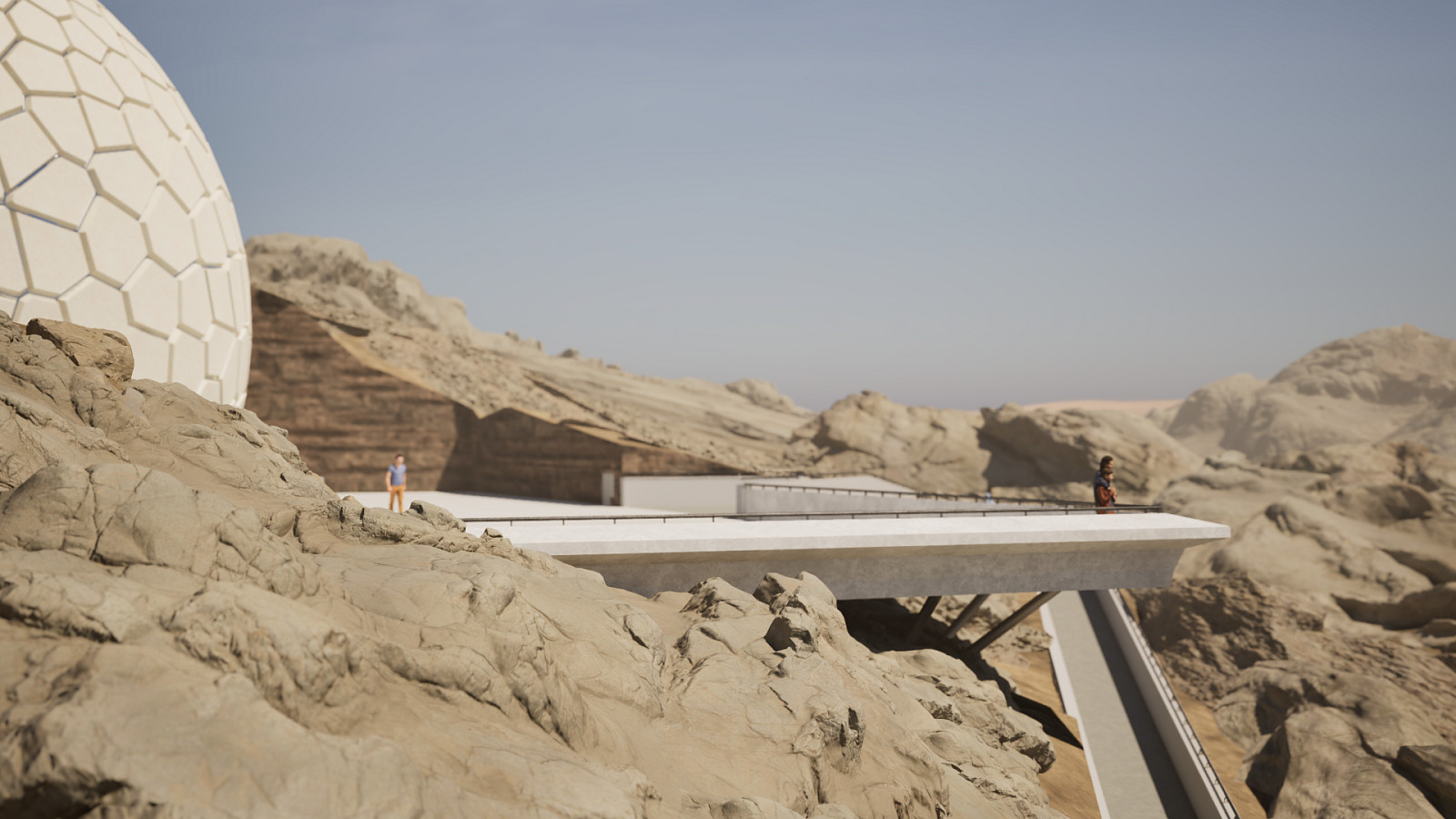
The Project is a proposed underground museum and interpretation center carved directly into the rocky slopes of Marsa Matrouh, Egypt. Designed to function as a physical timeline, the project seeks to rescue the valley's forgotten geological, ecological, and human history—particularly its rich Bedouin heritage—from modern obscurity. Rather than resting on the landscape as a traditional building, the architecture acts as an excavated void. It uses natural rock, raw materials, and sensory design to immerse visitors in the continuous evolution of the region.
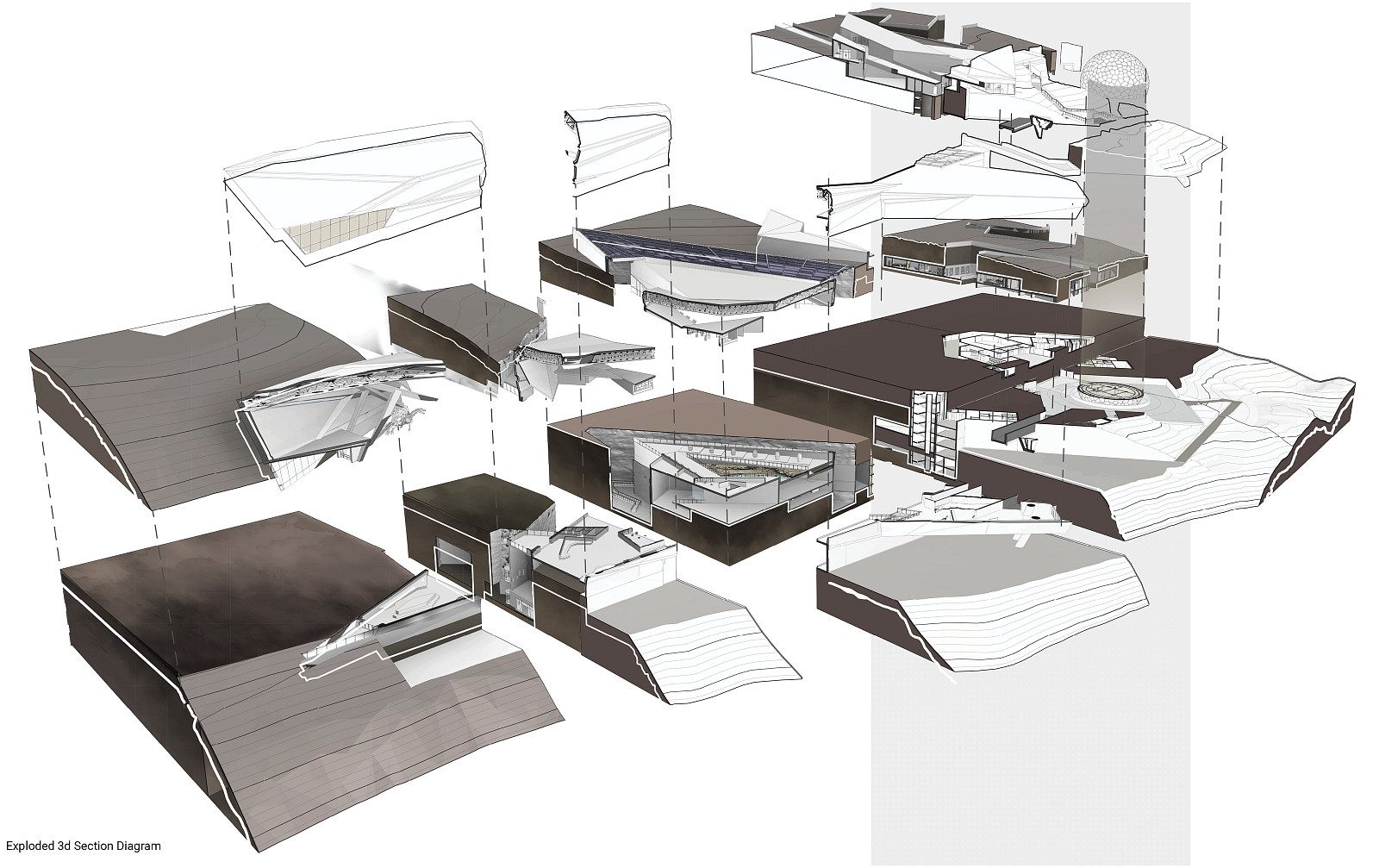
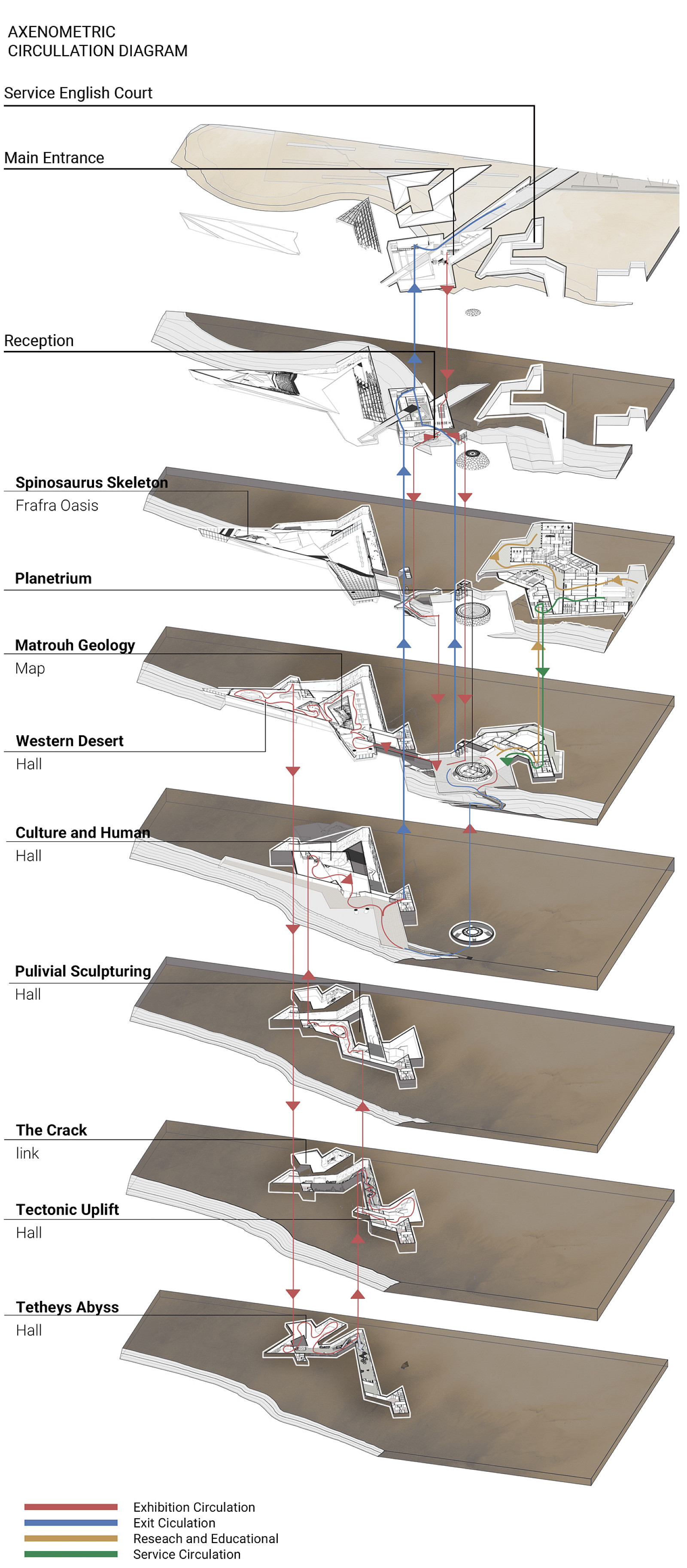
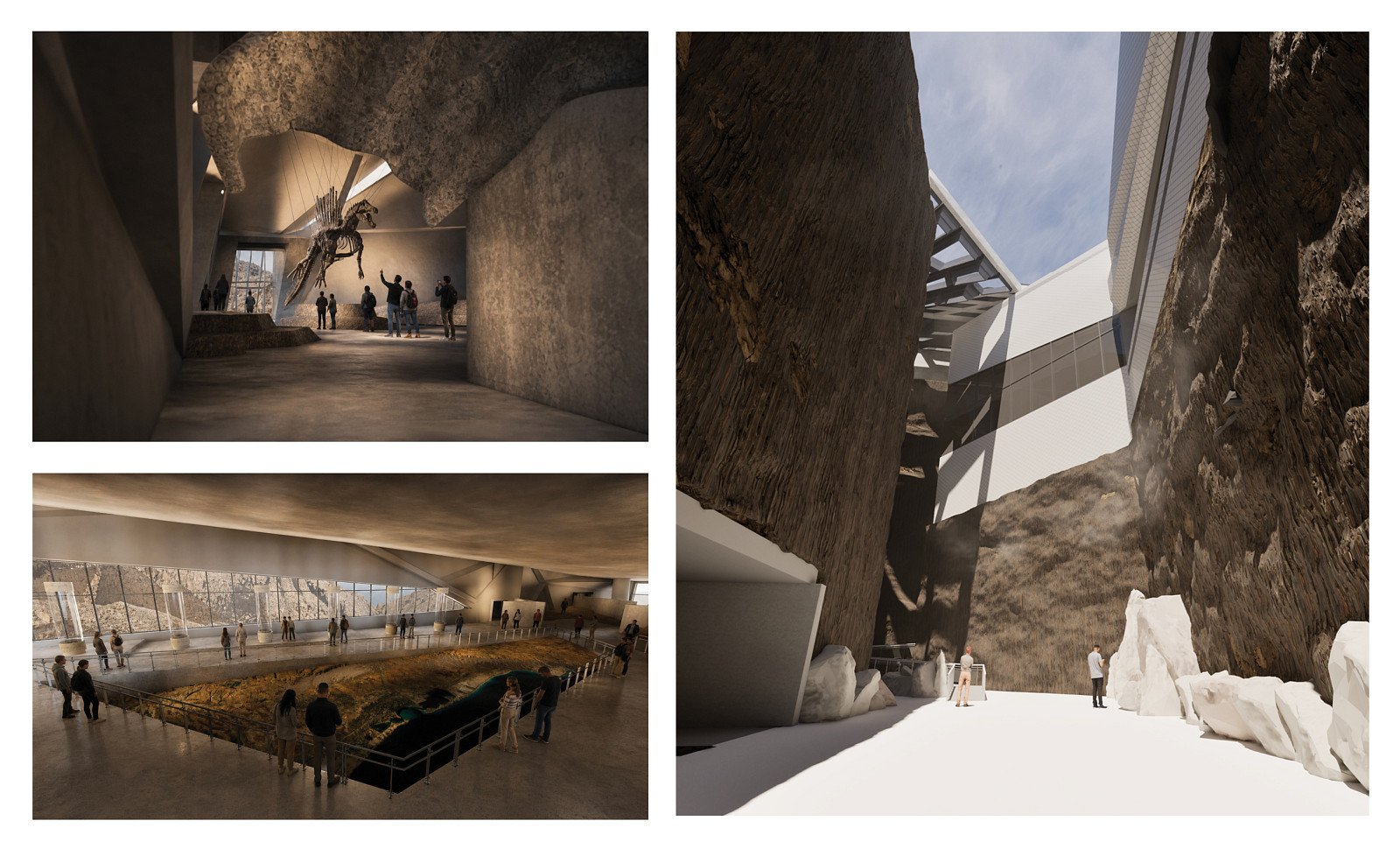
The Macro Context: The experience begins at the highest point with a grand introductory hall showcasing the diverse ecosystems, flora, and prehistoric life of the broader Western Desert.
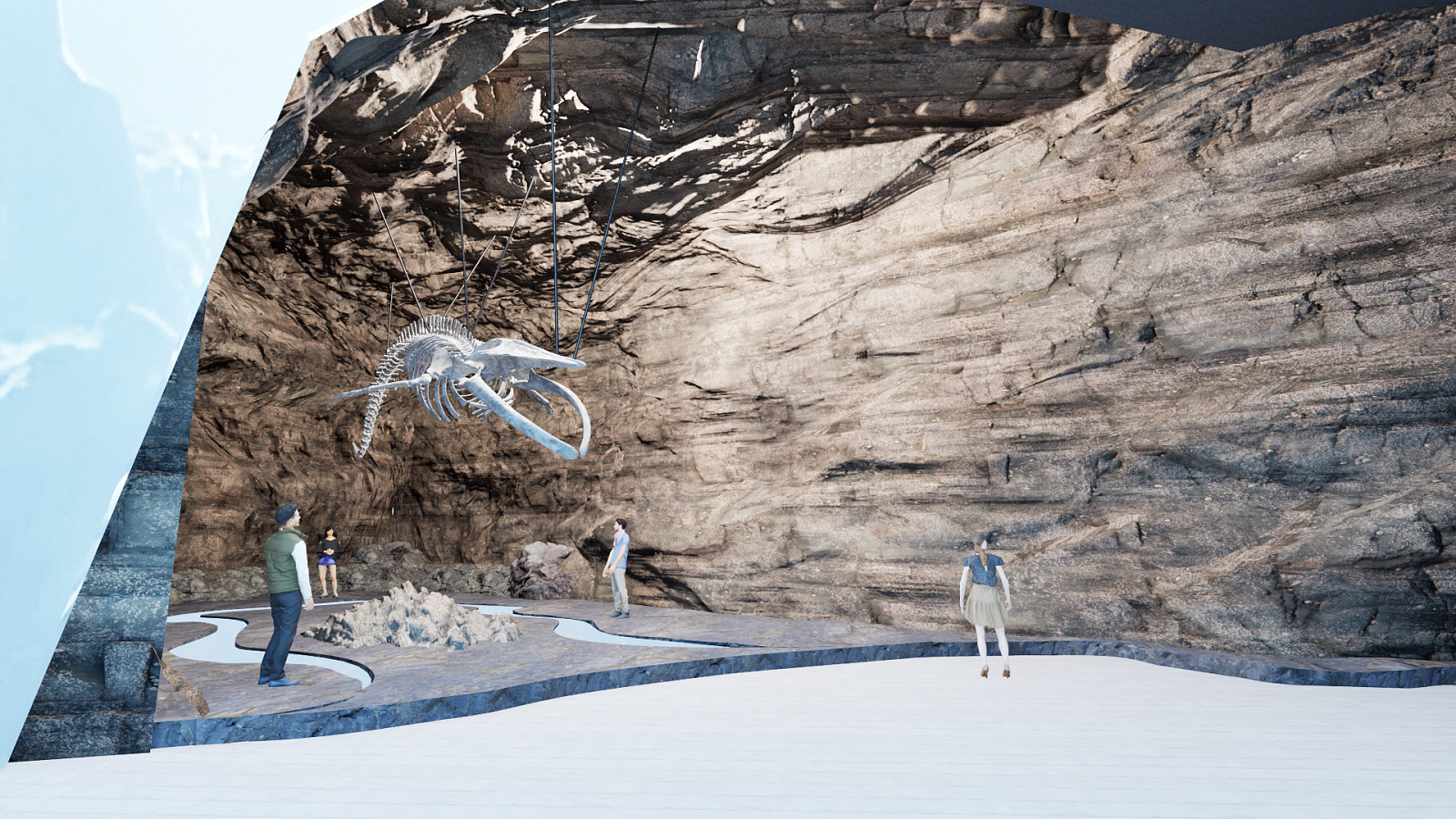
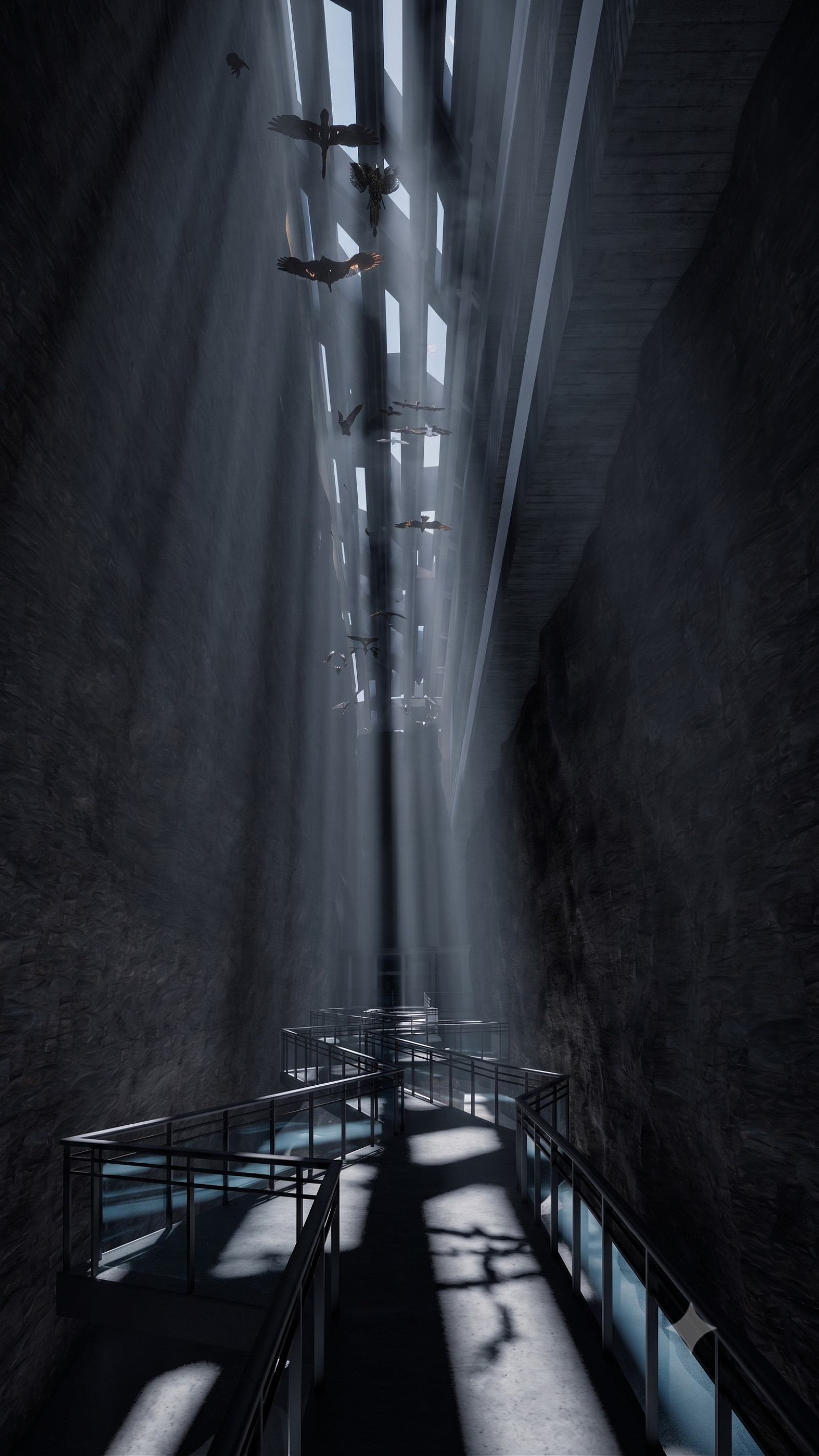
The Descent into Deep Time: Visitors travel 15 meters down through exposed bedrock into a subterranean cave that uses sensory effects to recreate the primordial, underwater world of the Tethys Sea.
Geological Forces: The path moves through fractured, narrow corridors that simulate violent tectonic uplifts, transitioning into smooth, curvilinear spaces that illustrate the shaping power of water and erosion.
Human Memory: As visitors begin their ascent, the architecture becomes warmer and more intimate, focusing on the survival, culture, and eventual migration of the local Bedouin communities.
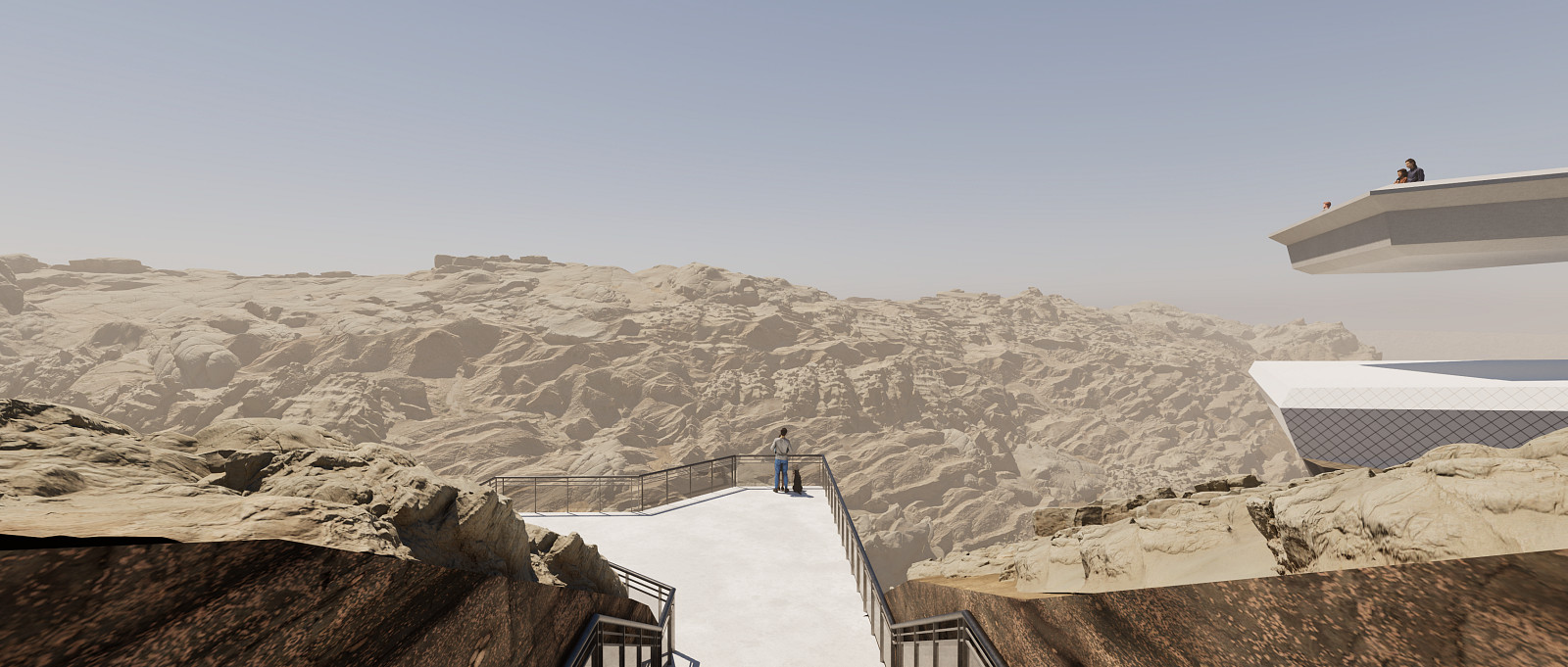
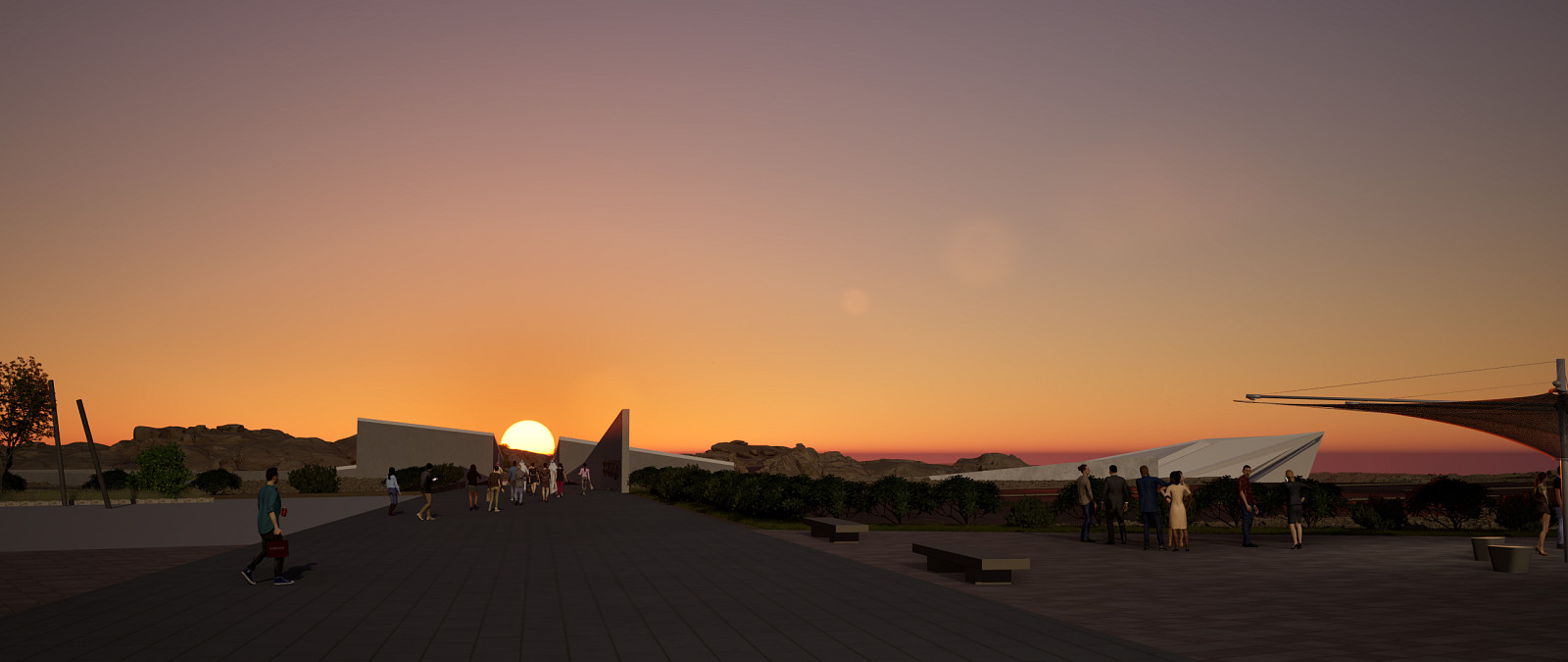
The Culmination: The chronological journey ends back at the surface on an open-air, media-free viewing platform. Here, visitors emerge with a transformed perspective, viewing the actual, unmediated Aqara Valley as the final living artifact.
Technical information
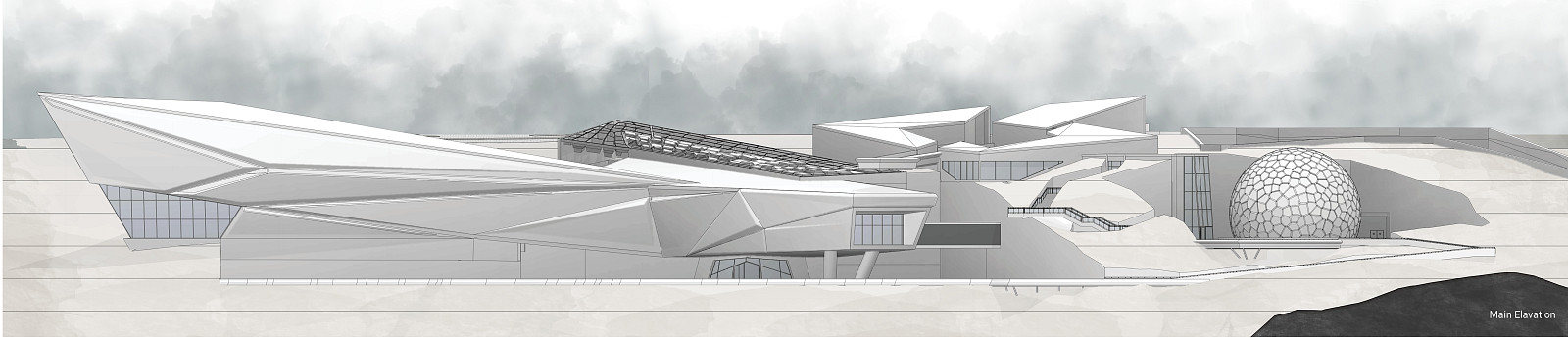
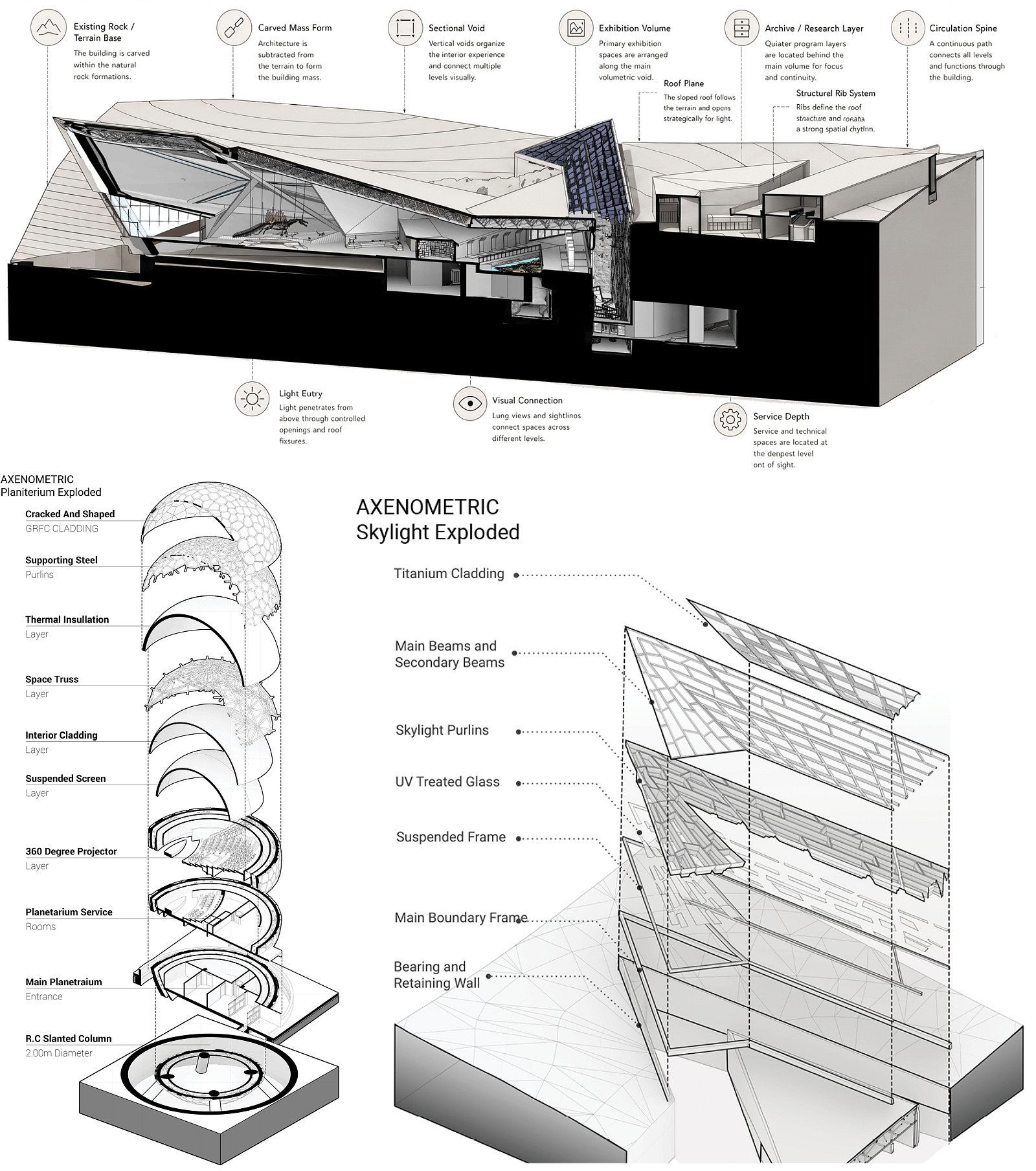
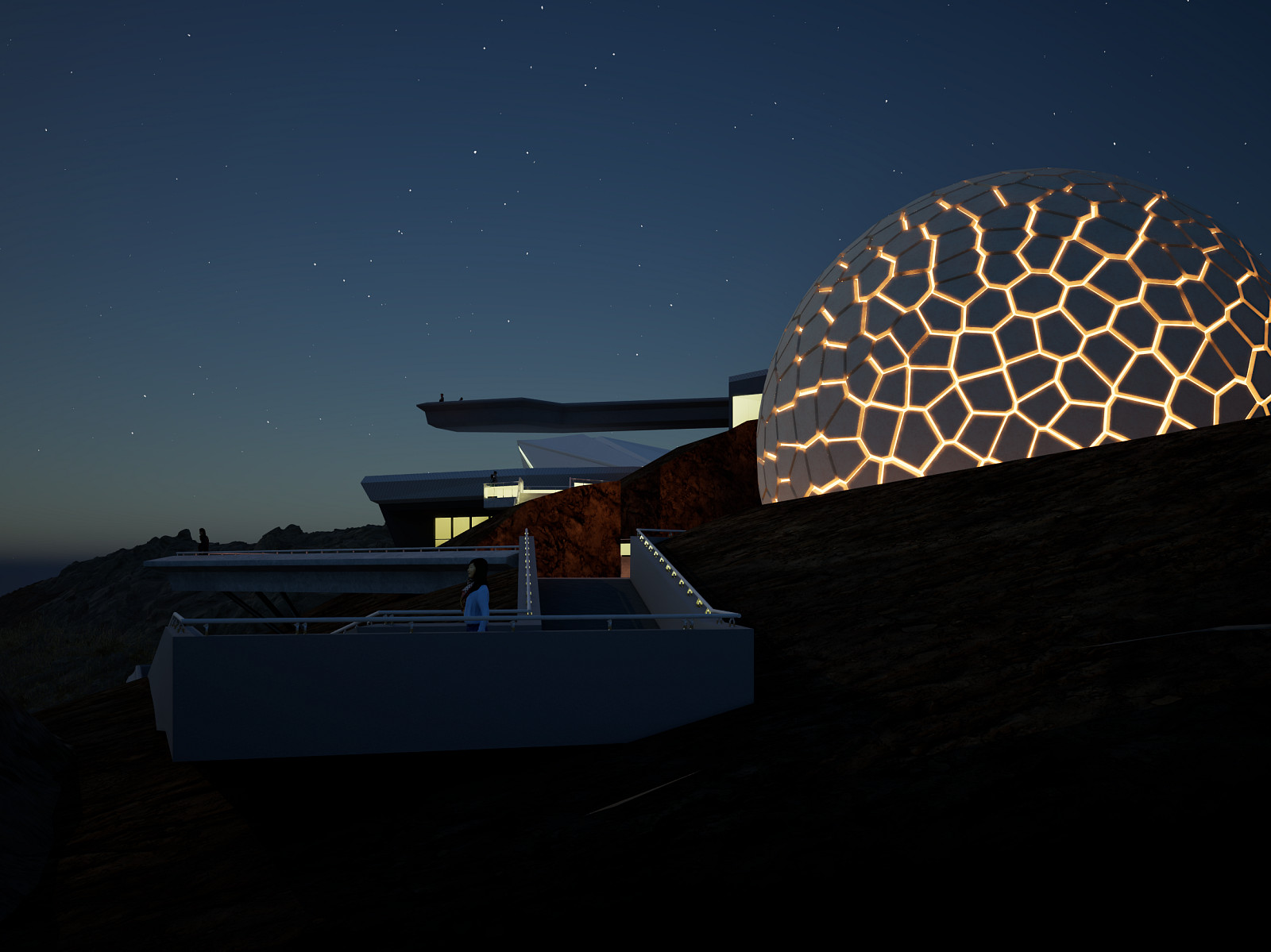
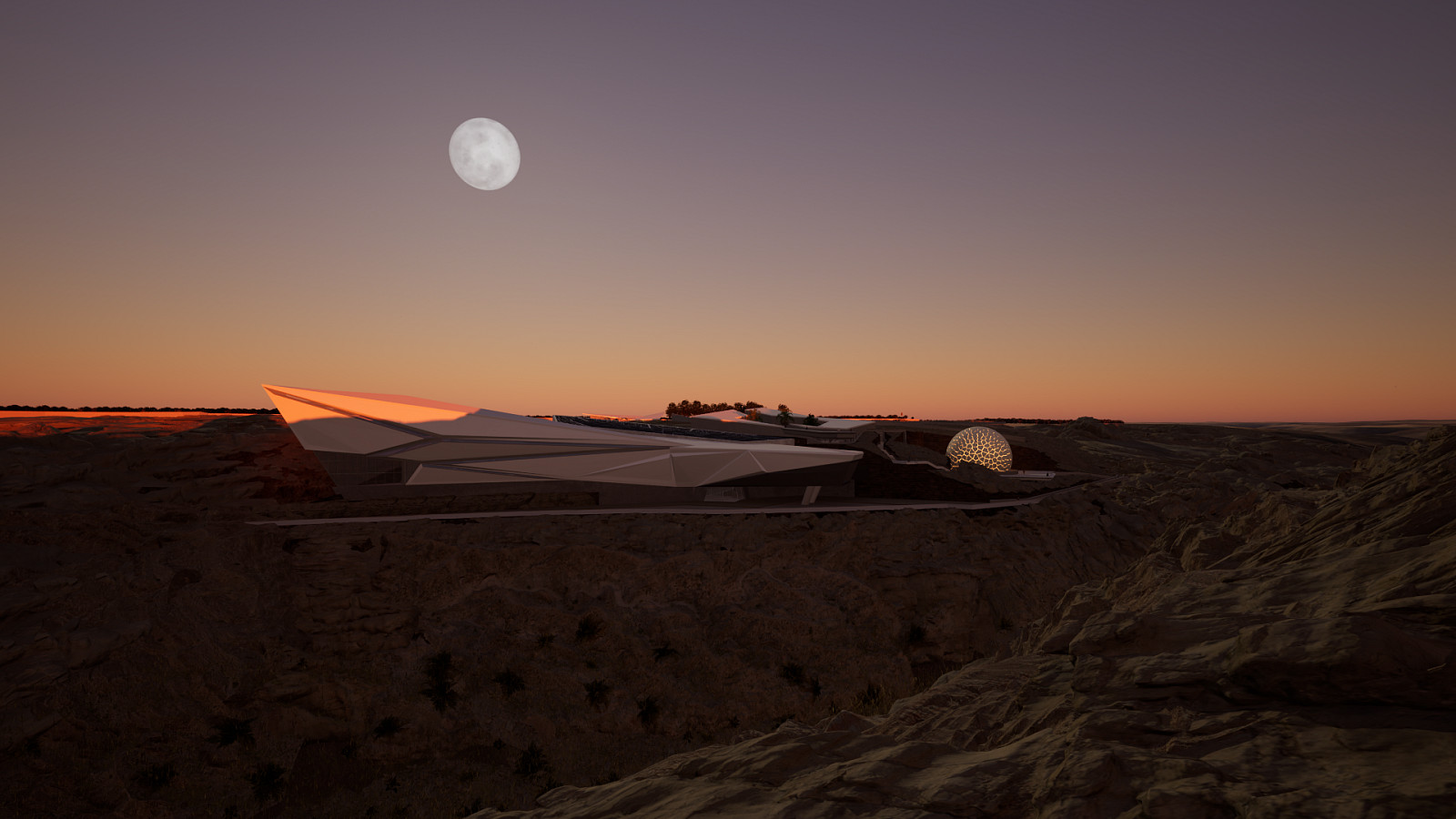
The construction of the project utilises a hybrid approach, combining deep landscape integration with a bold, additive superstructure. The architecture acts as a visual extension of geological forces, featuring highly angular forms that overlook the valley.
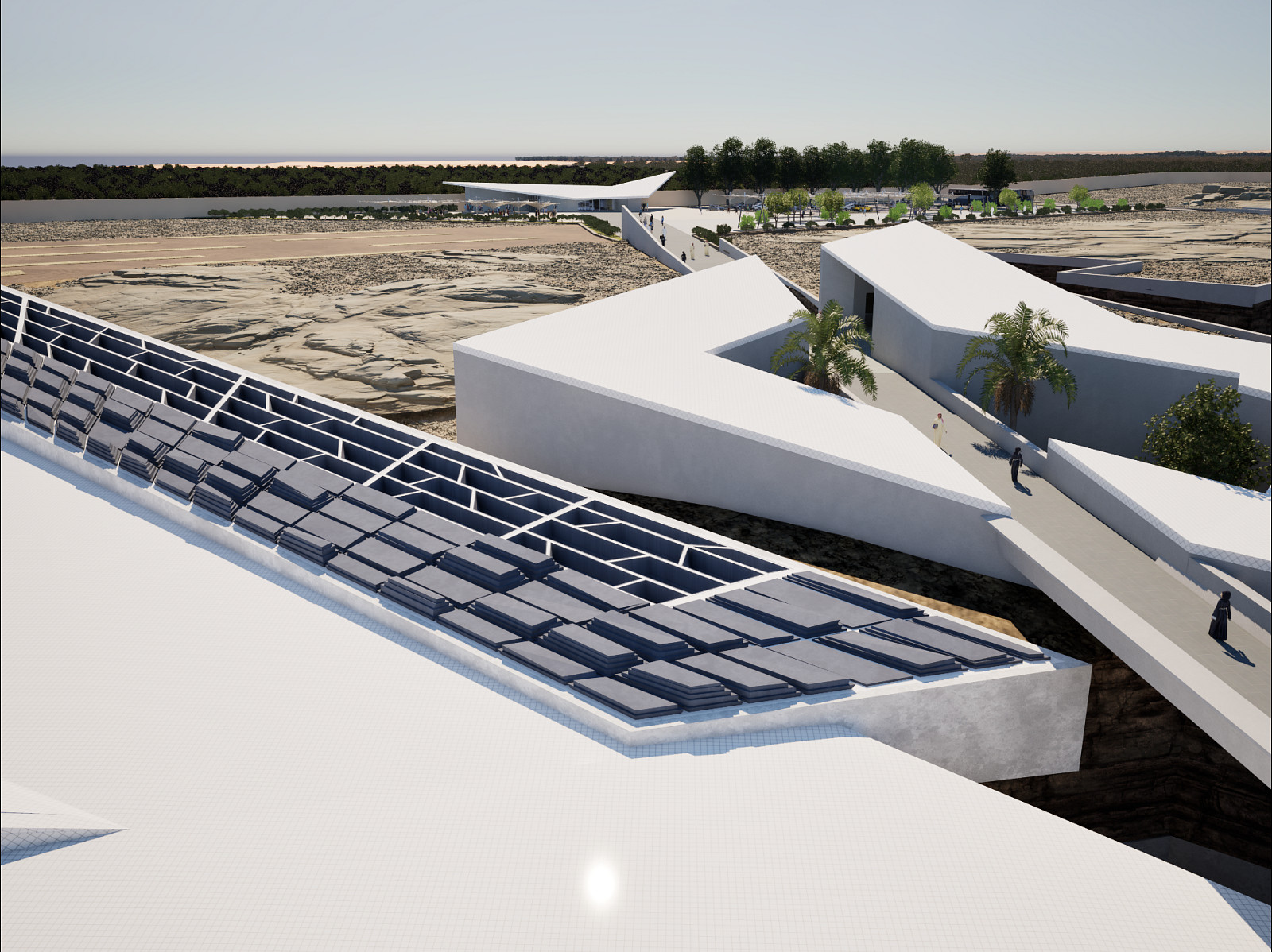
The primary building is defined by a dramatic, faceted, shard-like canopy designed to mimic shifting tectonic plates. The superstructure is clad in lightweight, high-albedo white panels to naturally reflect the harsh desert sun and reduce cooling loads.
The angular volumes rest upon a heavy, earth-toned podium. This base is constructed using reinforced concrete and natural stone, anchored directly into the cliffside to visually and structurally merge with the existing limestone bedrock of the valley.

Copyright © 2026 INSPIRELI | All rights reserved. Use of this website signifies your agreement to the Terms of Use, Privacy Policy, and use of cookies.