Living Threads


Project idea
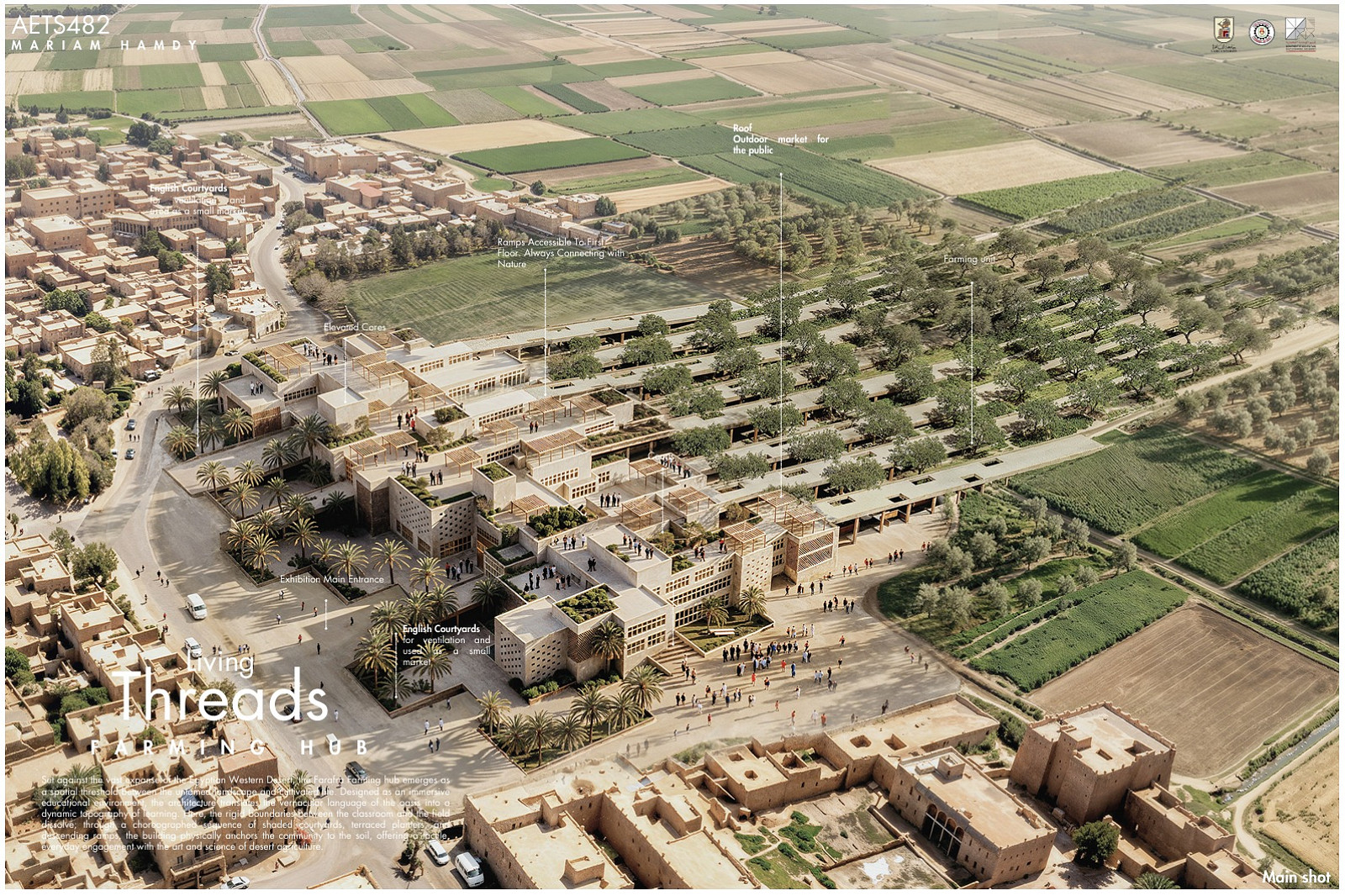
Living Threads is a farming hub in El-Farafra Oasis, Western Desert, Egypt. The project responds to the area’s water scarcity, soil salinity, and dependence on non-renewable groundwater by creating an educational and community-based agricultural center. Its idea is to connect people, farming, research, and the oasis landscape through shaded courtyards, ramps, planted strips, and open market spaces, making architecture a direct extension of the land.
Project description
The project includes agricultural learning spaces, experimental fields, water and soil testing labs, vertical farming labs, workshops, exhibition areas, library, coworking spaces, rooftop market, cafés, shops, shaded courtyards, and community gathering zones. The design is organized around a linear agricultural grid inspired by Farafra’s fields and vernacular urban fabric, with ramps and planted connectors linking the ground level to the roof and keeping users connected to nature.
Technical information
The building uses thick stone/limestone plaster masses, perforated stone screens, recessed glazing, shaded courtyards, timber pergolas, corten steel planter edges, and dense native planting such as palms and olive trees. These materials and systems are suitable for the desert context because they reduce heat gain, provide shade and ventilation, improve microclimate, support water efficiency, and create durable, low-maintenance architecture rooted in the Farafra landscape.
Documentation

Copyright © 2026 INSPIRELI | All rights reserved. Use of this website signifies your agreement to the Terms of Use, Privacy Policy, and use of cookies.
