Bloom Line


Project idea
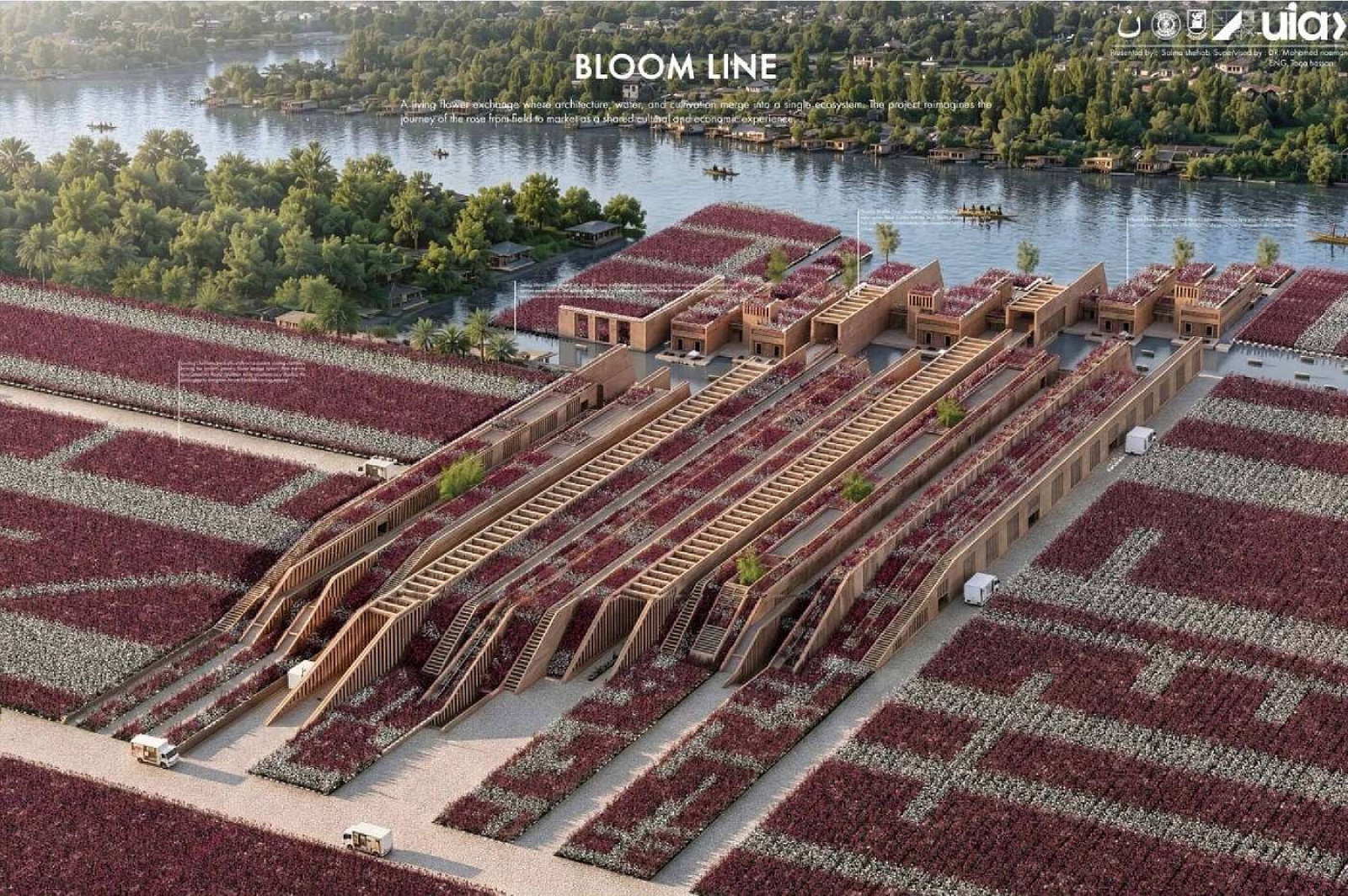
The project proposes a specialized rose trade and processing hub in Kashmir that protects the existing agricultural landscape while transforming it into a productive, cultural, and economic destination. The main idea is to support rose farmers by reducing post-harvest losses, improving flower handling, and creating a direct connection between cultivation, trade, storage, and visitors’ experience. Instead of replacing the rose fields with buildings, the project works with the land, using architecture as a light intervention that organizes movement, cooling, trading, and awareness around the value of Kashmir’s rose industry.
Project description
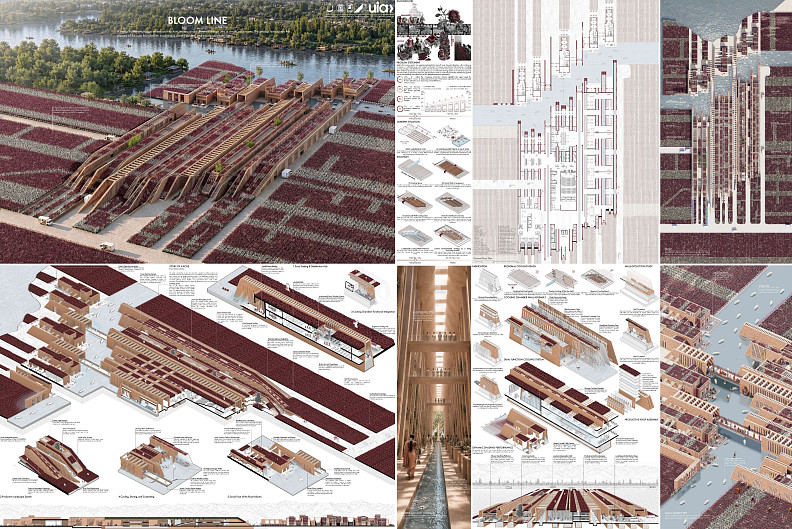
The project is designed as an integrated rose market and agricultural center that includes a main auction hall, small trading halls, local stalls, cold storage areas, packaging and sorting zones, trade services, research and awareness spaces, and a floating market connected to the surrounding landscape. The journey of the rose begins from the cultivated fields, moves through sorting and cooling, reaches auction and trade spaces, and finally extends to visitors through educational and sensory experiences. The design combines economic function with tourism and cultural identity, creating a place where farmers, traders, researchers, and visitors can interact within one continuous agricultural system.
Technical information
The project is located on a site of approximately 115,000 square meters, with around 80,000 square meters preserved for rose cultivation. The cold storage area covers about 7,500 square meters and is designed to support a handling capacity of nearly 33 tons of roses per day. The project aims to reduce post-harvest losses from around 40% to nearly 10% by improving cooling, sorting, packaging, and distribution processes. Architecturally, the design uses terracotta walls, hollow brick, shaded circulation, water channels, planted roofs, and passive cooling strategies to respond to the climate. A shaded cooling spine organizes the main movement and helps extend the marketable life of the roses while maintaining a strong connection between architecture, agriculture, and landscape.
Documentation

Copyright © 2026 INSPIRELI | All rights reserved. Use of this website signifies your agreement to the Terms of Use, Privacy Policy, and use of cookies.
