

ROOTLINE

Project idea
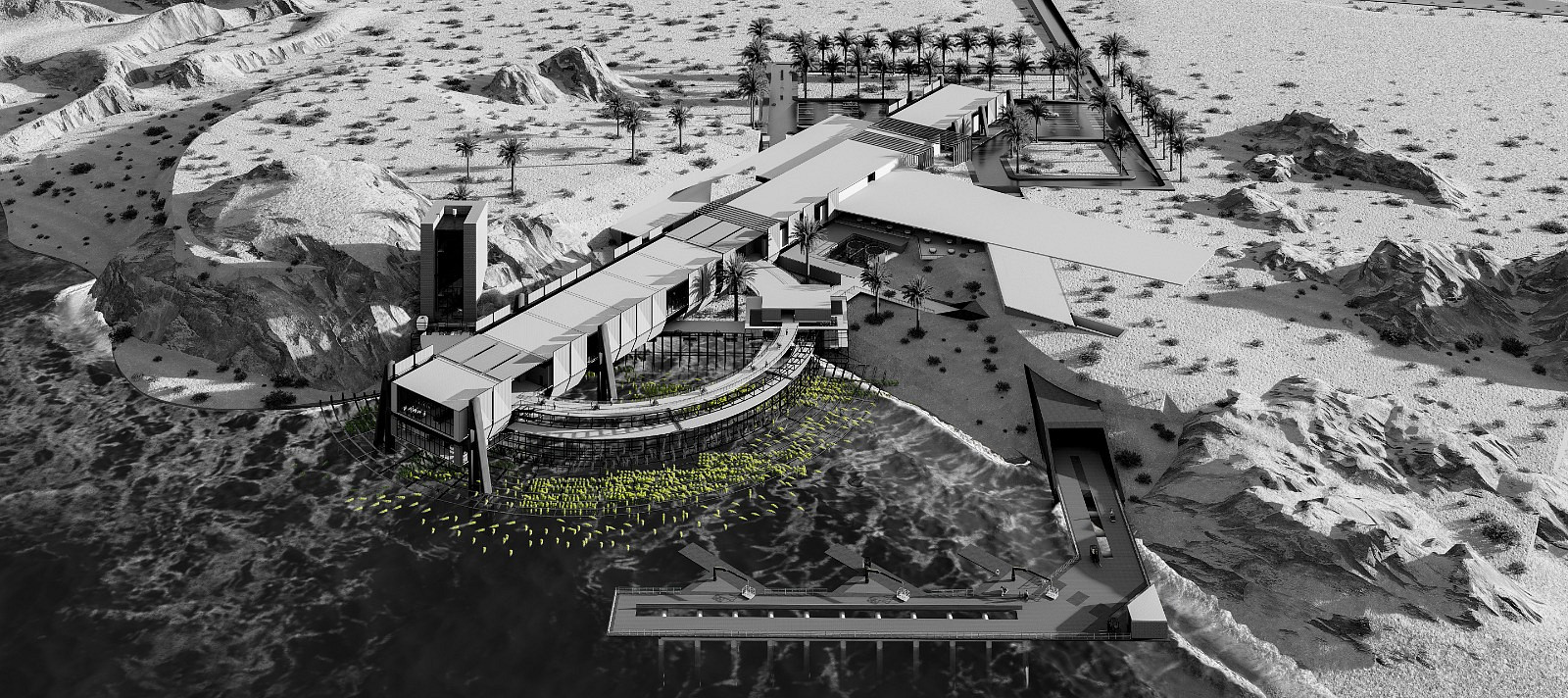
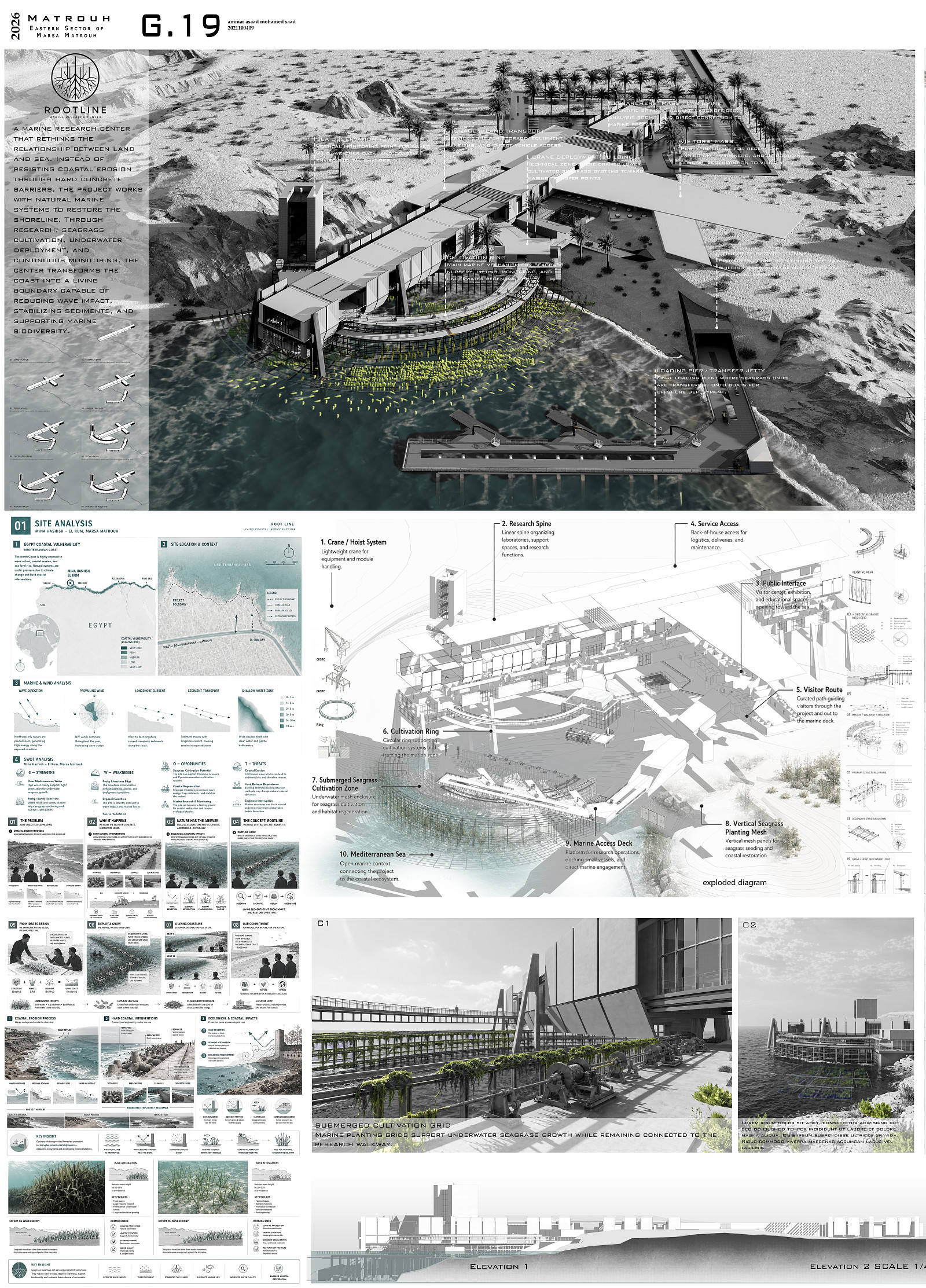
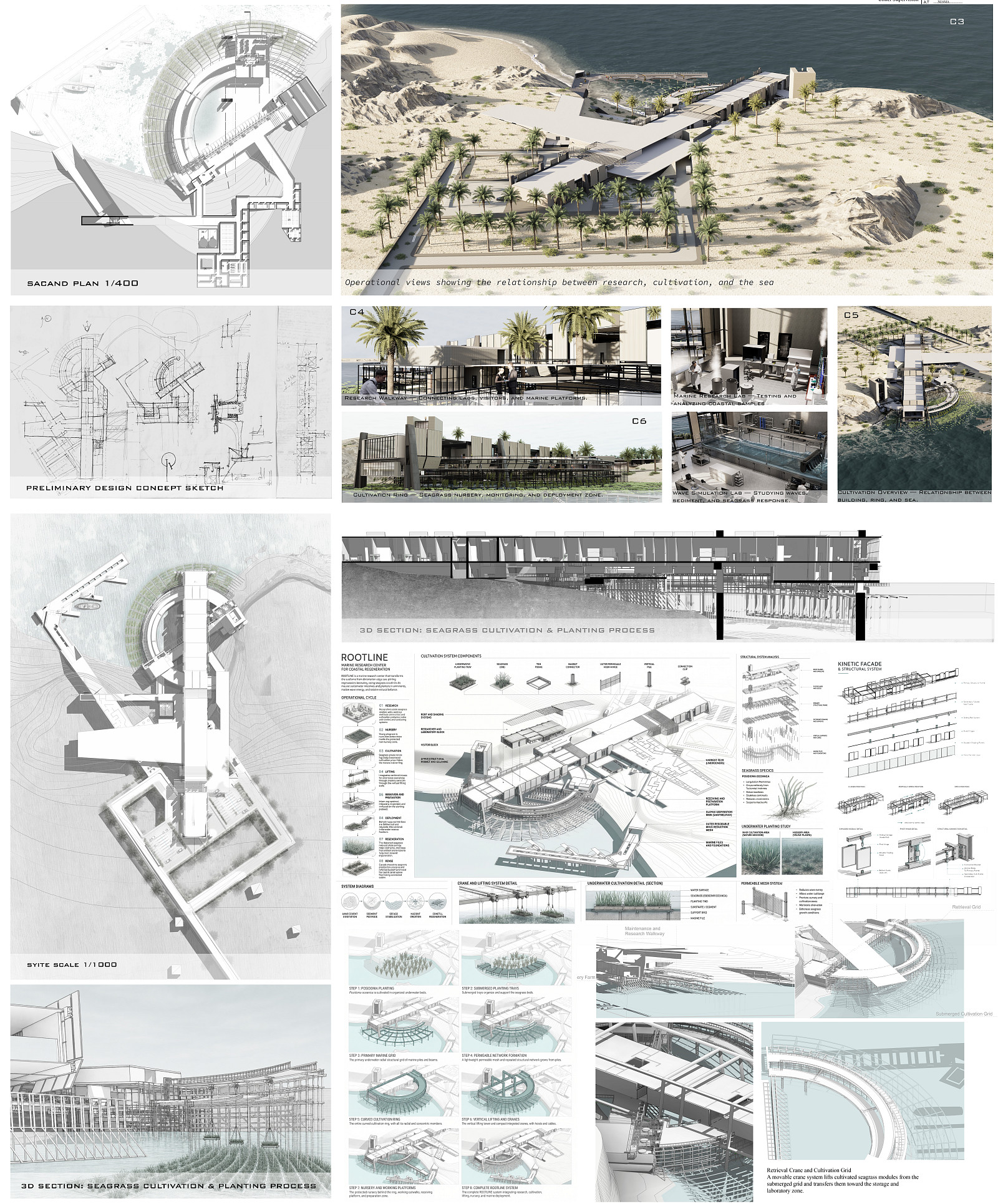
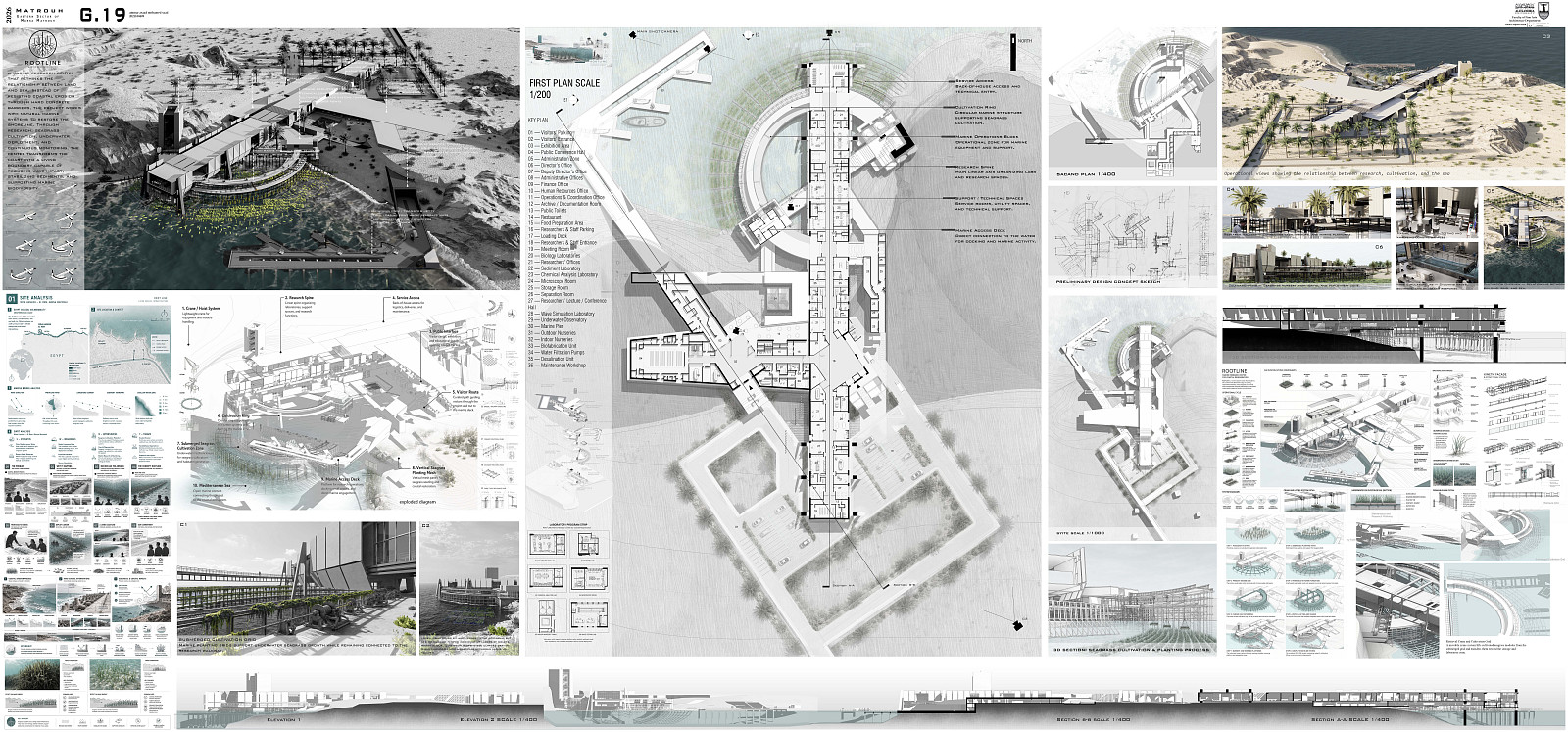
ROOTLINE is a Marine Research Center for Coastal Regeneration that challenges the traditional adversarial approach to coastal defense. For decades, hard engineering solutions such as concrete breakwaters, tetrapods, and rock barriers have been used to combat sea erosion. While offering temporary protection, these structures disconnect the sea from the land, prevent natural sediment flow, and create an endless battle with the ocean — particularly evident on Egypt’s vulnerable North Coast and Alexandria shoreline.
ROOTLINE proposes a paradigm shift: instead of fighting the sea, we learn from it. The project harnesses the natural power of marine vegetation and seagrass root systems, which function as a living infrastructure. These roots dissipate wave energy, trap sediment, stabilize the seabed, reduce erosion, and support rich marine ecosystems.
The name ROOTLINE combines “ROOT” (the living root systems that anchor the coast) and “LINE” (the coastline), symbolizing a dynamic, growing living boundary rather than a rigid wall.
Project description
ROOTLINE operates as a complete living ecological machine with a closed-loop system. It integrates research, cultivation, deployment, and resource recovery to regenerate eroding coastlines through nature-based solutions.
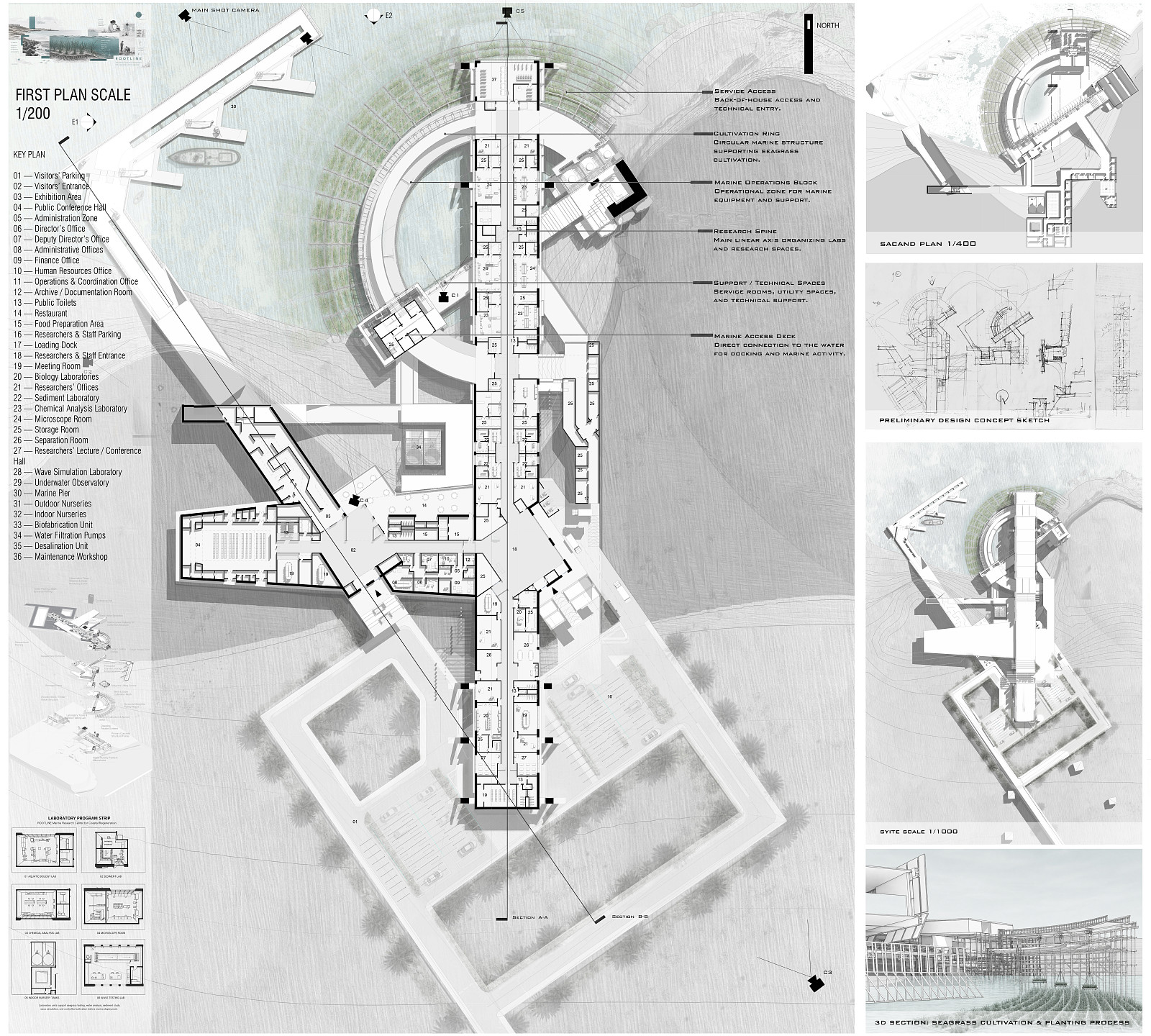
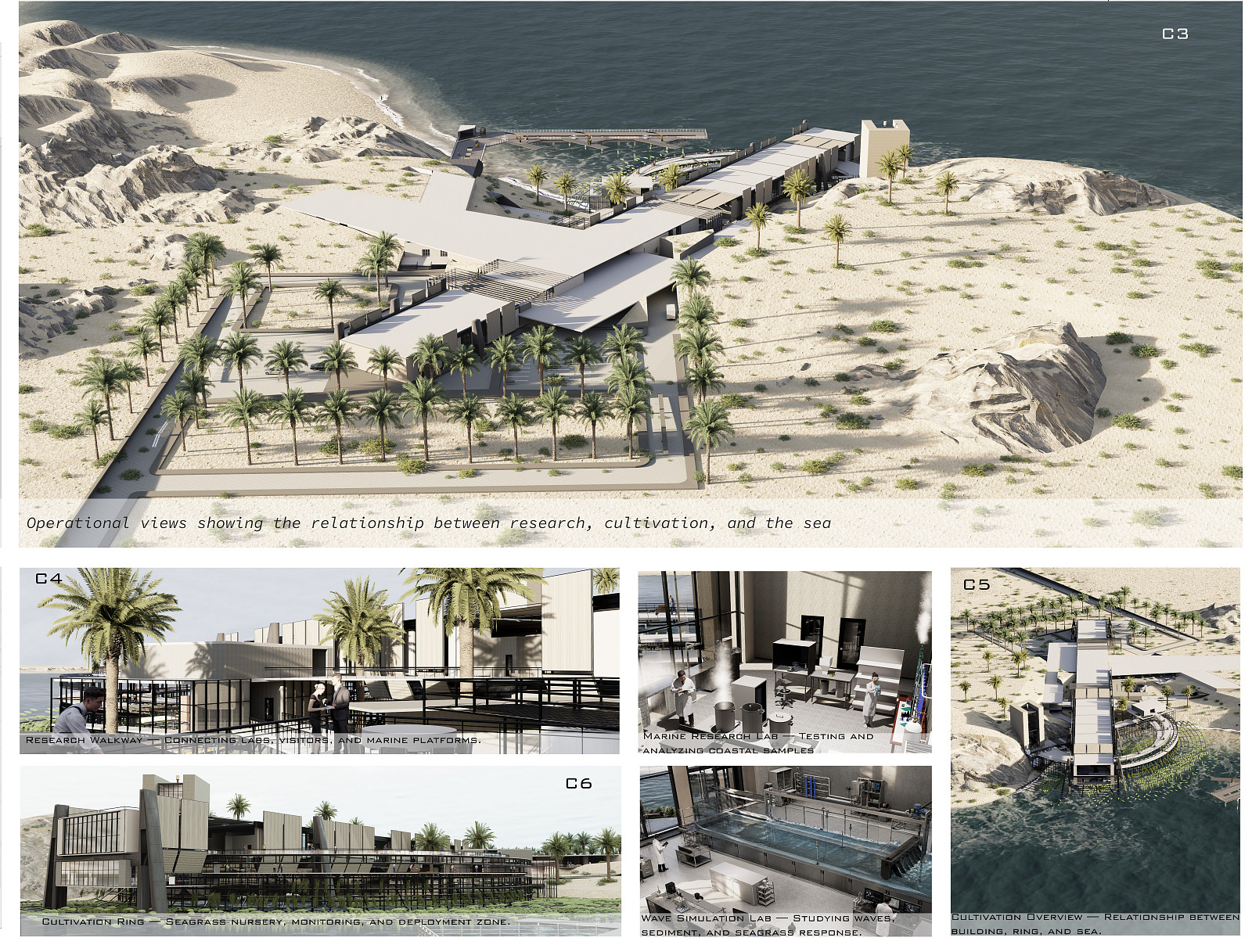
The center conducts advanced research on marine plant species, identifying optimal varieties for different coastal conditions. In controlled marine laboratories and experimental tanks, plants are cultivated and tested before being transferred to underwater cultivation networks. Once proven, these living systems are deployed to high-risk erosion zones, actively restoring and protecting the shoreline.
Beyond protection, the project adopts a circular economy model: harvested marine biomass is transformed into biobased construction materials, insulation, biofuel, and other sustainable products — ensuring zero waste.
The architecture itself is biomimetic, with forms inspired by root systems and water movement. The building emerges organically from the land, with branching circulation paths and fluid spaces that extend into the sea, declaring that the structure is part of the ecosystem rather than a foreign object imposed upon it.
ROOTLINE is not merely a research center — it is a prototype for the future of coastal protection: living, adaptive, and regenerative.
Technical information
Program: Marine research laboratories, controlled cultivation tanks, underwater farming networks, biomass processing facilities, exhibition/educational spaces, and administrative headquarters.
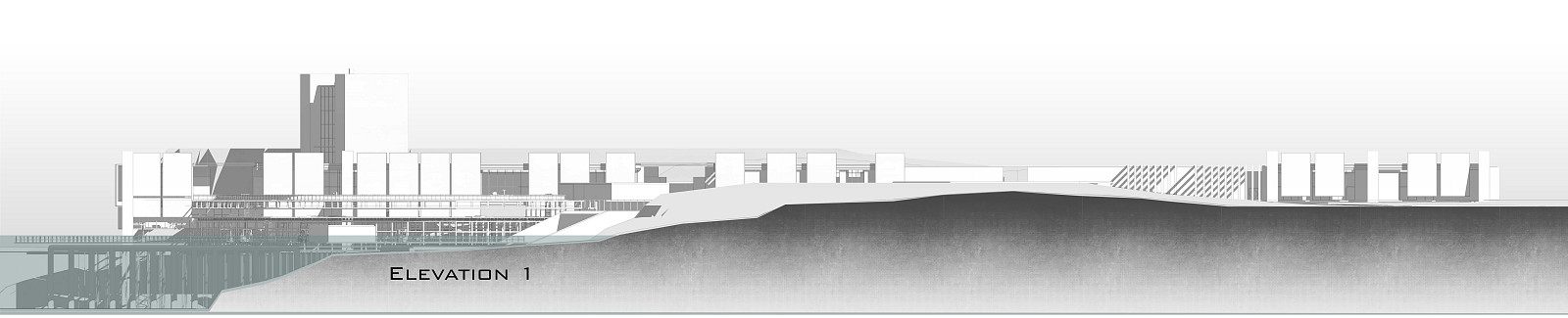
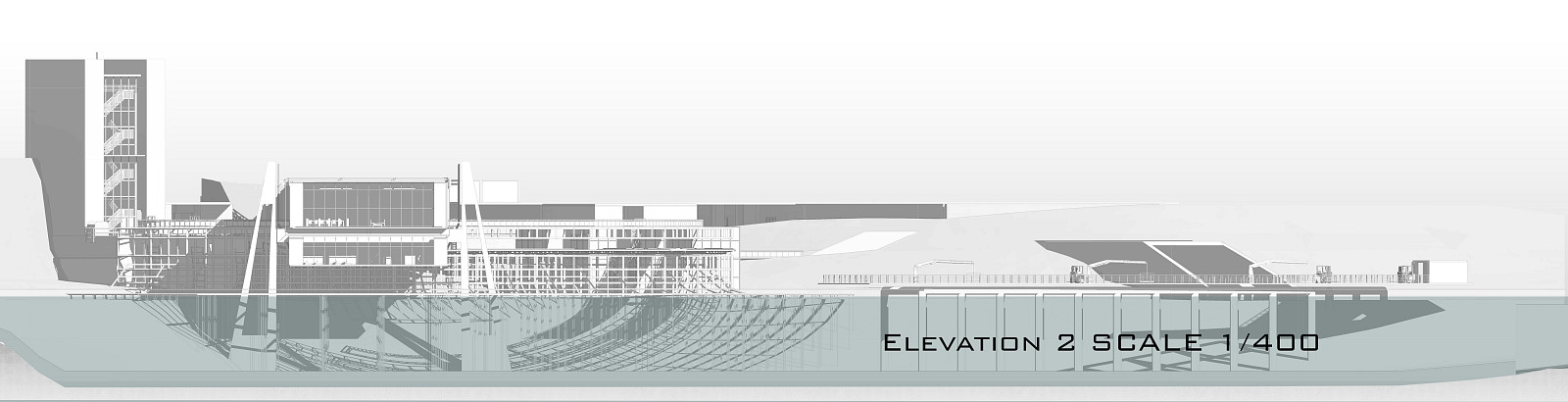
Site Integration: The building physically engages with the shoreline and extends into the sea, creating a transitional landscape between land and water.
Sustainable Systems: Biomimetic design principles, living shoreline systems using seagrass and marine vegetation, circular biomass utilization, passive environmental control through organic forms, and integration of renewable energy sources.
Construction Approach: Hybrid construction combining conventional structural systems with experimental biobased materials derived from project-grown marine vegetation.
Scalability: The research outcomes and living protection systems are designed for replication across different coastal typologies in the Mediterranean and beyond.

Copyright © 2026 INSPIRELI | All rights reserved. Use of this website signifies your agreement to the Terms of Use, Privacy Policy, and use of cookies.