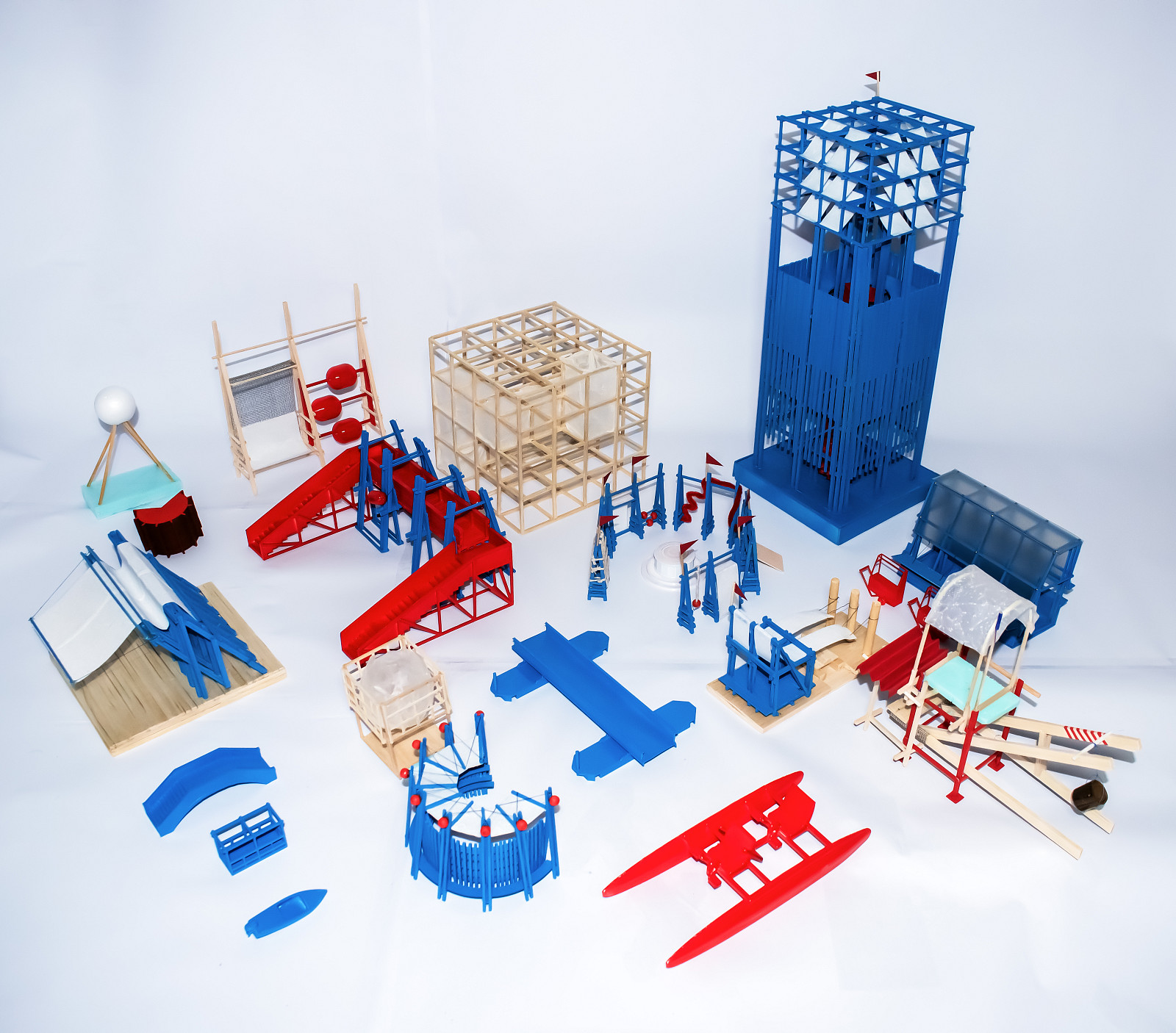
8+1 structures in Venice


Project idea
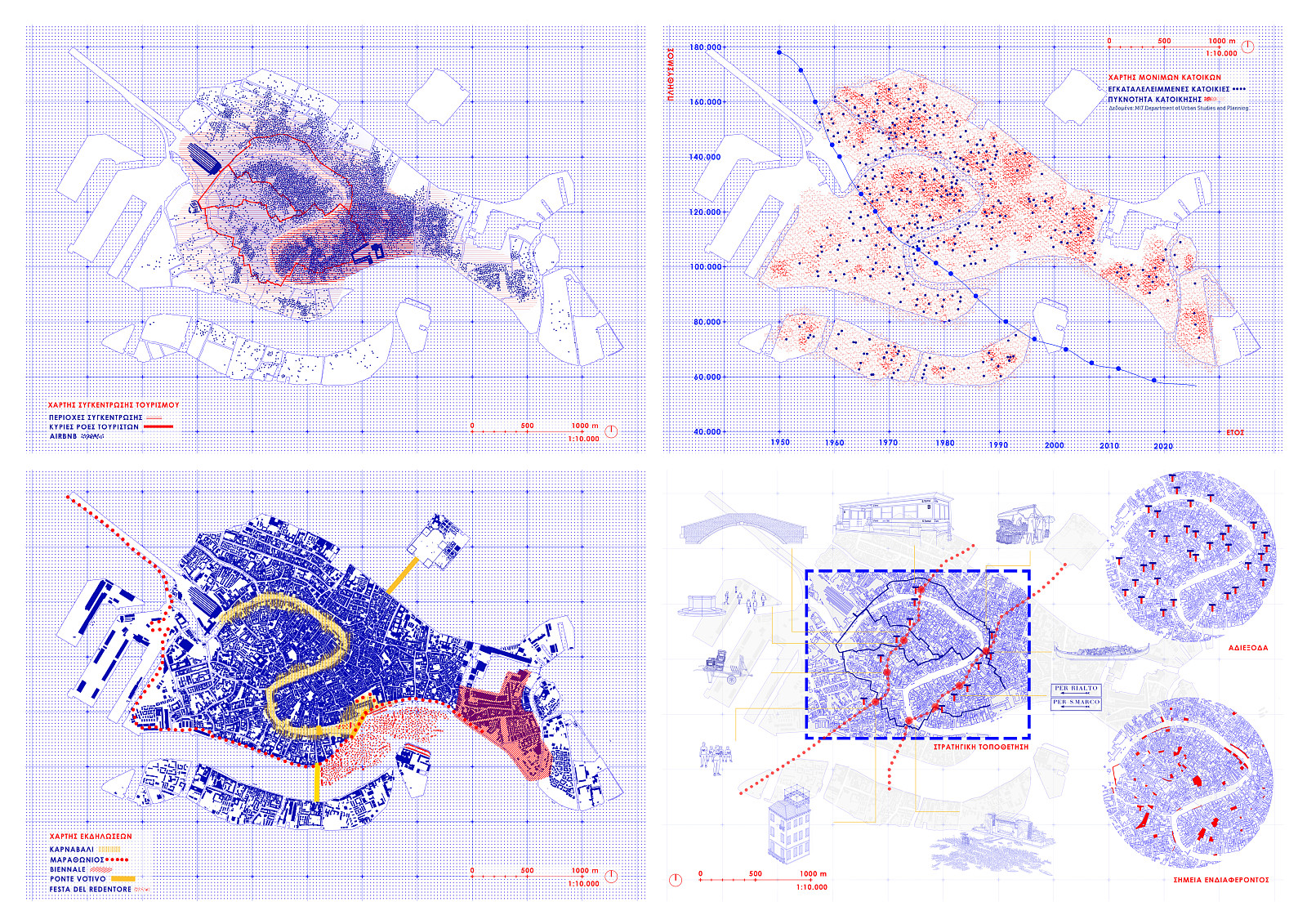
This diploma thesis is situated in Venice, approaching the city as an organism striving to reclaim its vital space against the backdrop of mass tourism saturation. The central objective is to transform the city from a static exhibit into a dynamic field of collective events that encompass both the permanent resident and the visitor. Through the mapping of spatial data and demographic elements, the need for new zones of diffusion was identified, extending beyond the established movement axes that lead only toward St. Mark's Square.
Project description
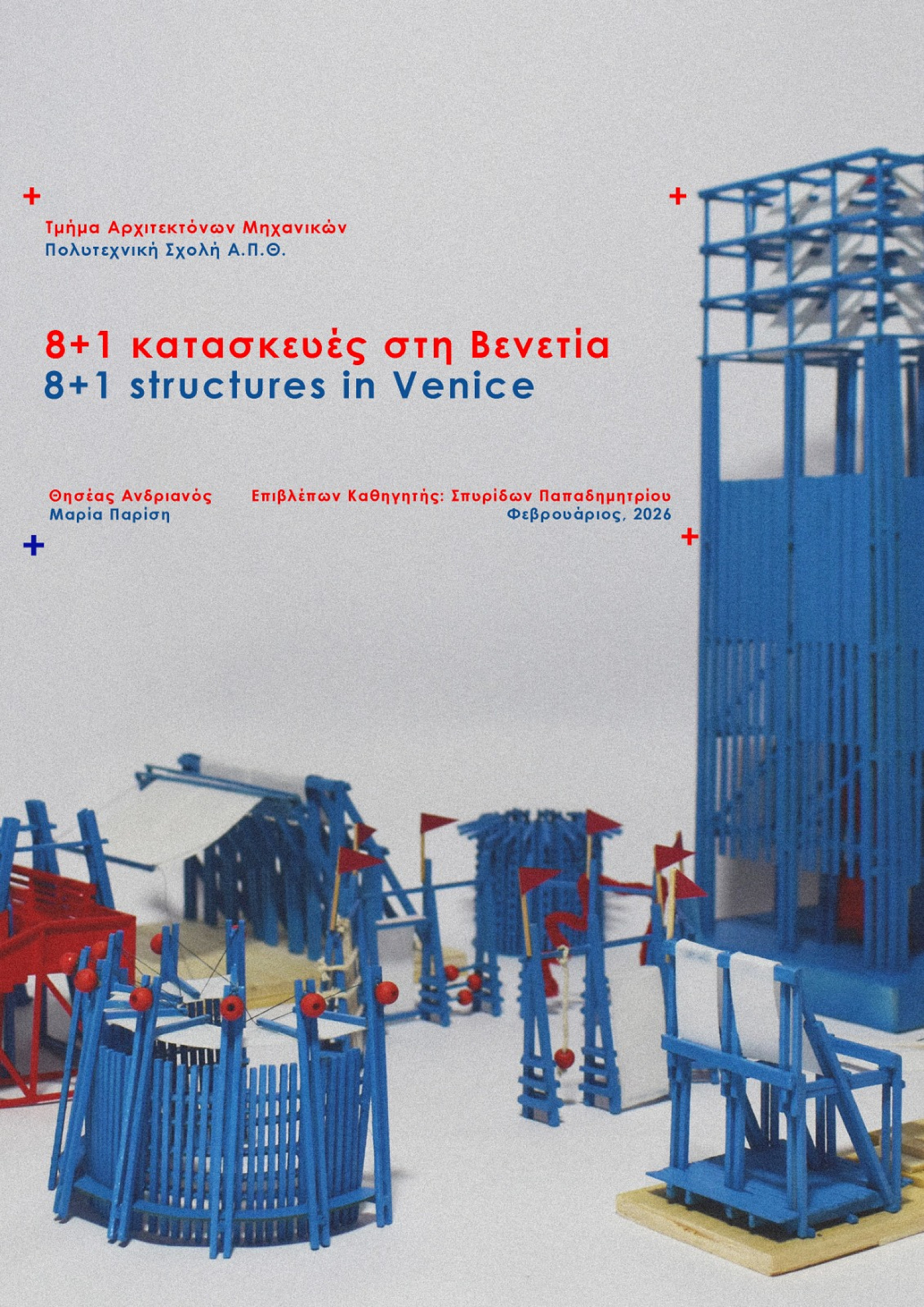
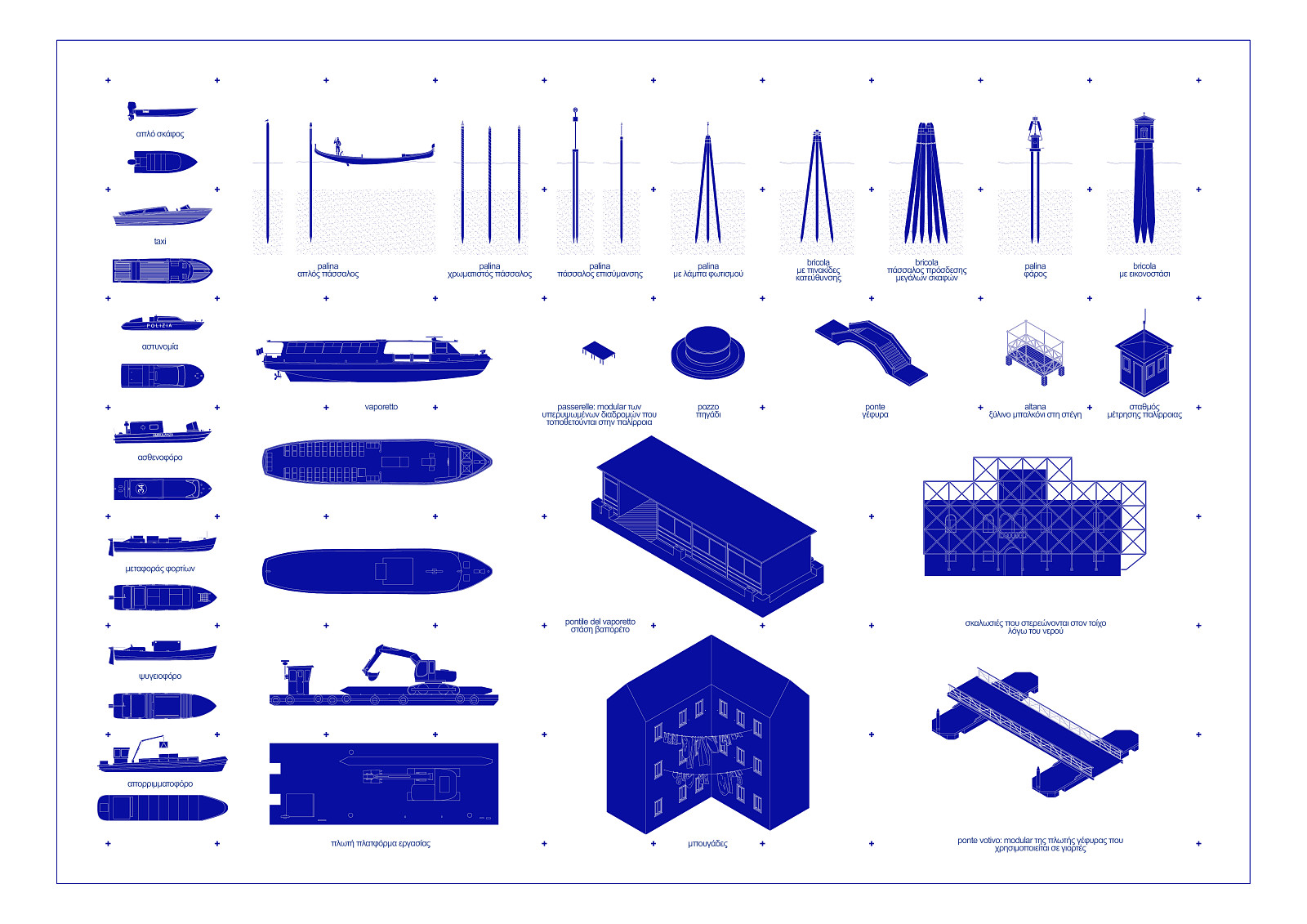
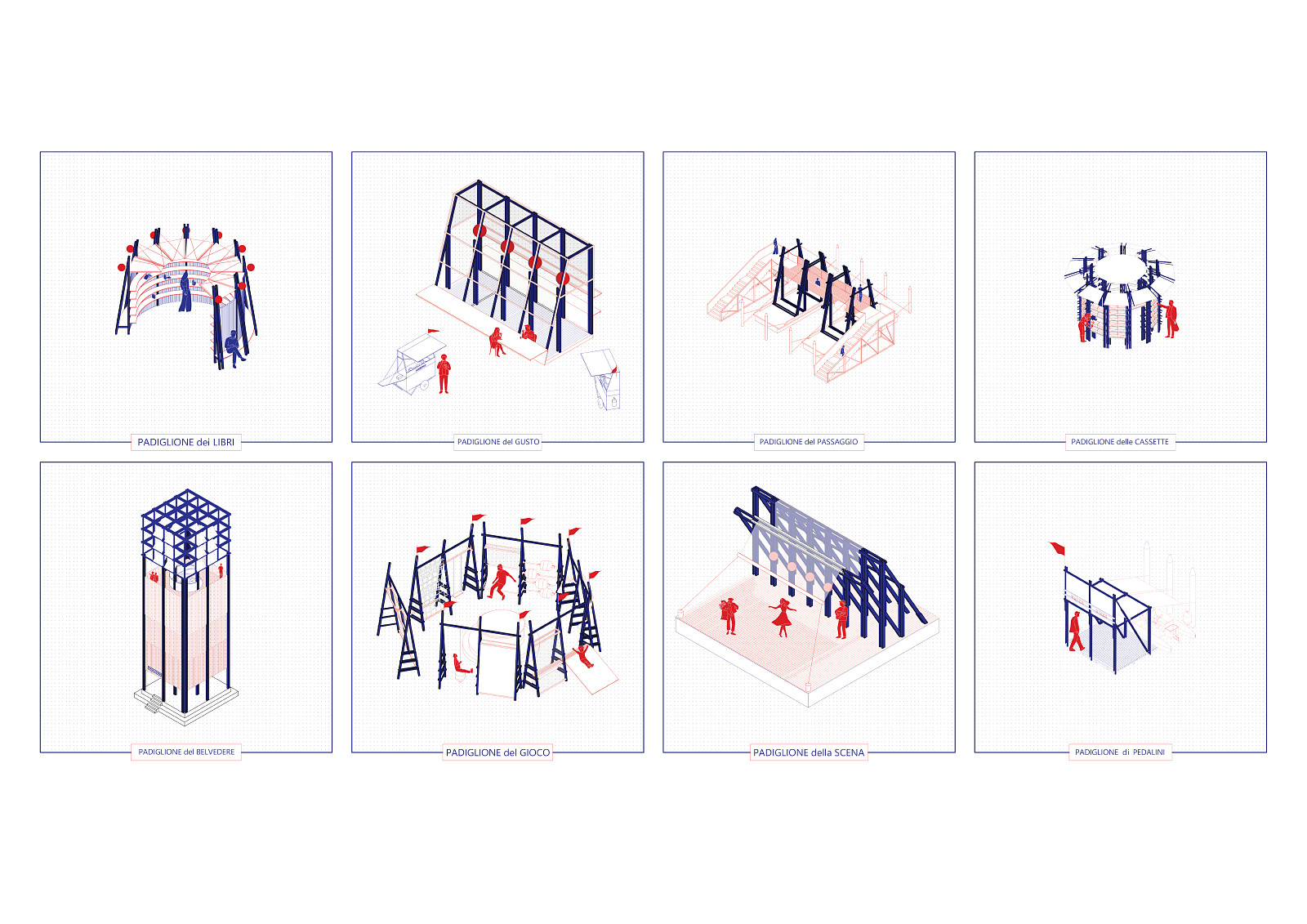
The design develops a network of eight ephemeral constructions which act as active urban tools to redefine user navigation within the city. The design process draws inspiration from the Venetian way of life, where daily life is closely linked to the water. The proposal adopts the shape and form of the many objects that replace conventional land-based transport, highlighting types of structures created from the city's floating nature. The ephemeral character of these units does not put a burden on the permanent buildings, but makes them flexible tools that appear and are removed according to evolving needs. Each unit is conceived as a targeted spatial response to specific urban requirements, where the void of a square around a traditional well is reconfigured into spaces for play and performance, while the need for social interaction and dining is met by mobile units and rest areas. The local market is reinforced with supportive kiosks, and cultural life is enriched through outdoor libraries, reading rooms, and observatories. Simultaneously, certain constructions function as connective elements within the urban fabric, taking the form of temporary bridges that restore pedestrian continuity across canals or water-bike stations acting as alternative means of circulation at dead-ends.
Technical information
In terms of composition, the units are based on the repetition of wooden structural frames, ensuring ease of construction, transport, and replication. A pivotal feature of the proposal is their double nature, as they are stationed firmly within squares or dead-ends while retaining the ability to be repositioned and float on water. Through this flexibility, the concept of the "plus one" emerges, where the eight autonomous constructions possess the inherent capacity to combine, transform, and multiply, generating new urban conditions. In this way, the network is transformed into a versatile mechanism of collective experience that reclaims the public space of Venice.

Copyright © 2026 INSPIRELI | All rights reserved. Use of this website signifies your agreement to the Terms of Use, Privacy Policy, and use of cookies.
