DAFFAH The Living Heart of NILE Preserving the Symbolic Image of the Nile through Culture, Crafts, Archaeology, and Community


Project idea
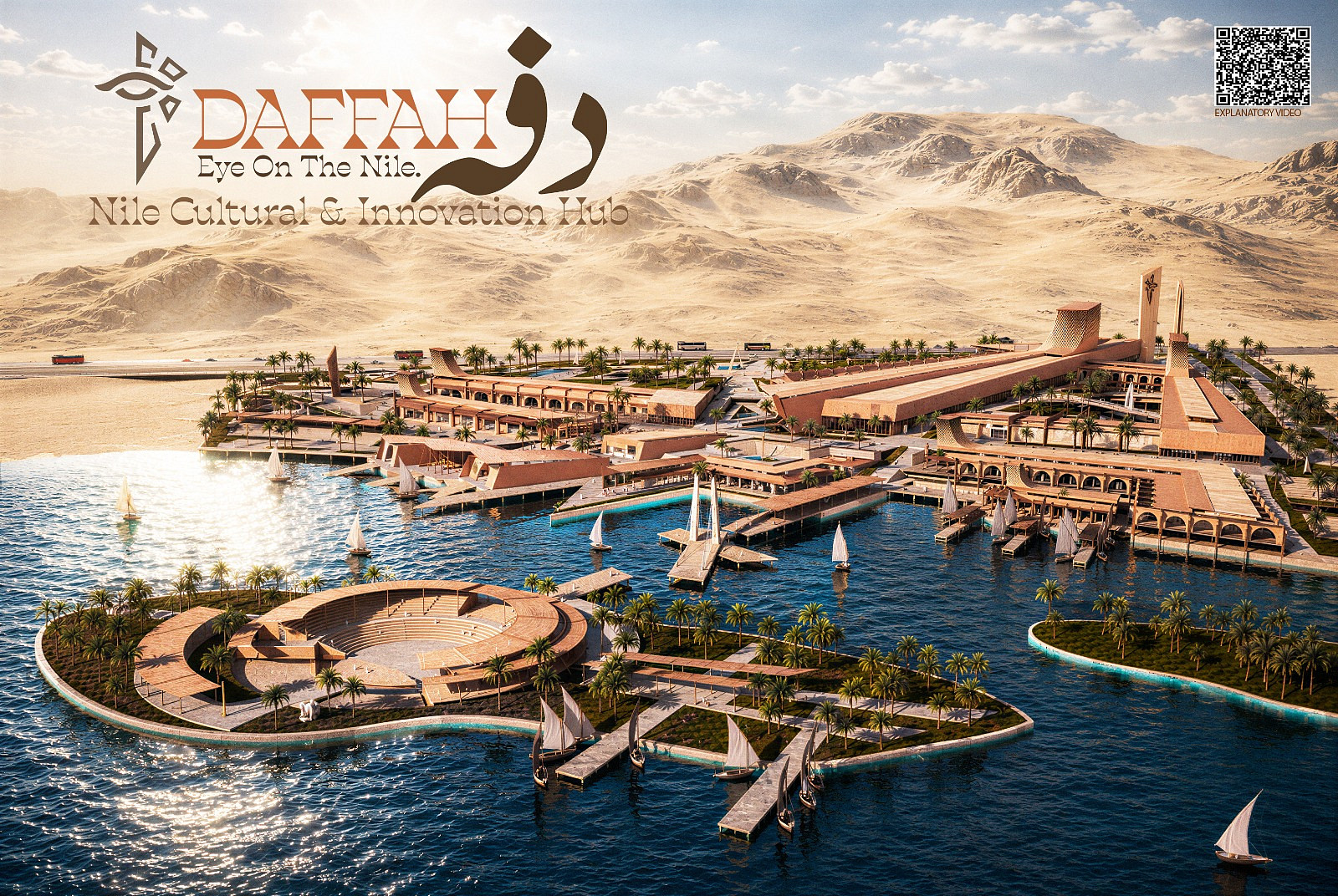
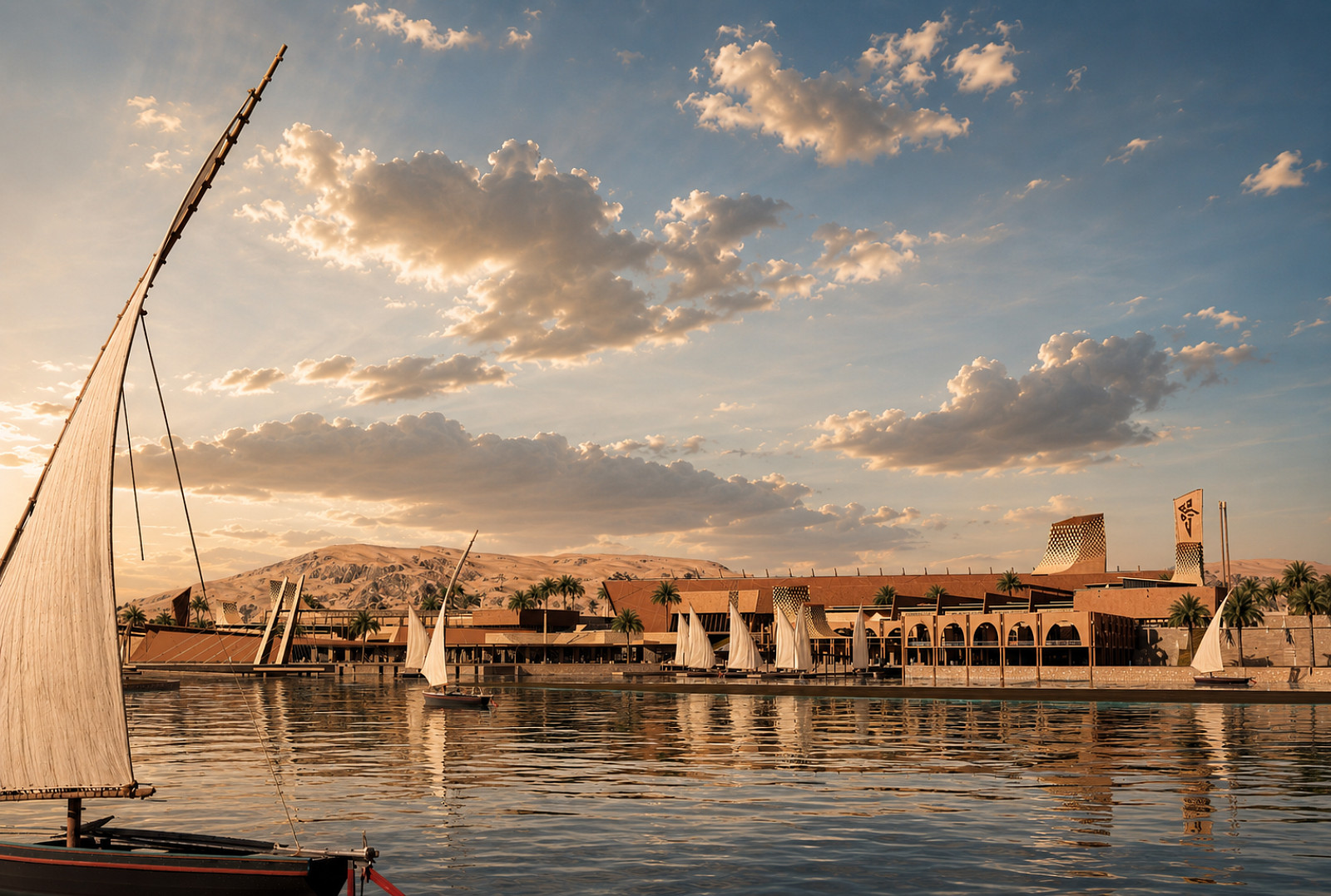
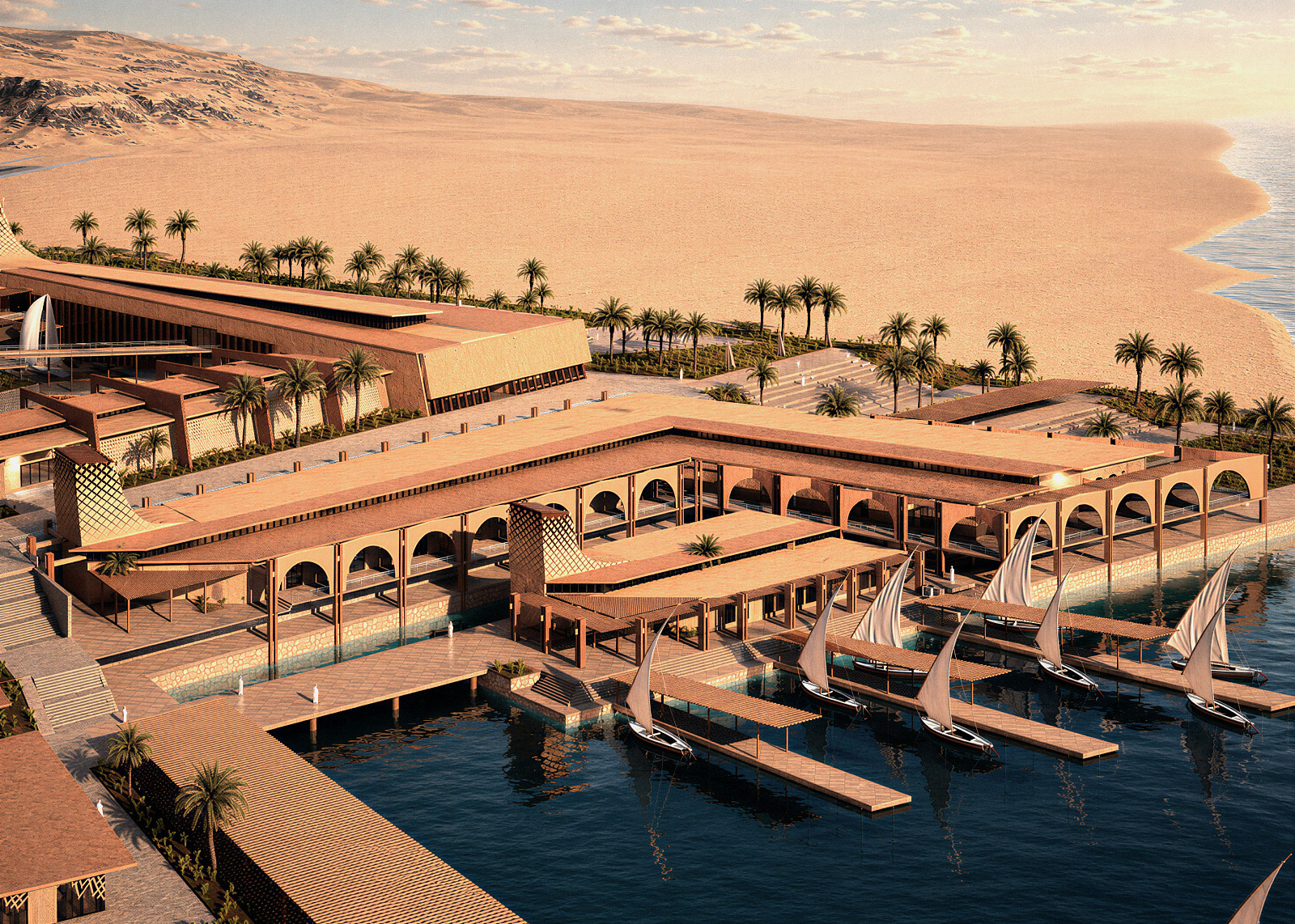
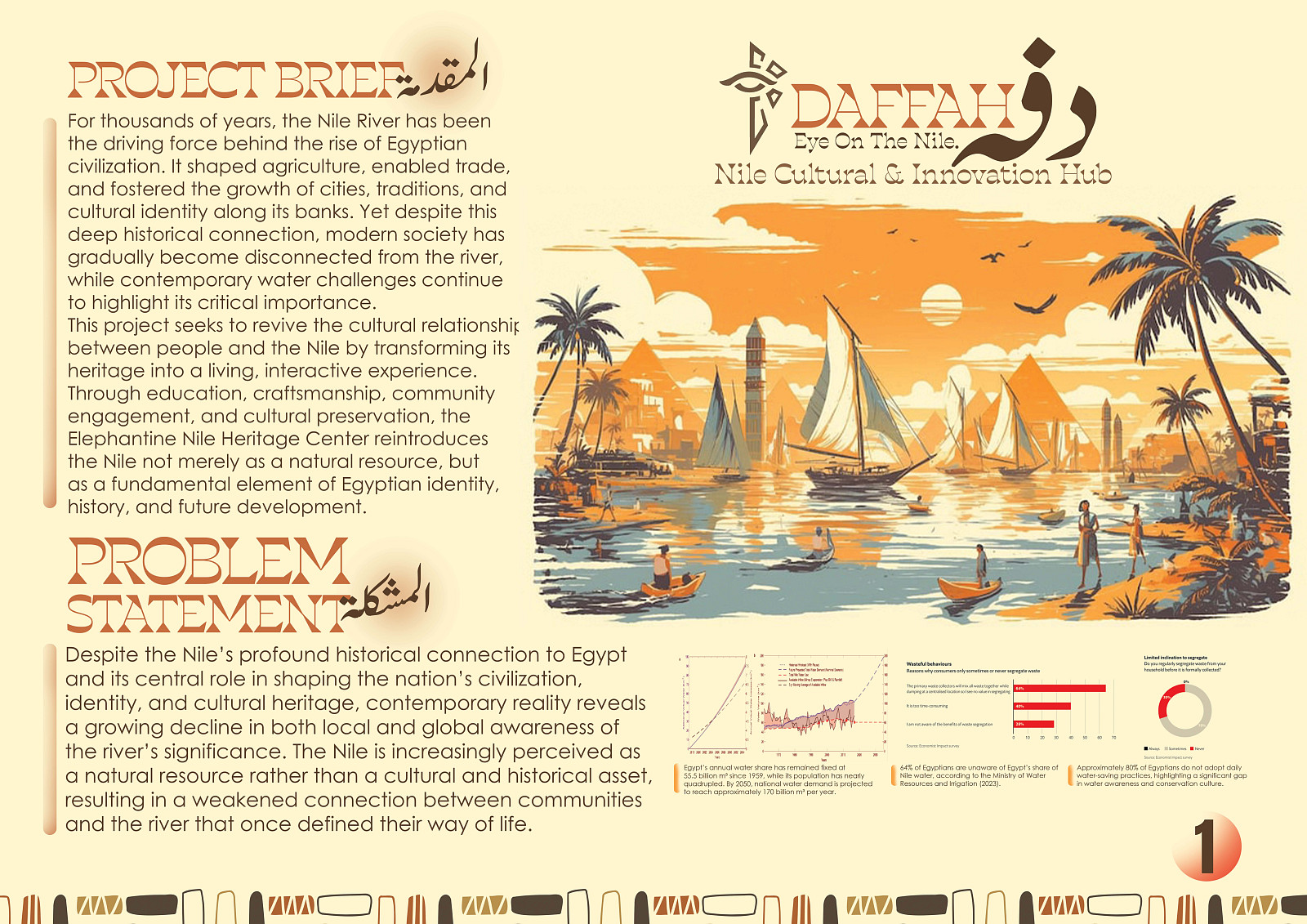
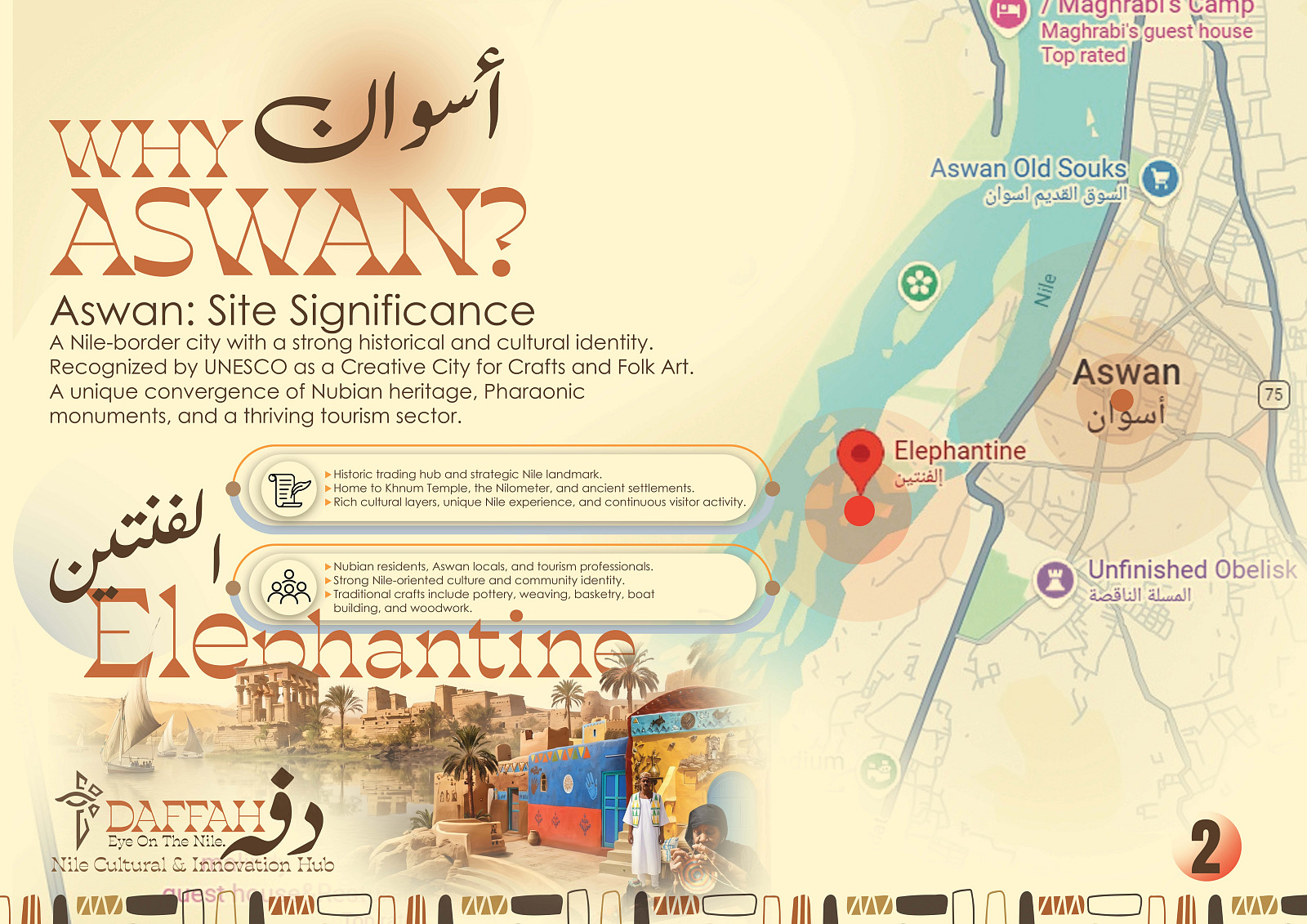
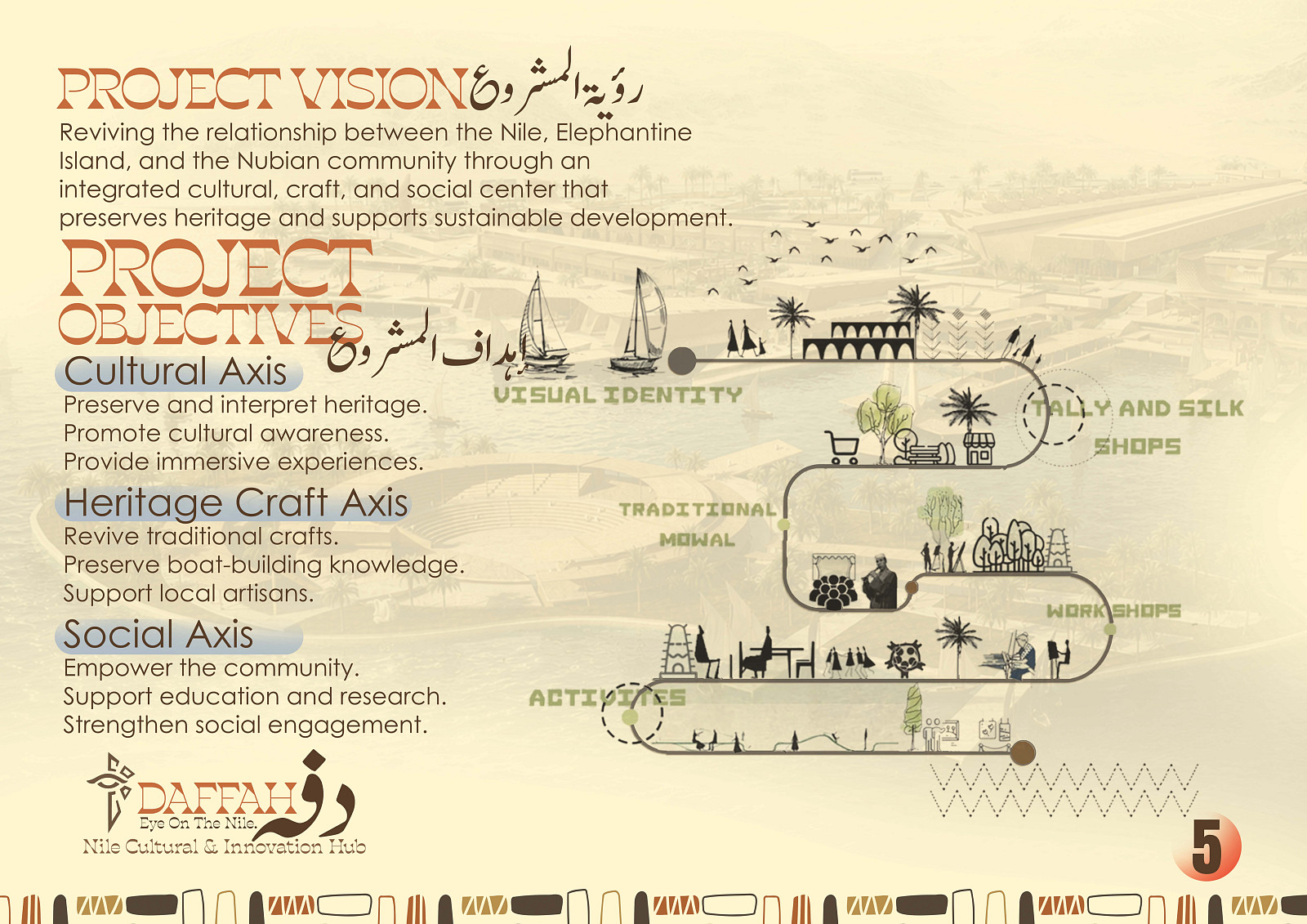
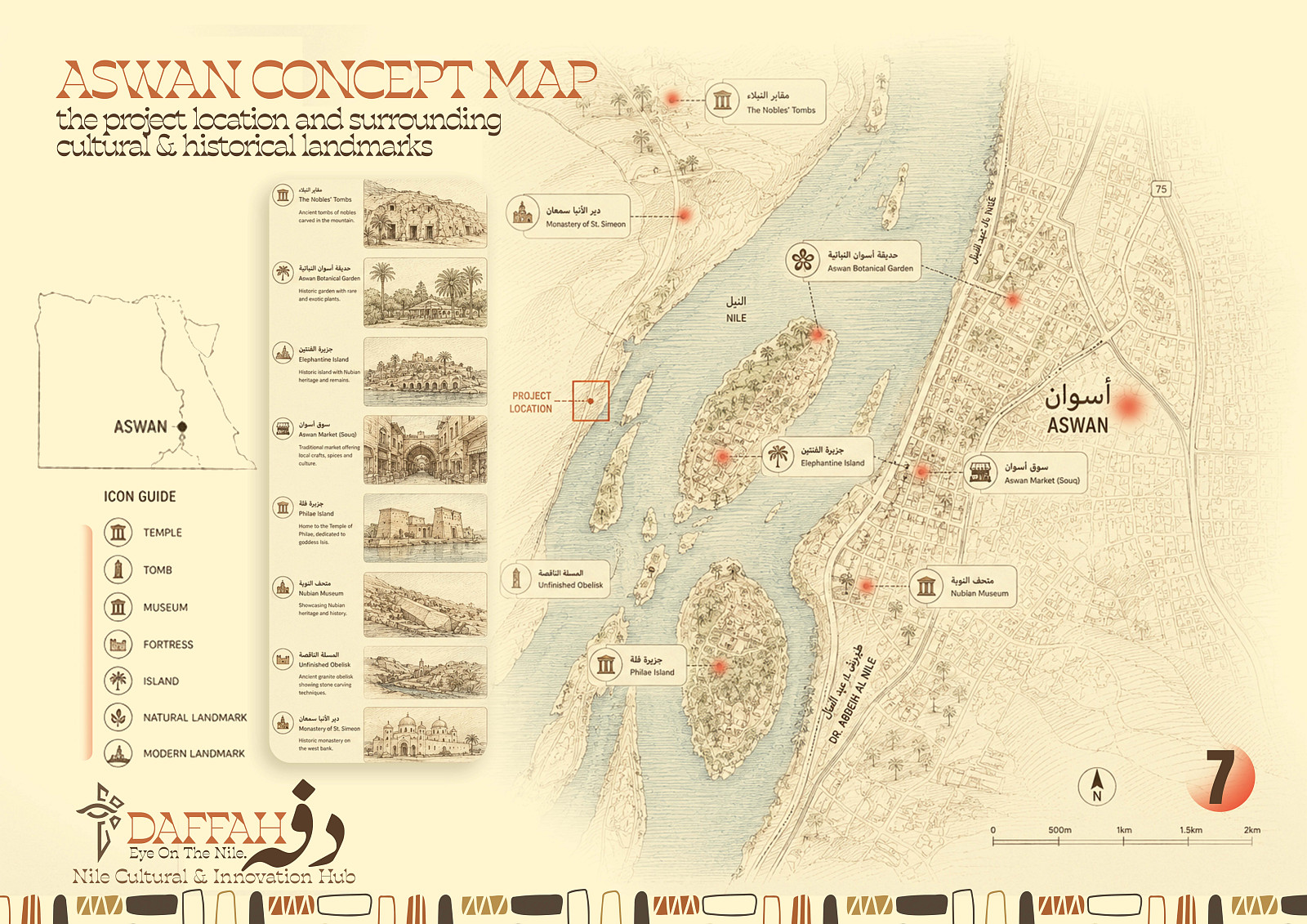
The Elephantine Nile Heritage Center was conceived in response to the gradual decline of the Nile's symbolic image in contemporary society. Although the Nile has shaped Egyptian civilization for thousands of years, it is increasingly perceived only as a natural resource rather than a cultural symbol that embodies the nation's history, identity, and heritage. The project aims to restore this lost connection by preserving the symbolic image of the Nile through an integrated cultural, educational, and community destination. Located in Aswan overlooking Elephantine Island, the center transforms heritage into a living experience through interactive exhibitions, traditional craft workshops, educational programs, public spaces, and environmental awareness, ensuring that the Nile continues to inspire future generations.
Project description
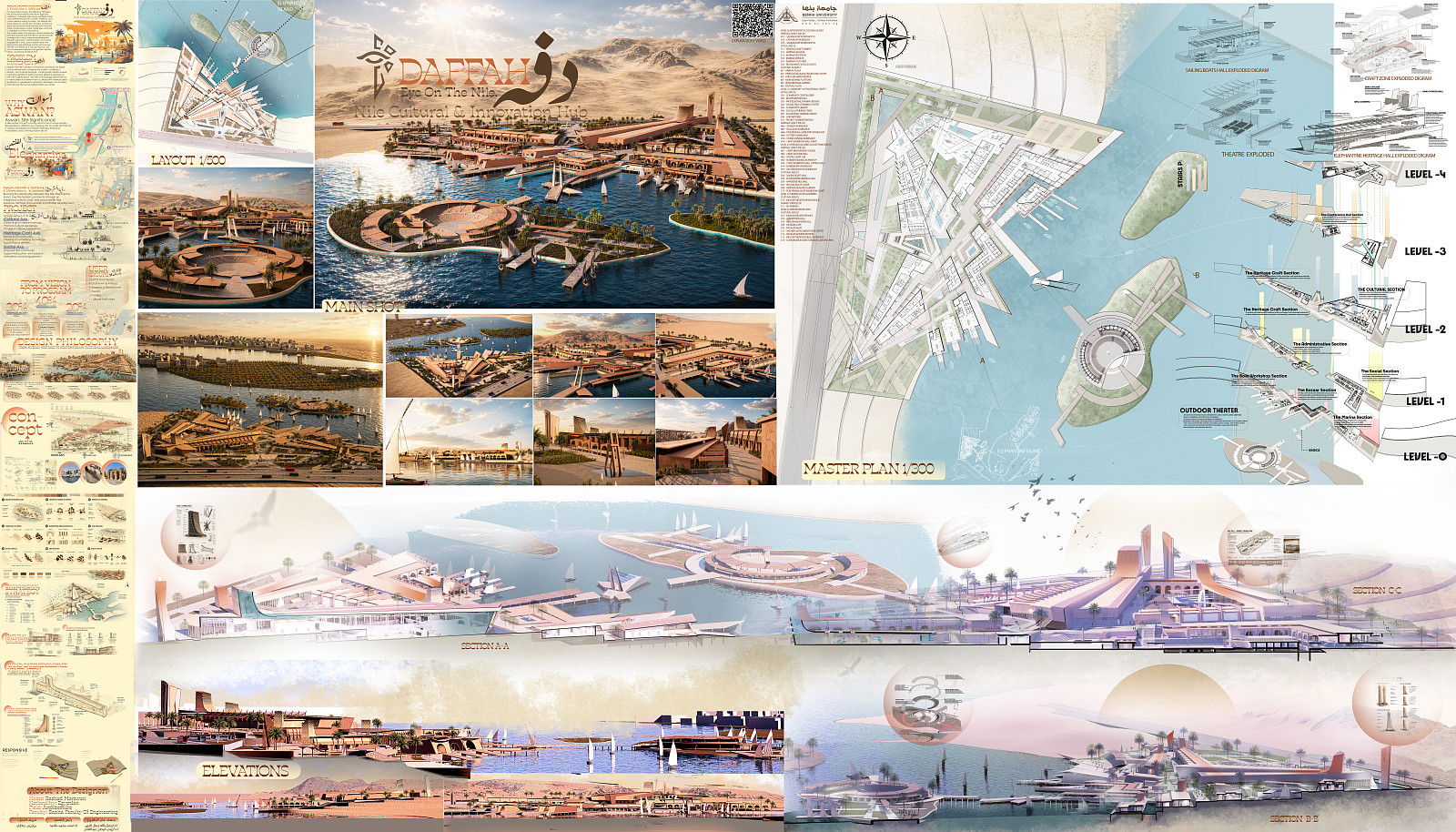
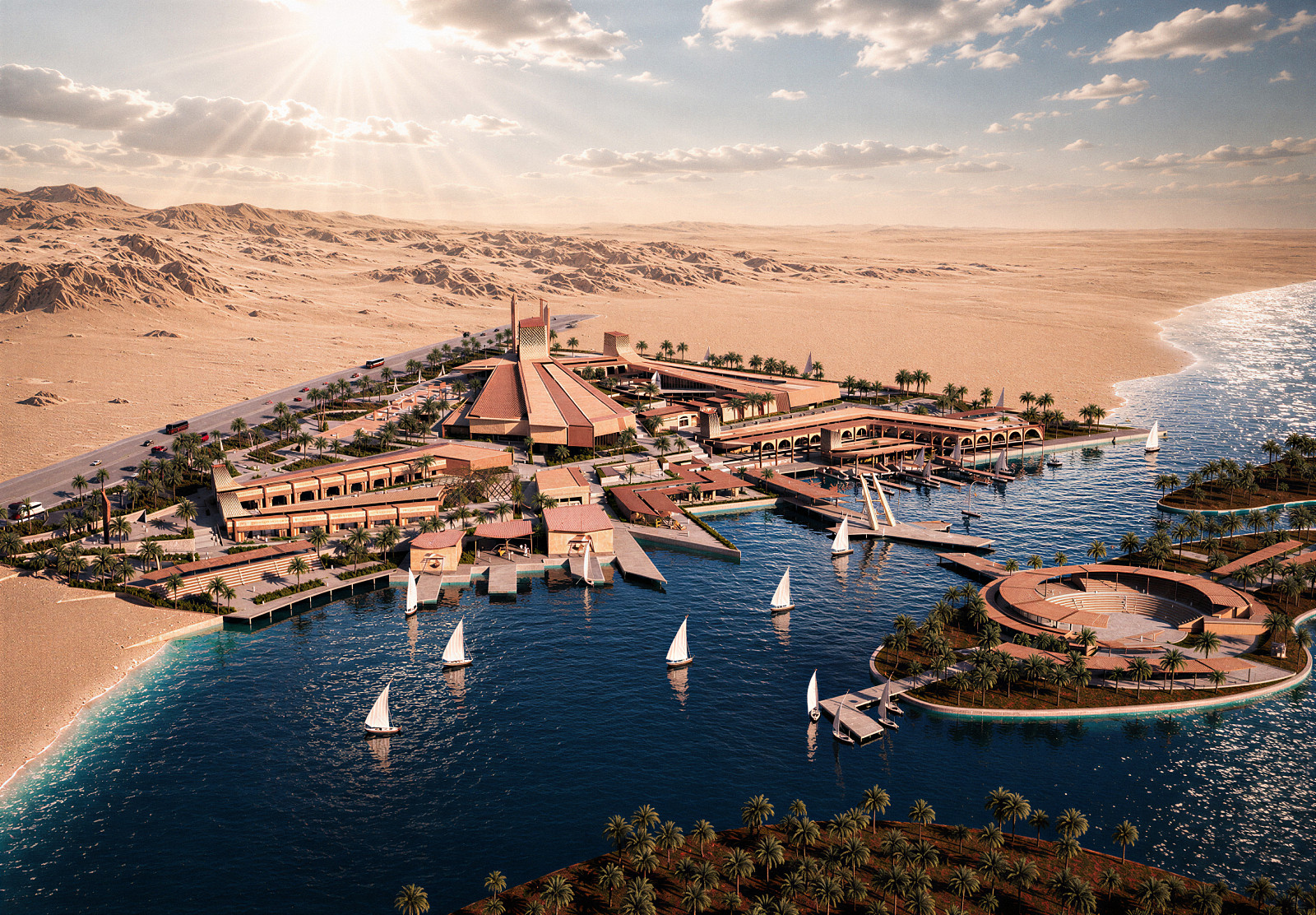
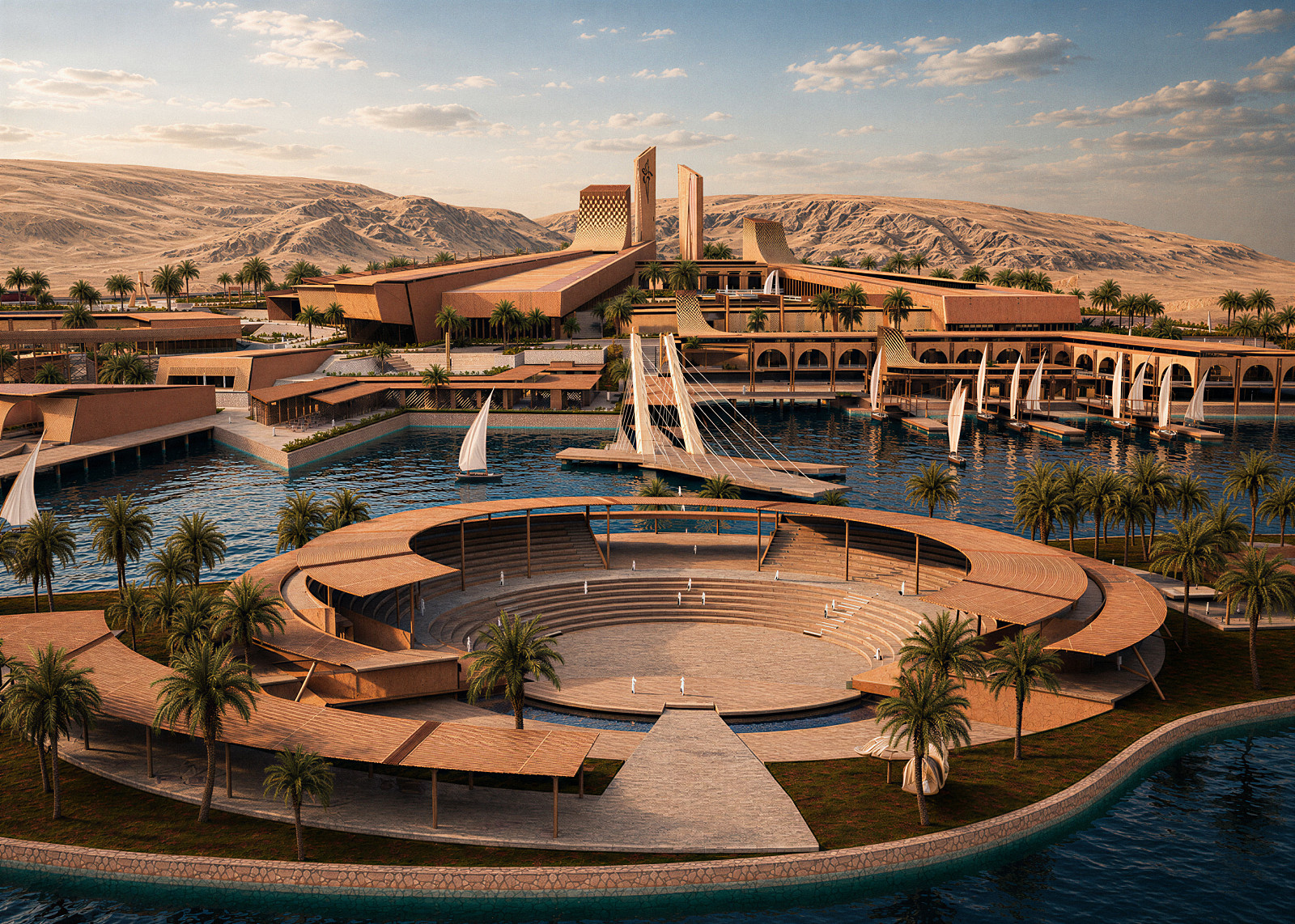
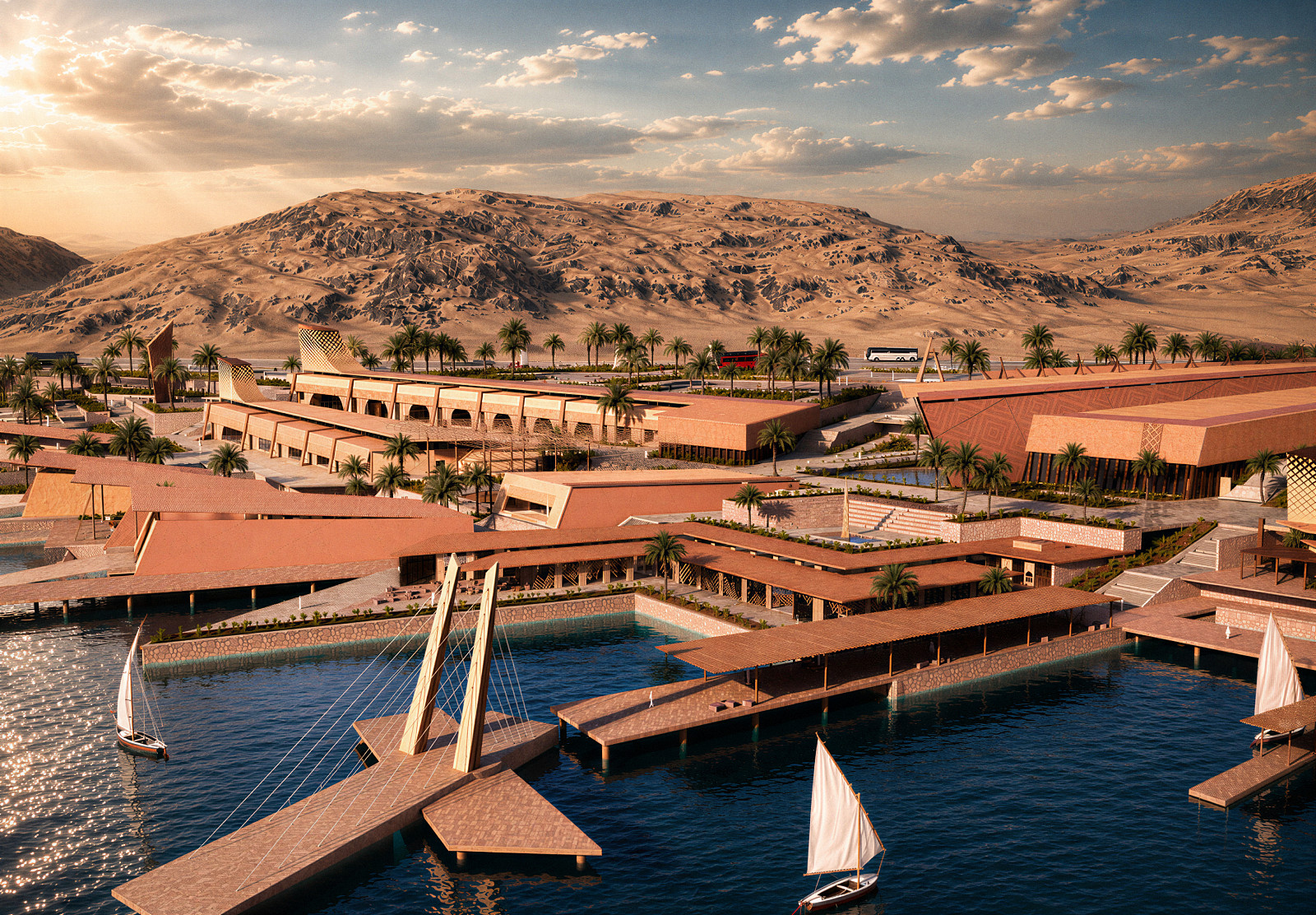
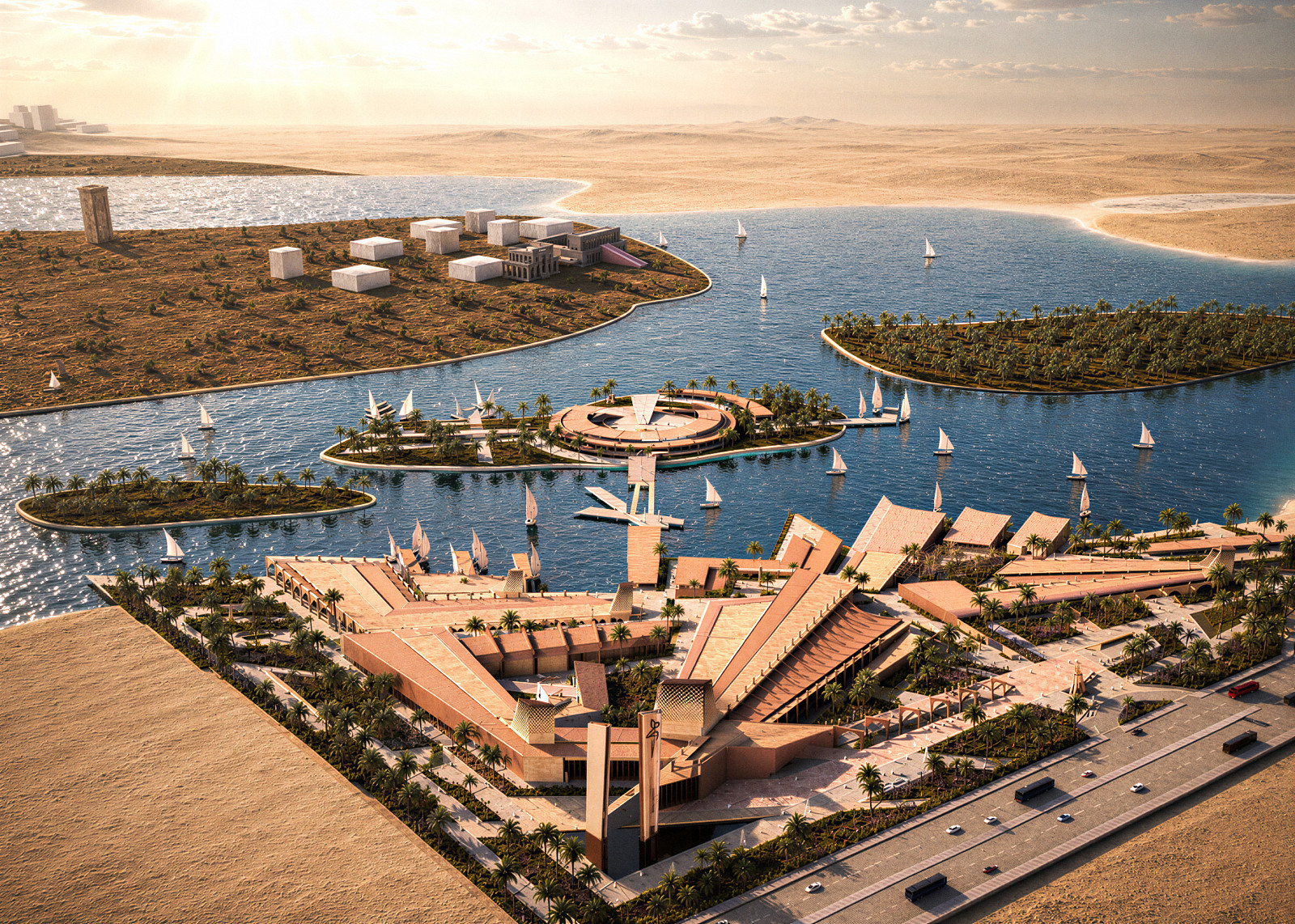
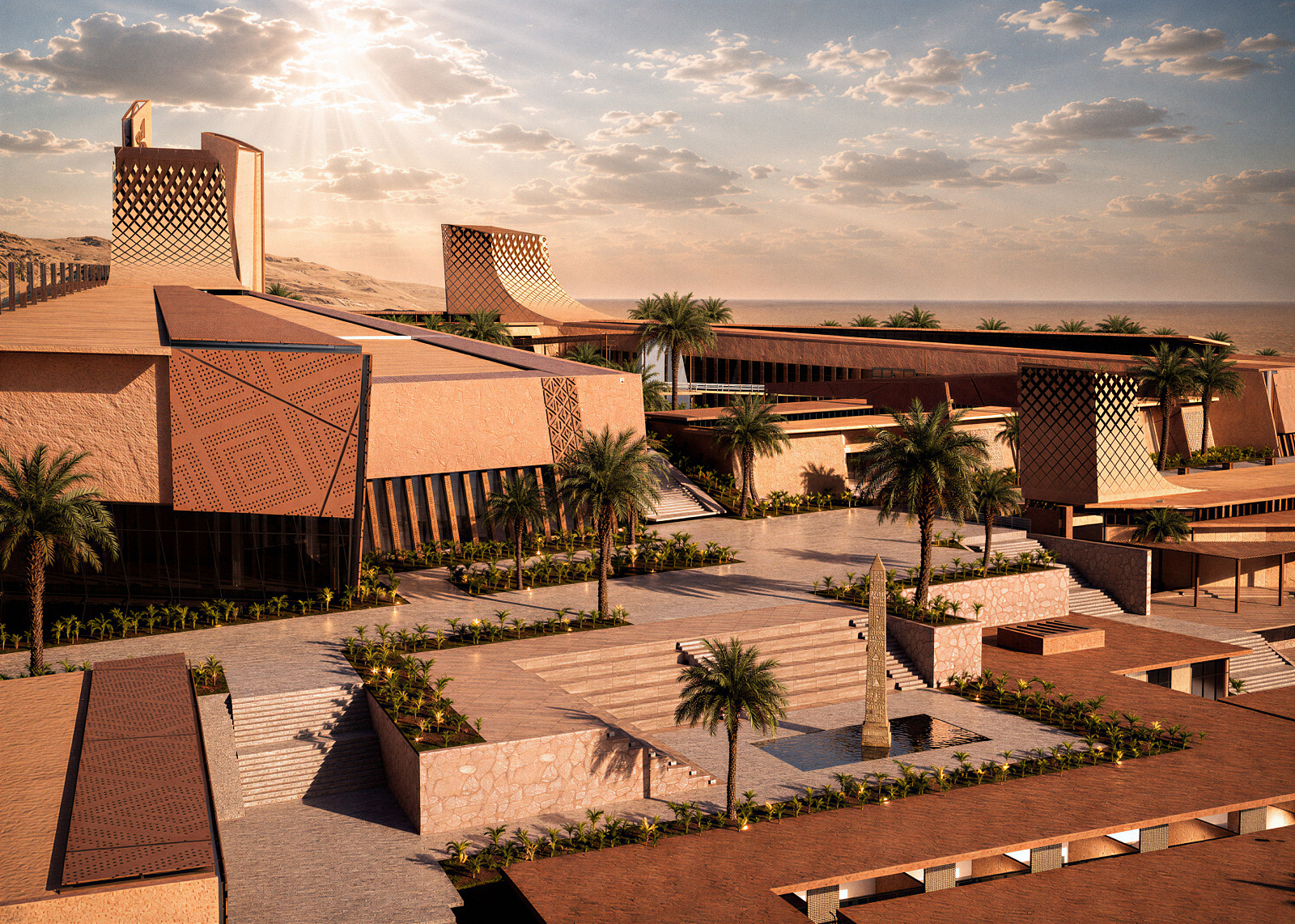
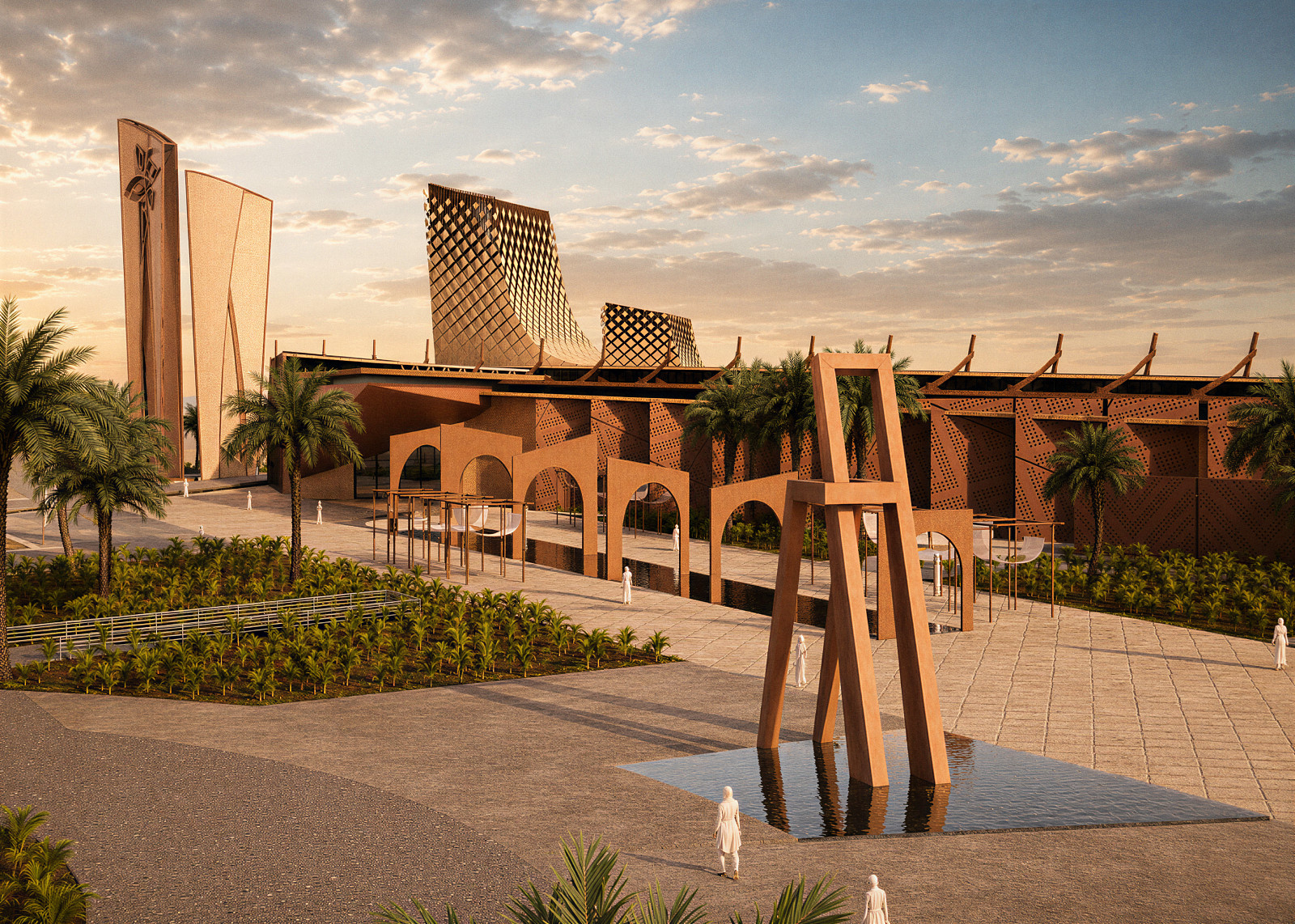
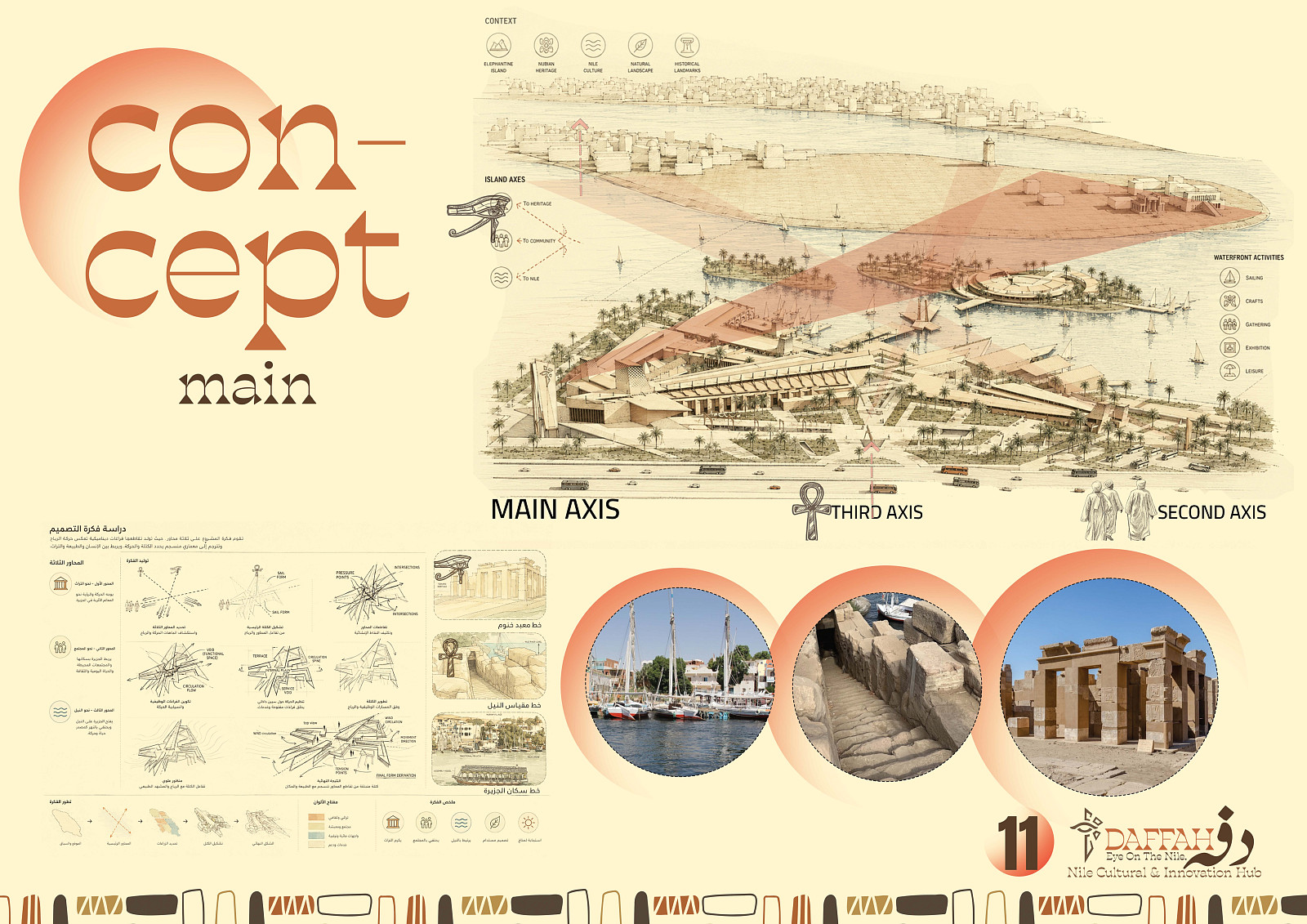
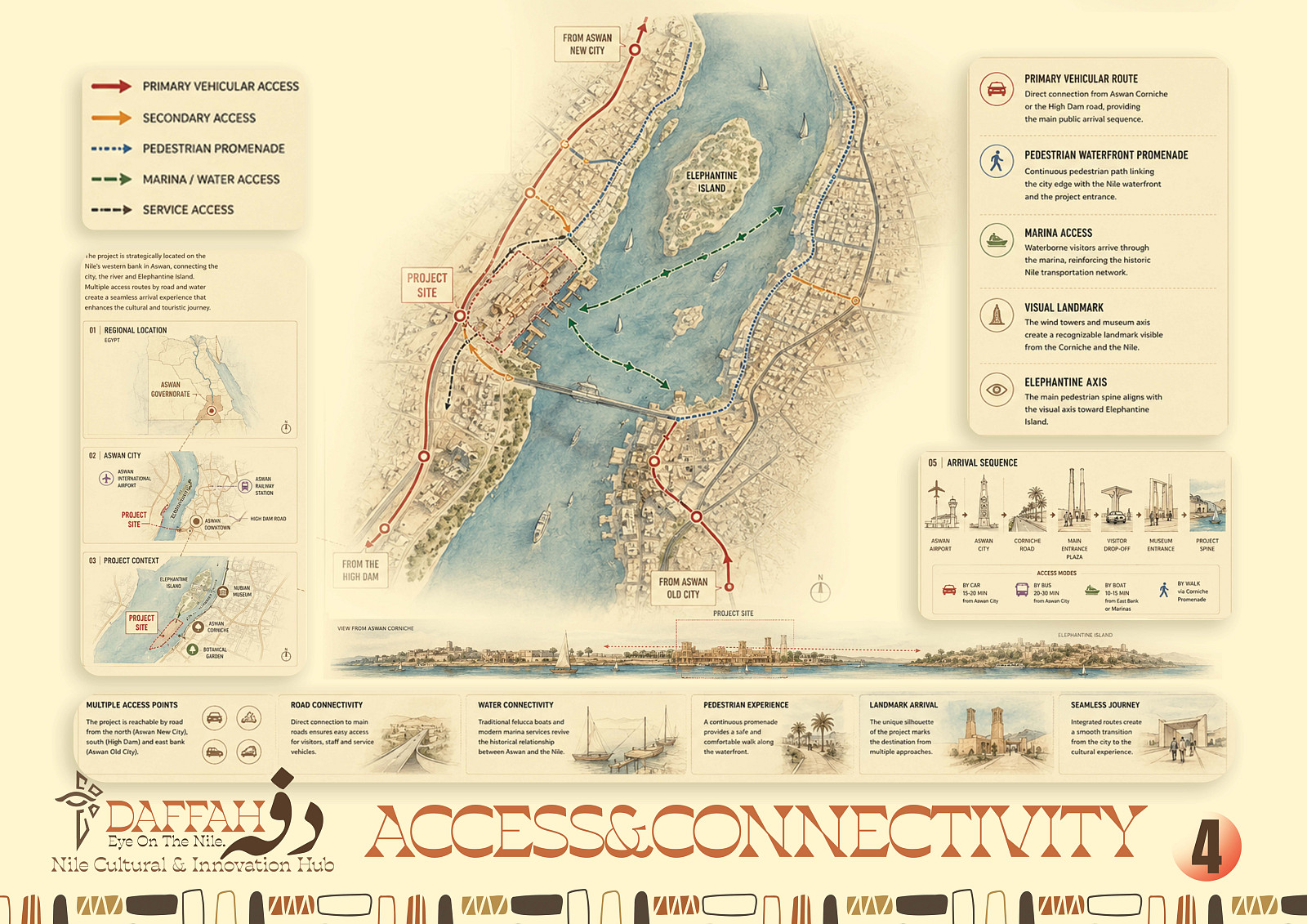
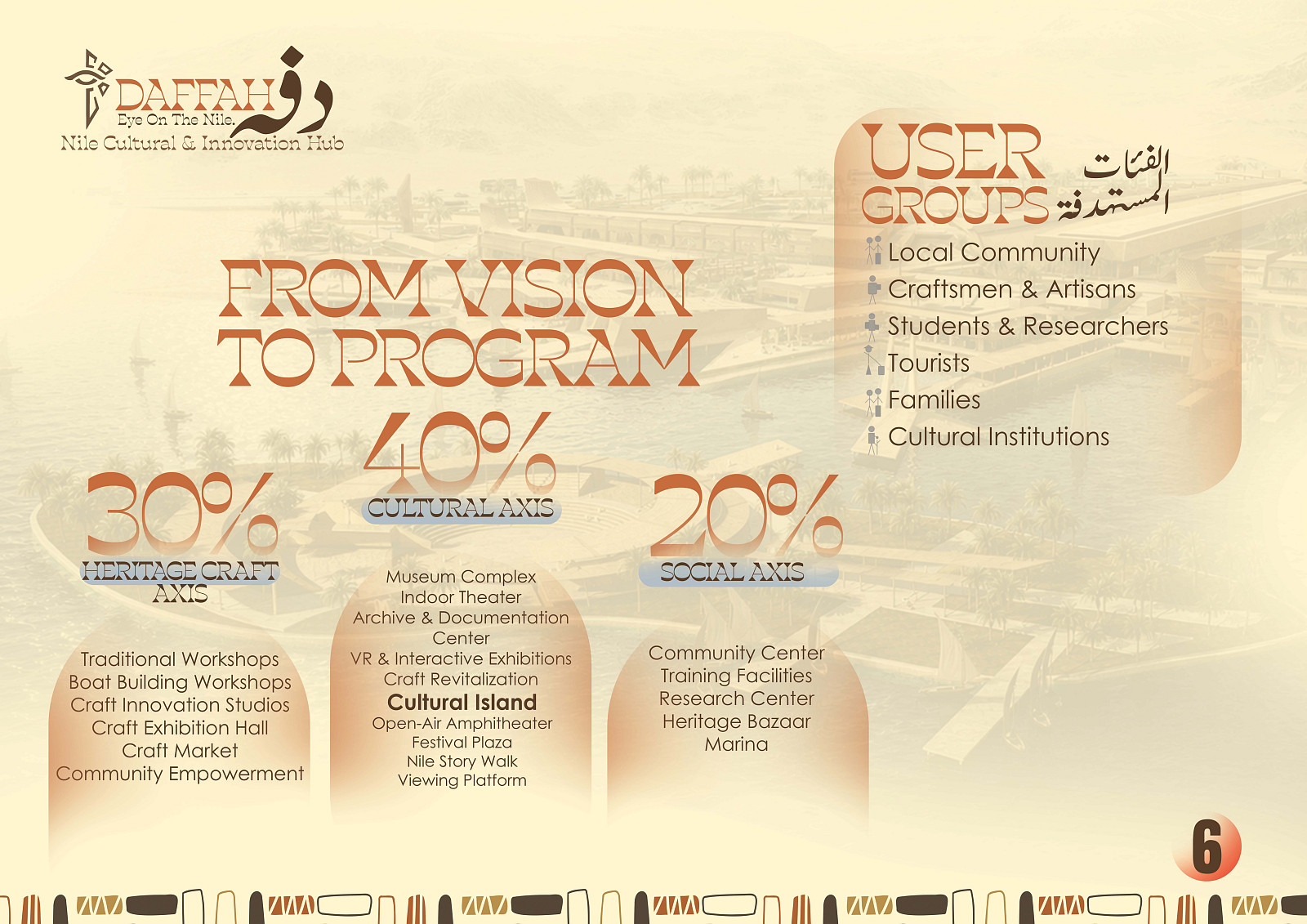
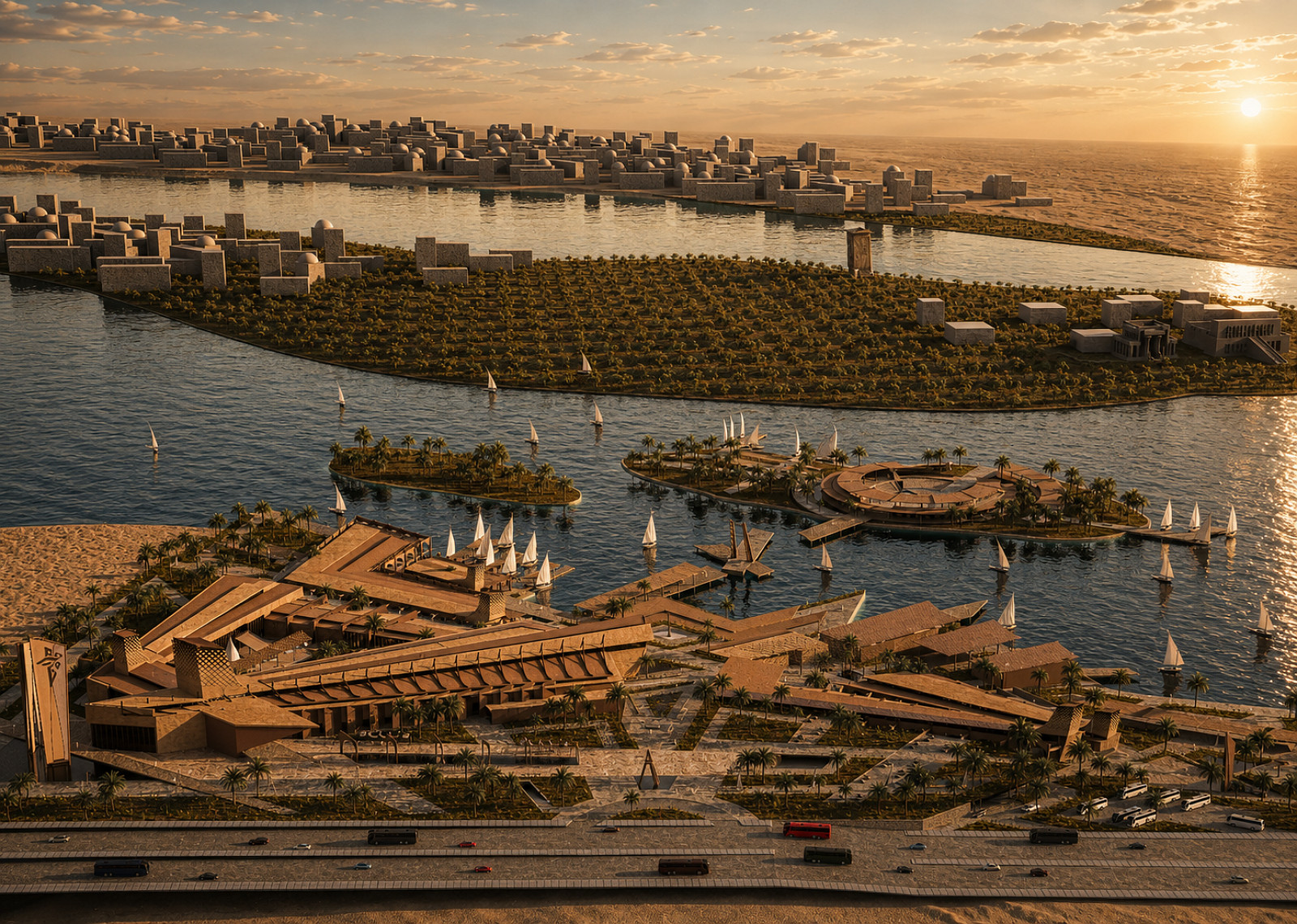
The project is developed as an integrated cultural campus organized around three main development axes: the Cultural Axis, the Heritage Craft Axis, and the Social Axis. It includes a Nile Heritage Museum, interactive exhibition galleries, documentation and archive center, educational and research facilities, traditional craft workshops, artisan marketplace, community center, cultural theater, open-air amphitheater, festival plaza, heritage bazaar, marina, waterfront promenade, restaurants, cafés, viewing platforms, and landscaped public spaces. The masterplan is structured around three symbolic axes representing the Nile, Elephantine Island, and the Nubian community, creating a continuous visitor journey that combines education, heritage preservation, public engagement, and sustainable tourism.
Technical information
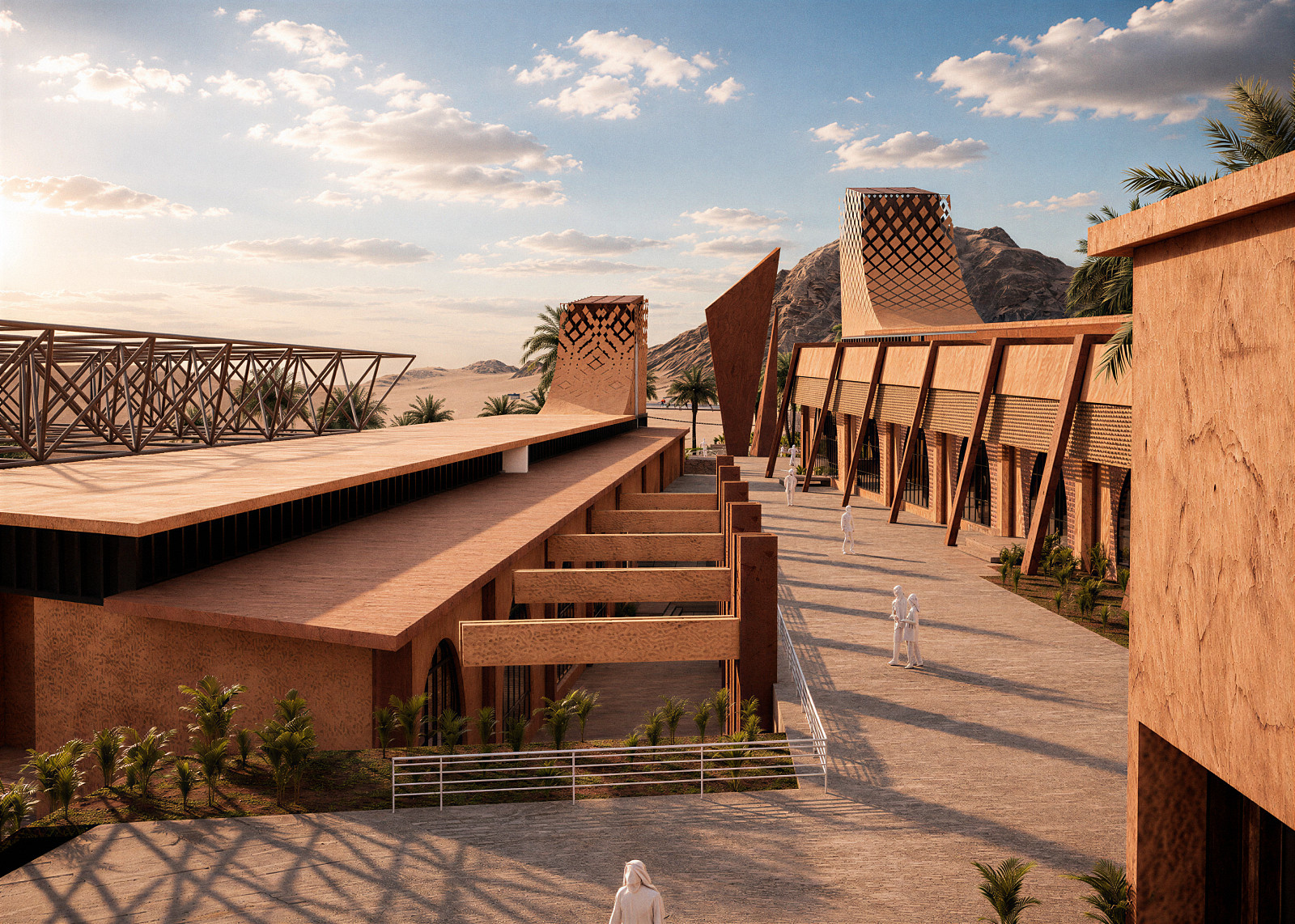
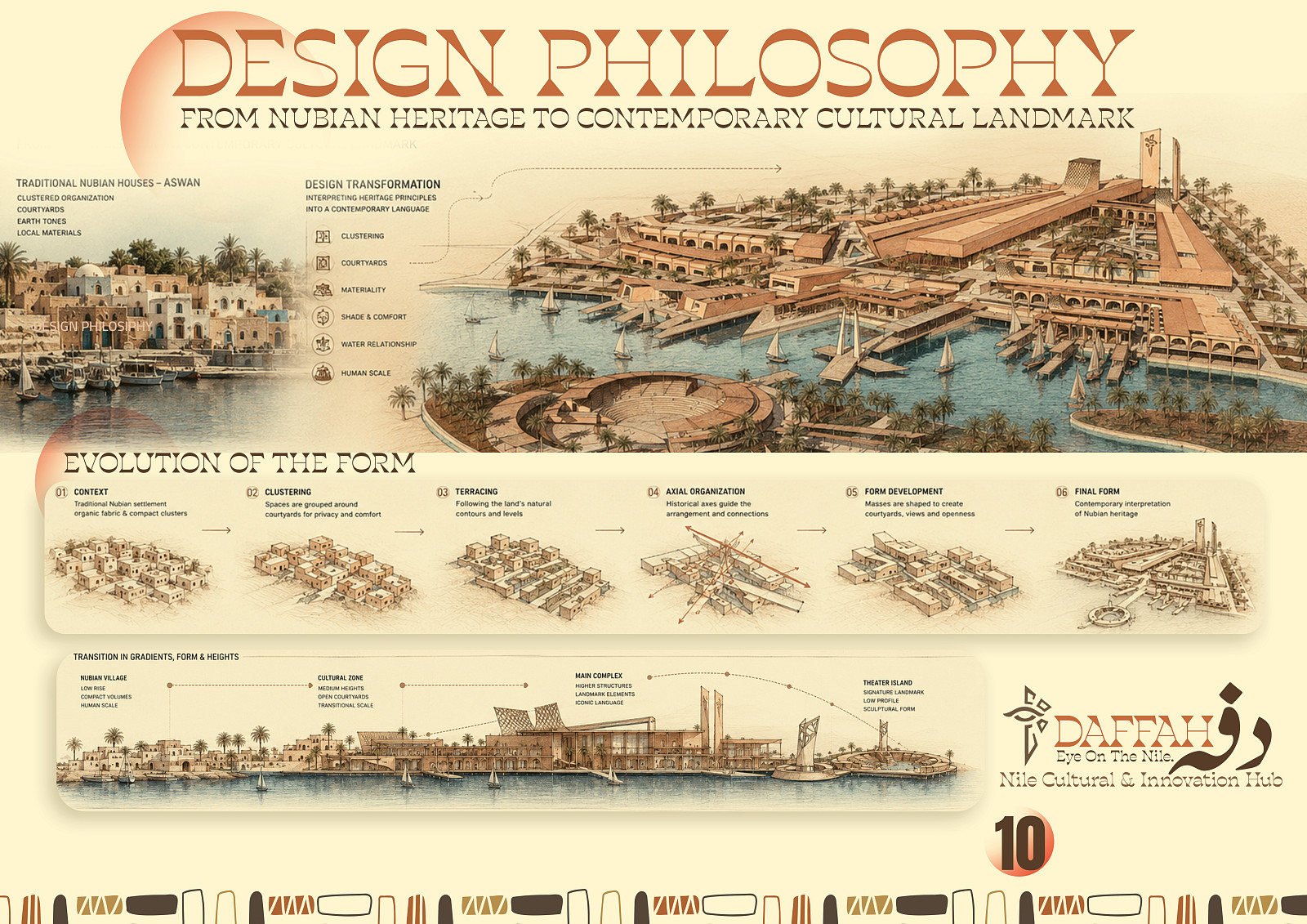
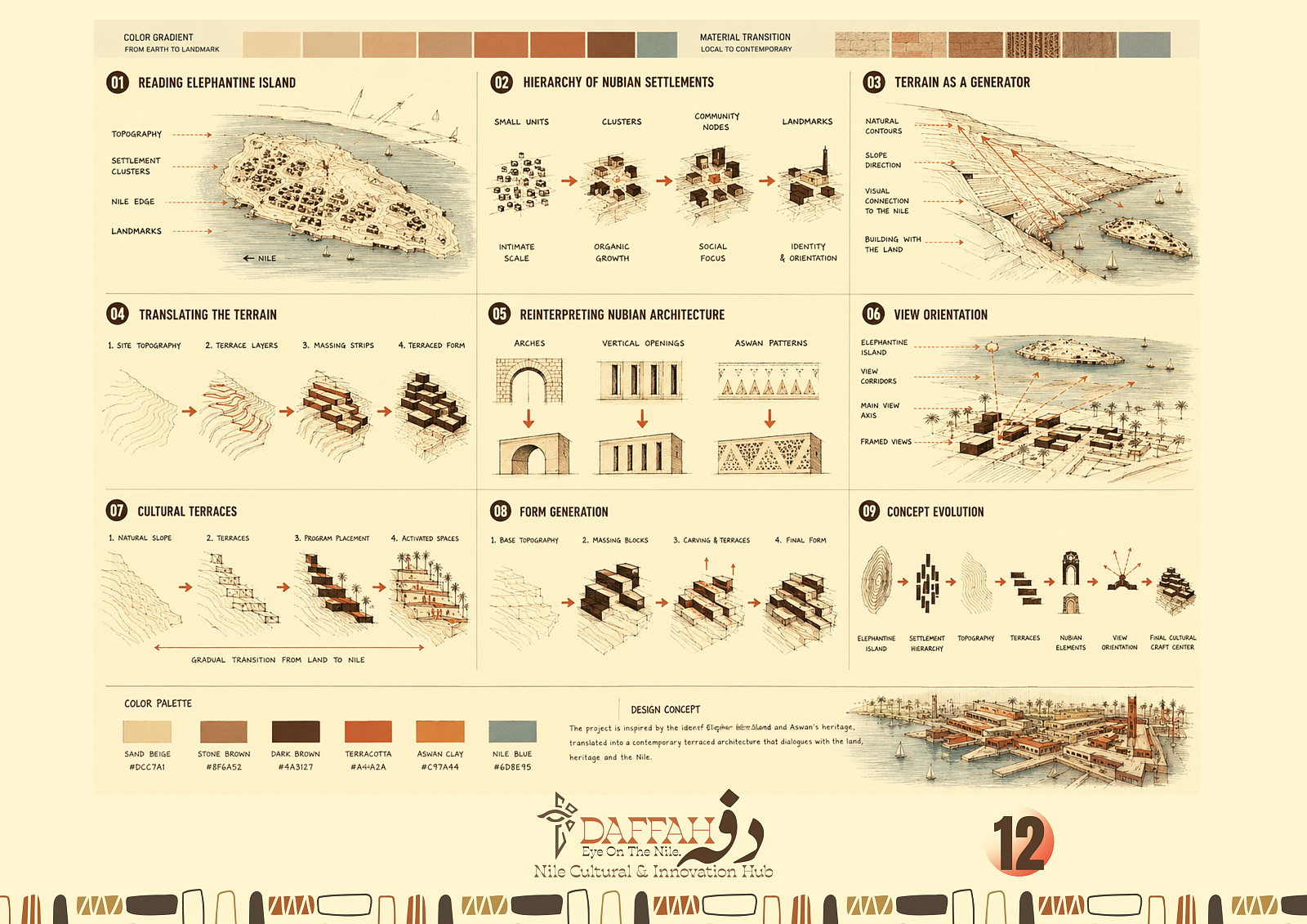
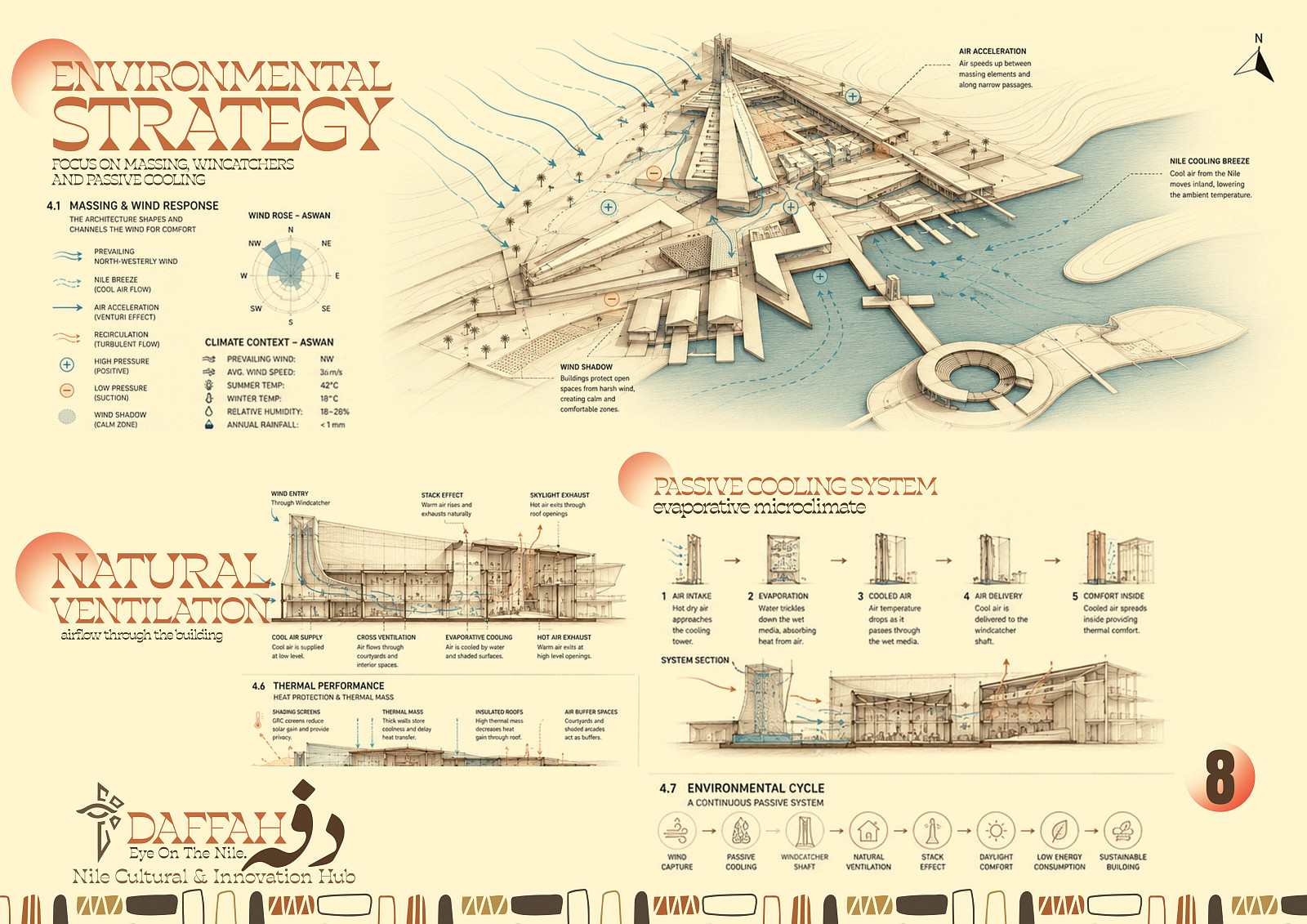
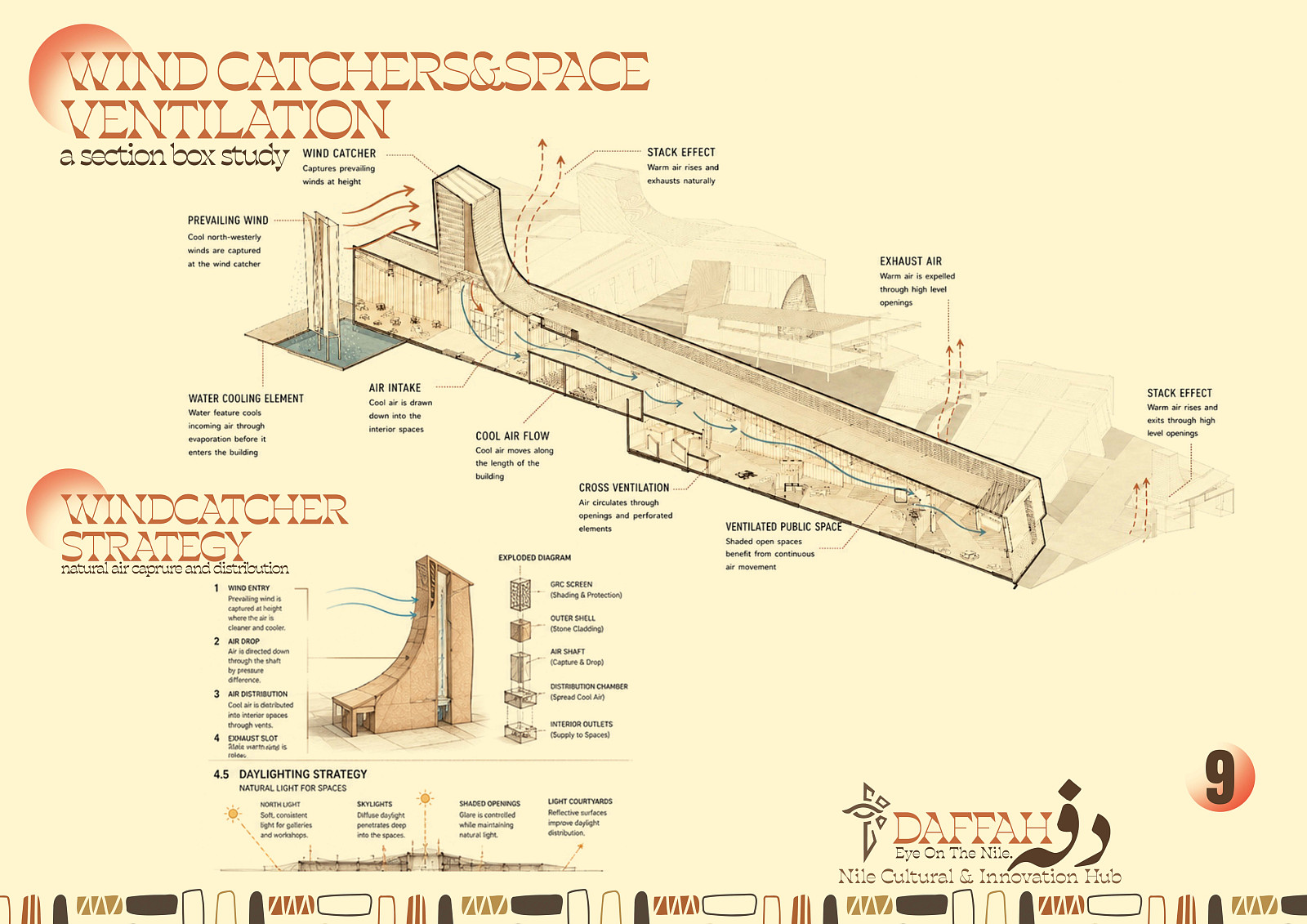
The project is designed using climate-responsive architectural principles inspired by traditional Nubian architecture and adapted to contemporary design. The masterplan follows passive environmental strategies including optimized building orientation, shaded courtyards, natural cross ventilation, wind catchers, thermal mass, passive cooling systems, solar shading devices, and native landscape planting to minimize energy consumption and improve thermal comfort. The architectural language combines locally inspired materials such as natural stone, architectural concrete, terracotta finishes, and screened façades with modern construction techniques. The fragmented massing enhances daylight, airflow, visual connectivity, and pedestrian movement while maintaining strong visual relationships with the Nile and Elephantine Island.

Copyright © 2026 INSPIRELI | All rights reserved. Use of this website signifies your agreement to the Terms of Use, Privacy Policy, and use of cookies.
