Floating Hyacinth


 Mohamed Noeman
Project idea
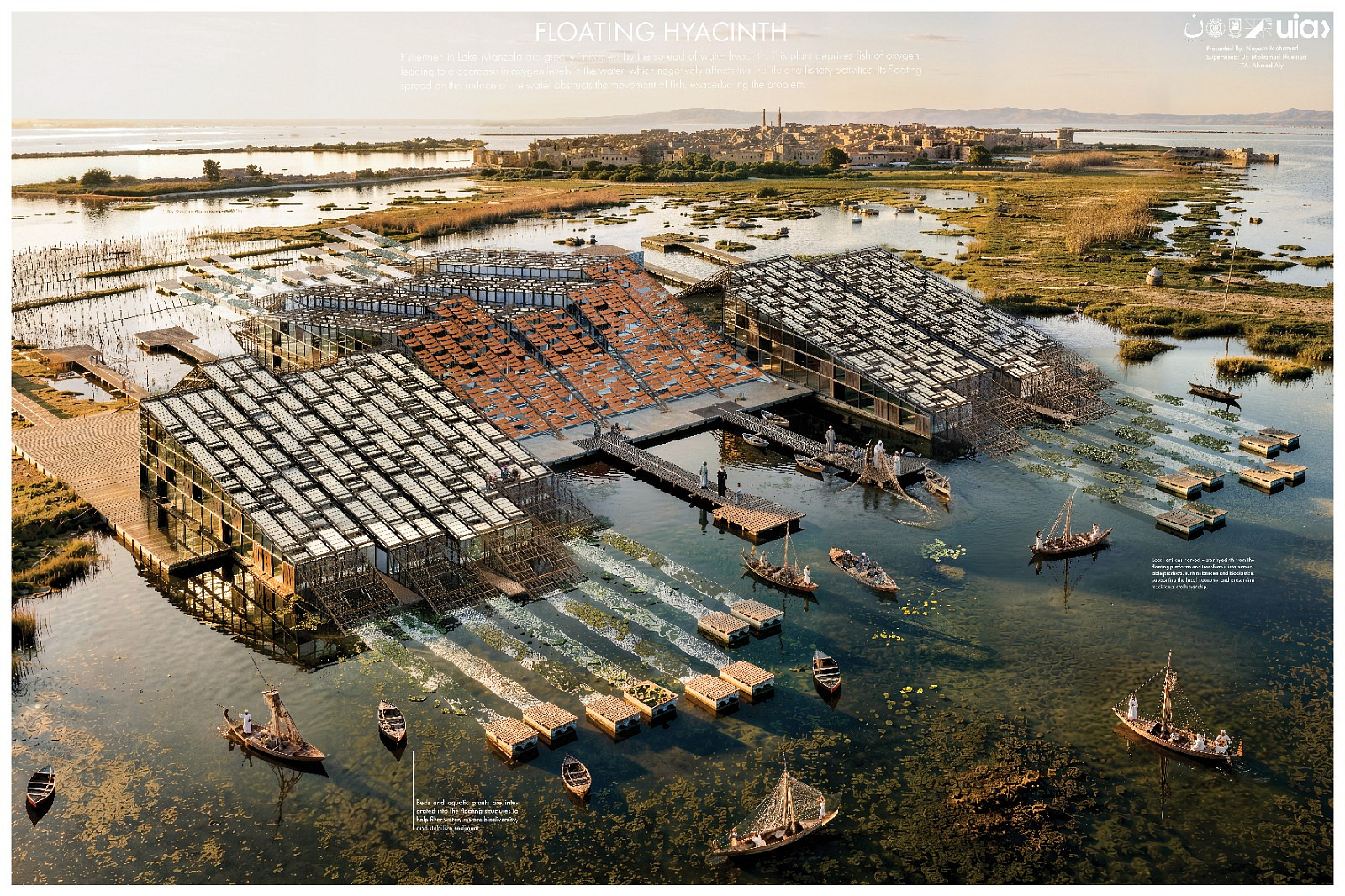
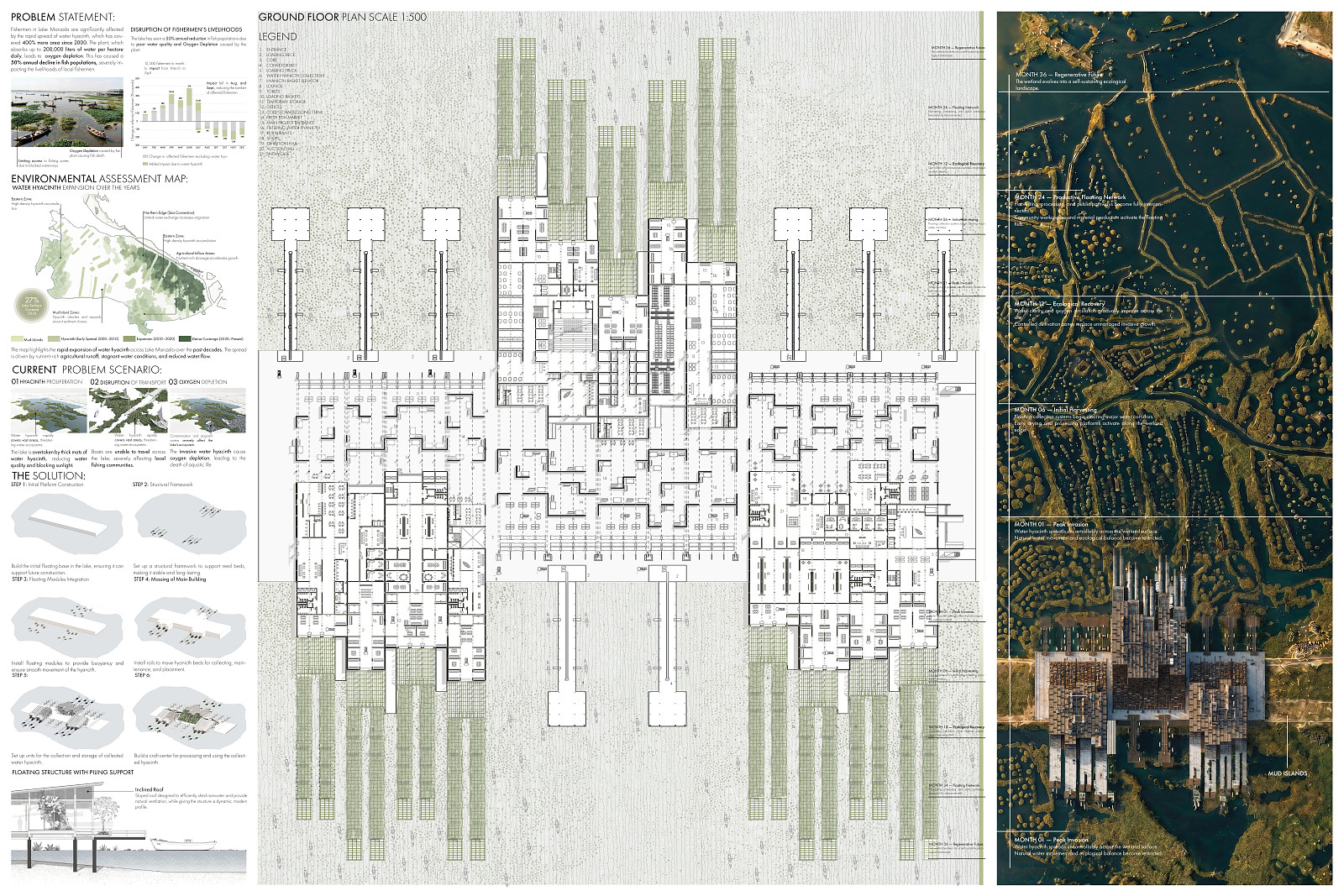
Lake Manzala is one of Egypt's most ecologically threatened wetlands, where the rapid spread of water hyacinth has disrupted both the lake's ecosystem and the livelihoods of its fishing communities. The invasive plant blankets the water's surface, blocking sunlight, depleting dissolved oxygen, restricting fish movement, and reducing fish populations that local fishermen depend on.
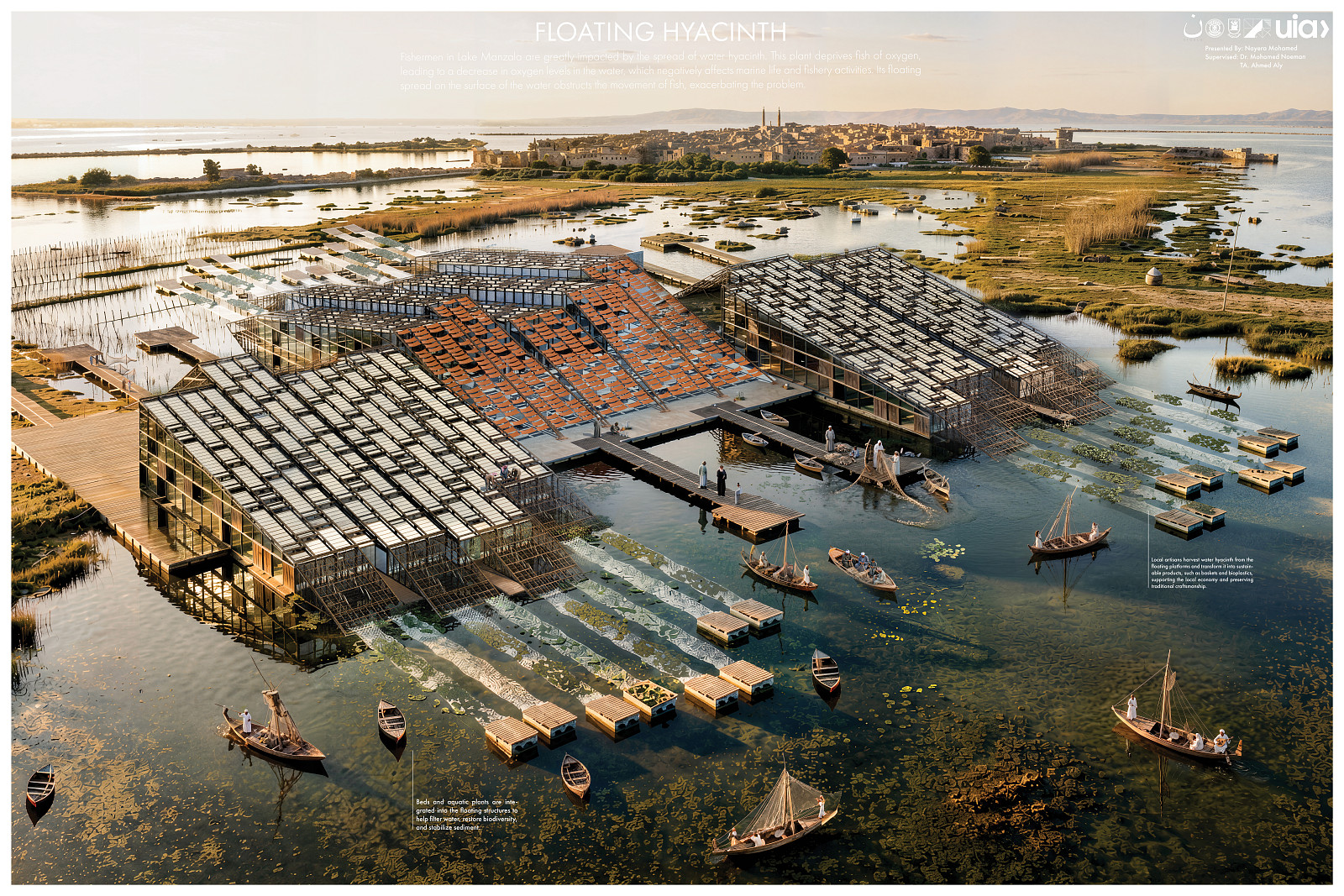
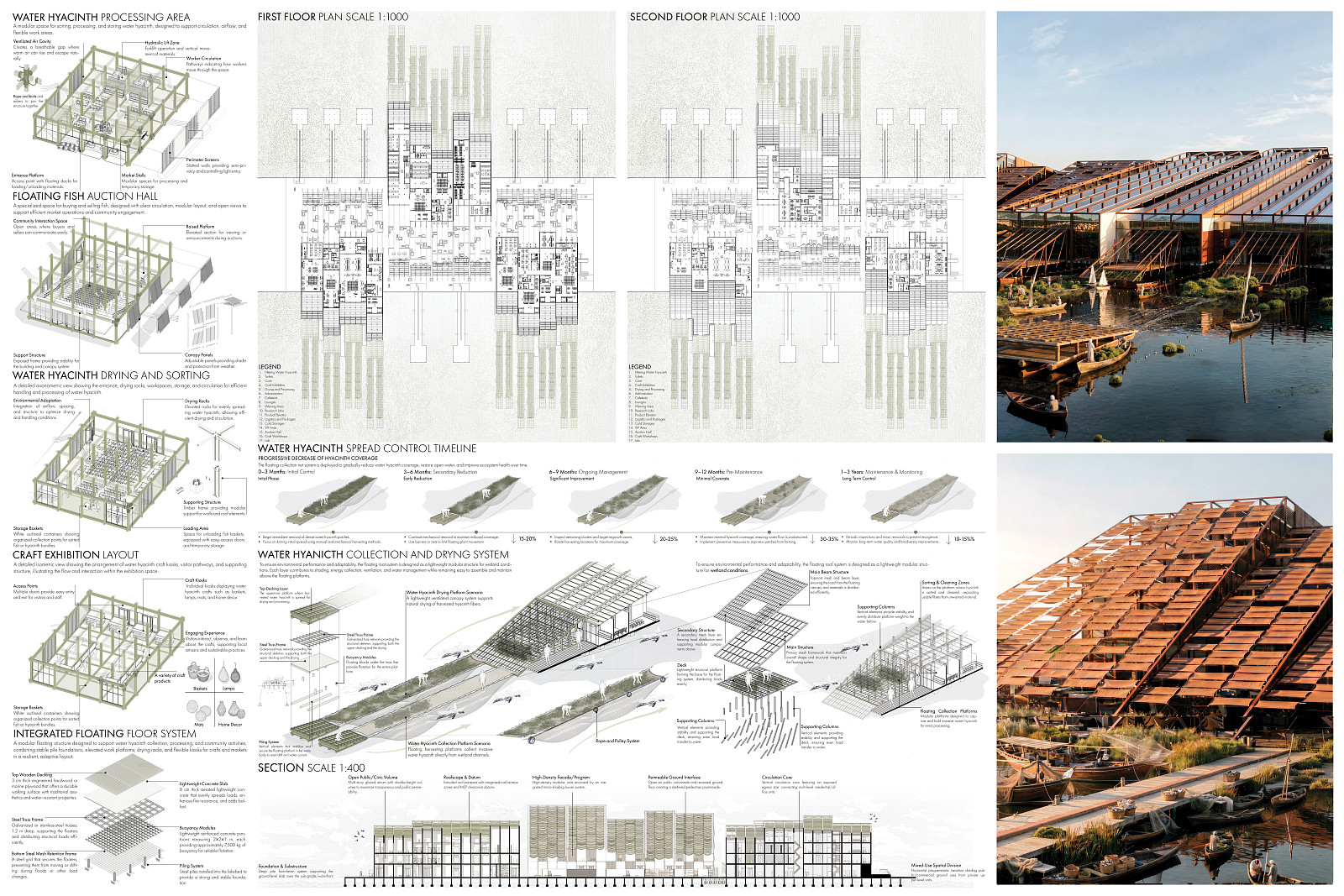
The Floating Hyacinth transforms this invasive plant from an environmental burden into a regenerative economic resource. Through floating collection modules, transport nets, and integrated workshops, the project harvests and processes hyacinth into crafts, bio-based composites, and local products.
It also functions as a floating port, supporting fishermen with docking areas, storage units, auction spaces, and market zones. The project becomes both an ecological machine and a social-economic hub, restoring the lake while supporting trade, fishing activity, and new livelihoods.
Project description
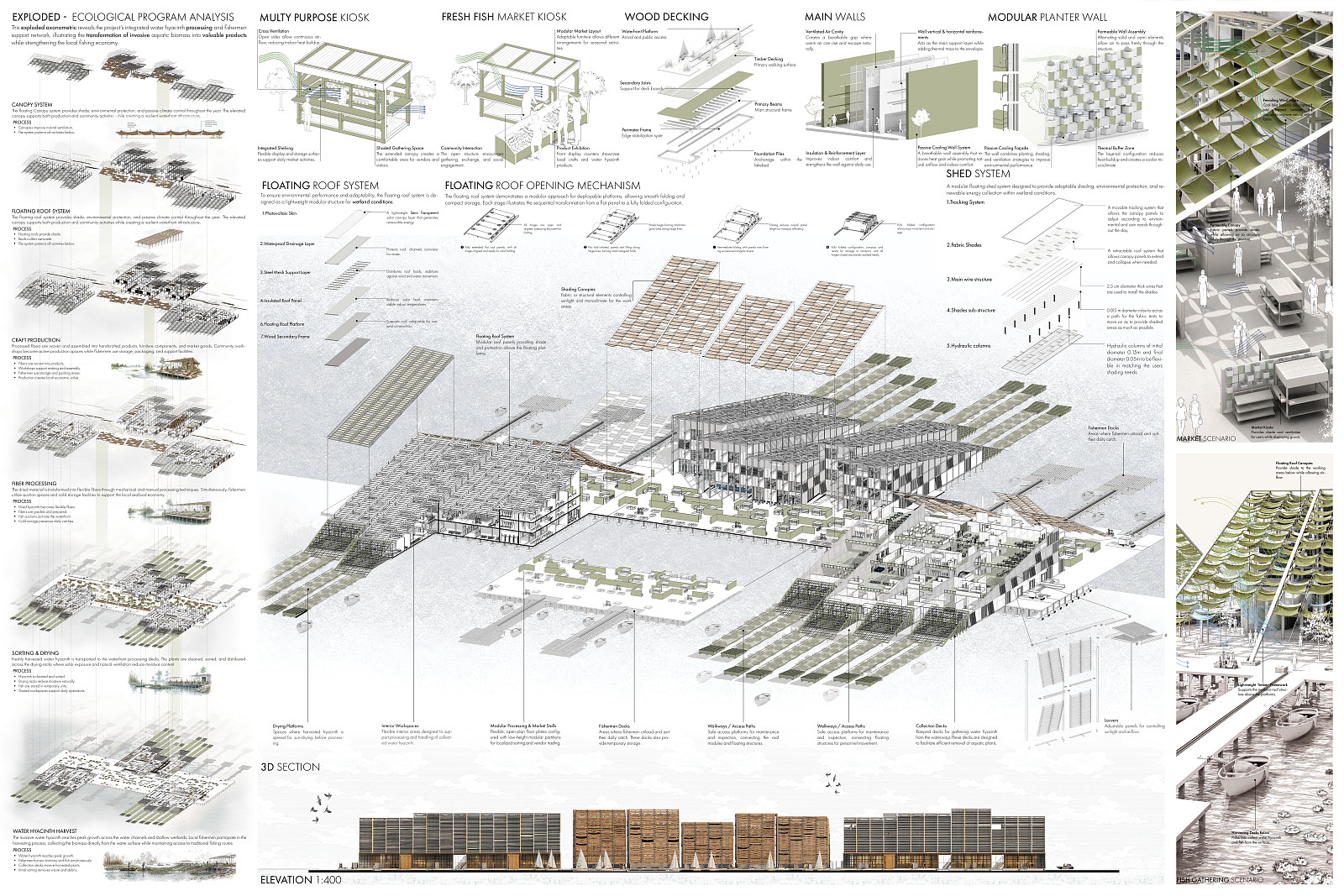
The project provides a comprehensive floating infrastructure that addresses environmental degradation, economic development, and community resilience through one integrated architectural system. The project consists of a floating ecological hub in Lake Manzala built around a continuous water hyacinth collection and processing system that operates across two scales simultaneously: environmental restoration and economic production. The architecture is not a static building; it is designed as a productive floating environmental system where harvesting, fishing, and processing occur as one continuous process. Water hyacinth is collected directly from the lake through floating collection modules and transported across the site by a guided net system, passing through drying, sorting, processing, and fabrication spaces before being transformed into bio-based materials and handcrafted products. Simultaneously, the project functions as a floating fishing port, where docking platforms, fish storage, auction halls, and market spaces support the daily activities of Lake Manzala's fishing community. Rather than separating ecological infrastructure from public life, the architecture allows environmental restoration, fishing, manufacturing, and commerce to operate within the same floating framework, making the project both an environmental machine and a productive circular economy.
Technical information
The project is constructed on a modular floating system that supports prefabricated steel structural frames designed for phased expansion and long-term adaptability to fluctuating water levels. Floating collection platforms intercept water hyacinth directly from the lake, while a rail-guided net transport system carries the harvested hyacinth through sequential processing stages including drying, sorting, storage, and fabrication.
The structural system combines treated palm wood and engineered local timber with galvanized steel brackets, allowing the architecture to remain lightweight, modular, and easy to repair by local craftsmen. All timber elements are treated with natural oils, lime wash, and resin-based protective coatings to resist moisture, fungal decay, salt exposure, and swelling. with large-span workshop spaces and a modular roof system incorporating operable openings for daylight, cross ventilation, and natural drying.
Metal-grated walkways and composite deck platforms connect the floating modules, fishing docks, processing workshops, auction halls, and market spaces into a continuous circulation network above the water. Native aquatic planting is integrated around the floating infrastructure to stabilize water conditions, enhance biodiversity, and improve water quality, allowing the building itself to operate as an active piece of environmental infrastructure while supporting the economic activities of Lake Manzala’s fishing community.
Floating beds and collection modules use woven reeds, treated palm frames, and biodegradable sediment layers, allowing the system to interact safely with the lake without harming aquatic life. Walkways are built as floating palm-wood catwalks reinforced with steel brackets, connecting fishing docks, storage areas, auction spaces, workshops, and market zones into one continuous floating port.
The project blends ecological performance with local material culture, turning the floating architecture into a seasonal engine for lake restoration, fishing activity, and community-based production.

Copyright © 2026 INSPIRELI | All rights reserved. Use of this website signifies your agreement to the Terms of Use, Privacy Policy, and use of cookies.
