Whitegold Nexus


 Mohamed Noeman
Project idea
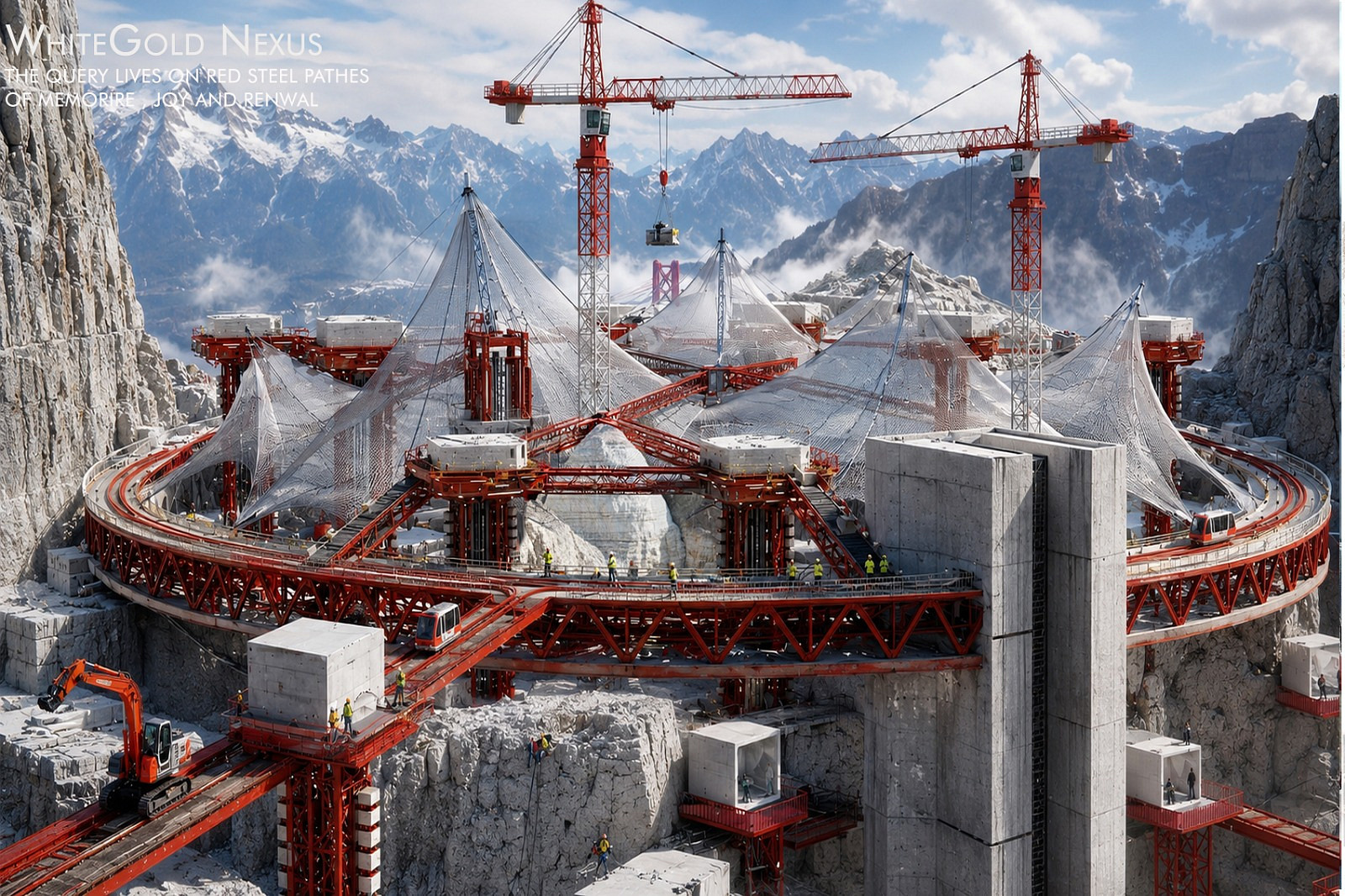
For centuries, the value of Egypt's limestone has been measured by the quantity of stone extracted from its quarries. WhiteGold Nexus proposes a new definition of value—one that places human life, innovation, and public experience alongside industrial production.
The project begins with a fundamental question:
Can a quarry continue producing limestone without exposing workers to unnecessary danger, while becoming a destination rather than an isolated industrial site?
The answer is WhiteGold Nexus.
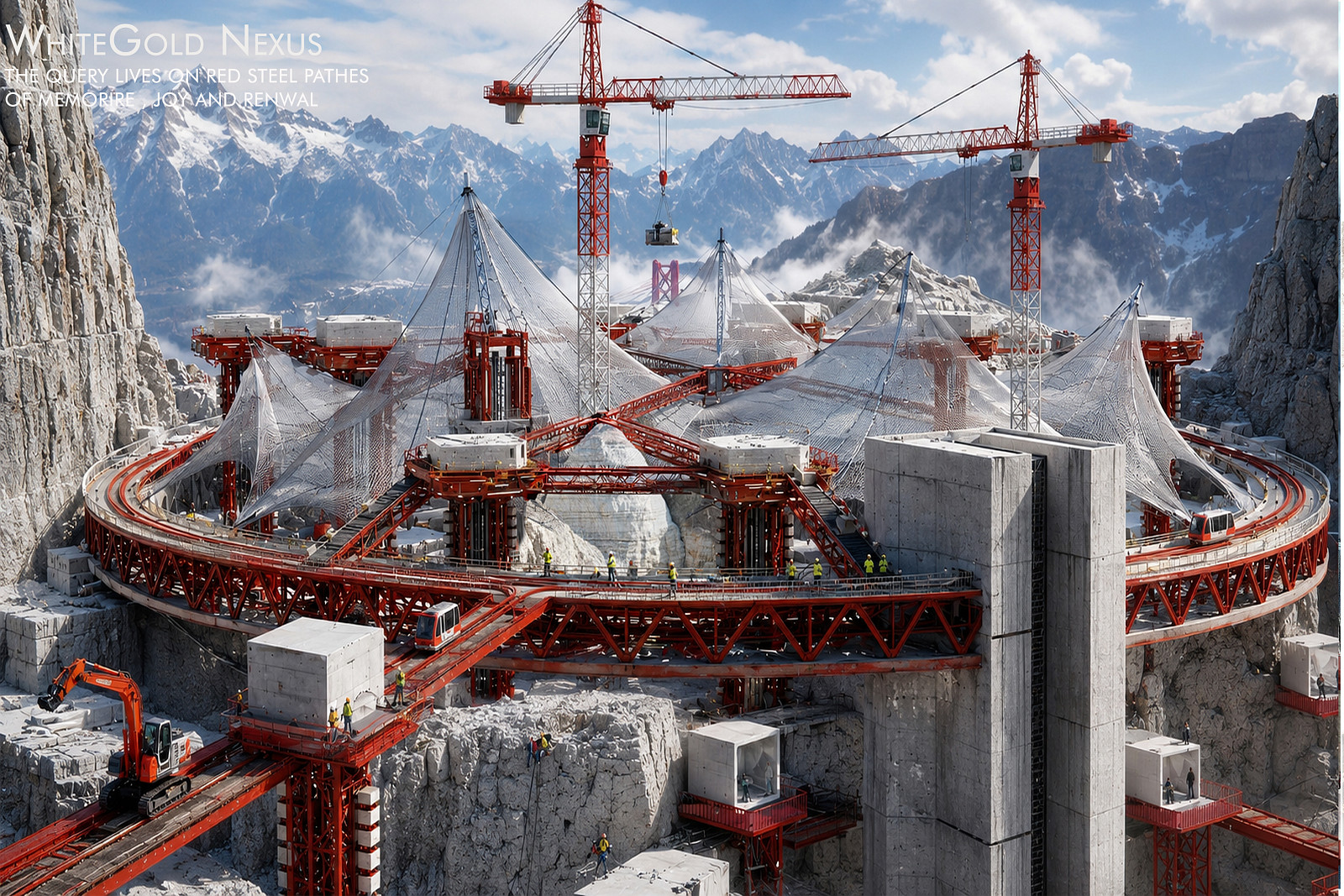
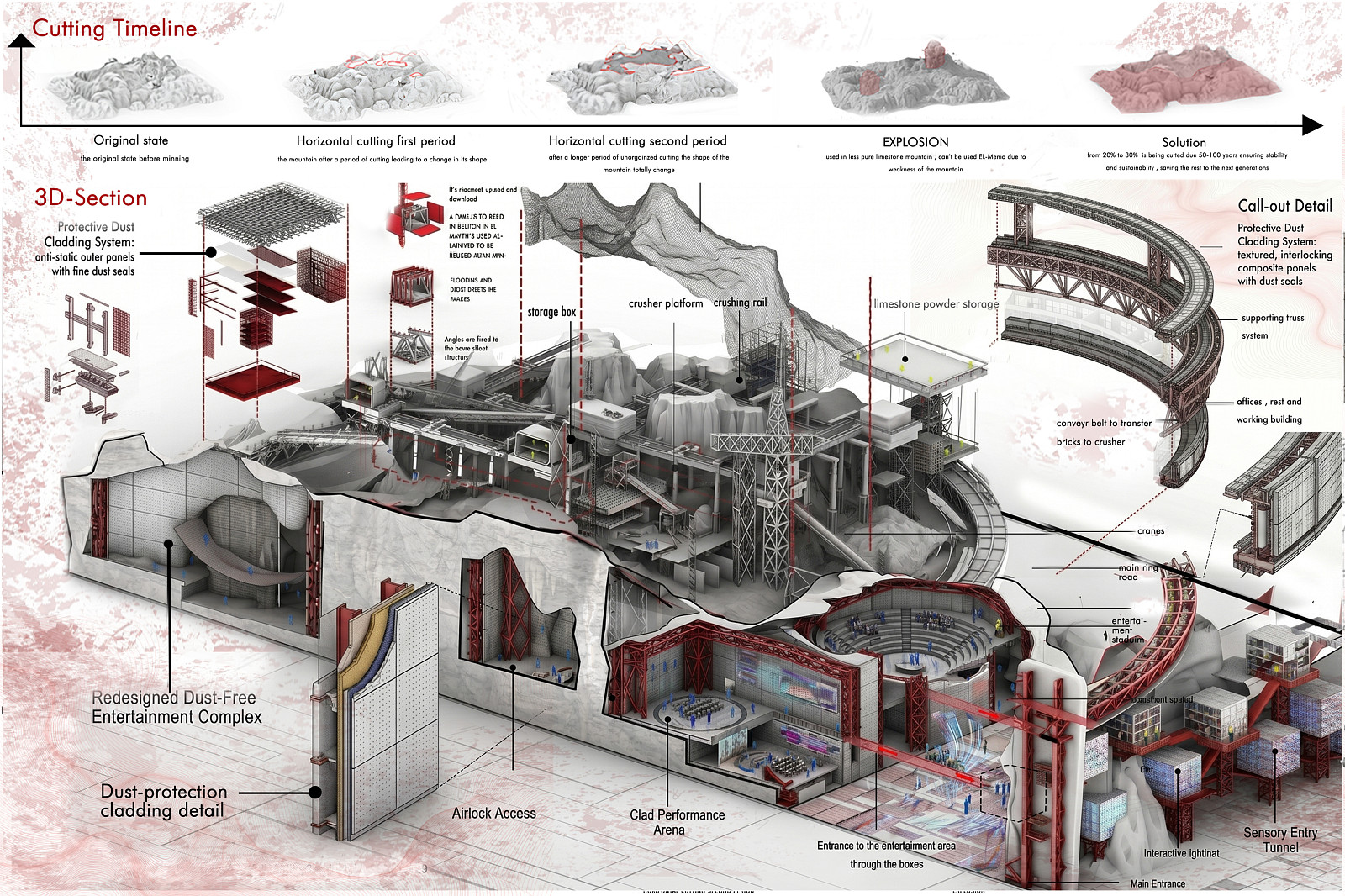
The proposal replaces conventional high-risk quarrying practices with a modern, safer mining system that significantly reduces workers' exposure to hazardous operations. At the same time, it introduces a new architectural layer inspired by the movement of quarry machinery. The iconic red steel structure acts as a circulation spine, connecting viewing platforms, cultural spaces, educational experiences, entertainment facilities, and public landscapes while allowing visitors to witness the quarry's operation safely.
This dual strategy transforms the quarry from a place defined solely by extraction into a landmark where industry, technology, architecture, and public life coexist. The quarry continues to fulfill its industrial role, but it also becomes a destination that educates visitors about geology, engineering, and Egypt's limestone heritage while creating new opportunities for tourism and economic growth.
Ultimately, WhiteGold Nexus demonstrates that the future of quarrying does not lie in choosing between industry and architecture, but in combining both. By protecting workers through safer mining technologies and introducing new architectural experiences that celebrate the quarry rather than hide it, the project establishes a sustainable model where productivity, human safety, and public engagement become equally valuable.
-
Project description
WhiteGold Nexus is an architectural proposal that redefines the future of limestone quarries by integrating safe mining technologies with cultural, recreational, and educational architecture within a single destination.
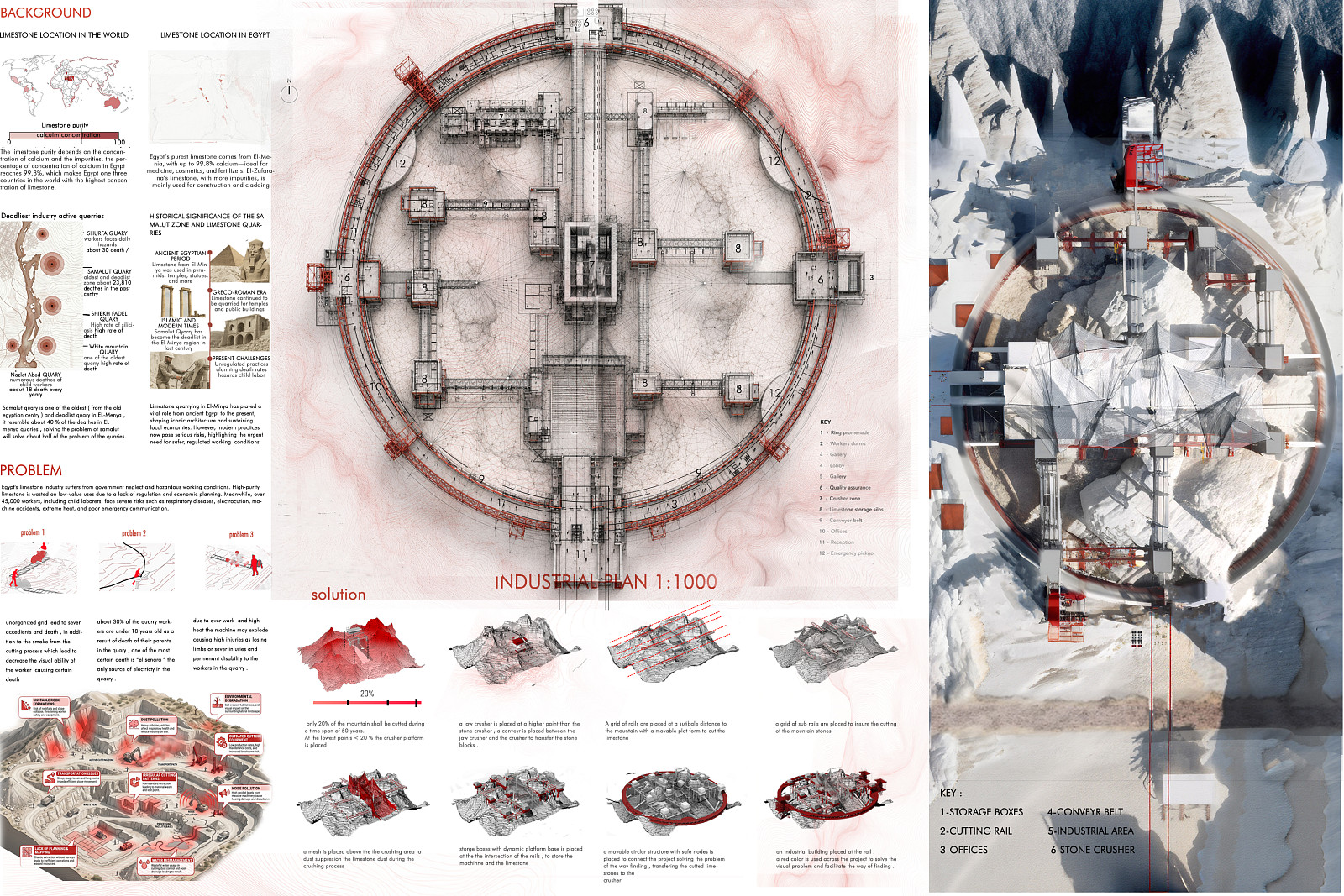
Egypt is home to some of the world's highest-purity limestone deposits, reaching up to 98% calcium carbonate, making limestone one of the country's most valuable natural resources. However, conventional quarrying methods continue to expose workers to hazardous conditions, including blasting operations, unstable excavation faces, dust pollution, and heavy machinery, resulting in significant occupational risks.
WhiteGold Nexus proposes a new quarrying model in which extraction is carried out using a modern automated mining system that minimizes direct human exposure to danger while preserving productivity. Alongside this technological transformation, the project introduces a contemporary architectural intervention that transforms the quarry into a public destination. Elevated circulation, observation platforms, exhibition spaces, educational facilities, entertainment venues, and recreational programs are carefully integrated into the quarry without compromising its industrial function.
Rather than separating industry from architecture, the proposal allows them to coexist, creating a quarry that continues to produce valuable resources while simultaneously generating cultural, social, and economic value.
Technical information
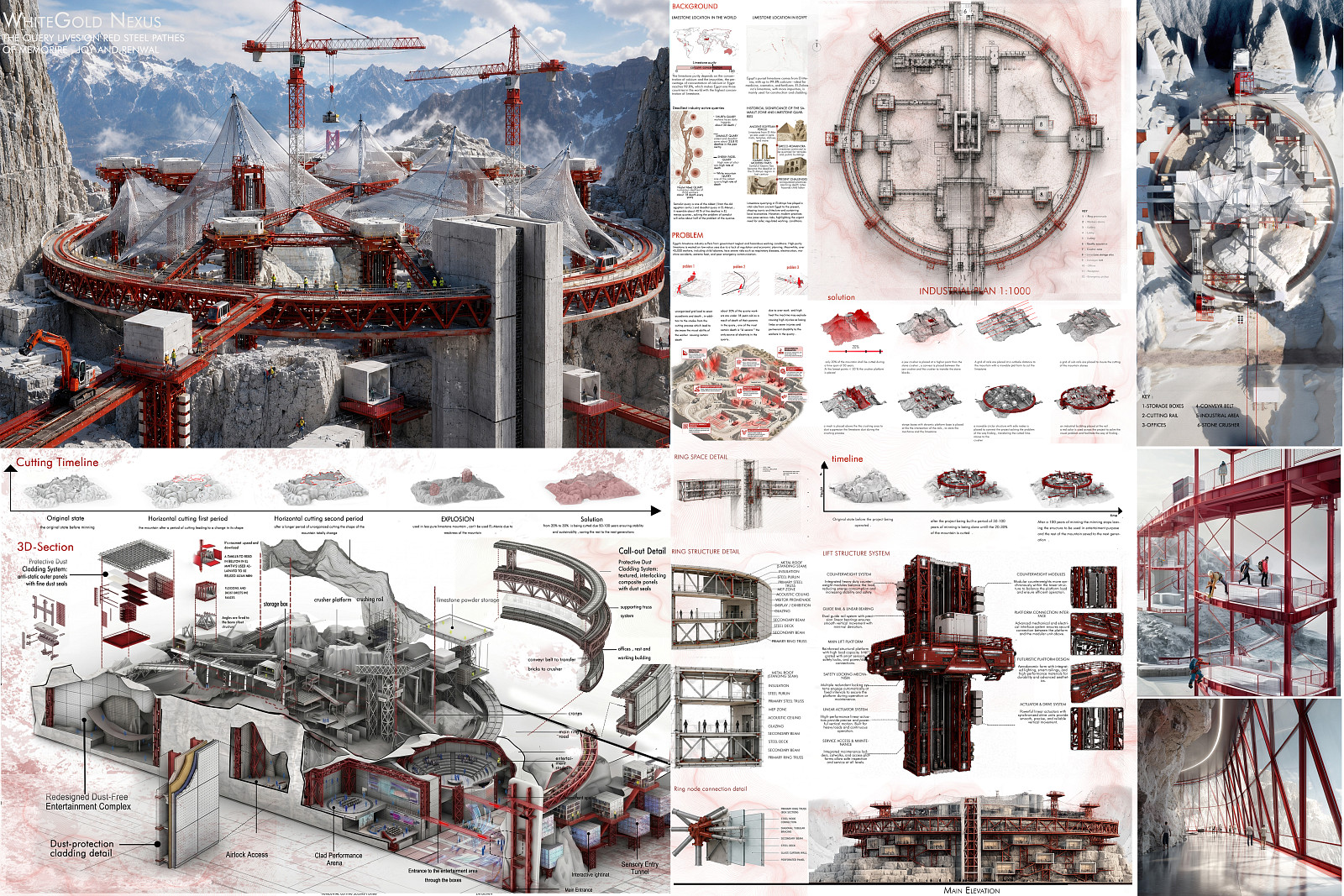
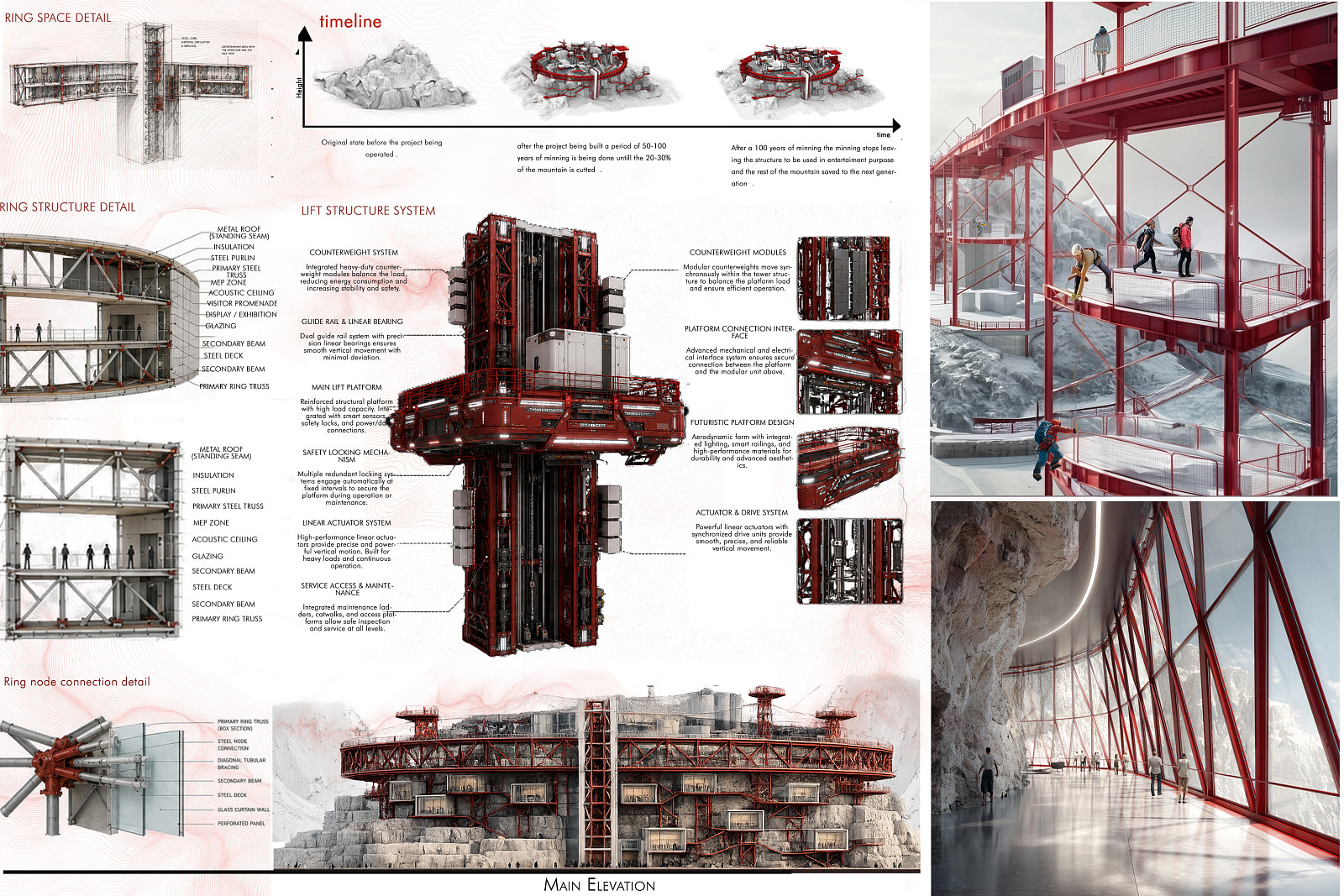
WhiteGold Nexus utilizes a modular high-strength steel exoskeleton anchored around the quarry perimeter to preserve the existing landscape while supporting both mining operations and public spaces. The structure consists of a circular steel truss system that carries elevated walkways, observation decks, and operational platforms.
The project's key innovation is a vertically movable platform operated by synchronized hydraulic lifting mechanisms integrated into the support towers. As each limestone layer is extracted, the platform descends safely to the next excavation level, allowing continuous mining without dismantling the structure. Guide rails and mechanical locking systems ensure precise alignment and structural stability at every stage.
Mining operations are performed using modern automated equipment, including robotic drilling, diamond-wire cutting machines, and conveyor systems, significantly reducing workers' exposure to hazardous conditions such as rock falls, dust, and blasting.
Above the operational level, the structure accommodates educational, cultural, and recreational facilities, allowing the quarry to function simultaneously as an active industrial site and a public destination. This adaptive system demonstrates how engineering and architecture can work together to improve safety, preserve productivity, and create lasting social and economic value.

Copyright © 2026 INSPIRELI | All rights reserved. Use of this website signifies your agreement to the Terms of Use, Privacy Policy, and use of cookies.
