Floating Phantasm


 Soha Elgohary
Project idea
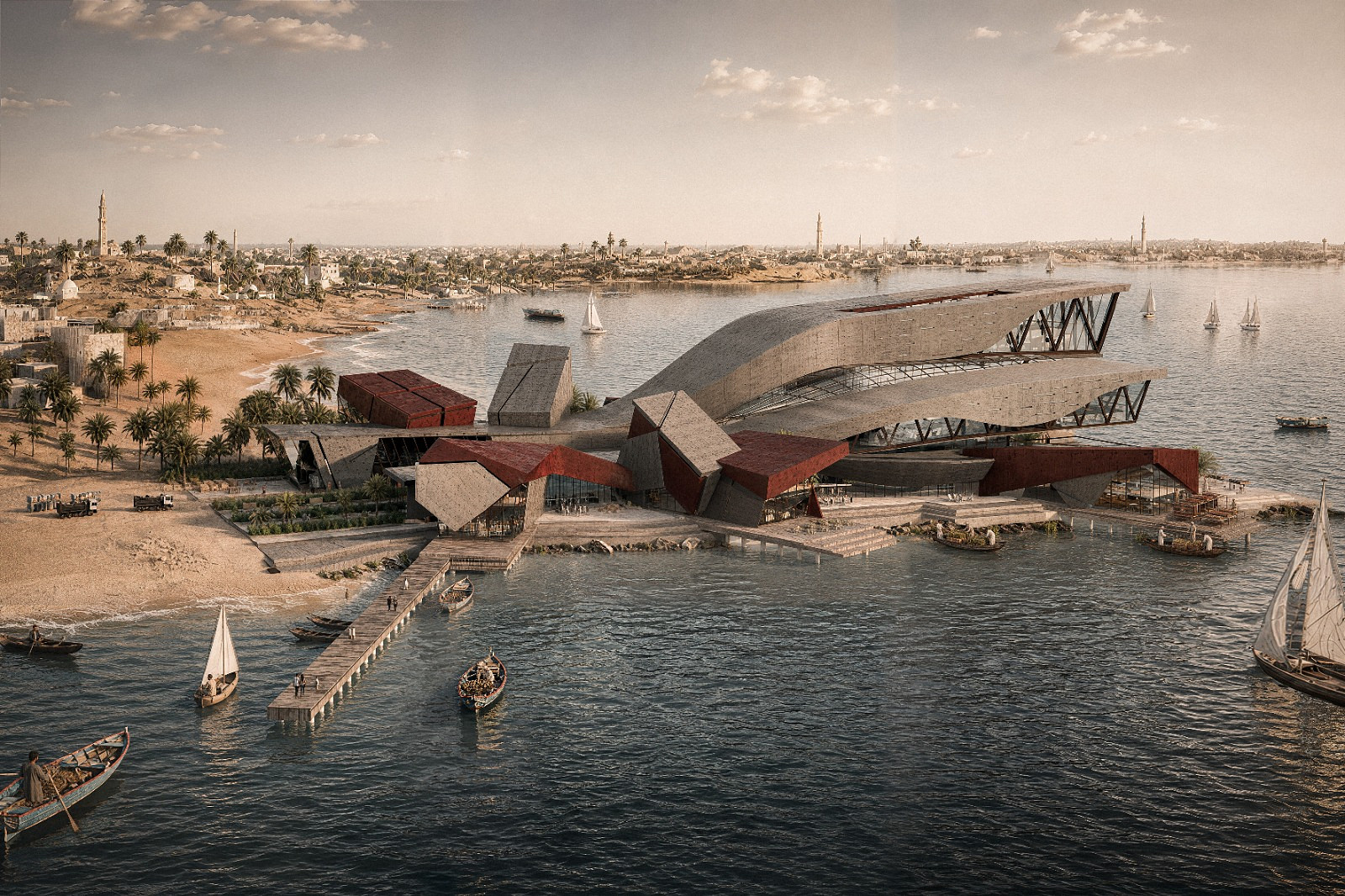
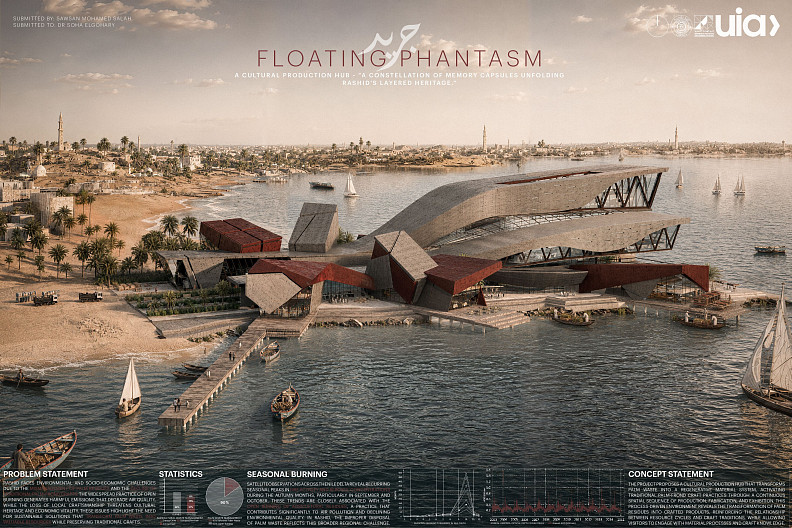
The project proposes a Cultural Production Hub in Rashid that transforms palm waste into a valuable resource through the integration of sustainable agro-industrial processes, traditional craftsmanship, and cultural heritage. Responding to the environmental impacts of palm residue burning and the decline of local palm crafts, the project establishes a comprehensive framework that connects material processing, craft production, education, exhibition, and public engagement within a single architectural destination. By celebrating the historical relationship between Rashid and the date palm, the project preserves traditional knowledge while introducing innovative applications for palm-based materials. Its objective is to create an environmentally responsible and economically productive hub that strengthens the local identity, supports artisans and small industries, promotes sustainable material innovation, and positions Rashid as a center for cultural, educational, and ecological regeneration.
Project description
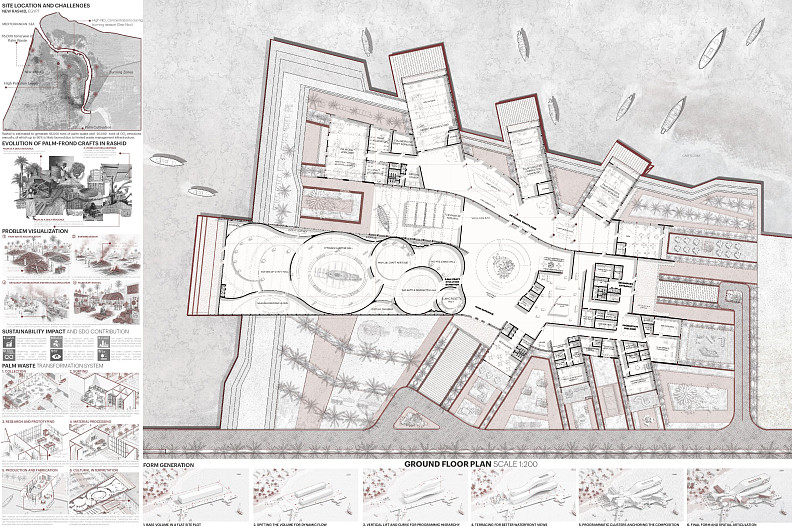
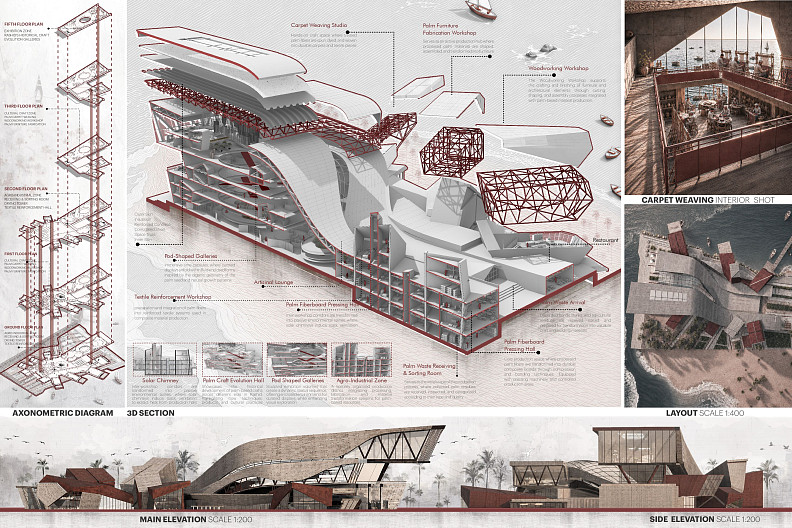
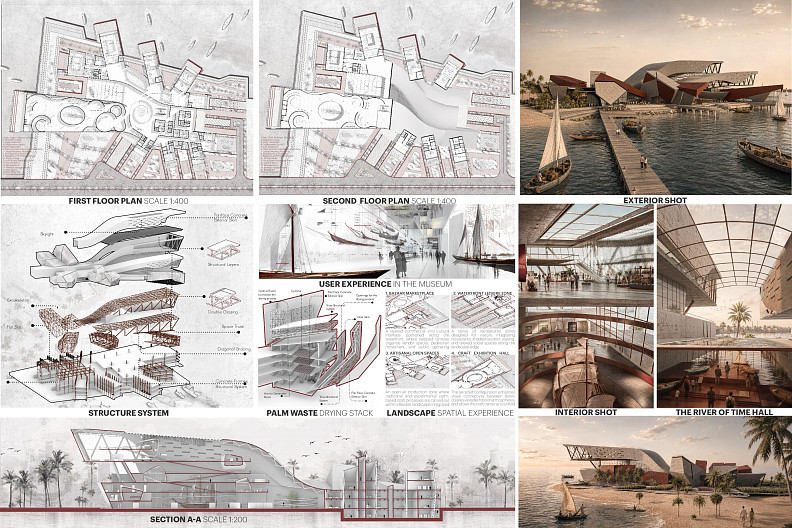
The project is conceived as a Cultural Production Hub structured around three primary architectural domains: the Agro-Industrial Zone, the Artisanal Crafts Zone, and the Palm Craft Evolution Exhibition. Together, these components establish a comprehensive architectural framework that integrates material production, craftsmanship, and cultural interpretation, transforming the lifecycle of palm residues into a cohesive spatial narrative.
The Agro-Industrial Zone accommodates the processing and material transformation of palm residues through a sequence of production, research, and fabrication facilities, forming the productive core of the project. Complementing this, the Artisanal Crafts Zone houses workshops and making spaces where traditional palm craft techniques are preserved, reinterpreted, and adapted to contemporary applications. The Palm Craft Evolution Exhibition functions as the cultural nucleus of the project, presenting the historical development of palm craftsmanship in Rashid through curated galleries that document the changing relationship between the date palm, local craftsmanship, and the city's cultural identity.
The architectural composition is organized through a clear hierarchy of programmatic zones, allowing each function to operate independently while contributing to a unified institutional vision. The transition from industrial production to craft fabrication and finally to cultural exhibition establishes a deliberate progression that reveals the transformation of palm residues from raw agricultural by-products into materials of environmental, cultural, and economic value. Through this spatial organization, the project positions architecture as a medium that accommodates production, preserves heritage, and communicates the evolving narrative of palm craftsmanship in Rashid.
Technical information
The project is based on a technical system that transforms palm waste into valuable architectural and craft materials through a sequence of collection, drying, processing, and production stages. The project integrates a palm waste processing zone, including drying stacks, fiber extraction, textile reinforcement, and composite pressing areas, where agricultural residues are converted into usable materials. These production spaces are connected with craft workshops, exhibition halls, and educational areas to create a complete journey from raw material transformation to final product display. The architectural organization supports the workflow between industrial and public functions, allowing visitors to experience the process of palm waste regeneration while preserving the cultural value of palm-based crafts in Rashid.
Documentation

Copyright © 2026 INSPIRELI | All rights reserved. Use of this website signifies your agreement to the Terms of Use, Privacy Policy, and use of cookies.