Hydro Vessel


 Esraa A.Metwally
Project idea
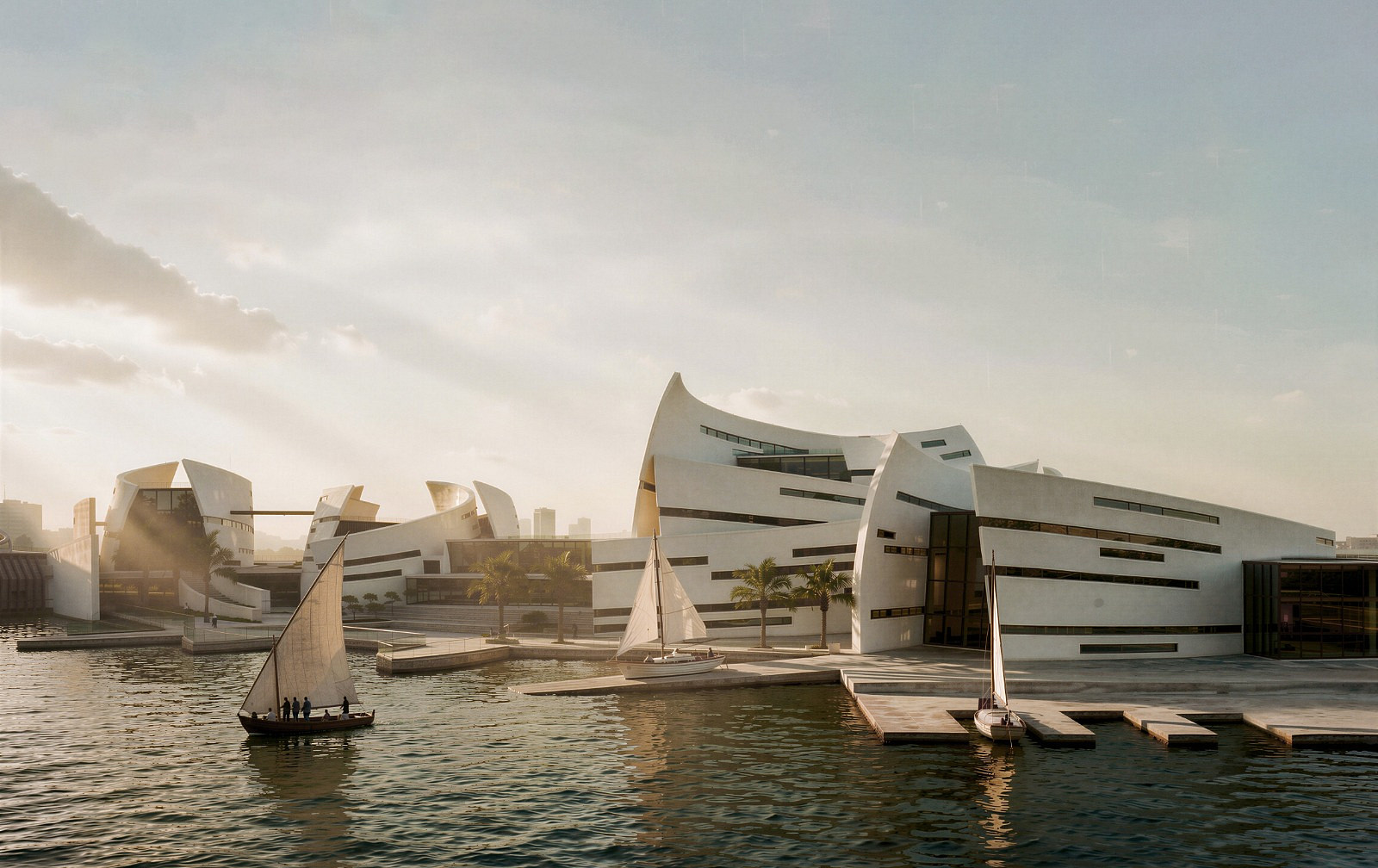
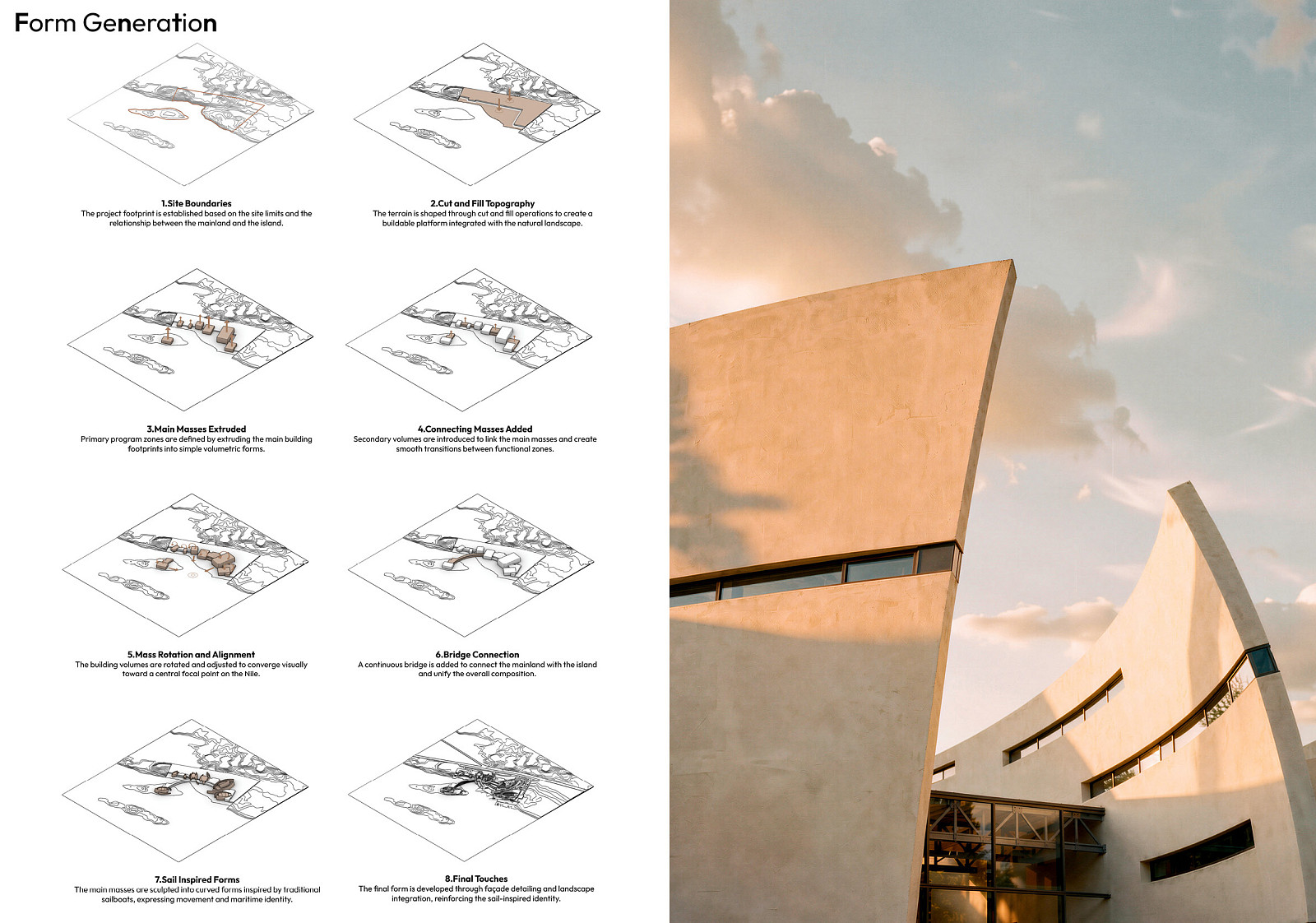
Hydro Vessel is a research-driven maritime innovation hub that reinterprets Egypt's traditional Nile sailboats through prototype development, advanced materials, digital fabrication, and public engagement. Rather than replacing the historic felucca or dahabiya, the project provides a platform where new generations of Nile sailboats can be researched, assembled, tested, and exhibited, preserving Egypt's maritime heritage while advancing sustainable river mobility.
Project description
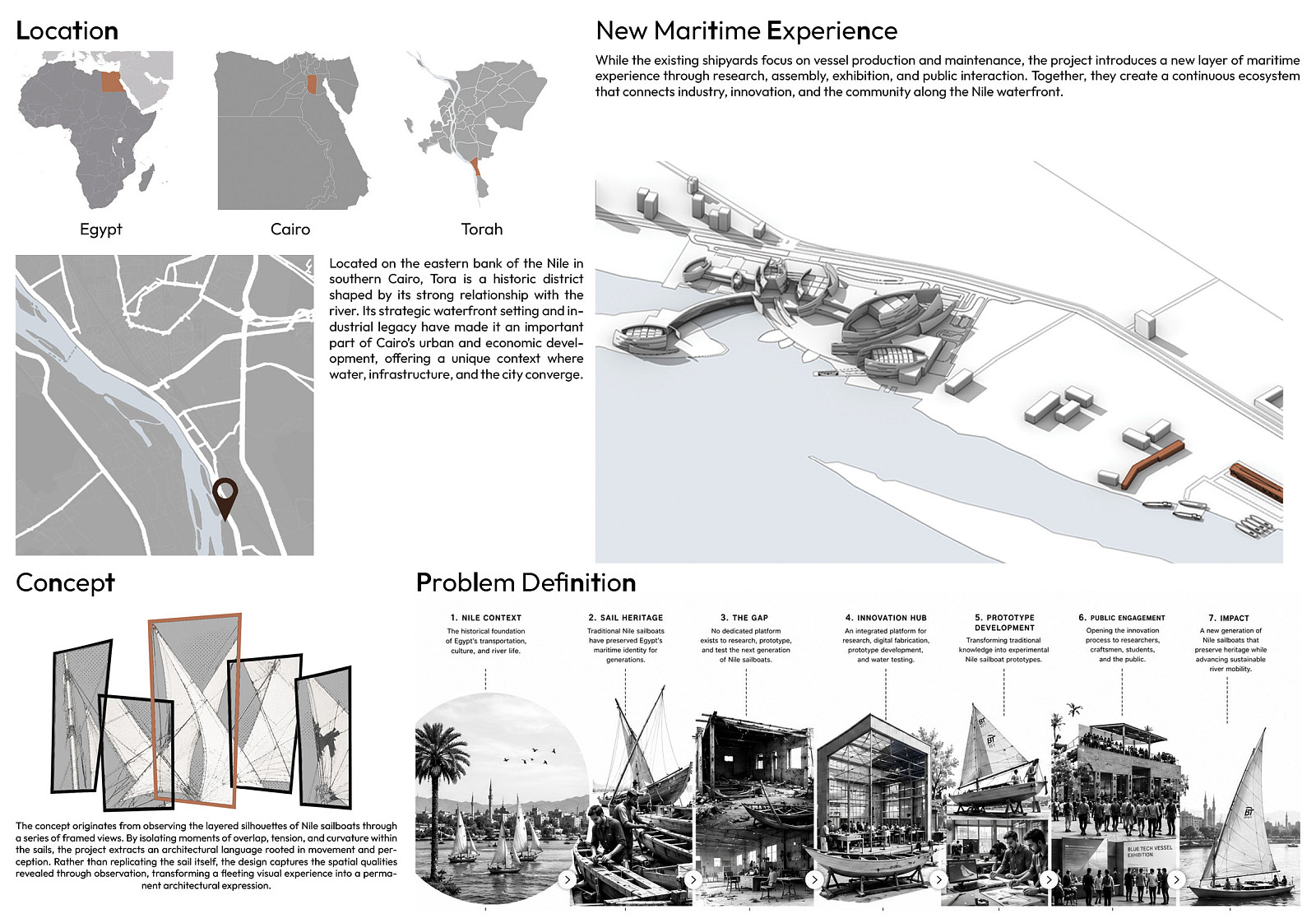
Egypt's relationship with the Nile has shaped its transportation, culture, and craftsmanship for thousands of years. Among its most enduring symbols are the traditional Nile sailboats, whose fundamental design has remained largely unchanged despite significant advances in materials, fabrication technologies, and environmental engineering. While Egypt is investing in the modernization of its maritime infrastructure through the Blue Economy strategy, there is currently no architectural platform dedicated to researching, prototyping, and testing the future of Nile sailboats.
Hydro Vessel responds to this gap by proposing a new architectural typology: a Maritime Innovation Port that integrates research, digital fabrication, prototype assembly, water testing, and public engagement within a single waterfront environment. Rather than operating as a conventional industrial shipyard, the project functions as a collaborative innovation hub where architects, engineers, researchers, craftsmen, and students work together to develop experimental prototypes inspired by Egypt's maritime heritage.
The project investigates new materials, structural systems, fabrication techniques, and sustainable technologies while preserving the cultural identity and navigational principles of traditional Nile sailboats. Through laboratories, fabrication workshops, testing basins, exhibition spaces, and educational facilities, visitors can experience the complete journey of a prototype—from research and design to assembly, water testing, and public exhibition.
By transforming innovation into a visible and participatory process, the project reconnects people with the Nile, revitalizes the industrial riverfront of Helwan–Turah, and establishes a national platform for advancing sustainable river mobility. Ultimately, Hydro Vessel positions architecture as a catalyst for preserving Egypt's maritime heritage while shaping the next generation of Nile sailboats through research, collaboration, and technological innovation.
Technical information
Project Type
Hydro Vessel is a mixed-use maritime innovation hub that combines research, education, prototype development, public exhibition, and waterfront recreation within a single architectural complex. The project functions as an Innovation Port, providing an integrated environment where the complete lifecycle of experimental Nile sailboats—from concept development to water testing—is carried out.
Project Location
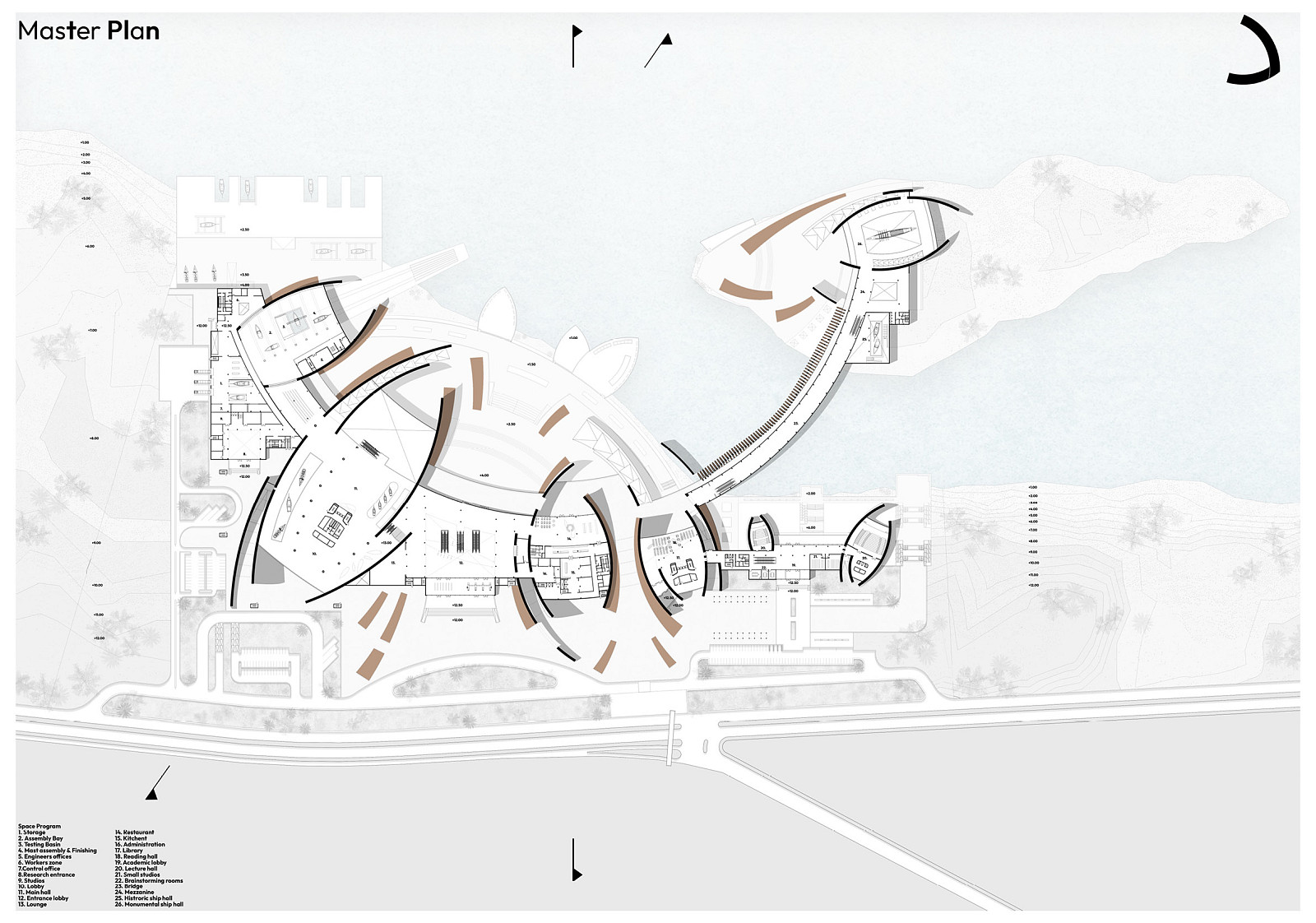
The project is located on the Nile waterfront in Turah, Helwan, Cairo, Egypt, within a historically industrial riverfront characterized by shipbuilding activities and direct access to the Nile. The site is strategically positioned adjacent to Maasara Shipyard (Arab Contractors Shipyard) and Giza Shipyard, allowing the project to build upon the area's existing maritime infrastructure while transforming it into a center for research, innovation, and public engagement.
Project Function
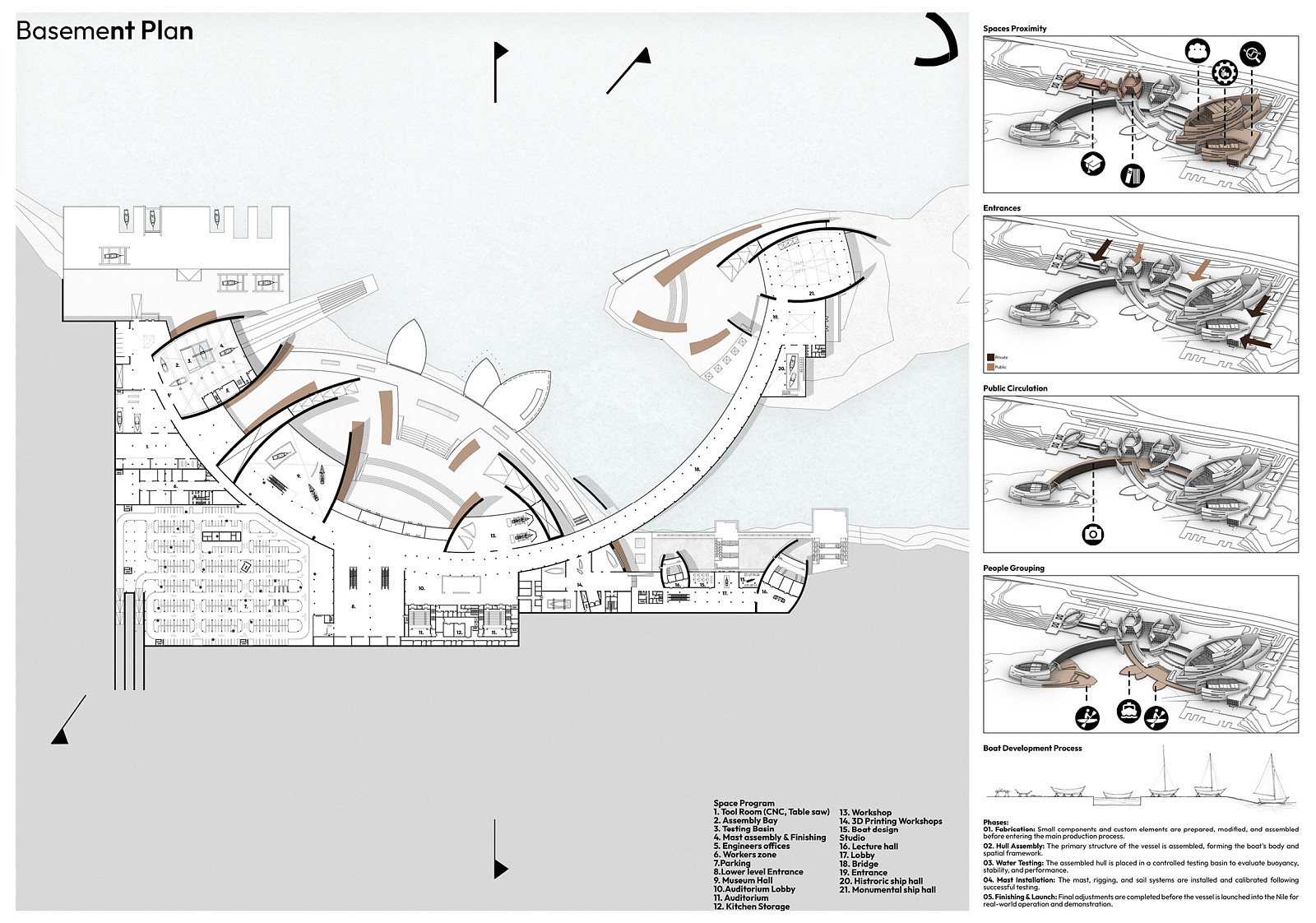
Rather than operating as a conventional production shipyard, Hydro Vessel serves as a research-driven platform dedicated to the development of experimental Nile sailboat prototypes. The project integrates design studios, research laboratories, digital fabrication workshops, assembly halls, testing facilities, and exhibition spaces into a continuous workflow that encourages collaboration between researchers, engineers, designers, craftsmen, students, and the public.
Architectural Program
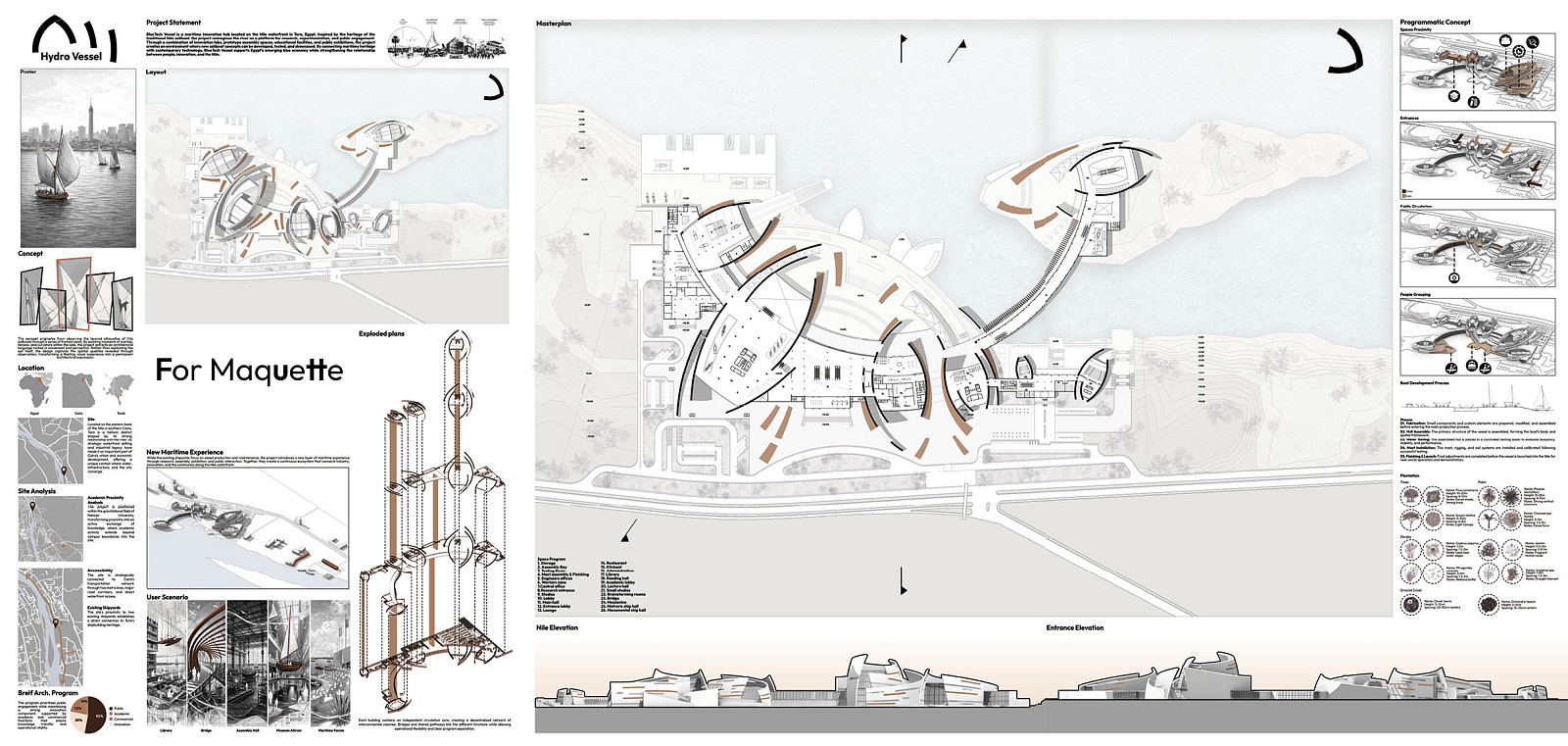
The architectural program is organized into four primary zones that balance operational efficiency with public accessibility. The Public Zone occupies approximately 53% of the project and includes the maritime museum, exhibition halls, waterfront promenade, observation decks, and community spaces. The Innovation Zone, representing 25%, accommodates research laboratories, digital fabrication facilities, prototype workshops, and testing spaces. The Commercial Zone accounts for 12%, supporting visitors through cafés, retail spaces, and event-related functions, while the Academic Zone, comprising 10%, includes learning studios, seminar rooms, library facilities, and collaborative educational spaces.
Research Focus
The project focuses on advancing the future of Nile sailboats through research into innovative materials, lightweight structural systems, digital fabrication technologies, sustainable construction methods, and hydrodynamic performance. Instead of replacing traditional boat typologies, the project investigates how their cultural identity can be preserved while improving efficiency, durability, environmental performance, and construction techniques through full-scale prototype development.
Prototype Development Process
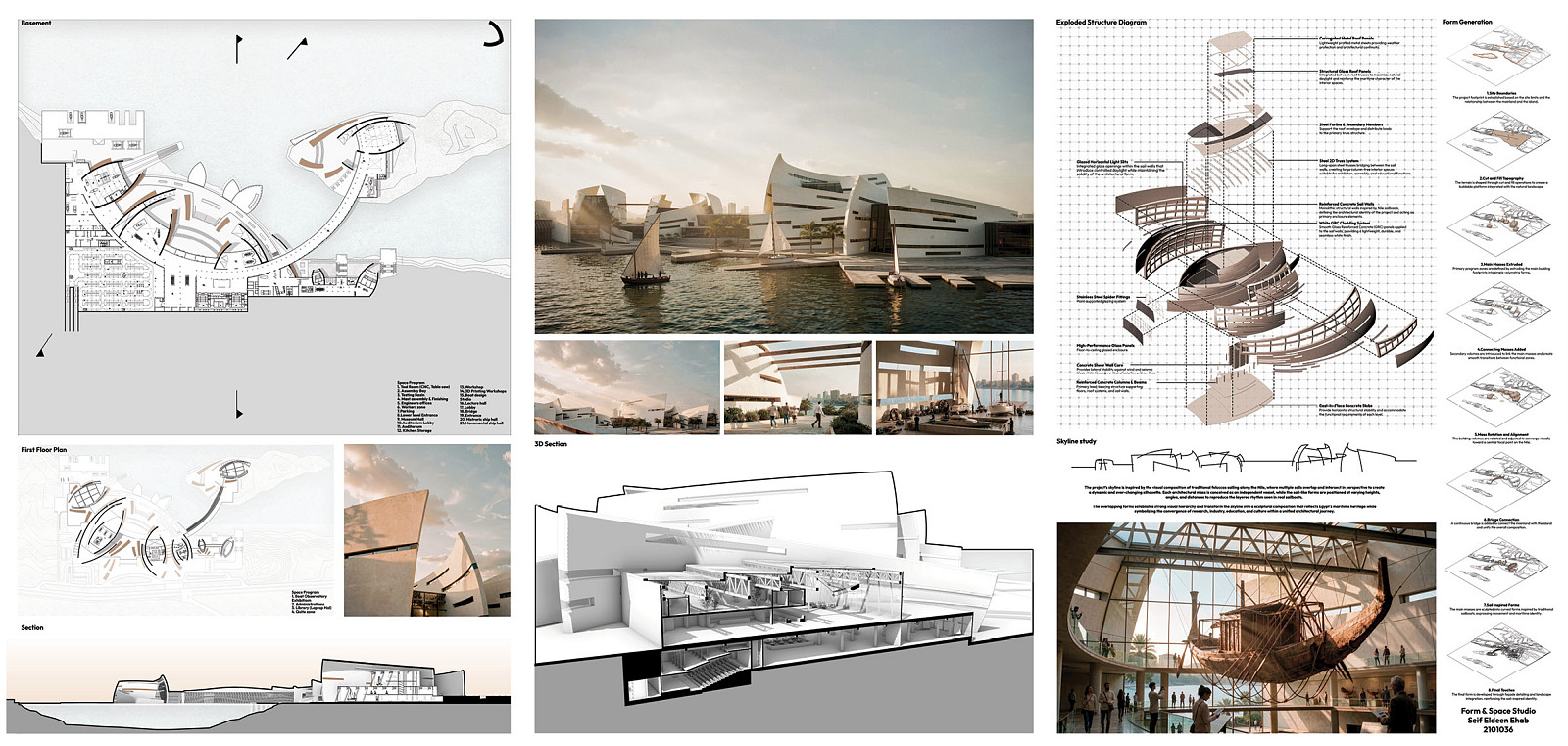
The project follows a continuous research and development process beginning with conceptual design and digital simulation, followed by prototype fabrication, structural assembly, mast installation, water testing, performance evaluation, and public exhibition. This iterative workflow allows each prototype to become both a research outcome and an educational tool, creating a cycle of continuous innovation within the maritime industry.
Structural System
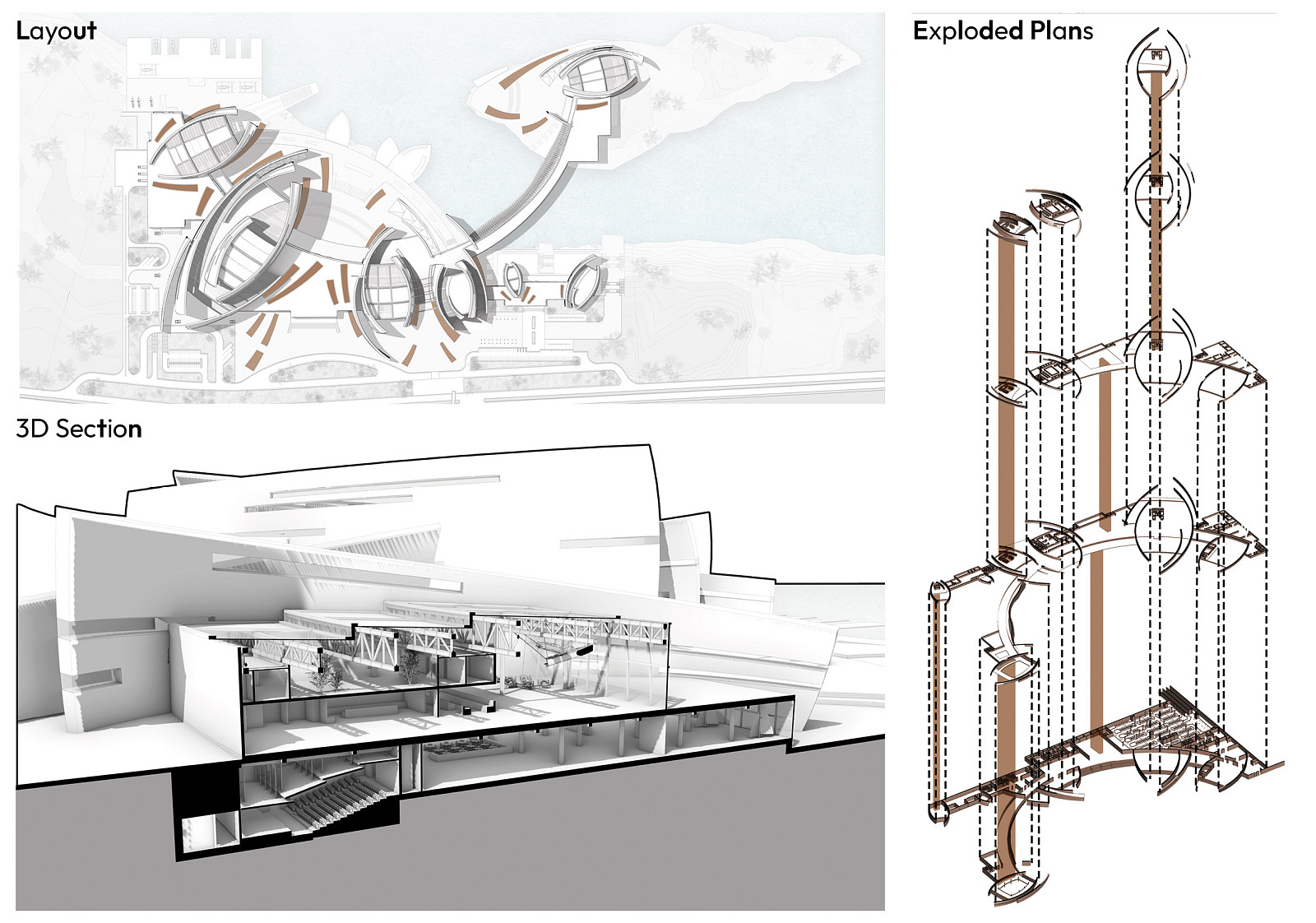
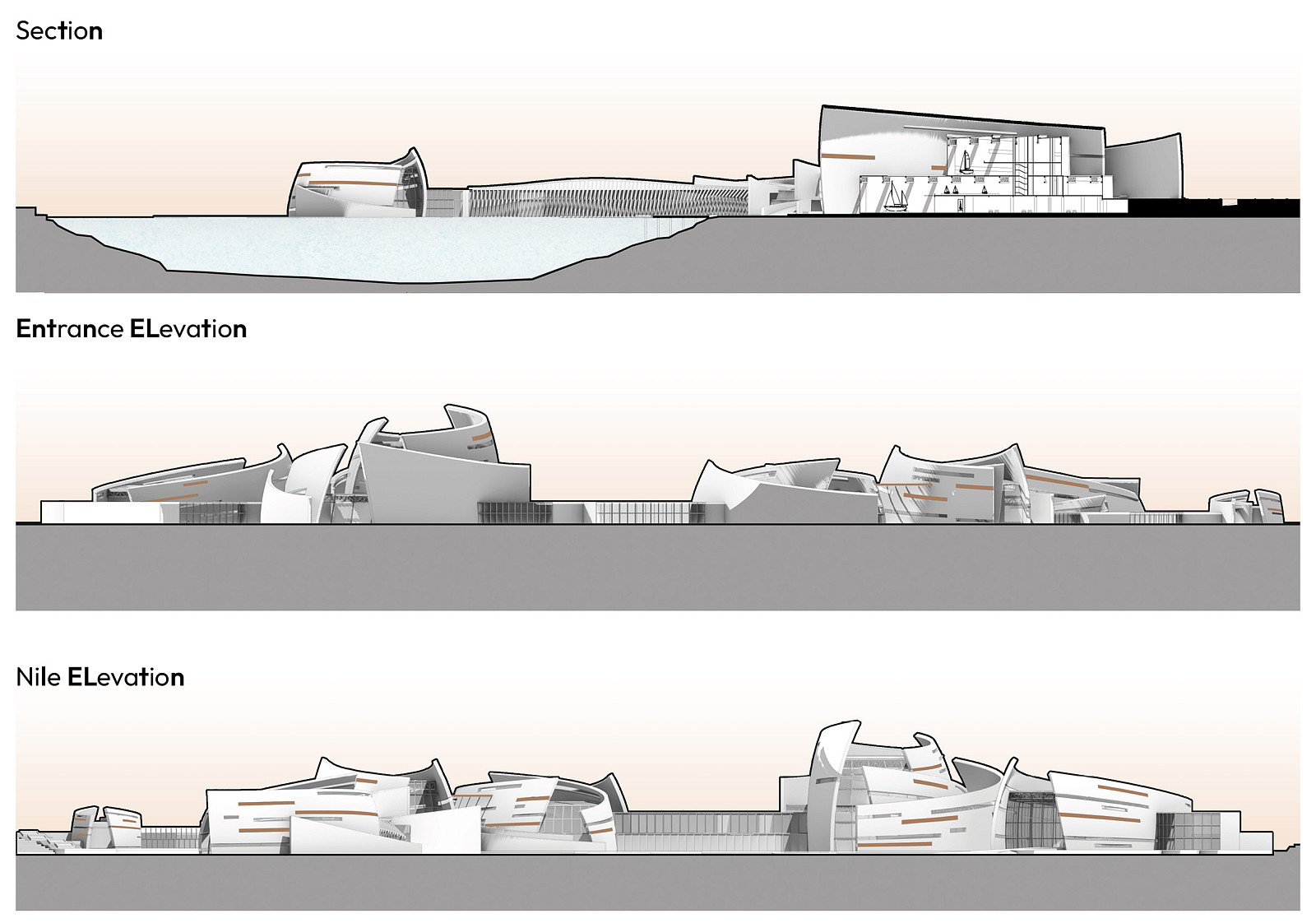
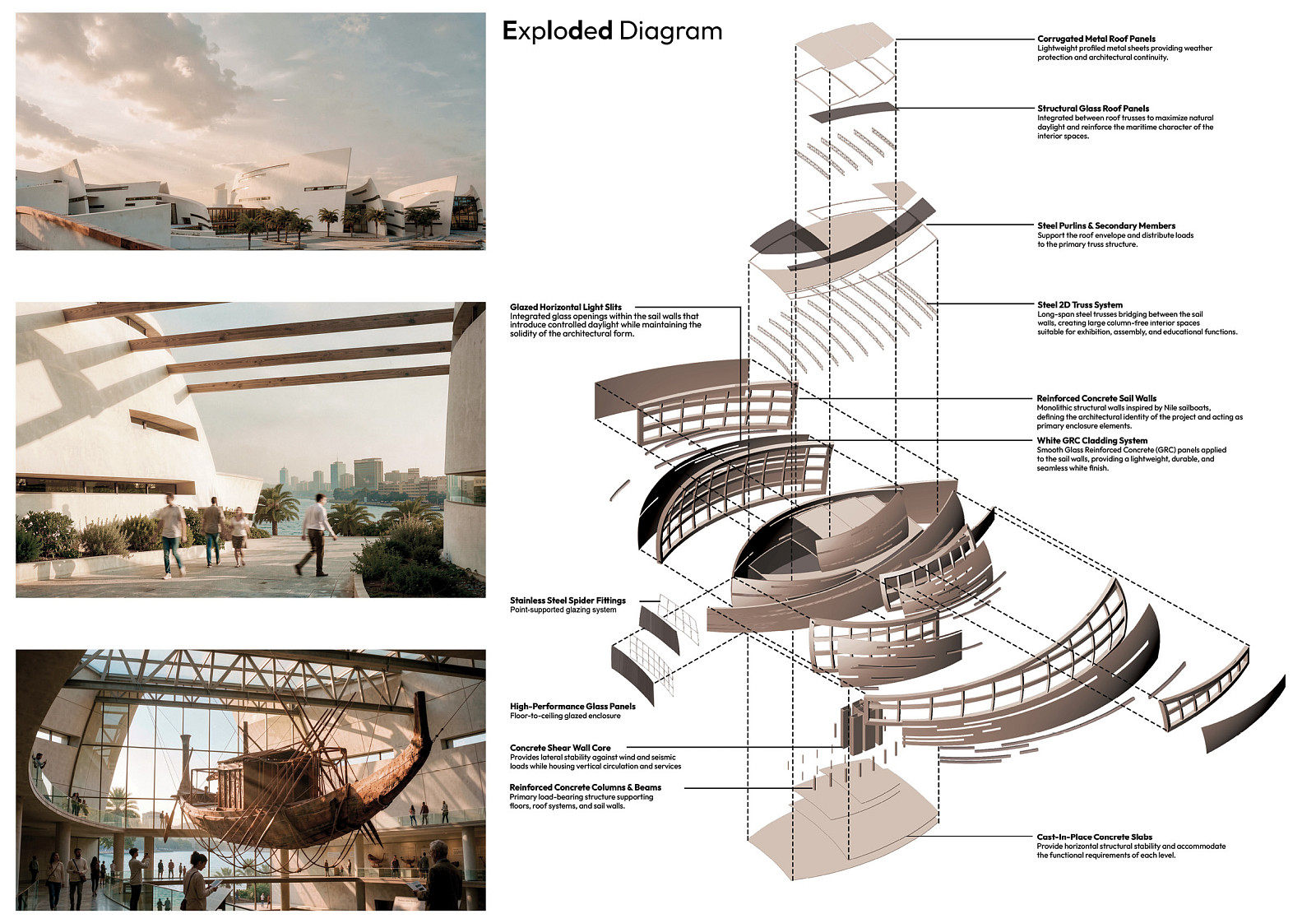
The architectural design is based on a hybrid structural system that combines reinforced concrete curved walls with long-span steel trusses to achieve large column-free spaces required for prototype assembly, exhibition halls, and research facilities. The structural strategy emphasizes flexibility, allowing workshops and assembly areas to accommodate different scales of experimental vessels while expressing the project's sail-inspired architectural language.
Users
Hydro Vessel is designed to serve a diverse range of users, including researchers, engineers, architects, industrial designers, craftsmen, local communities, tourists, and visitors. The integration of research facilities with public spaces allows knowledge exchange between specialists and the wider community, transforming the innovation process into an accessible educational experience.

Copyright © 2026 INSPIRELI | All rights reserved. Use of this website signifies your agreement to the Terms of Use, Privacy Policy, and use of cookies.