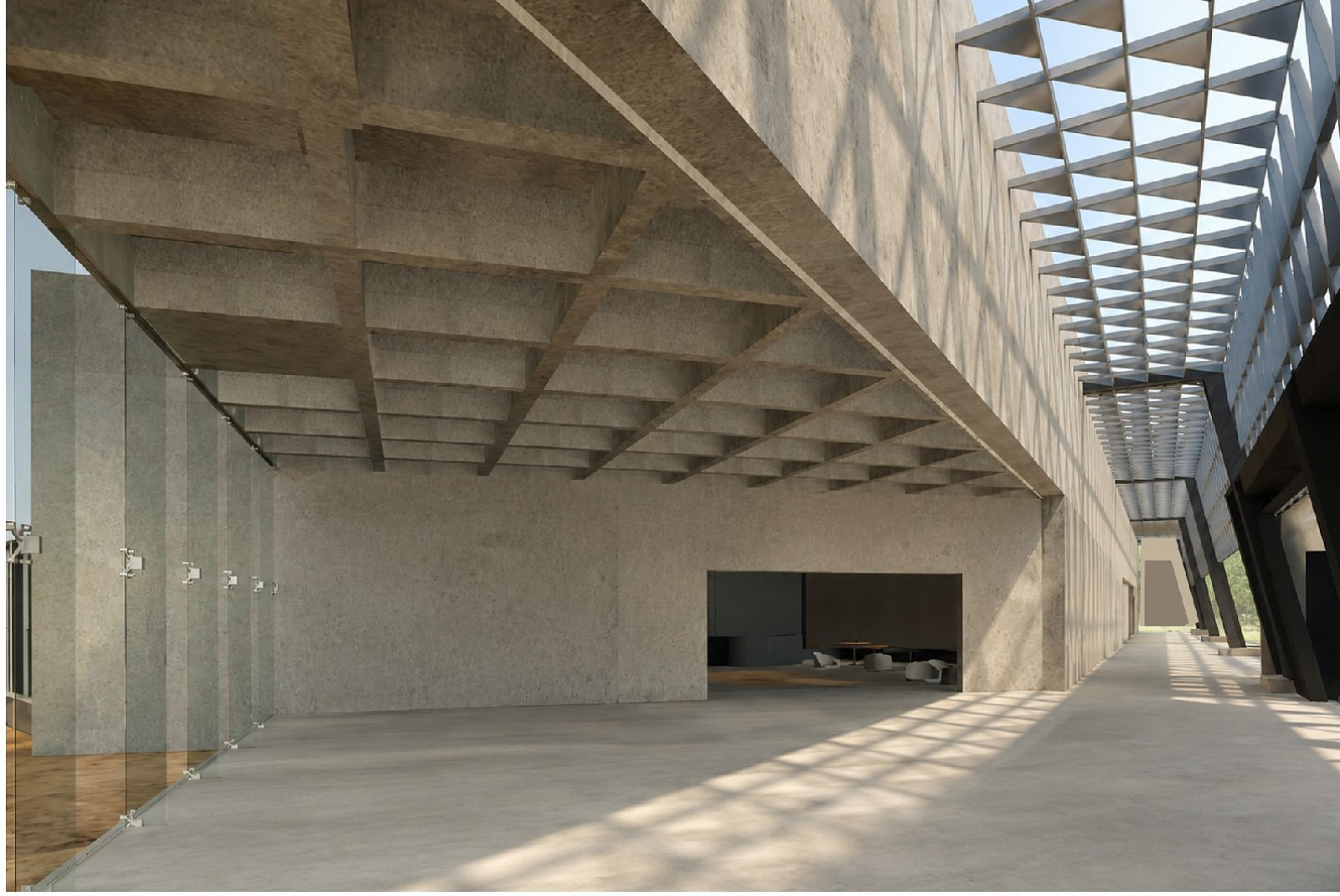
renewable energy research center


Project idea
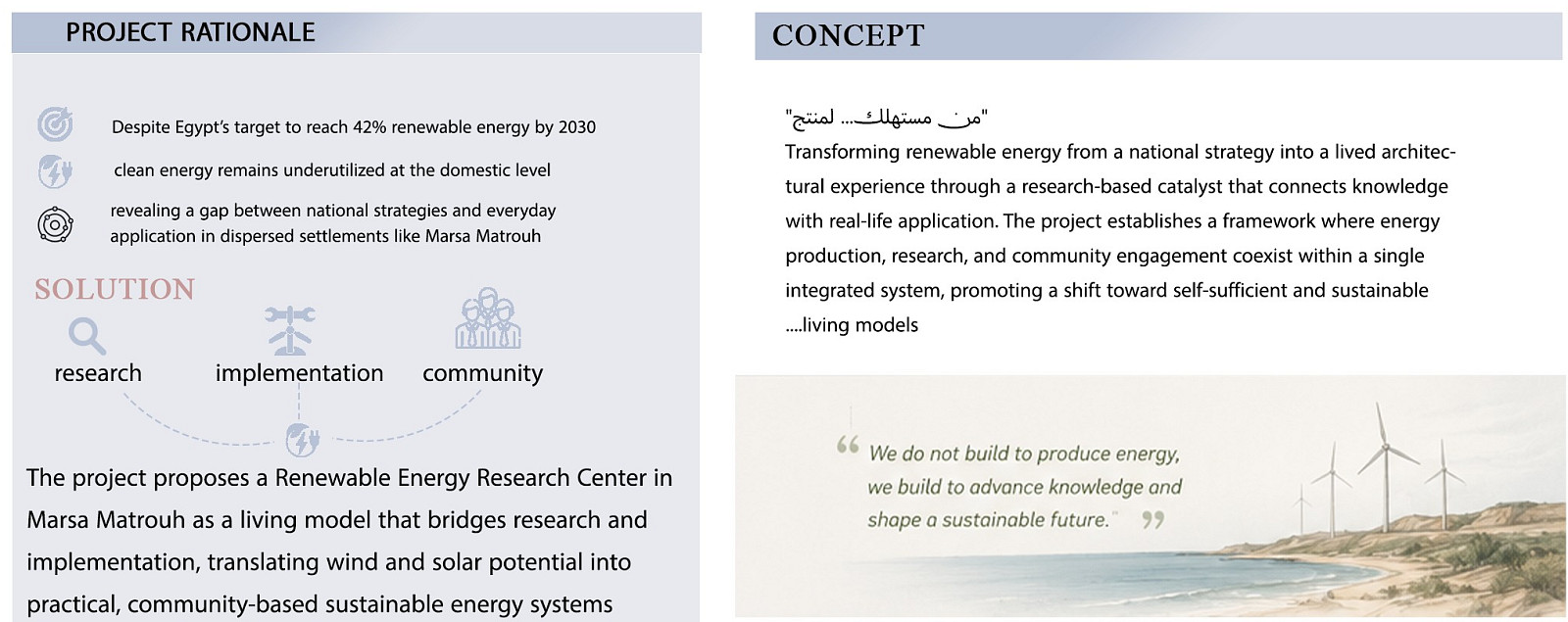
The Renewable Energy Research Center is envisioned as a catalyst for scientific innovation, where research, education, and environmental responsibility converge to shape the future of sustainable energy. Rather than functioning as an industrial production facility, the project establishes a collaborative platform dedicated to developing renewable energy technologies through experimentation, interdisciplinary research, and knowledge exchange.
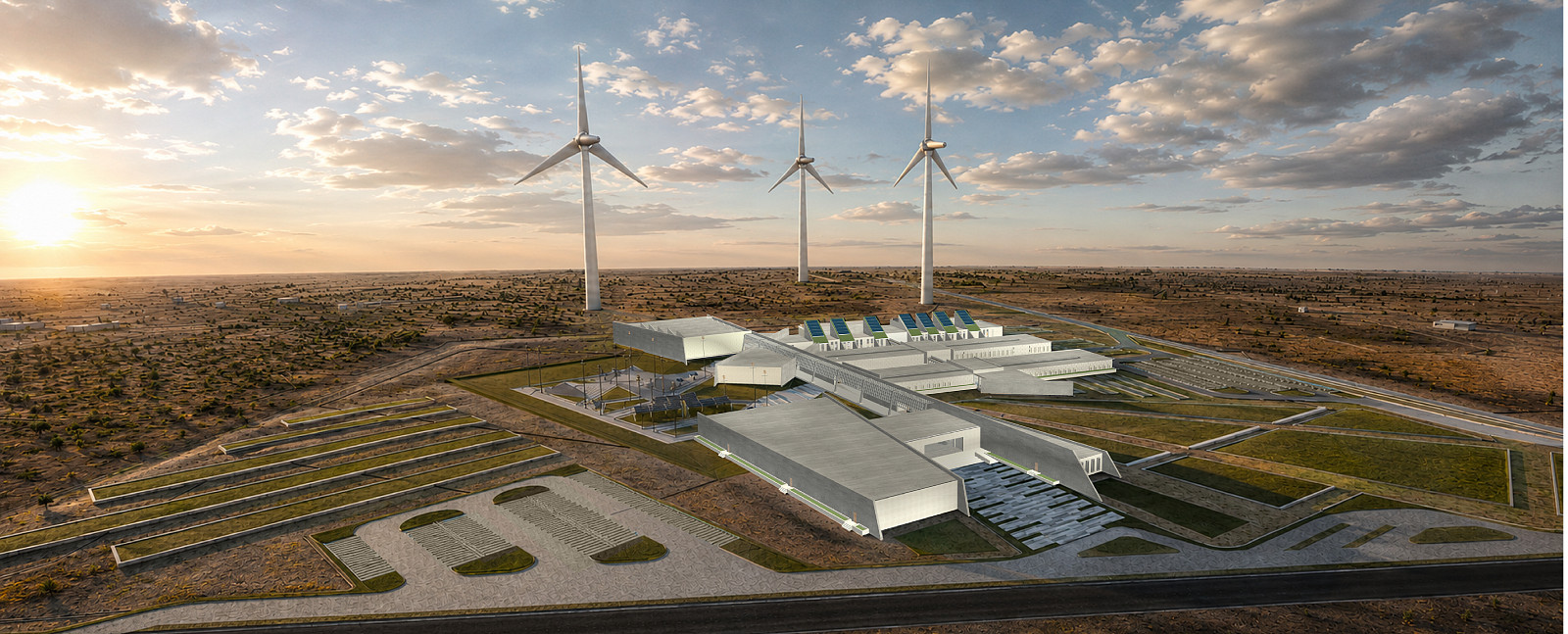
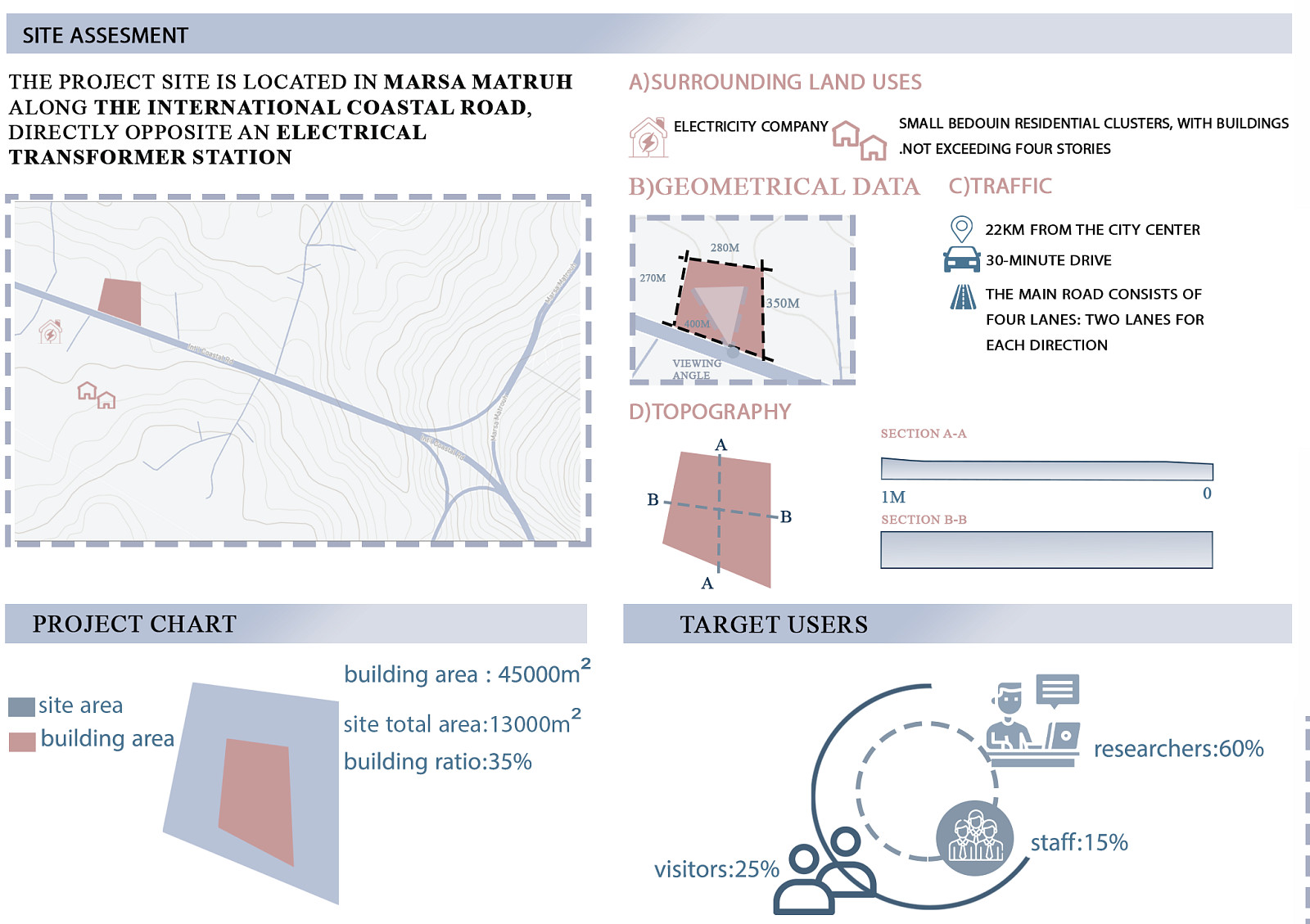
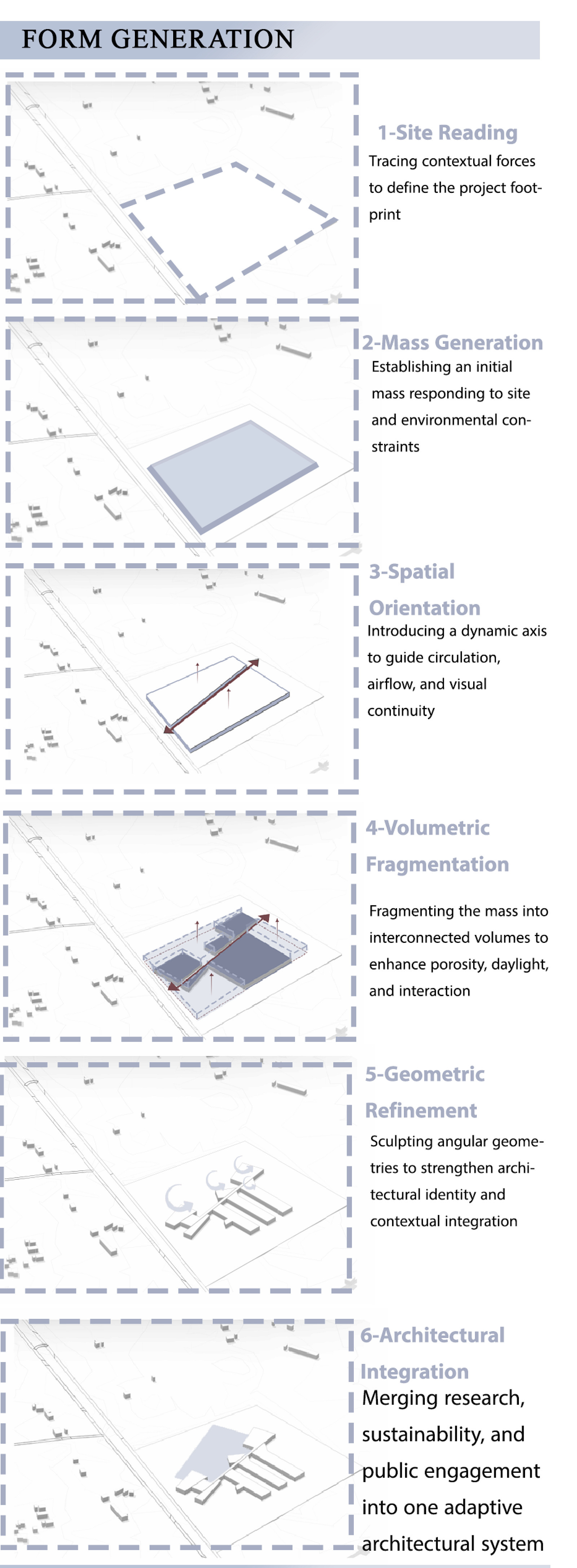
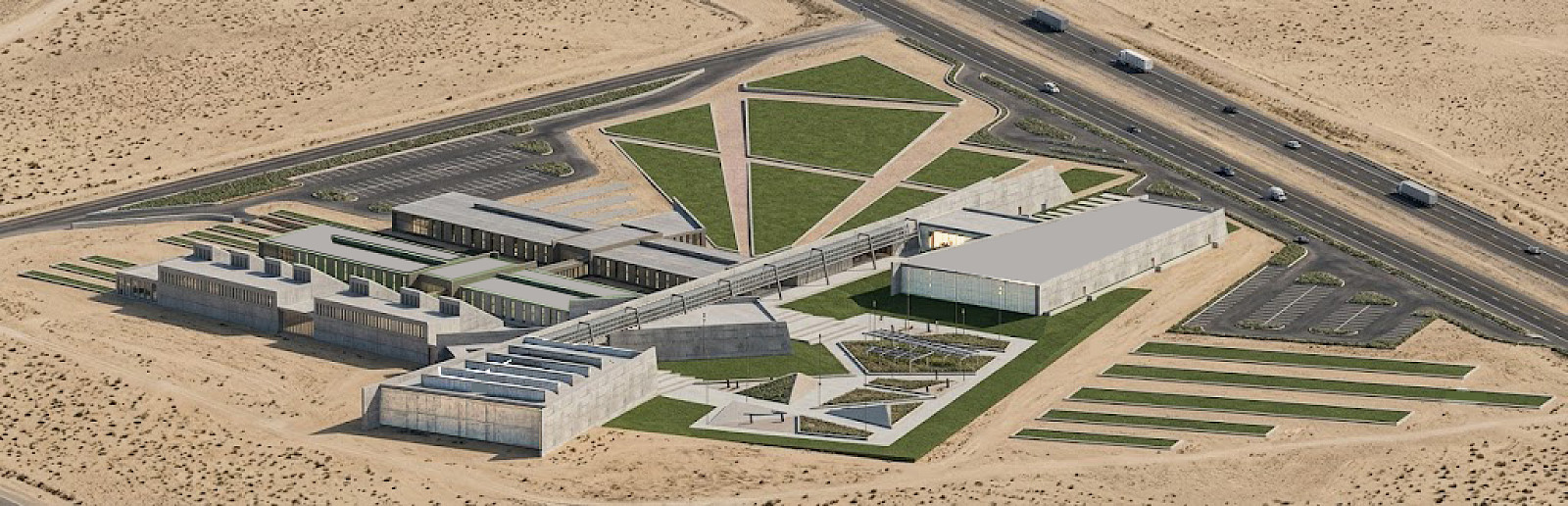
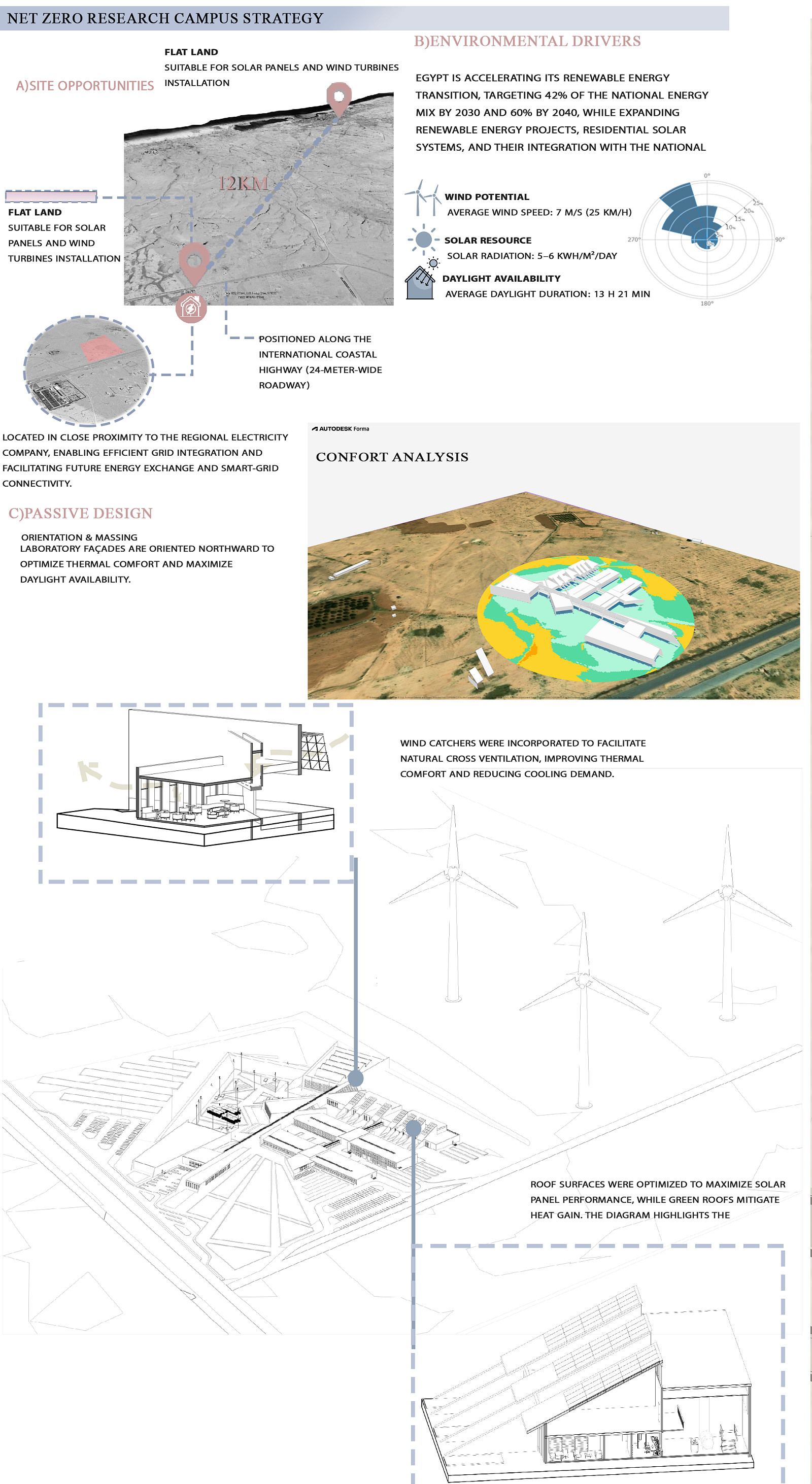
Strategically located in Matrouh, Egypt, a region distinguished by its exceptional solar irradiation and wind potential, the center transforms the site's natural resources into active design generators. The architectural concept is driven by climate-responsive principles, where orientation, massing, self-shading façades, natural ventilation, and daylight optimization work collectively to minimize energy demand while maximizing environmental performance.
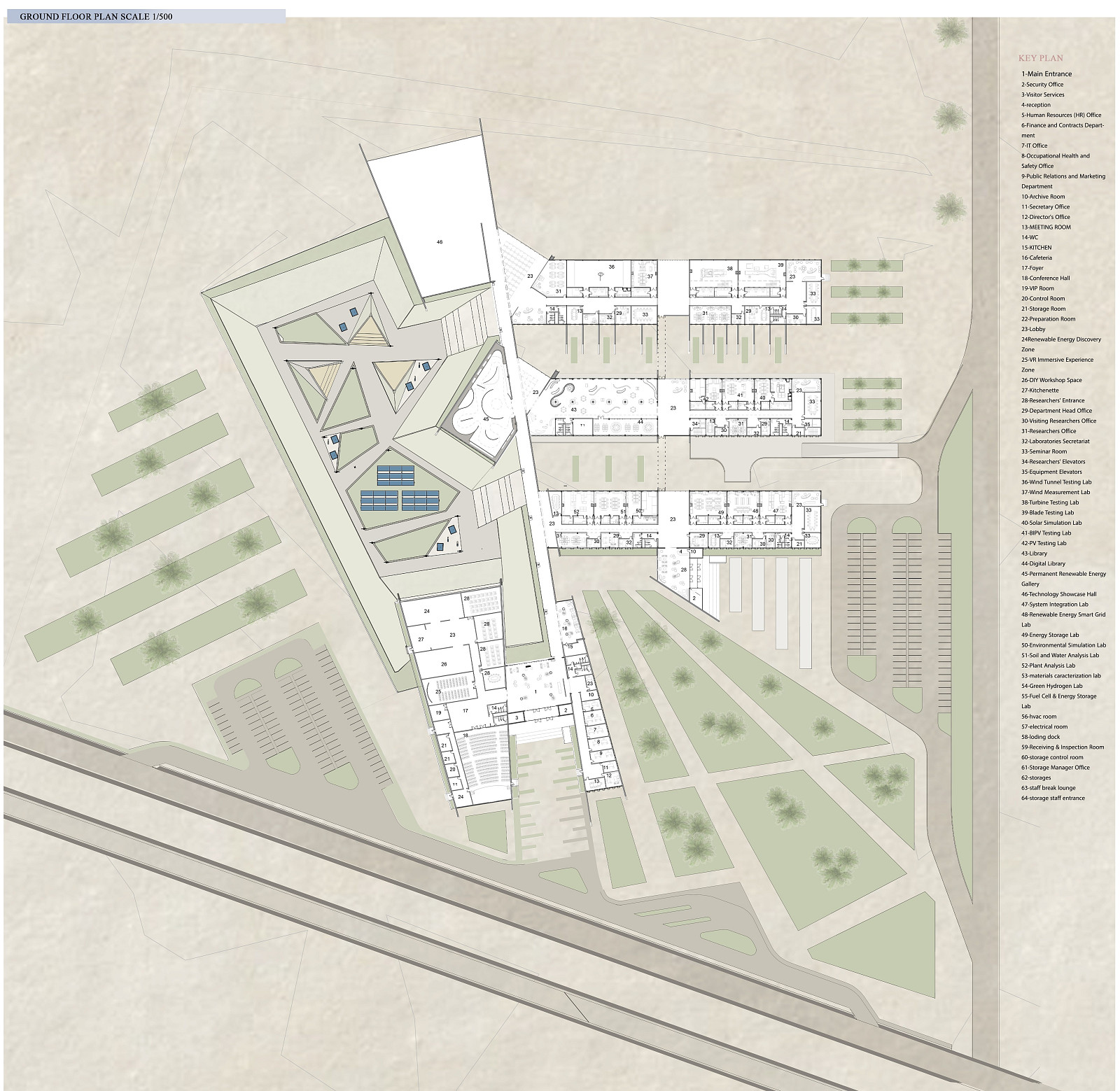
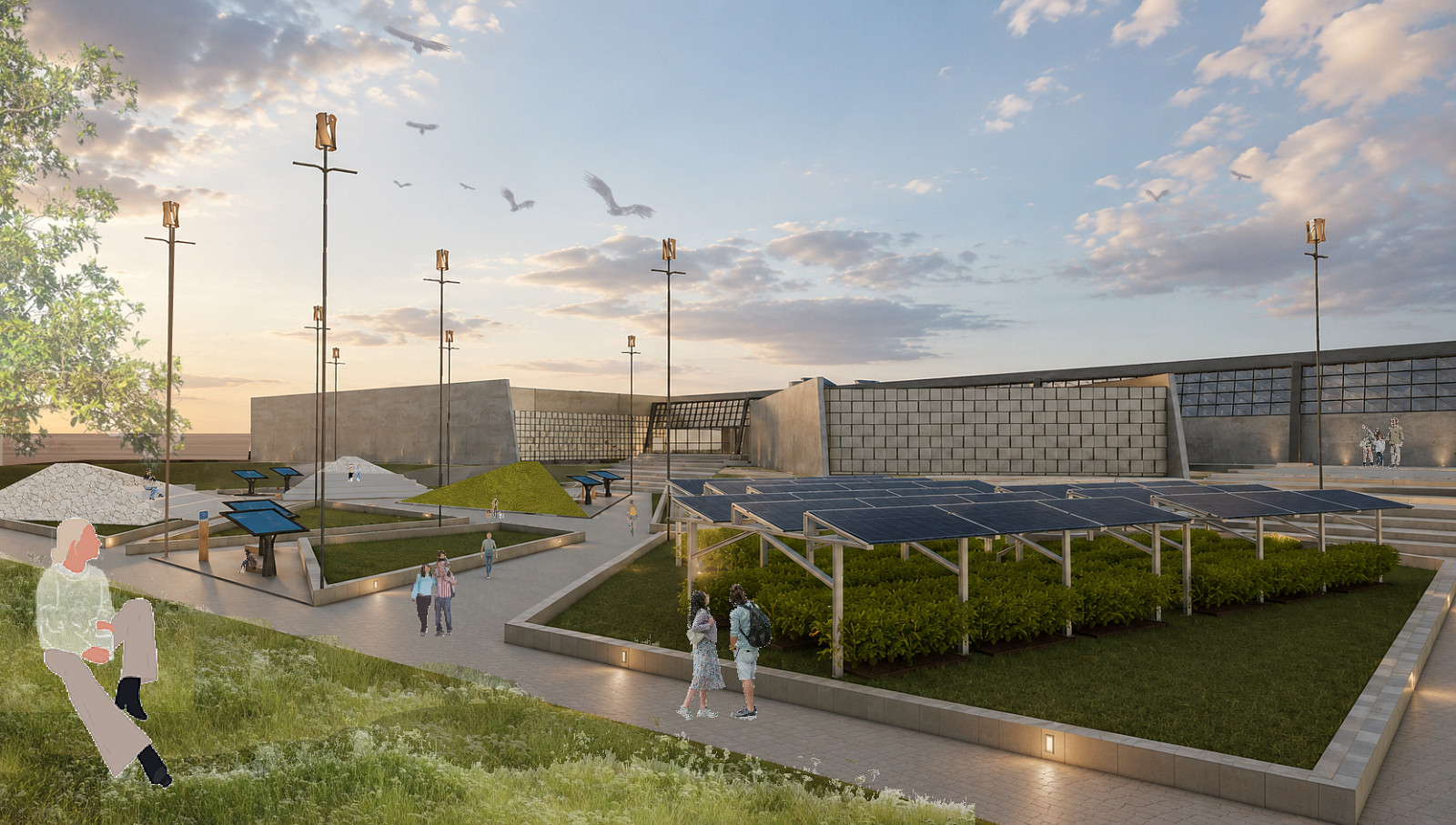
The spatial organization creates a seamless dialogue between research laboratories, educational facilities, innovation hubs, public exhibition spaces, and outdoor demonstration fields. This integration fosters collaboration between researchers, students, industry professionals, and the wider community, reinforcing the role of scientific research as a driver of sustainable development.
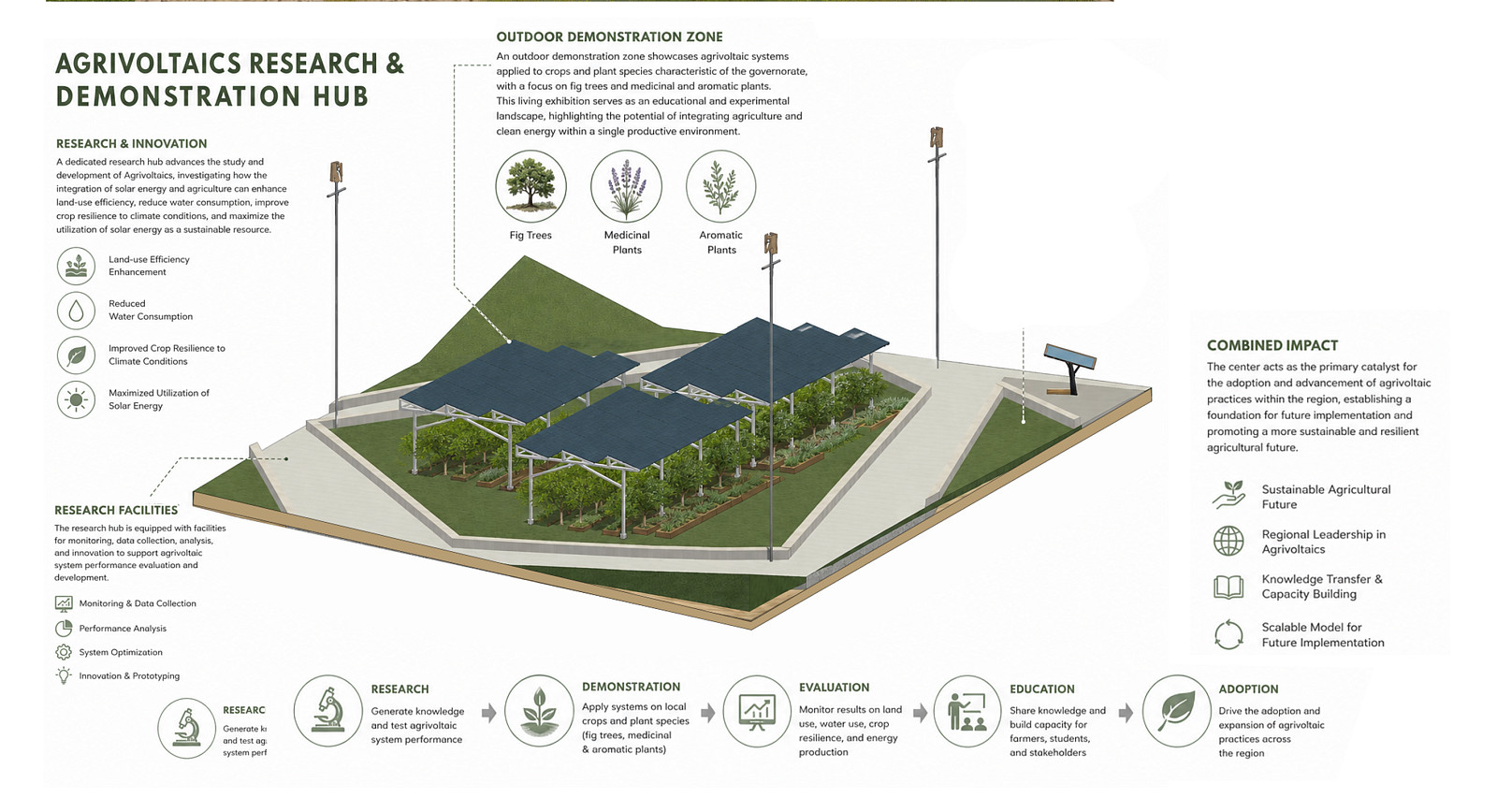
A dedicated Agrivoltaics Research Division forms a key component of the project, investigating the integration of photovoltaic systems with agricultural production as an innovative strategy for enhancing land-use efficiency, conserving water resources, improving crop resilience, and supporting future food and energy security.
Beyond its physical function, the project aspires to become a living laboratory—an adaptive environment where architecture itself contributes to scientific discovery. Through the integration of renewable energy systems, passive environmental strategies, and flexible research spaces, the center demonstrates how architectural design can actively support innovation while reducing environmental impact.
Ultimately, the project proposes a new model for research architecture: one that transforms buildings from passive containers of knowledge into active participants in the transition toward a resilient and carbon-conscious future.
Project description
The Renewable Energy Research Center is a multidisciplinary research campus designed to support scientific innovation, education, and technological development in the field of renewable energy. The project serves as a platform where research, experimentation, demonstration, and public engagement are integrated within a unified architectural environment.
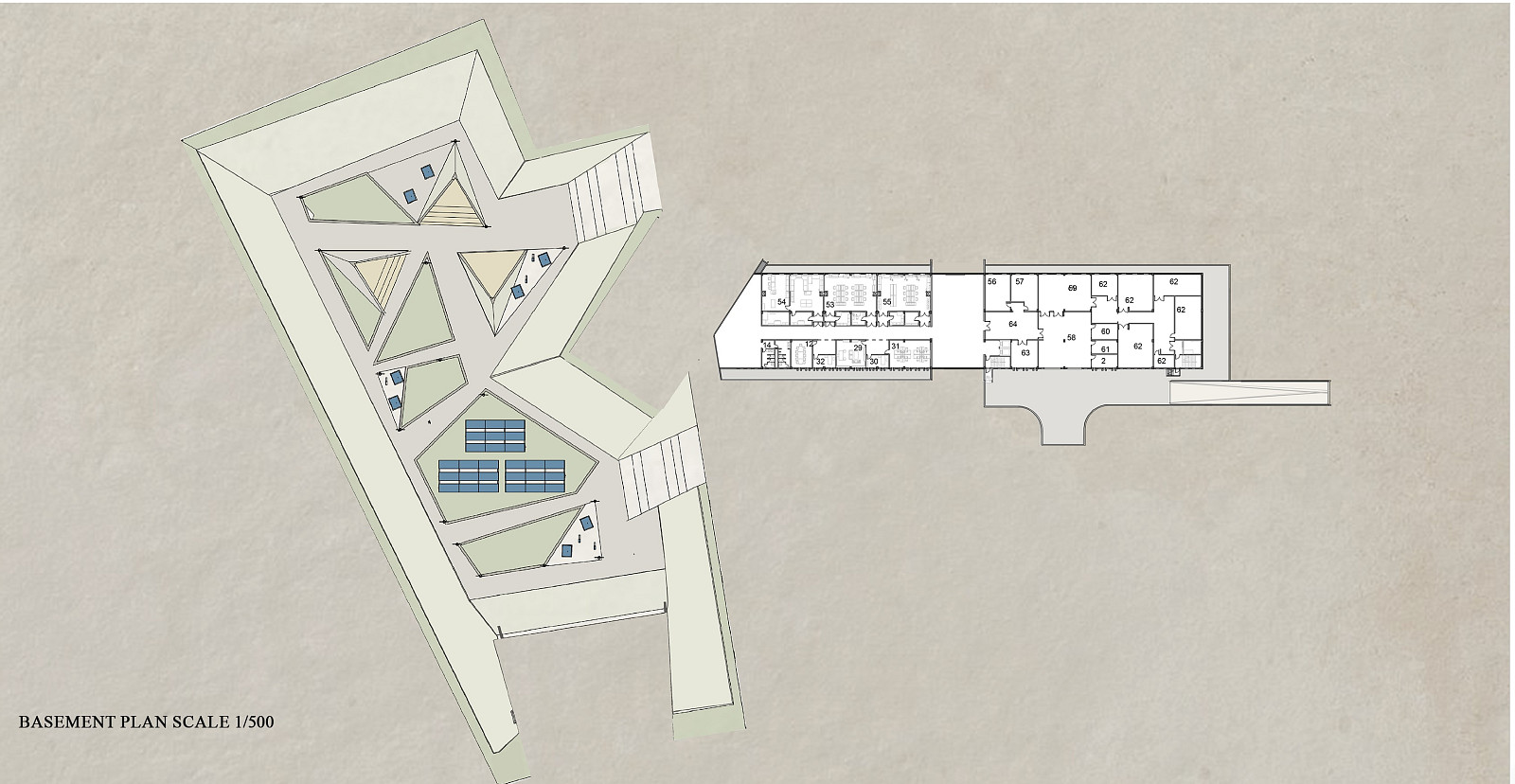
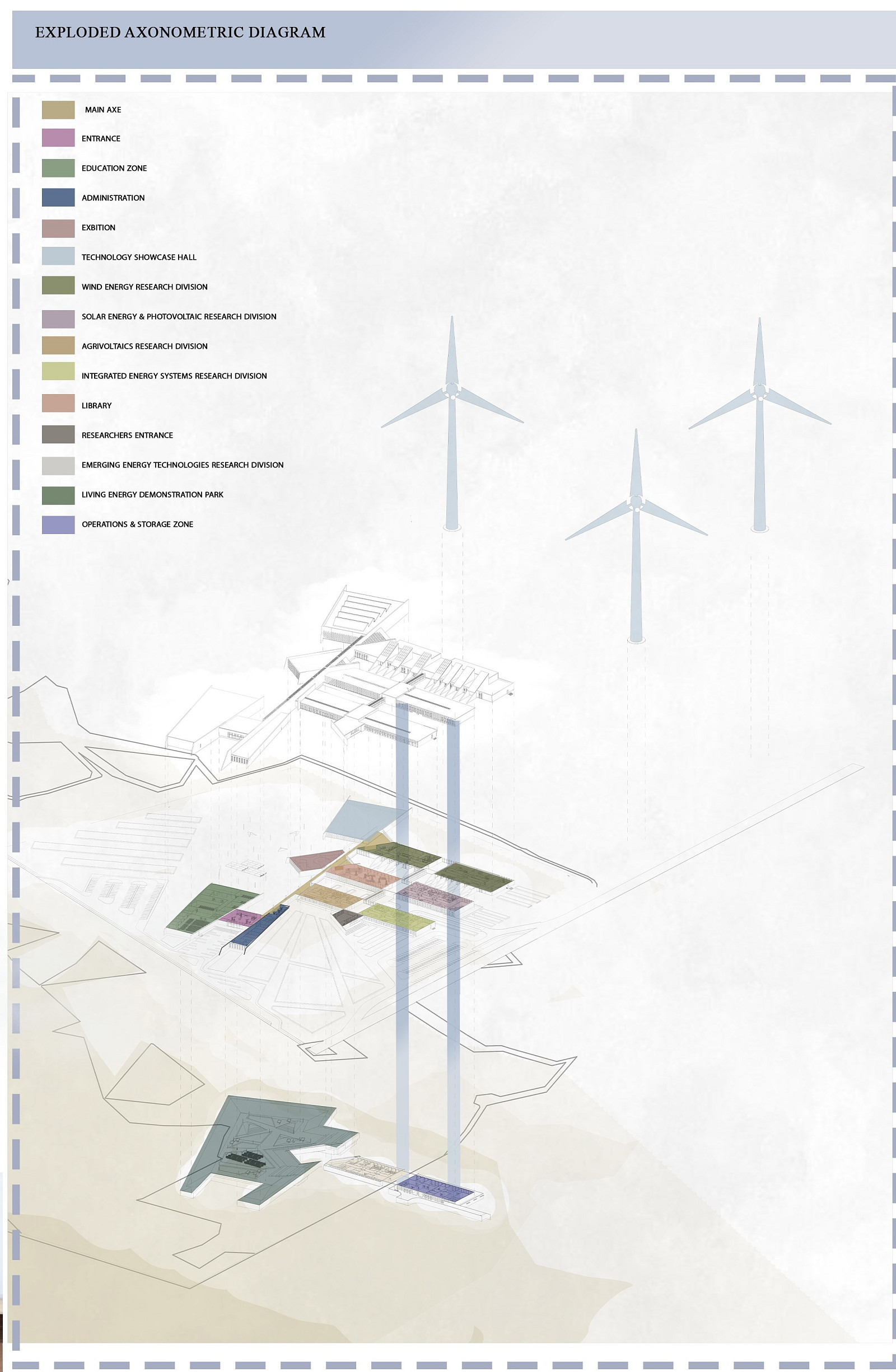
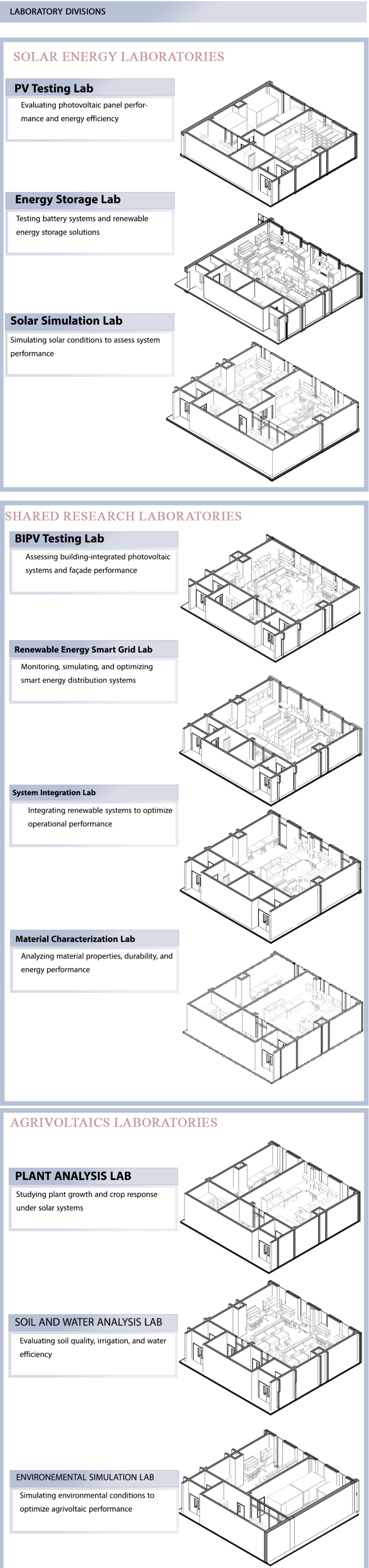
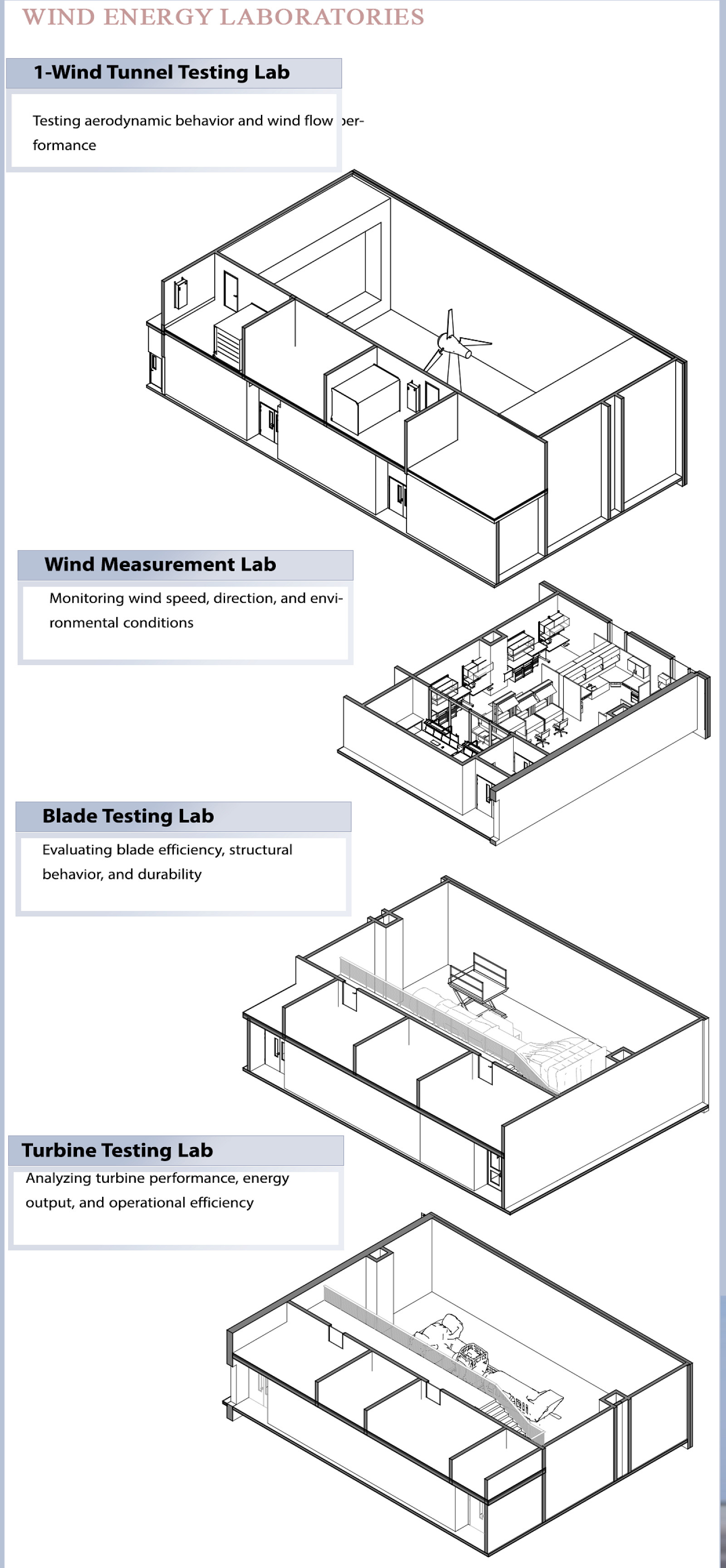
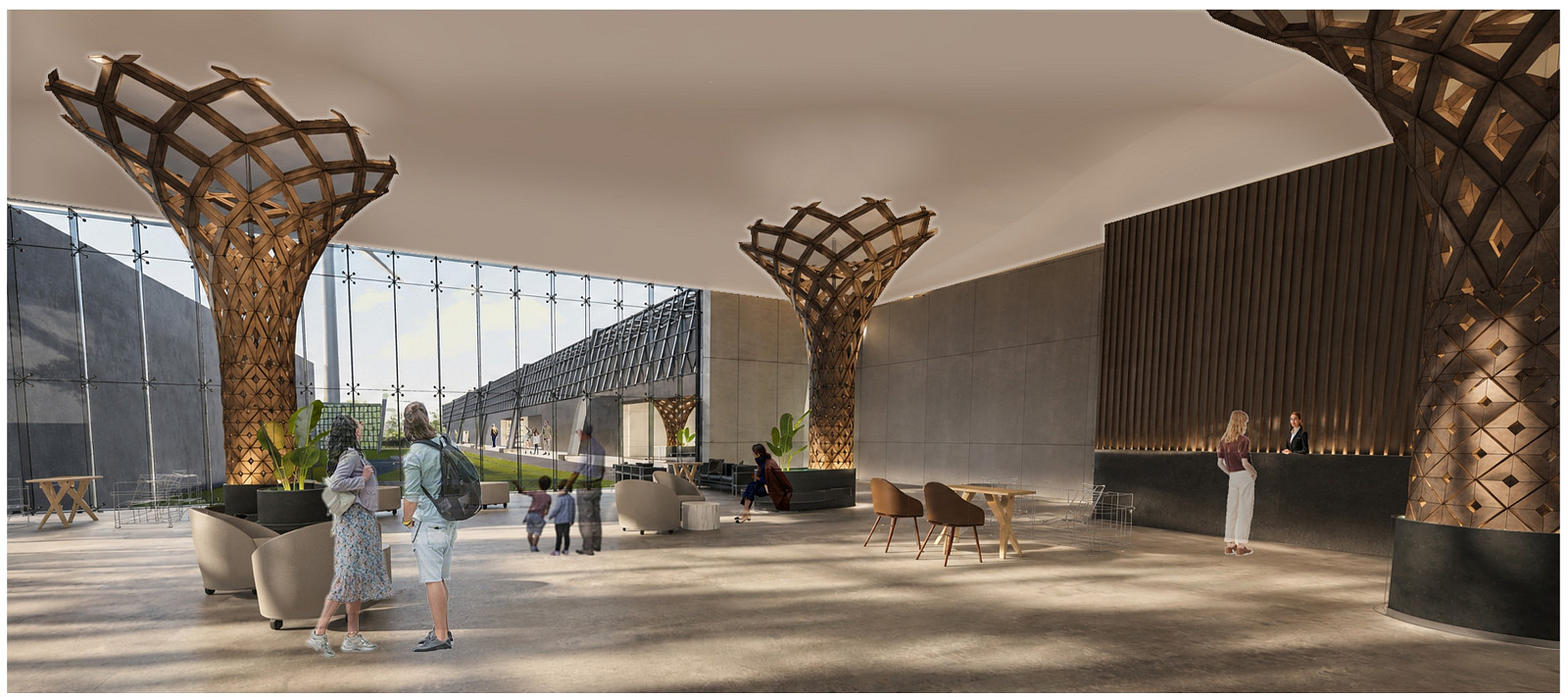
The program includes specialized research laboratories dedicated to solar energy, wind energy, hydrogen technologies, battery testing, smart grid systems, and emerging renewable energy technologies. Complementing these facilities are educational spaces, collaborative work areas, conference halls, administration offices, public exhibition spaces, and outdoor demonstration zones that allow visitors to experience renewable energy applications in real-life scenarios.
A key component of the project is the Agrivoltaics Research and Demonstration Hub, where photovoltaic systems are integrated with agricultural production to investigate sustainable land-use strategies, improve crop performance, optimize water consumption, and enhance food–energy synergy.
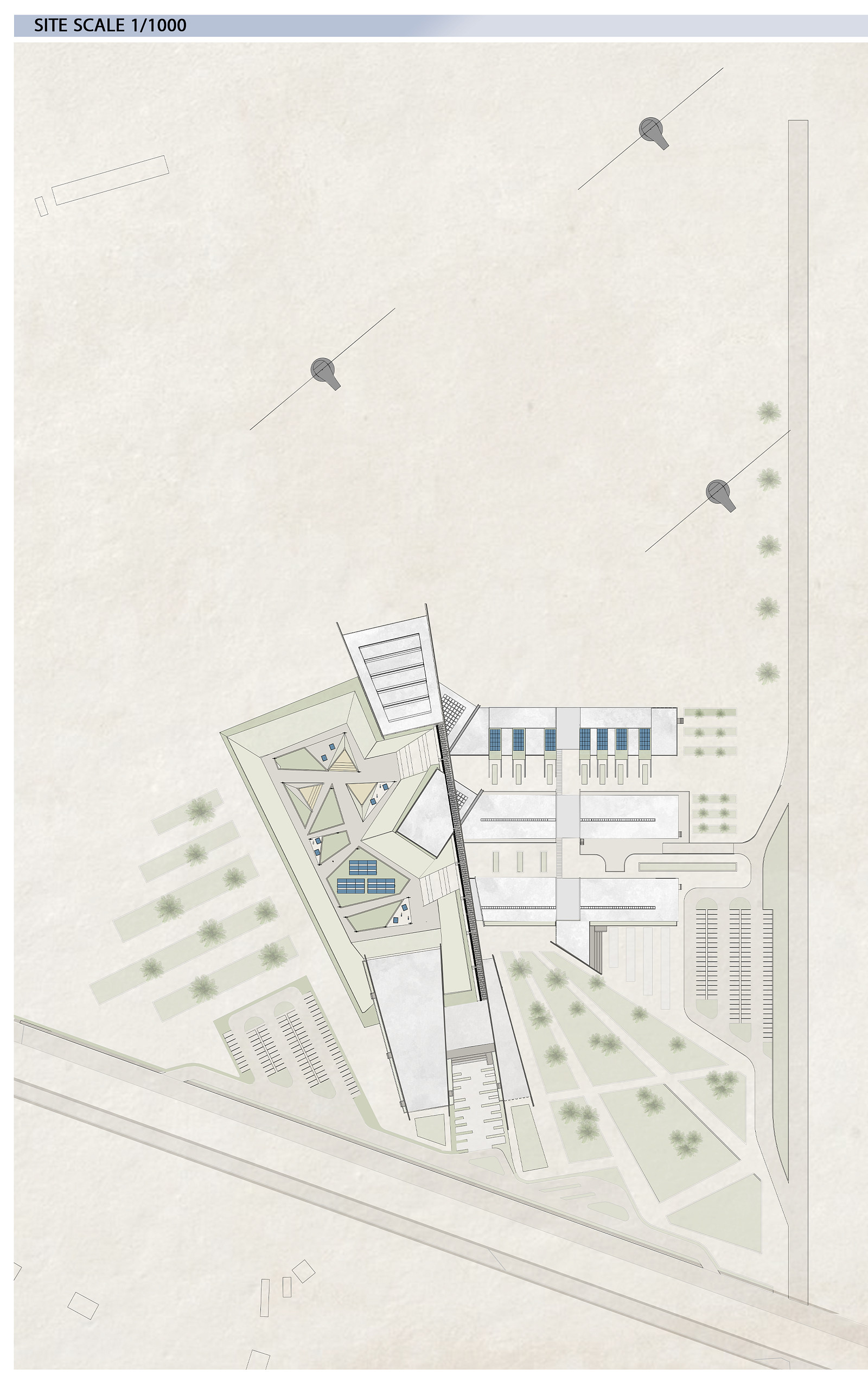
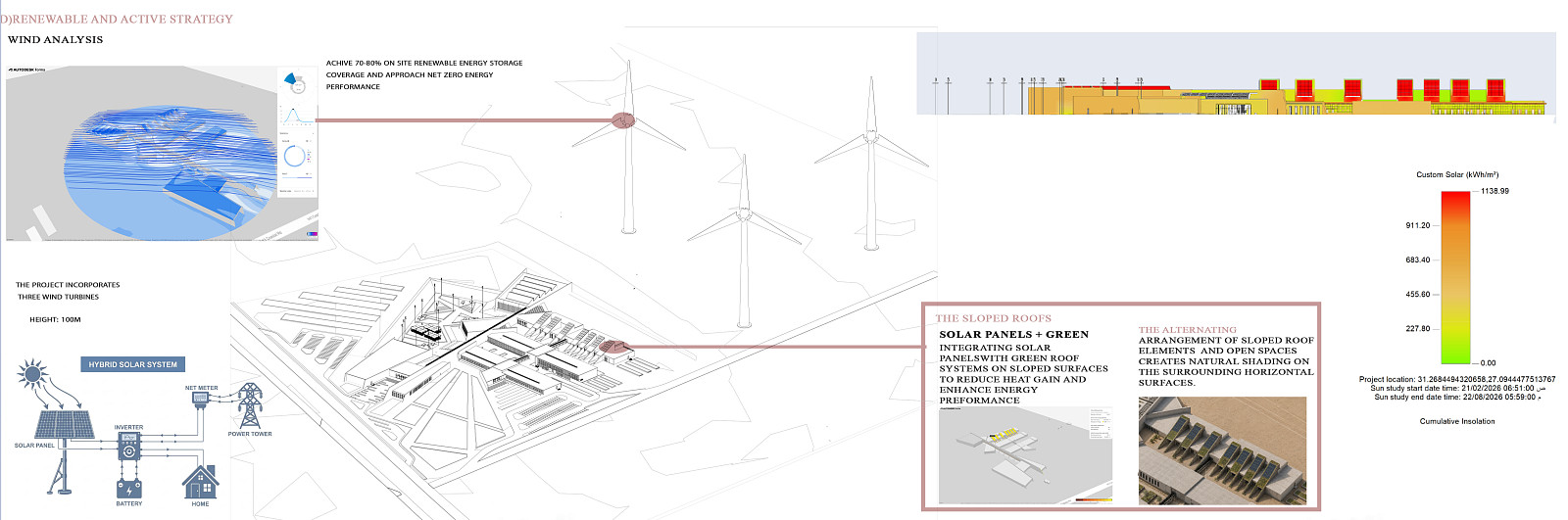
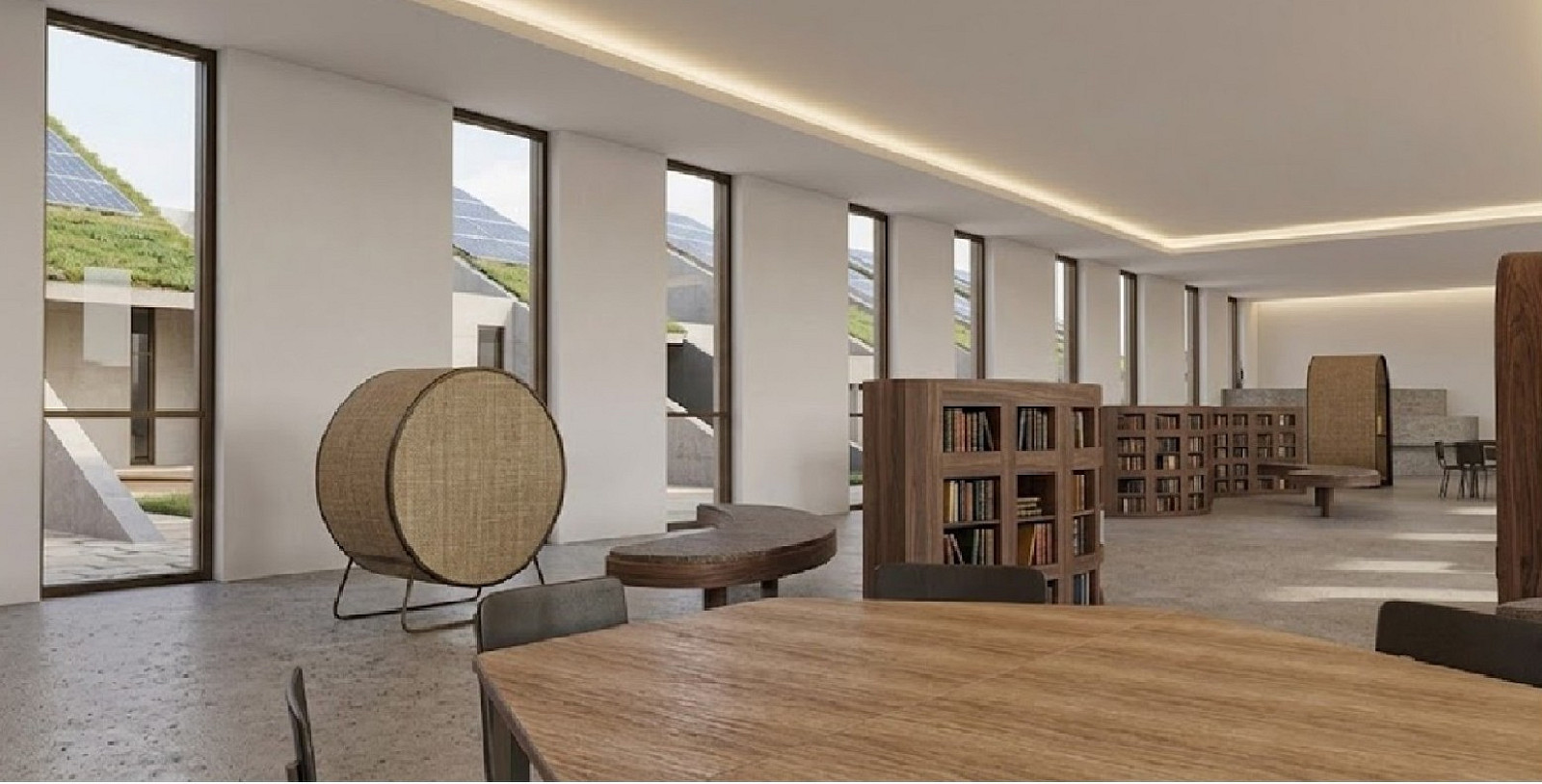
The master plan is organized to promote efficient circulation while creating strong visual and functional relationships between research, education, and public interaction. Environmental performance is enhanced through passive design strategies, including optimized orientation, self-shading façades, natural ventilation, daylight utilization, green roofs, and the integration of renewable energy systems.
Rather than operating solely as a research facility, the center functions as a living laboratory where architecture, technology, and environmental performance are continuously evaluated and demonstrated. The project establishes a dynamic environment that encourages collaboration between researchers, students, industry partners, and the local community while contributing to Egypt's transition toward a sustainable energy future.
Technical information
The Renewable Energy Research Center adopts a hybrid structural system that combines cast-in-place reinforced concrete shear walls, steel frame structures, and precast concrete roof systems to achieve structural efficiency, flexibility, and construction speed.
Cast-in-place reinforced concrete shear walls are utilized in the primary structural cores, including staircases, service cores, and circulation cores, providing lateral stability and resistance to wind loads while ensuring structural continuity.
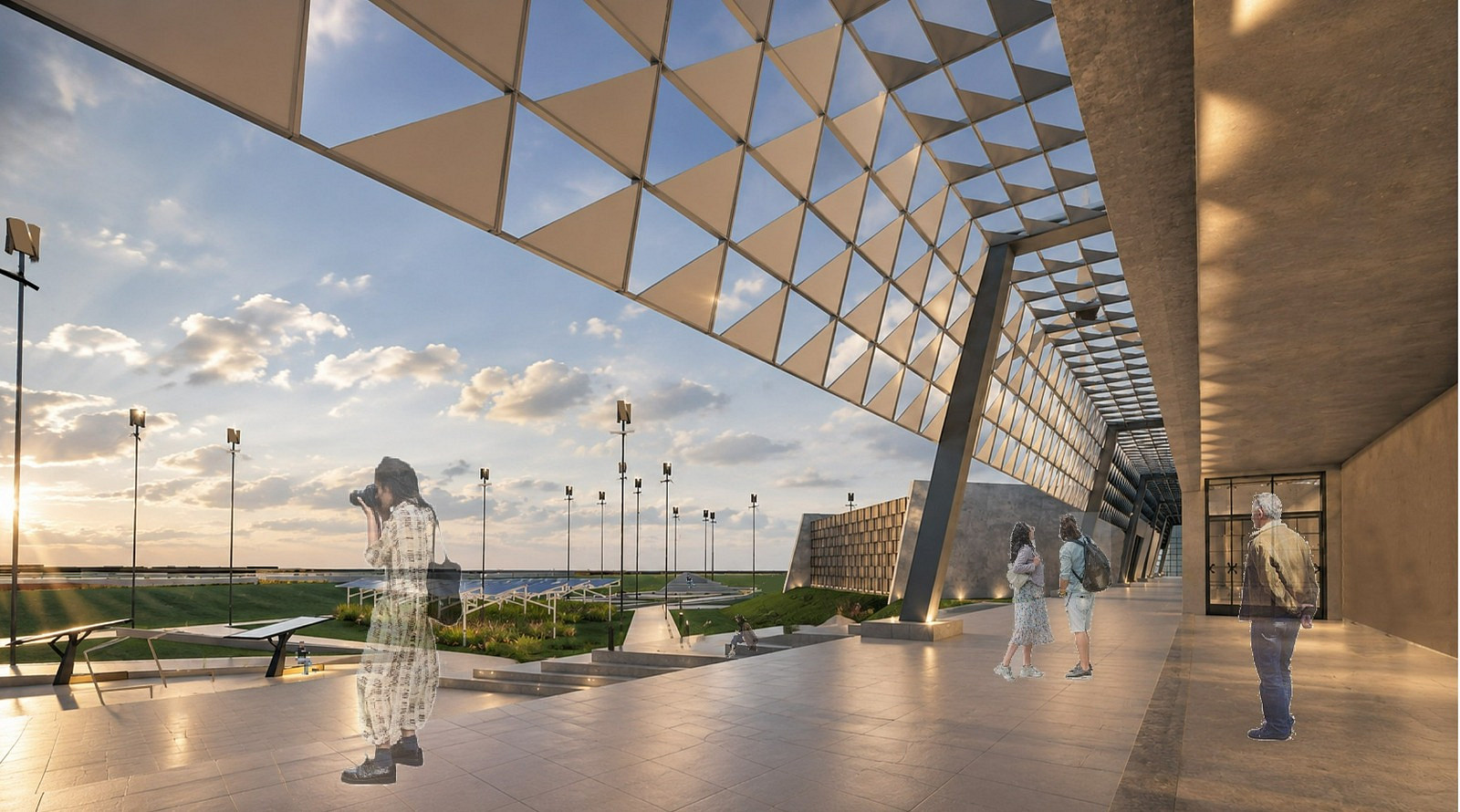
Steel frame structures are employed in large-span spaces such as the main entrance, exhibition halls, research spaces, and public gathering areas, allowing flexible, column-free interiors that can accommodate changing functional requirements.
Precast concrete roof systems are used throughout the laboratory, educational, and administrative buildings, improving construction efficiency, quality control, and reducing on-site construction time.
The building envelope incorporates AAC wall systems for enhanced thermal insulation and reduced structural loads. High-performance glazing, recessed façades, and self-shading architectural elements minimize solar heat gain while maximizing natural daylight.
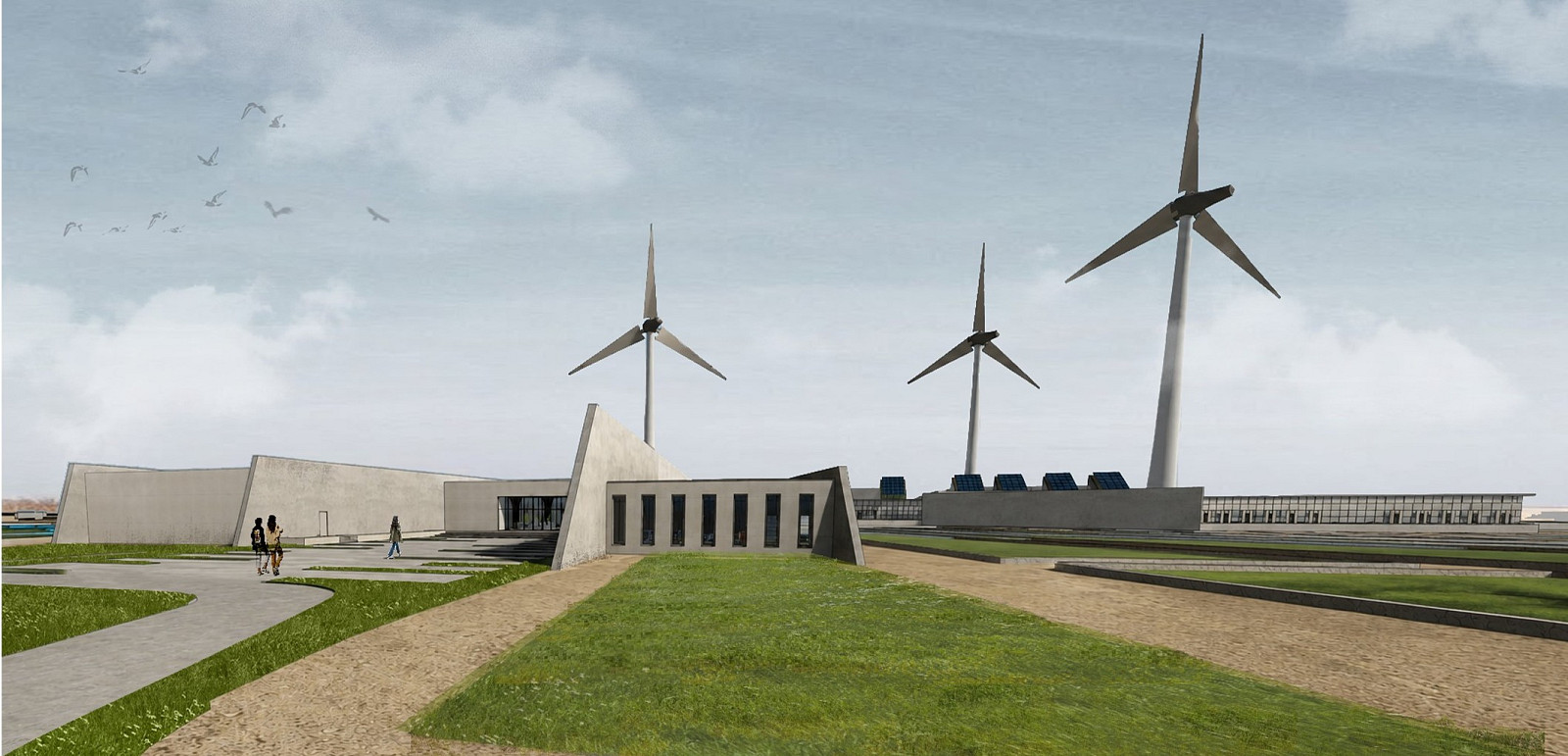
The project integrates passive environmental strategies including optimized orientation, cross ventilation, wind catchers, skylights, and green roofs. Active renewable energy systems including photovoltaic panels, wind energy technologies, and smart grid infrastructure are incorporated into the research facilities and demonstration areas, allowing the building itself to operate as a living laboratory for renewable energy research and public education.

Copyright © 2026 INSPIRELI | All rights reserved. Use of this website signifies your agreement to the Terms of Use, Privacy Policy, and use of cookies.