NISARGA-livelihood and economic center


 Chandana Shrinath Wijetunga
Project idea
The Habarana–Galoya Dry Zone faces several interconnected socio-economic and environmental challenges. Local communities primarily depend on Yala and Maha seasonal cultivation, resulting in income shortages during the off-season. To supplement their earnings, some farmers engage in illegal chena cultivation within forest buffer zones. This has contributed to forest encroachment and other informal activities, such as unauthorized fishing, which disturb wildlife habitats and reduce forest cover. Increased human presence within these areas disrupts natural ecosystems and alters animal movement patterns.
These activities have also led to the disruption of elephant migration corridors, particularly within the Minneriya–Kaudulla ecosystem. As agricultural lands expand into forest areas, traditional elephant pathways become blocked, increasing Human–Elephant Conflict. In some cases, harmful practices such as the use of “hakka patas” further threaten wildlife and biodiversity. At the same time, valuable local resources such as loofah, honey, lemon, and other dry-zone products remain underutilized, limiting opportunities for income generation and value-added production.
Additionally, roadside selling is largely informal and often occurs within elephant corridor zones, creating safety concerns for both people and wildlife. Another overlooked issue is the underutilization of safari drivers’ time, as tourism activities are generally limited to morning and evening safari sessions, leaving significant periods of unproductive time during the day. Together, these challenges highlight the need for alternative livelihood opportunities, sustainable resource utilization, and community-based economic development initiatives in the Habarana–Galoya region.
Project description
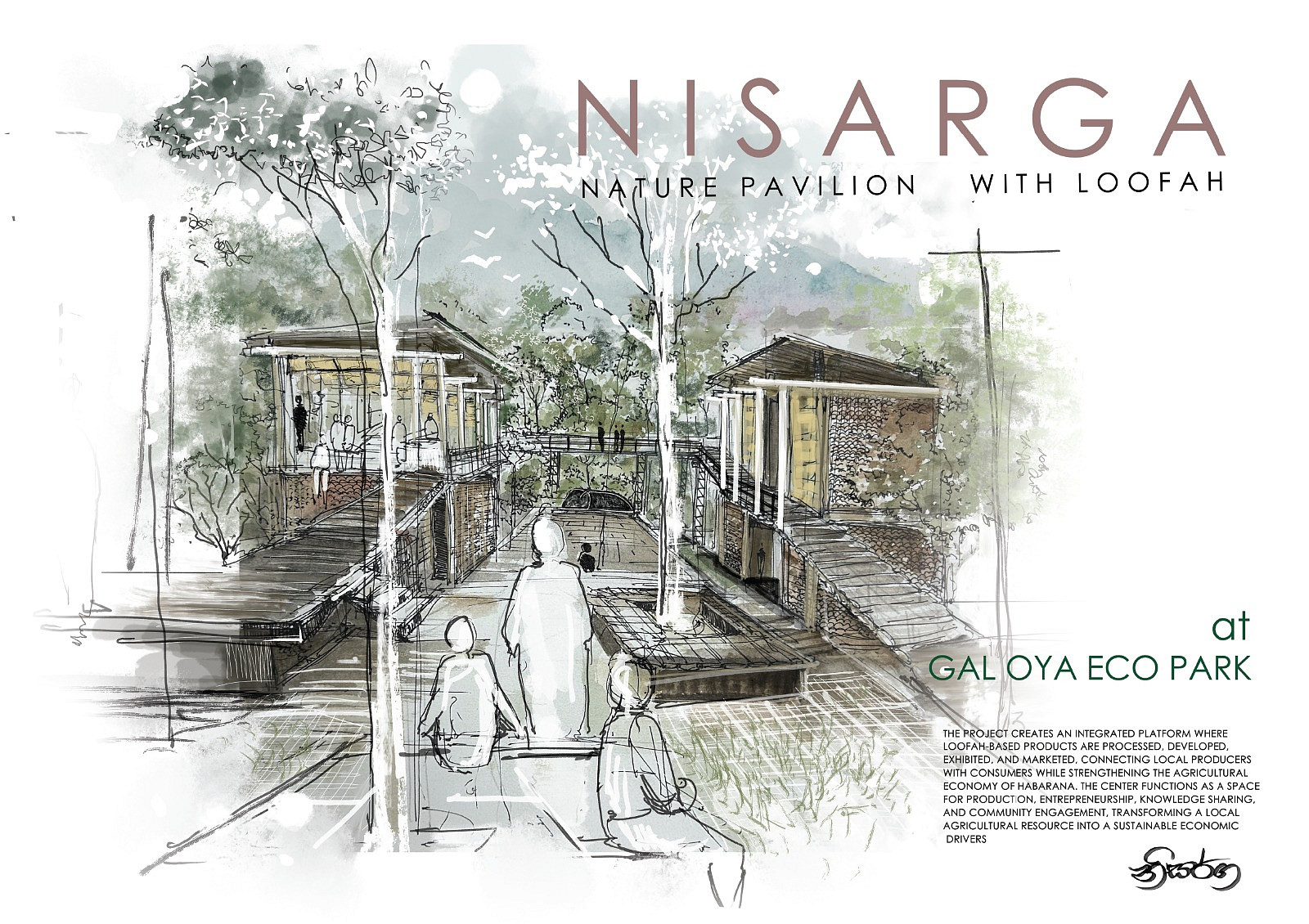
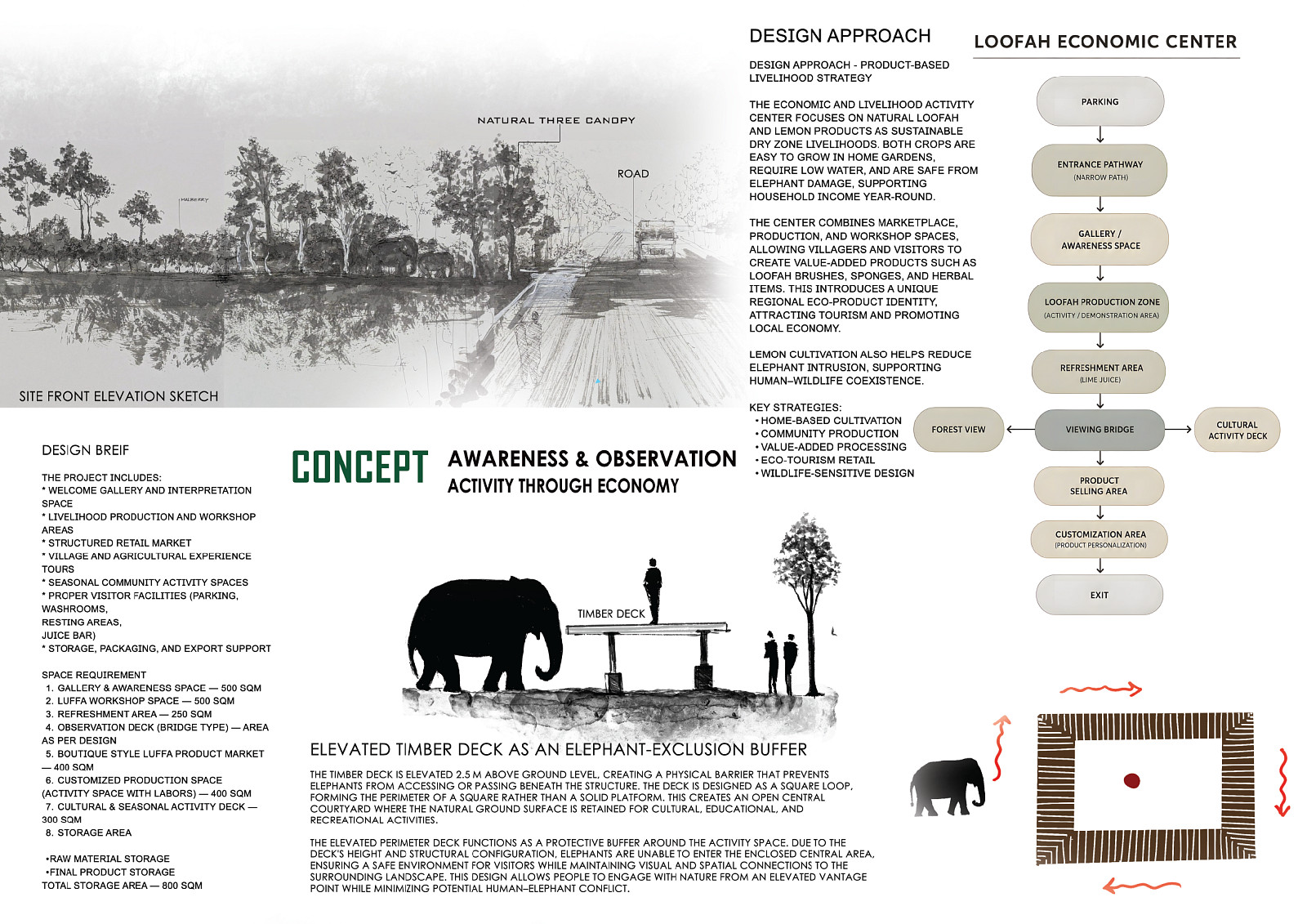
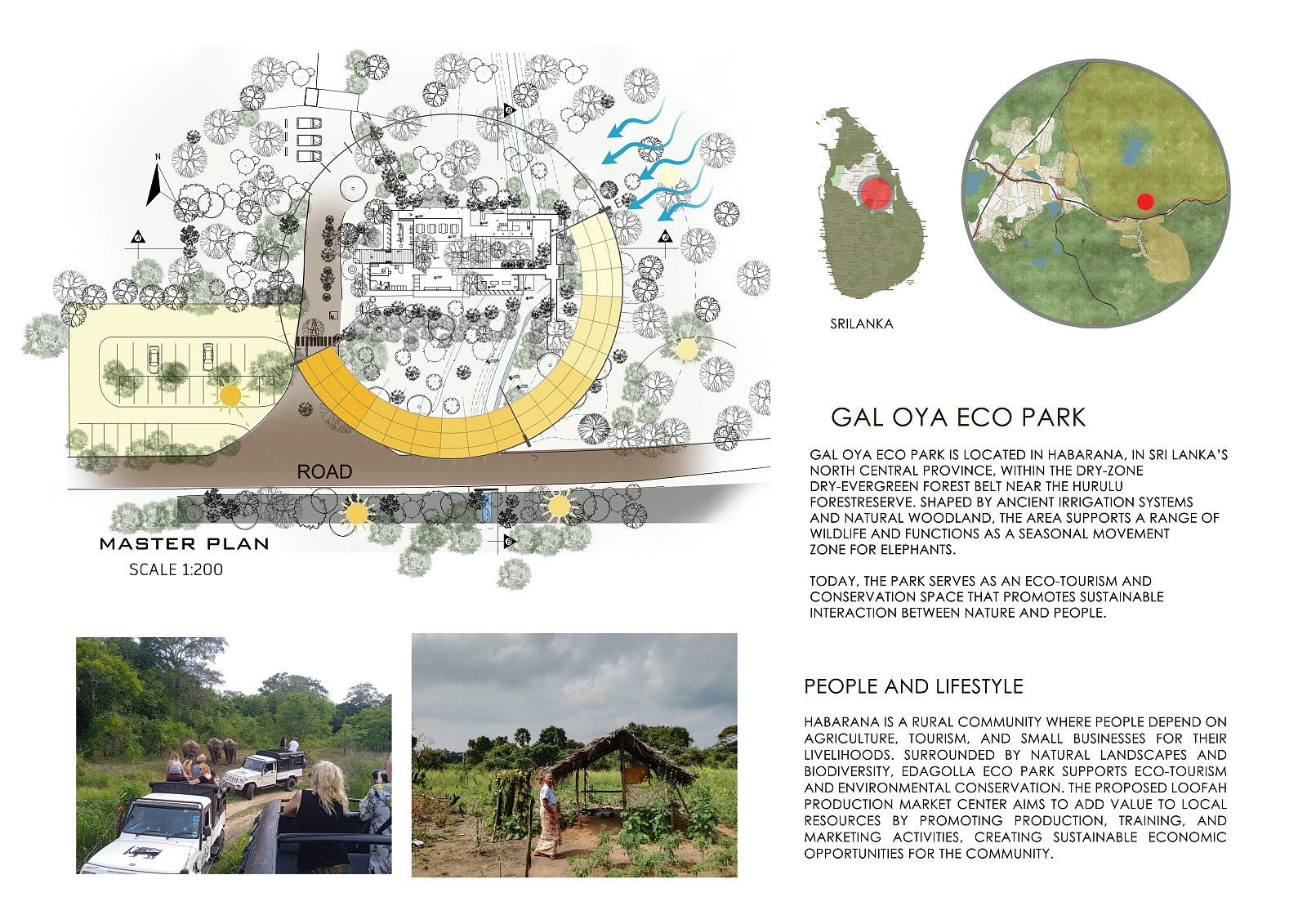
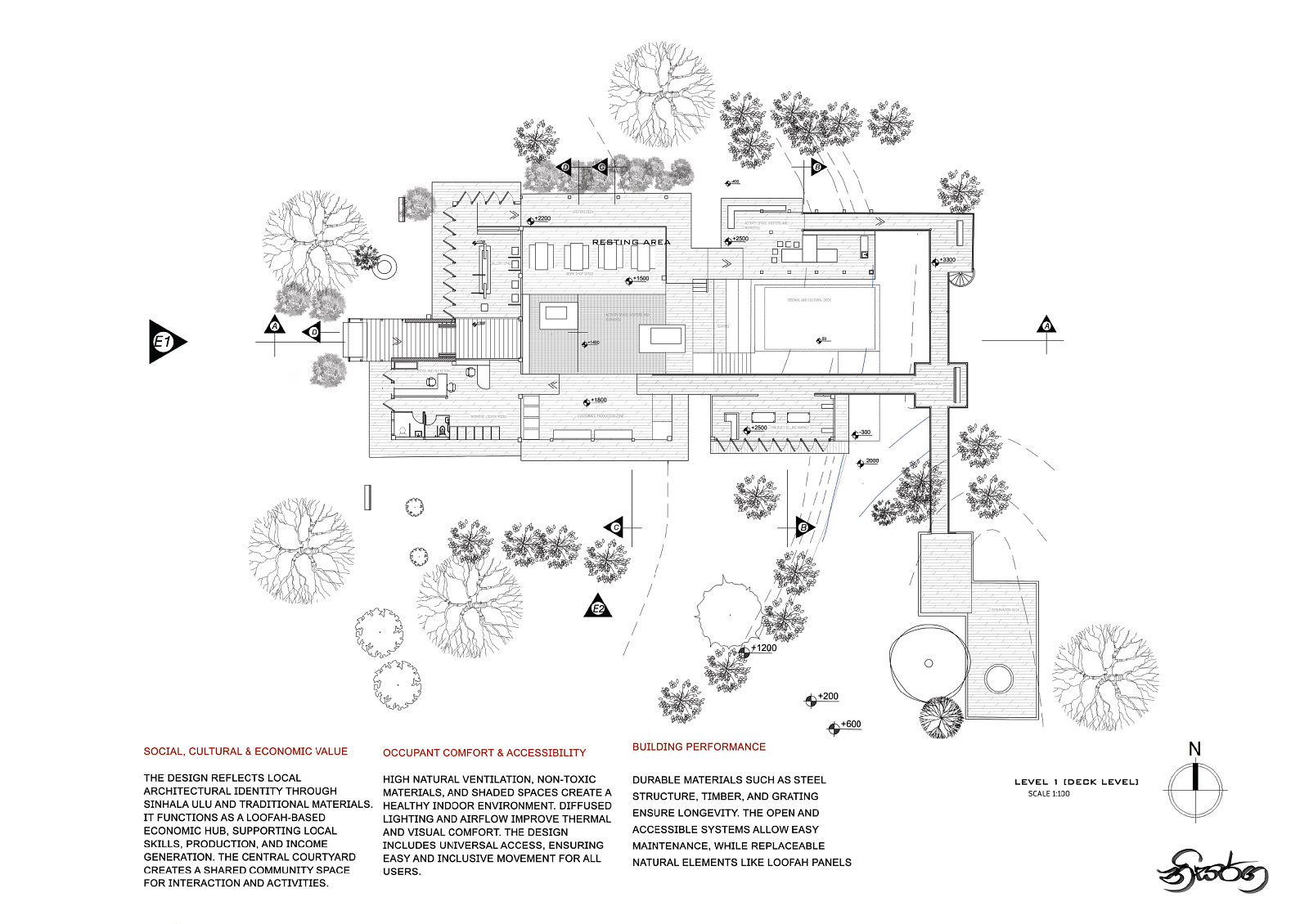
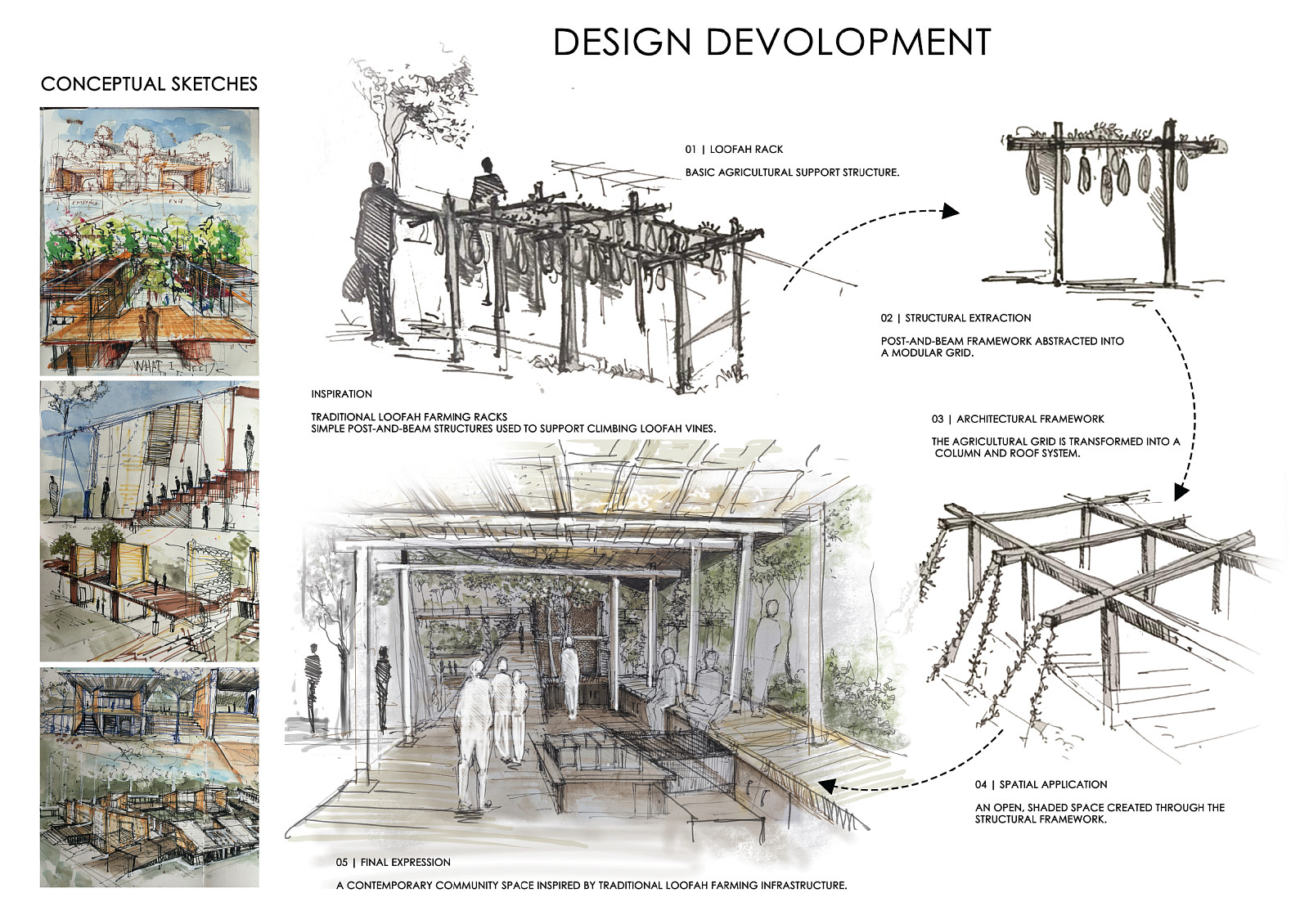
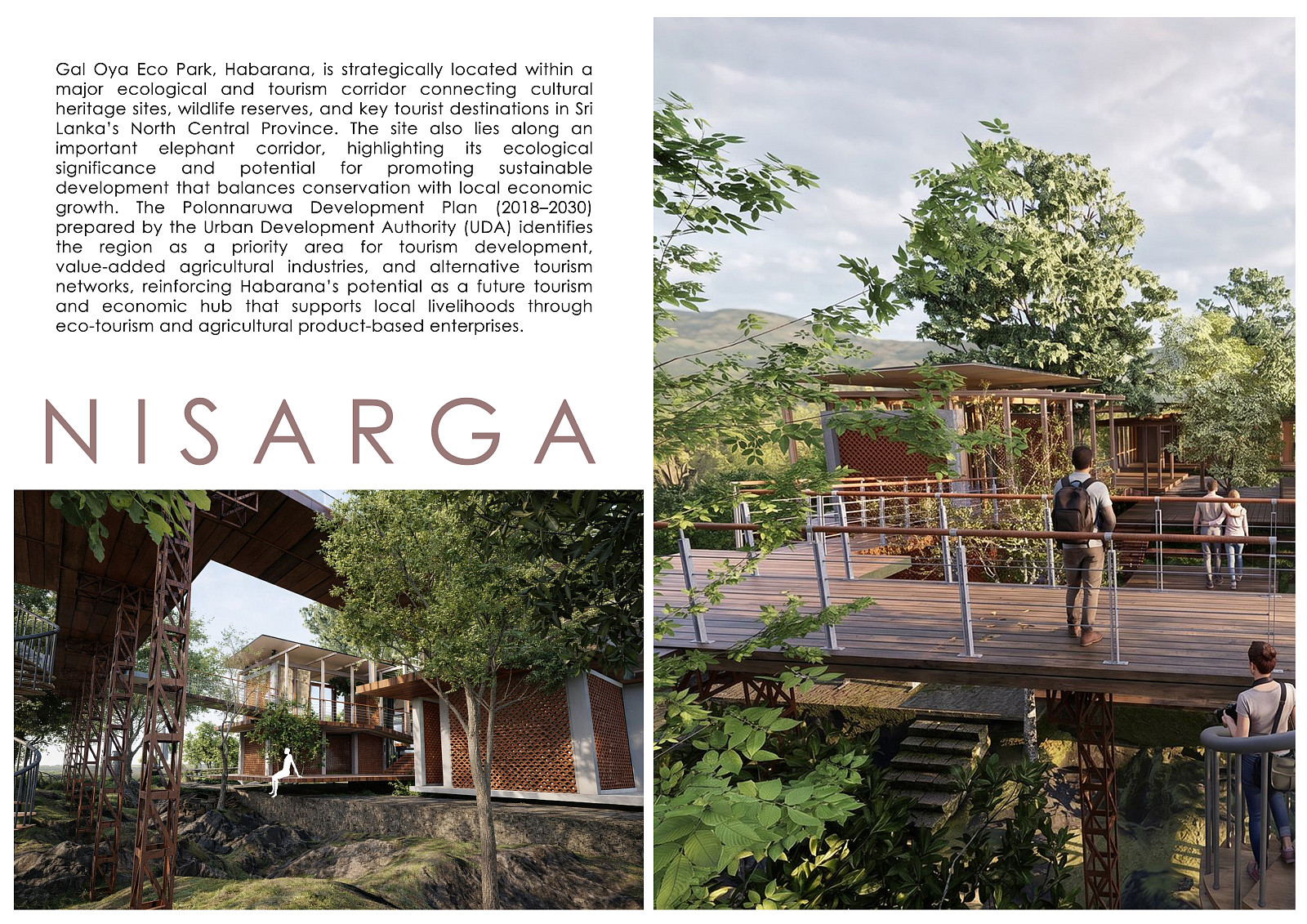
The proposed Loofah Production and Market Center is located at Golla Eco Park, Habarana, addressing the socio-economic and environmental challenges of the region. During the off-season, many farmers experience income shortages and turn to chena cultivation within forest buffer zones, increasing Human–Elephant Conflict by encroaching on elephant habitats and migration corridors. The project introduces loofah cultivation as a sustainable alternative livelihood, allowing communities to produce value-added products through processing, training, and entrepreneurship. The center integrates production spaces, workshops, exhibition areas, a community market, and eco-tourism experiences, creating a platform that connects local producers with tourists and markets. By generating year-round income opportunities, the project aims to strengthen the local economy while reducing pressure on forest ecosystems and supporting long-term human–elephant coexistence.
Technical information
Passive Ventilation
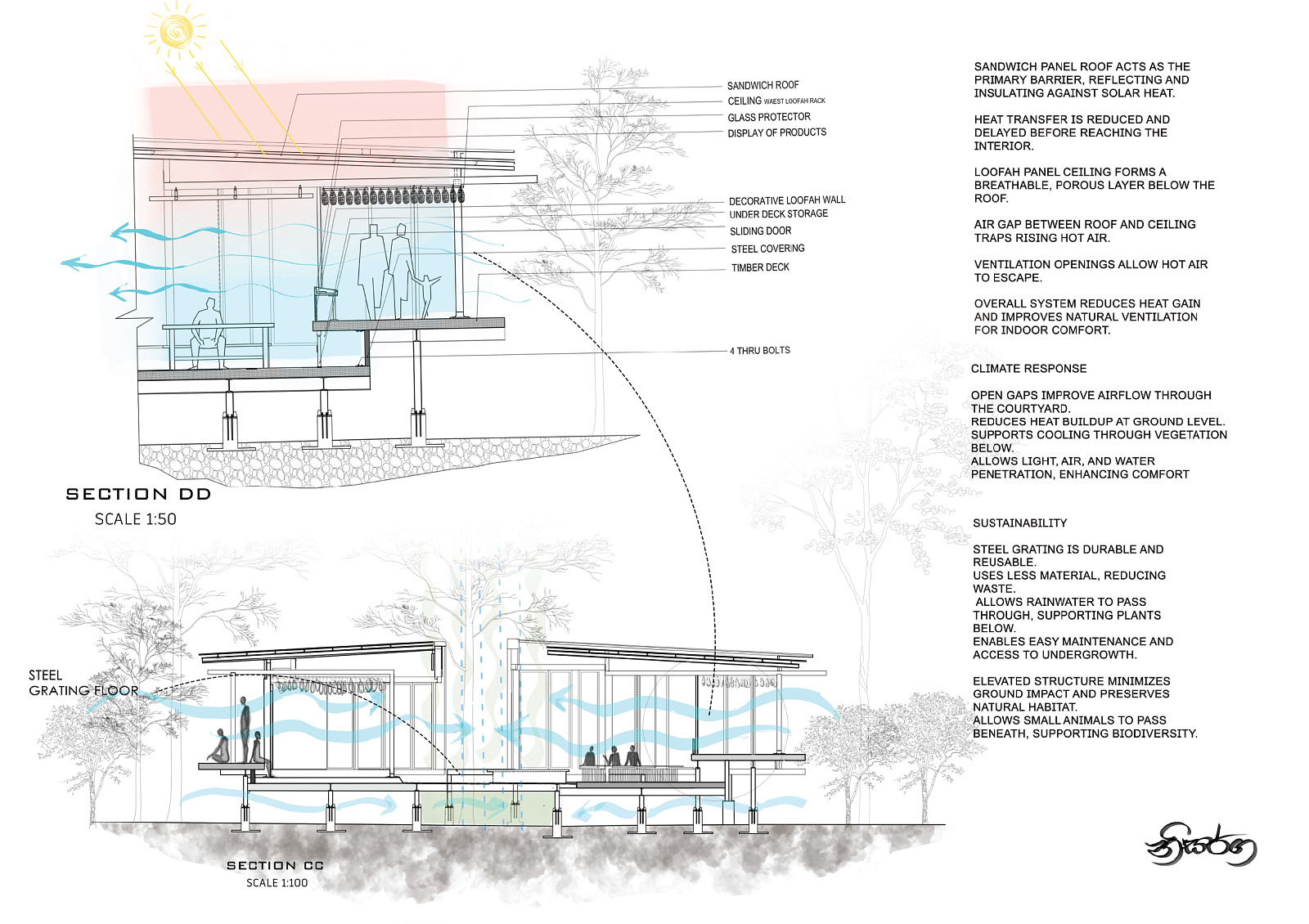
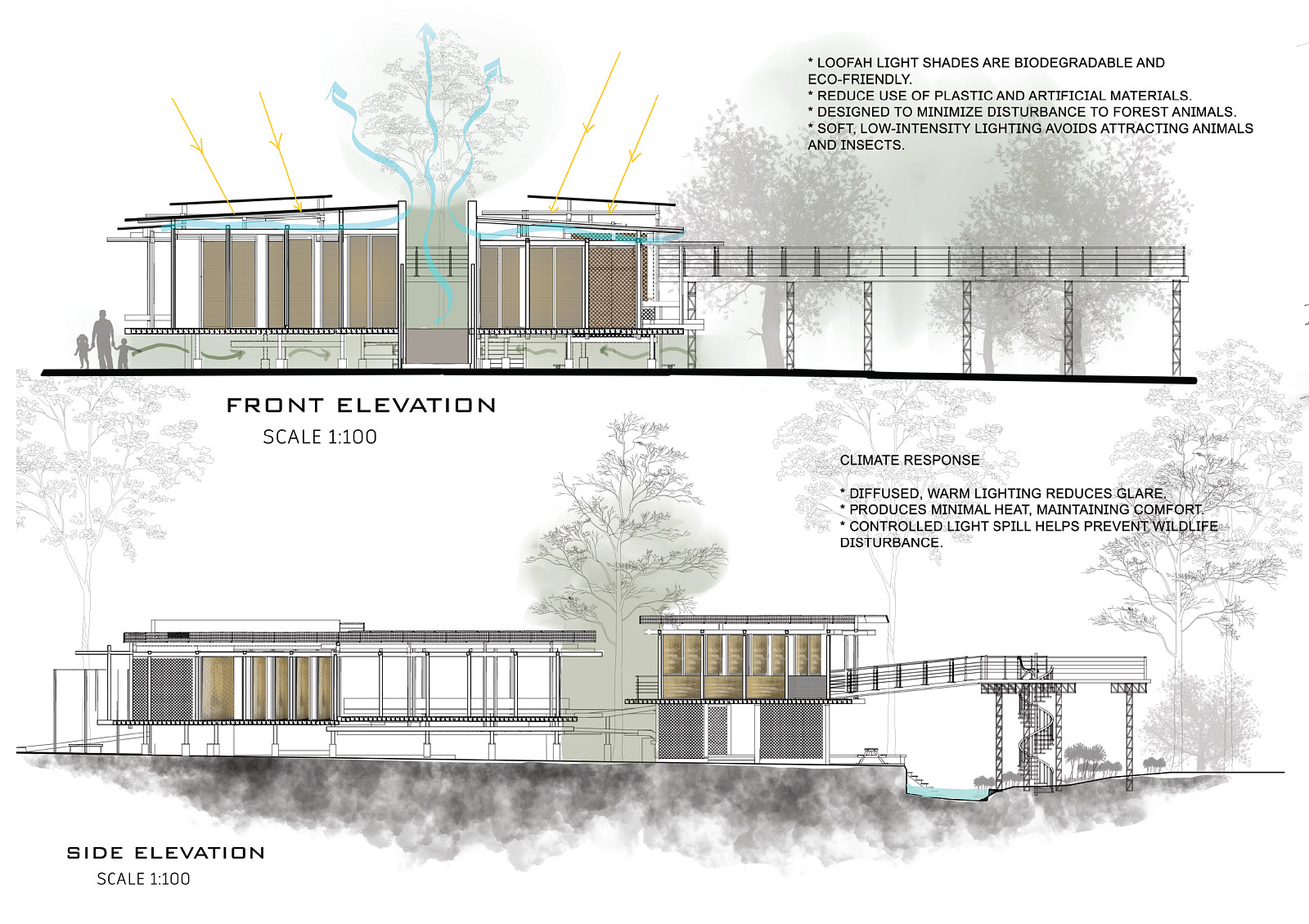
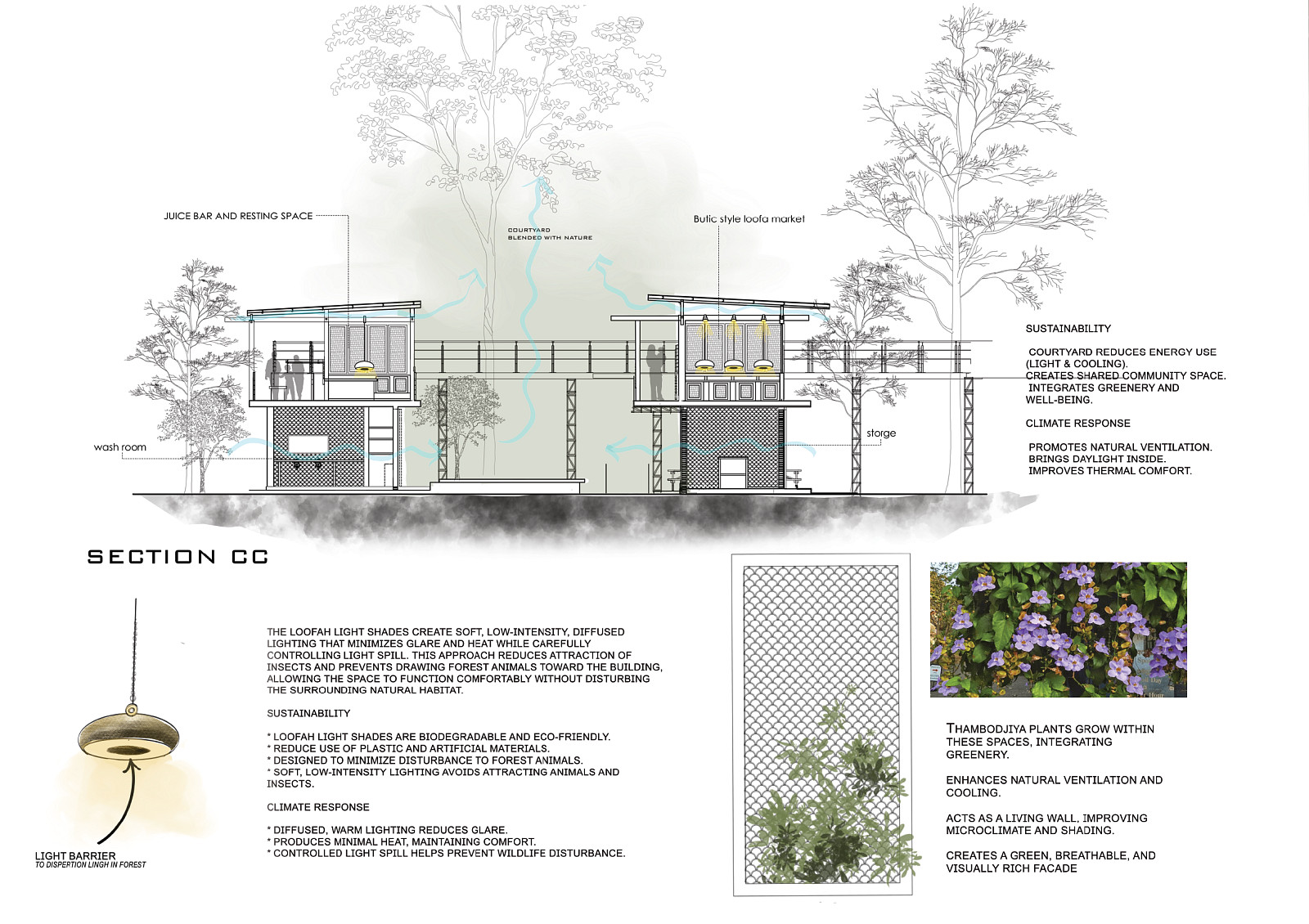
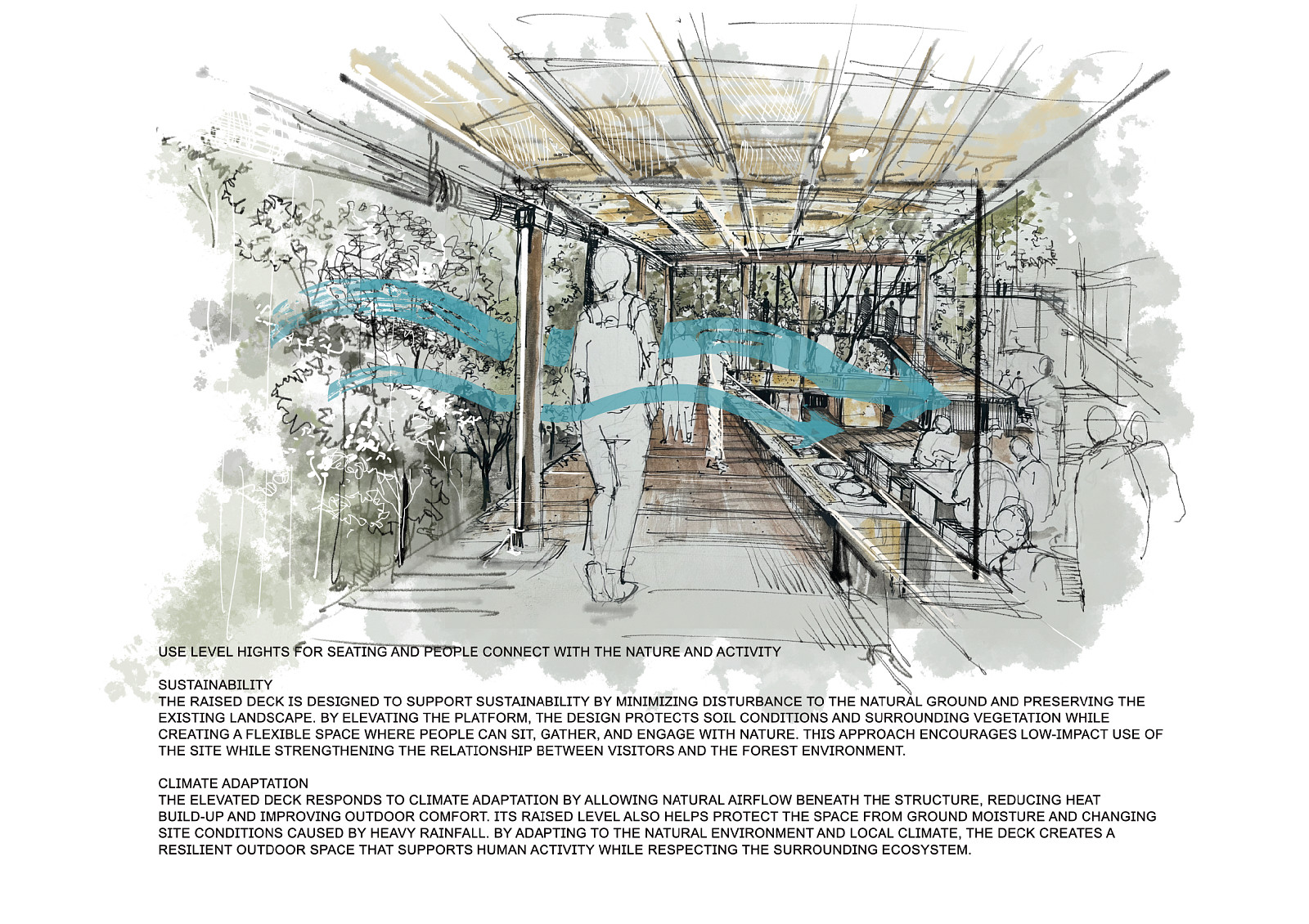
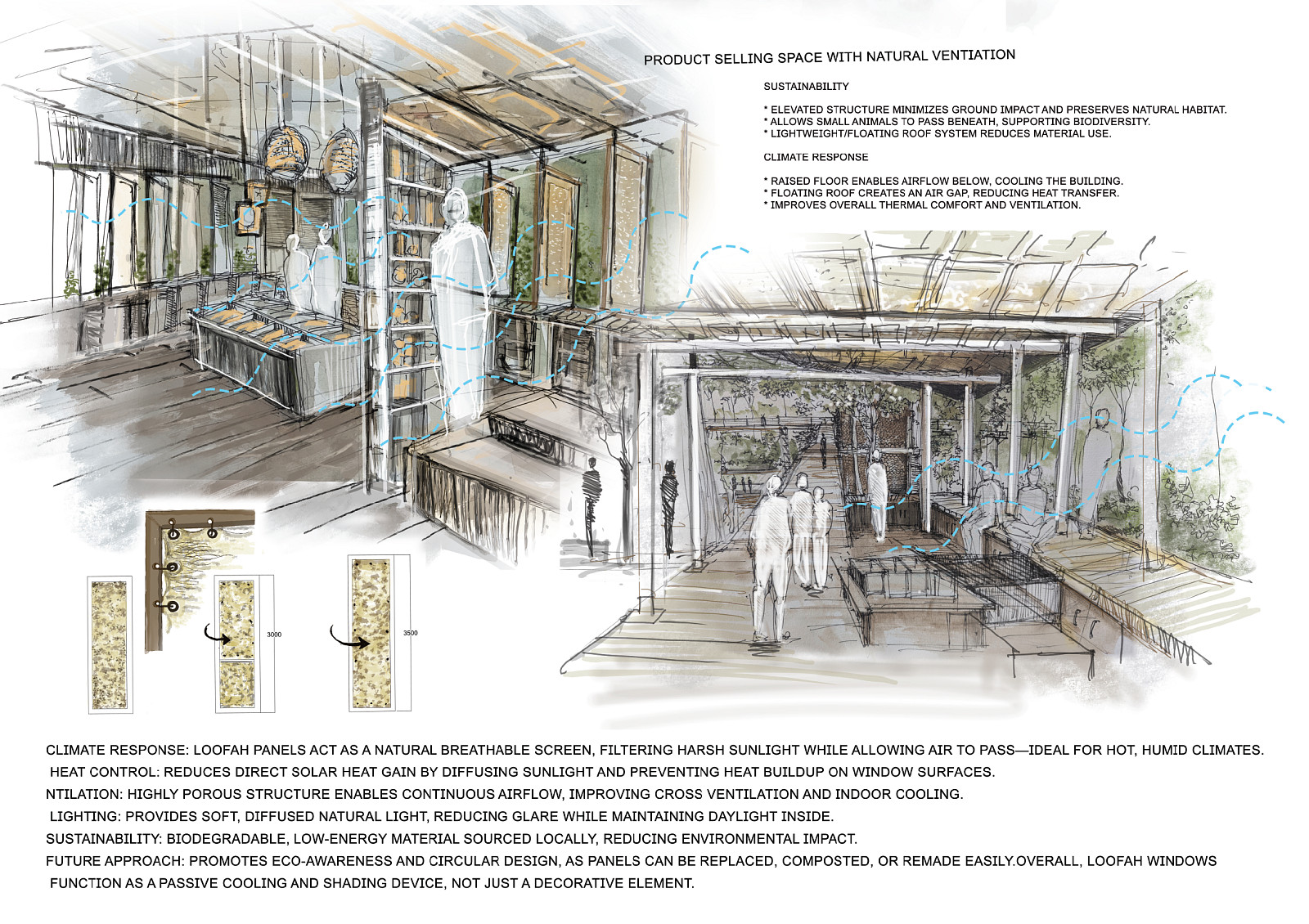
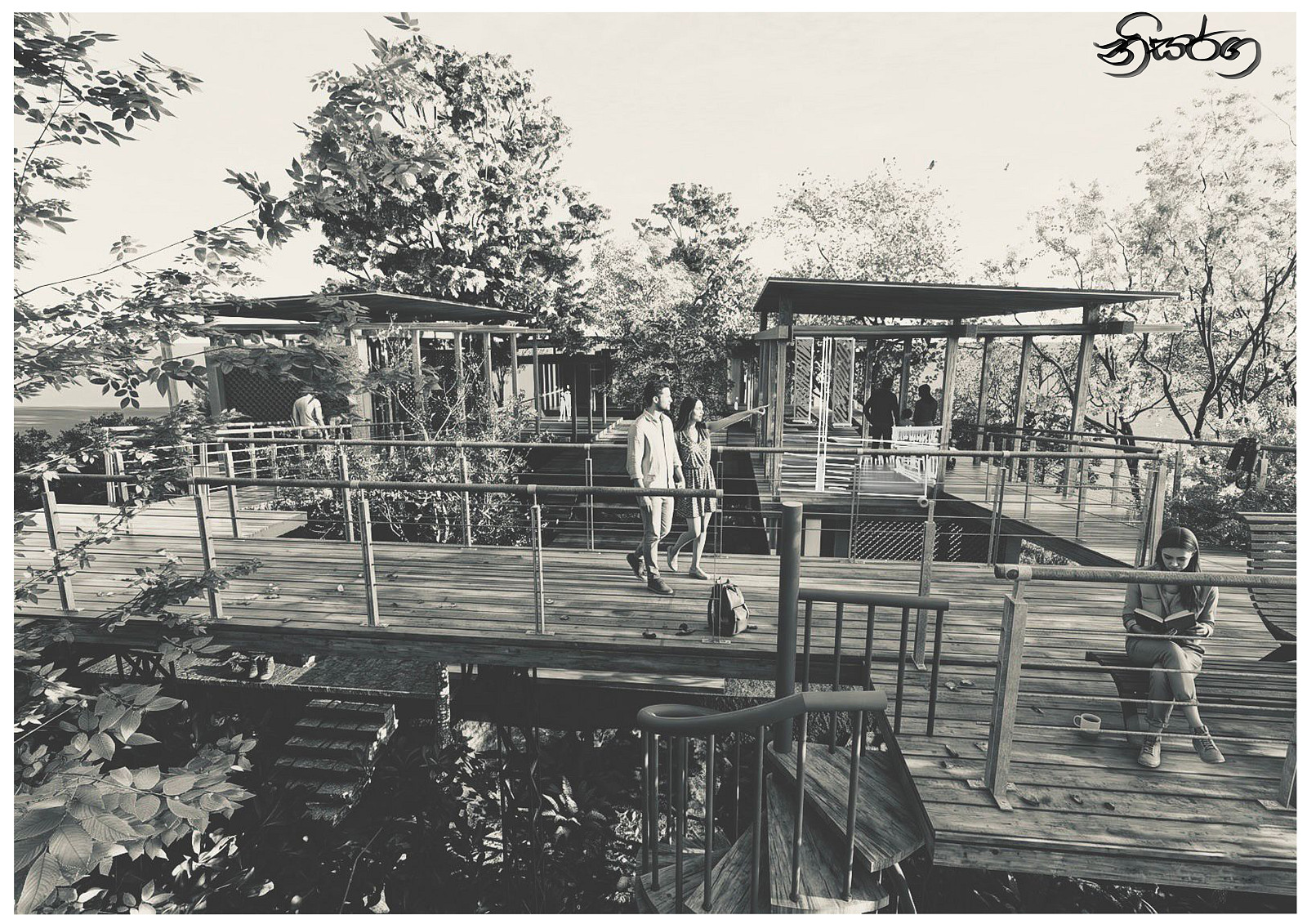
The building is designed as an open pavilion with elevated floors and permeable walls to maximize natural cross ventilation. The layered roof creates a stack effect, allowing warm air to rise and escape through roof openings while drawing cooler air into the interior, reducing the need for mechanical cooling.
Heat Gain Reduction
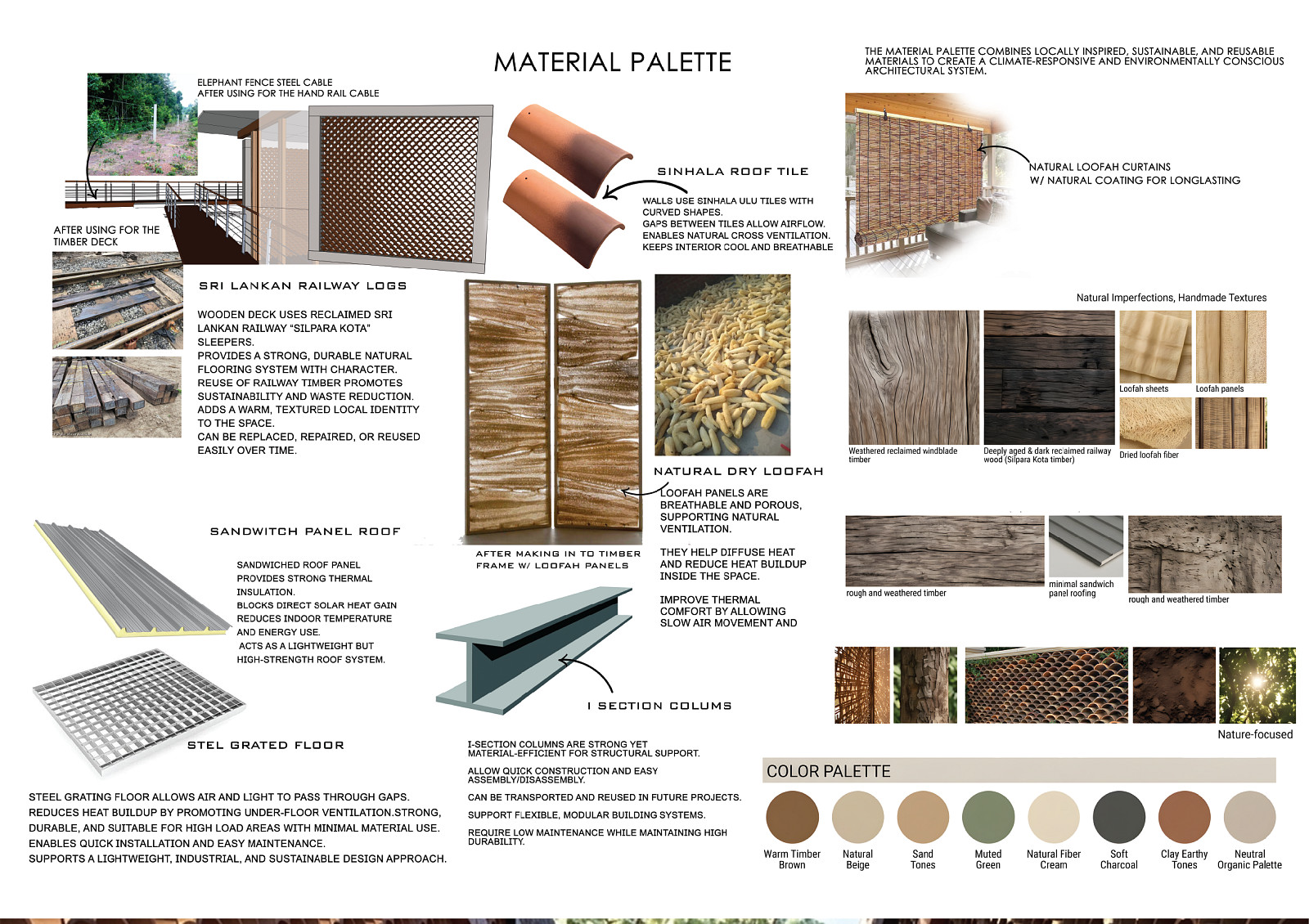
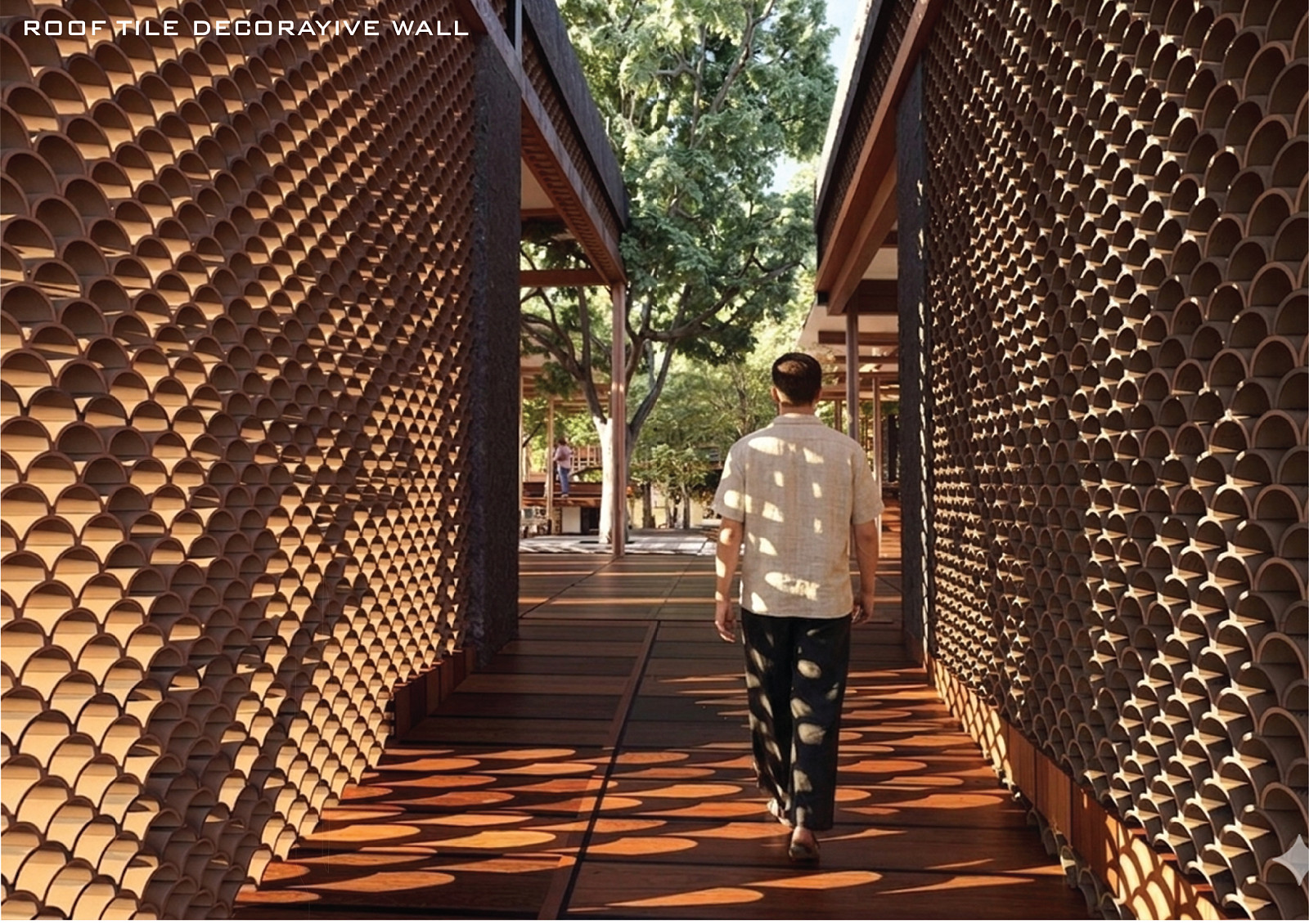
A double-layer roof with extended overhangs minimizes direct solar heat gain and provides shade to both indoor and outdoor spaces. The use of timber and perforated brick walls further reduces heat absorption while maintaining a comfortable indoor environment.
Natural Daylighting
Natural daylight is introduced through open façades and roof openings, allowing soft, diffused light to illuminate interior spaces. This strategy reduces dependence on artificial lighting while creating a bright and visually comfortable environment.
Solar Energy Integration
Photovoltaic (PV) solar panels are integrated into the roof to generate renewable electricity for lighting, workshops, exhibition areas, and market facilities. This improves the building’s energy efficiency and reduces its environmental impact.
Rainwater Management
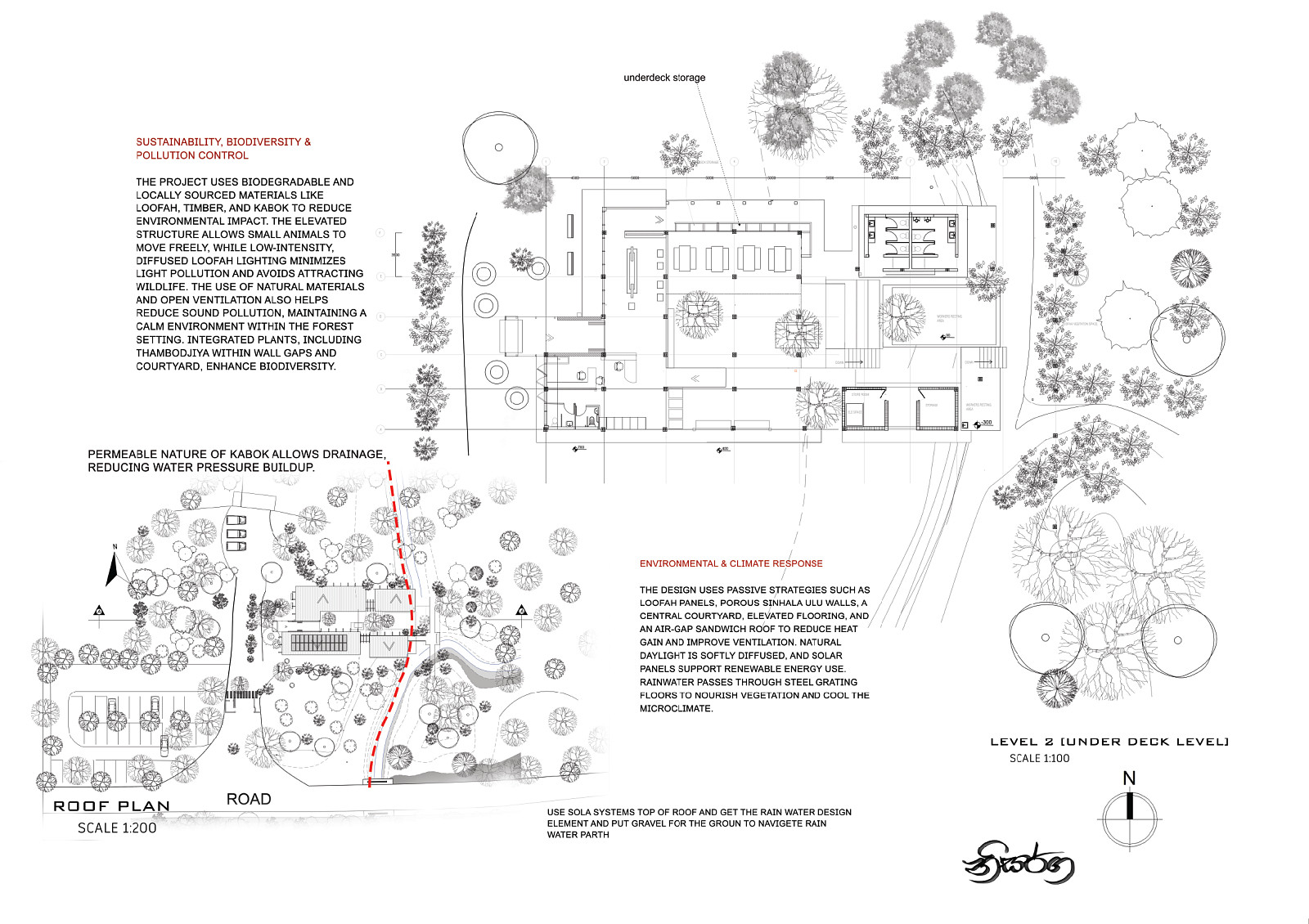
Rainwater collected from the roof is directed through gutters into storage tanks for reuse in landscape irrigation, cleaning, and loofah cultivation. This supports sustainable water management while reducing dependence on the local water supply.
Sustainable Material Strategy
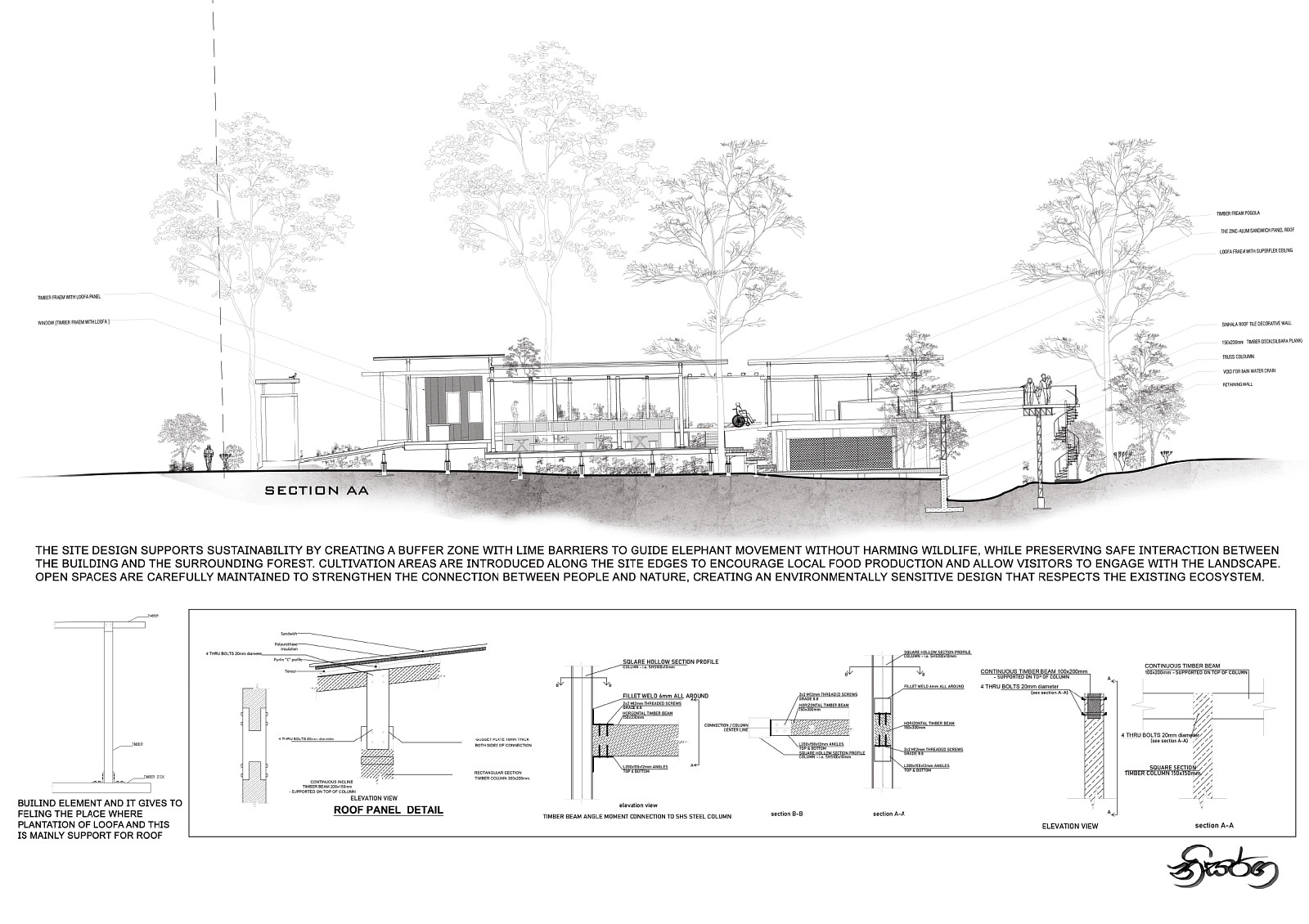
The project utilizes locally available timber, brick, and steel to reduce transportation impacts and support regional construction practices. These durable, low-impact materials contribute to the building’s sustainability while reflecting the local architectural identity.
Ecosystem Conservation
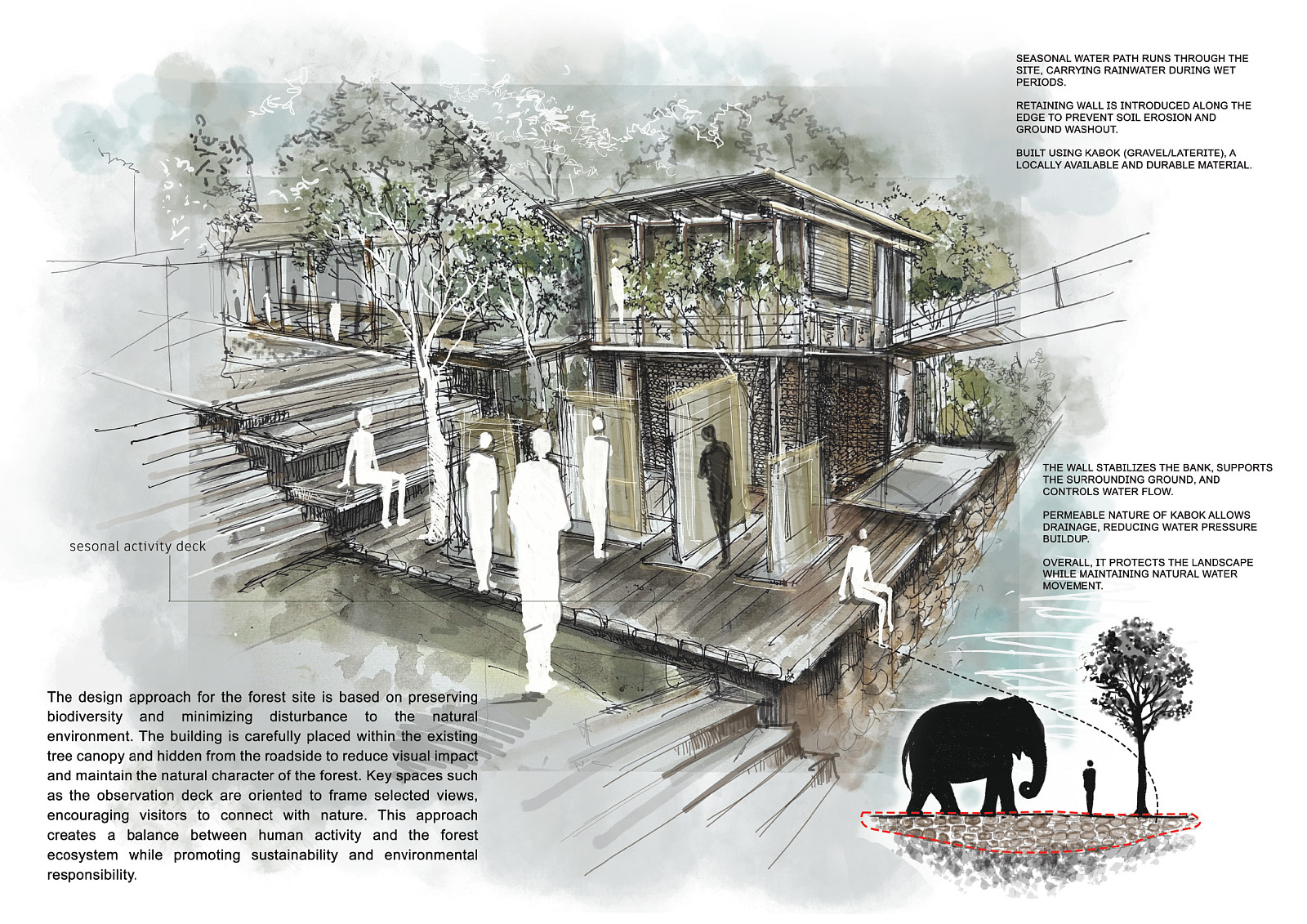
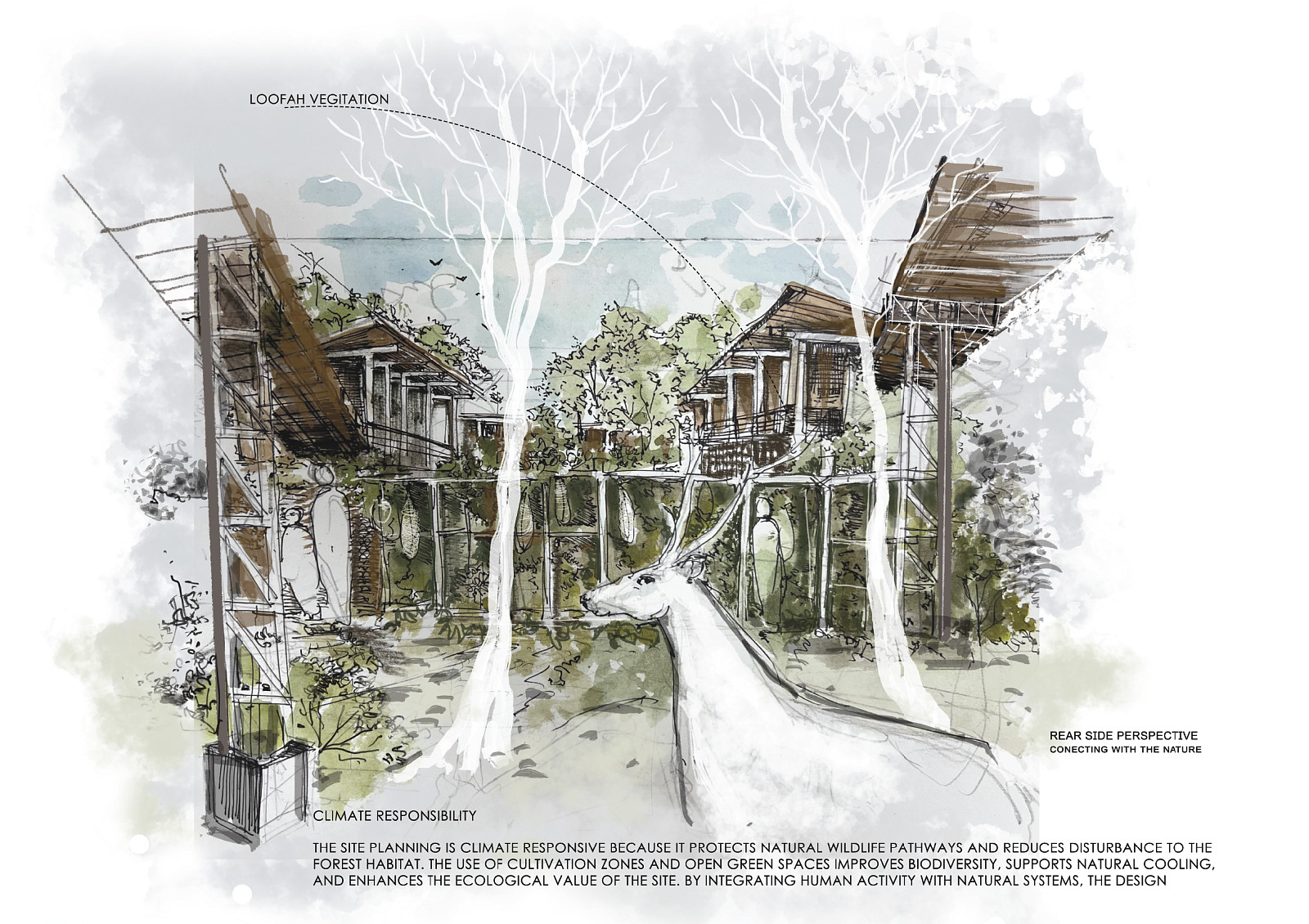
The structure is elevated on columns to minimize ground disturbance and preserve natural drainage, vegetation, and wildlife movement. Existing trees and natural habitats are retained to protect biodiversity and maintain the ecological character of Edagolla Eco Park.
Community and Economic Sustainability
The center integrates loofah production, training, exhibition, and market spaces to create year-round livelihood opportunities. By promoting value-added products and linking local producers with tourists and regional markets, the project strengthens the local economy while reducing dependence on forest encroachment and seasonal agriculture.

Copyright © 2026 INSPIRELI | All rights reserved. Use of this website signifies your agreement to the Terms of Use, Privacy Policy, and use of cookies.
