CYBERPUNK-PUNK: Hacking Downtown Los Angeles


Project idea
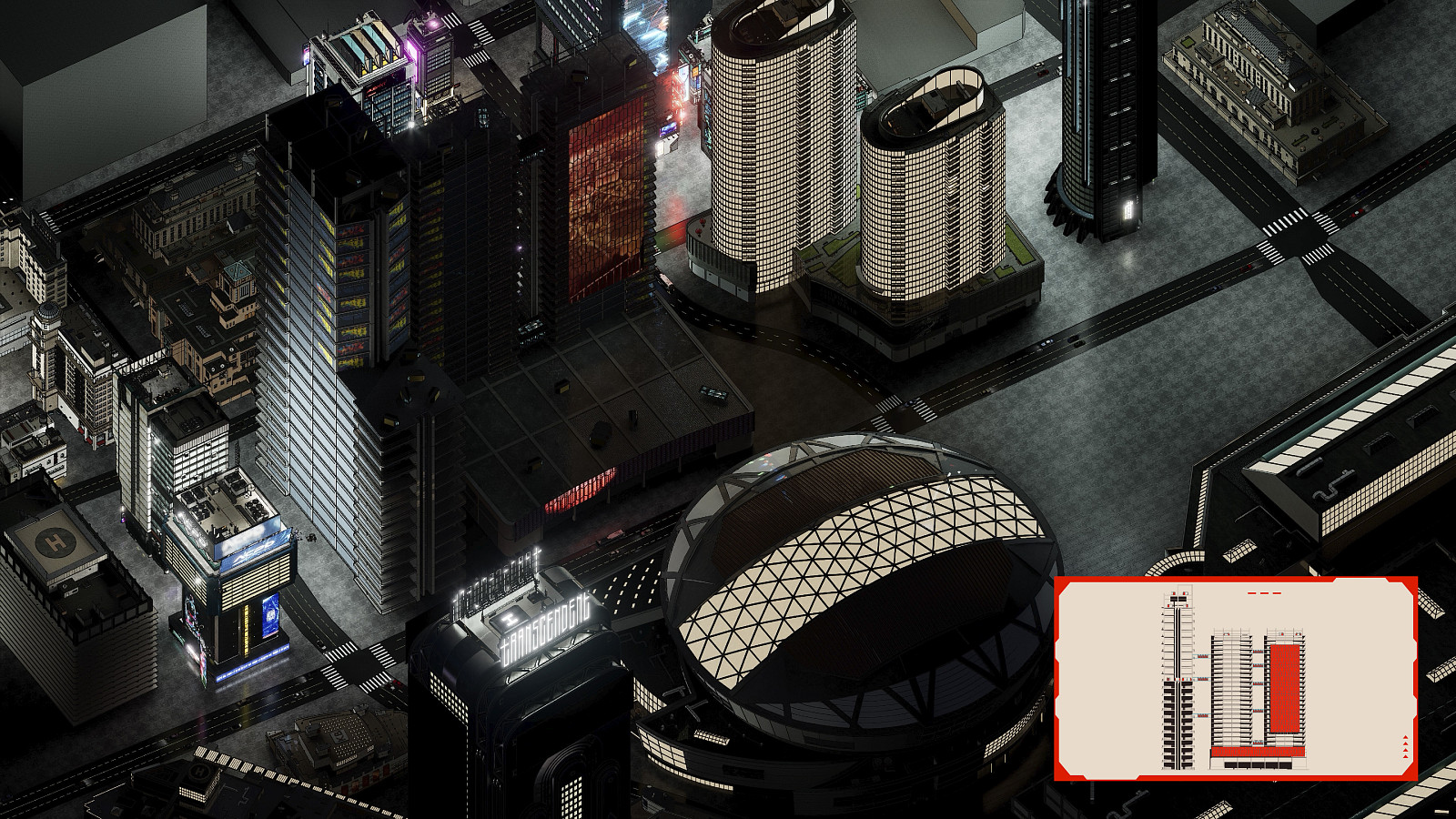
Cyberpunk emerged as a postmodern corrective to modernism's techno-optimism, but its critiques of unchecked capital and the Information Age were eventually watered down into aesthetics — the rebellious messages suggested by the likes of Blade Runner, Akira, the Matrix, and Ghost in the Shell were defanged and absorbed into the mainstream. Yet, the inequities cyberpunk media warned us about are now more pressing than ever, and nowhere more legible than in Los Angeles, where all the markers of a Second Gilded Age pepper the city; the largest unhoused population in the country sits blocks from the financial district, and developments are either underfunded and in disrepair or gentrifying and displacing.
CYBERPUNK-PUNK responds not by solving this condition but by designing for it, drawing on Fred Moten and Stefano Harney's Undercommons and the speculative traditions of Yona Friedman, Cedric Price, and Archigram. Rather than proposing a utopian fix, it asks architecture to design for decay and delinquency — imagining a fantastical future in order to cultivate heterotopian hope.
Project description
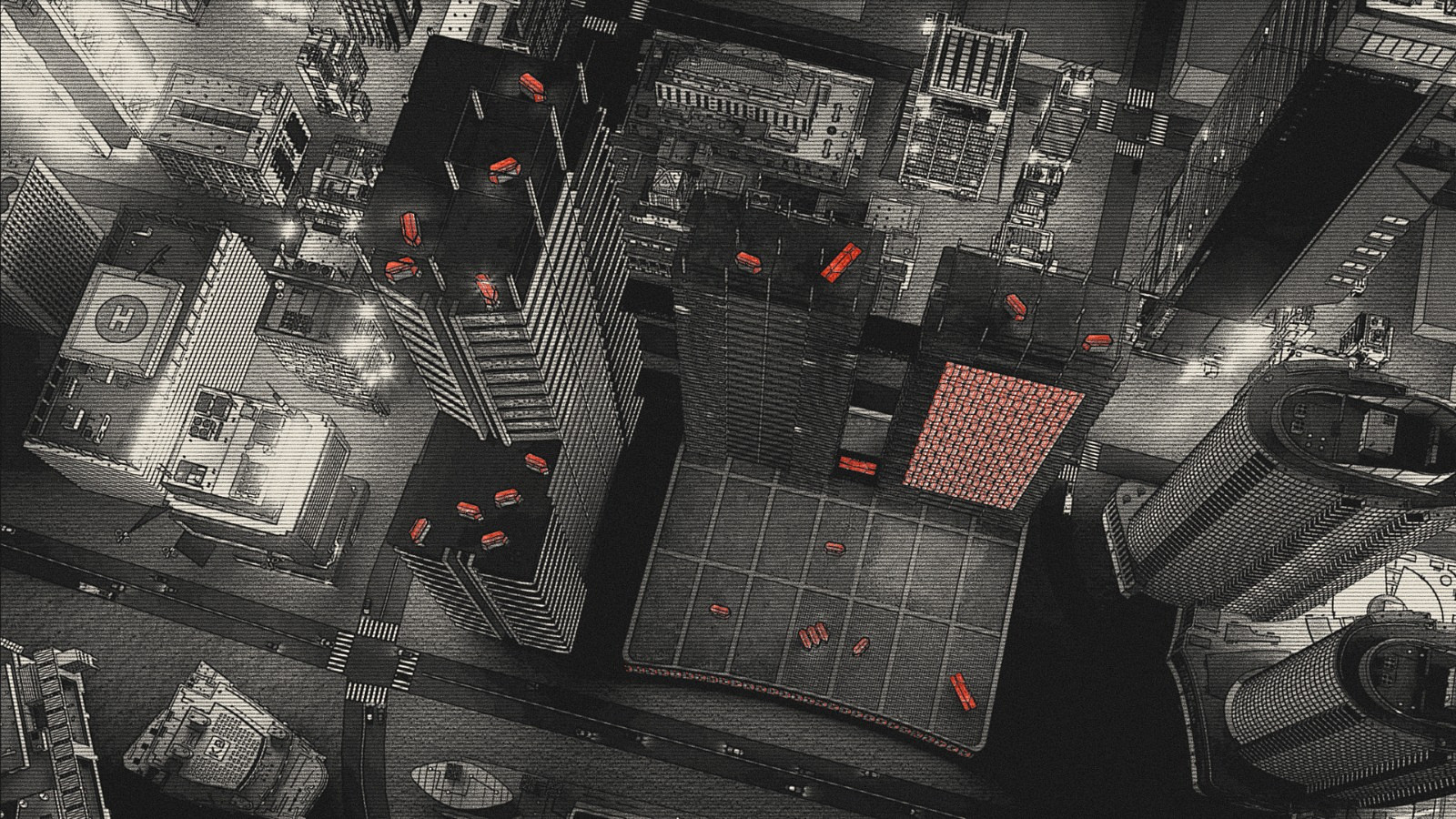
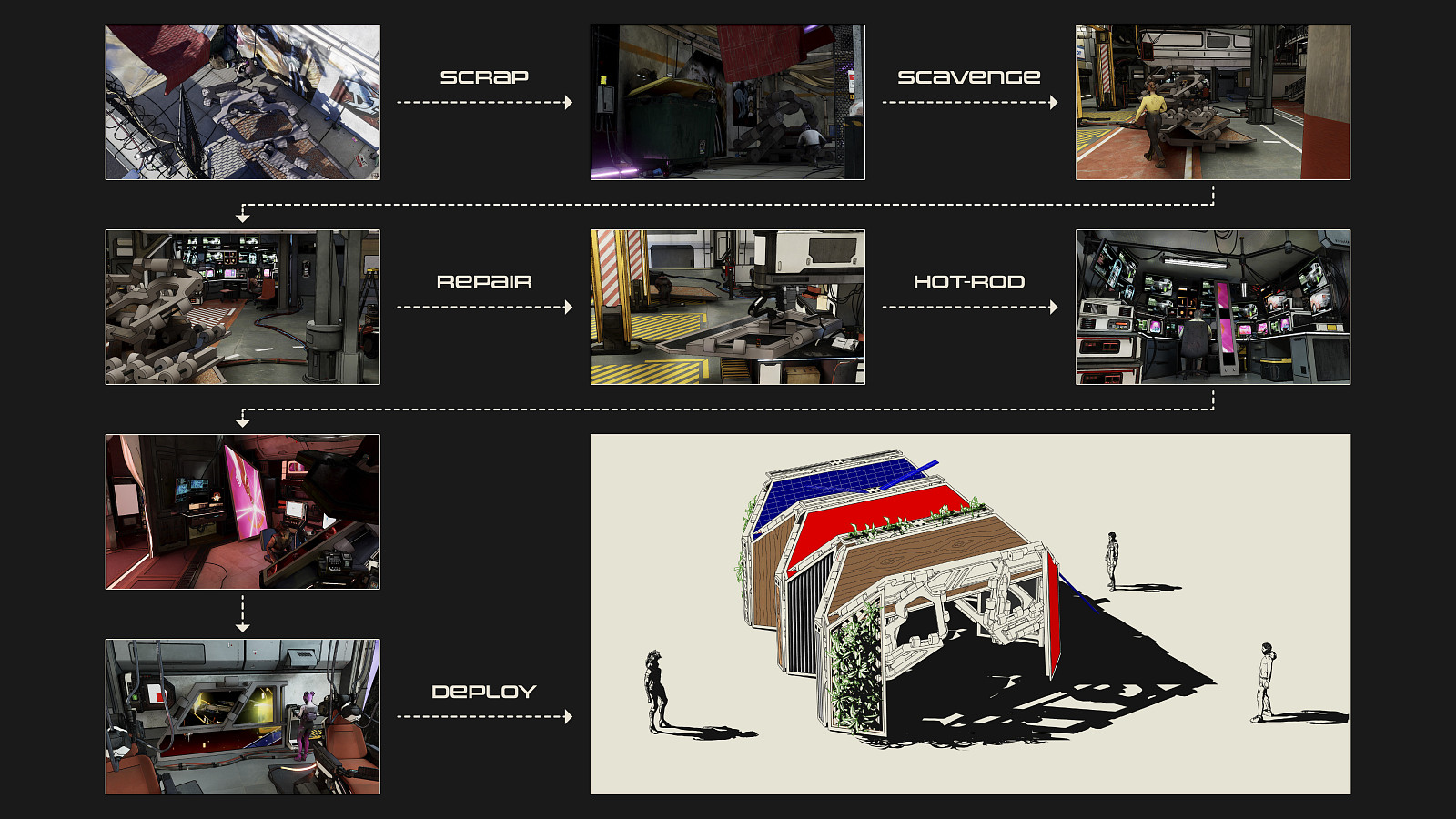
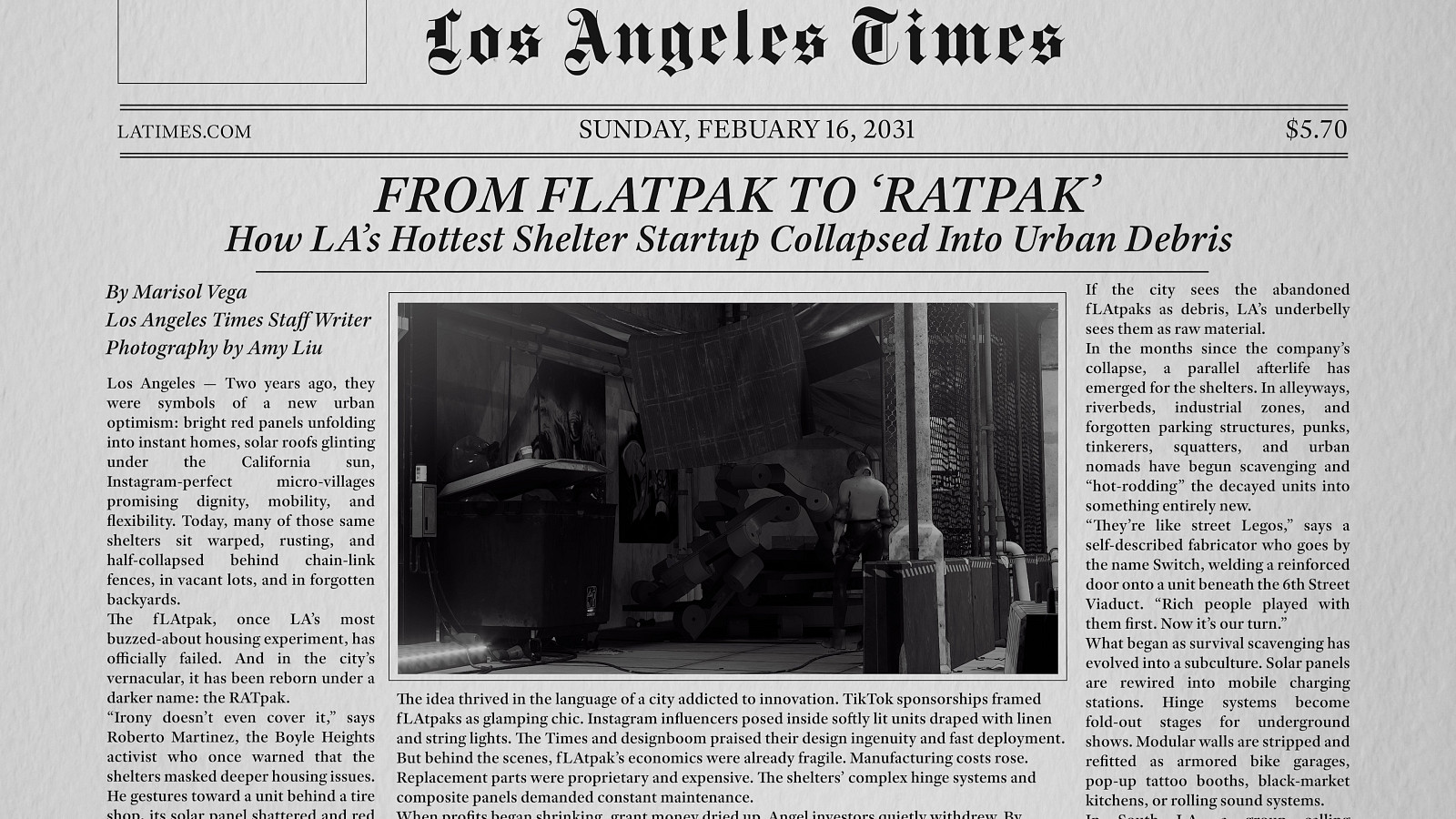
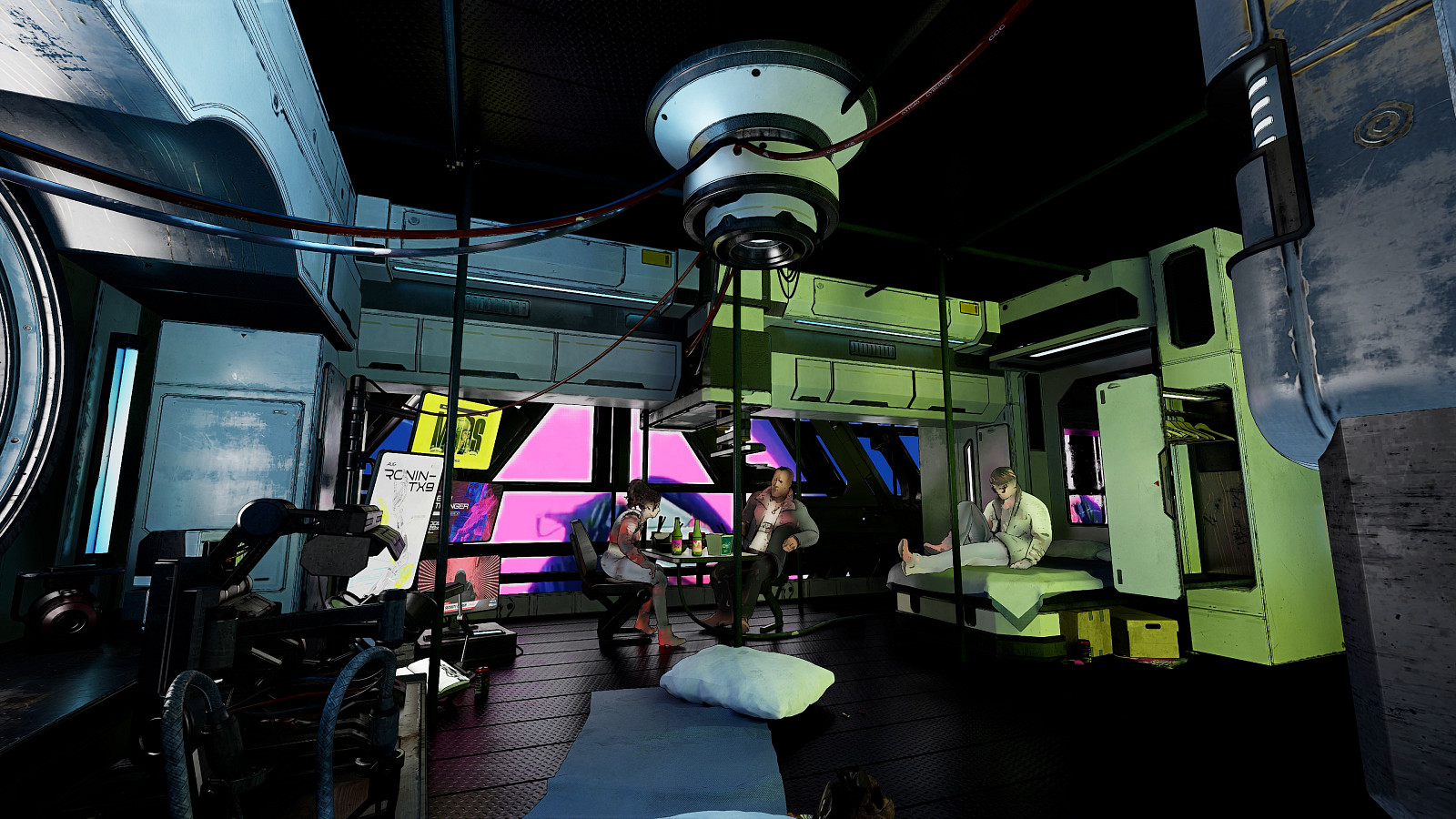
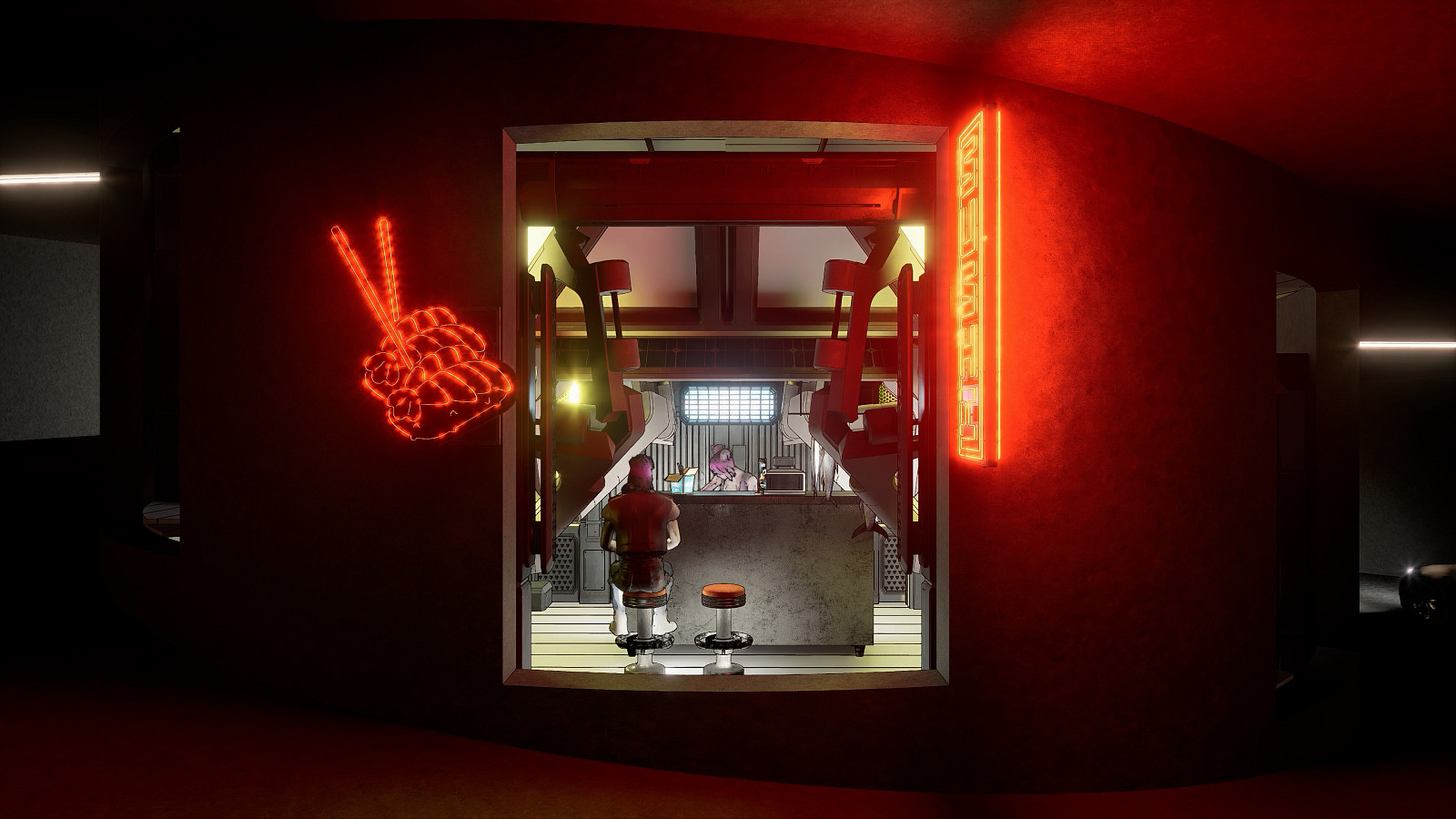
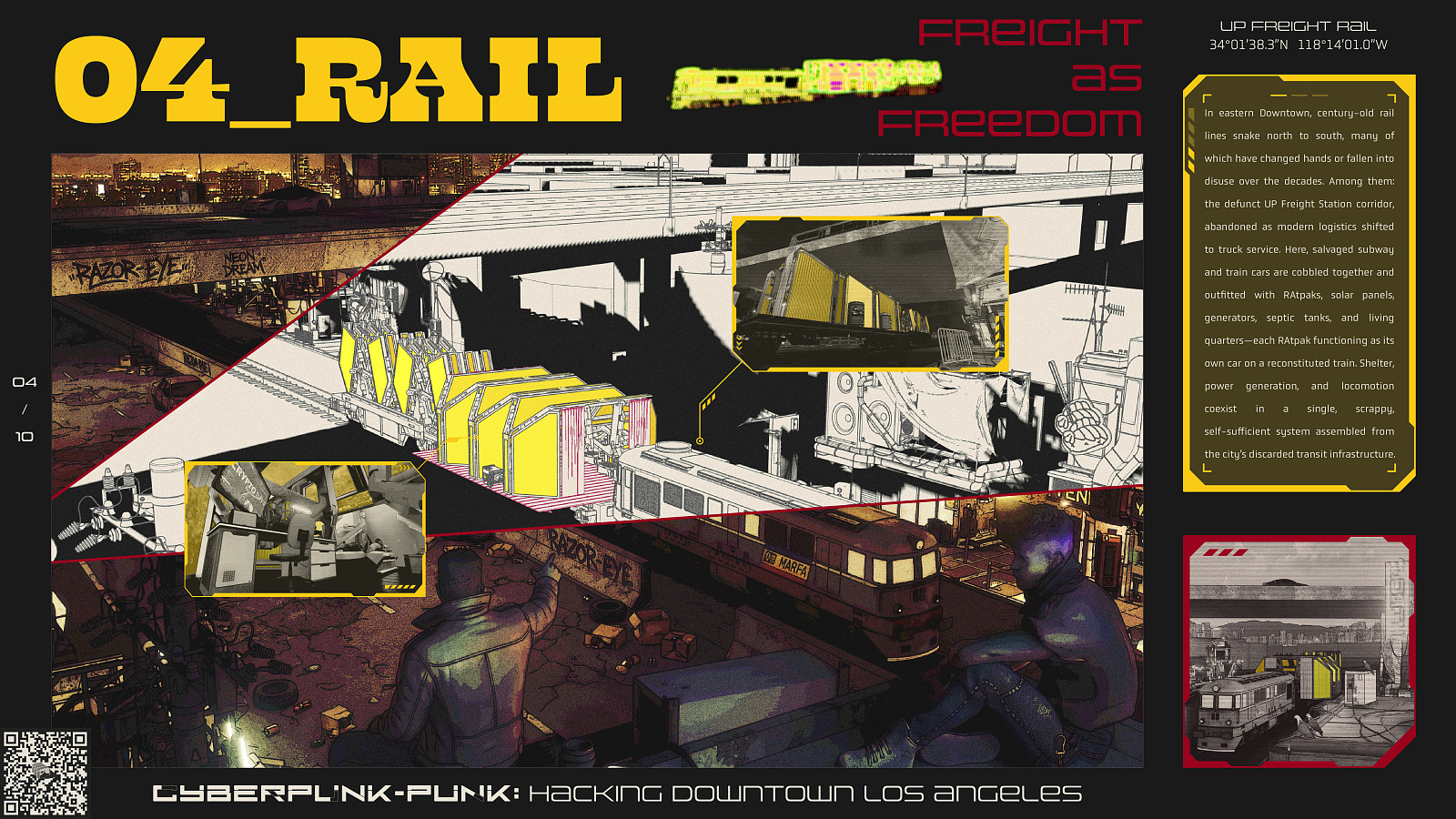
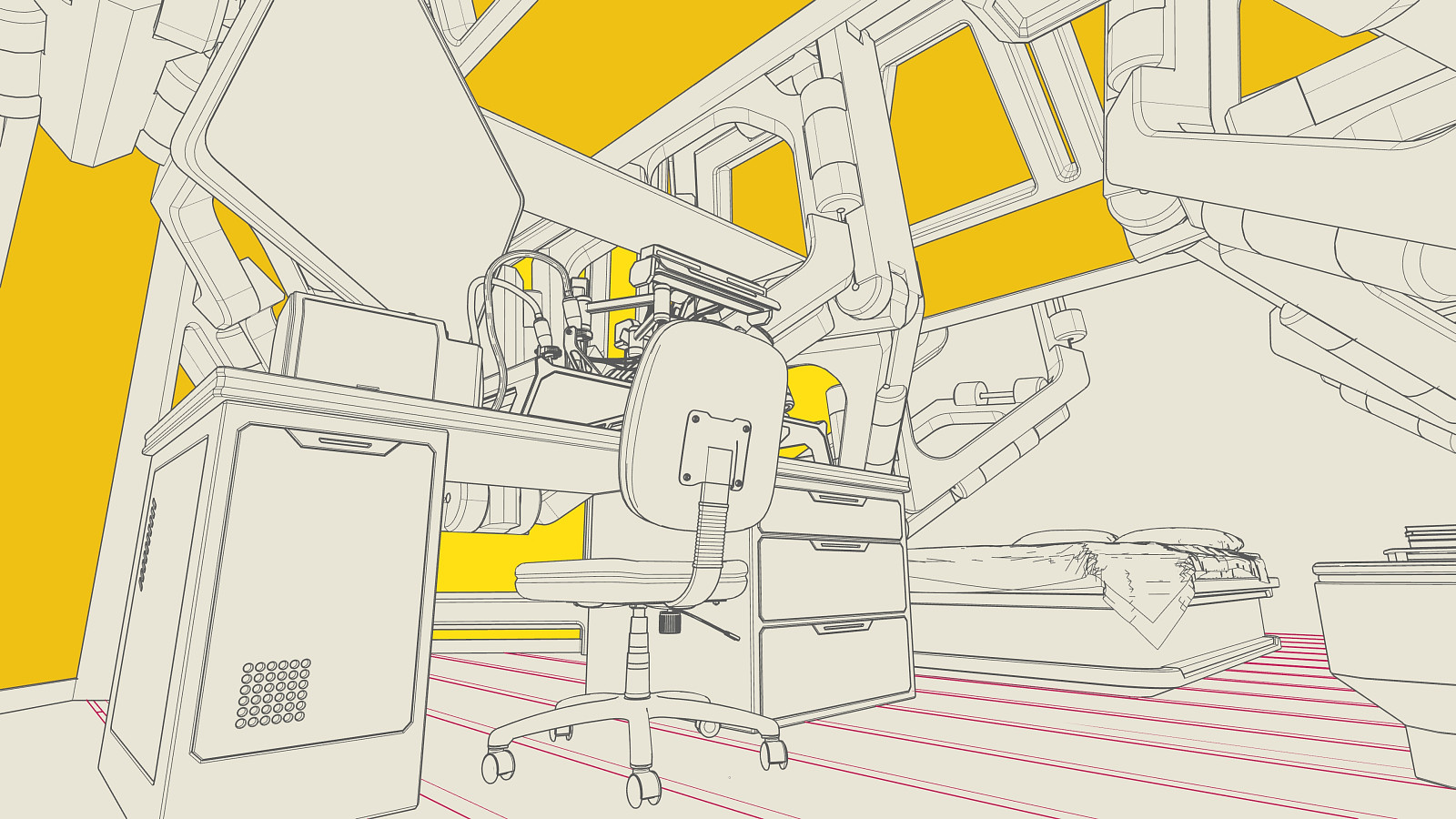
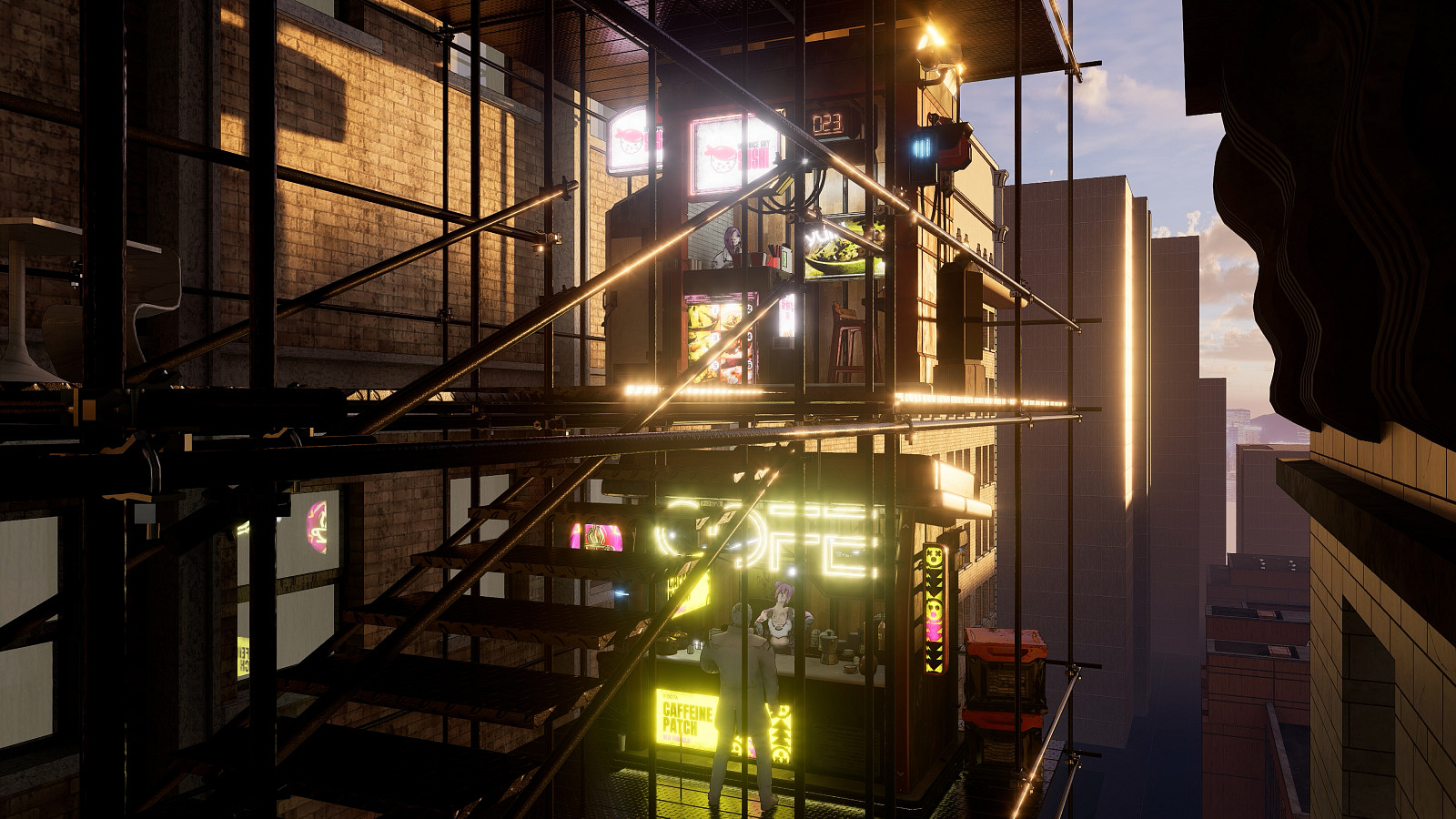
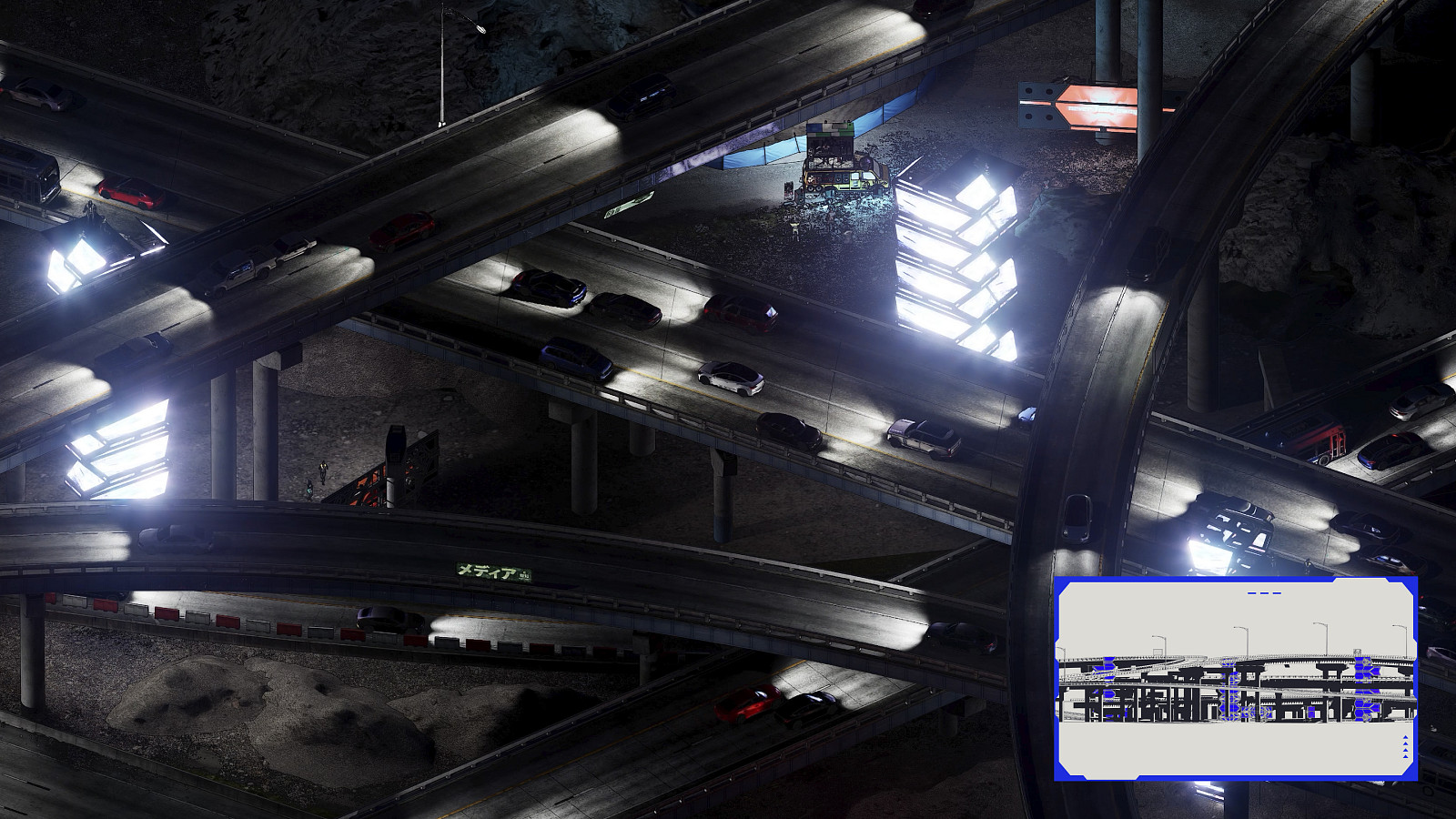
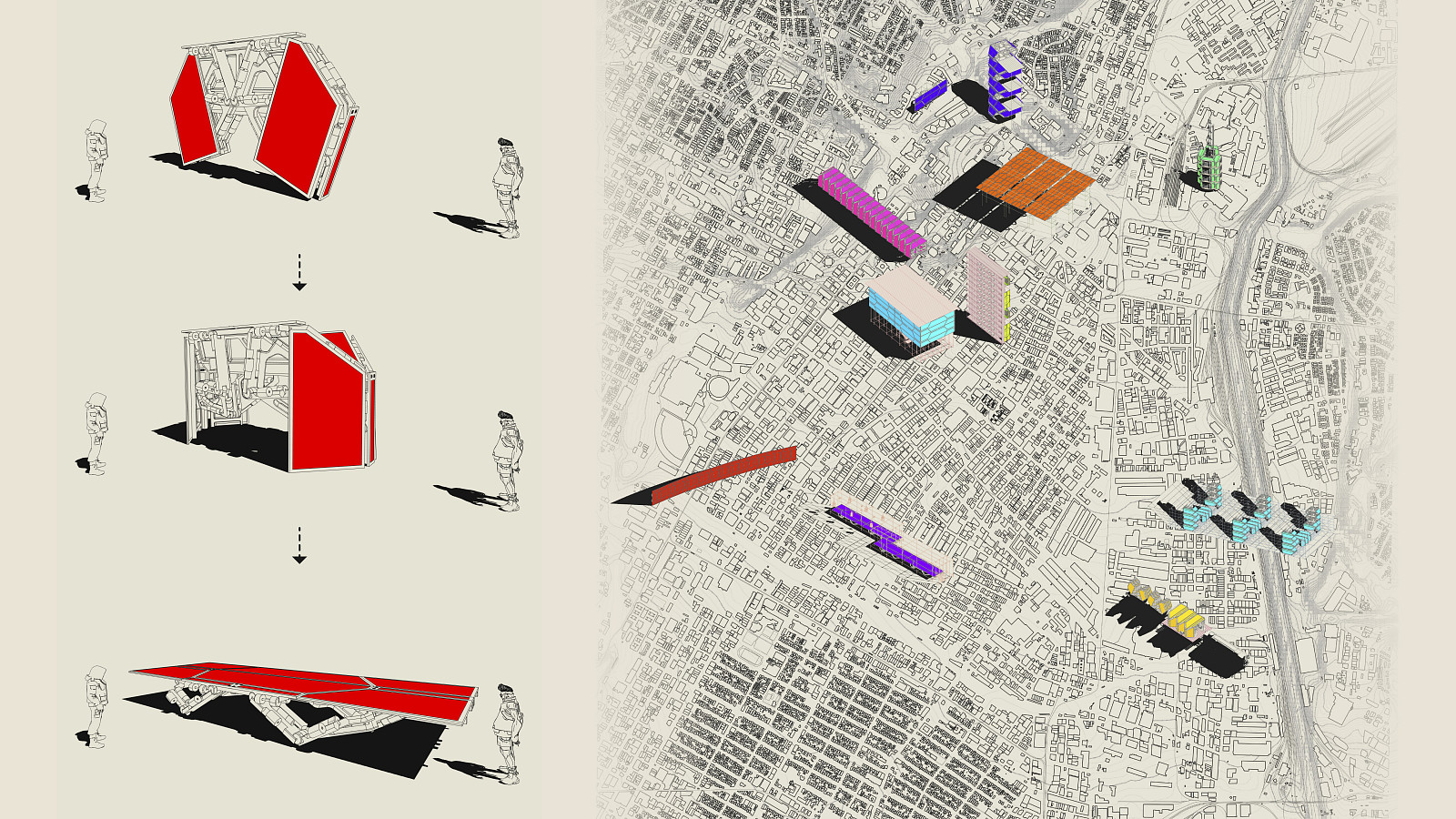
The project follows a fiction: fLAtpak, a startup manufacturing deployable shelter units, finds brief success before going bankrupt, leaving hundreds of abandoned units — rebranded RAtpaks — scattered across the city. Downtown LA's near-future undercommons reclaim them, taking a scrappy approach to hot rodding their conditions and staking their claim at ten key sites around the metropolis, each one a unique typology to worm into, to occupy, and to leverage.
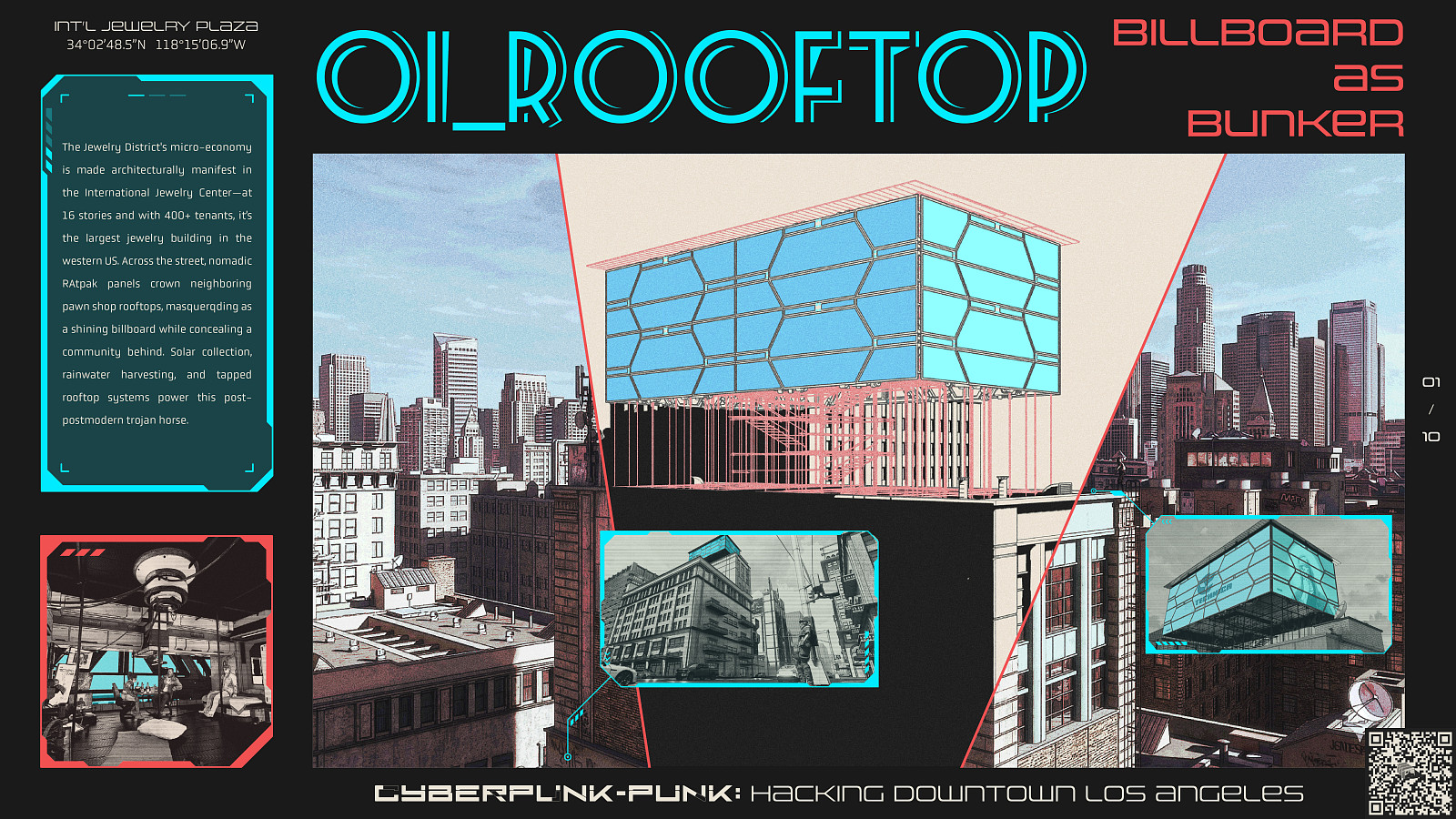
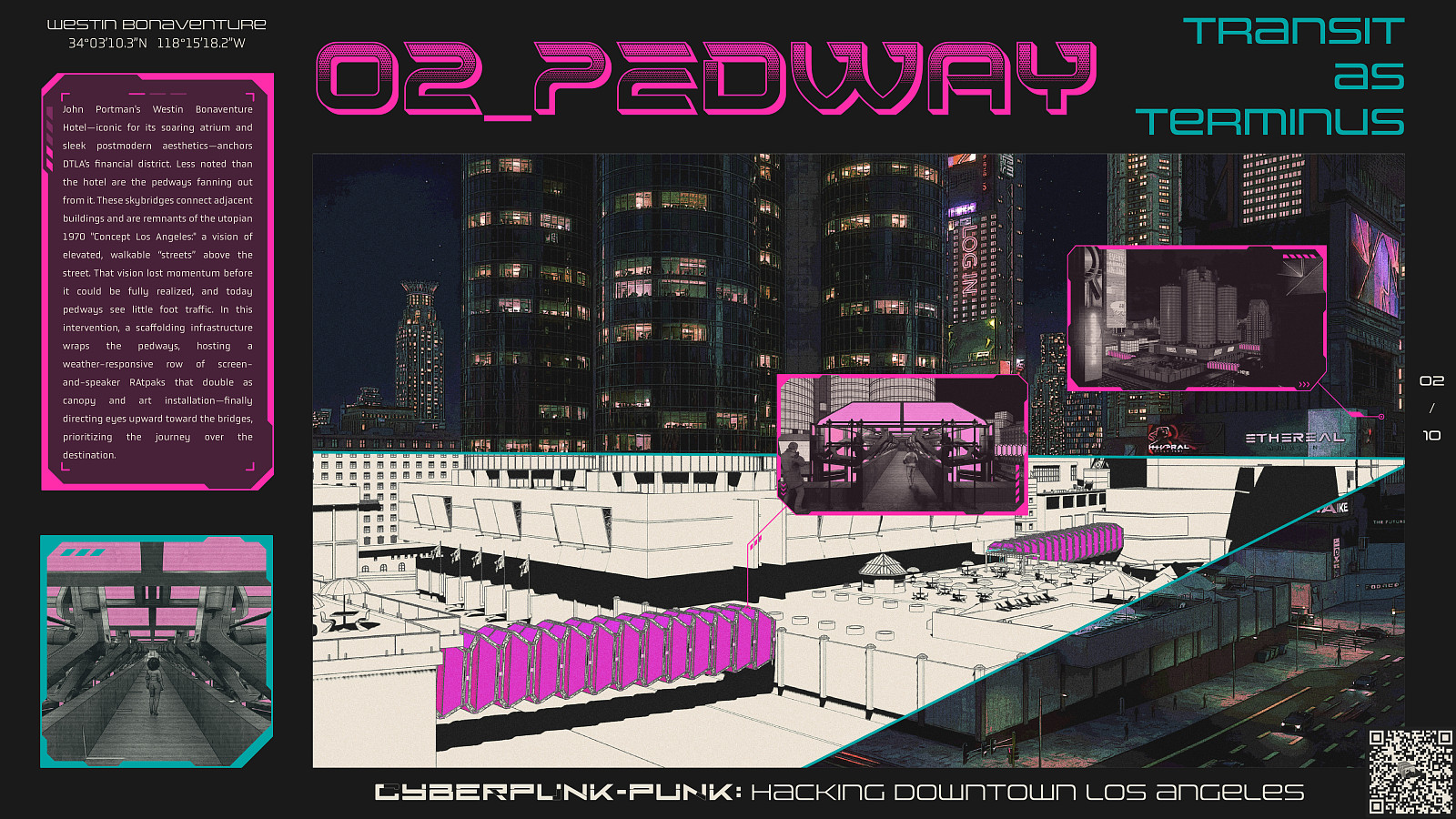
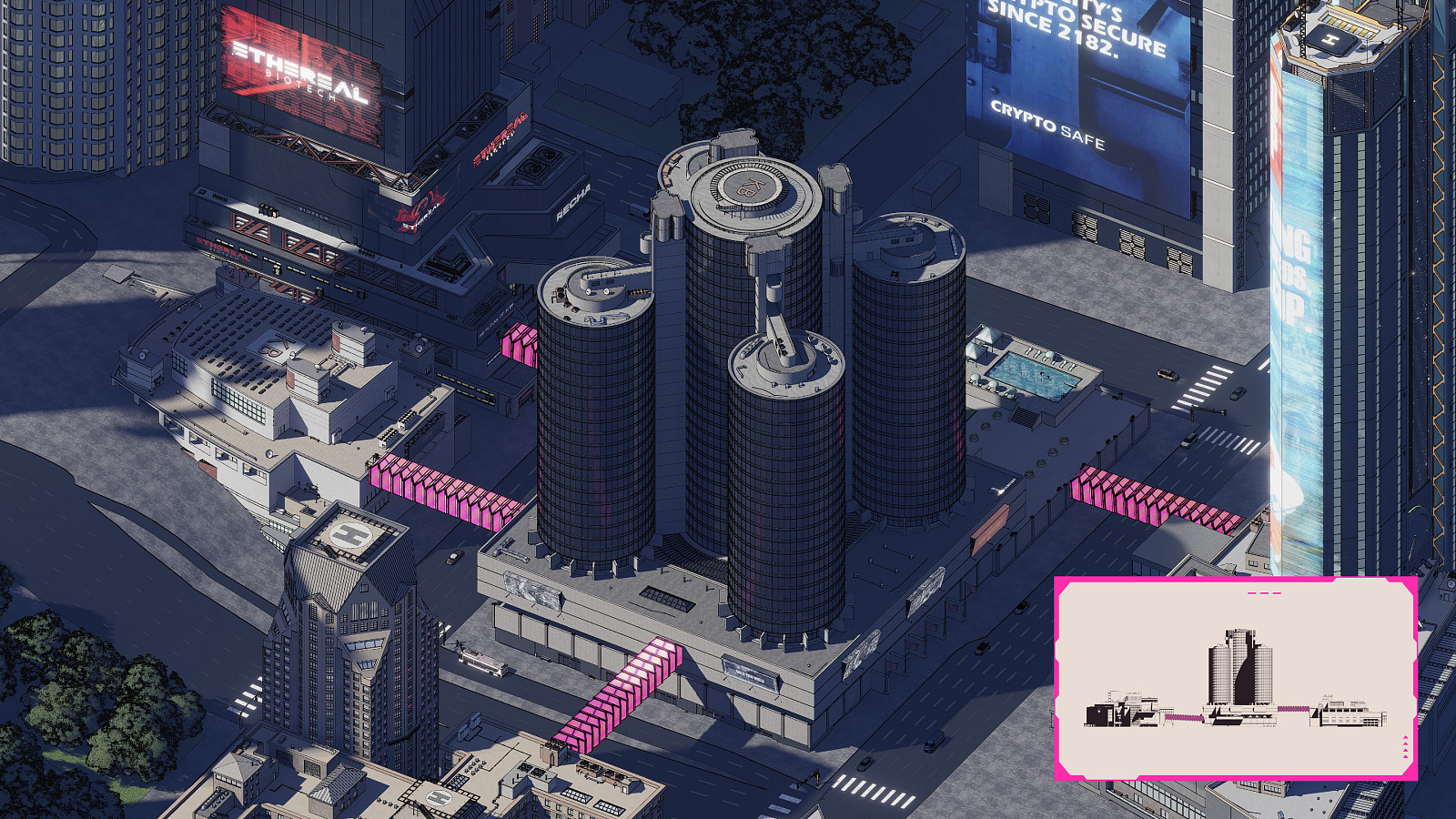
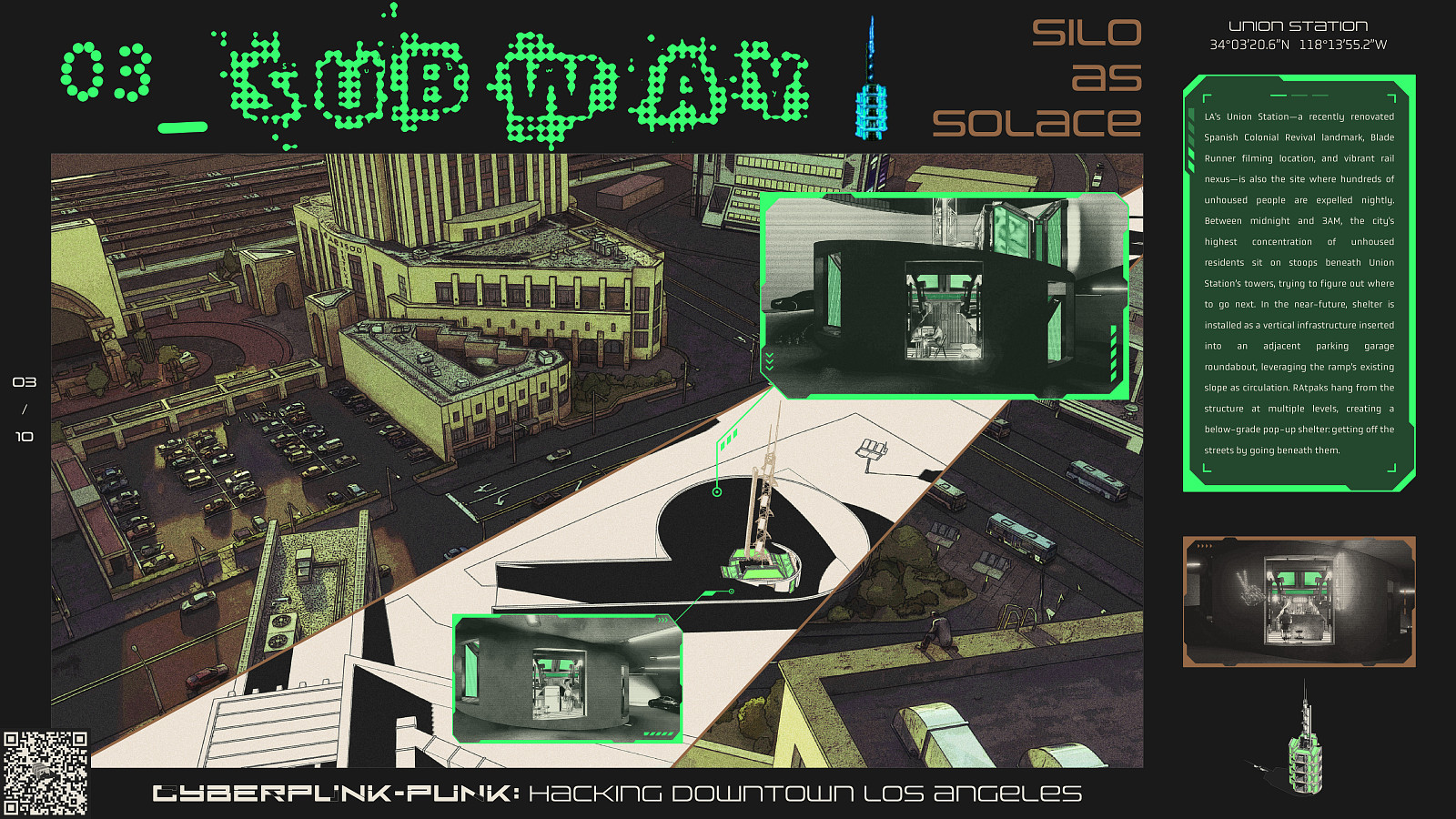
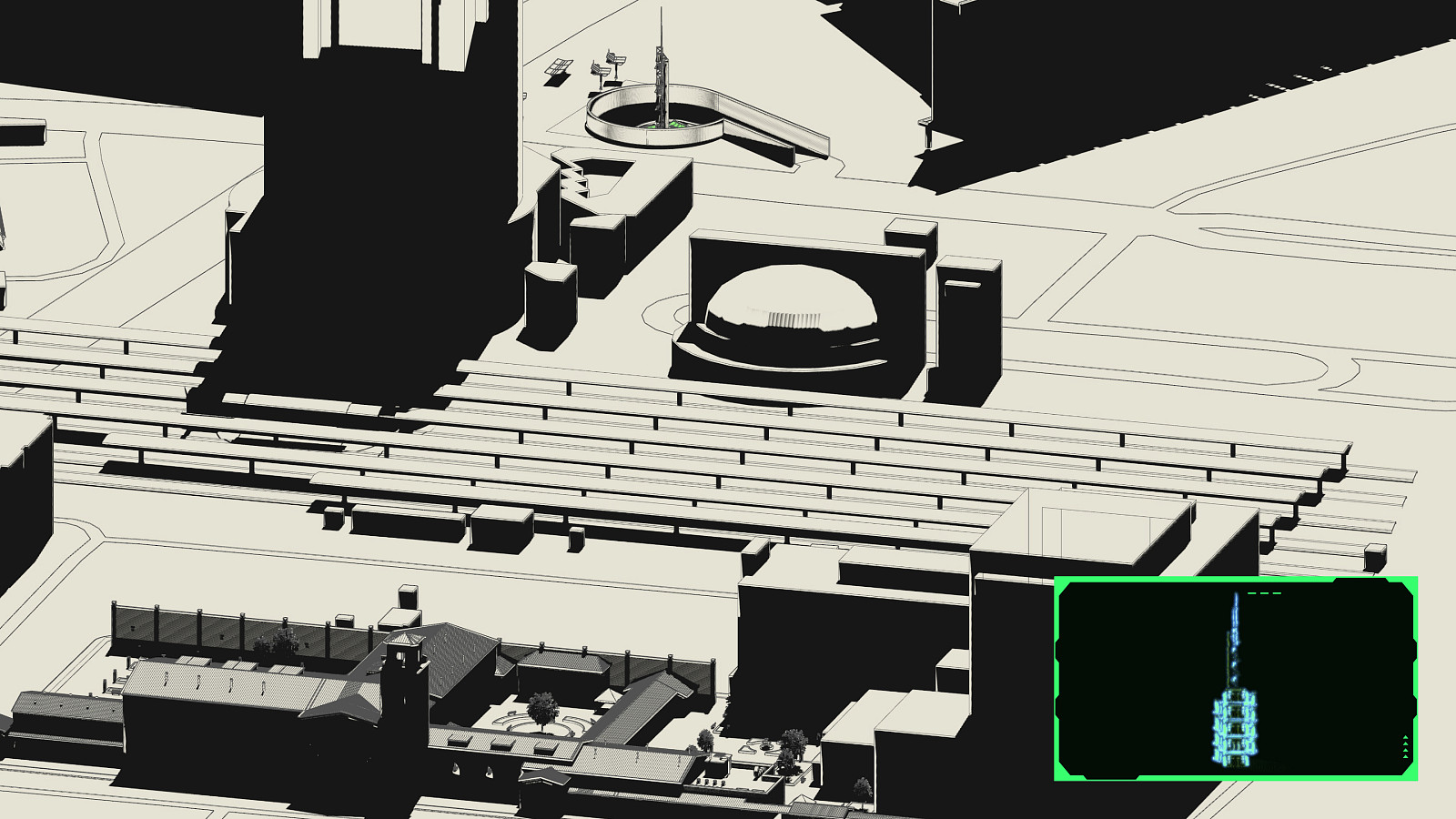
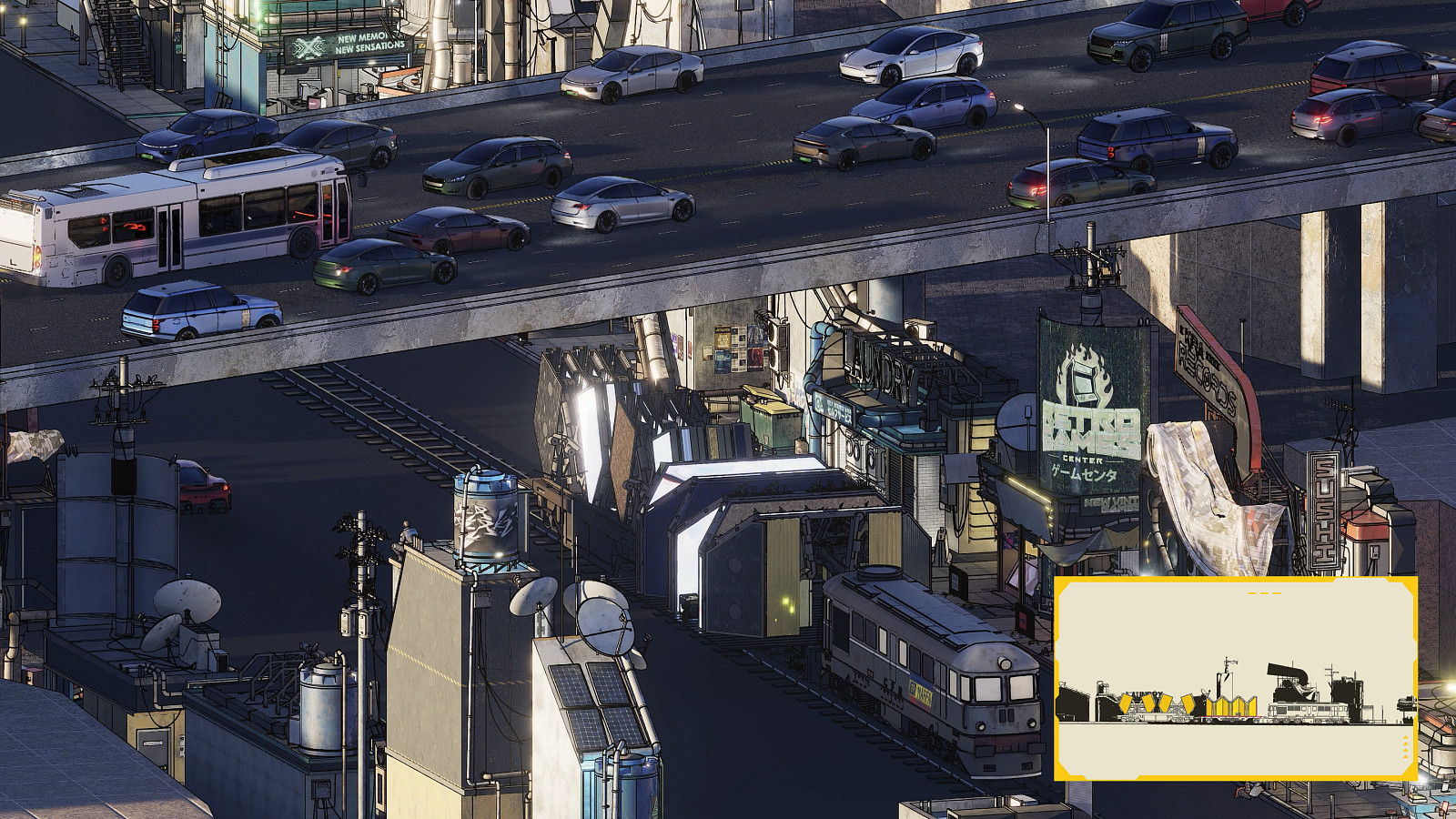
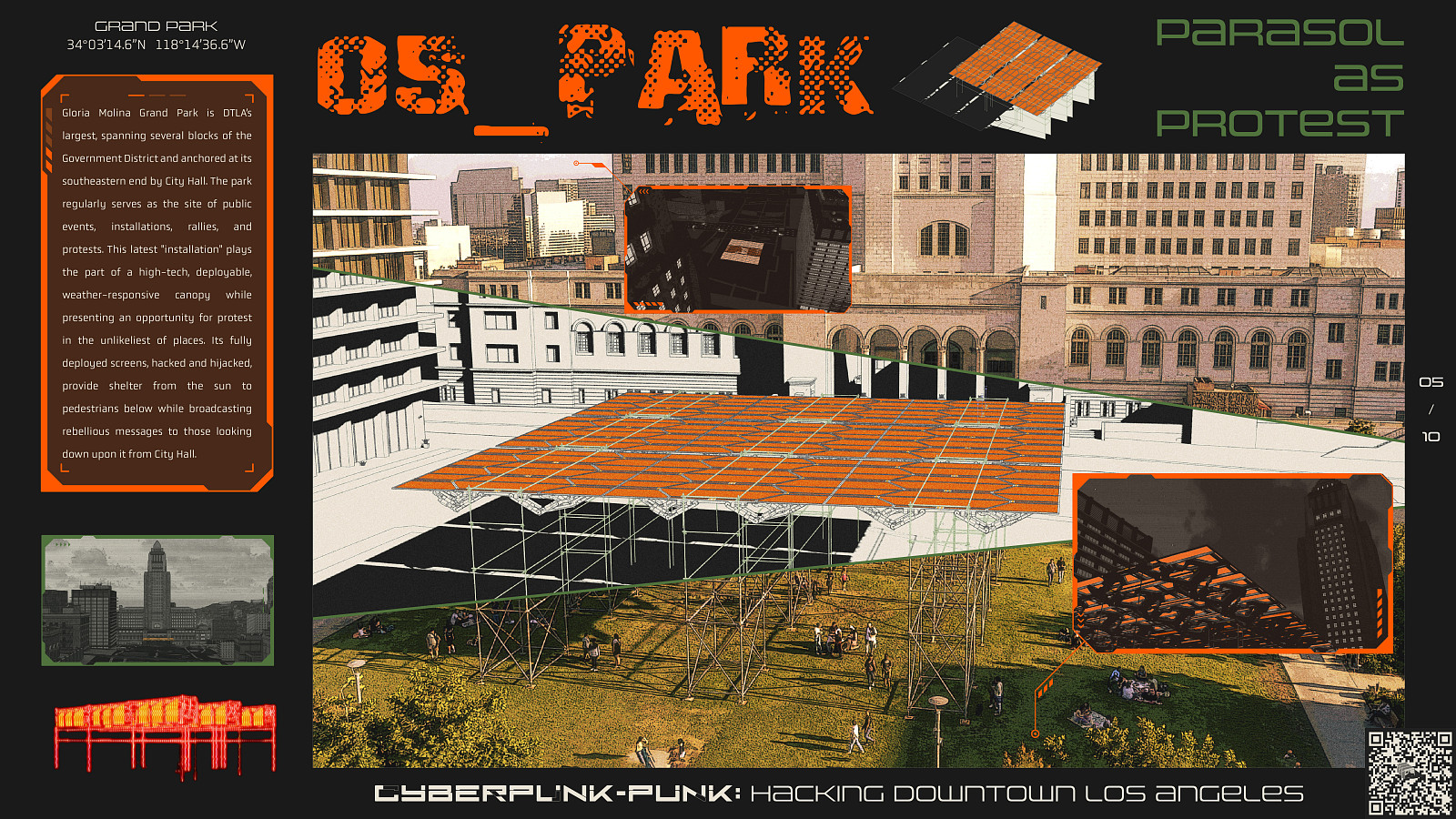
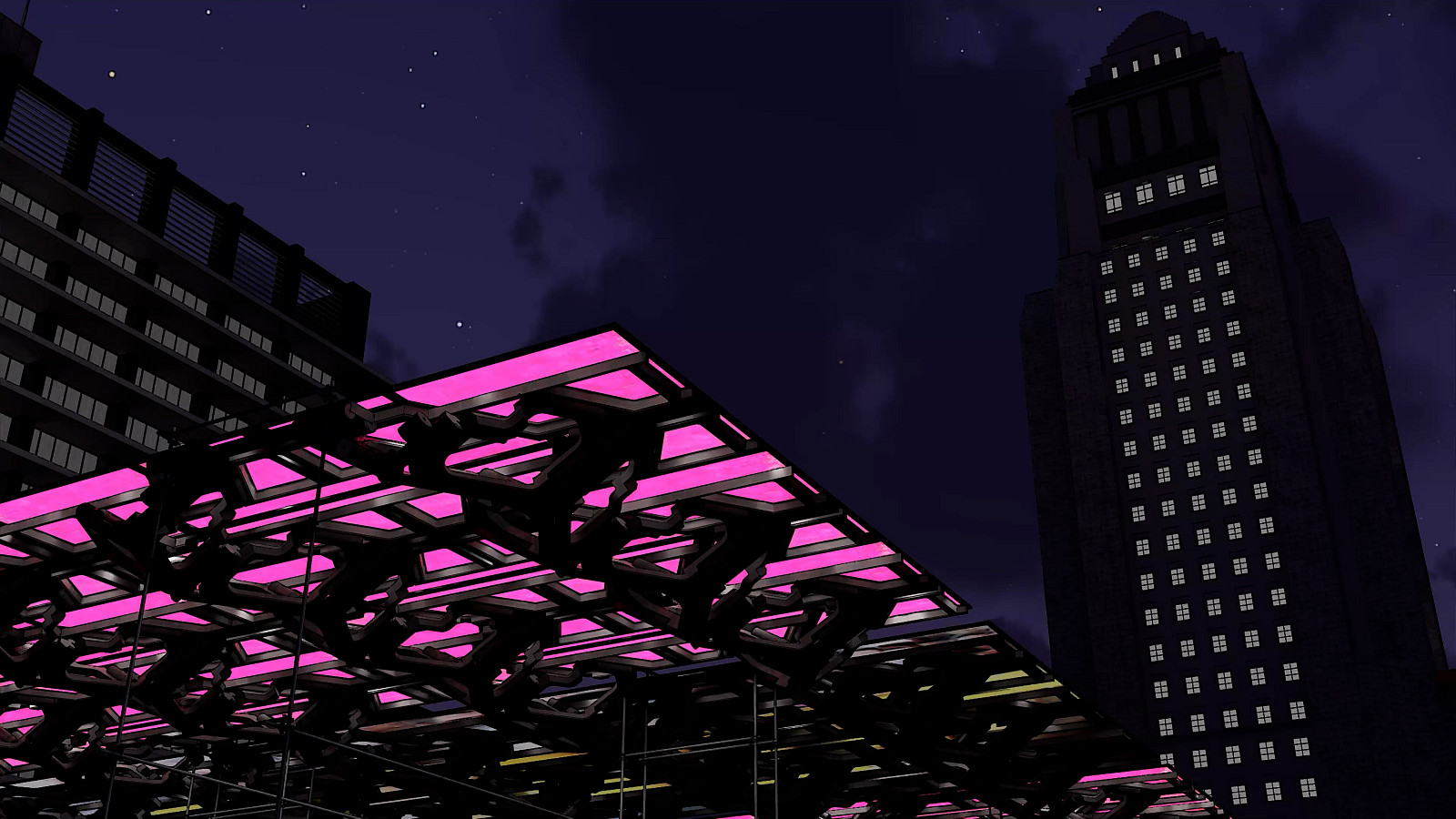
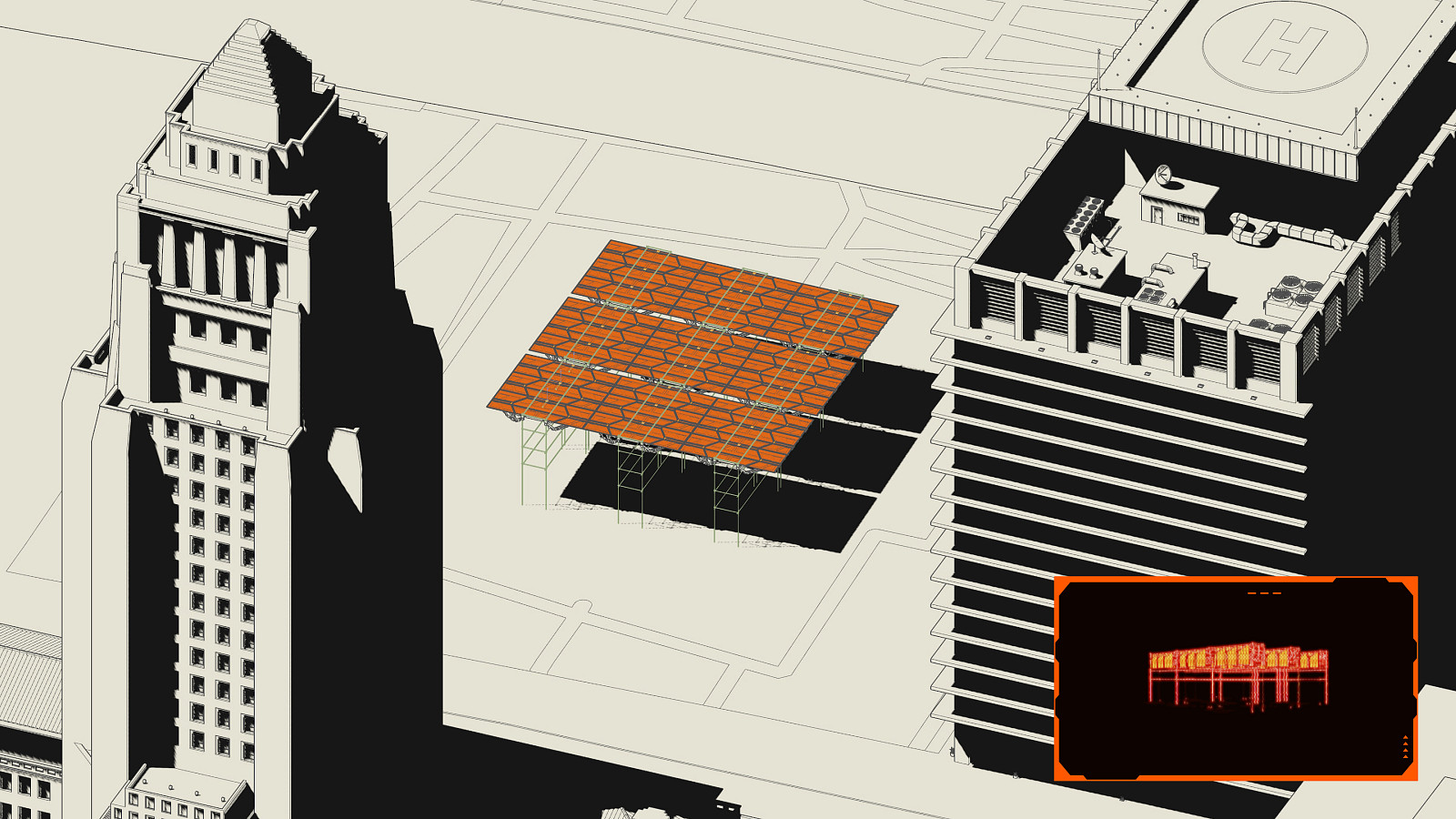
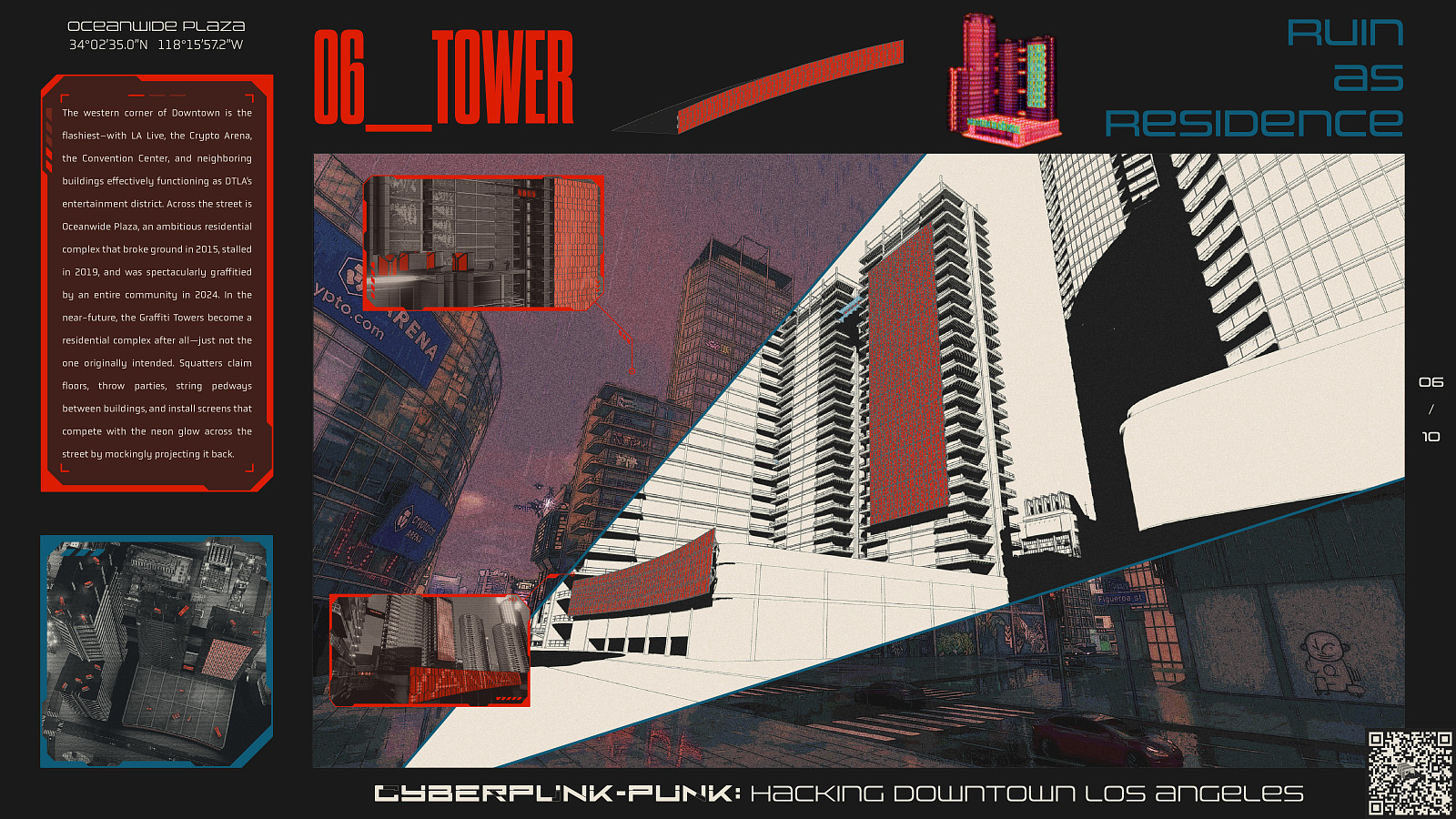
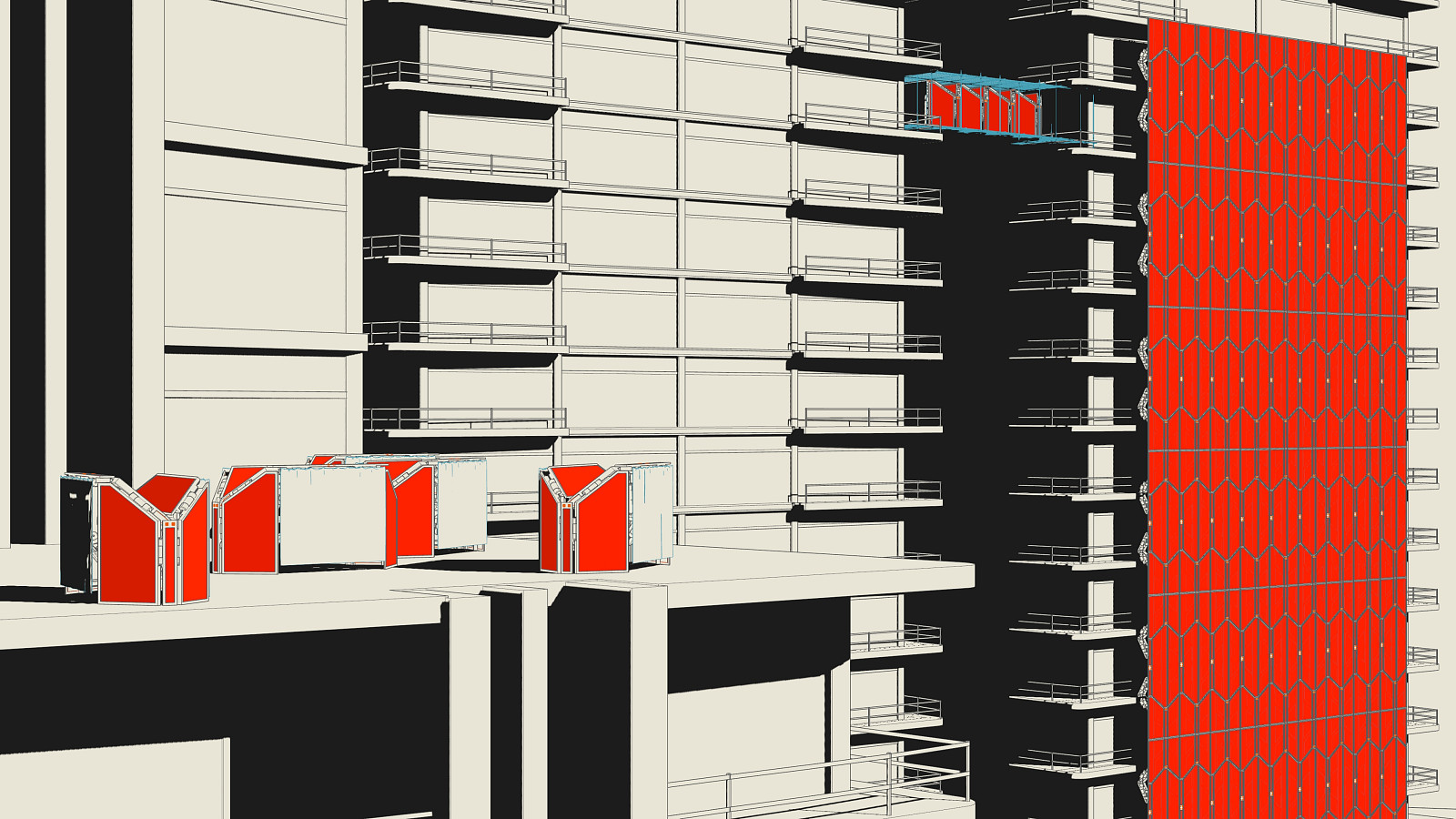
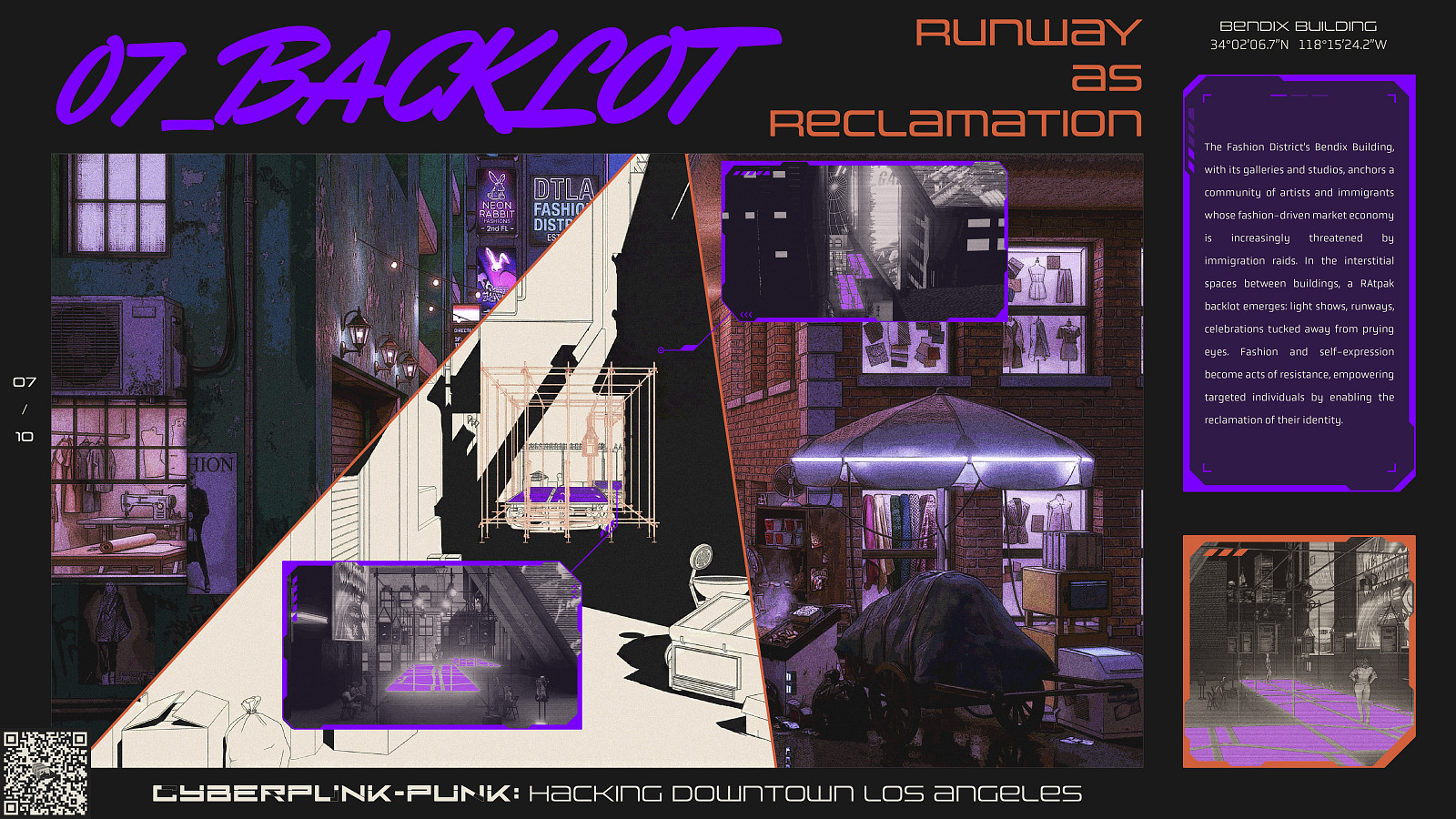
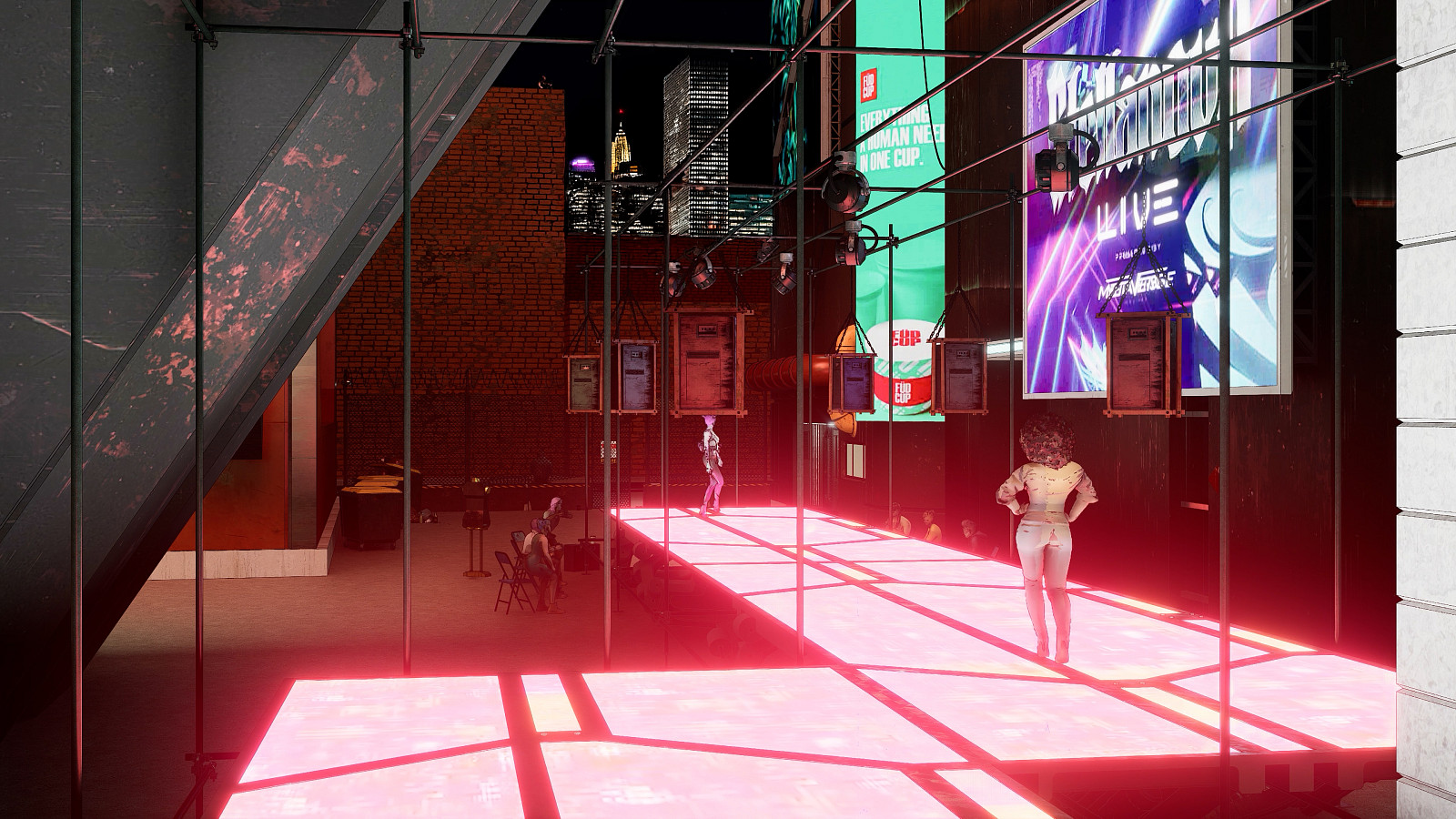
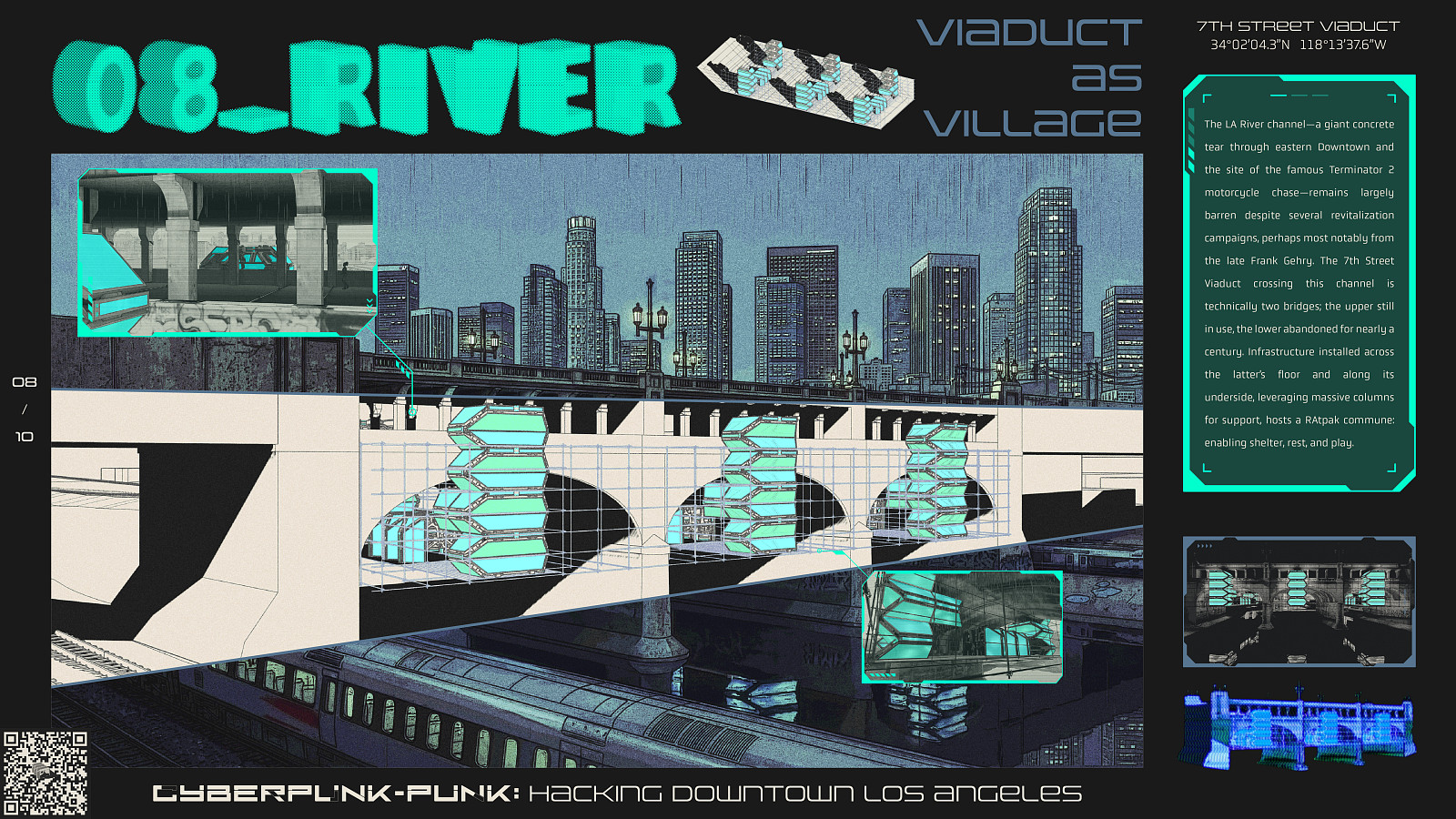
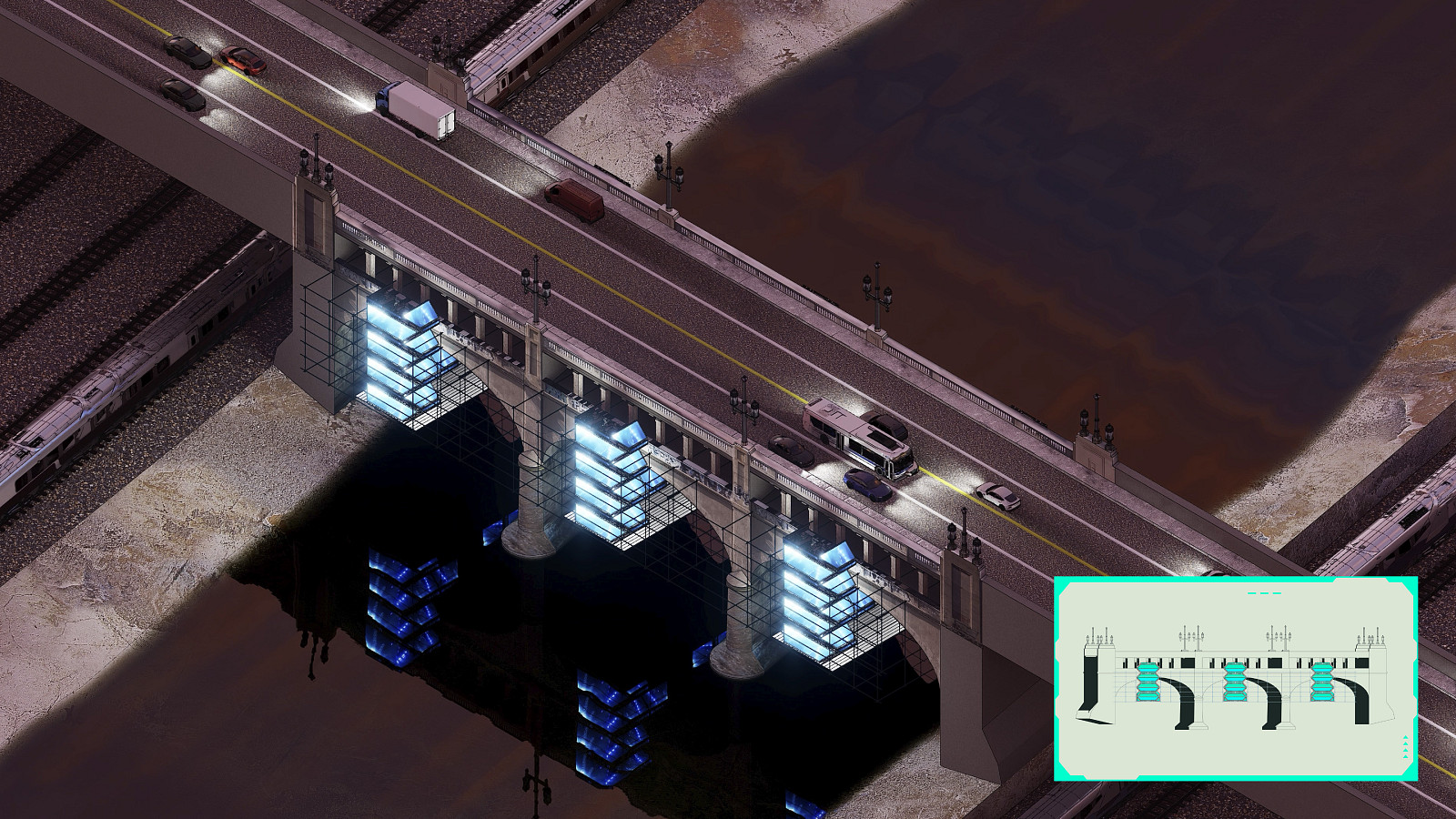
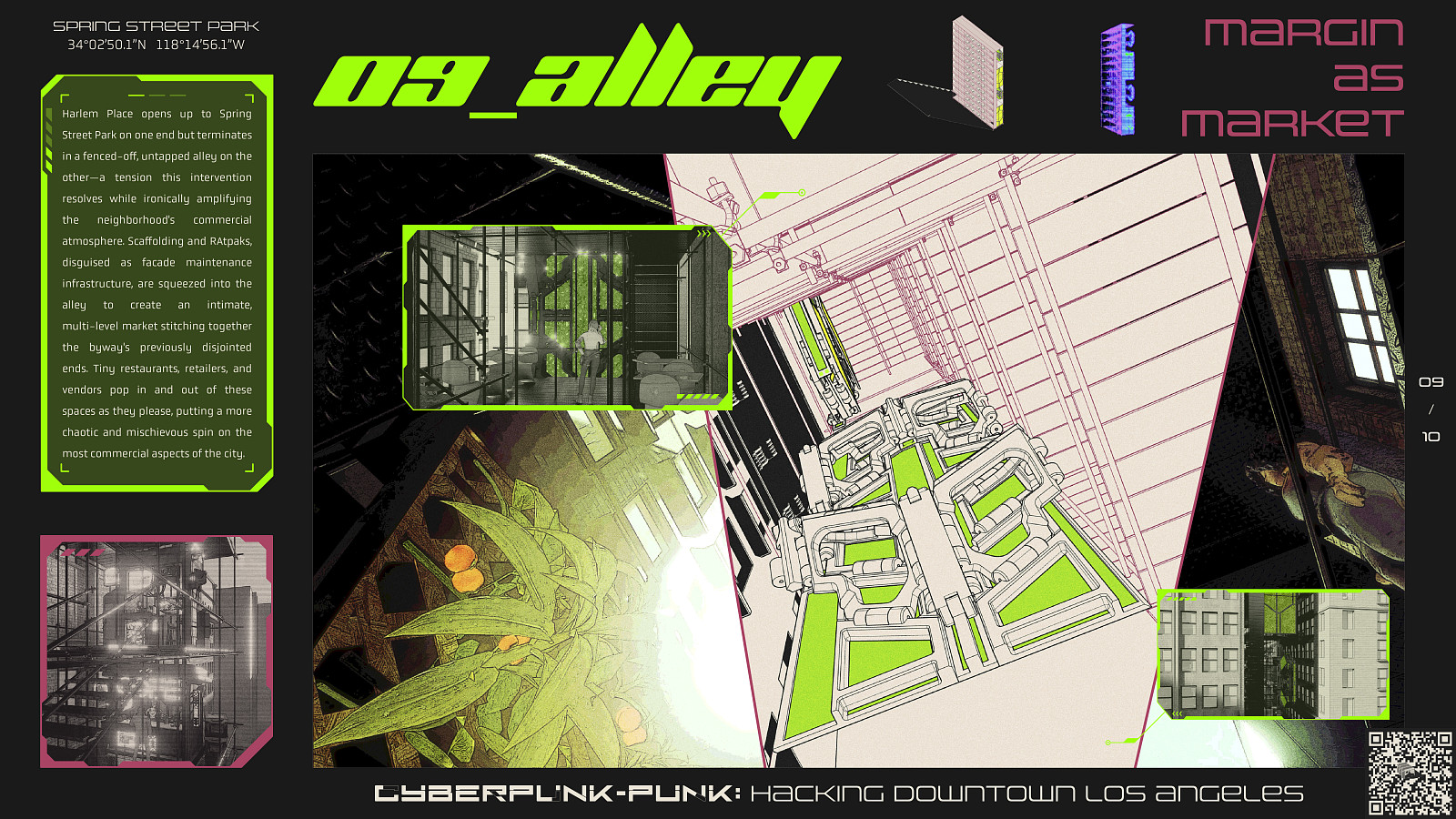
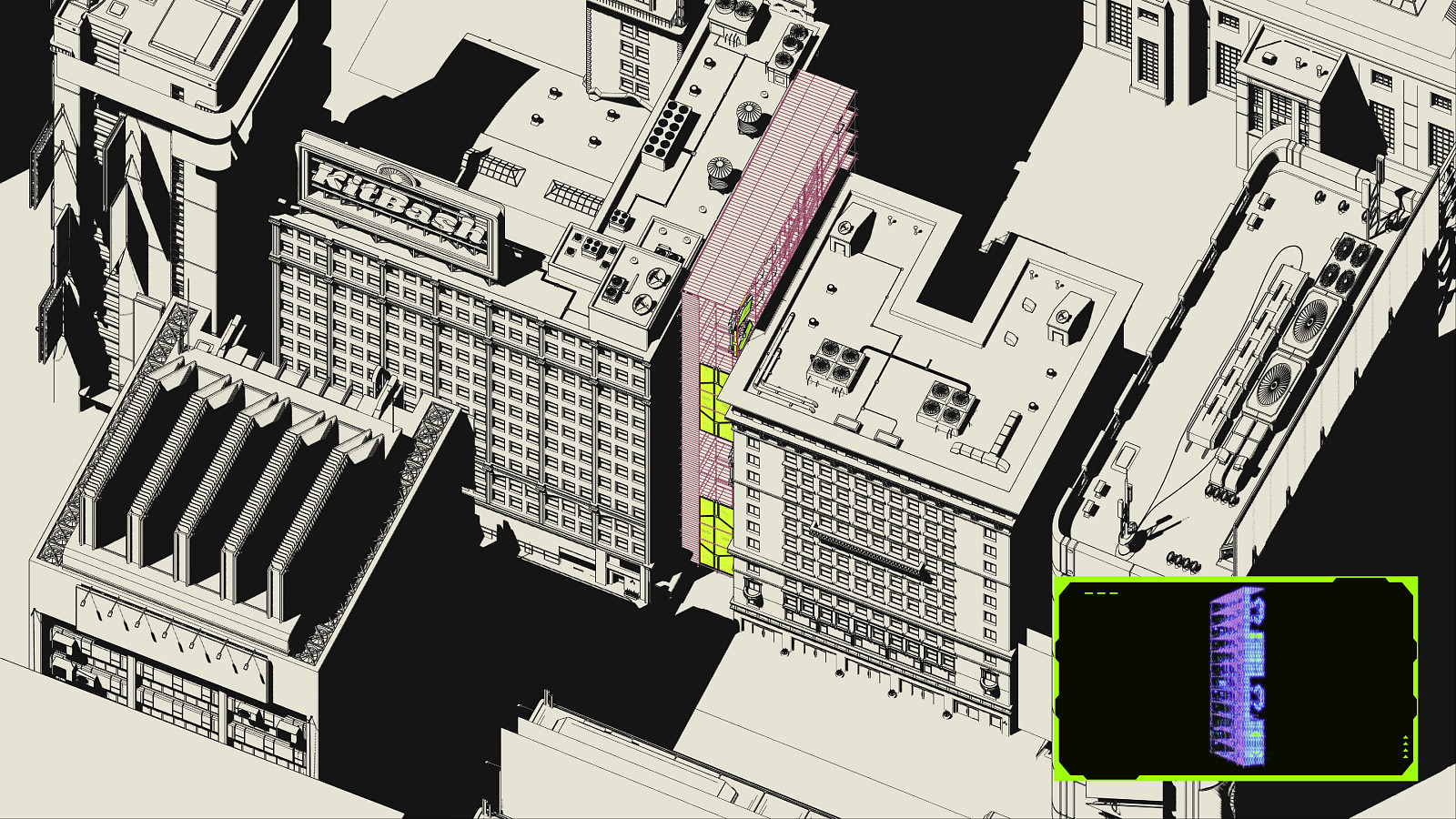
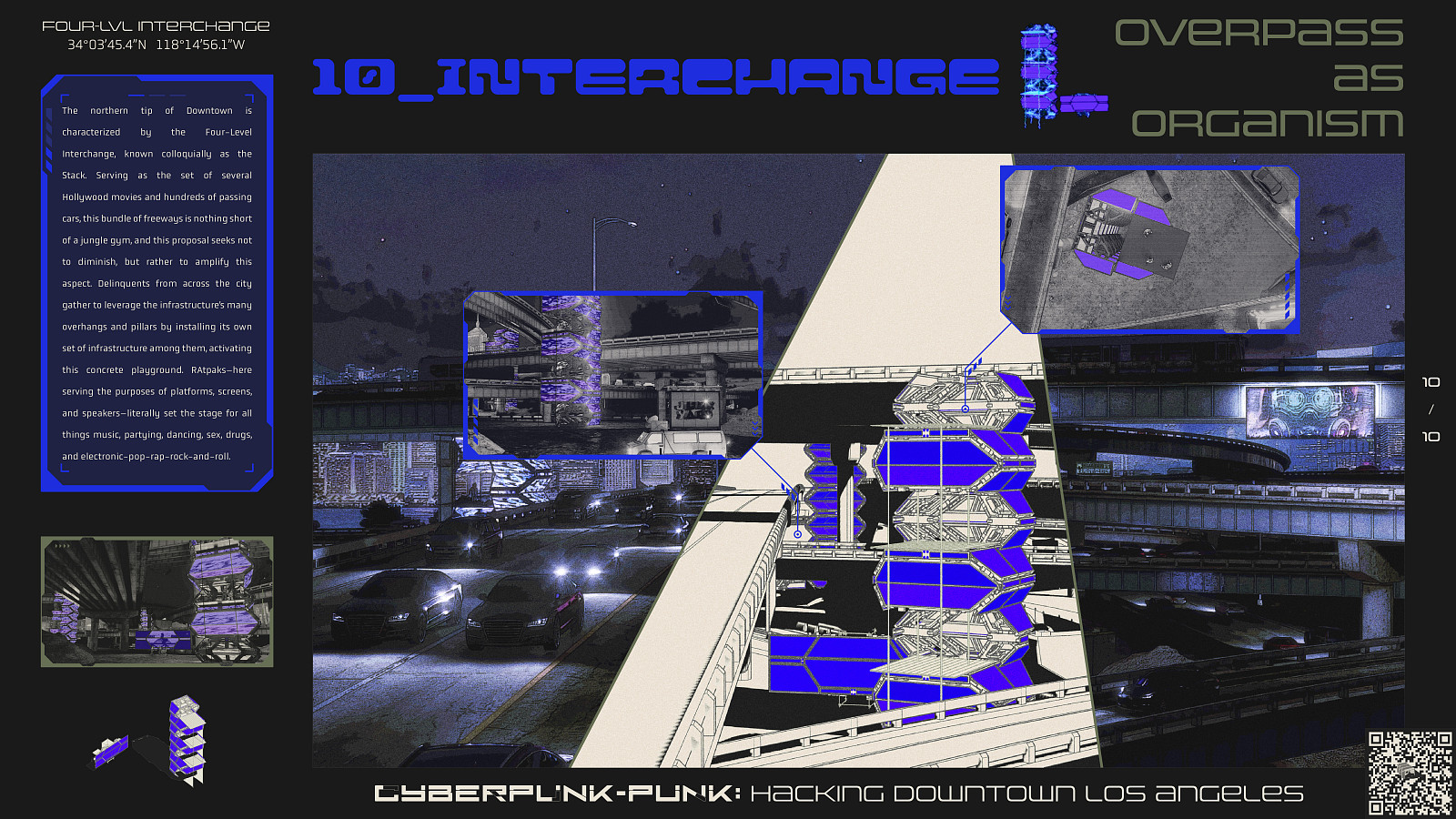
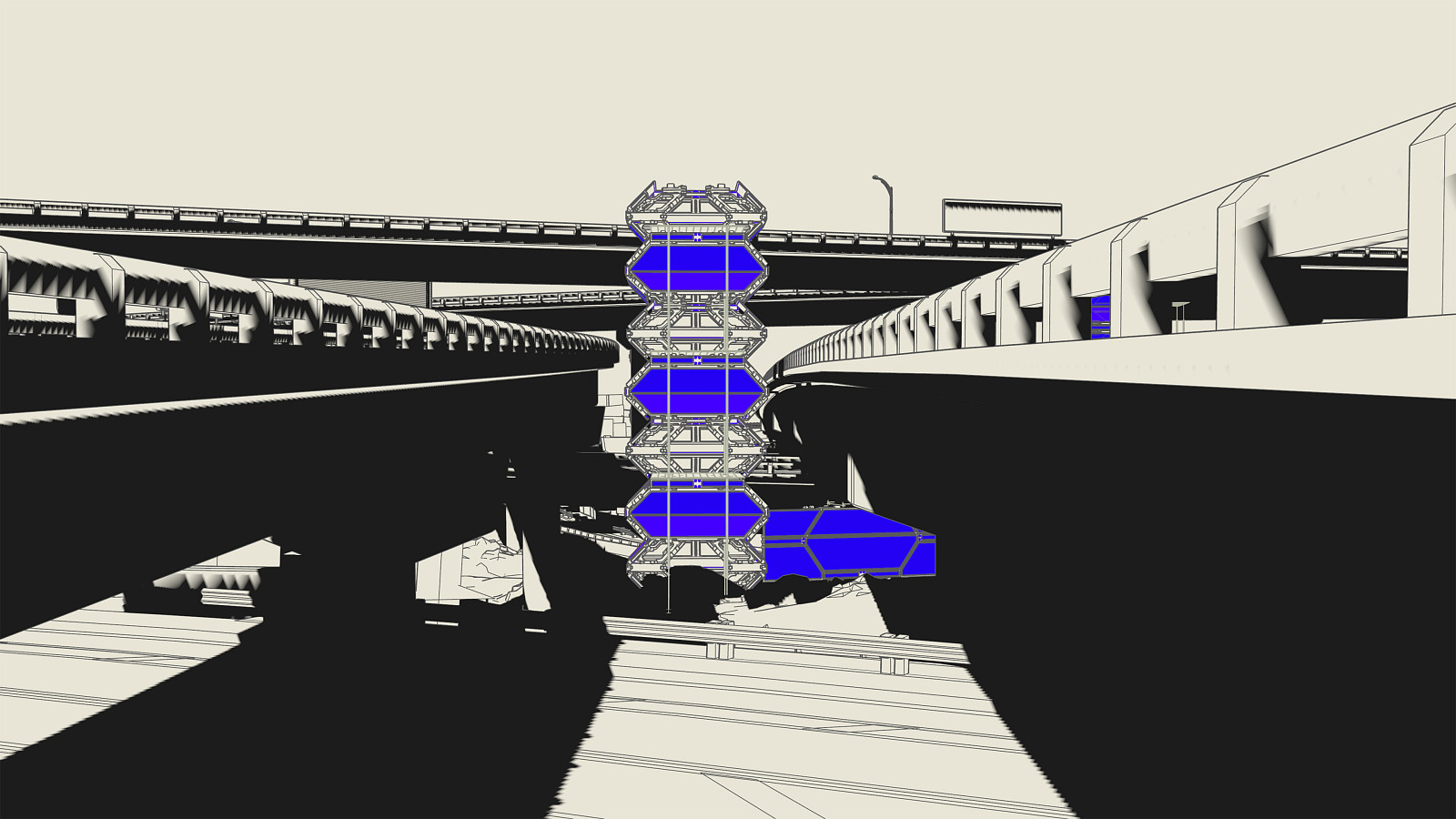
The ten typologies are the Jewelry District (billboard as bunker), the Westin Bonaventure Hotel's pedways (transit as terminus), Union Station (silo as solace), the UP Freight Station (freight as freedom), Grand Park (parasol as protest), the Graffiti Towers (ruin as residence), the Fashion District (runway as reclamation), the LA River channel (viaduct as village), Spring Street Park (margin as market), and the Four Level Interchange (overpass as organism).
Technical information
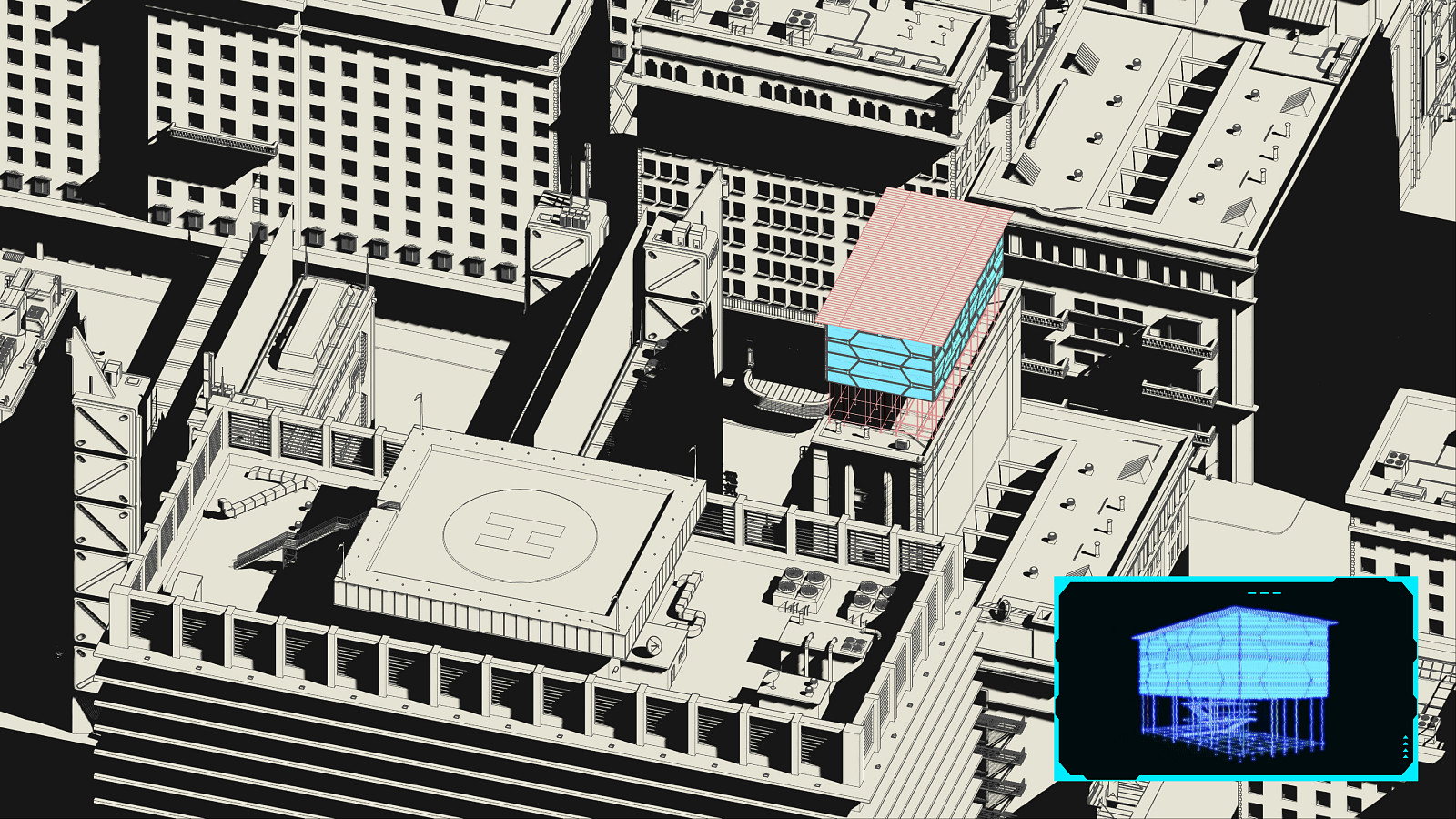
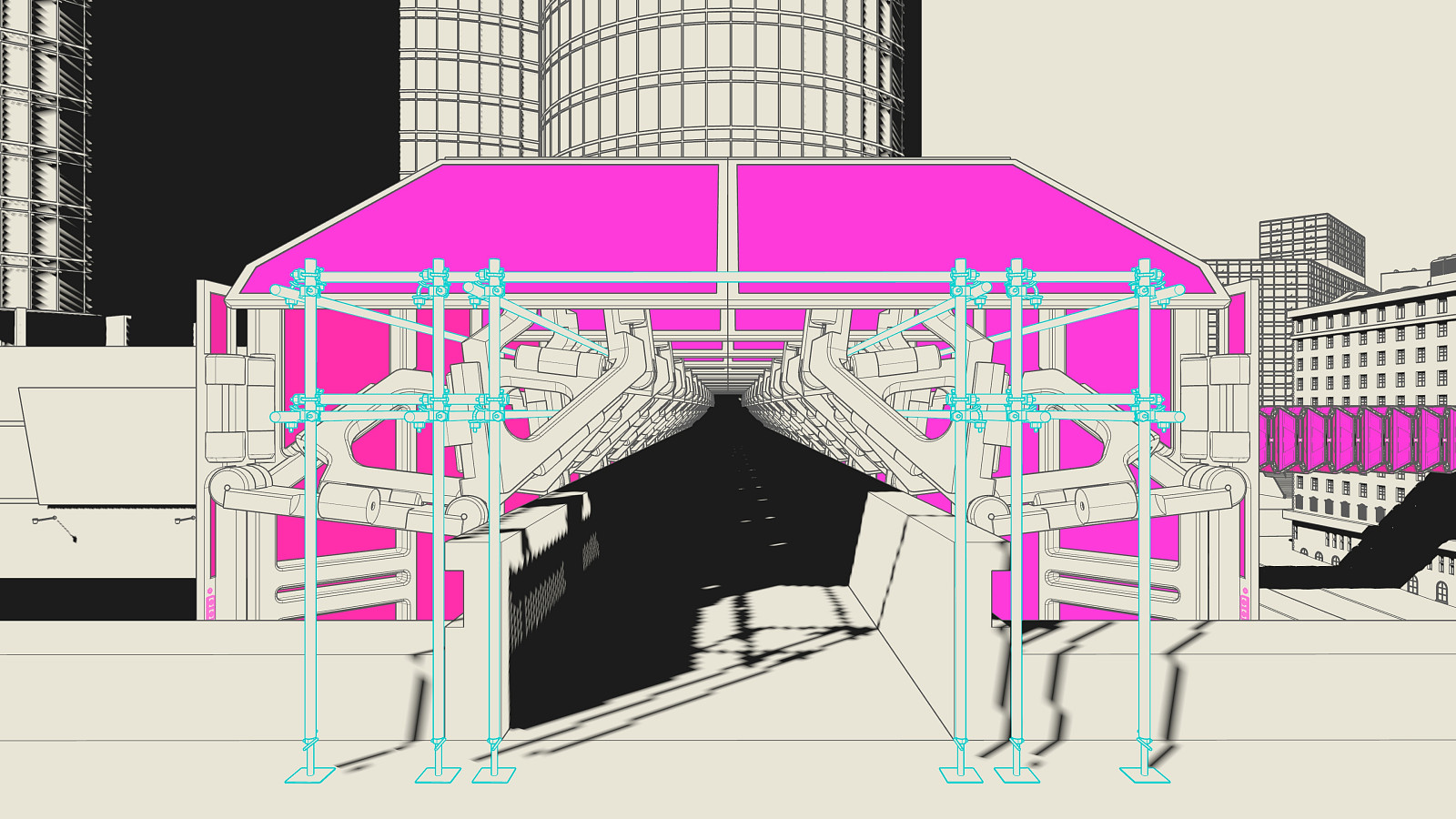
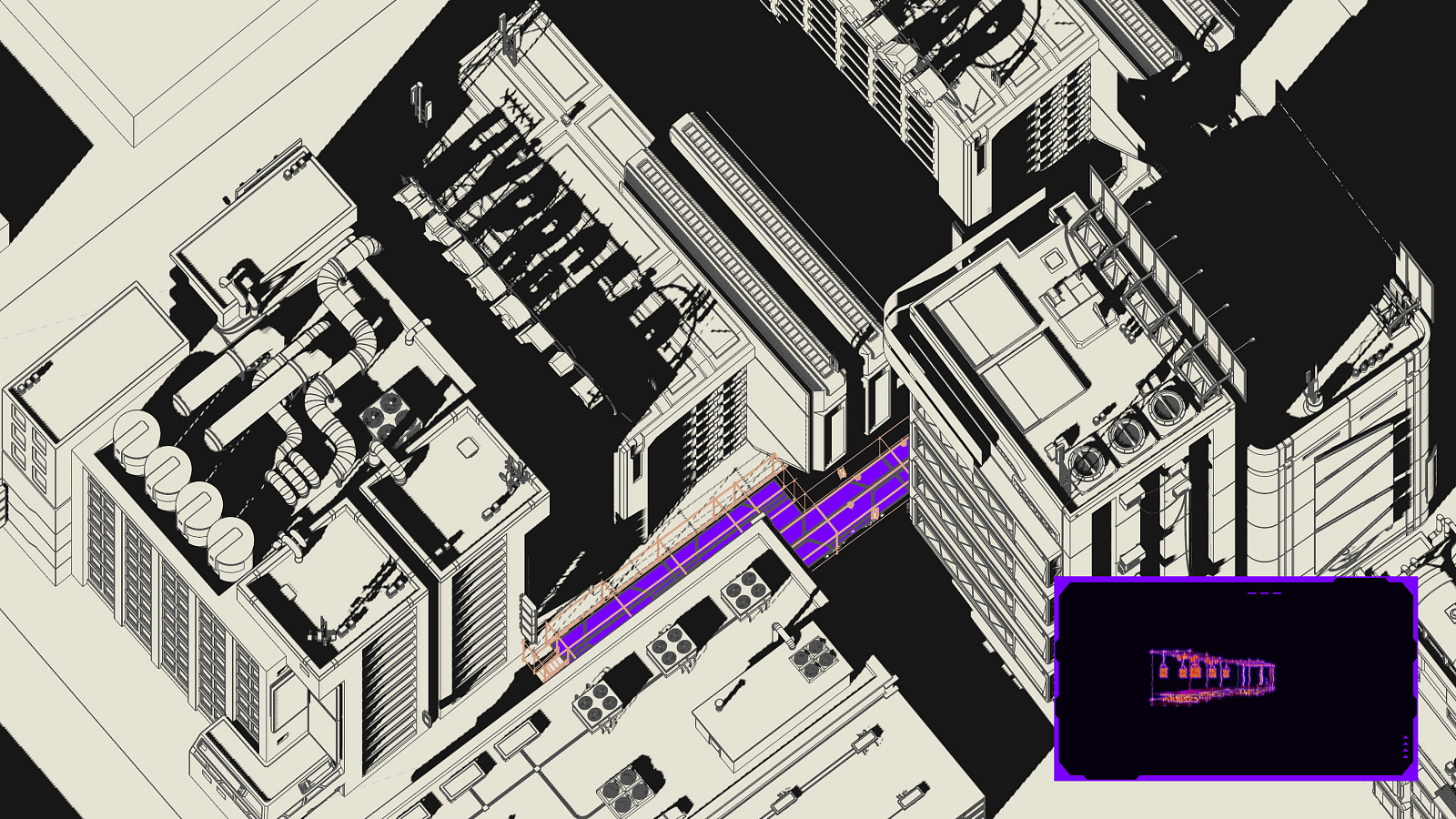
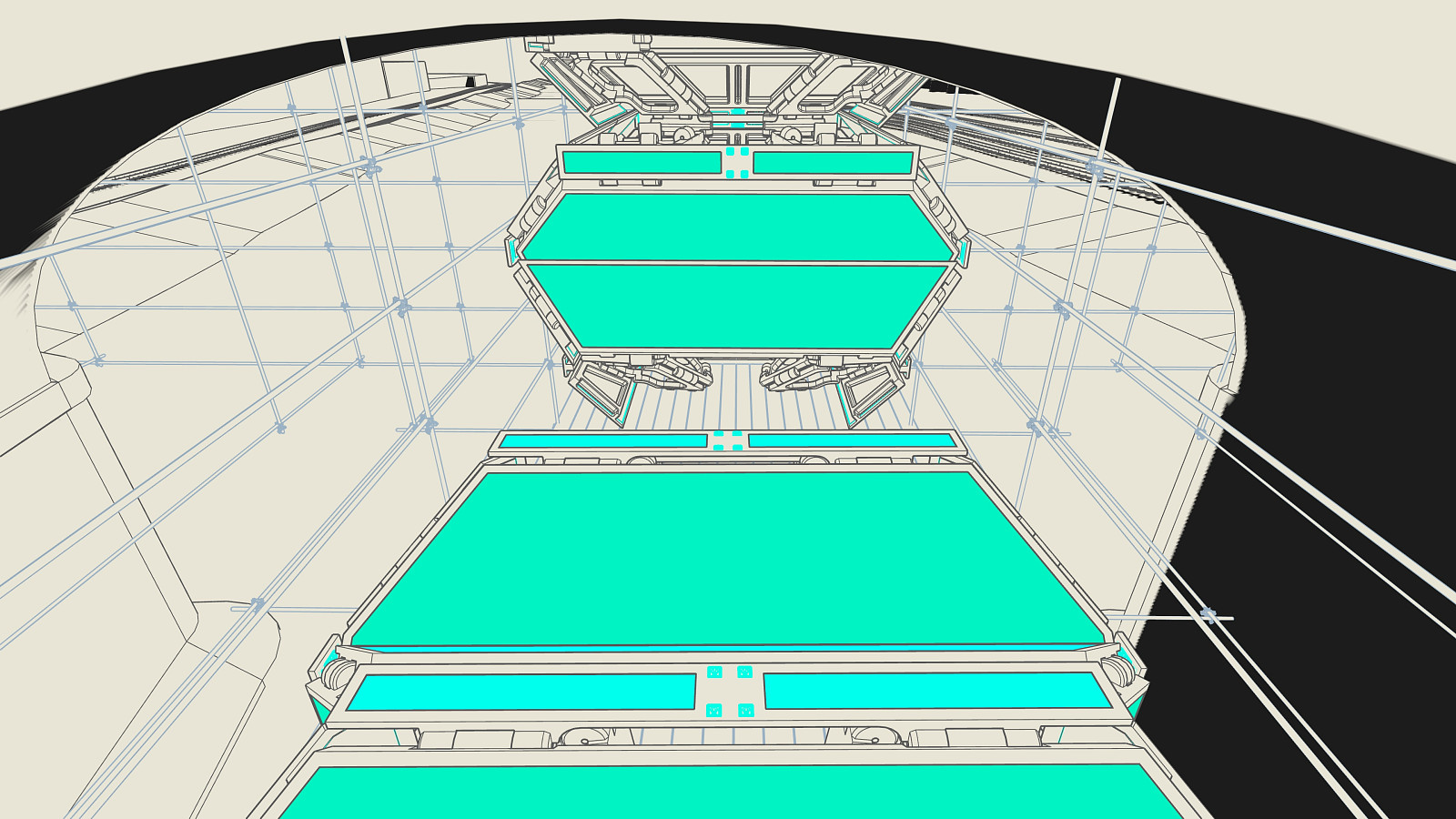
Each site follows the same two-phase construction logic. First, a lightweight, easy-assembly infrastructural framework is anchored into existing urban conditions — rooftops, parking garages, bridge undersides, freeway pillars. Second, hot rodded RAtpak modules are deployed onto the framework: kit-of-parts units small enough to transport by truck or by hand, outfitted with customizable modules and water and power hardware, and capable of linking to each other to scale in size.
Site-specific strategies vary the assembly: rooftop interventions jack into solar and rainwater systems, ramp and freeway sites use existing concrete infrastructure as primary support, an abandoned railroad sees the retrofitting of old rail cars with generators and septic systems, and a viaduct site hangs lightweight scaffolding from existing structural elements. Across all ten sites, the strategy favors adaptive reuse and high-tech guerilla architecture, treating the city's neglected infrastructure as the project's primary toolkit.

Copyright © 2026 INSPIRELI | All rights reserved. Use of this website signifies your agreement to the Terms of Use, Privacy Policy, and use of cookies.
