RENILE


 Esraa A.Metwally
Project idea
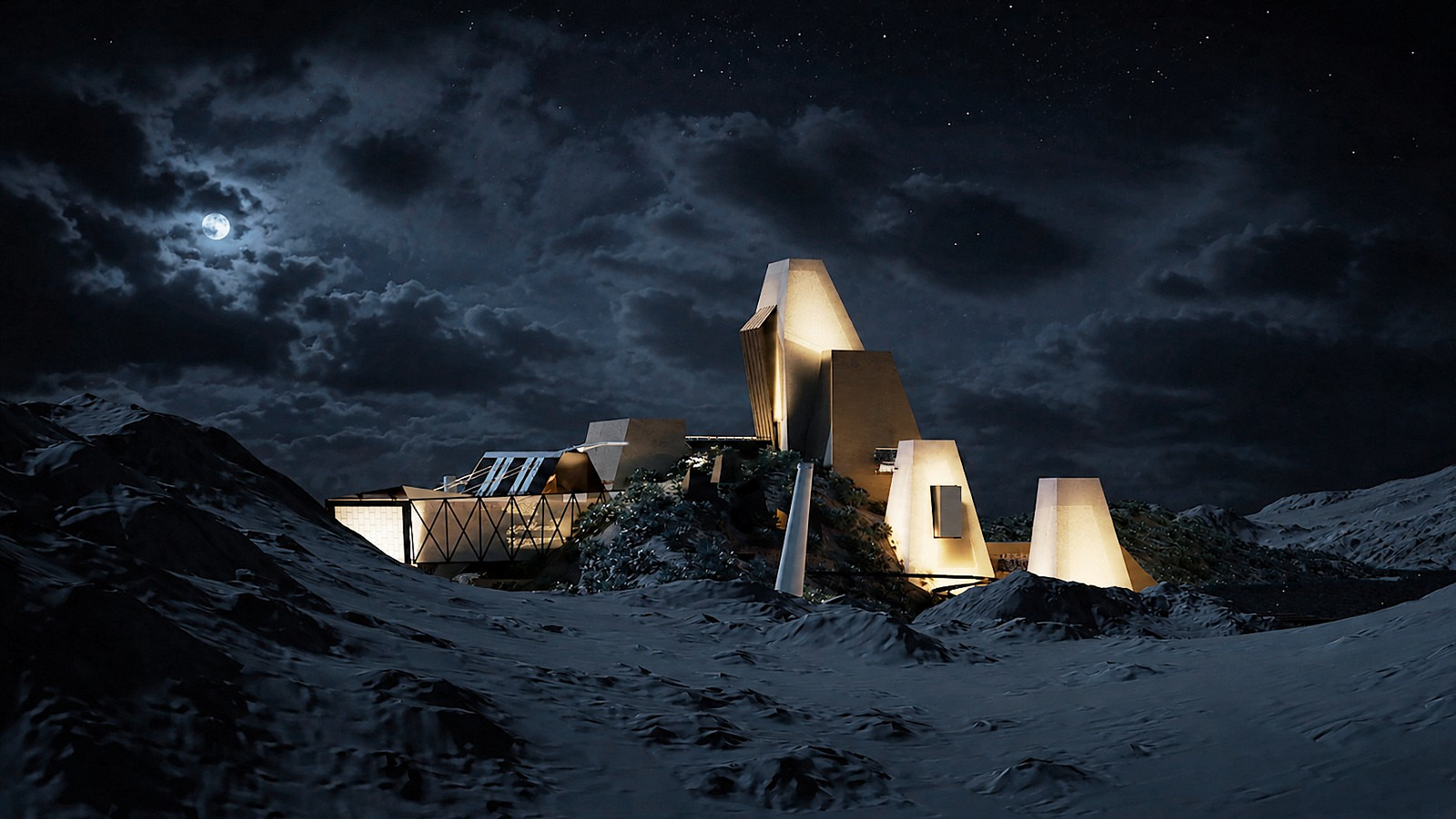
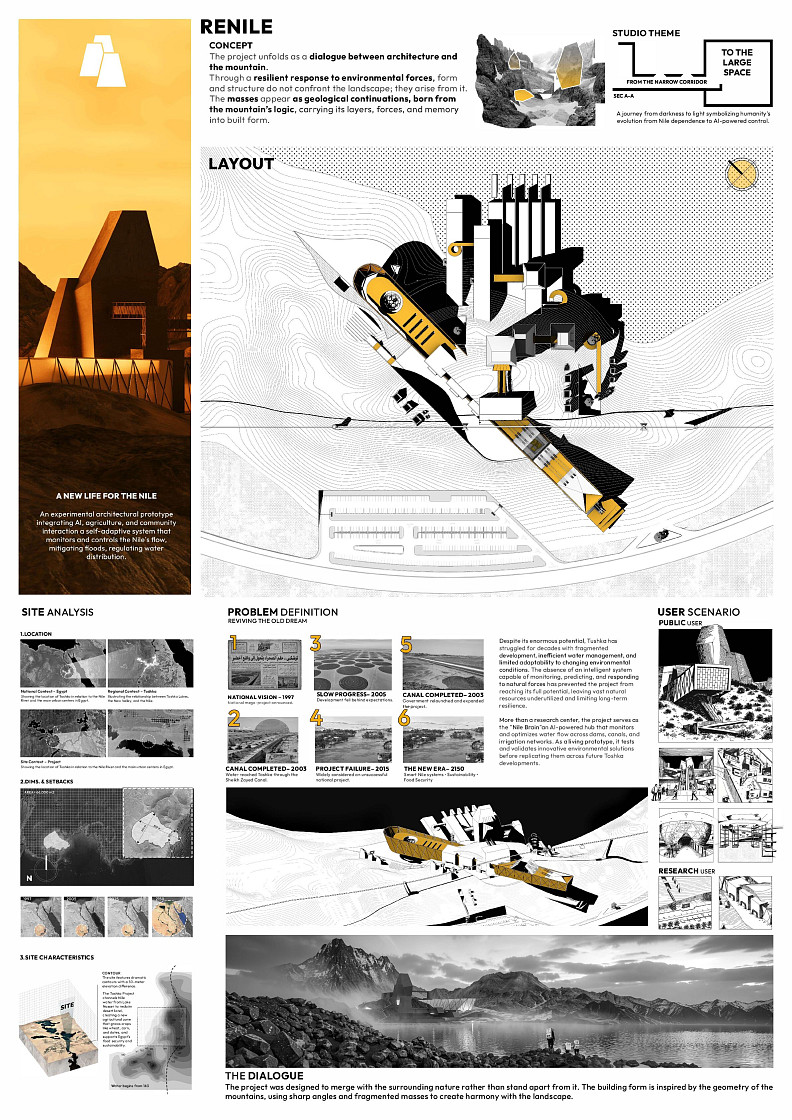
Recent hydrological changes around the Tushka Spillway have sparked discussions about the possibility of new water channels gradually branching from the Nile. Over time, these developments could lead to the emergence of a new river corridor running parallel to the Nile and extending toward the Qattara Depression. Inspired by this future scenario, TUSHKA 2150 is envisioned as the starting point of this transformation. The project serves as the first research and innovation hub along this emerging water corridor, supporting sustainable water management, environmental monitoring, and climate-resilient agriculture. Inspired by the surrounding mountain formations, the architecture establishes a dialogue between the built environment and nature, allowing the project to emerge organically from the landscape while providing educational, cultural, and scientific experiences for visitors.
Project description
The project provides a sustainable research and innovation hub that supports the future development of the emerging Nile corridor. Its scope includes water resource monitoring and management, environmental research, sustainable agriculture, climate resilience, and public education. By integrating research facilities, environmental technologies, and community spaces, the project aims to establish the foundation for future development while restoring the relationship between water, nature, and people.
Technical information
The project is integrated with the natural topography and utilizes a lightweight steel structural system to achieve large spans and cantilevered spaces. ETFE cushion façades maximize natural daylight, reduce structural loads, and enhance thermal performance while maintaining visual transparency. Sustainable strategies include renewable energy integration, AI-assisted water monitoring, water treatment and recycling systems, indoor farming technologies, and drought-resistant landscaping, ensuring efficient resource management and long-term environmental resilience.
Documentation

Copyright © 2026 INSPIRELI | All rights reserved. Use of this website signifies your agreement to the Terms of Use, Privacy Policy, and use of cookies.