Calli Verde


 Mosè Ricci
Project idea
Green Urban Justice - a project inspired by Aztec heritage where 'Calli' means 'Home', focusing on sustainable and equitable urban development.
Project description
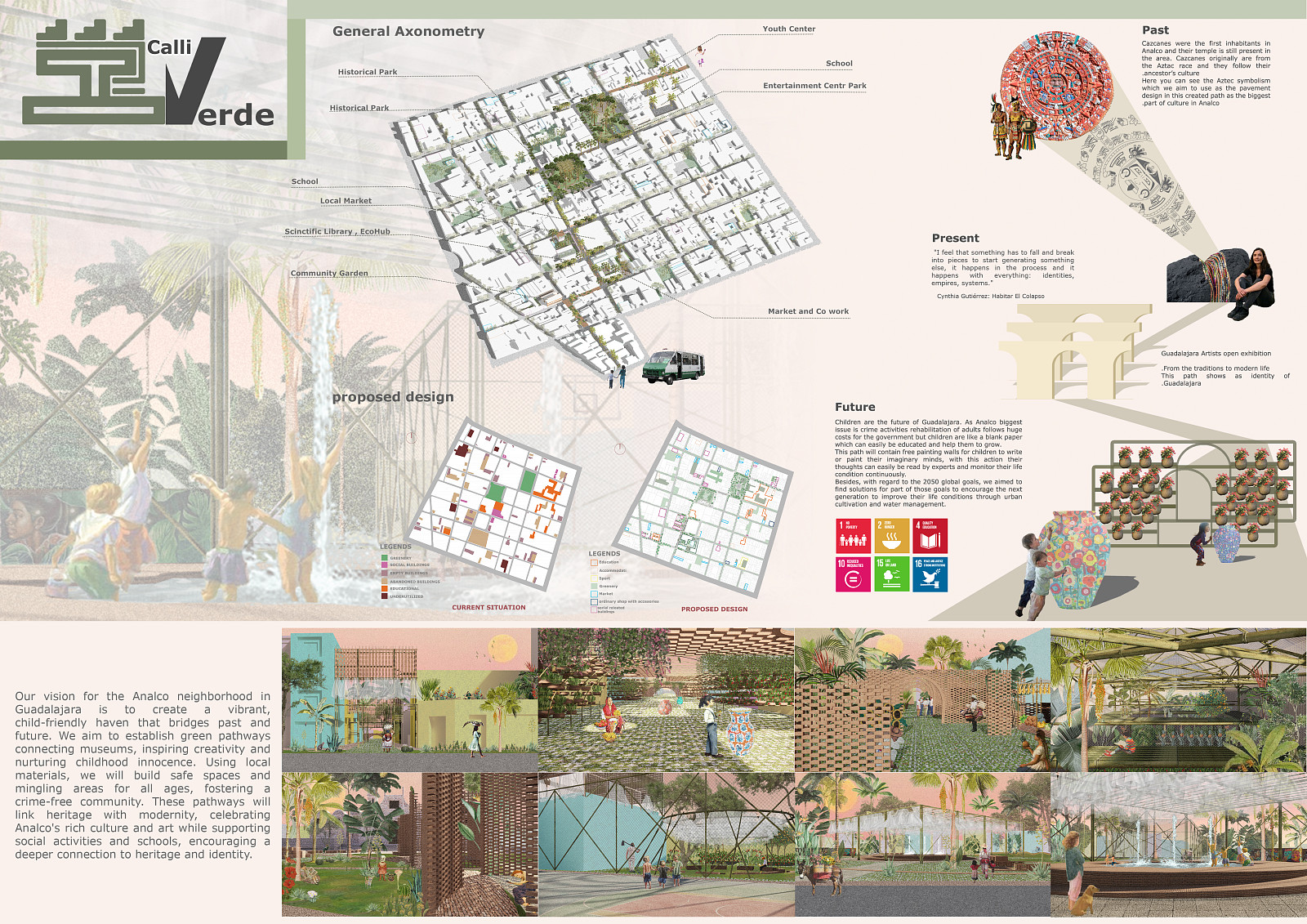
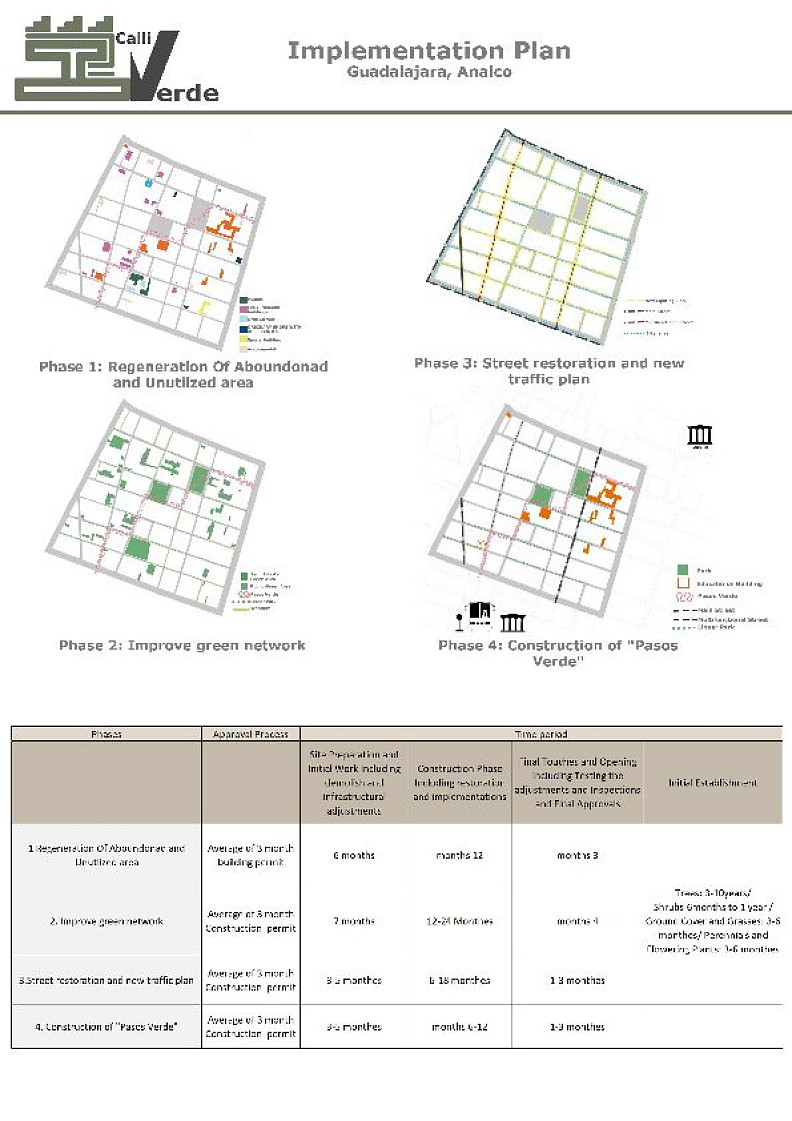
Our vision for the Analco neighborhood in Guadalajara is to transform the area into a vibrant, inclusive, and child-friendly urban environment that bridges heritage and contemporary urban life. The project proposes a network of green pathways that connect cultural landmarks, including museums and historic sites, while creating safe, accessible, and engaging public spaces that encourage exploration, creativity, and everyday social interaction.
Through the use of local and sustainable materials, the intervention introduces a series of interconnected spaces designed for all age groups, fostering community cohesion and promoting a sense of safety and belonging. These pathways not only enhance physical connectivity but also strengthen the relationship between education, culture, and public life by linking schools, cultural institutions, and communal gathering areas.
By celebrating Analco’s rich artistic and historical identity, the project reinterprets the neighborhood as a living cultural landscape where heritage and modernity coexist. It aims to nurture stronger social bonds, support active community life, and deepen residents’ connection to place, identity, and collective memory.
Technical information
The project is conceived as an integrated urban regeneration strategy that combines sustainable construction, landscape design, community infrastructure, and cultural heritage preservation to create a resilient and inclusive public environment. The proposed interventions include lightweight bamboo structures, adobe cultivation walls, transparent exhibition elements, educational and research facilities, community gardens, public parks, and multifunctional recreational spaces. Renewable and locally appropriate materials are prioritized to minimize environmental impact while reinforcing the site's cultural identity and ensuring durability, ease of maintenance, and cost-effective construction. Universal accessibility, pedestrian connectivity, climate-responsive design, and the integration of green infrastructure are fundamental principles throughout the project.
The design emphasizes environmental sustainability and social resilience by incorporating urban agriculture, rainwater-sensitive landscaping, shaded public spaces, rooftop terraces, flexible community facilities, and educational environments that encourage interaction between residents of all generations. Public spaces are designed to accommodate a wide range of activities, including recreation, cultural events, learning, research, and community gatherings, creating a multifunctional urban network that strengthens local identity, promotes self-sufficiency, and improves the overall quality of life. Together, these technical solutions establish a coherent, adaptable, and sustainable framework for the long-term revitalization of the Analco neighborhood.
Documentation


Copyright © 2026 INSPIRELI | All rights reserved. Use of this website signifies your agreement to the Terms of Use, Privacy Policy, and use of cookies.