Bayn


Project idea
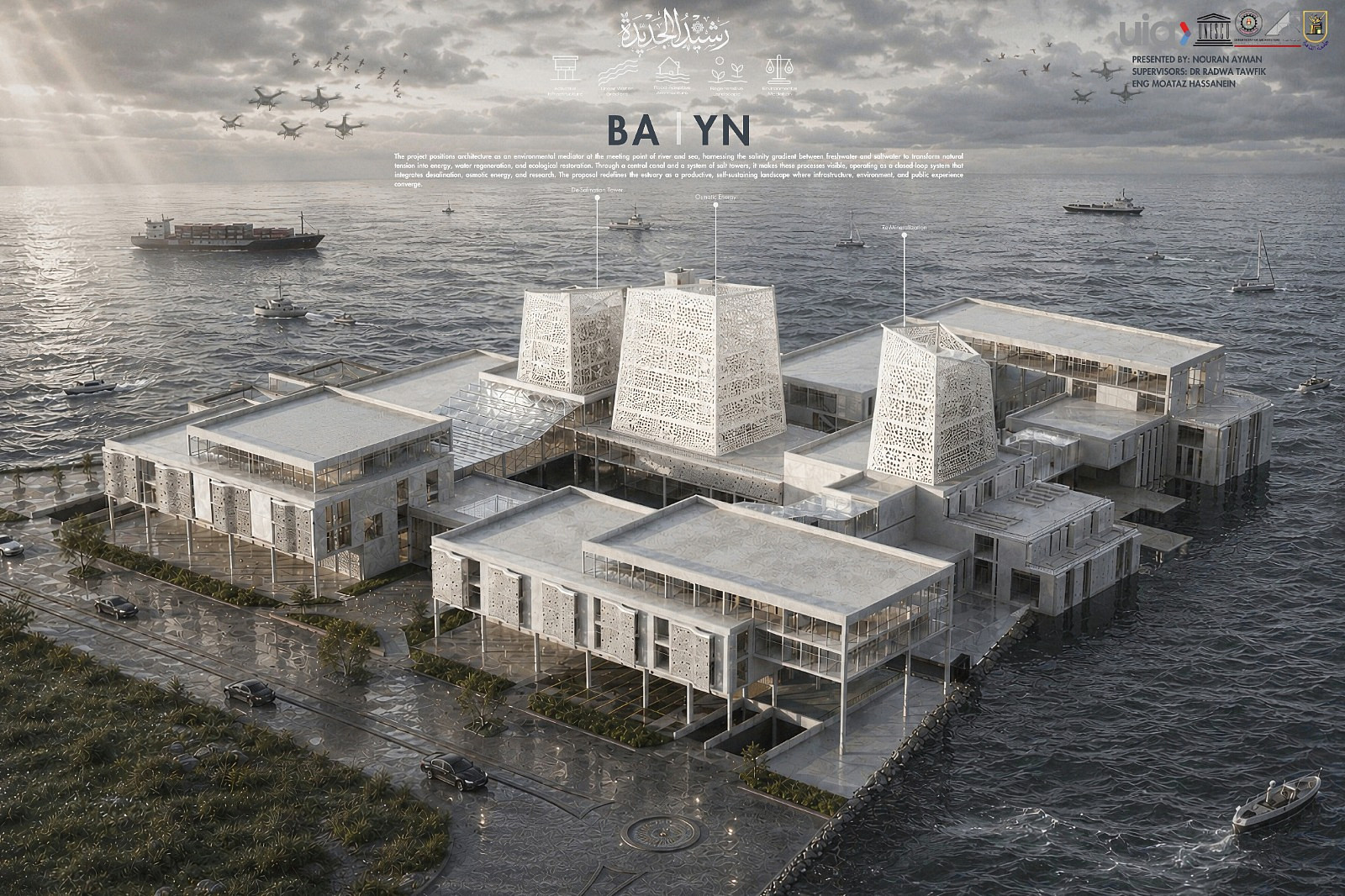
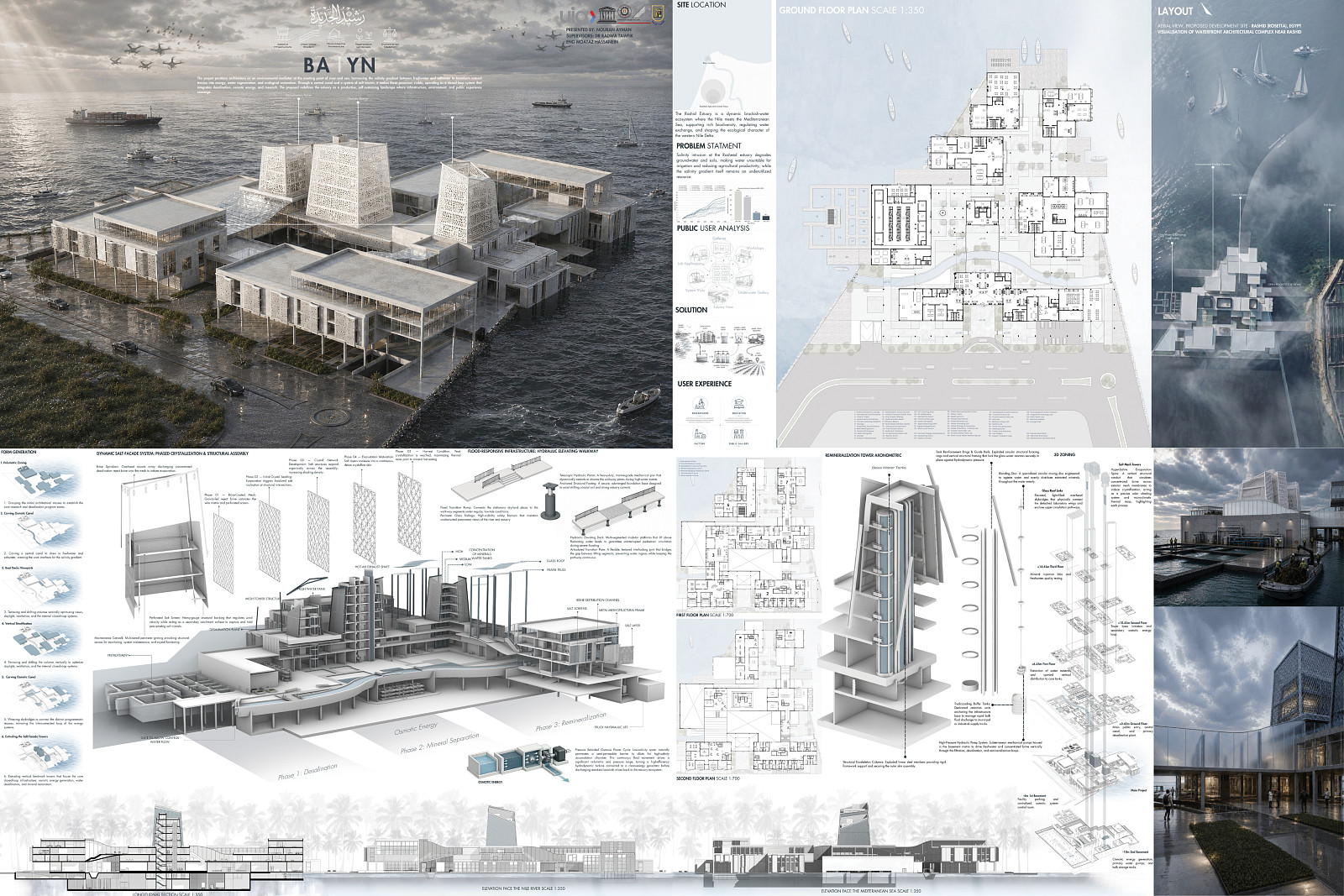
The idea of this project is driven by the severe environmental vulnerabilities facing the Nile Delta coast, specifically at the Rashid (Rosetta) Estuary in New Rashid, Egypt, where climate-induced sea-level rise and saltwater intrusion threaten local ecosystems, agricultural productivity, and groundwater quality. Situated directly at this dynamic intersection where the freshwater of the Nile River meets the high-salinity marine environment of the Mediterranean Sea, the project is inspired by the concept of "environmental mediation" and addresses the critical need to transition from passive defense strategies to an inclusive, clean-energy closed loop. By utilizing the untapped potential of these local salinity gradients, the project establishes a specialized facility that generates clean osmotic energy while actively facilitating ecological restoration, offering both an advanced scientific research hub and a renewed civic waterfront for the community.
Project description
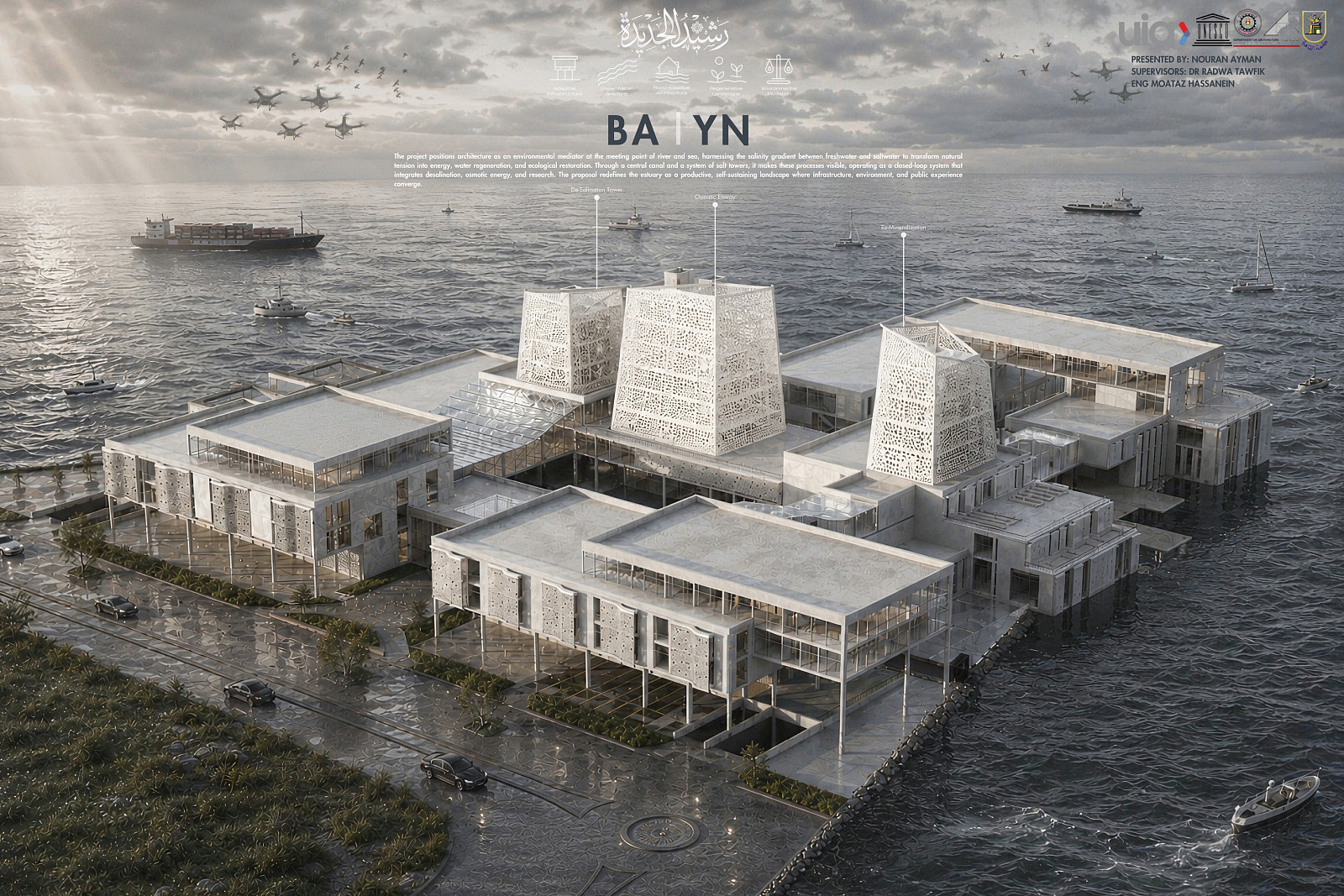
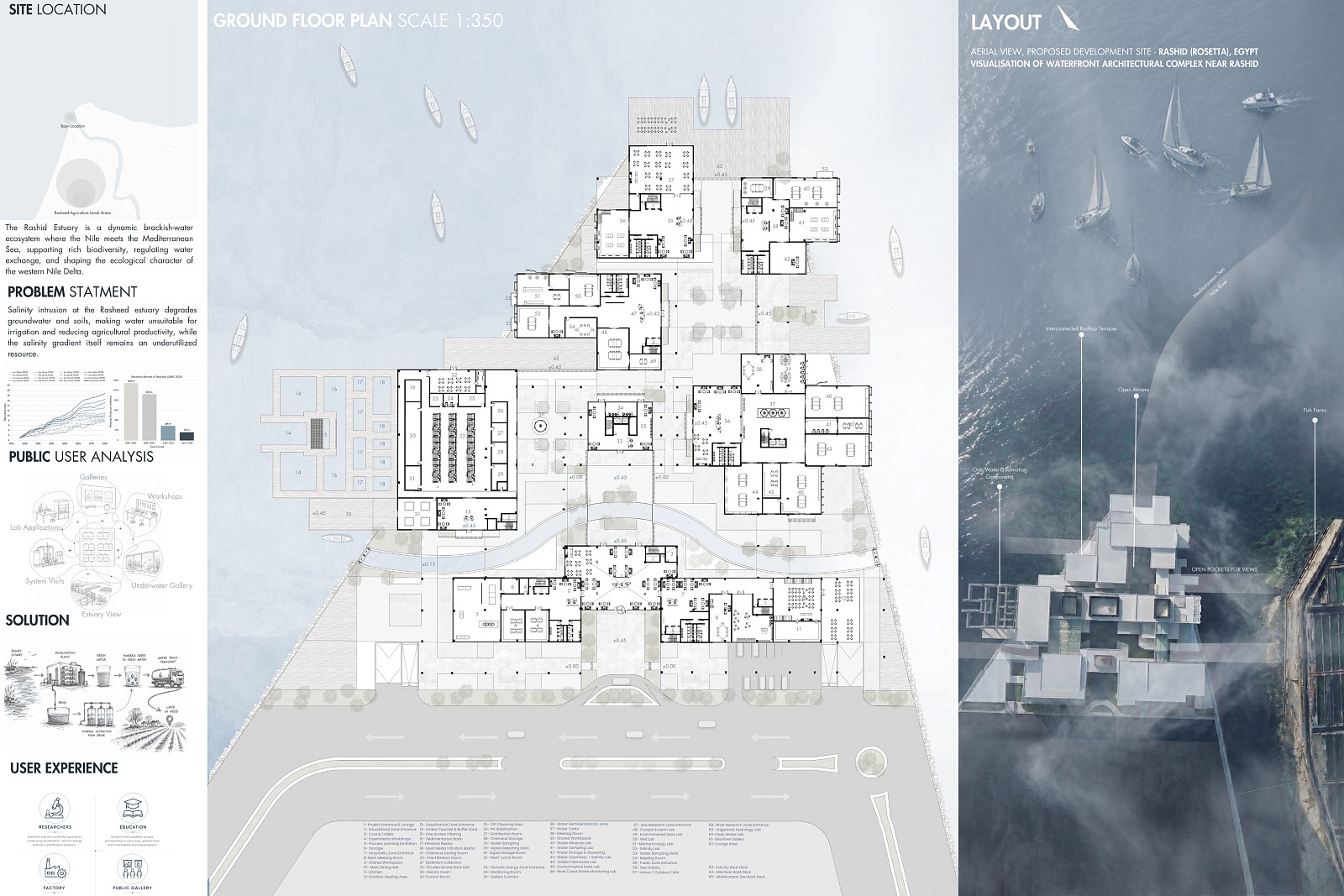
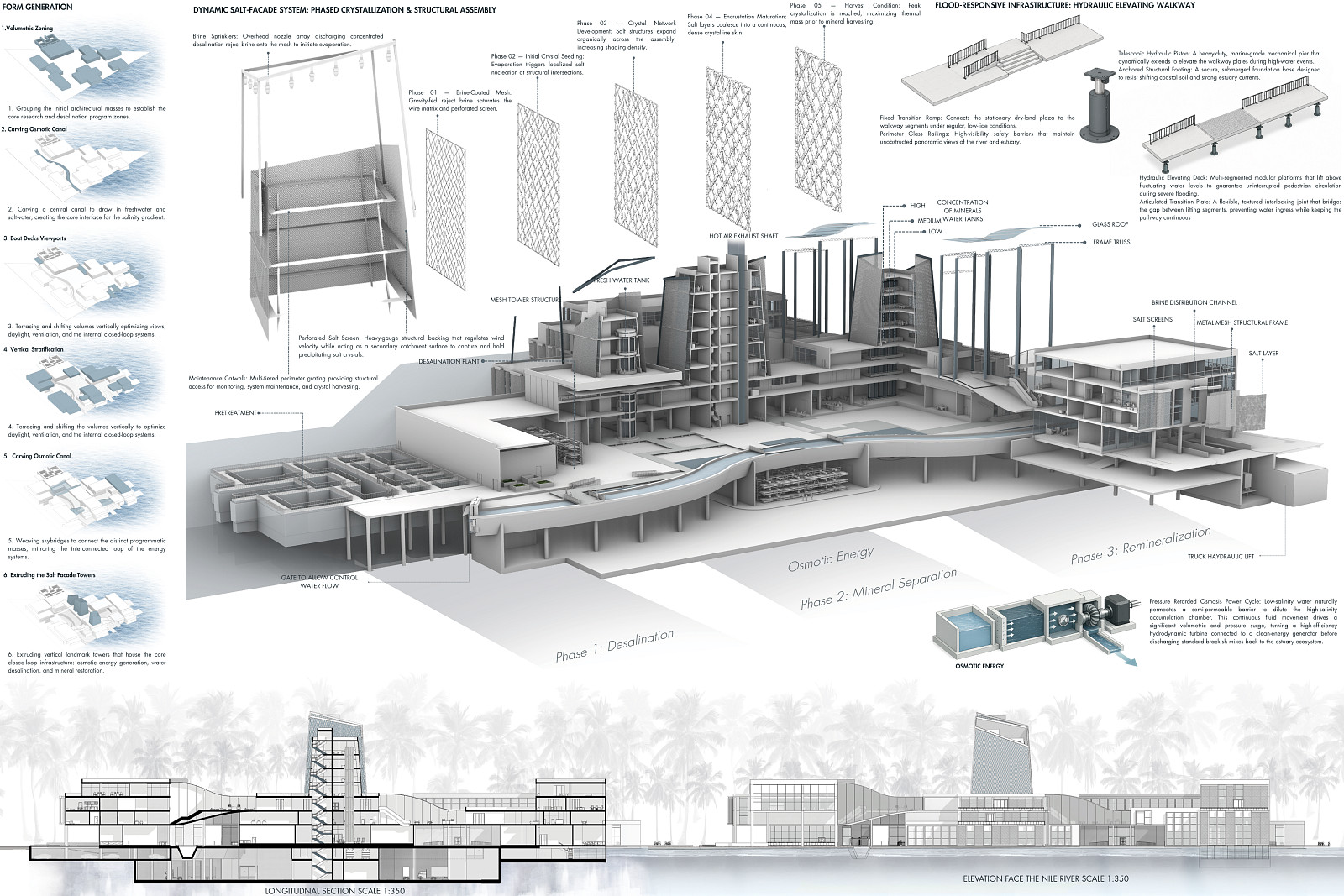
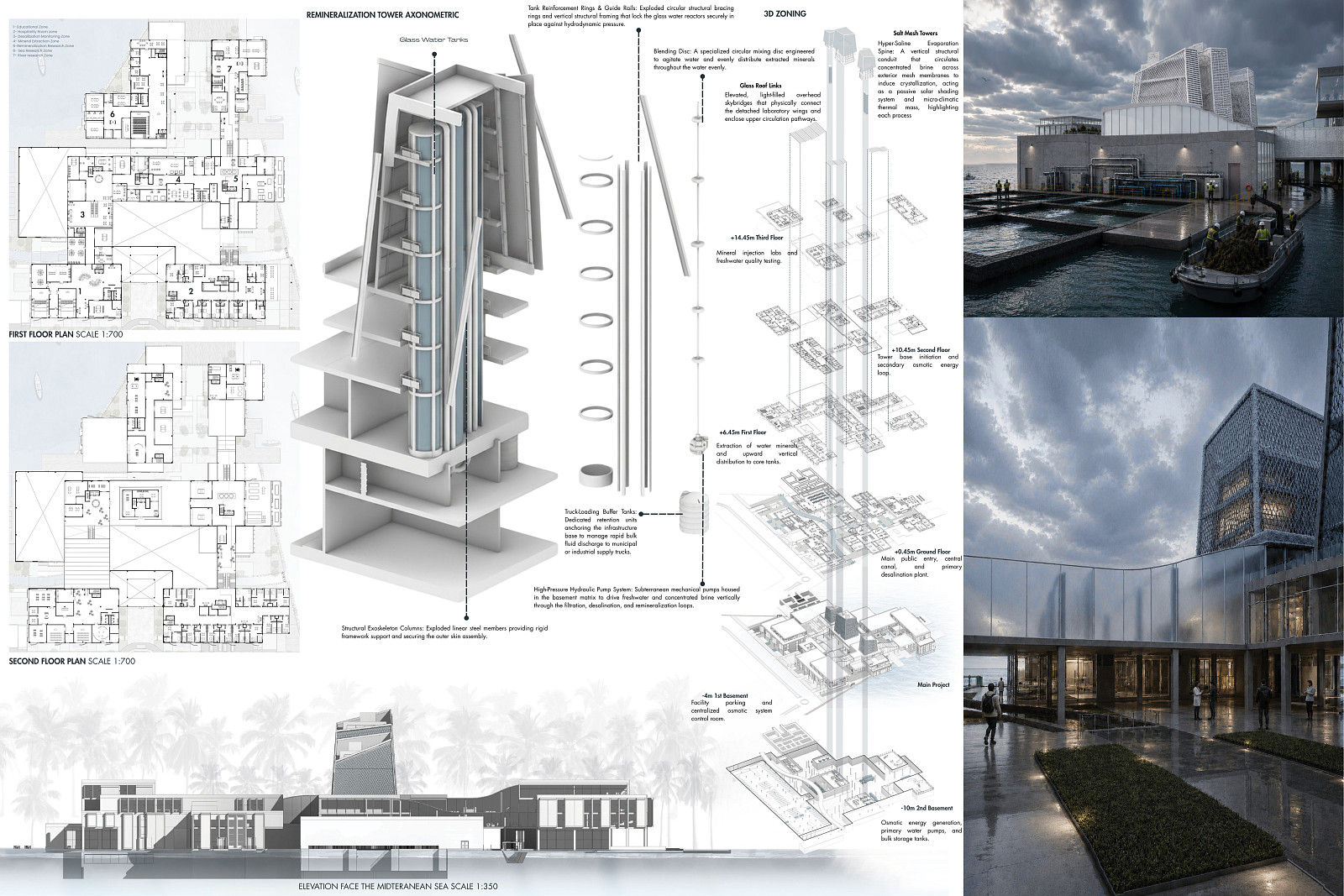
This project consists of a highly integrated, closed-loop infrastructural and architectural complex. The main area is organized around a multi-level facility featuring a subterranean Pressure Retarded Osmosis (PRO) plant for osmotic energy generation utilizing an array of 27 high-capacity gradient tanks, a primary desalination facility powered by a matrix of 18 dedicated processing vessels, and specialized water-mineral extraction zones. This technical core feeds into a vertical stratification system composed of Remineralization and Salt Mesh Towers that passively process brine, capture minerals, and refine freshwater. The programmatic scope seamlessly weaves public civic engagement into the industrial infrastructure through a central salinity canal, civic waterfront promenade decks, an adaptive hydraulic elevating walkway, and overhead glass-roof skybridges that house community-facing research and testing laboratories.
Technical information
The construction of the building is made of a durable, marine-grade hybrid structural system engineered to withstand severe coastal conditions, high humidity, and massive structural fluid loads. The subterranean substructure utilizes deep, waterproofed reinforced concrete matrices to house the osmotic energy array, which is composed of 27 structural cylinders (each 1.80 meters diameter by 23.00 meters height) processing 8,000 to 10,000 cubic meters per day of gradient fluid, alongside the primary desalination matrix consisting of 1 high-capacity fresh water buffer tank (1.80 meters diameter by 23.00 meters height). This desalination loop operates on a continuous turnover timeline to generate a steady, high-volume freshwater yield daily. The above-ground superstructure is framed by a rigid steel exoskeleton utilizing heavy-gauge I-beams to resist severe coastal wind forces. The landmark vertical towers integrate three continuous translucent glass fluid reactors for remineralization (each 1.10 meters diameter by 28.00 meters height), equipped with internal vertical drive shafts and multi-tiered hydrodynamic impellers to sustain mineral suspension against a base hydrostatic pressure of approximately 274.70 kilopascals. This remineralization phase treats up to 1,500 to 2,000 cubic meters of targeted water daily, channeling mineral-rich solutions directly to dedicated agricultural loading zones to be dispatched to local lands needed for rehabilitation against saltwater degradation. The exterior envelope integrates advanced brine salt facades utilized for active air filtration, paired with built-in louvers that lessen sun exposure and provide optimized solar shading while fully preserving outward views of the estuary. This envelope works in tandem with a multi-tiered, brine-coated mesh system engineered to induce phased passive salt crystallization. The concentrated reject brine is sprayed from high-level nozzle arrays, utilizing natural solar heat and wind movement to accelerate evaporation. This structural facade yields high-purity crystalline salt on a rolling weekly harvesting timeline, offering an economic, hand-crafted architectural material and local industrial asset while managing micro-climatic cooling around the facility.

Copyright © 2026 INSPIRELI | All rights reserved. Use of this website signifies your agreement to the Terms of Use, Privacy Policy, and use of cookies.