المنار ما بين المد و الجذر


Project idea
## Project Declaration
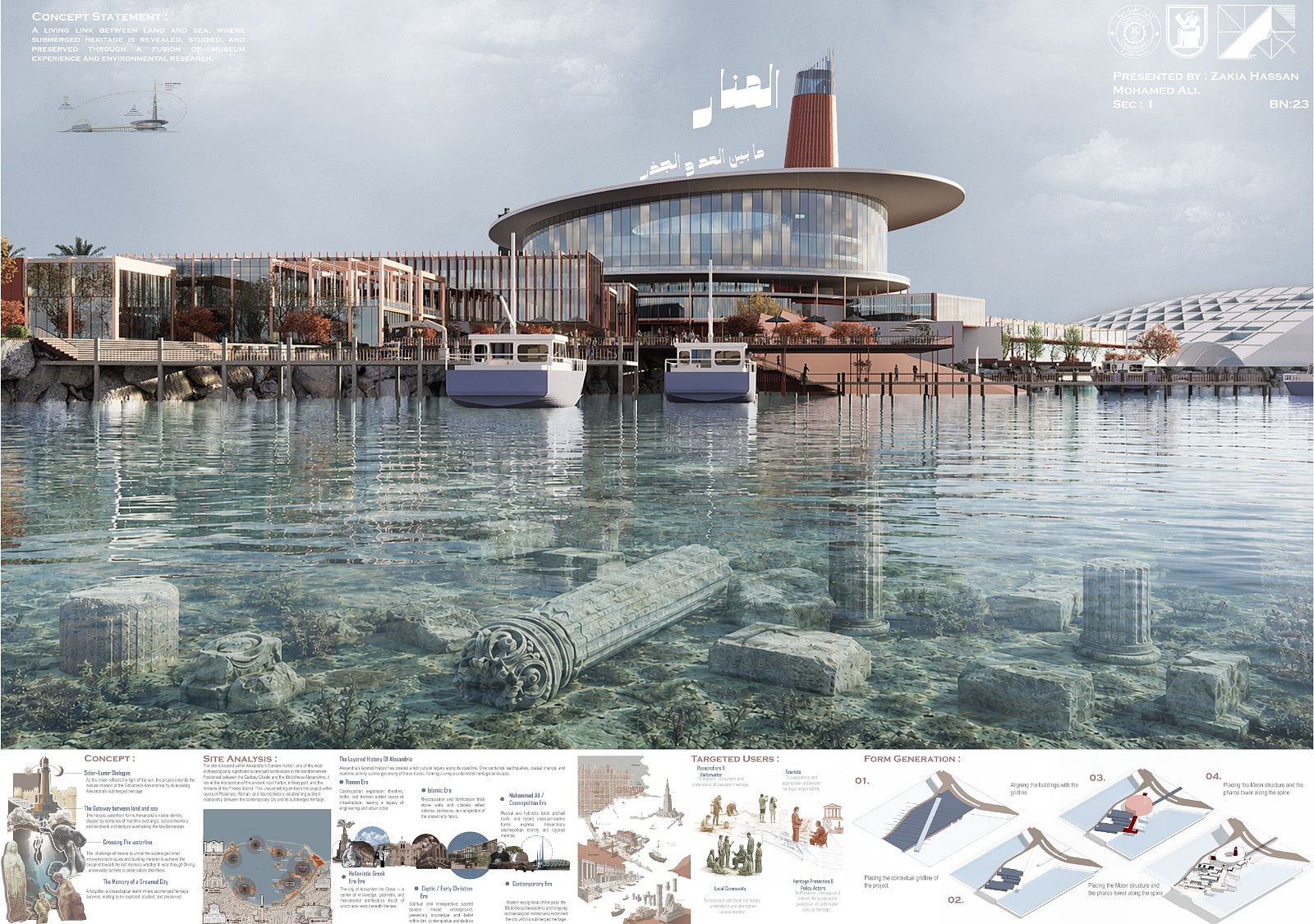
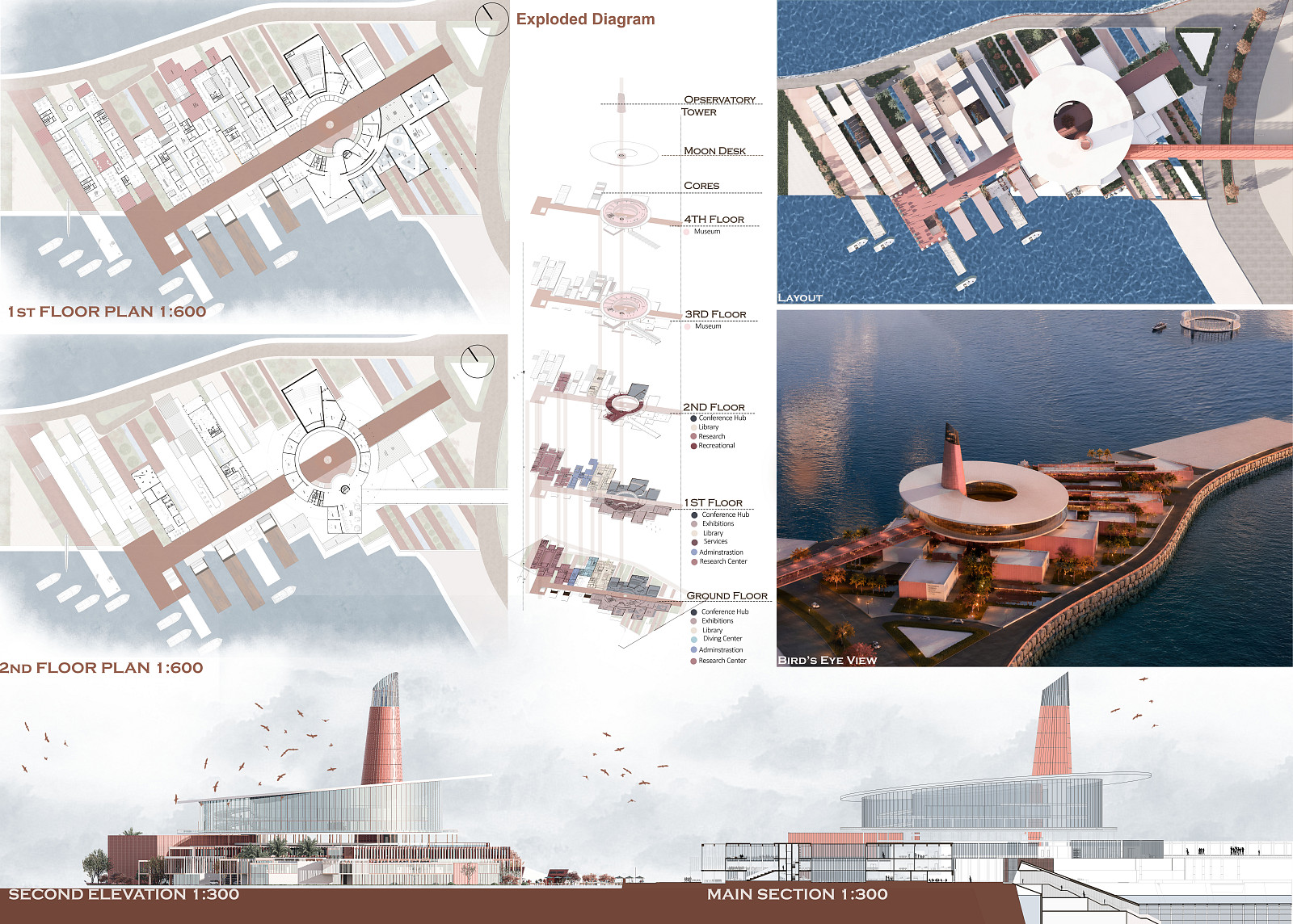
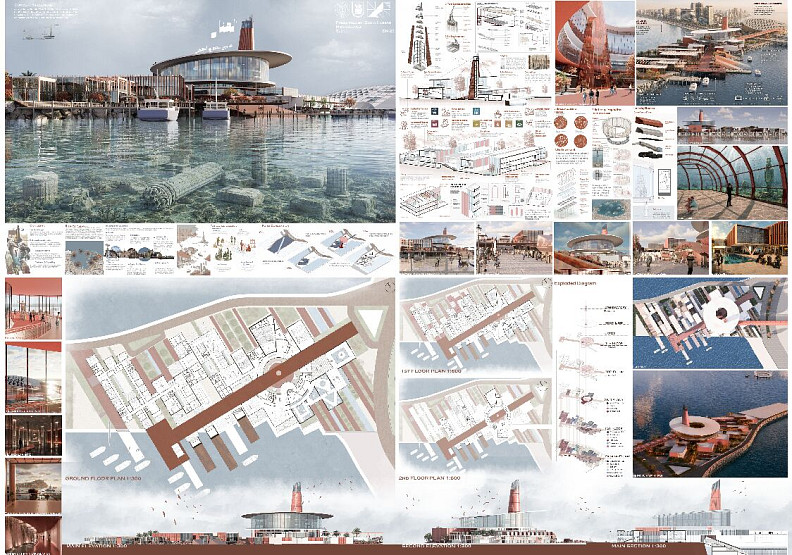
The **Museum and Research Center for Submerged Heritage** is envisioned as a multidisciplinary institution that unites cultural preservation, scientific research, public education, and environmental stewardship. Located along Alexandria's historic waterfront and connected to the Bibliotheca Alexandrina, the project responds to the city's unique relationship with the Mediterranean Sea, where centuries of history now lie beneath the water.
The project is founded on the concept of **"The Lunar Essence,"** drawing inspiration from the moon's influence on tides and its symbolic relationship with memory, discovery, and the hidden world beneath the sea. Architecture becomes a narrative journey that guides visitors from the familiar realm above ground into an immersive exploration of Alexandria's submerged heritage, revealing archaeological remains while emphasizing the delicate relationship between cultural heritage and the marine environment.
Beyond functioning as a museum, the project serves as a research and innovation hub dedicated to documenting, conserving, and studying submerged cultural heritage. Specialized conservation laboratories, GIS and environmental observation facilities, digital documentation centers, educational spaces, and public learning environments foster collaboration between researchers, students, specialists, and visitors. By integrating scientific investigation with immersive exhibition experiences, the project transforms knowledge into public awareness and strengthens the connection between society and its underwater heritage.
The project's primary objectives are to preserve and interpret submerged cultural heritage, advance interdisciplinary research, monitor environmental changes affecting underwater archaeological sites, promote conservation through innovation, and inspire public appreciation of the cultural and environmental significance of the Mediterranean. Through the seamless integration of research, education, and exhibition, the project establishes a lasting dialogue between Alexandria's past, present, and future, ensuring that the stories hidden beneath the sea are preserved, understood, and shared with generations to come.
Project description
## Scope of Project Solution
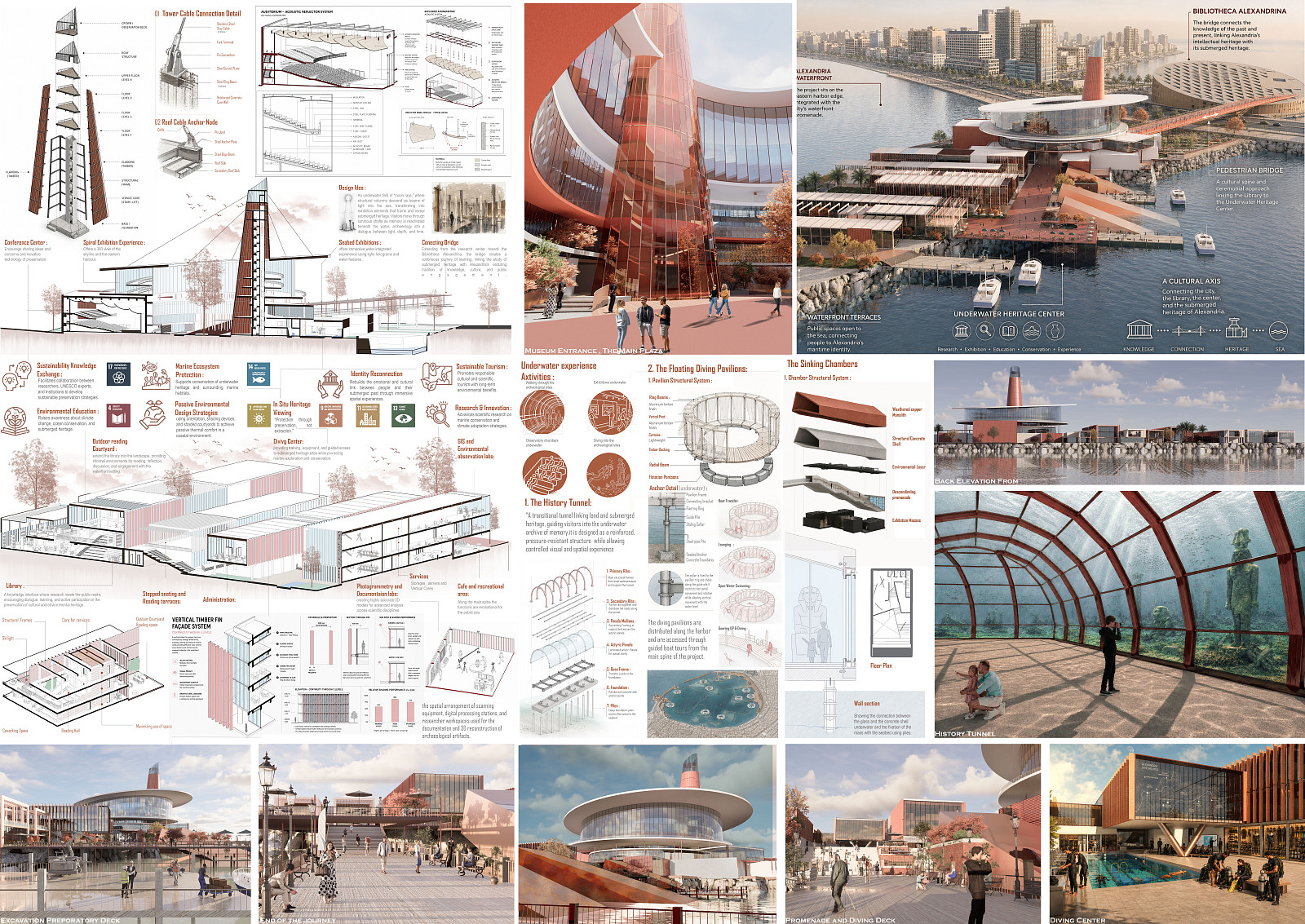
The project proposes a comprehensive architectural solution that combines a public museum with a specialized research center dedicated to the exploration, conservation, and interpretation of submerged cultural heritage. The design addresses the need for an integrated facility that supports archaeological research while making underwater heritage accessible to the public through immersive exhibitions and educational experiences.
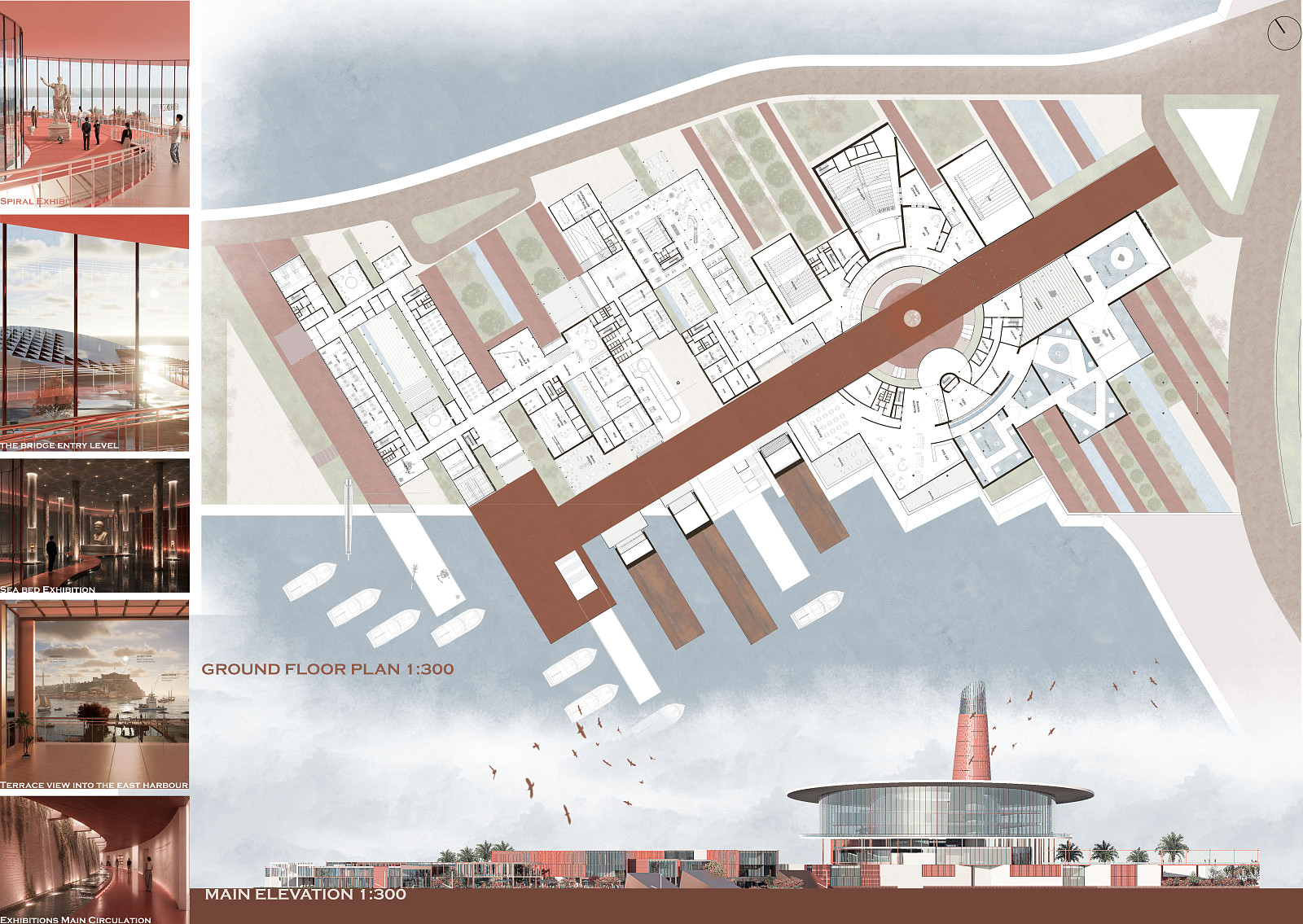
The scope of the project includes exhibition galleries, an underwater viewing experience, conservation and restoration laboratories, GIS and environmental observation laboratories, digital documentation and research facilities, educational and workshop spaces, a public library connected to the Bibliotheca Alexandrina, administration, visitor services, and outdoor public spaces that encourage interaction with the waterfront. The project also incorporates sustainable design strategies and resilient planning measures that respond to the coastal environment and the challenges affecting submerged archaeological sites.
By bringing together research, conservation, education, and public engagement within a single institution, the project creates a platform for preserving Alexandria's underwater heritage while fostering scientific collaboration, environmental awareness, and cultural appreciation for future generations.
Technical information
## Technical Specifications of the Project
The project is designed as a **Museum and Research Center for Submerged Heritage** that integrates public exhibition spaces with advanced research and conservation facilities. The building accommodates a diverse range of users, including visitors, researchers, archaeologists, students, conservation specialists, and administrative staff, while ensuring efficient circulation and functional separation between public, semi-public, and restricted areas.
The structural system is designed to support large-span exhibition spaces and specialized laboratory environments while responding to the site's coastal conditions. Durable, corrosion-resistant materials are selected to withstand the marine climate, ensuring long-term performance with minimal maintenance. The project incorporates energy-efficient building systems, natural daylighting where appropriate, passive environmental strategies, and high-performance mechanical and environmental controls required for artifact conservation and research laboratories.
Specialized facilities include conservation and restoration laboratories, GIS and environmental observation laboratories, digital documentation and scanning suites, research offices, educational spaces, an underwater viewing experience, artifact storage areas with controlled environmental conditions, and a publicly accessible library connected to the Bibliotheca Alexandrina. The project is fully accessible and complies with universal design principles, life-safety requirements, fire protection standards, and building regulations, ensuring a safe, inclusive, and adaptable environment for both visitors and professionals.
Documentation

Copyright © 2026 INSPIRELI | All rights reserved. Use of this website signifies your agreement to the Terms of Use, Privacy Policy, and use of cookies.