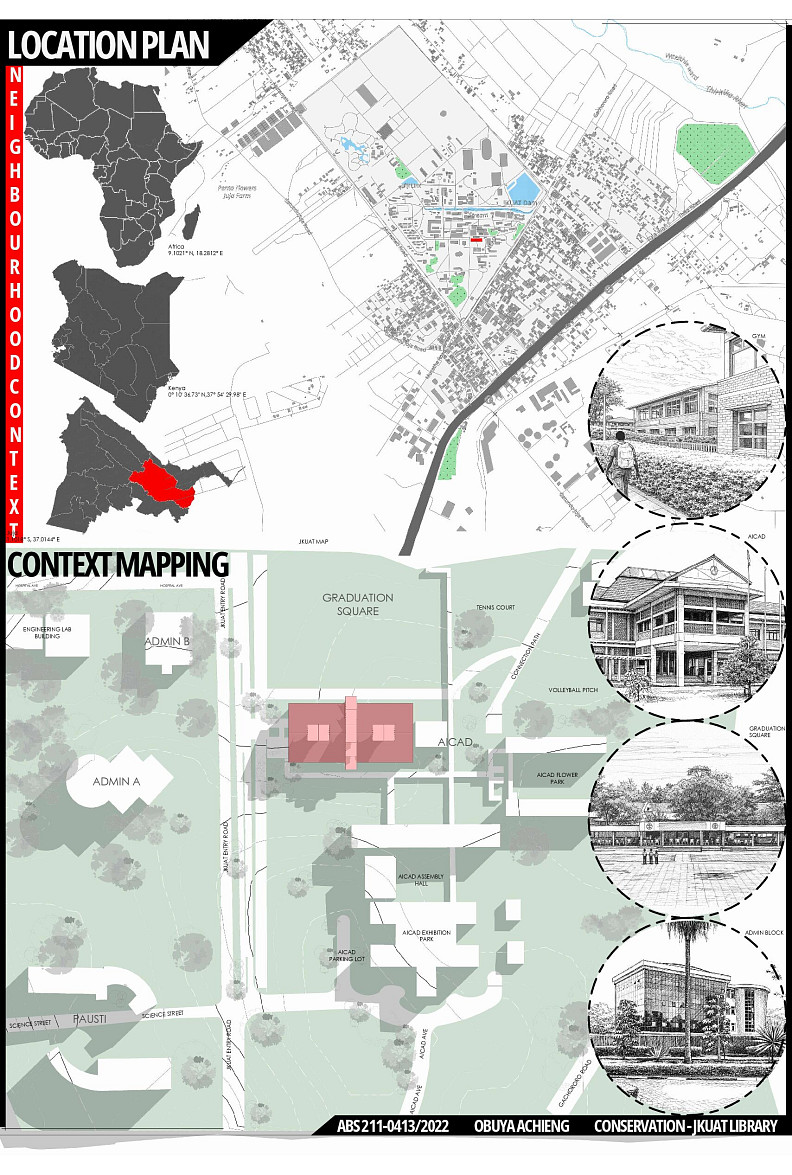
CONSERVATION OF JKUAT LIBRARY


Project idea
The jkuat library is a prime example of brutalist-inspired tropical architecture, relying on high thermal mass and cross-ventilation to maintain environmental stability. however, the building’s current adaptive reuse,shifting from a static book repository to a high-density, ict-intensive learning commons,has introduced significant internal heat gains from servers and mobile devices that the original passive envelope was not programmed to mitigate. this creates a performance gap where users face localized thermal discomfort, leading to a potential
reliance on energy-intensive mechanical cooling.
This research was to investigates Architectural retrofitting interventions,specifically bioclimatic skins and waste-heat recovery,to restore the building's thermal equilibrium and achieve a net-zero operational footprint.
Project description
Scope of the project solution was to:
1. Undertake measured documentation of selected portions of the building.
2. Map deterioration and identify structural and material failures.
3. Analyse environmental performance (daylighting, ventilation, thermal comfort).
4. Review relevant regulatory frameworks (building code, accessibility standards, fire compliance).
5. Propose adaptive reuse strategies for selected zones, including but not limited to:
a. Learning commons
b. Digital resource centres
c. Collaborative study areas
d. Archival and conservation zones
e. Inclusive and accessible facilities
6. Develop detailed conservation and retrofit proposals at architectural and technical scales
Technical information
Locally available materials,brick and reclaimed wood from broken furniture repurposed to make new usable ones.
Documentation

Copyright © 2026 INSPIRELI | All rights reserved. Use of this website signifies your agreement to the Terms of Use, Privacy Policy, and use of cookies.