The Pavlov Estate


Project idea
Restoration and reactivation of the 19th century Pavlov Estate in Kharkiv as a living cultural asset and vibrant civic destination amidst the challenges of the Ukrainian-Russian war, transforming it from a static monument into a community hub.
Project description
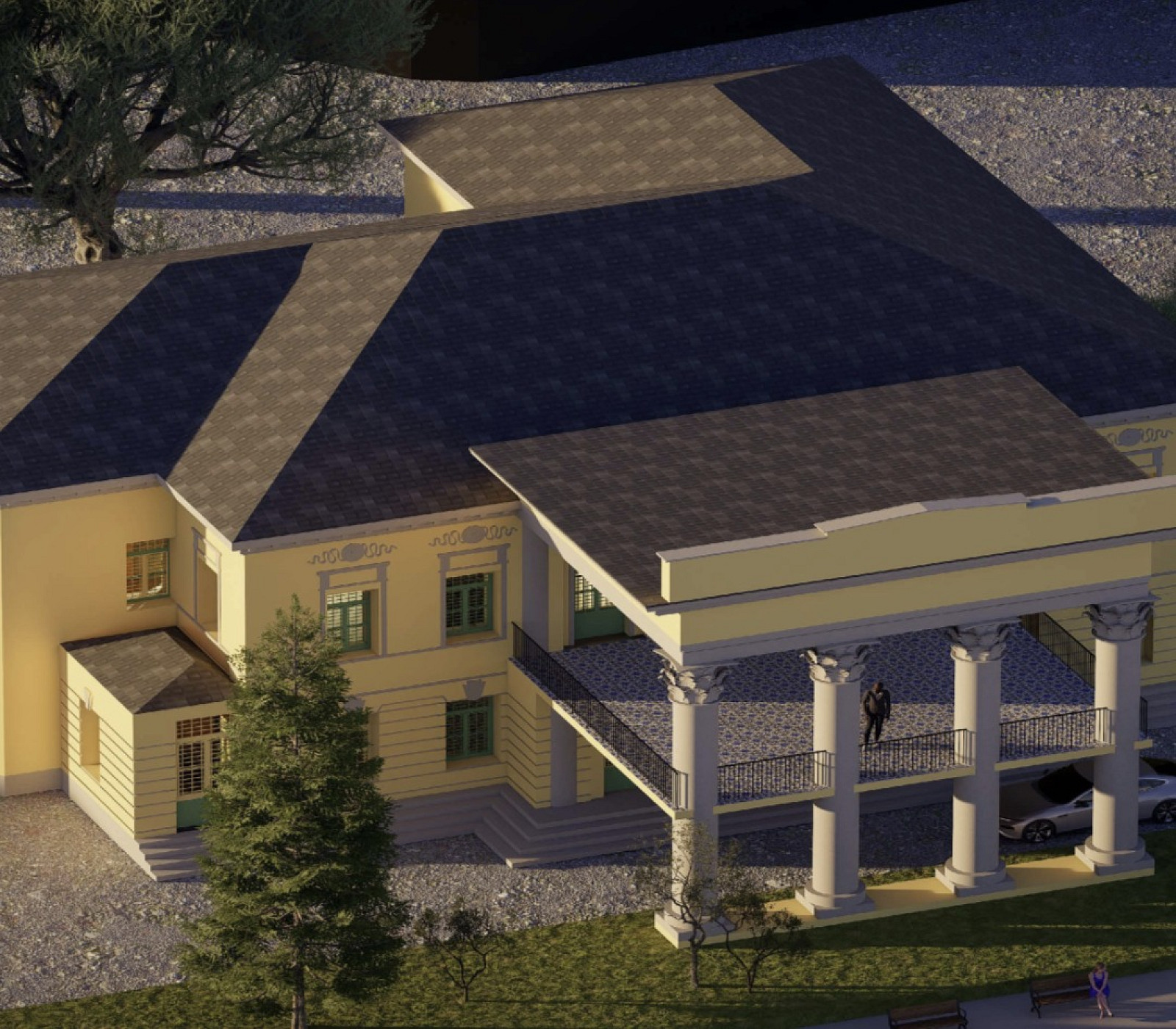
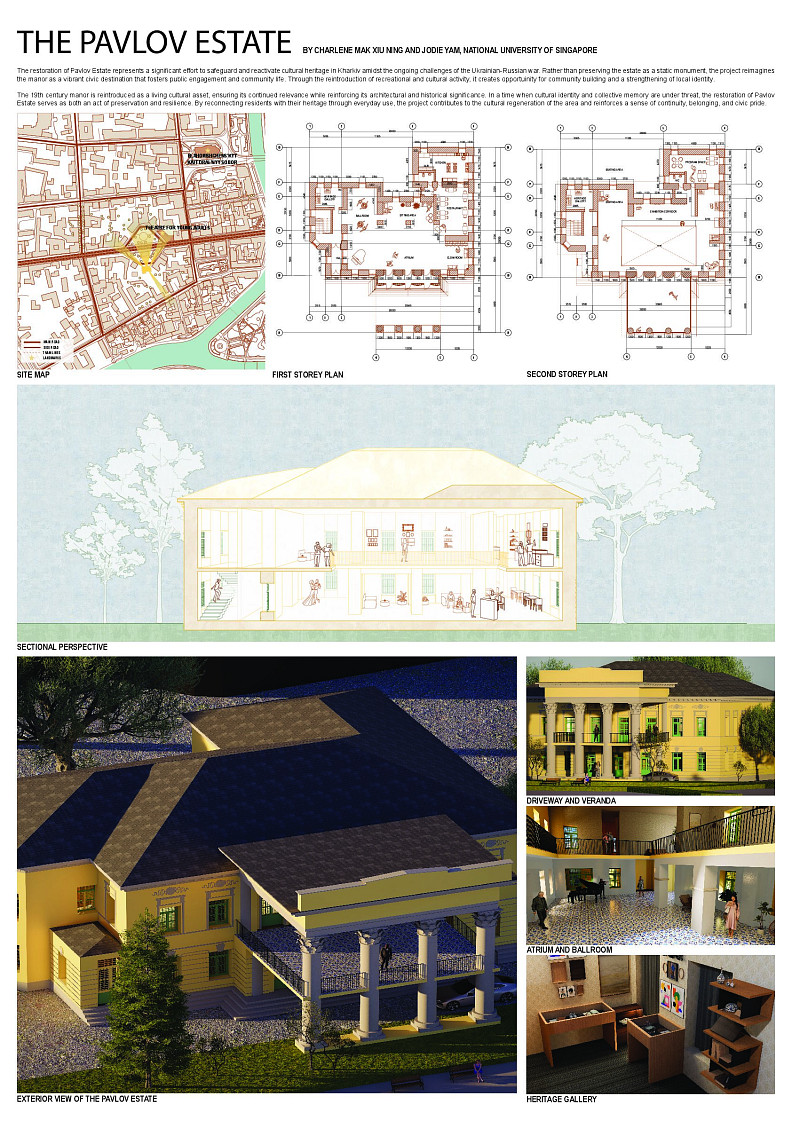
The restoration of Pavlov Estate represents a significant effort to safeguard and reactivate cultural heritage in Kharkiv. Rather than preserving the estate as a static monument, the project reimagines the manor as a vibrant civic destination that fosters public engagement and community life. Through the reintroduction of recreational and cultural activity, it creates opportunity for community building and a strengthening of local identity. The 19th century manor is reintroduced as a living cultural asset, ensuring its continued relevance while reinforcing its architectural and historical significance. In a time when cultural identity and collective memory are under threat, the restoration serves as both an act of preservation and resilience. The program includes a ballroom, restaurant, office space, atrium, courtyard, heritage gallery, exhibition corridor, reading area, and program spaces across two storeys.
Technical information
The project includes first and second storey plans showing the spatial organization with labeled rooms including ballroom, restaurant, office space, atrium, courtyard, heritage area, reading area, exhibition corridor, and program spaces. A site map shows the estate's location in relation to Blahovishensky Kafedral'nyy Sobor and a Theatre for Young Adults, with main roads, side roads, tram lines, and landmarks indicated. A sectional perspective reveals the interior spatial qualities and the classical architectural character of the building.
Documentation

Copyright © 2026 INSPIRELI | All rights reserved. Use of this website signifies your agreement to the Terms of Use, Privacy Policy, and use of cookies.