Nuswa Bhuvana, Marunda Across Nature


Project idea
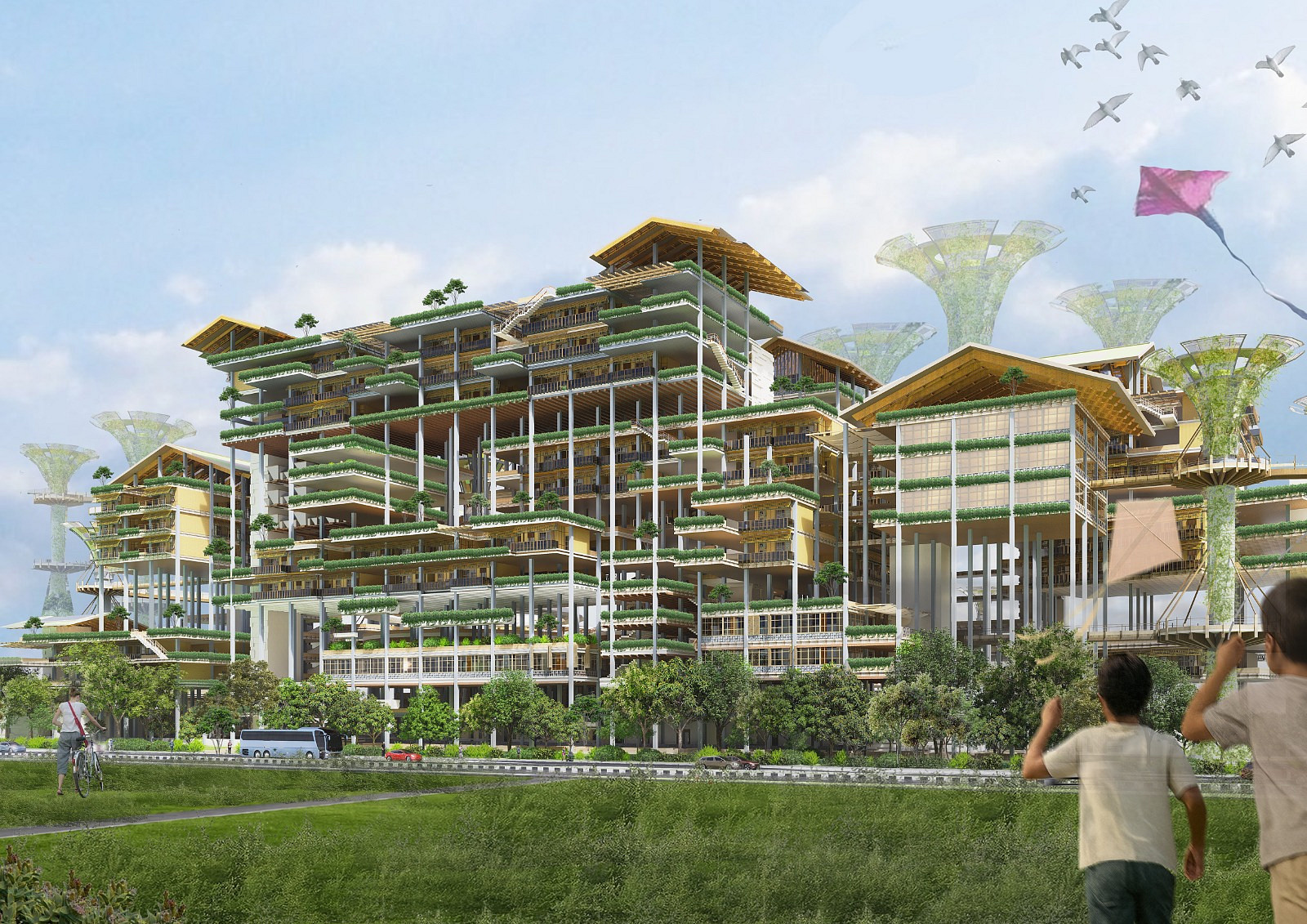
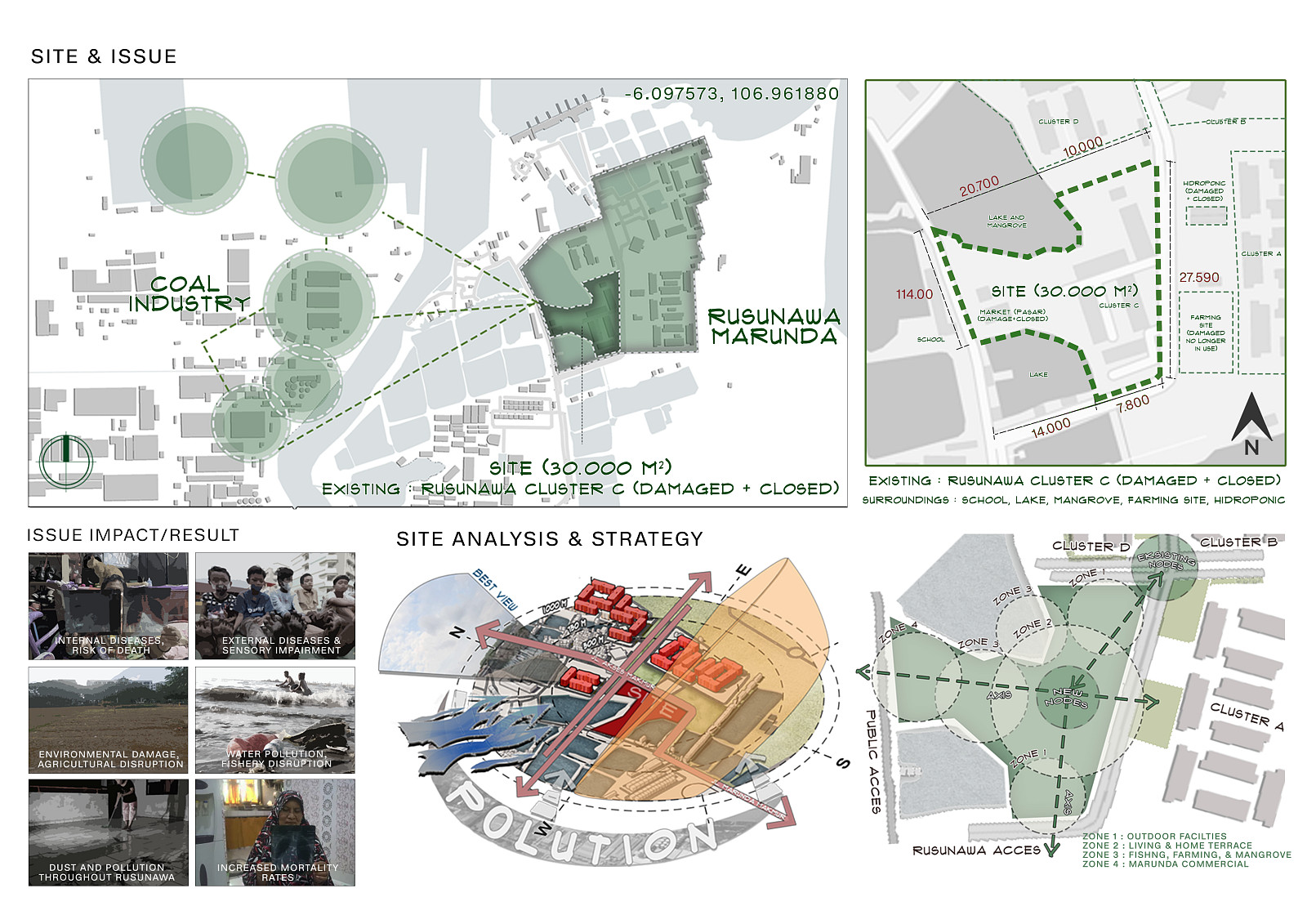
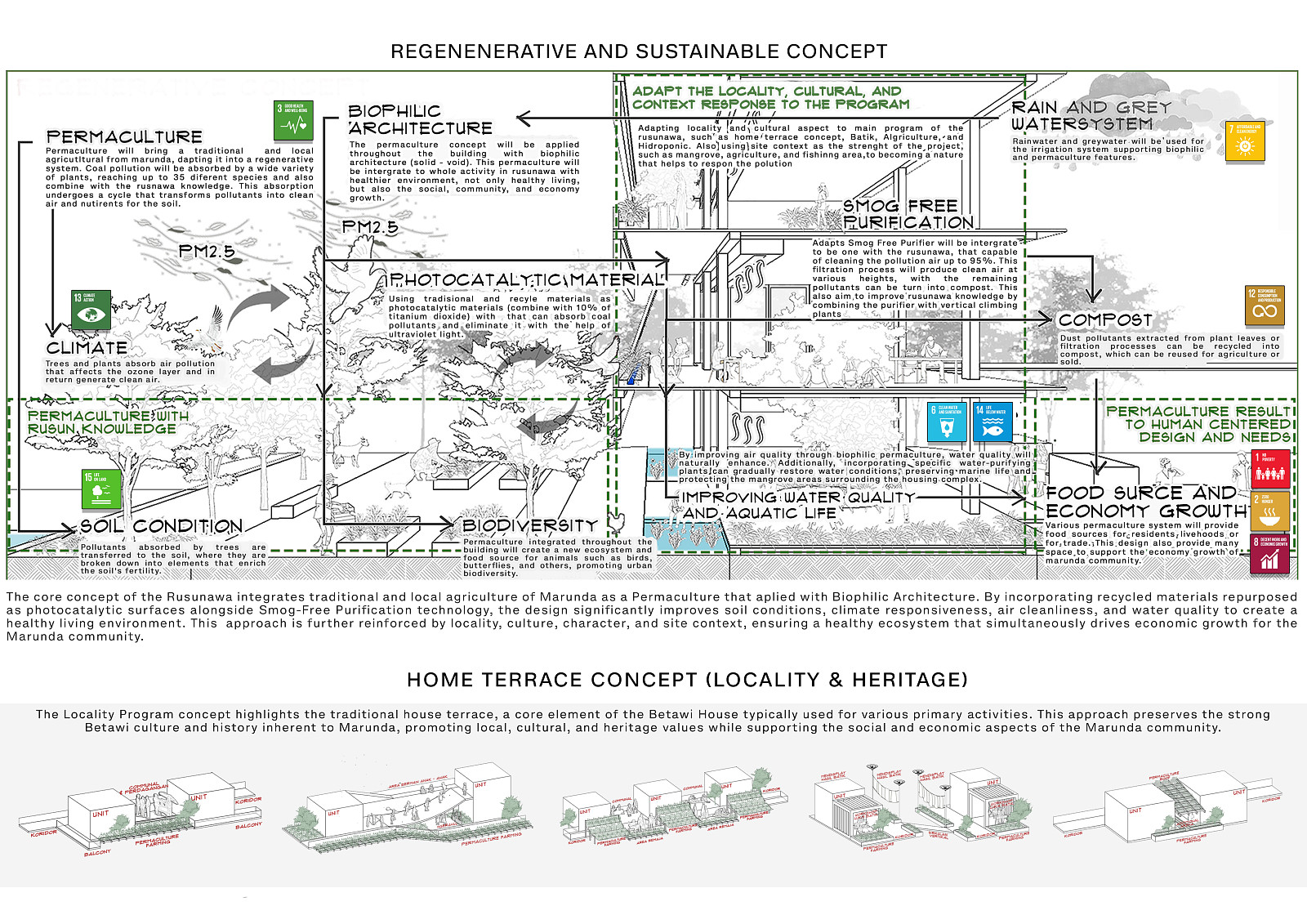
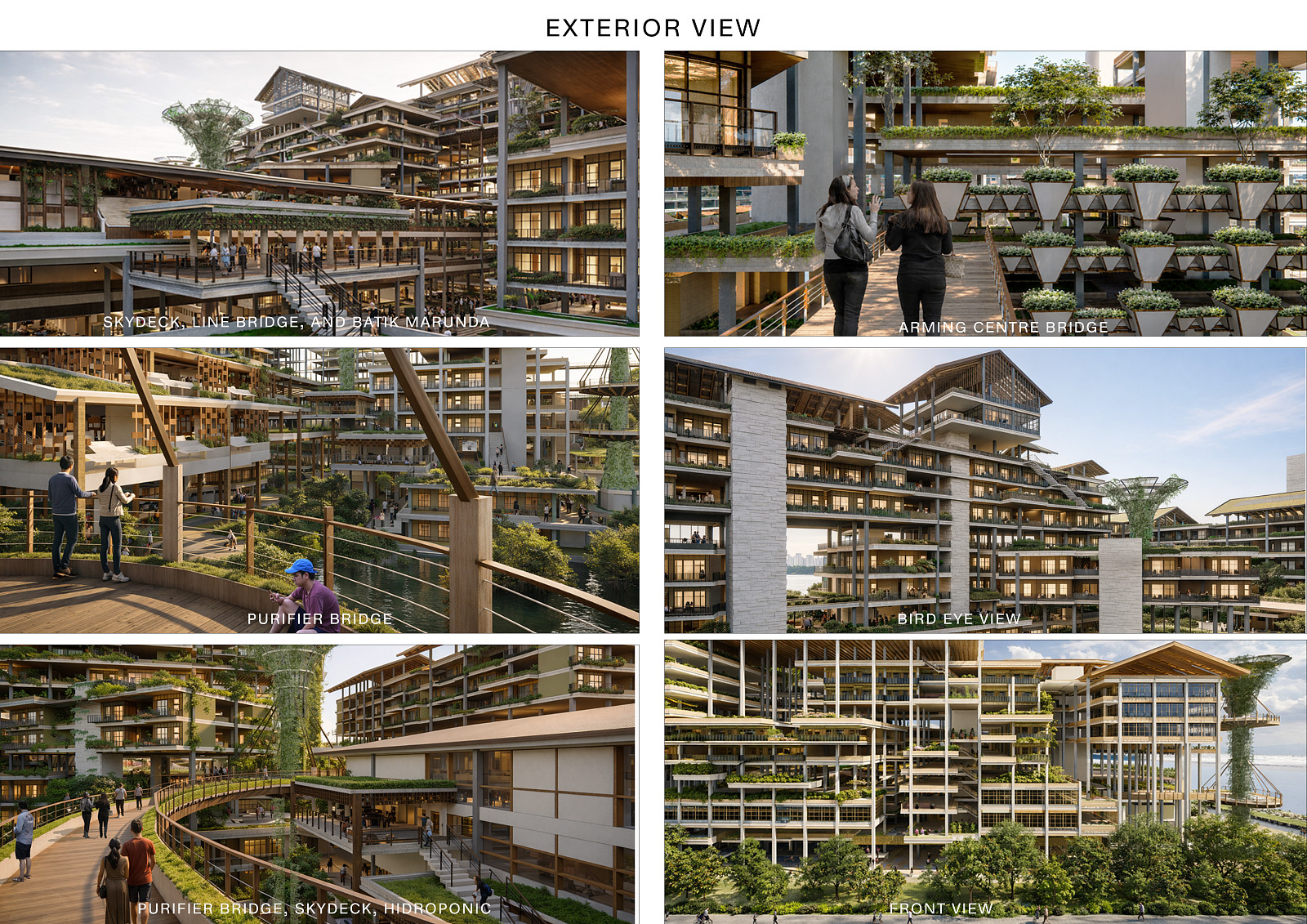
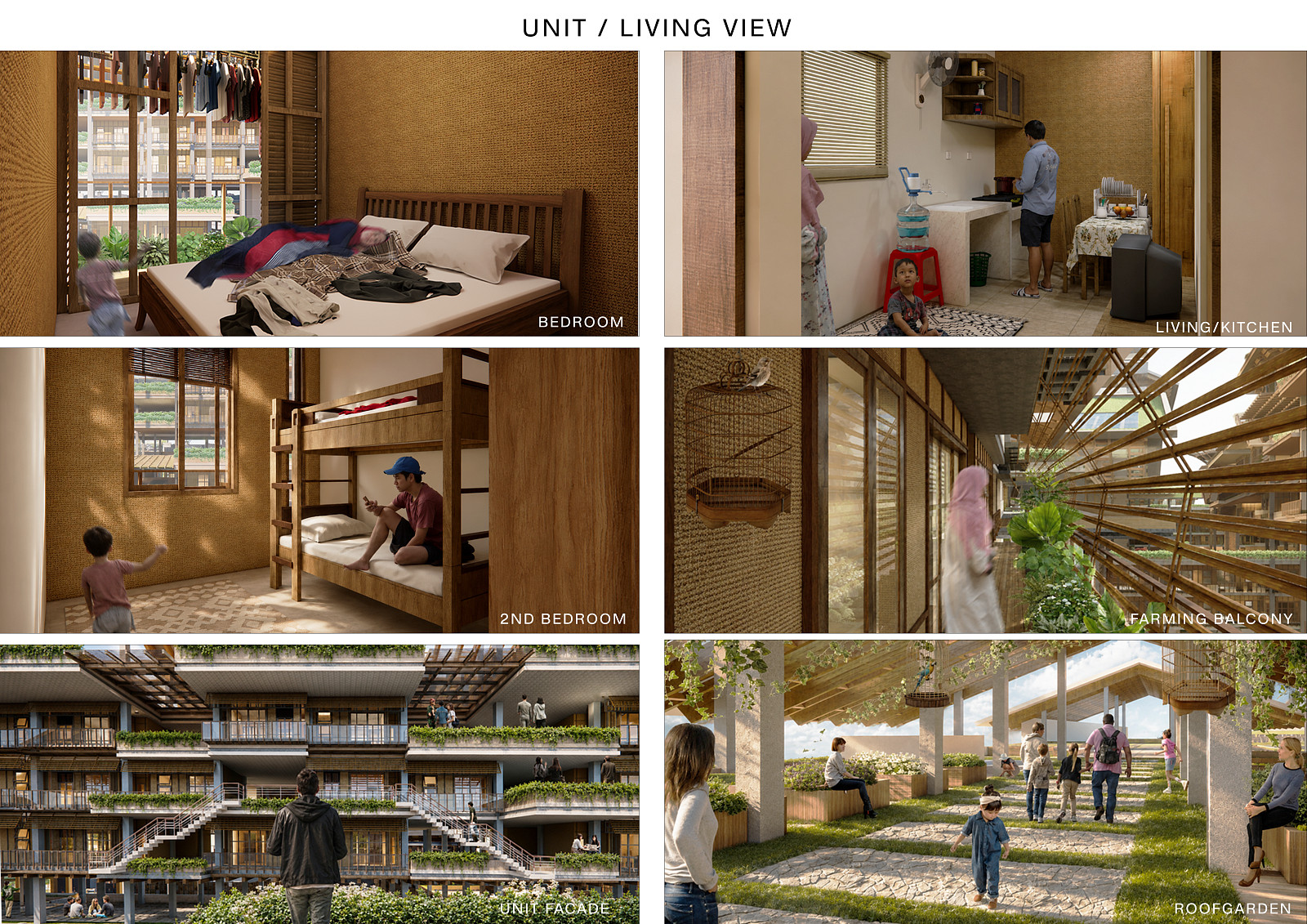
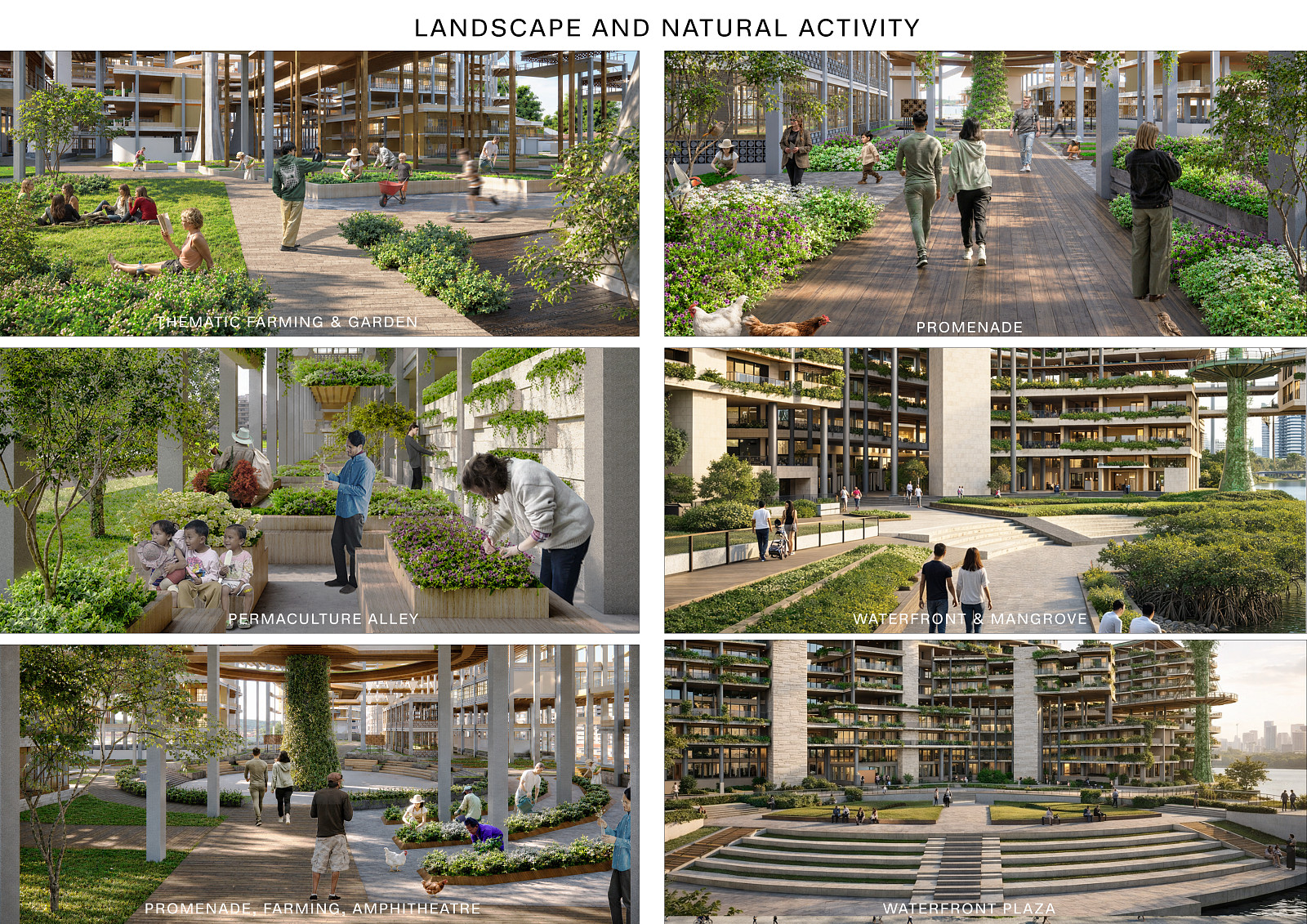
Nuswa Bhuvana is a public housing (Rusunawa) that integrates living activities with nature to mitigate the negative impacts of coal pollution. By applying vernacular concepts, the project draws from the local character and agricultural heritage of Marunda, transforming it into a permaculture system (regenerative agriculture). This concept is realized by embedding permaculture systems directly into the living ecosystem of the Rusunawa Marunda through biophilic architecture. This approach adapts traditional Marunda principles into a contemporary spatial strategy to address existing environmental challenges. As a result, Marunda’s agricultural identity is seamlessly integrated into the daily lives and all activities of its residents.
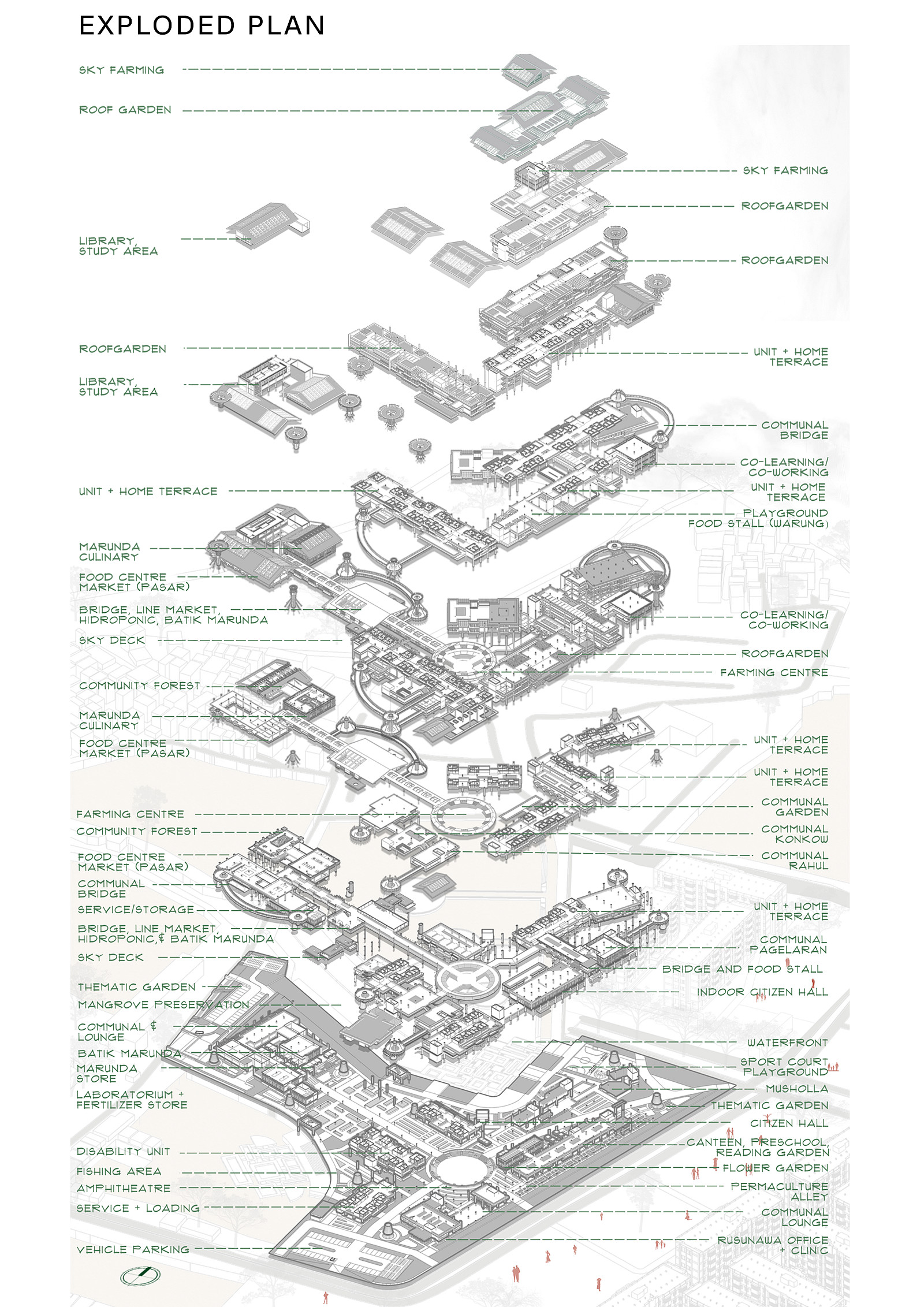
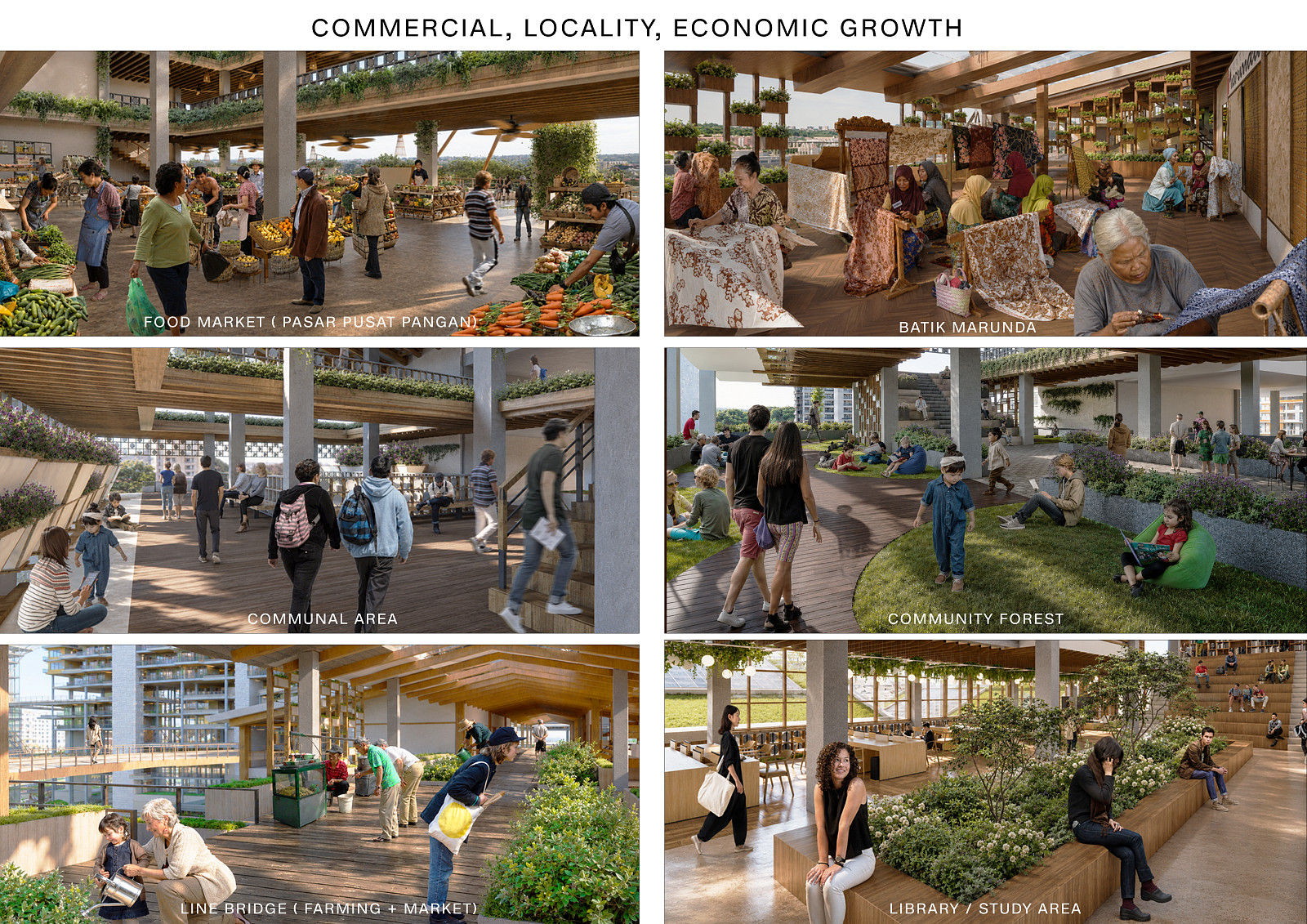
Furthermore, the project strengthens the locality and economy by highlighting Marunda’s distinct identity, ranging from urban farming and hydroponics to batik production, mangroves, fisheries, and Betawi culture. Nuswa Bhuvana aims to be more than just a healthy place to live, it serves as a catalyst for social cohesion, the preservation of locality and culture, also sustainable economic growth for the entire Marunda community.
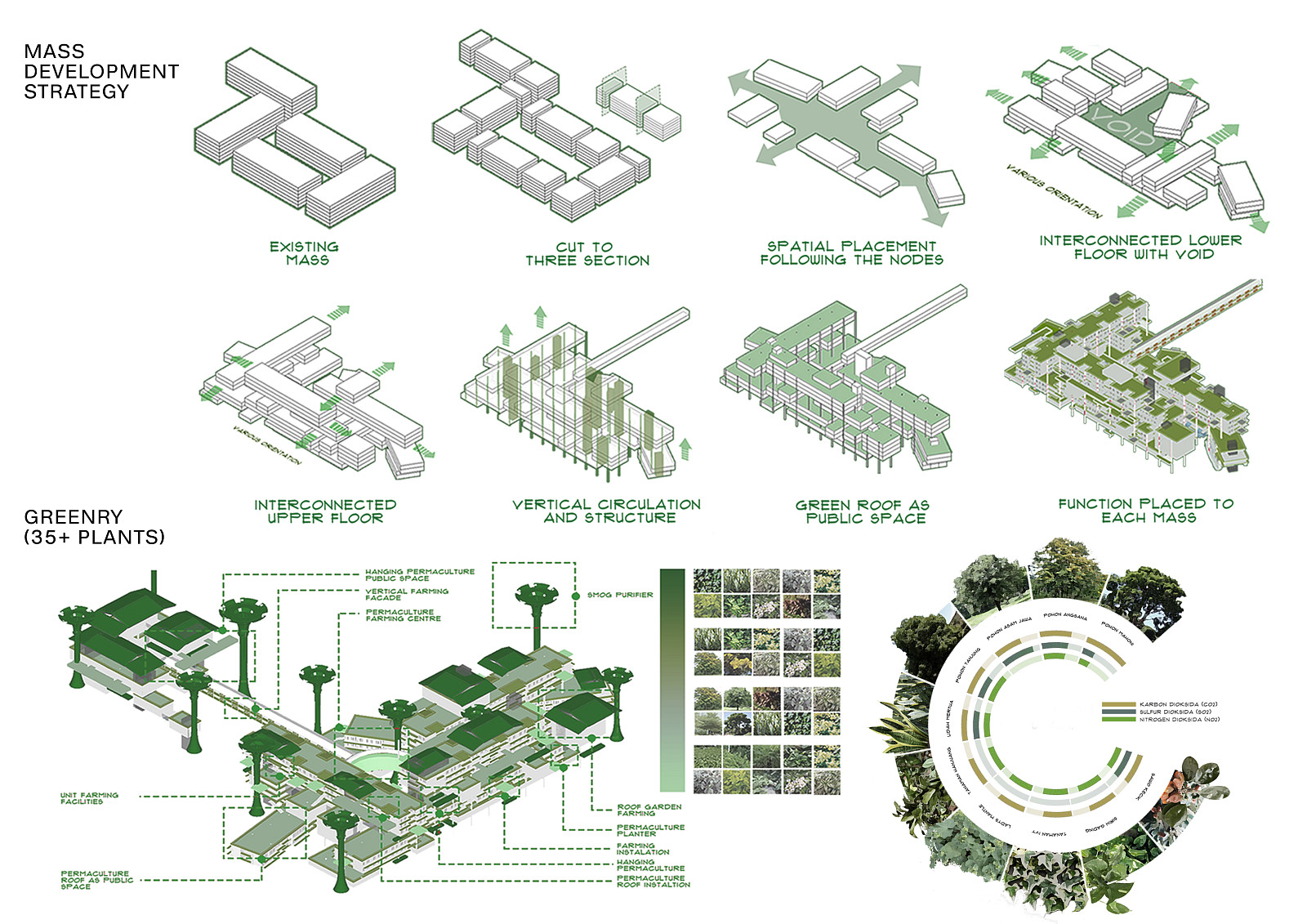
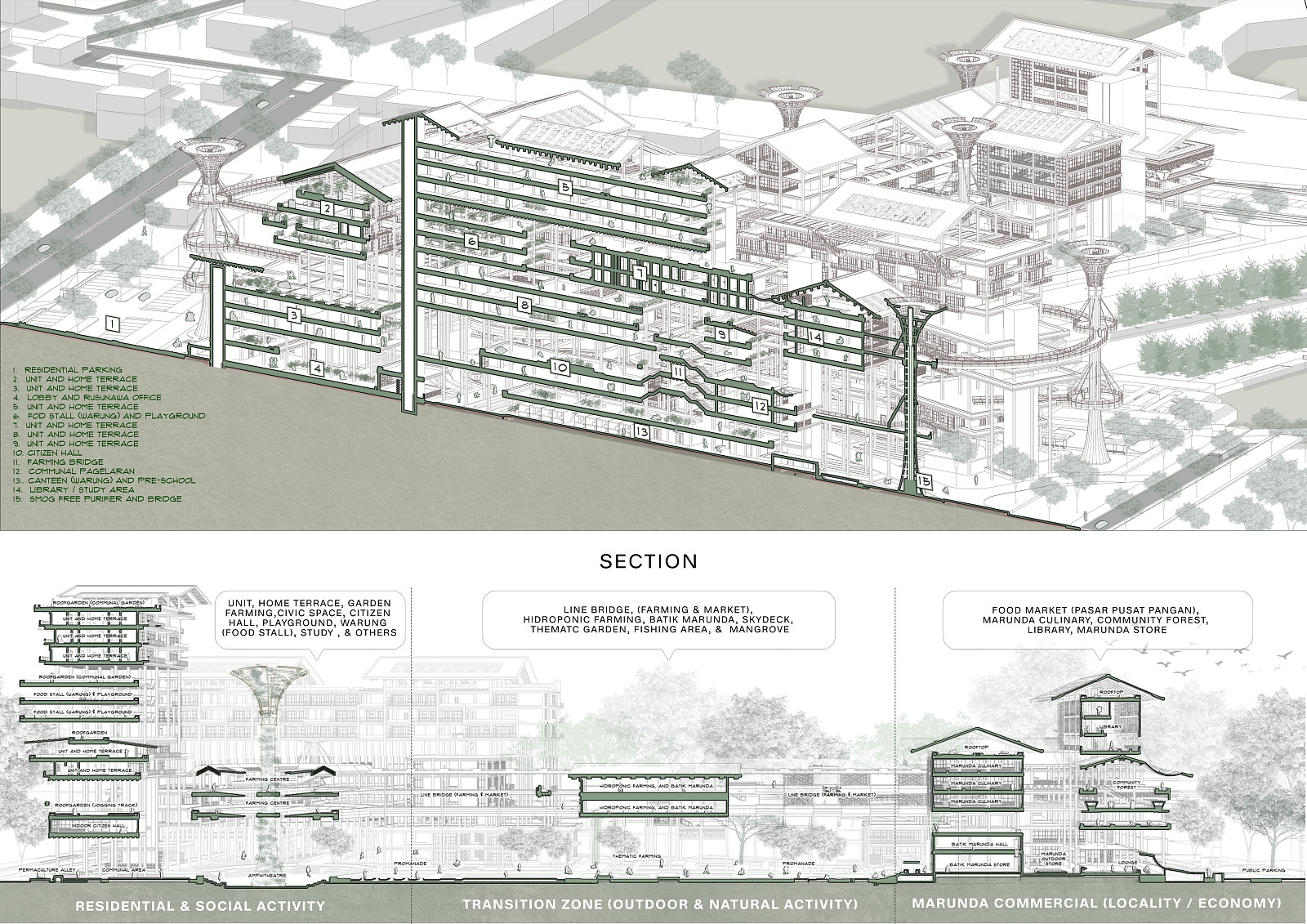
The design scheme incorporates a solid void composition and variations in floor levels to maximize the integration of permaculture and biophilic architecture. With this scheme, the building mass is developed based on the typology of the existing rusunawa and the results of the site analysis.
Project description
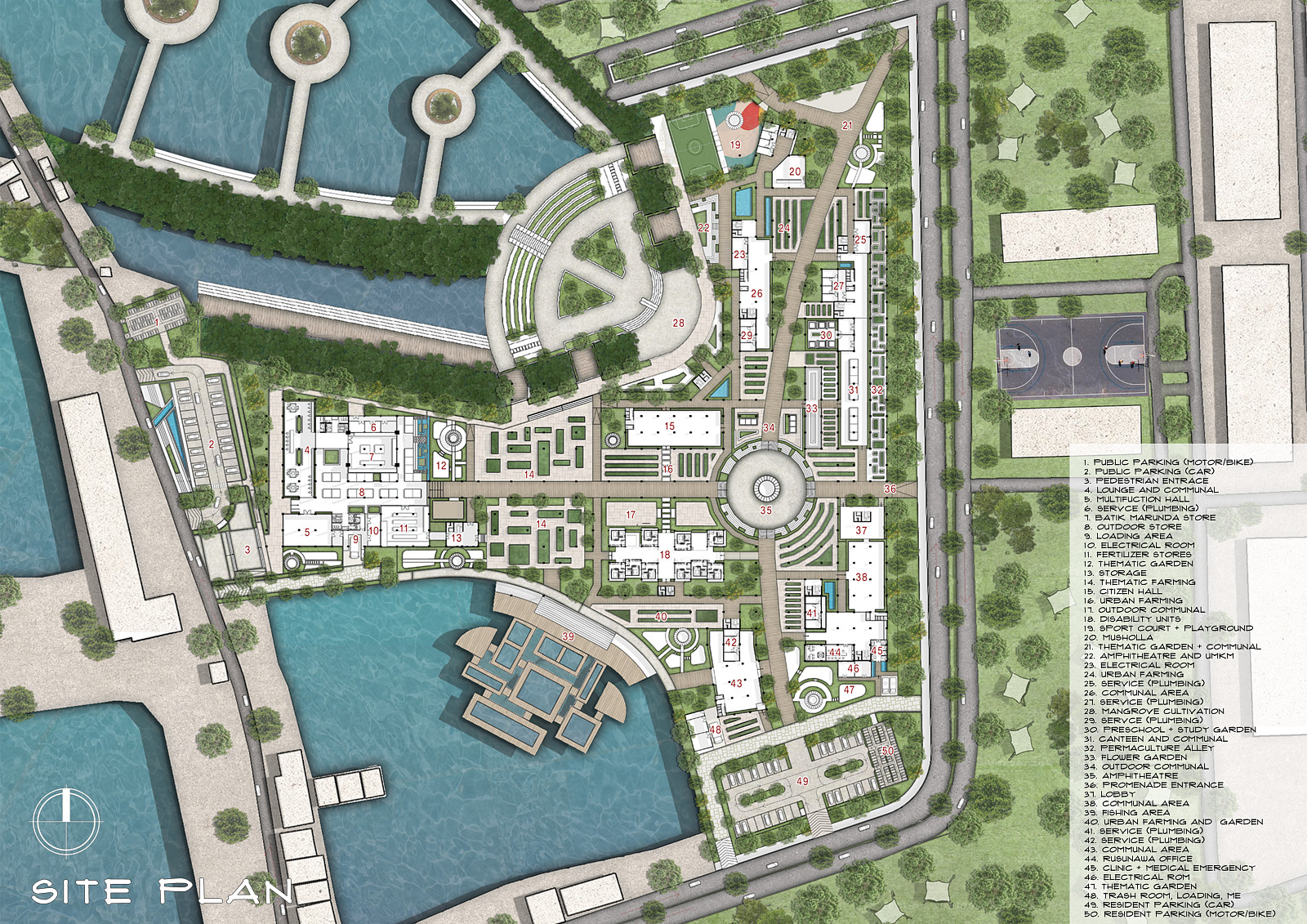
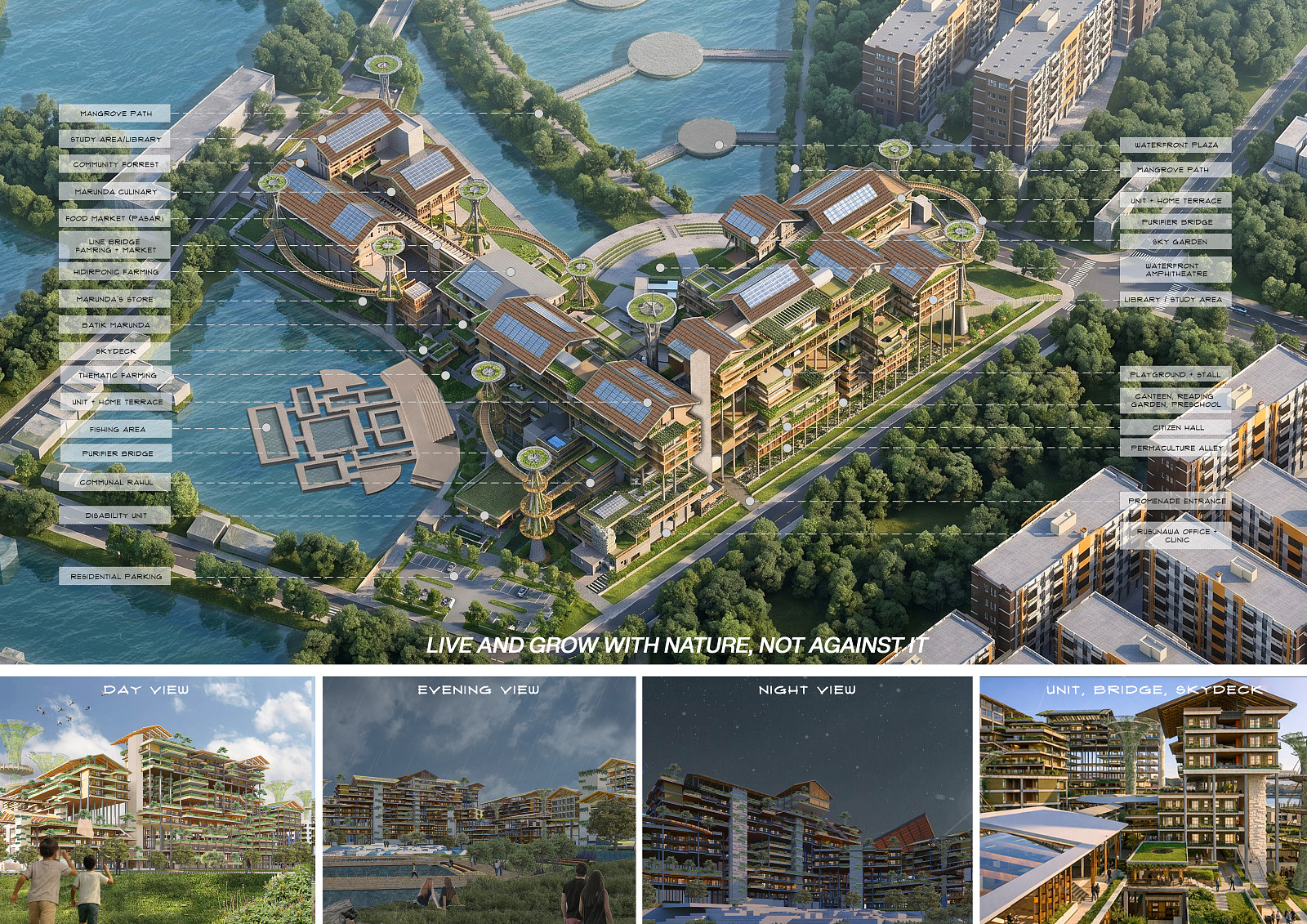
Nuswa Bhuvana is a regenerative public housing project in Marunda, North Jakarta, designed with a biophilic approach and permaculture principles. It responds to the negative impacts of coal pollution by creating a healthier, natural, and meaningful living environment. The housing goes beyond providing decent shelter, offering regenerative spaces that encourage ecological activities such as urban farming, pollution management, and water conservation.
By integrating permaculture and biophilic design, Nuswa Bhuvana fosters strong connections between residents and their environment, forming a living and supportive system. It also strengthens the local economy by highlighting Marunda’s identity through farming, hydroponics, batik, mangroves, fisheries, and Betawi culture. Ultimately, Nuswa Bhuvana represents regenerative housing that harmonizes people and nature, building a healthy and resilient community.
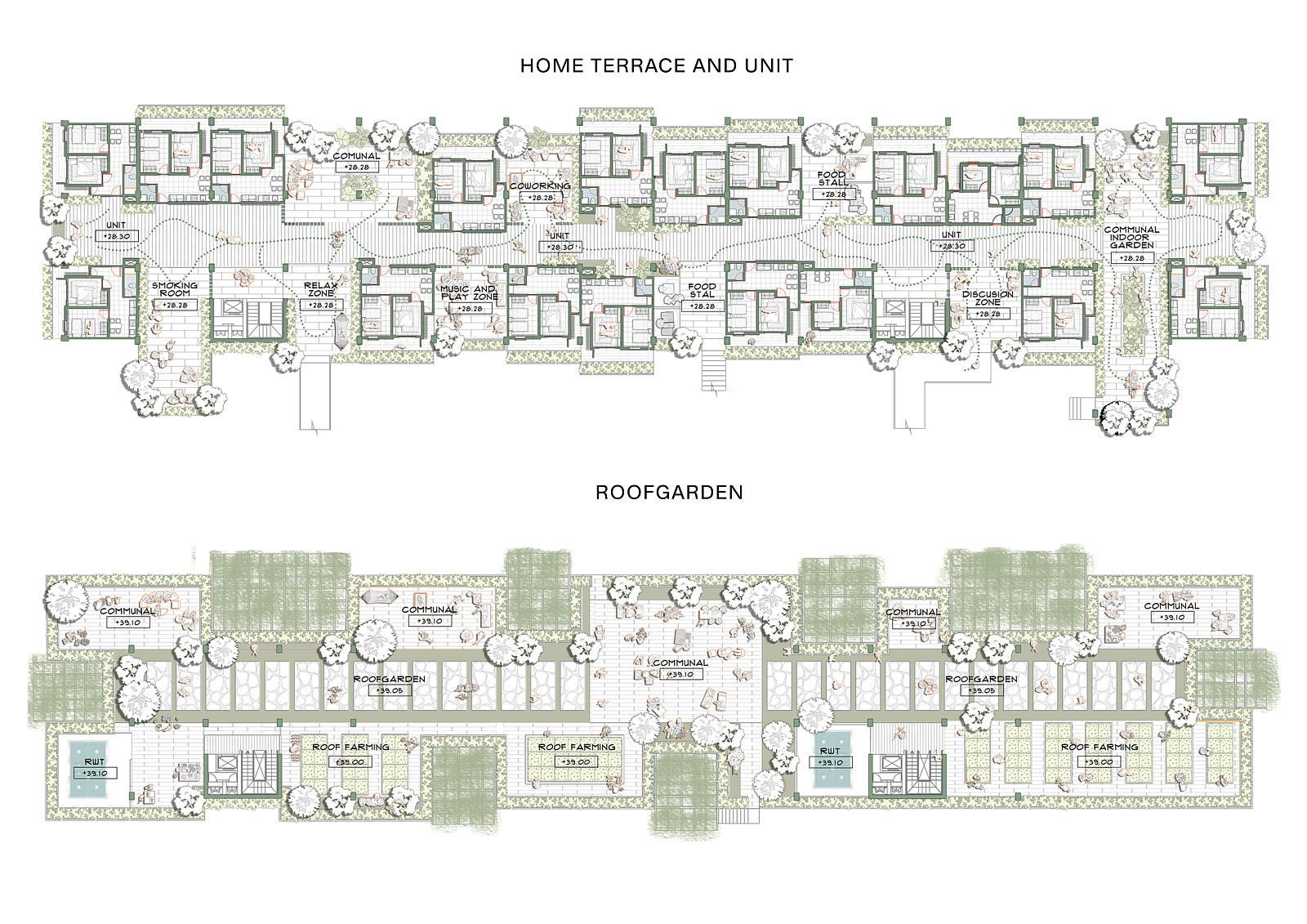
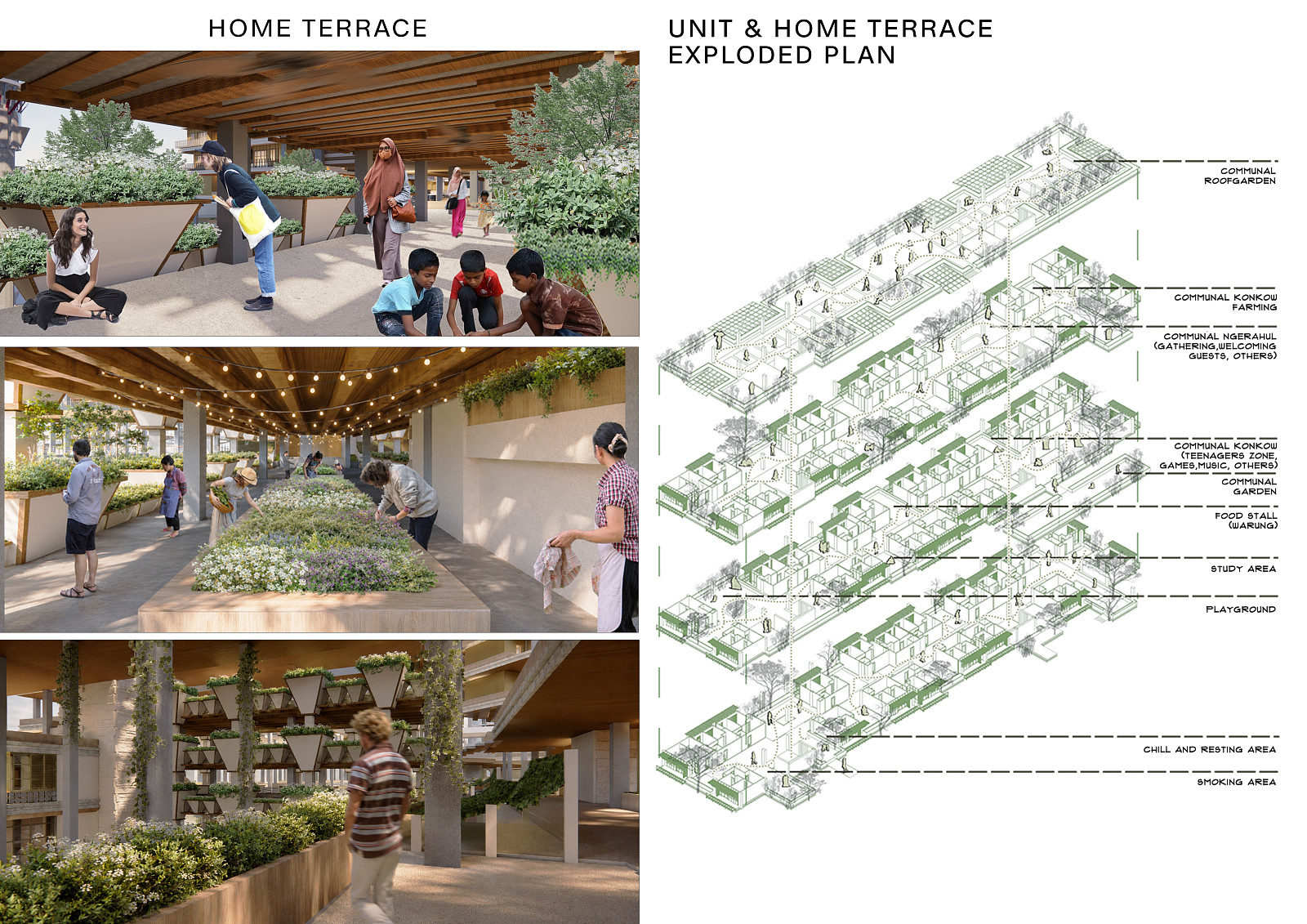
The concept of program locality is inspired by the idea of the house terrace, a feature of traditional Betawi houses that is typically used for various main activities. This approach preserves the strong Betawi culture and history inherent to Marunda, promoting local, cultural, and heritage values while supporting the social and economic aspects of the Marunda community. This home terrace also functions as a void area that support and integrates biophilic permaculture, becoming an integral part of all communal activities and living, within the Rusunawa
Technical information
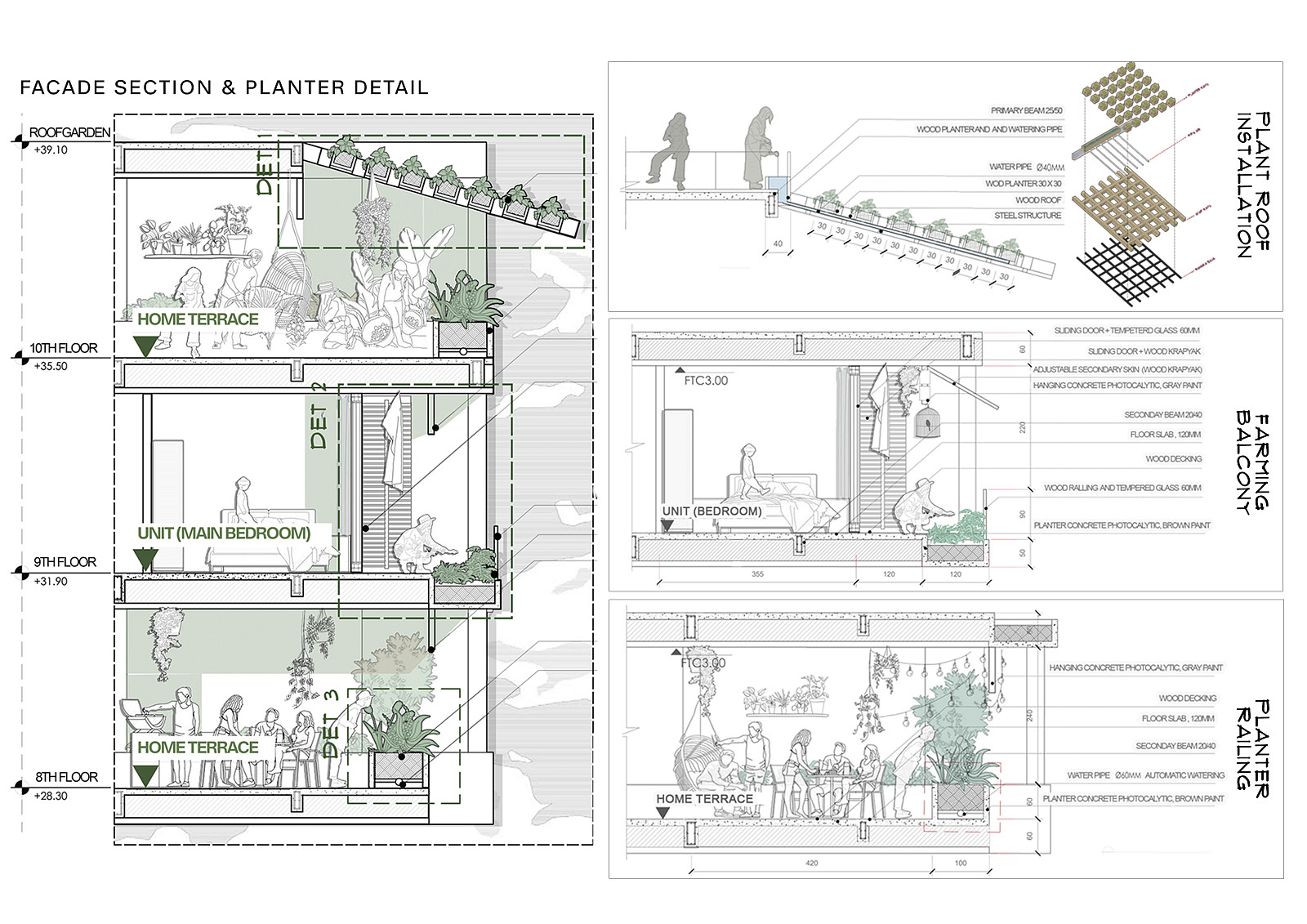
In addition to permaculture and biophilic architecture, the design also incorporates photocatalytic materials system. Photocatalytic materials are recycled existing materials mixed with photocatalyst compounds (Titanium Dioxide), allowing it to absorb and neutralize coal pollution with the help of sunlight. In addition to the concrete itself, the low-cost apartment also features wooden material accents, which is a traditional and local material of Marunda.
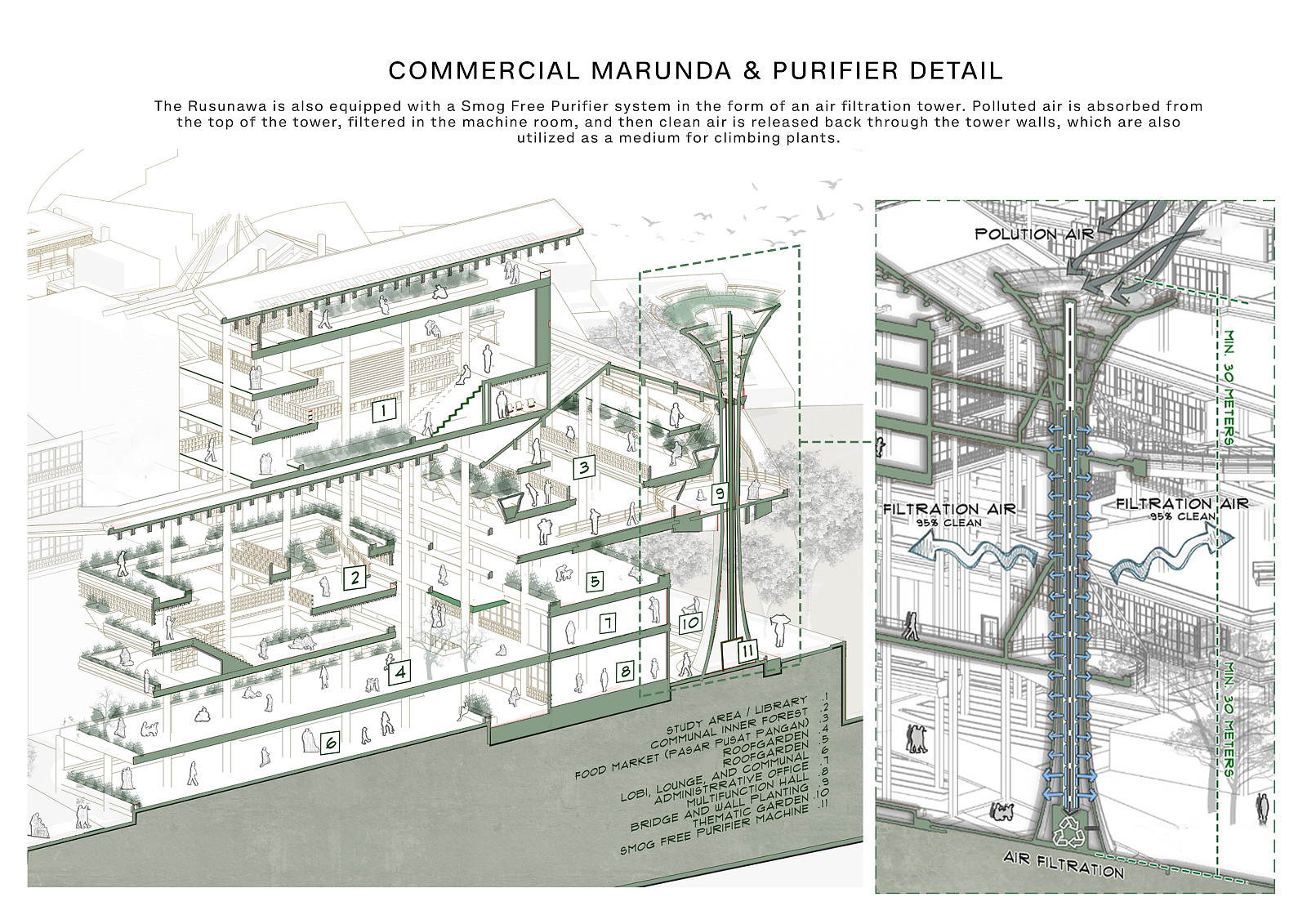
The Rusunawa is also equipped with a Smog Free Purifier system in the form of an air filtration tower. Polluted air is absorbed from the top of the tower, filtered in the machine room, and then clean air is released back through the tower walls, which are also utilized as a medium for climbing plants to improve rusunawa knowledge.


Copyright © 2026 INSPIRELI | All rights reserved. Use of this website signifies your agreement to the Terms of Use, Privacy Policy, and use of cookies.