Floating Research and Purification Center for the Gdańsk Bay: Modern Forms of Marine Architecture as a Response to Contemporary


Project idea
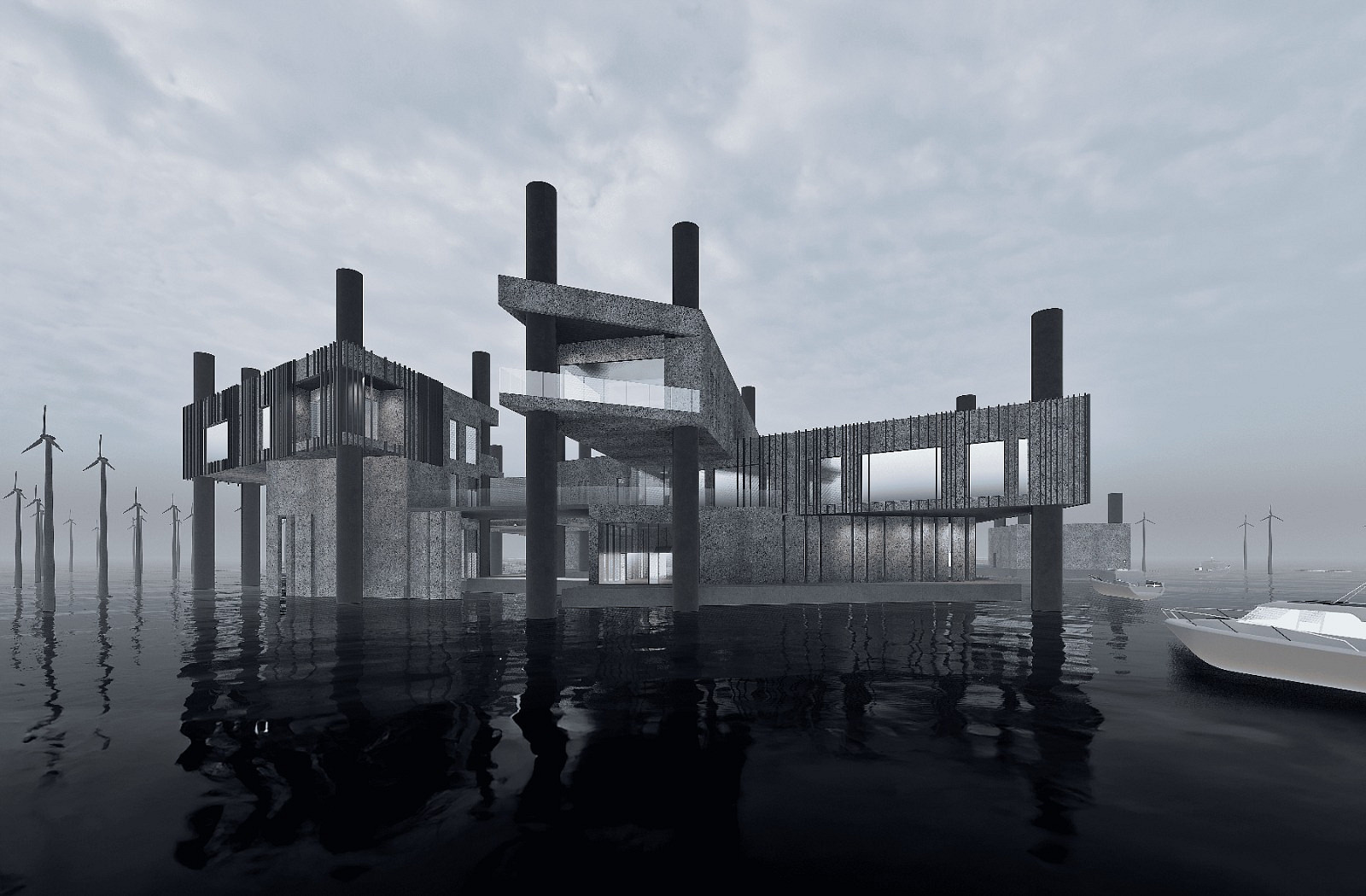
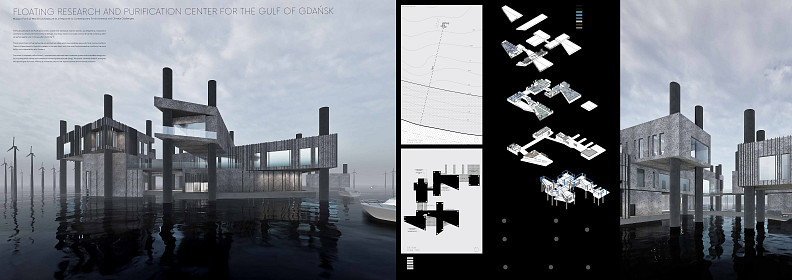
The project envisions a pioneering Research and Purification Center designed to address two escalating threats in the Baltic Sea: leaking chemical munitions from World War II and the effects of climate change. Located 1.2 km off Sobieszewo Island, the facility combines scientific innovation with climate-resilient engineering, offering a safe and sustainable platform for monitoring, identifying, and neutralizing underwater contaminants. Its dynamic architecture symbolizes both the vulnerability of the marine environment and the determination to protect it through advanced technology and adaptive design.
Project description
At the bottom of the Baltic Sea, particularly in the Gulf of Gdańsk, lie numerous shipwrecks and large quantities of chemical weapons from World War II. Substances such as mustard gas, phosgene, and sarin, sealed in corroding containers, pose a serious threat to the environment, food safety, and the local economy, which relies heavily on fishing and tourism. At the same time, the impacts of climate change — including rising sea levels and increasingly frequent extreme weather events — demand the implementation of flexible and resilient engineering solutions.
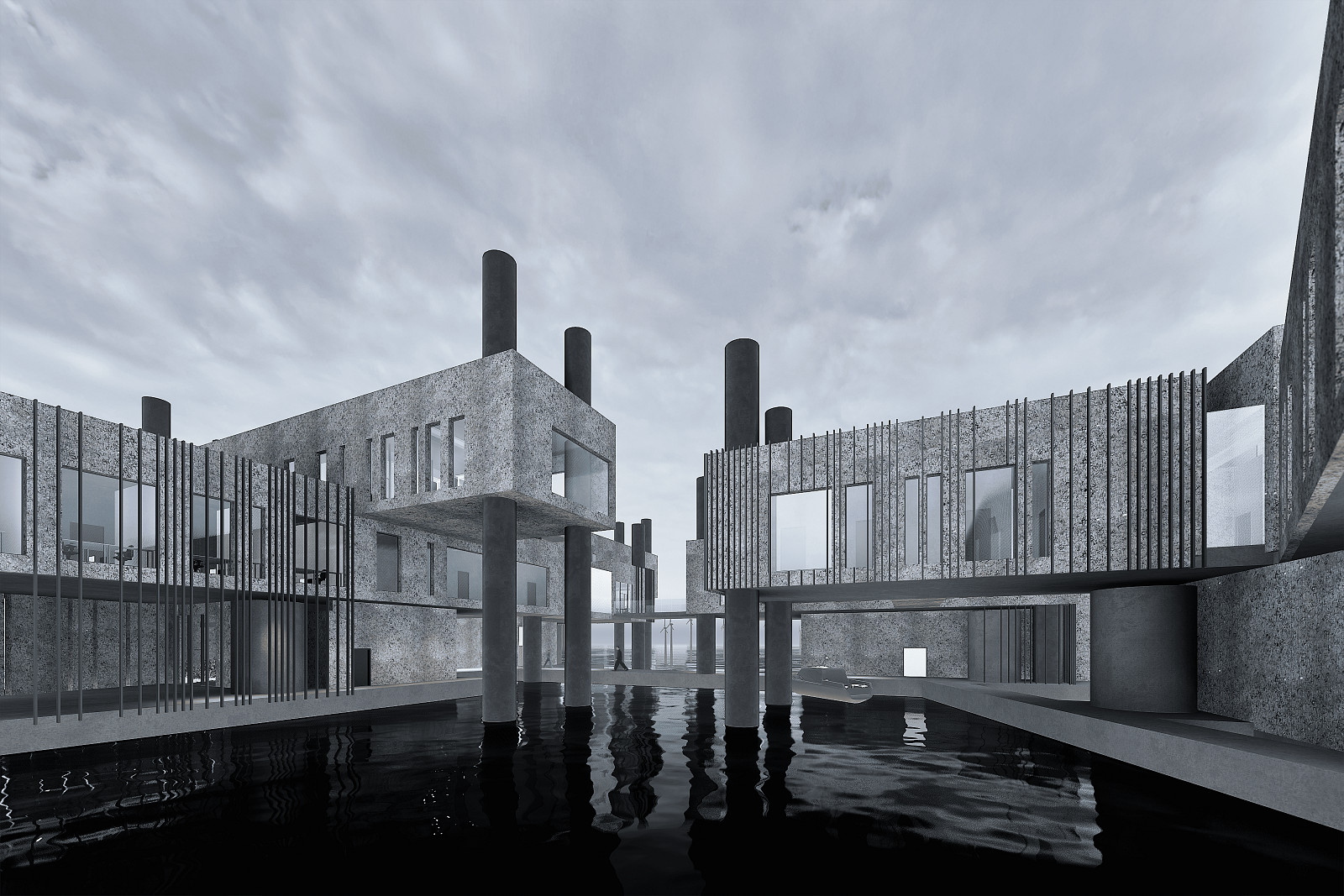
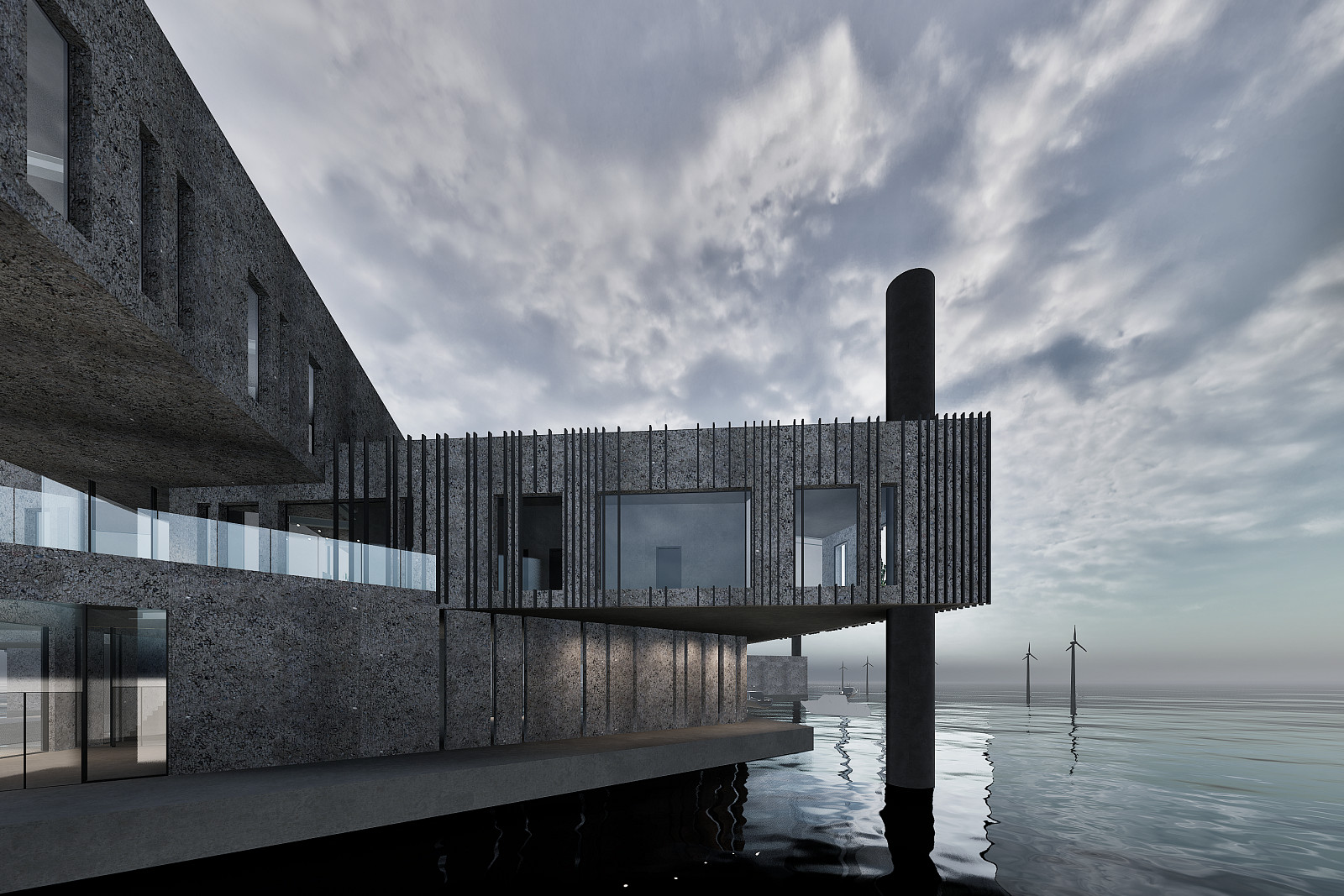
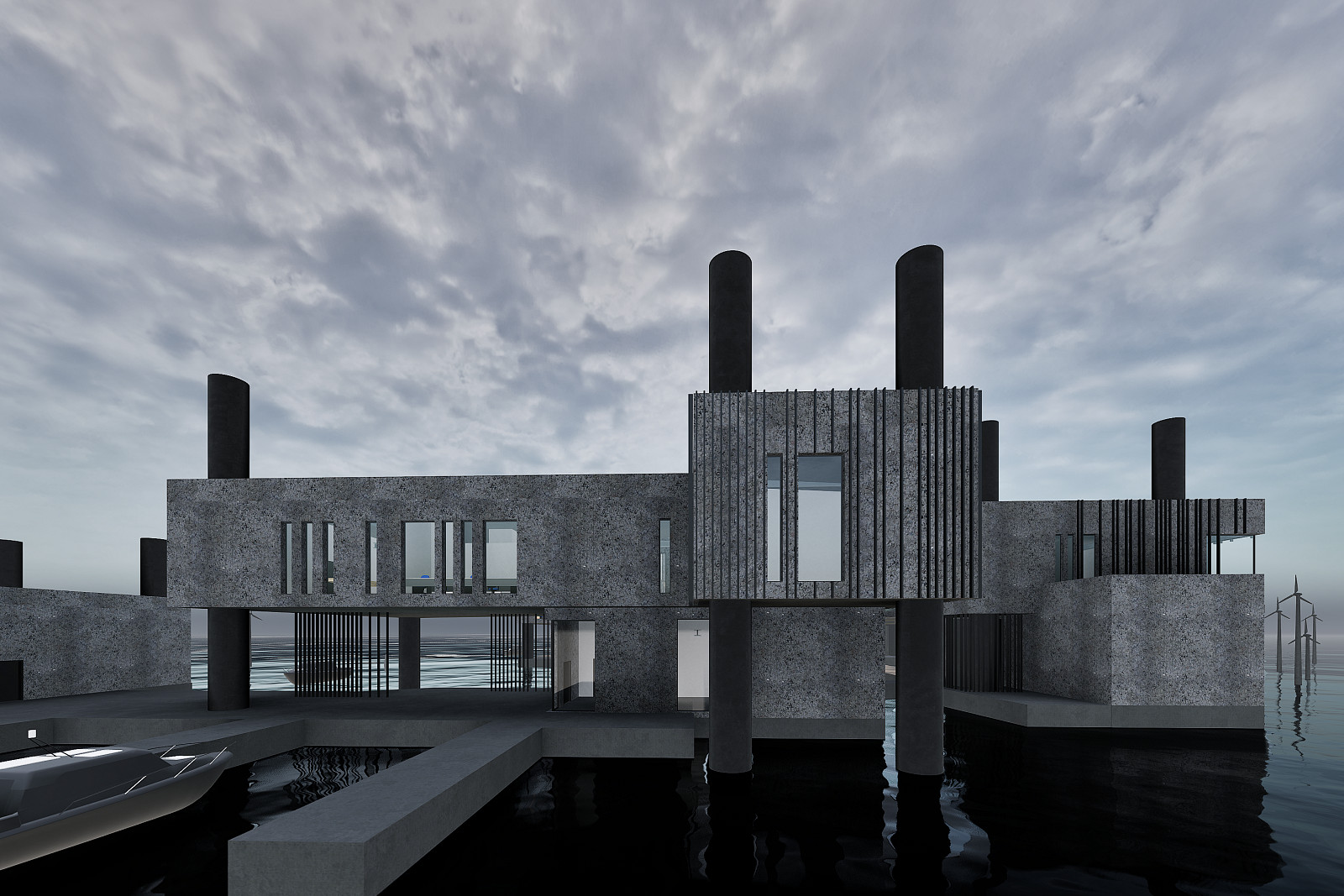
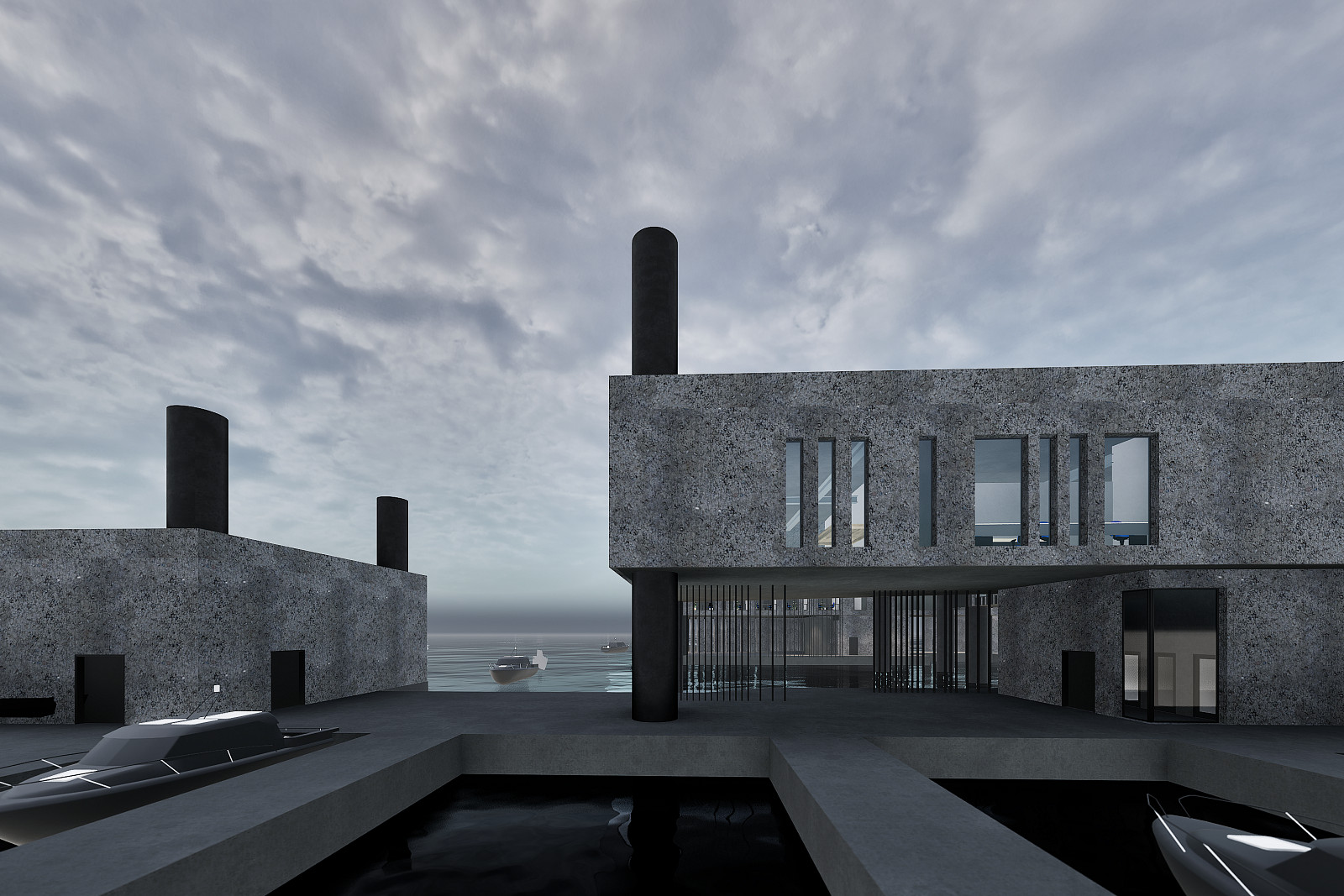
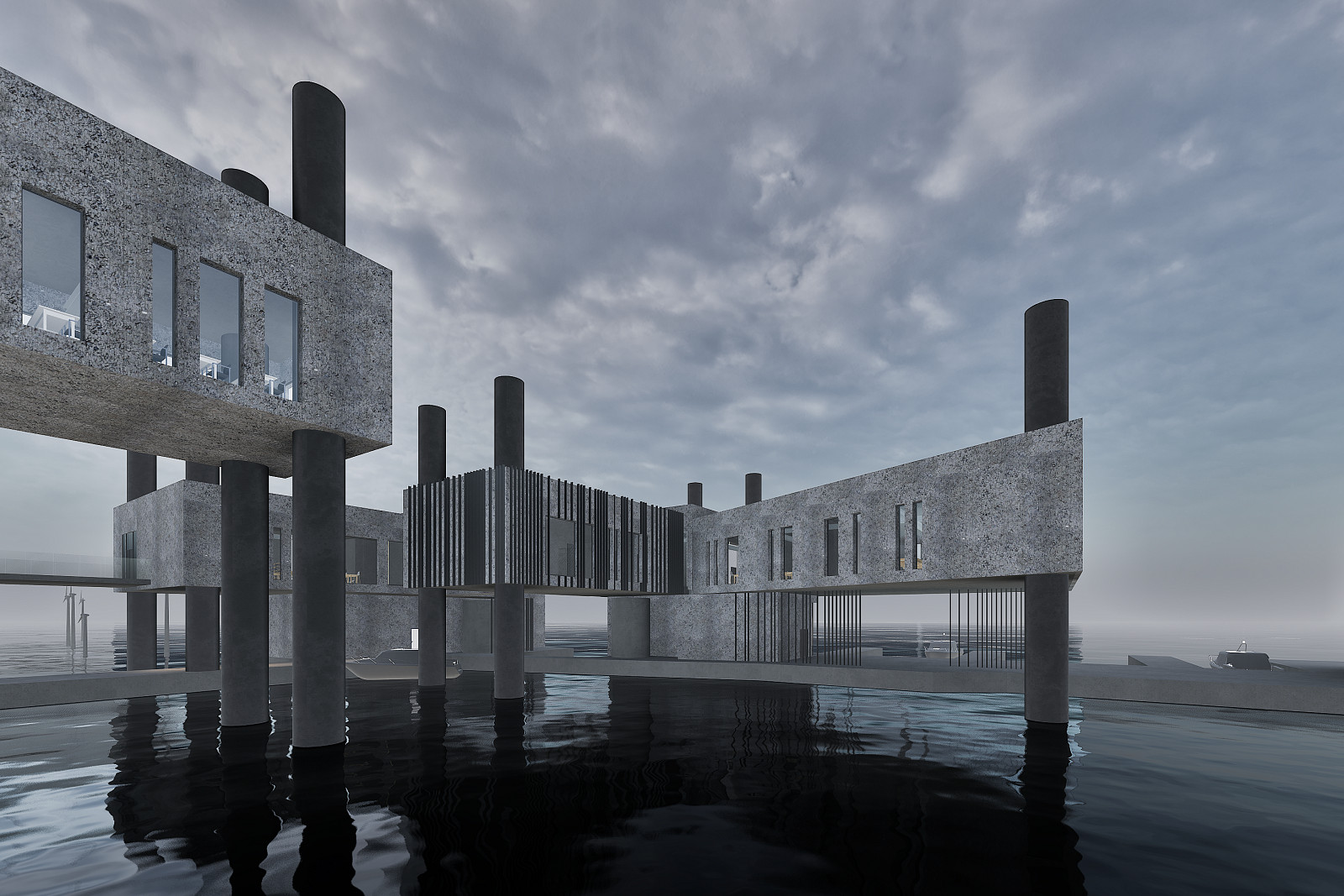
In response to these challenges, an offshore Research and Purification Center has been designed, located at a depth of 12.5 meters. The structure rests on hydraulic piles anchored in the seabed, allowing the entire facility to be elevated by up to 5 meters, protecting it from storm surges and the future effects of rising water levels. Additional stability is provided by a floating foundation that operates on the principle of buoyant force, making the facility semi-mobile and resilient to long-term environmental changes. The walls and slabs are constructed from waterproof and fire-resistant materials, ensuring durability and operational safety.
The multi-level interior is divided into five functional zones: a representative and administrative section, living quarters for the on-duty crew, a temporary storage area, and two specialized laboratories — one for chemical analytics and one for robotics and telemetry. The center employs advanced technologies such as autonomous underwater drones, sonar systems, laser scanners, and AI-based tools capable of recognizing objects and detecting underwater anomalies. Simultaneously, continuous monitoring of water and sediment quality allows for the assessment of contamination levels.
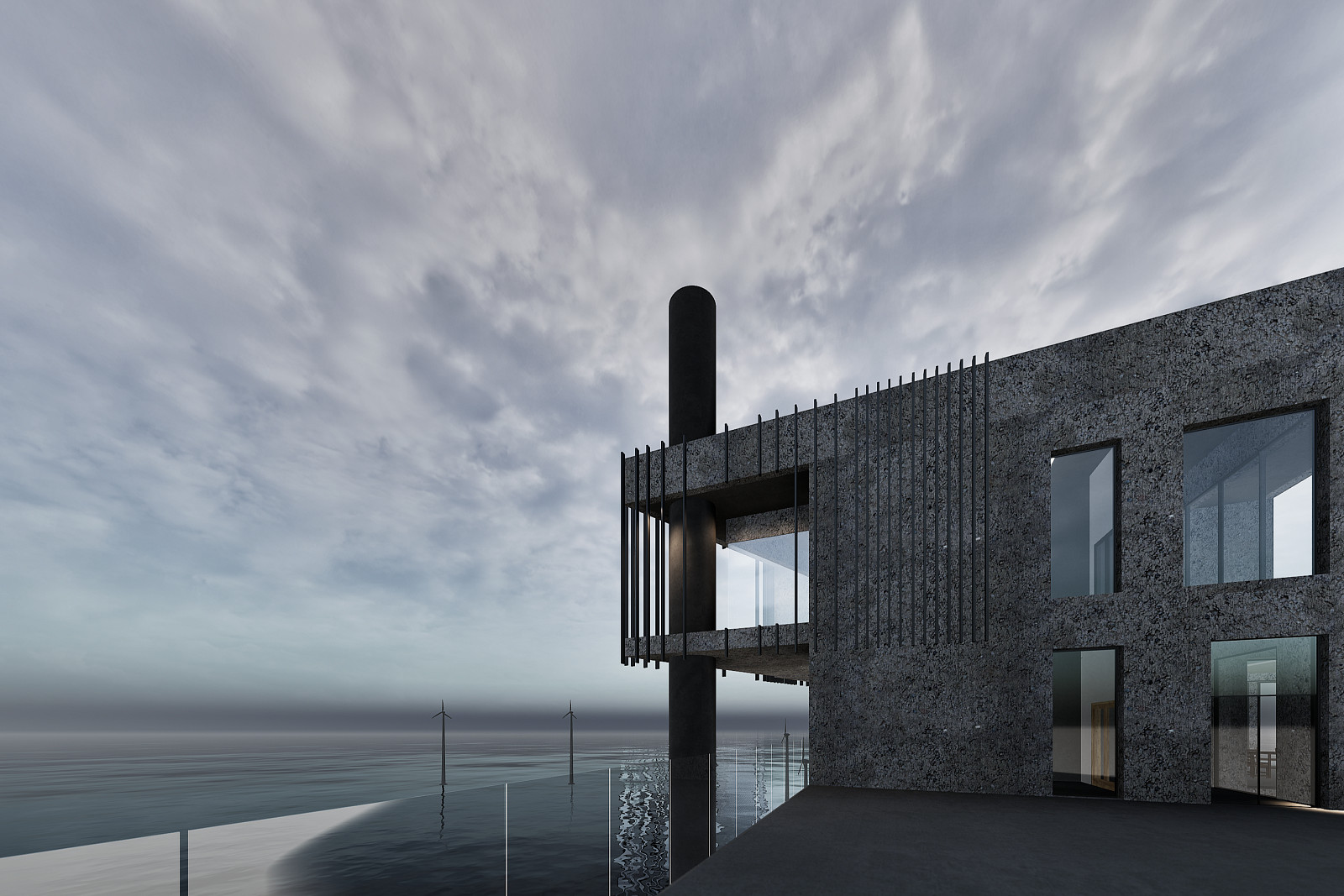
The facility is completely energy self-sufficient, powered by both wave and wind energy. The wave-energy system operates through floating modules that rise and fall with the waves, driving pistons that transfer kinetic energy to a rotor to generate electricity. The architecture of the structure — austere, dynamic, and inspired by the marine landscape — emphasizes its mission: to support science, protect the environment, and adapt to a changing climate.
Technical information
The facility is located 1.2 kilometers off the coast of Sobieszewo Island in Gdańsk, at a depth of 12.5 meters. Its structural system is based on hydraulic piles anchored into the seabed, which allow the entire structure to be elevated by up to five meters. Each pile is equipped with steel hydraulic actuators, 150 cm in diameter, utilizing water pressure to drive pistons within cylinders. An additional floating foundation provides buoyant-force stability, enabling semi-mobile operation. The walls and slabs are constructed from waterproof and fire-resistant materials, designed to withstand extreme marine conditions.
The facility is fully energy self-sufficient, utilizing offshore wind turbines with a capacity of 4–6 kW, as well as systems harnessing energy from waves and tides. The wave-energy system operates via floats that move with the rhythm of the waves, transmitting energy through pistons to a rotor to generate electricity. Wind turbines supplement this production, providing stable energy regardless of sea conditions. Dedicated technical rooms house transformers, power converters, electrical switchboards, and energy storage units. All devices are calibrated to the number of turbines and the current energy demand, ensuring a reliable and efficient power supply for the entire complex.
Documentation
Created in:


Copyright © 2026 INSPIRELI | All rights reserved. Use of this website signifies your agreement to the Terms of Use, Privacy Policy, and use of cookies.
