Colony to Community: Redevelopment of Antulenagar Leprosy Colony, Pune


Project idea
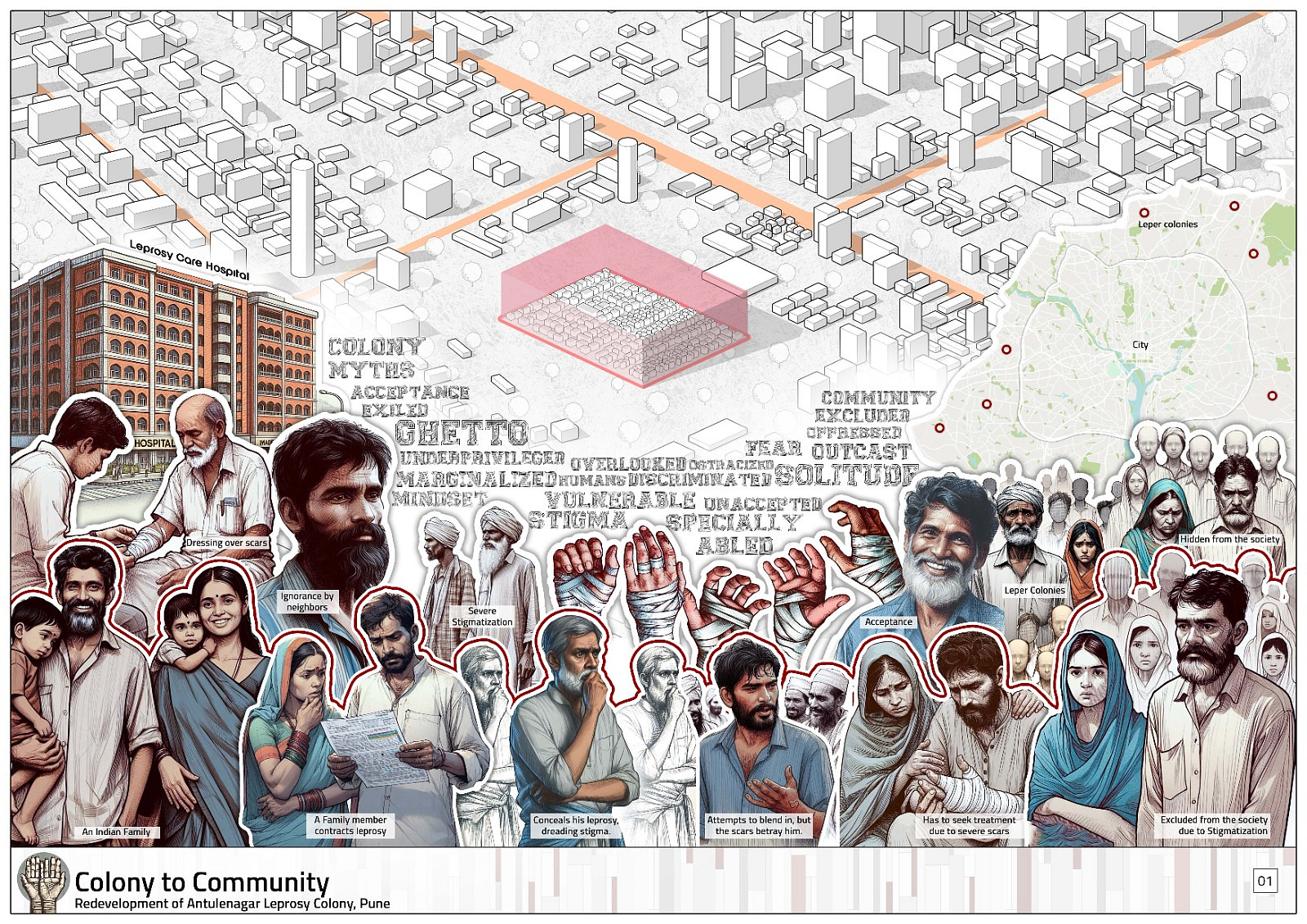
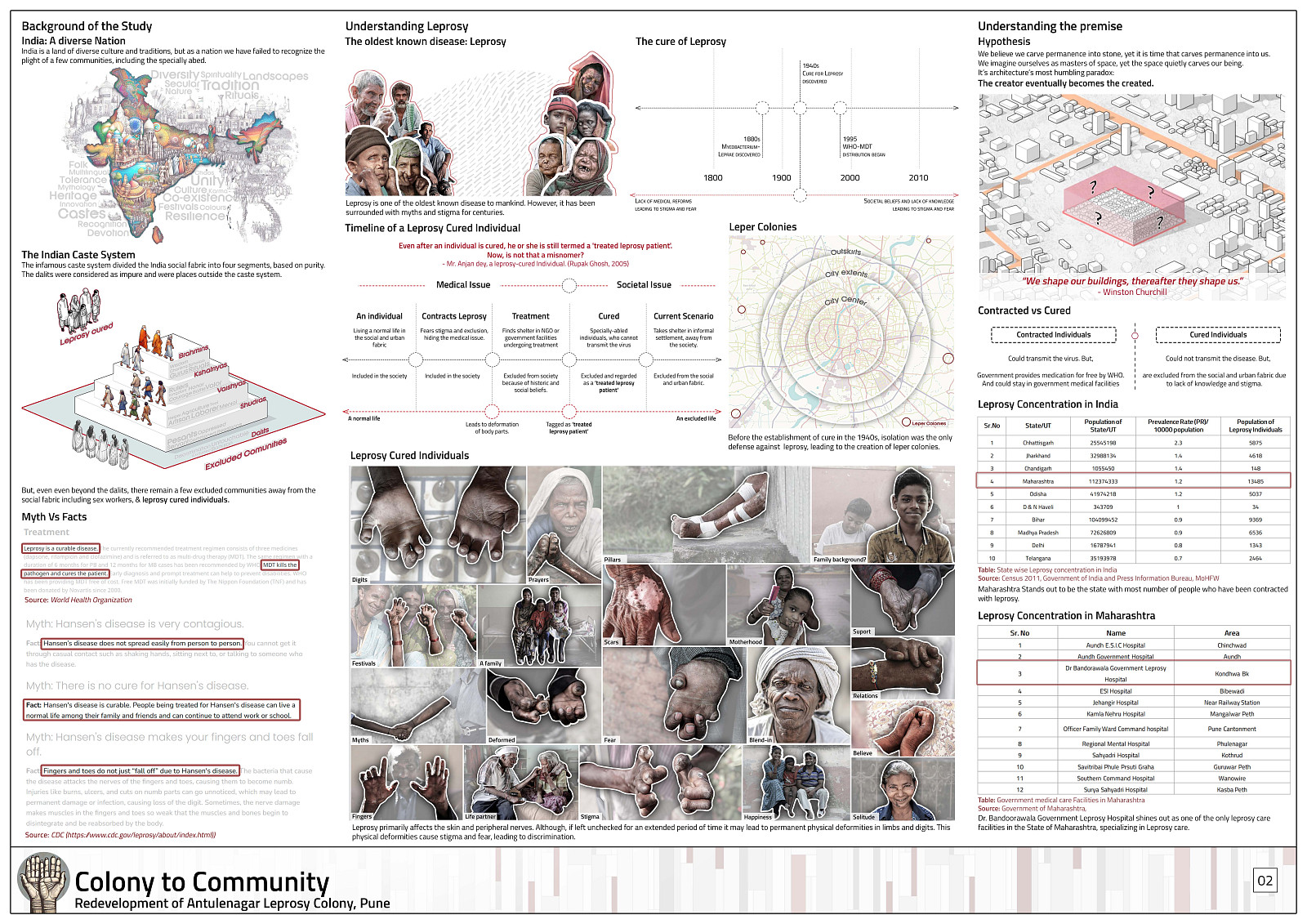
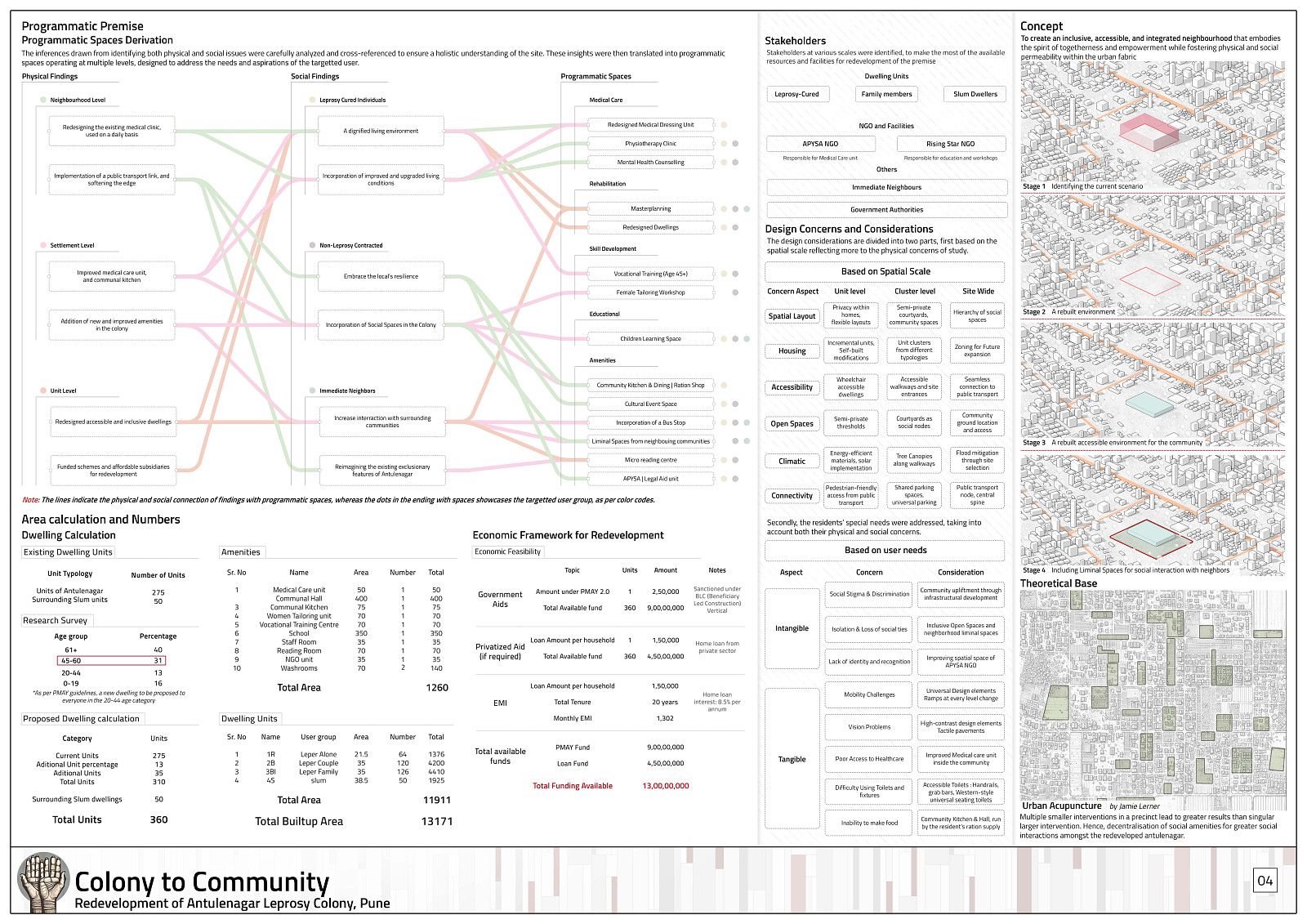
Leprosy is one of the oldest known diseases in the world. Even though the cure has existed for many decades, people who were affected by the disease still face strong social stigma. This has led to the formation of segregated colonies such as Antulenagar in Pune, where cured individuals and their families live isolated from the rest of the city.
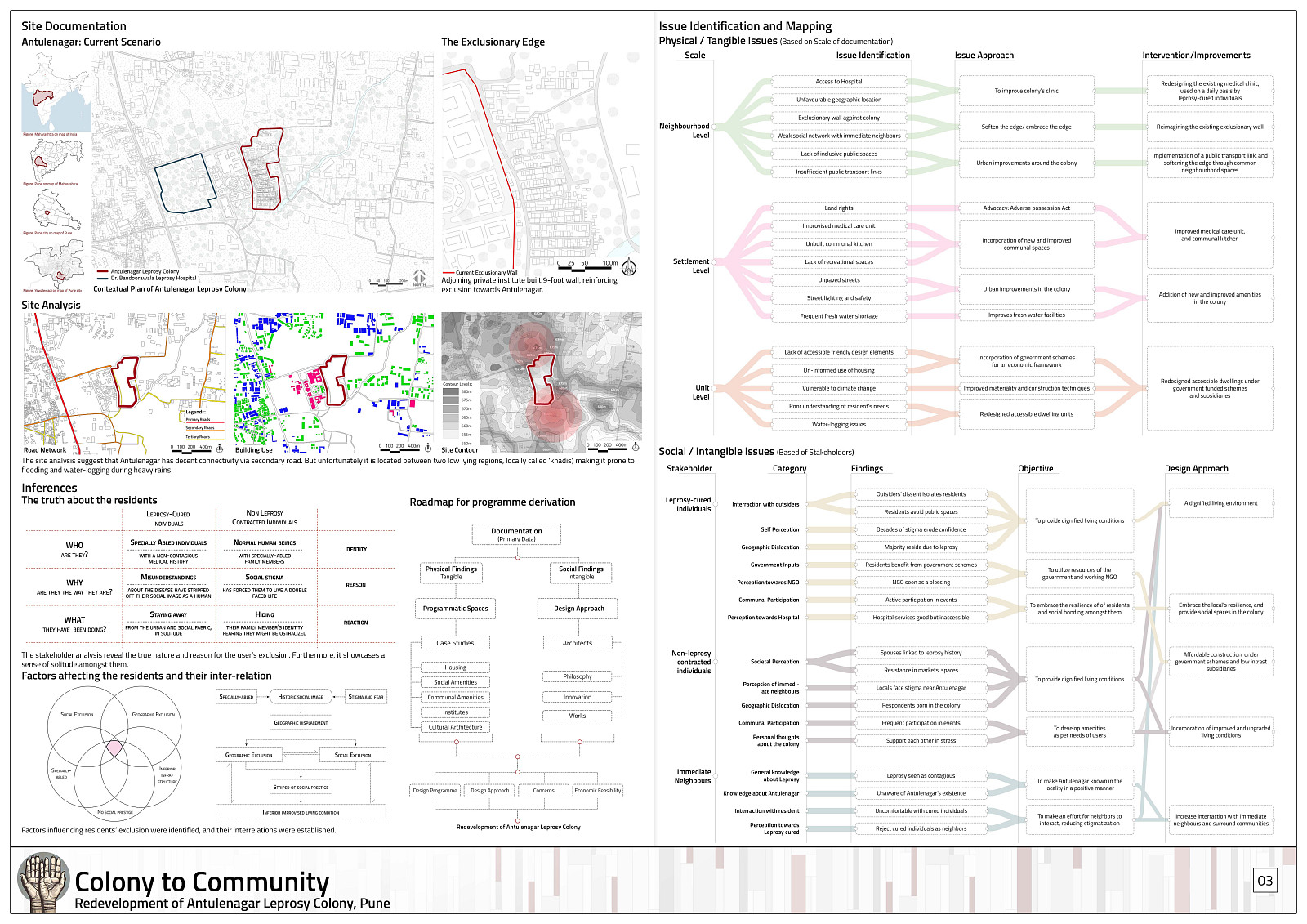
The project aims to address this long-standing exclusion by rethinking Antulenagar as an inclusive neighbourhood. The main idea is to reintegrate the community with the surrounding urban fabric while ensuring dignity, equality, and belonging for its residents.
Project description
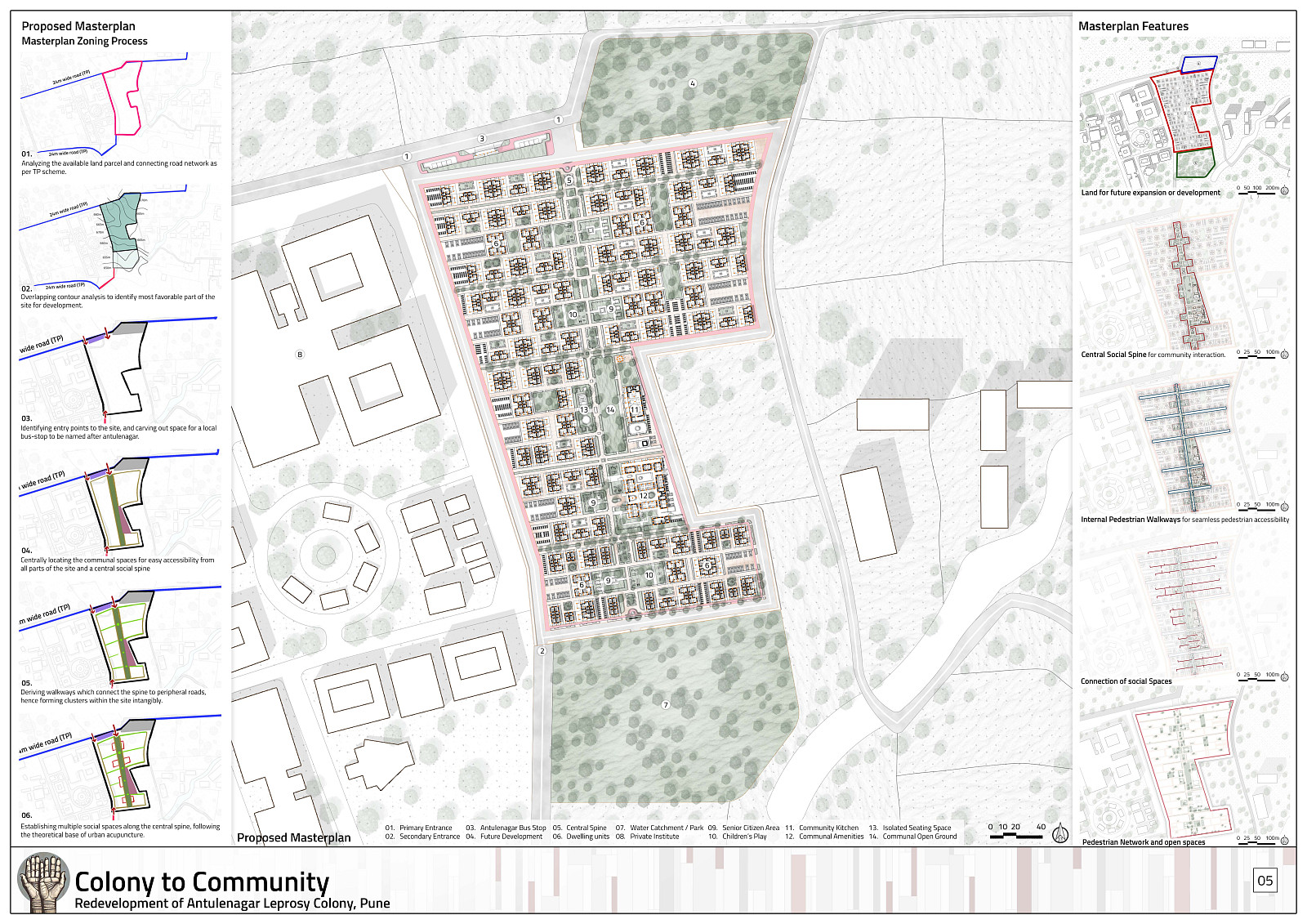
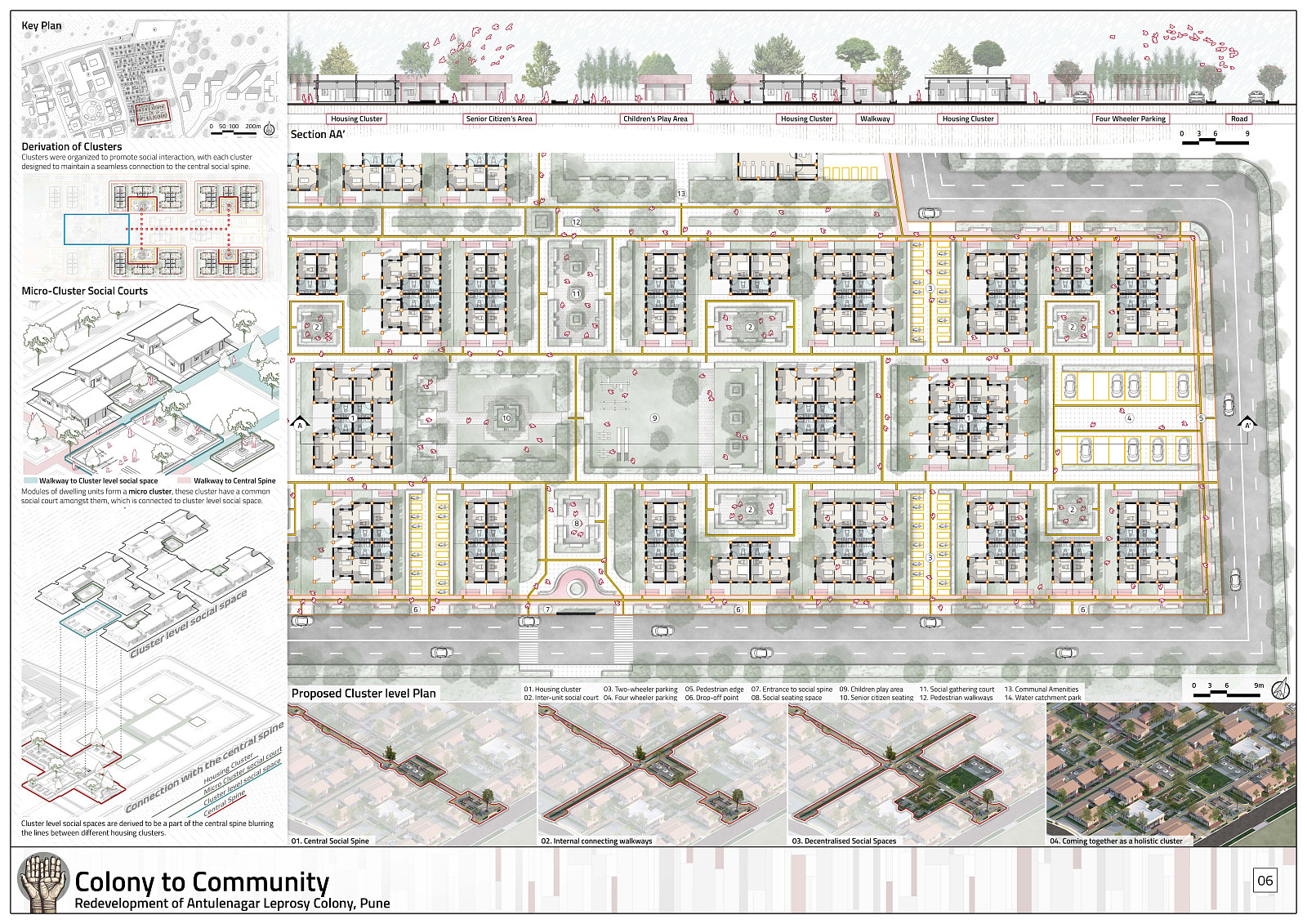
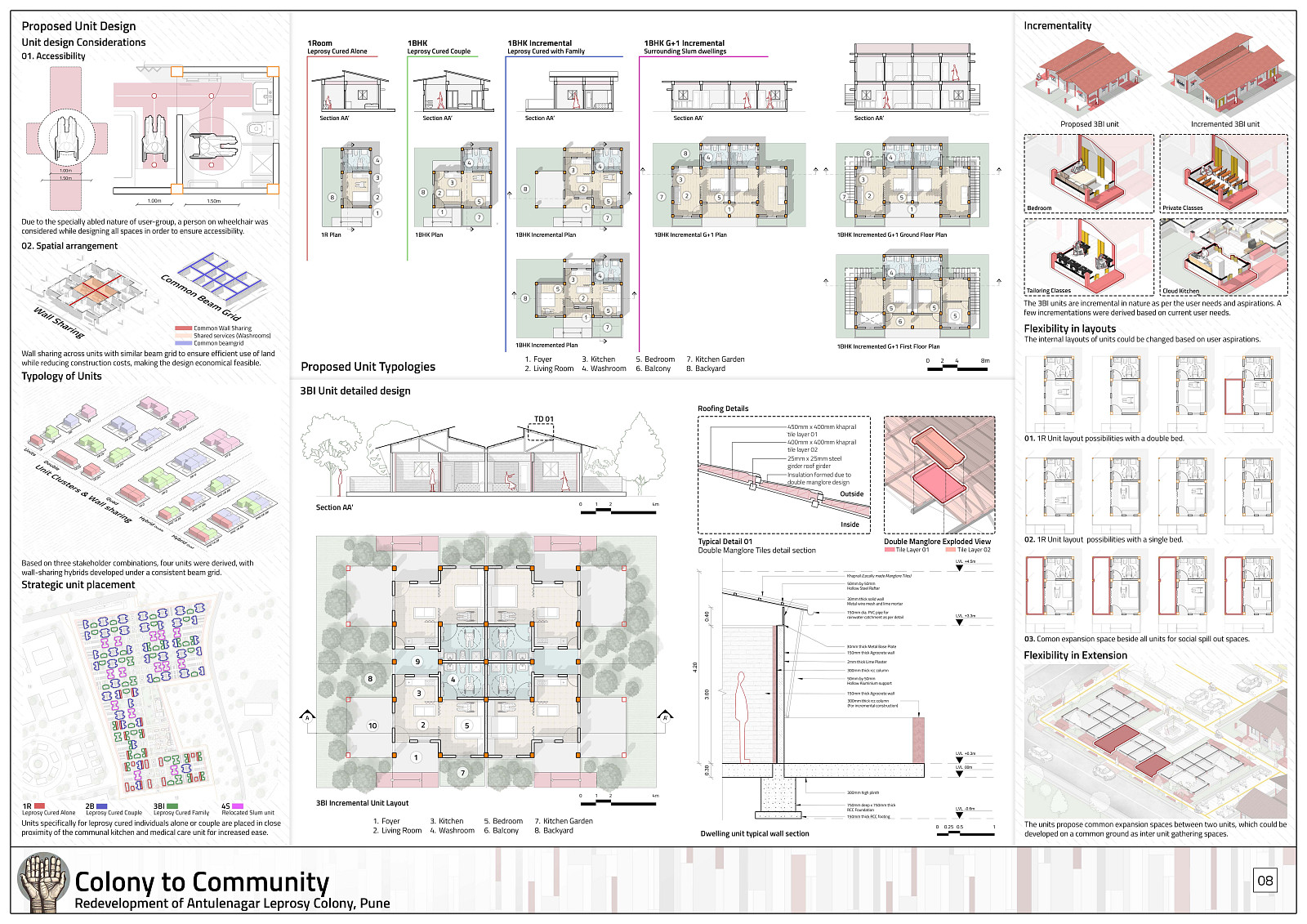
The design proposes the redevelopment of Antulenagar through a master plan that focuses on accessible and adaptable housing for its residents. The design responds to the physical challenges faced by many cured individuals by providing barrier-free environments and spaces that are easy to navigate and modify over time.
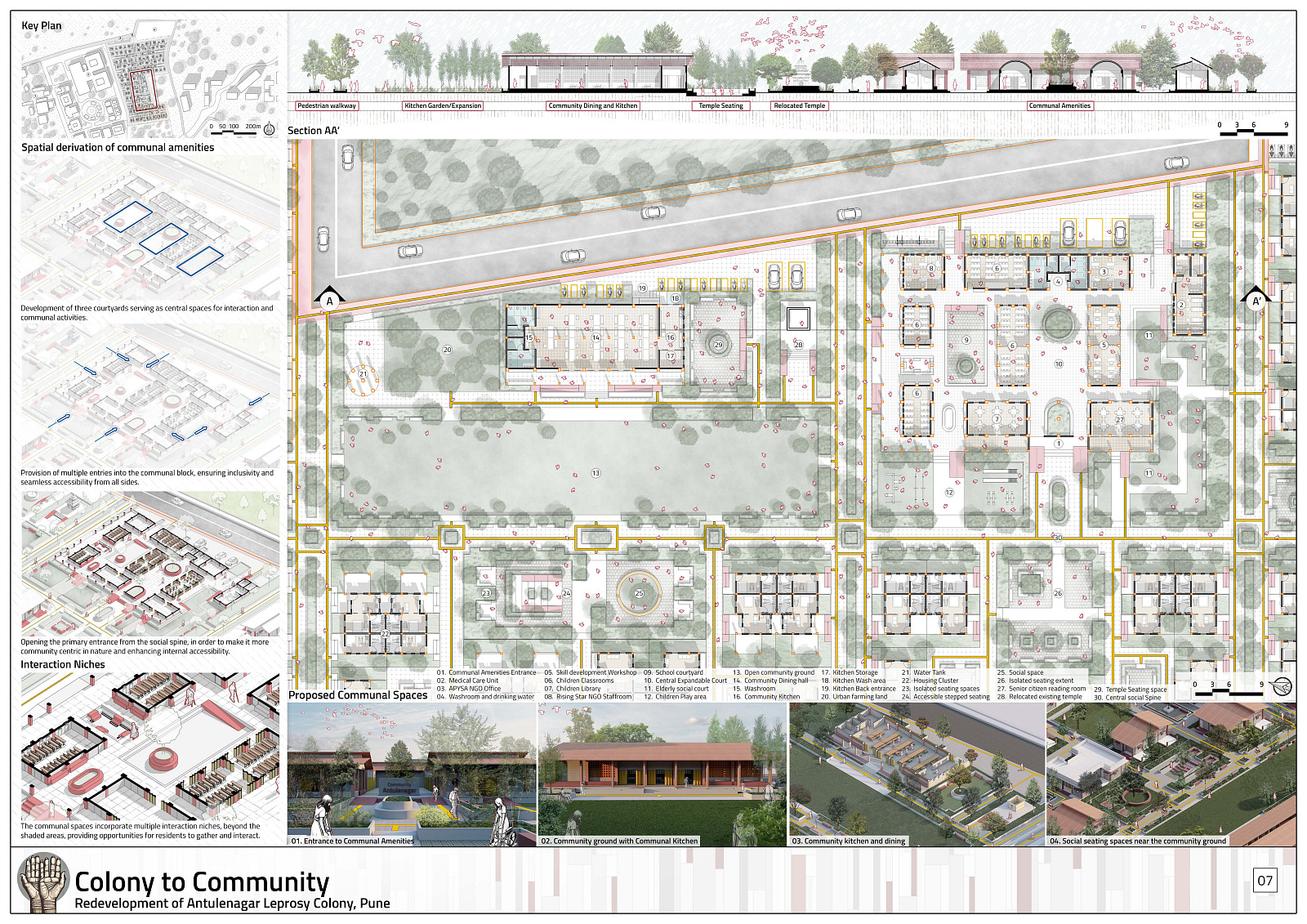
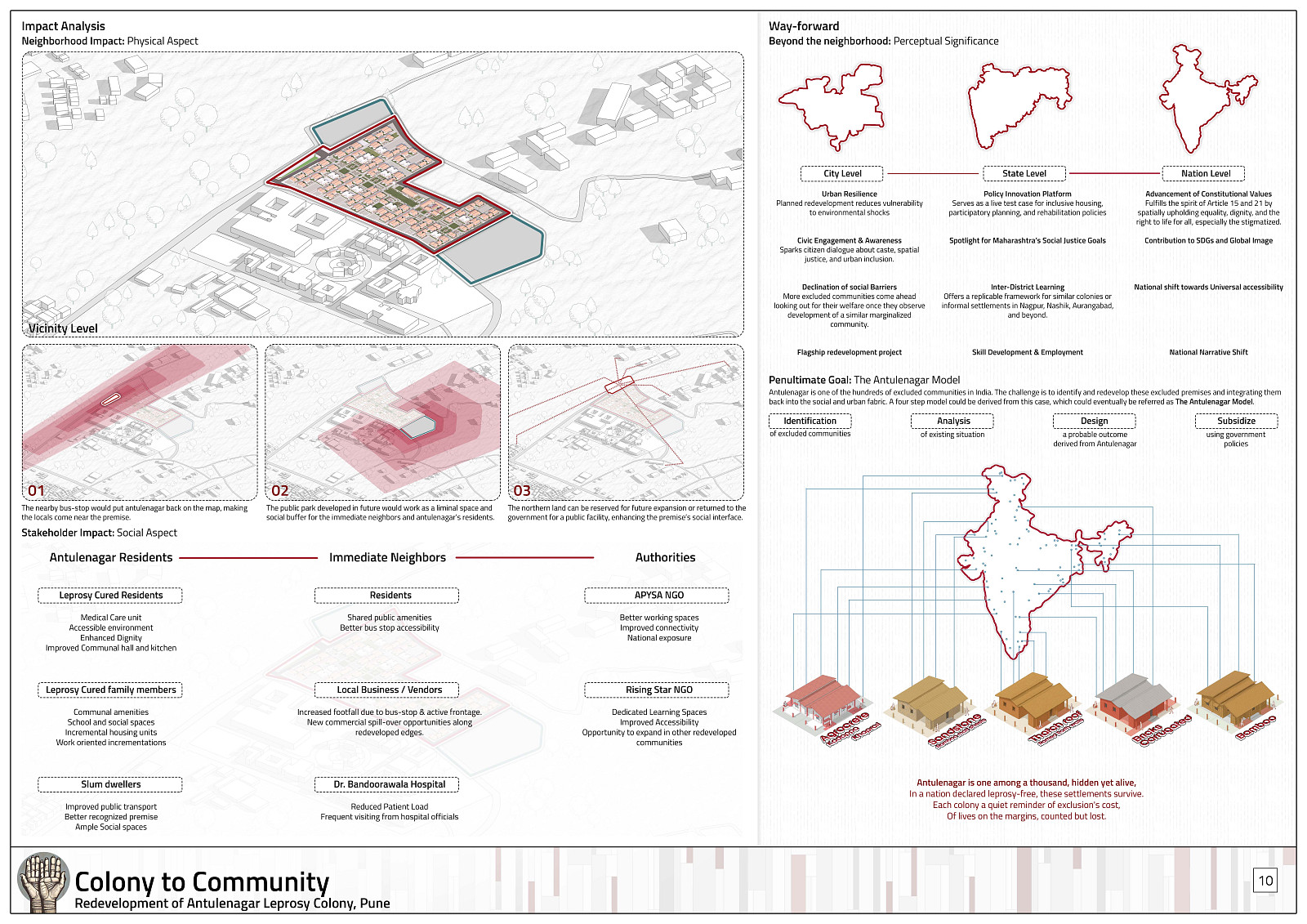
Shared facilities such as a communal kitchen and dining area are introduced to strengthen social interaction and mutual support within the community. The edges of the site are left out for future development acting as transitional social spaces that act as buffers between Antulenagar and the surrounding neighbourhood. These spaces encourage interaction with nearby communities and gradually help dissolve the stigma associated with the colony.
The proposal is conceived as the beginning of a larger vision. Antulenagar is treated as a pilot project to develop a replicable redevelopment model for similar colonies across India. Many such settlements remain hidden in plain sight within cities, where cured individuals and other excluded communities continue to live in isolation. By demonstrating how inclusive planning, accessible housing, and community-oriented spaces can be integrated into a neighbourhood, the project aims to establish a framework that can guide the transformation of other marginalised colonies into dignified and socially integrated urban environments.
Technical information
The proposed housing follows an RCC frame structural system designed for durability, economy, and future expansion. Reinforced concrete columns and foundations form the primary load-bearing structure, organised through a common beam grid that allows wall sharing between adjacent units. This approach improves structural efficiency and reduces construction costs.
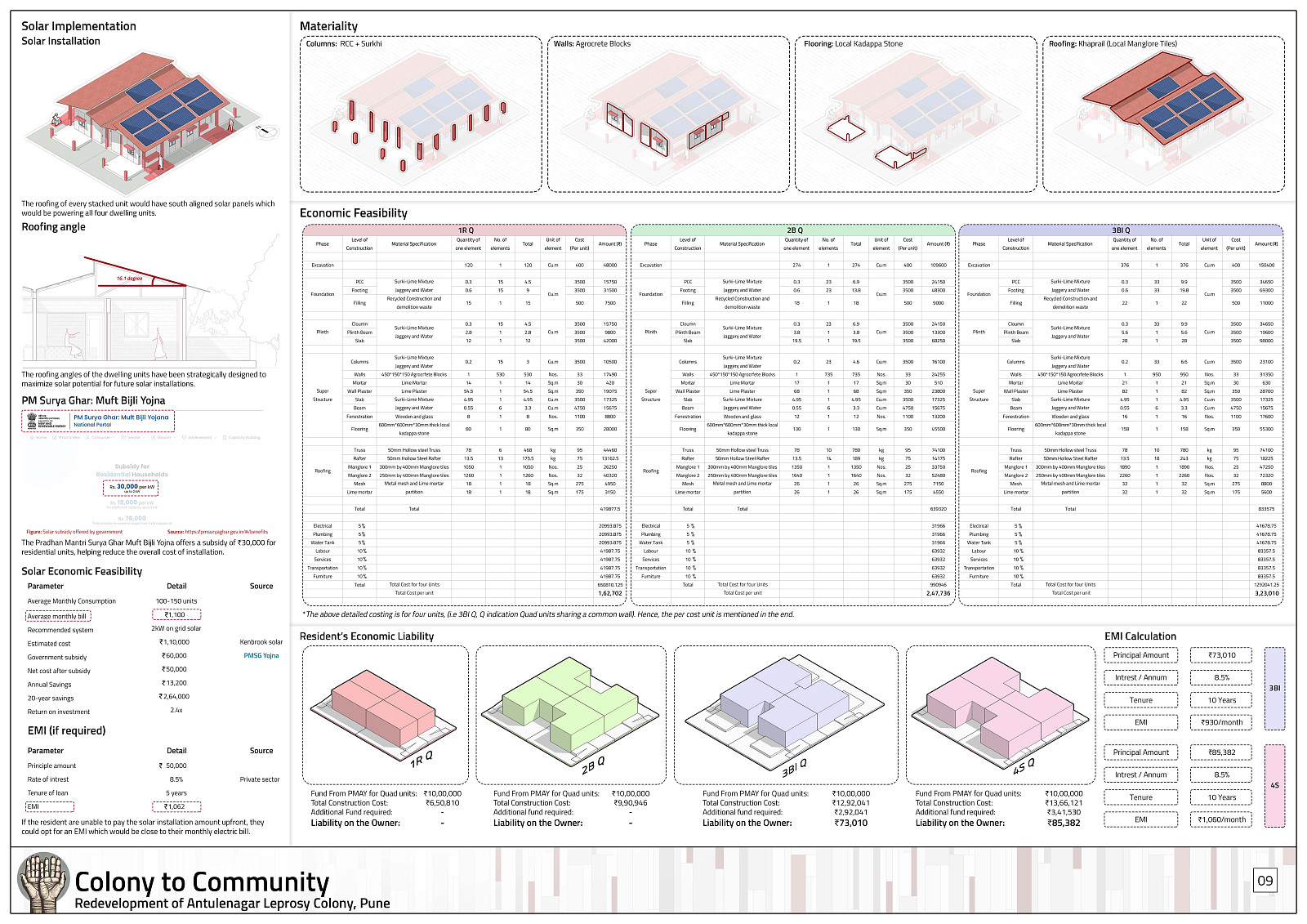
Walls are constructed using agrocrete block masonry finished with surkhi-lime plaster, creating a lightweight and breathable envelope suited to the local climate. The addition of Surkhi gives the design its symbolic red appearance. Service spaces such as washrooms are aligned along shared walls to simplify plumbing and construction.
The roof consists of a sloping system supported by a lightweight steel rafter framework integrated with a steel girder grid. Locally made Mangalore (khaprail) tiles are arranged in a double-layer assembly, creating an insulating air gap that improves thermal performance. A metal mesh and lime mortar layer beneath the tiles provides structural support and weather protection.
The housing follows a modular planning strategy that allows flexible layouts and incremental expansion. Units can adapt to changing user needs and accommodate small home-based activities, while shared expansion spaces between units support social interaction and community use.


Copyright © 2026 INSPIRELI | All rights reserved. Use of this website signifies your agreement to the Terms of Use, Privacy Policy, and use of cookies.