Collective Housing Framework


 Zahid Usman
Project idea
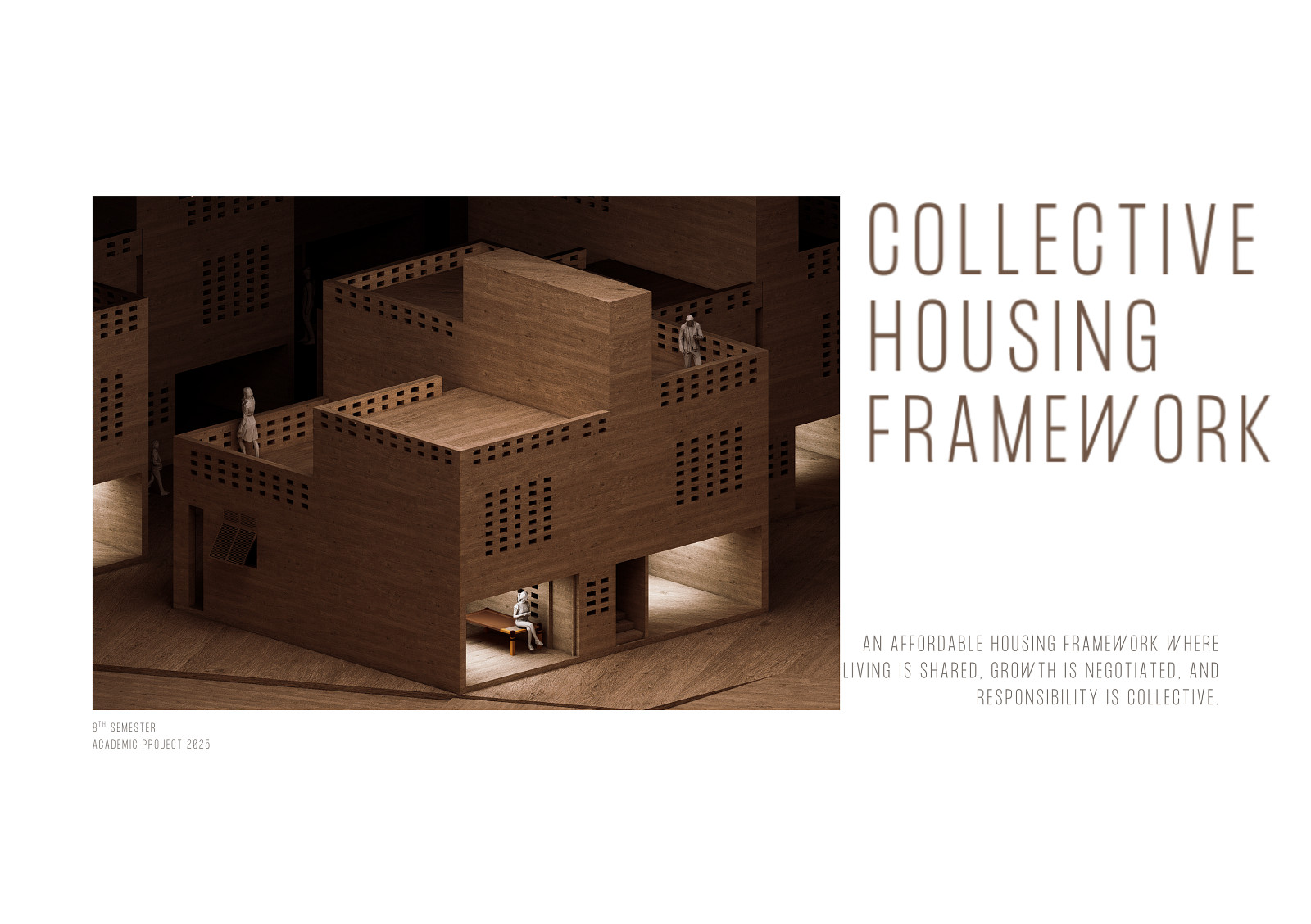
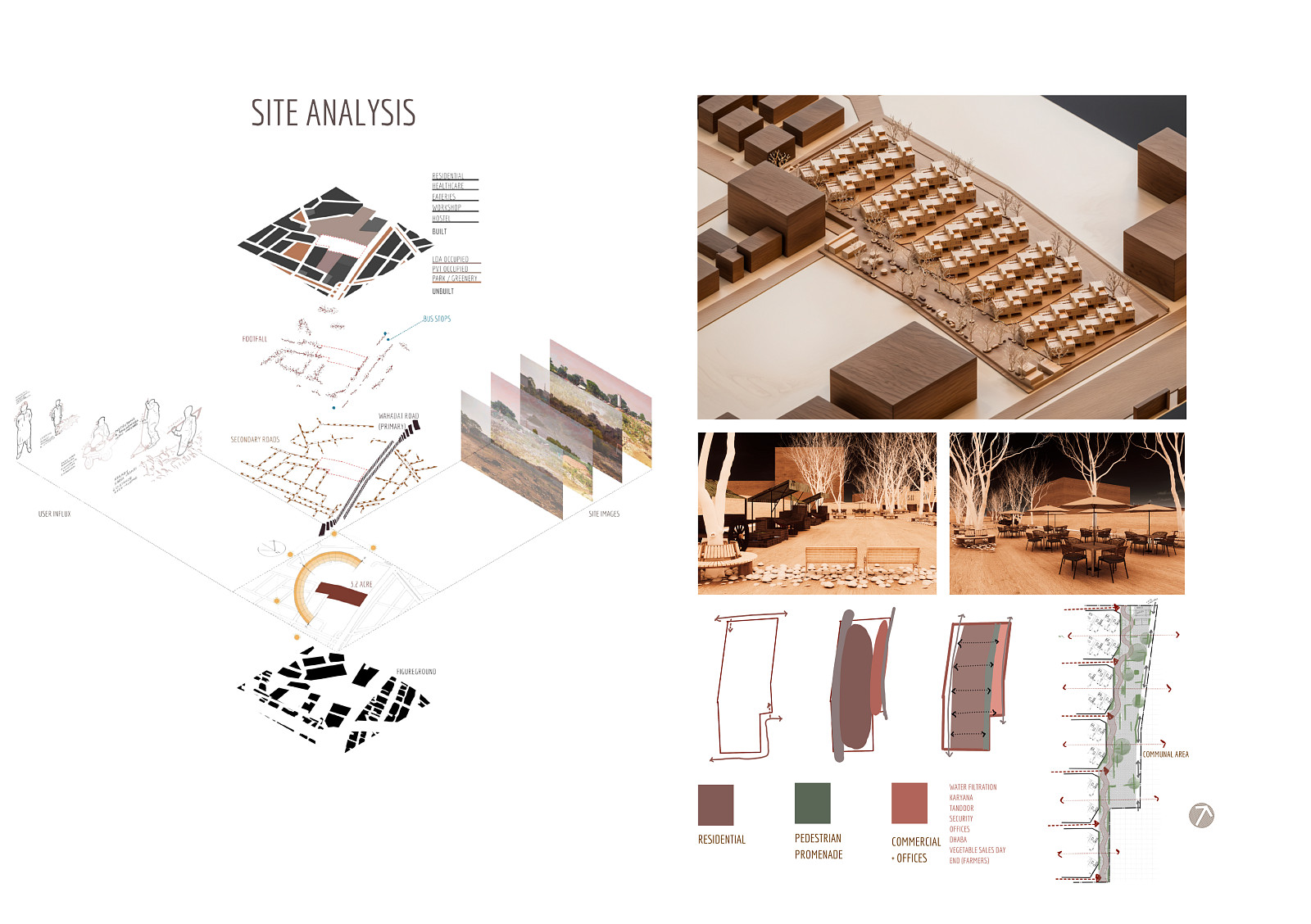
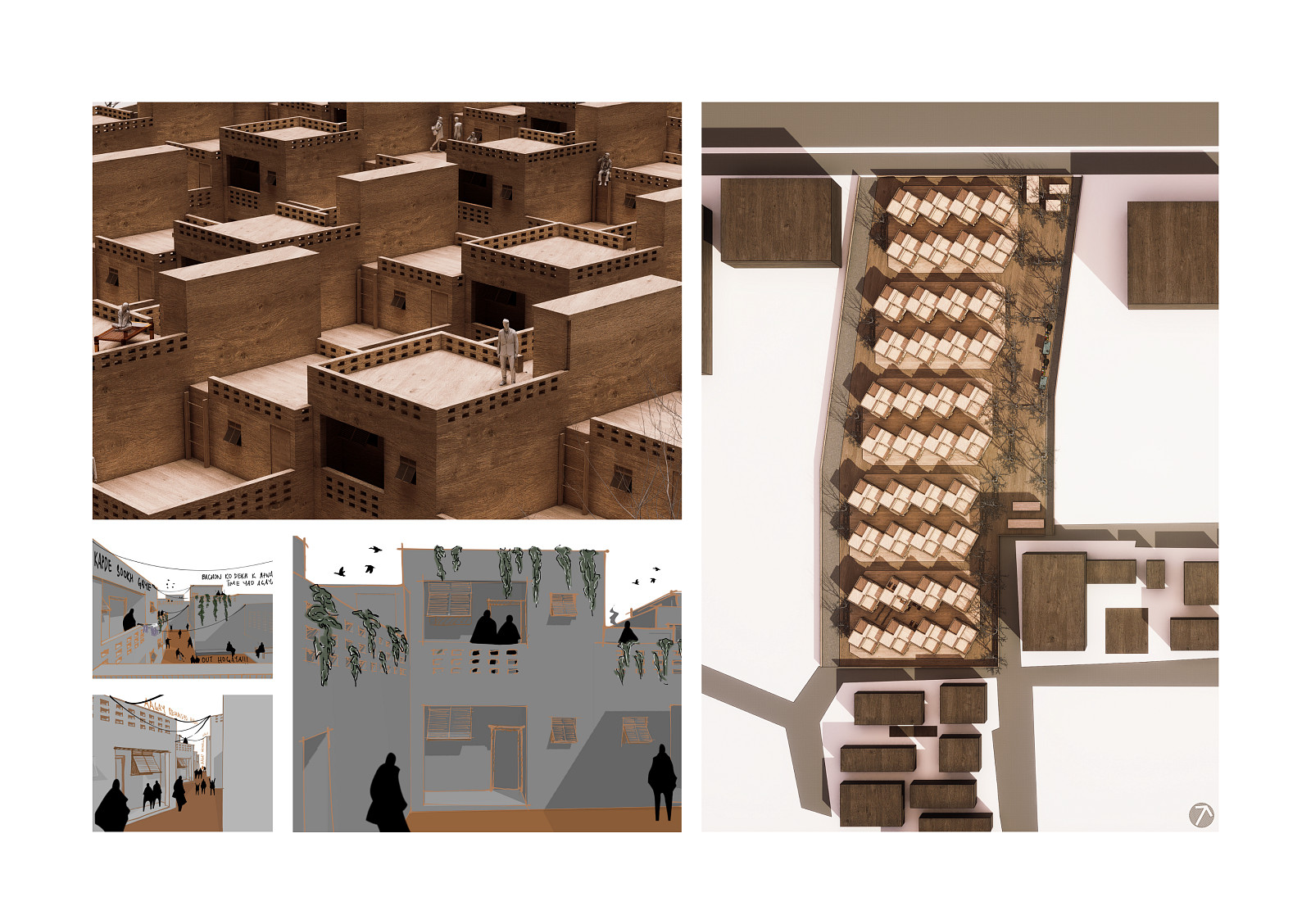
In rapidly urbanizing environments (in this case Lahore, Pakistan), "affordable" often becomes synonymous with "static" and "isolated." Inspired by the organic growth patterns of the Aranya Housing project by B.V. Doshi, this framework seeks to redefine affordability as a dynamic process rather than a finished product. The core problem we address is the lack of agency in low-income housing. Our inspiration lies in the "negotiated growth" of a neighborhood—where a house isn't just a shelter, but a seed that can grow with the family's needs. We aim to provide a dignified, collective framework where living is shared, expansion is planned, and the community is the primary architect of its own future.
Project description
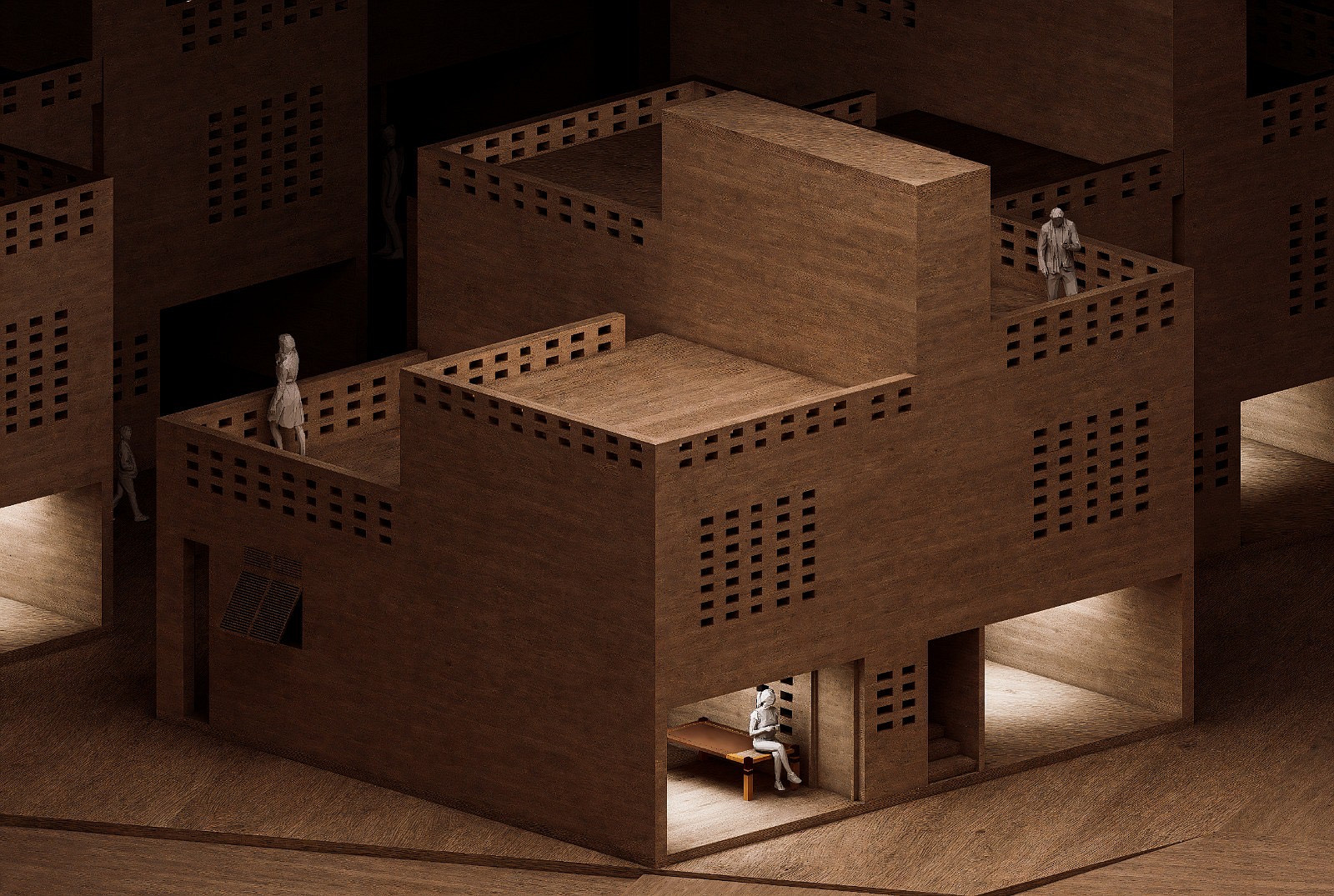
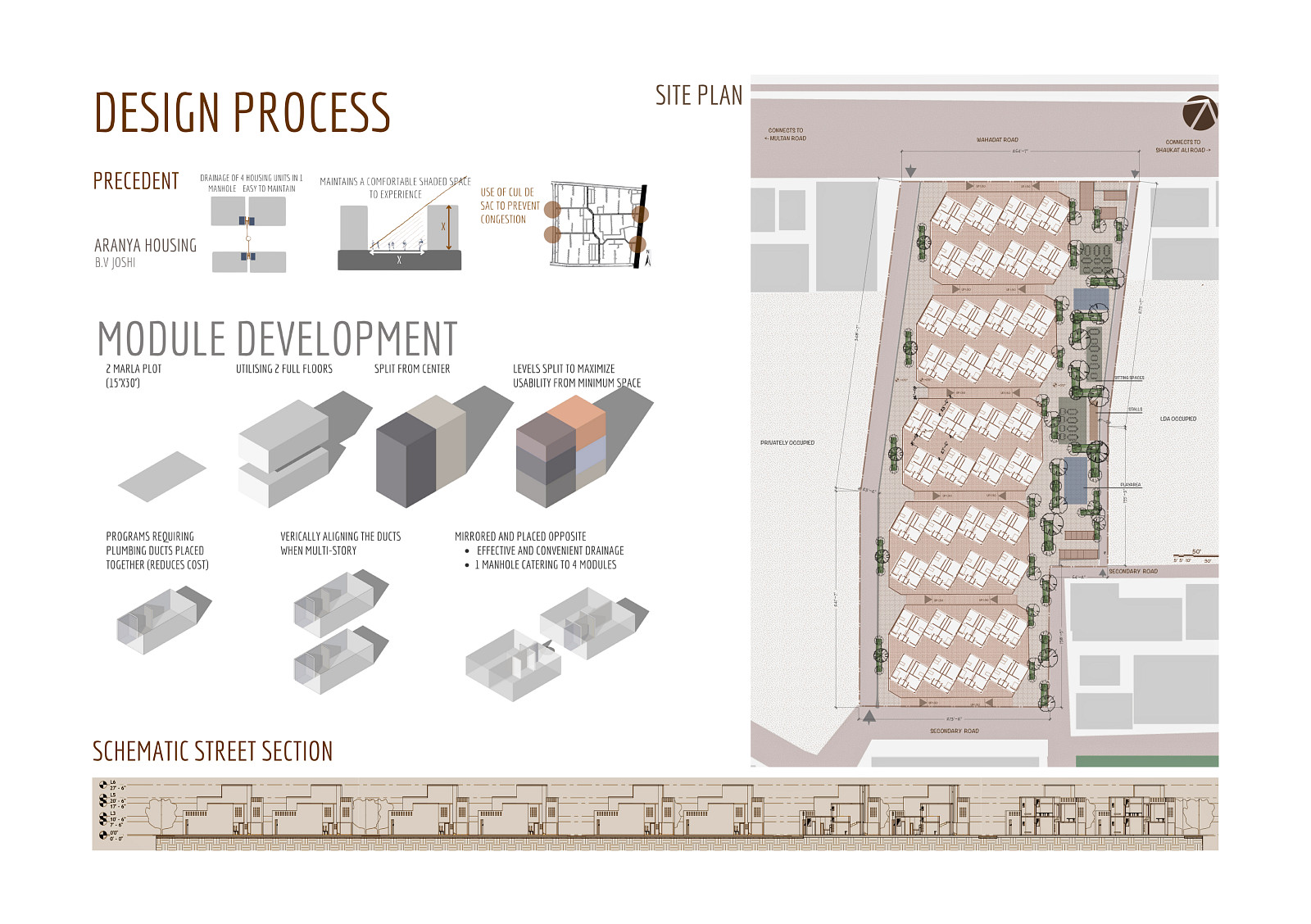
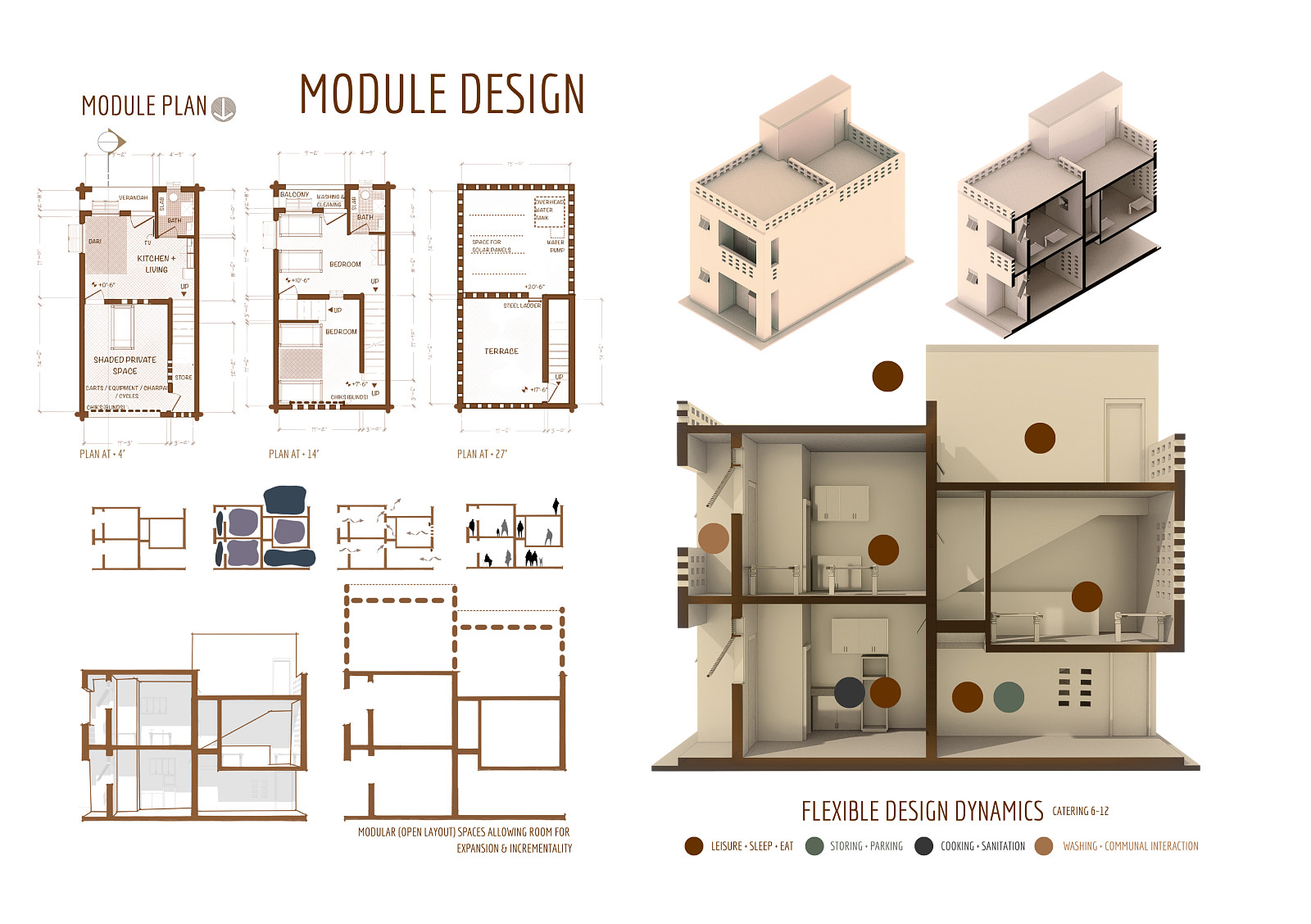
This project is a modular housing system designed for a 15' x 30' (2 Marla) plot, specifically tailored to cater to 6–12 occupants. The design utilizes a split-level strategy to maximize vertical space and natural light within a minimal footprint. Key components include:
- The Incremental Module: A core structure that allows for "Open Layout" expansion, giving residents the freedom to add rooms or terraces as their financial stability increases.
- Shared Dynamics: By mirroring modules and sharing plumbing ducts and drainage (one manhole for four modules), we significantly reduce infrastructure costs.
- Collective Plinth: The ground level is designed for "Shaded Private Spaces" that double as commercial nodes or communal workshops, fostering a local economy within the neighborhood fabric.
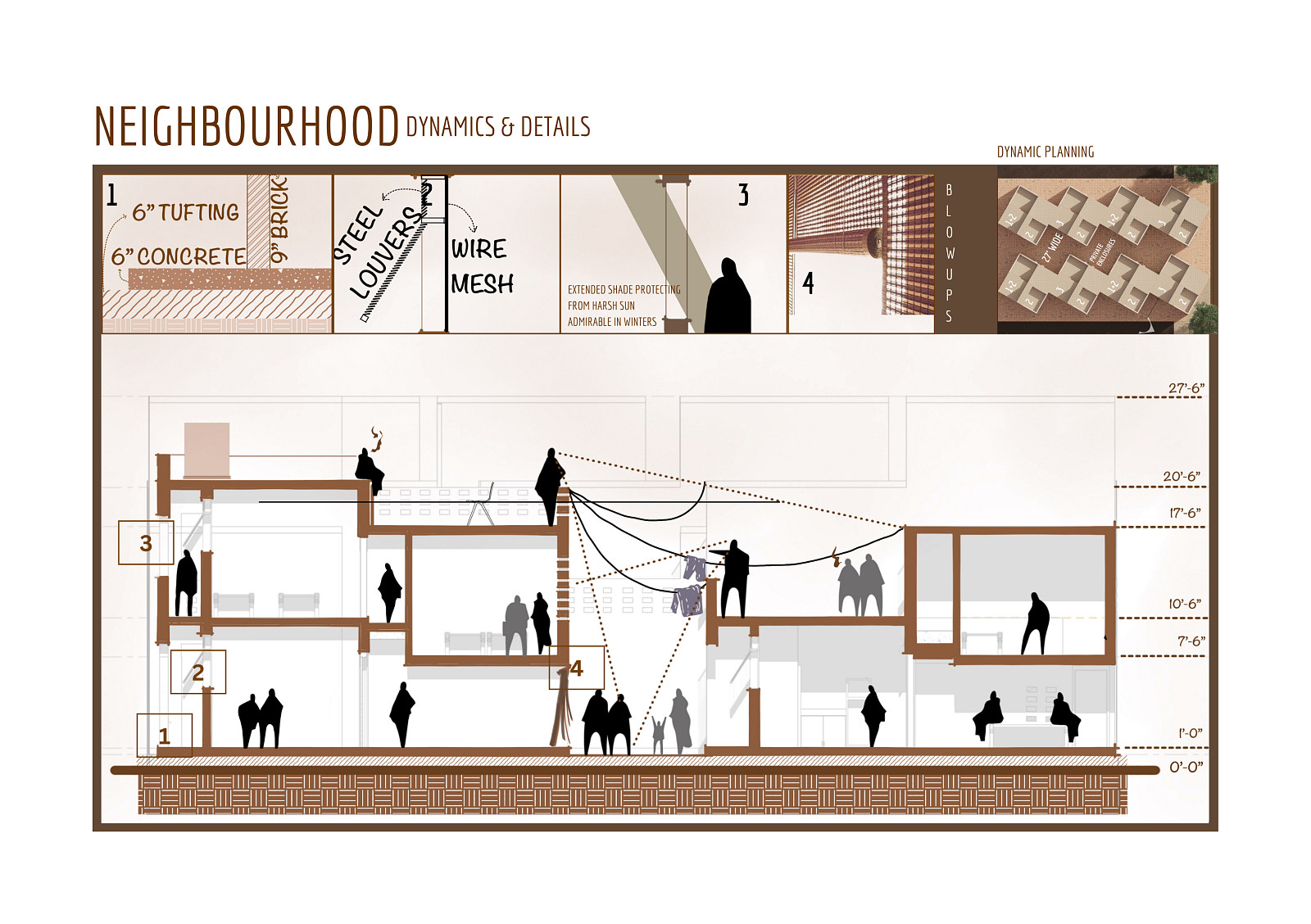
- Climatic Adaptation: Deep-set windows, steel louvers, and shaded terraces ensure comfort in harsh sun without relying on expensive mechanical cooling.
Technical information
The structural framework is built for longevity and incremental growth, utilizing a reinforced concrete frame with 9-inch load-bearing brick masonry. To minimize the carbon footprint and operational costs, the design prioritizes passive climate control through high-thermal-mass roofing—comprising 6-inch concrete topped with 6-inch tufting—and a strategic "split-level" section that promotes natural stack ventilation. The building skin integrates steel louvers and wire mesh, allowing for continuous airflow and filtered daylight while shielding the interior from direct solar gain. Deep-set windows and extended shading eaves are calculated to block the harsh summer sun while inviting low-angle winter warmth. Efficiency is further achieved by vertically aligning all wet areas to reduce piping infrastructure, and the roof is structurally prepped for solar harvesting and gravity-fed water systems, ensuring the module remains resource-independent and thermally comfortable without mechanical reliance.

Copyright © 2026 INSPIRELI | All rights reserved. Use of this website signifies your agreement to the Terms of Use, Privacy Policy, and use of cookies.
