Posttraumatic urbanism. Convalescence of place: Case of Srebrenica.


Project idea
The project explores the concept of "post-traumatic urbanism" in Srebrenica, a city that functions as a "social rubble" due to the 1995 genocide. The trauma here is not just history; it is a spatial stigma that blocks the city's development. The goal is not to reconstruct the lost urban form or build monumental memorials, but to design spaces of "reconvalescence". By reversing the vector of the tragic "Death March" into a "Path of Healing", the project introduces a system of urban acupuncture. These subtle interventions aim to provide a safe, neutral background for the slow regeneration of broken social ties and individual healing, allowing memory and everyday life to peacefully coexist.
Project description
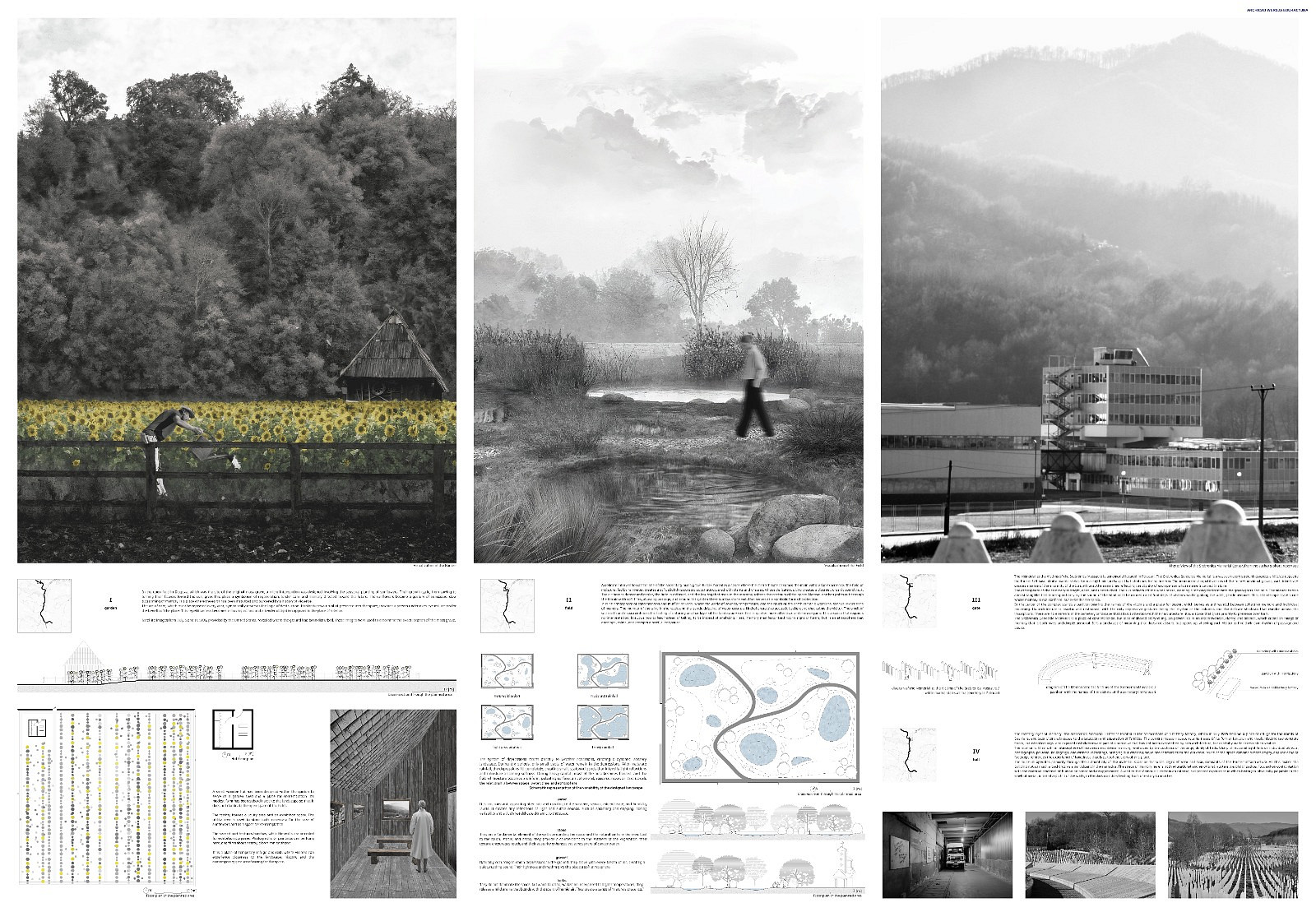
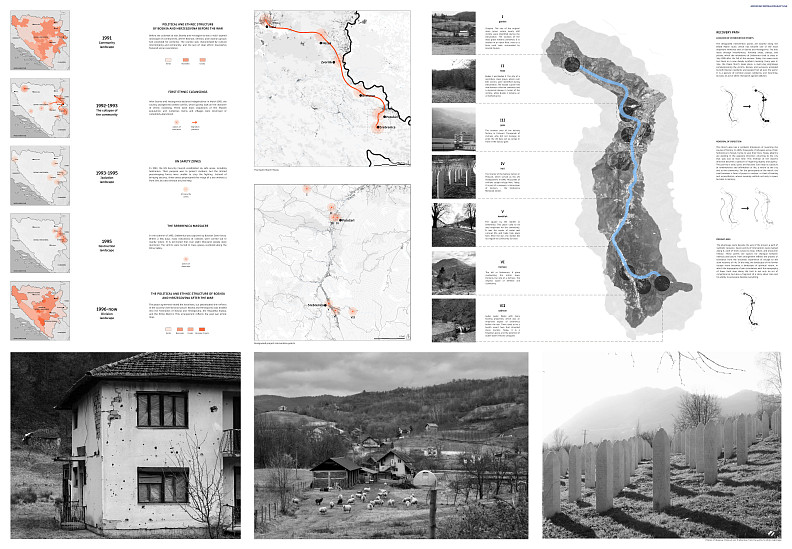
The scope encompasses the "Path of Healing" masterplan, consisting of 7 intervention zones (urban acupuncture) along the historical route: 1) Glogova (primary mass grave) – an ephemeral memorial via a seasonal sunflower field; 2) Budak (secondary grave) – a microclimate field with water mirrors, responsive to weather conditions; 3 & 4) Potočari Factory and Cemetery – integrating existing memorial sites into a new narrative, transitioning from martyrology to life; 5) Srebrenica Square – the "Komsiluk" pavilion and social garden rebuilding neighborhood bonds; 6) Horizon – a reconciliation pavilion for three religions with an adjacent orchard; 7) Sadrvan – subterranean baths and a pump room integrated with the Guber healing springs for physical cleansing.
Technical information
The technical specification is based on a low environmental impact strategy and collaboration with natural forces. It includes: microclimate shaping and natural water retention (Budak), the use of lightweight, adaptable timber frame structures (Komsiluk pavilion), precise manipulation of natural daylight within the religious niches (Horizon), and subterranean structures made of concrete and local stone, powered by natural geothermal waters (Sadrvan baths). The key "technical" parameter of the entire masterplan is processuality—utilizing vegetative cycles (sunflowers, fruit trees) and participatory spatial maintenance by the residents as an integral tool for social healing.
Documentation
Created in:


Copyright © 2026 INSPIRELI | All rights reserved. Use of this website signifies your agreement to the Terms of Use, Privacy Policy, and use of cookies.