URBAN INFILL- River side Cultural & Culinary Hub


Project idea
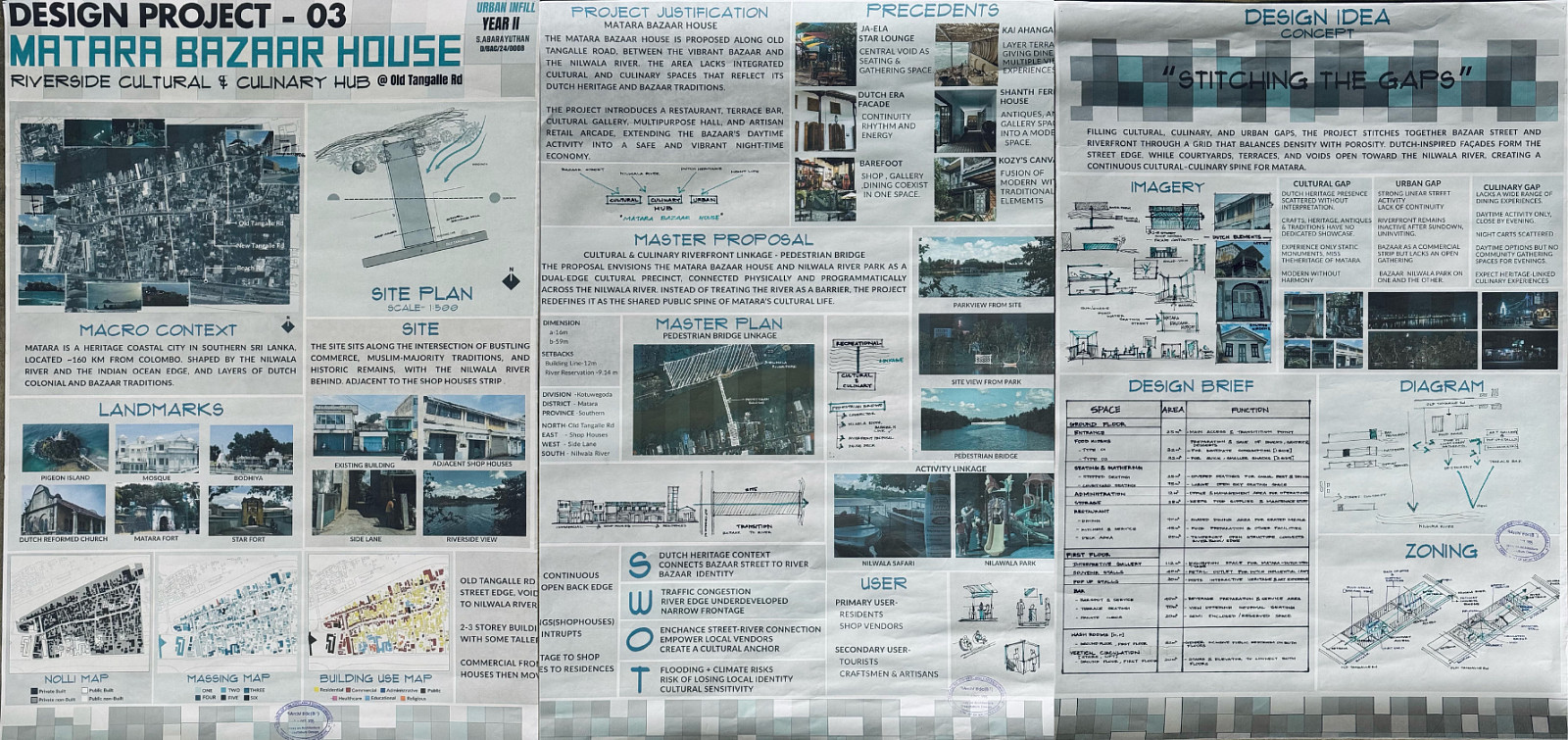
“Matara Bazaar House” is designed as a cultural and culinary hub in the heart of the Old Tangalle Road bazaar street. The site lies at the intersection of bustling commerce, Muslim-majority traditions, and historic remains, with the Nilwala River behind. This project will enhance
Matara’s identity as a heritage city while filling the gap in restaurant/bar facilities for residents and visitors. The building will serve as a bridge between heritage and modernity, Commercial to residential blending the character of shophouses and bazaar vibrancy with new cultural
infrastructure.
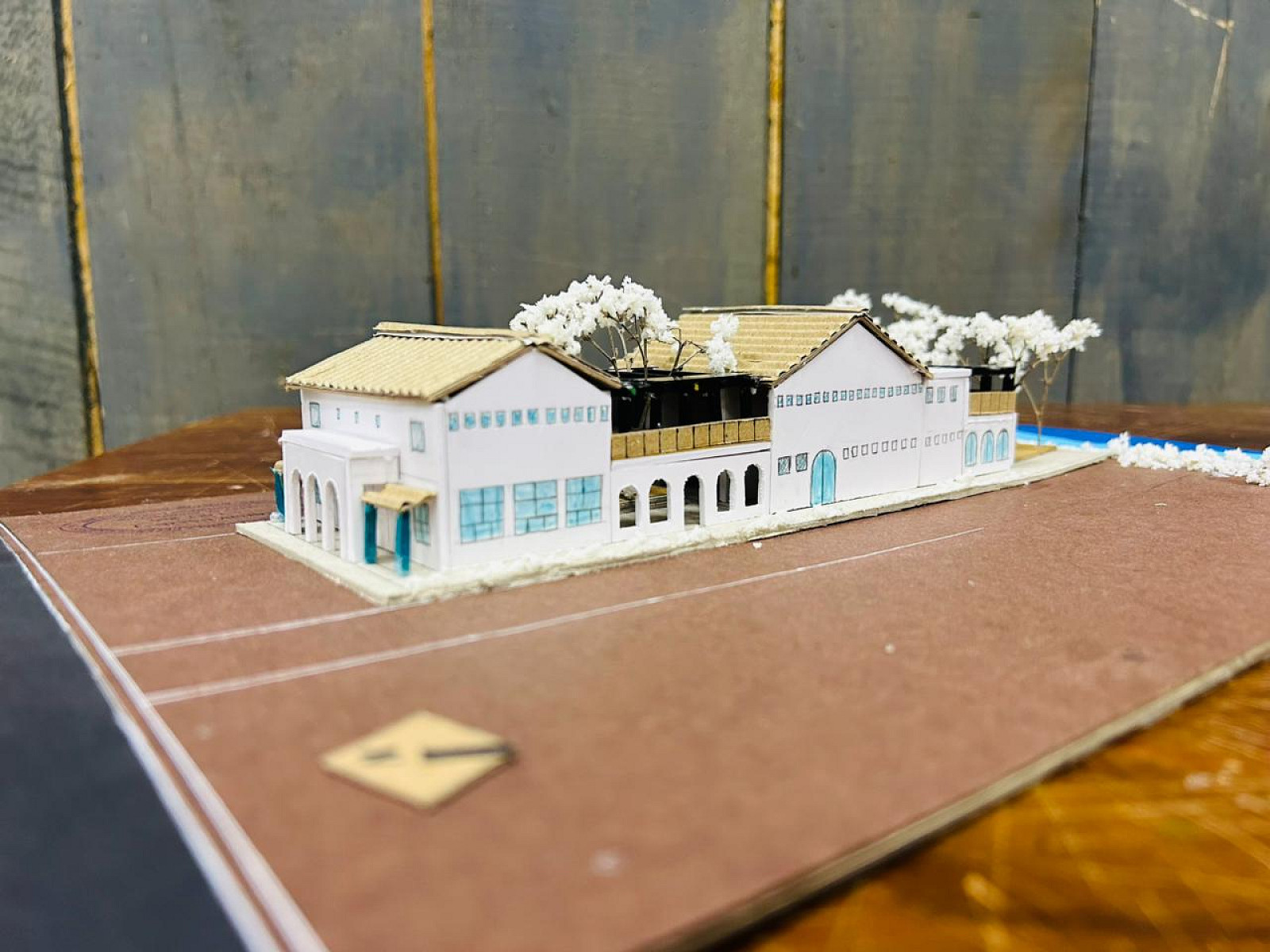
Stitching cultural, culinary, and urban gaps, the project stitches together bazaar street and riverfront through a grid that balances density with porosity. Dutch-inspired façades form the street edge, while courtyards, terraces, and voids open toward the Nilwala River, creating a continuous cultural–culinary spine for Matara. The project introduces a restaurant, terrace bar, cultural gallery, multipurpose hall, and artisan retail arcade, extending the bazaar’s daytime activity into a safe and vibrant night-time economy.
Project description
This urban infill project in Matara responds to a fragmented cultural and spatial condition between Old Tangalle Road and the Nilwala River, where historic Dutch remnants such as the Matara Fort coexist with a fading culinary identity and a vibrant yet disconnected bazaar tradition. The proposal identifies a cultural and urban gap within this context and positions architecture as a stitching mechanism — reconnecting heritage, food culture, street commerce, and riverfront recreation. Rooted in the bazaar spirit of Old Tangalle Road, the building integrates Dutch spatial references with contemporary tropical design strategies, creating a porous, pedestrian-scaled interface that mediates between the active urban edge and the calm ecological boundary of the river. As a larger urban vision, the master proposal introduces a pedestrian bridge linking Nilwala River Park with the revitalized Matara Bazaar House, transforming the site into a connective civic node that unifies cultural memory, culinary exchange, and public life within the evolving fabric of the city.
Master Proposal-
Cultural & Culinary Riverfront Linkage - pedestrian Bridge
The proposal envisions the Matara Bazaar House and Nilwala River Park as a dual-edge cultural precinct, connected physically and programmatically across the Nilwala River. Instead of treating the river as a barrier, the project redefines it as the shared public spine of Matara’s cultural life.
Technical information
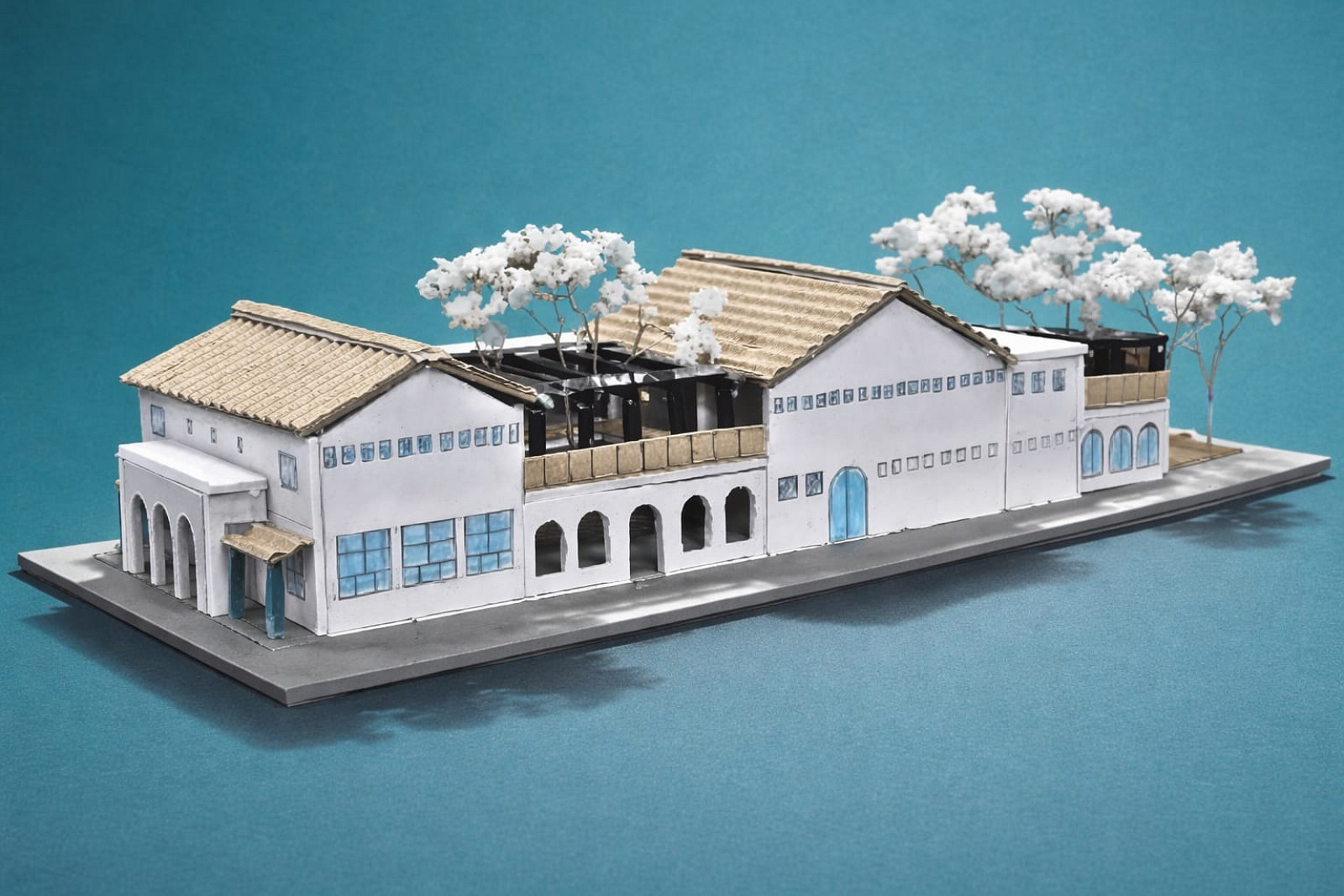
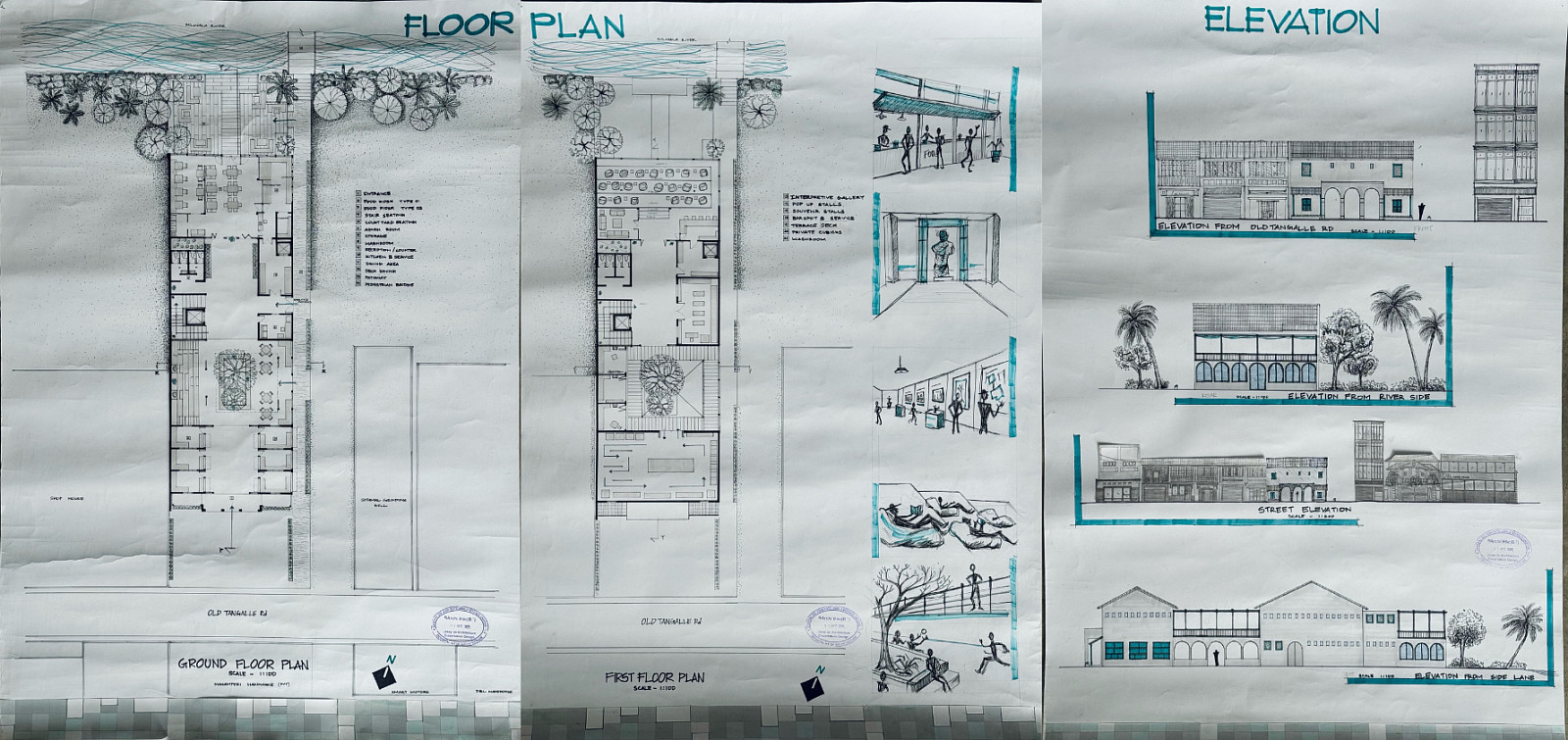
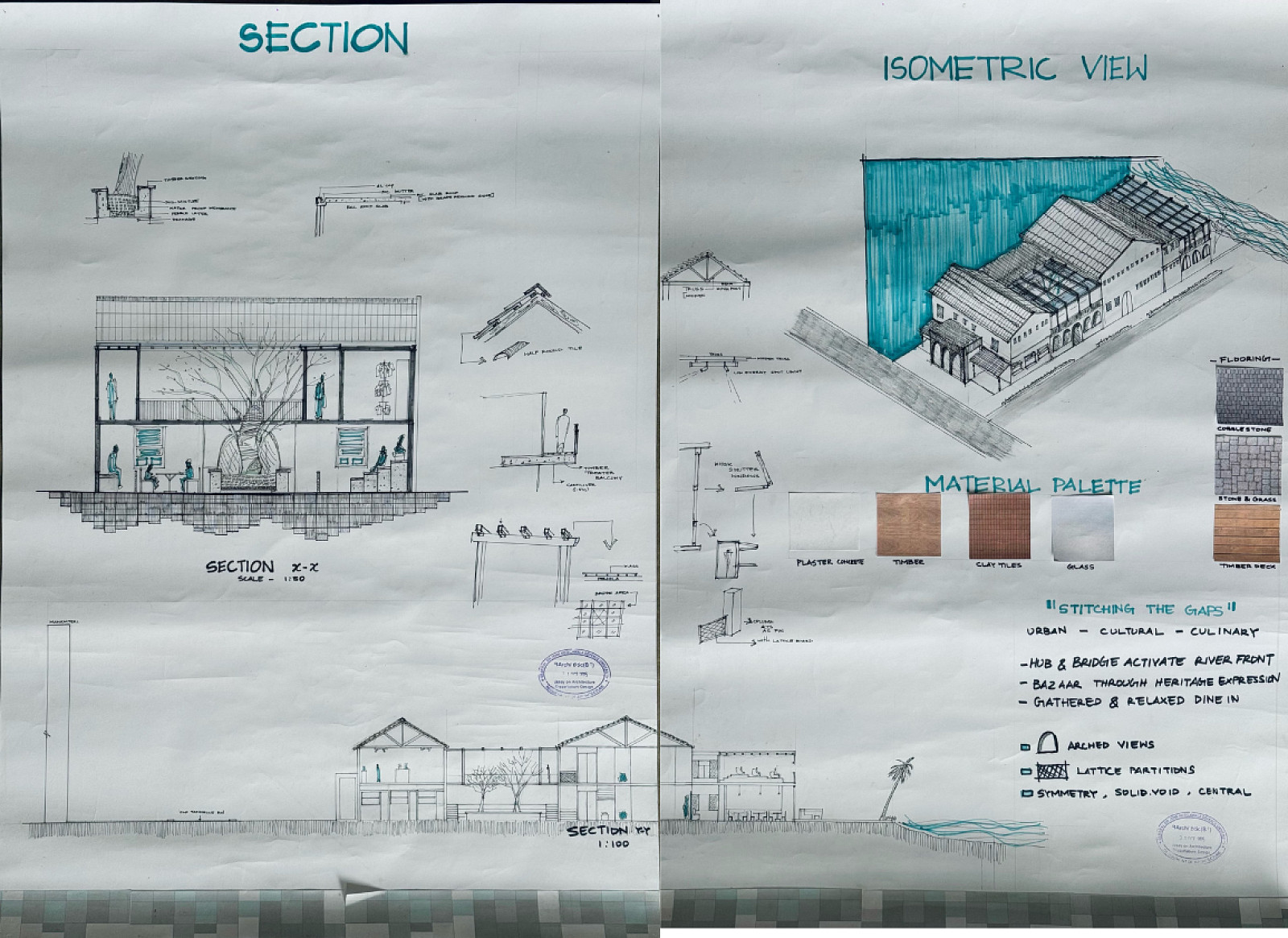
The material palette of the proposed urban infill project is developed to ensure strong urban continuity while reflecting a Dutch colonial character through a contemporary interpretation. At the street edge, cobblestone paving extends from the existing frontage road into the site, forming a continuous pedestrian path that connects to the proposed bridge and reinforces movement. Within the site, the central courtyard introduces a softer landscape through a combination of grass and stone flooring, creating a balanced microclimate, while the internal transition spaces use an interconnected composition of exposed concrete and timber decking to define spatial zones with continuity. The built form is articulated with smooth white plastered walls, emphasizing clean horizontal planes and enhancing light reflectivity, while timber is used for structural and architectural elements such as columns and vertical fins to introduce rhythm, shading, and depth. Openings are designed as narrow timber-framed window slits integrated with glass, alongside distinctive teal-colored timber windows that express Dutch cultural identity and create contrast against the white surfaces. The roof structure consists of exposed timber trusses supporting half-round clay tiles, reflecting traditional Dutch-period architecture while responding to the tropical climate. Additionally, the courtyard areas and the backside terrace bar are articulated with pergola structures combined with glass roof panels attached to the slab, functioning as semi-covered top-side verandas along the rear and side edges, enhancing shaded outdoor living while maintaining visual openness. Overall, the material strategy is based on layering, contrast, and continuity, creating a cohesive spatial experience that connects the building to its historical and urban context.

Copyright © 2026 INSPIRELI | All rights reserved. Use of this website signifies your agreement to the Terms of Use, Privacy Policy, and use of cookies.