THESIS PROJECT RURAL AND AFFORDABLE HOUSING (VILLAGE)


Project idea
Issue:
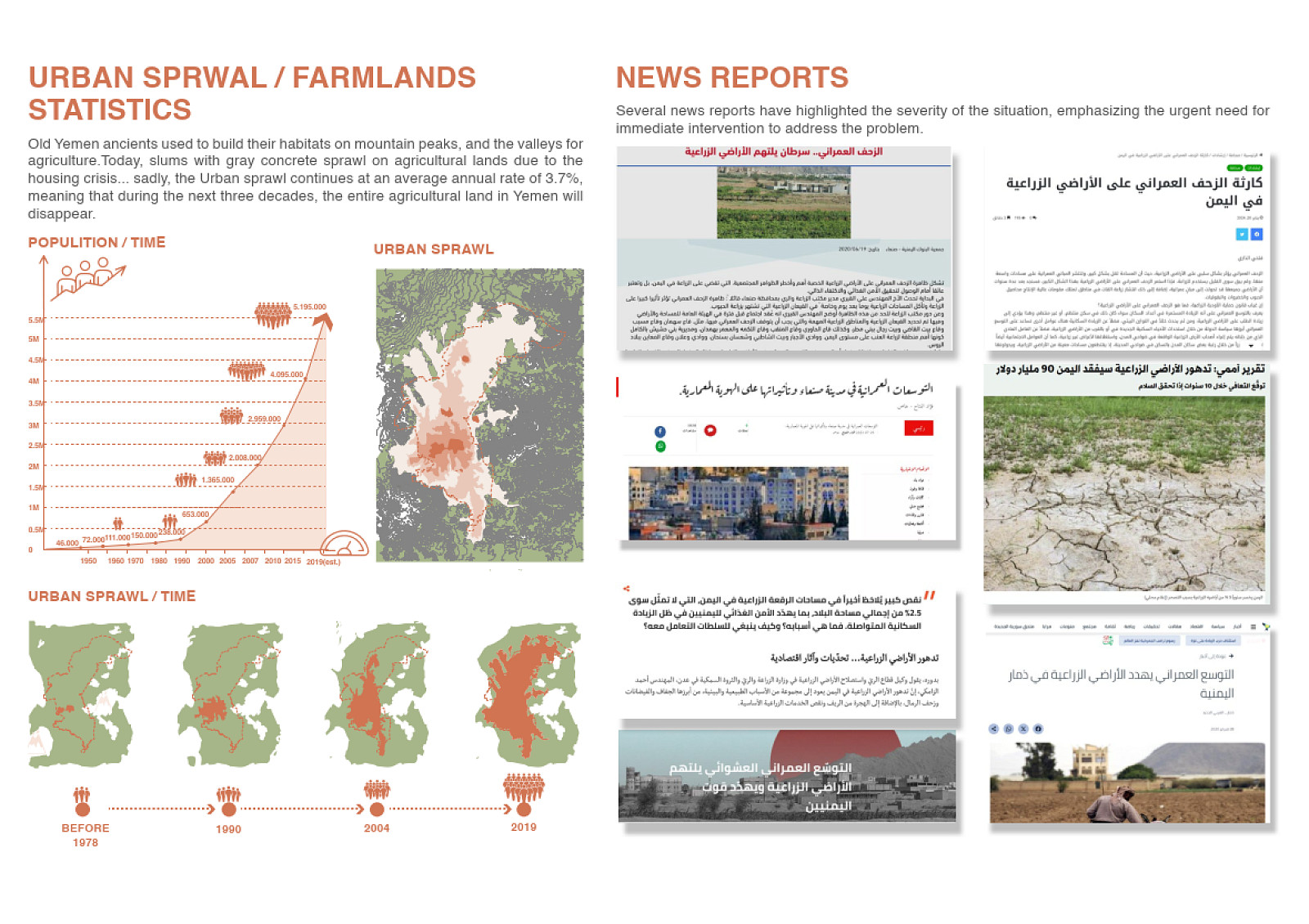
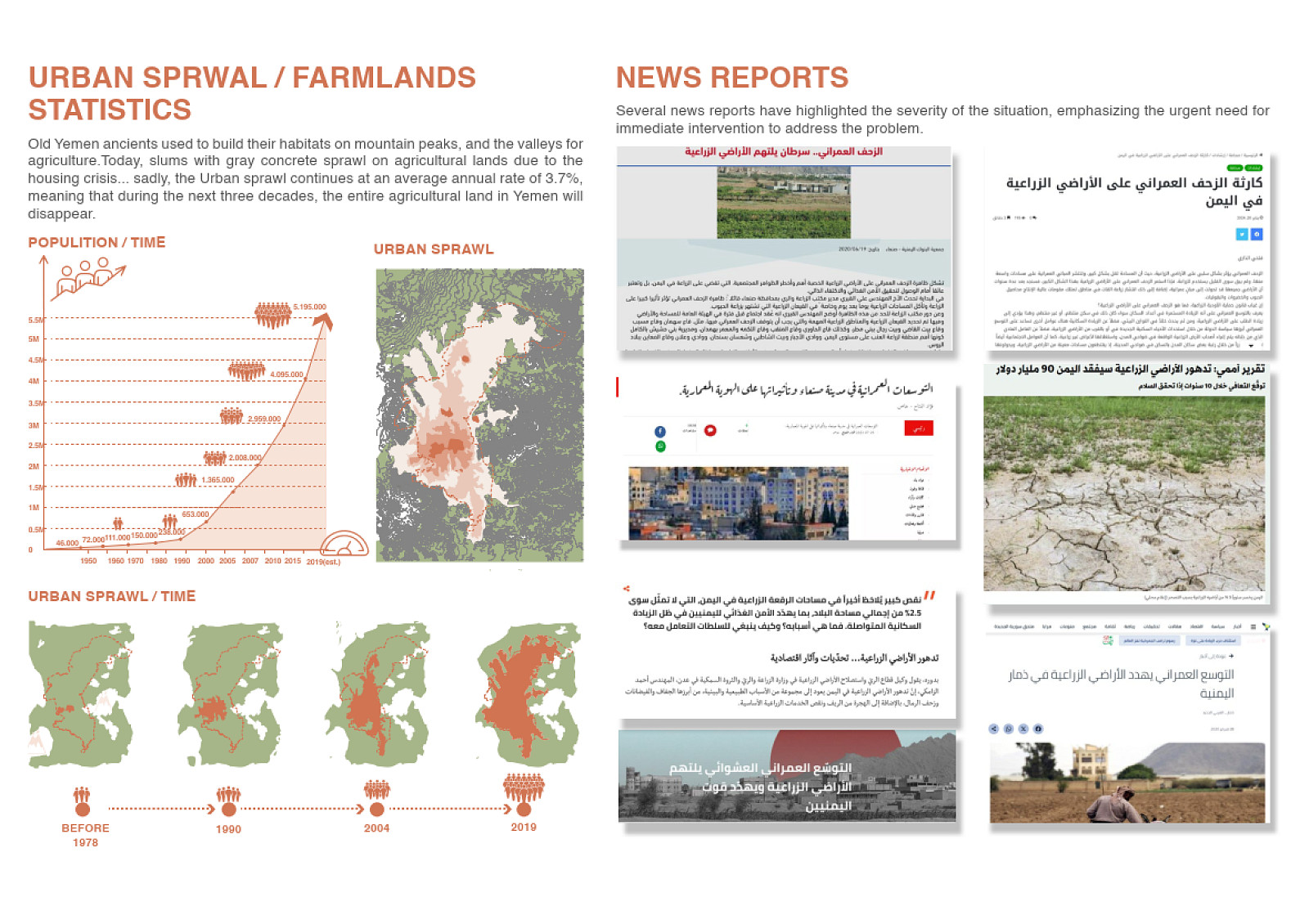
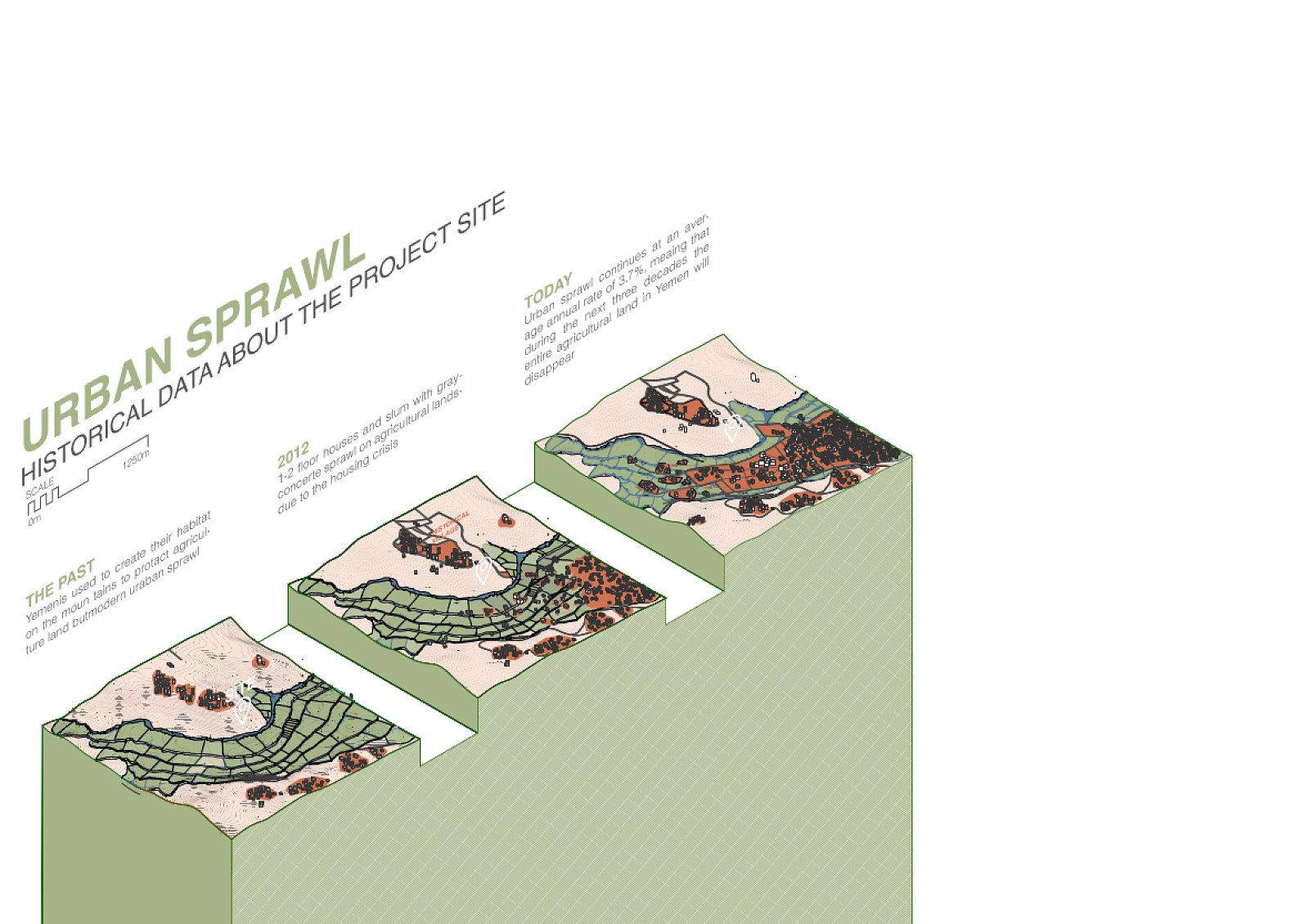
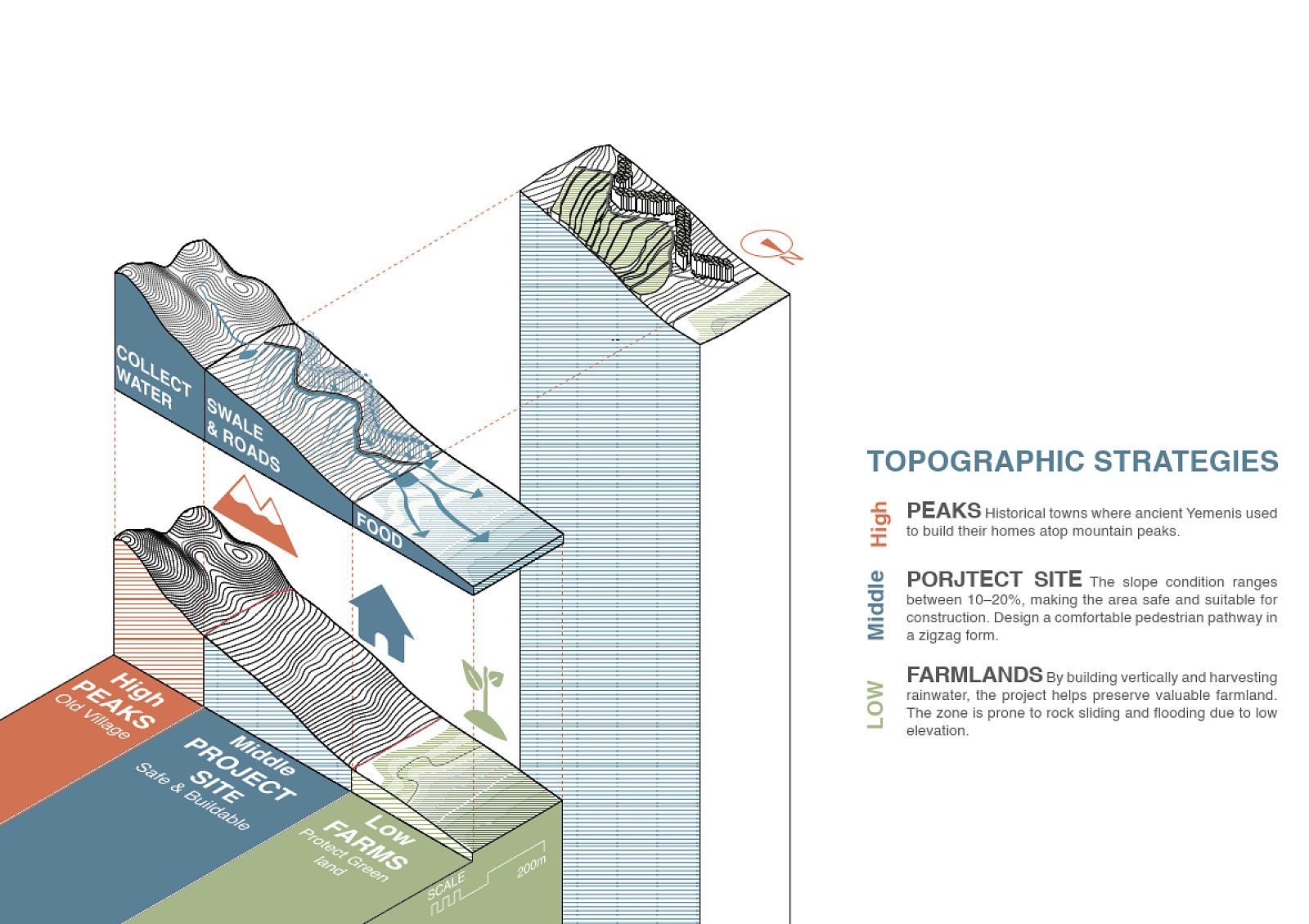
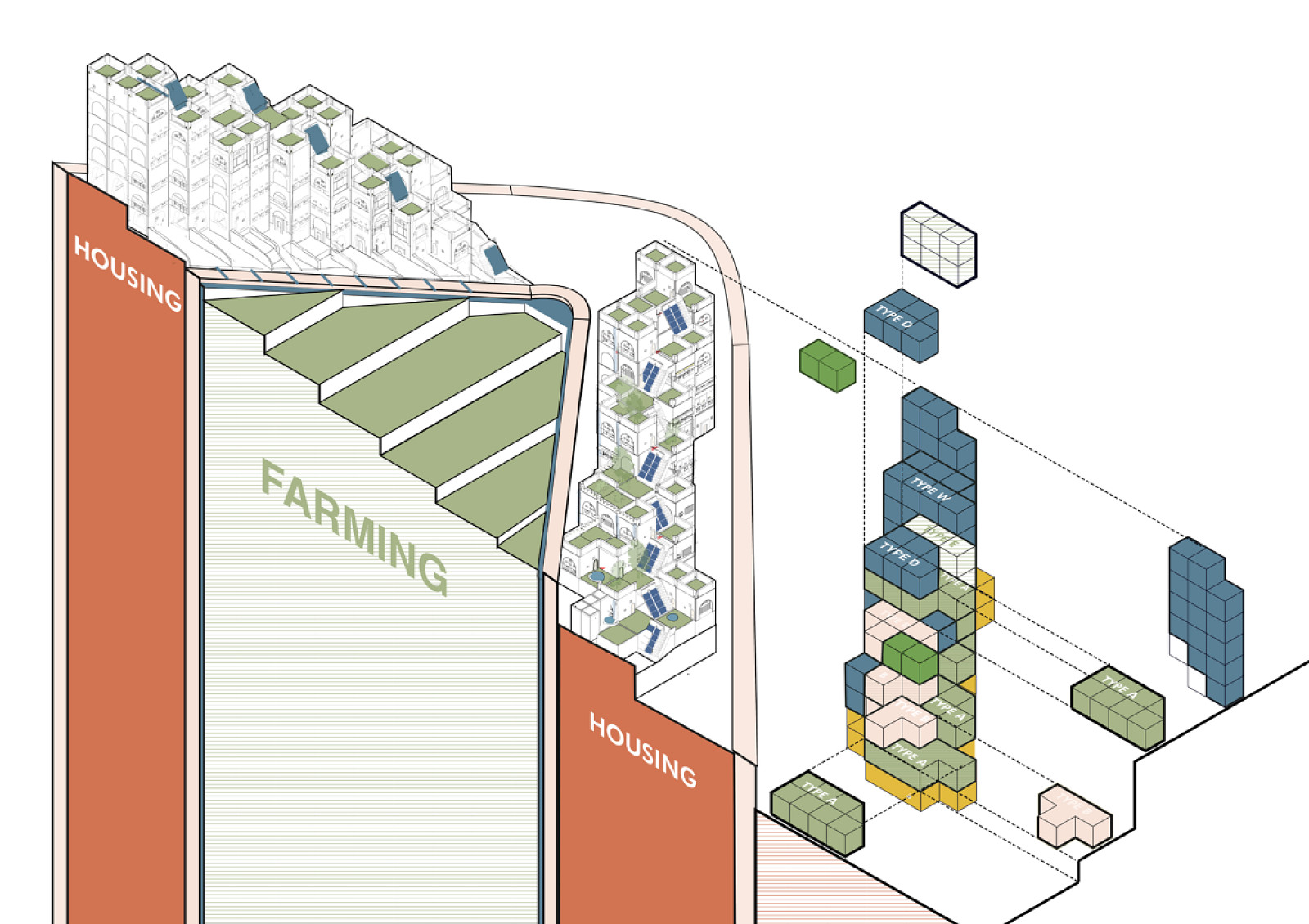
Old Yemen ancients used to build their habitats on mountain peaks, and the valleys for agriculture.
Today, slums with gray concrete sprawl on agricultural lands due to the housing crisis... sadly, the Urban sprawl continues at an average annual rate of 3.7%, meaning that during the next three decades, the entire agricultural land in Yemen will disappear.
Propose:
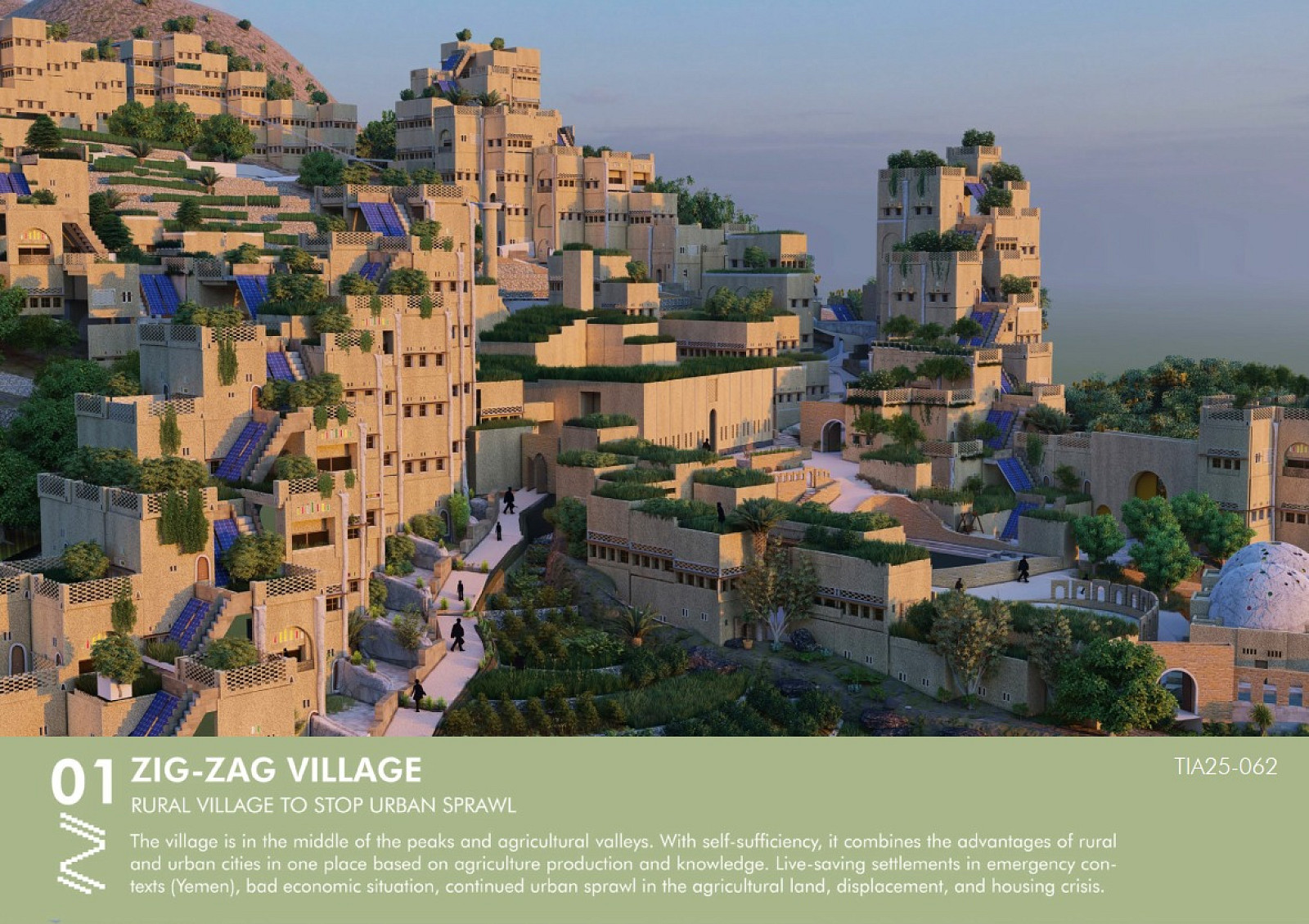
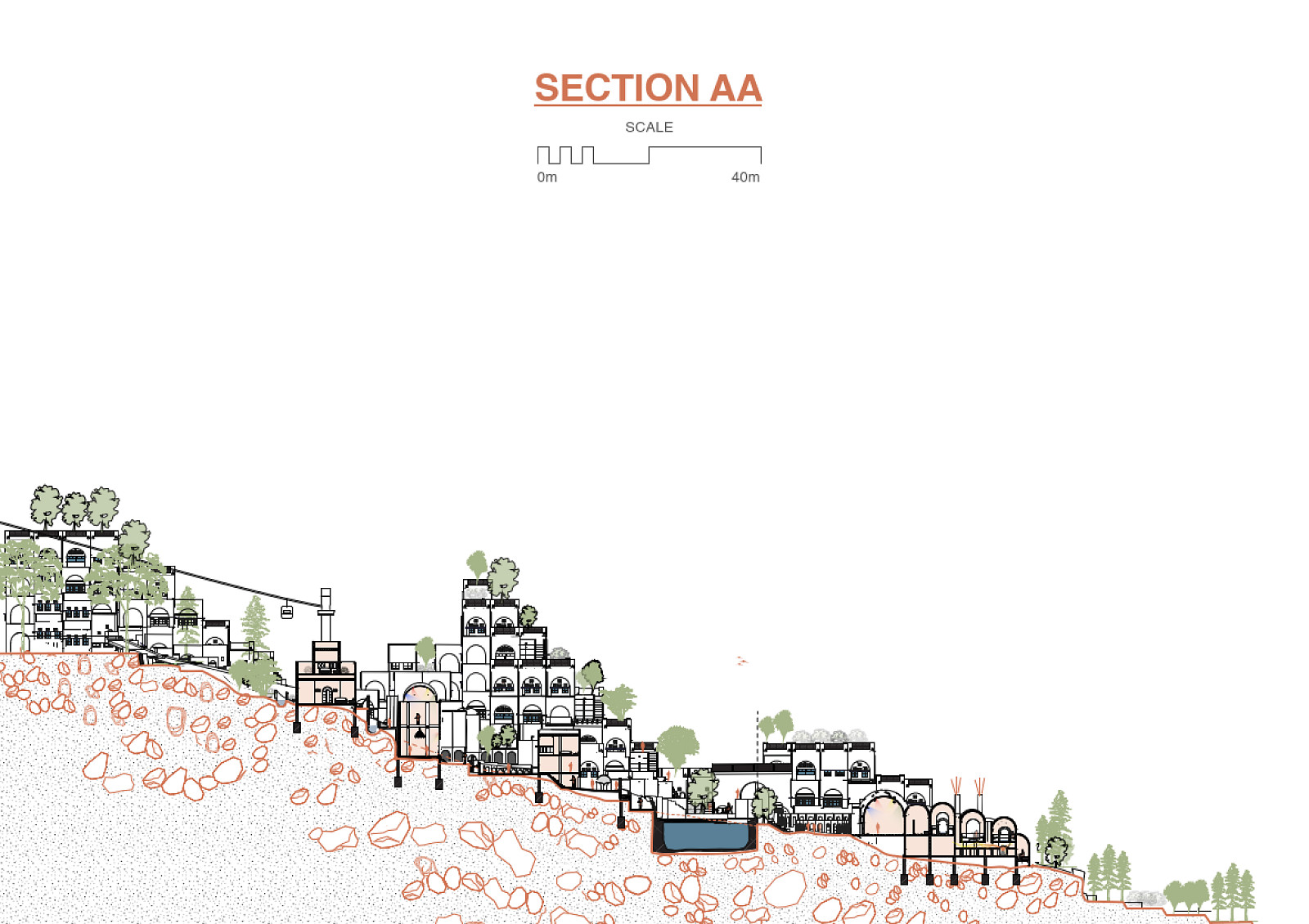
Village in the middle of the peaks and agriculture valleys. It combines the advantages of rural and urban cities in one place based on agriculture production and knowledge. It helps reduce the housing crisis as well as stop the urban sprawl in the agricultural land.
Project description
Goals:
Elimination of poverty, and stopping desertification, are the main goals, Since Yemen is one of the poorest countries and suffers from desertification. Agriculture, self-sufficiency, and sustainability a ways to achieve these goals.
Main points:
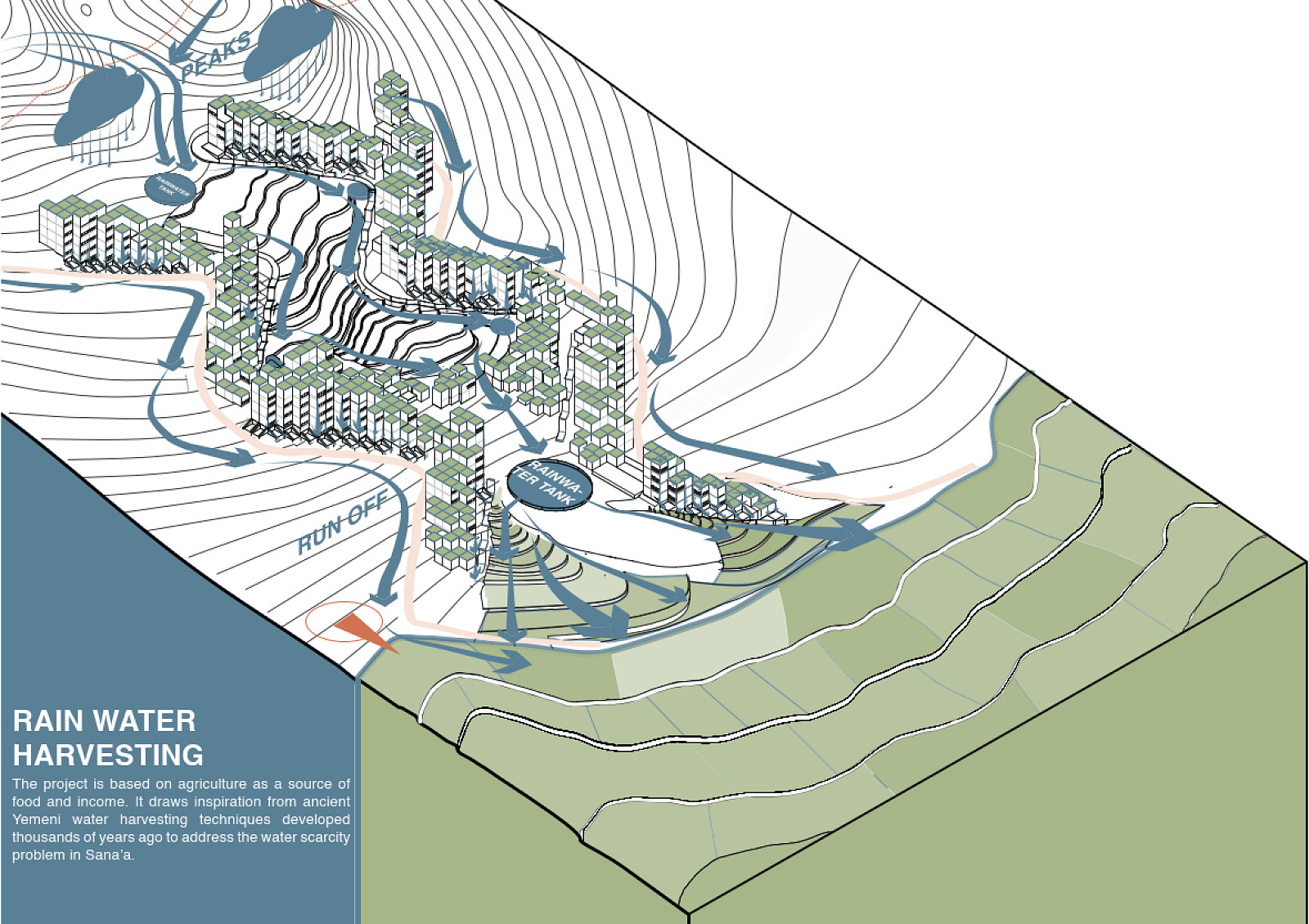
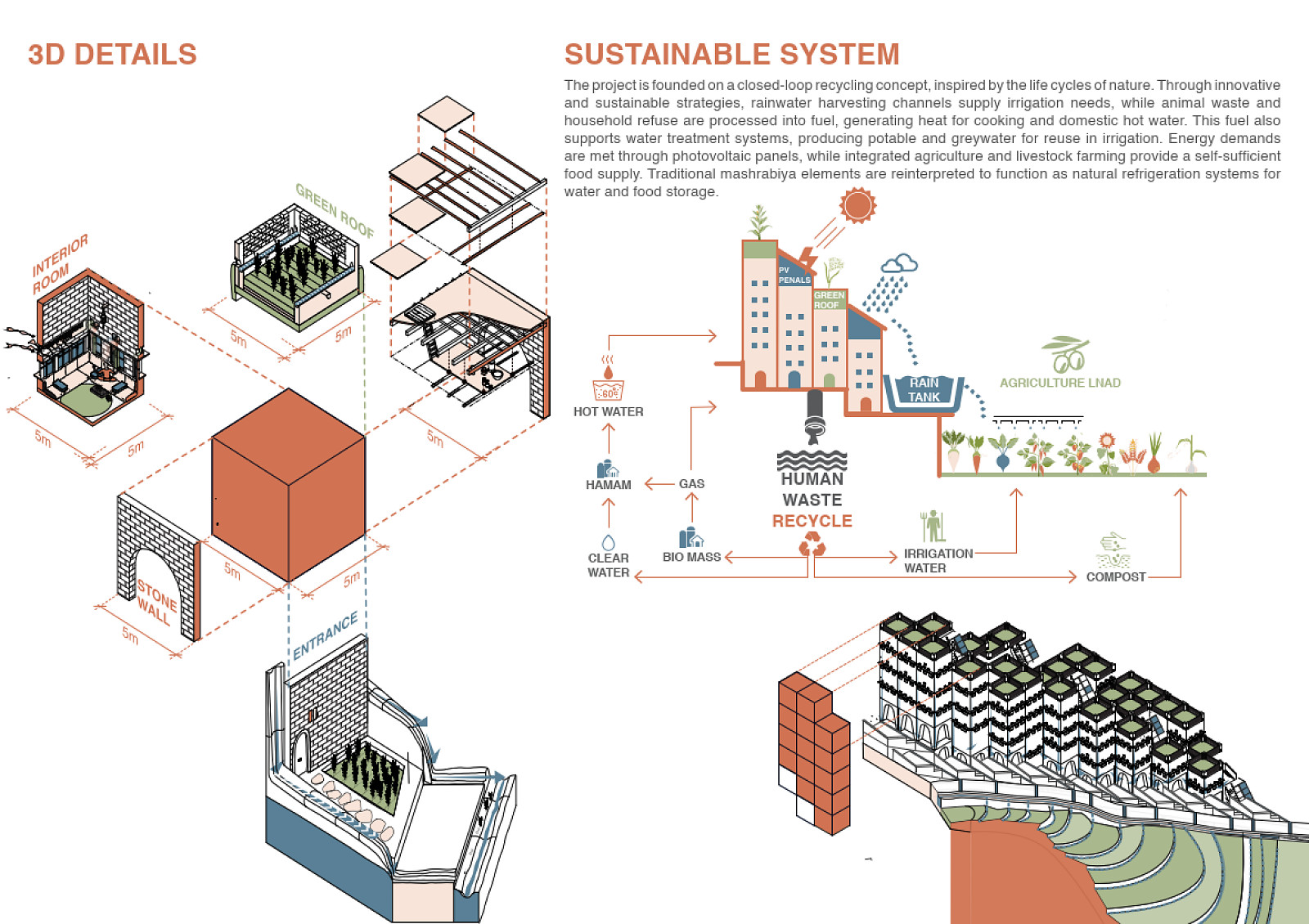
Water harvesting
Food security
Recycle the waste
Heath life
Clean energy
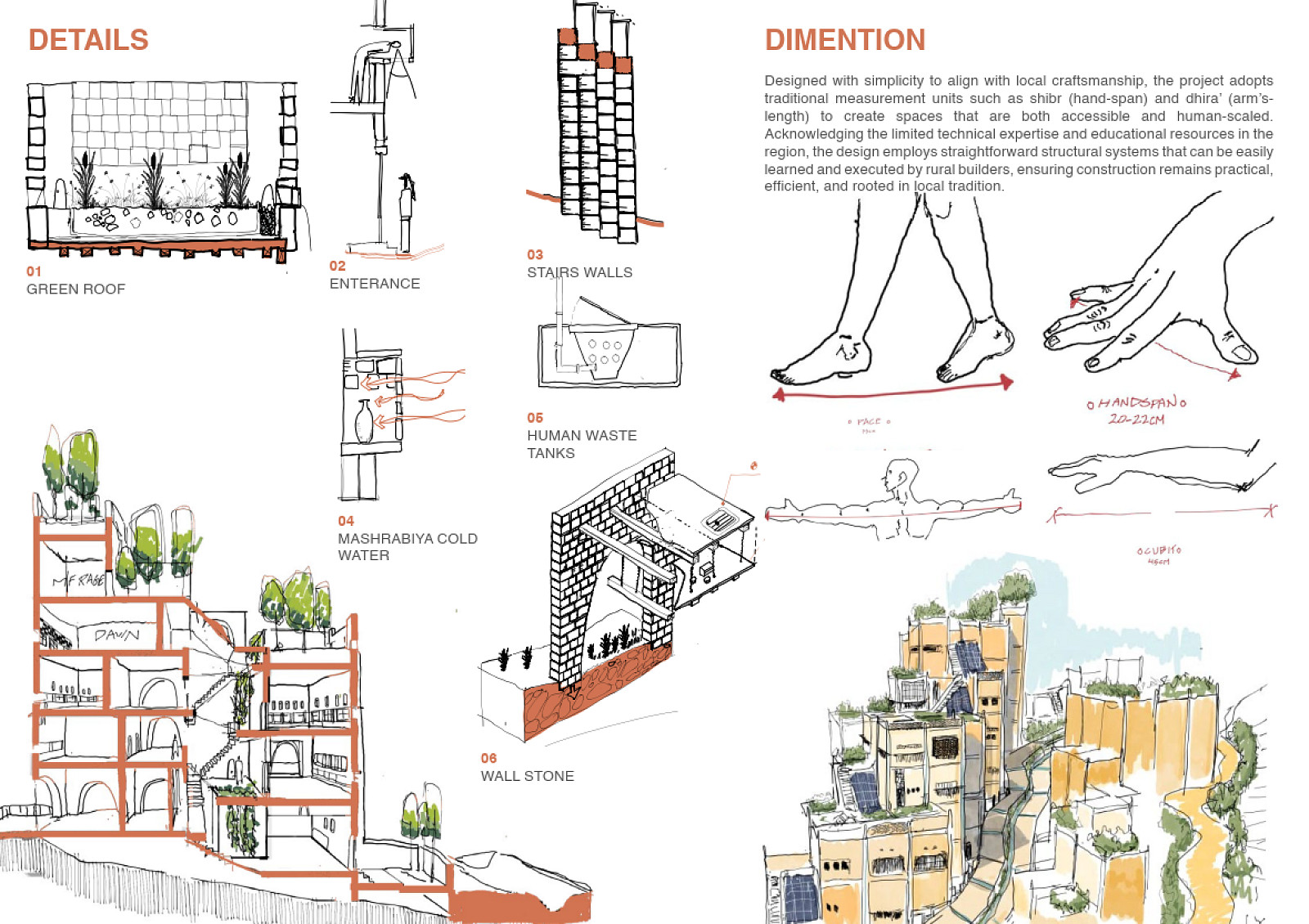
Self-built
Community participation
Issue causes:
Houses crisis
Population Growth
High land values
Issue effect:
More Poverty
Weak economy
Food insecurity
Increase supply and decrease export
Increase unemployment
Damage to the environment
Technical information
Project Information
English:
Project Title: Rural and Affordable Housing (Village)
Project Type: Architectural Graduation Thesis
Location: Rural hillside area, Sana’a – Yemen
Year: 2022
Discipline: Architecture
Level: Bachelor Thesis
Site Characteristics
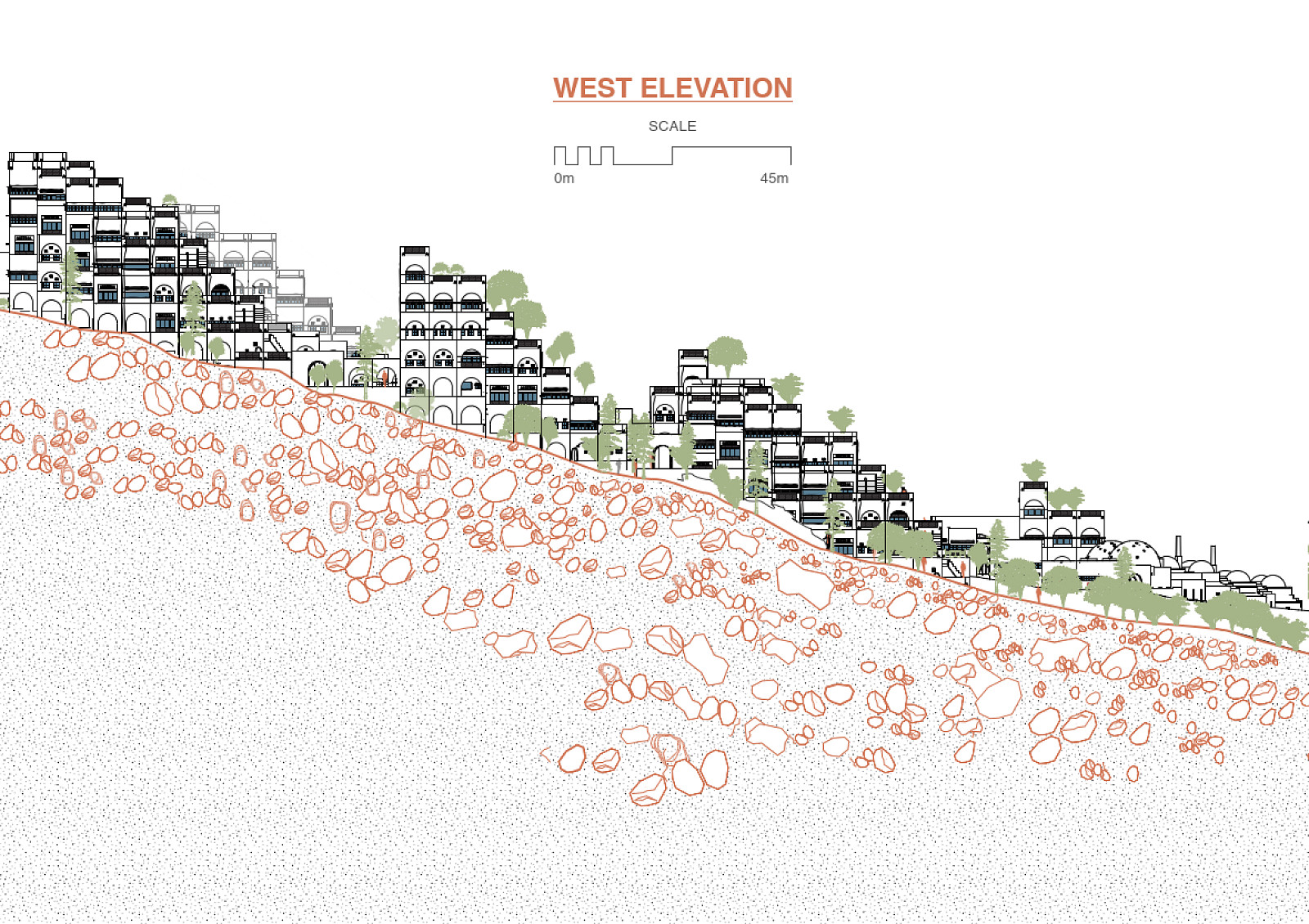
Topography: Mountainous terrain between agricultural valleys
Climate: Semi-arid climate with high solar exposure
Context: Rural-agricultural environment threatened by urban sprawl
Accessibility: Defined circulation for pedestrians and vehicles
Planning Strategy
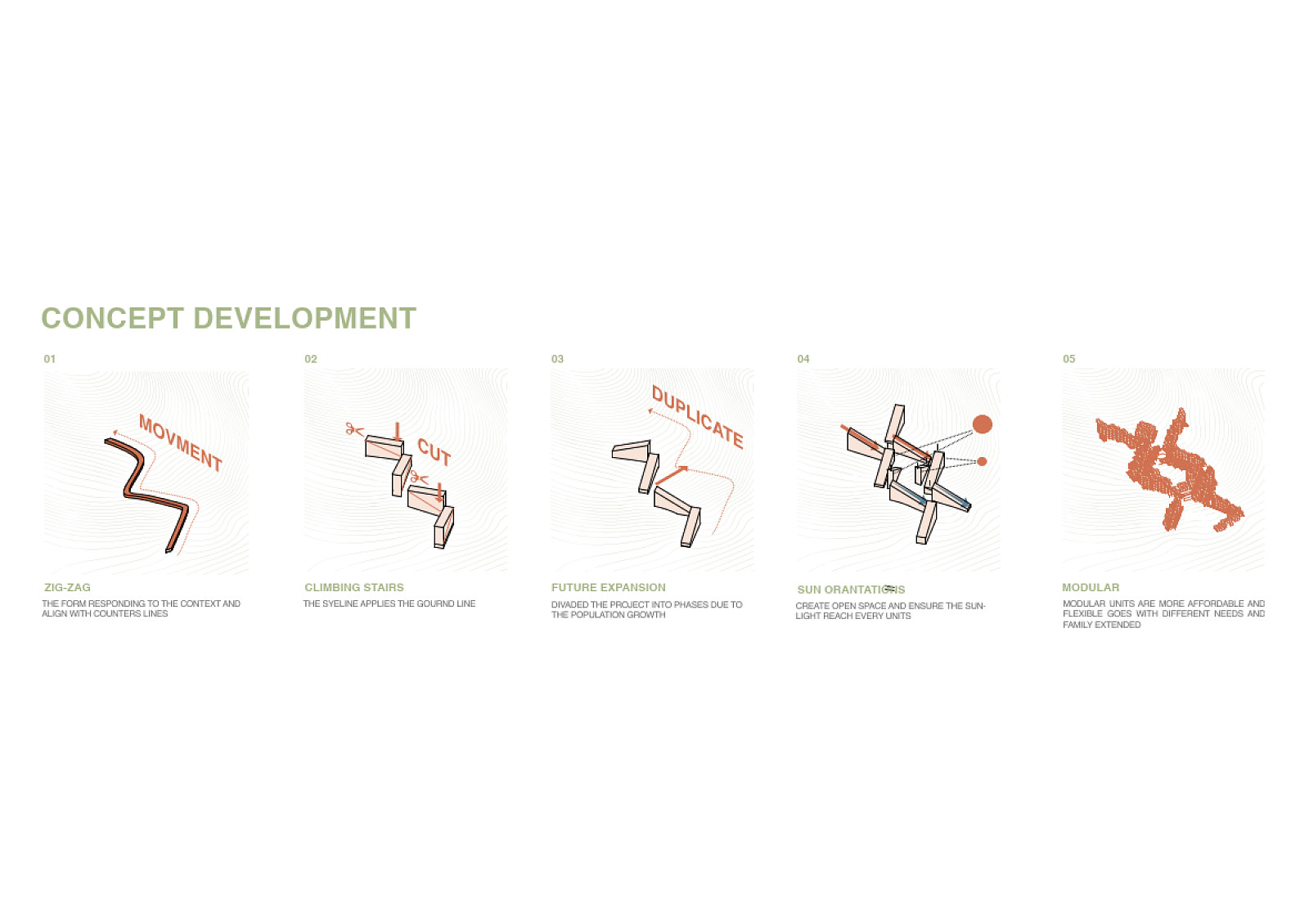
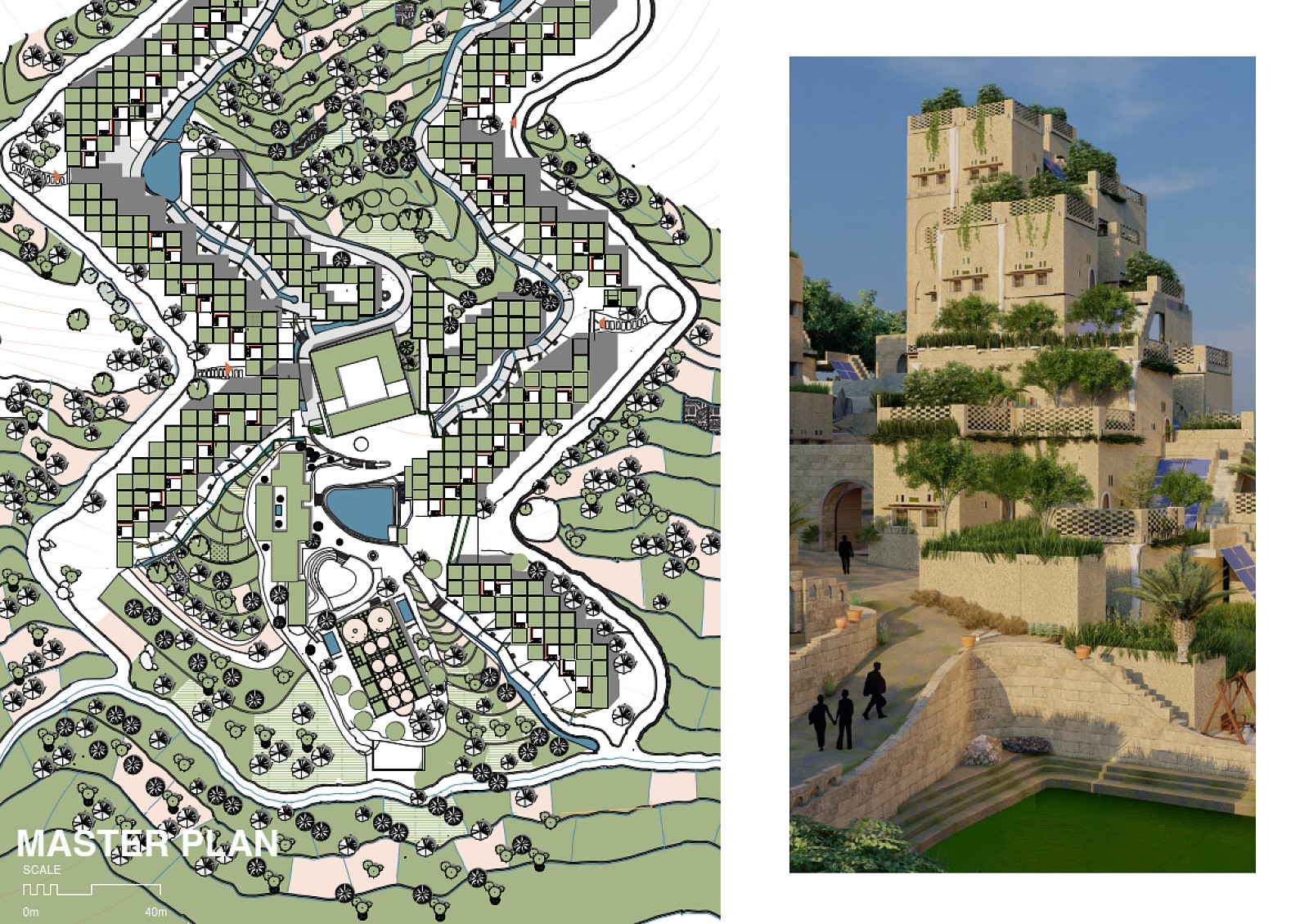
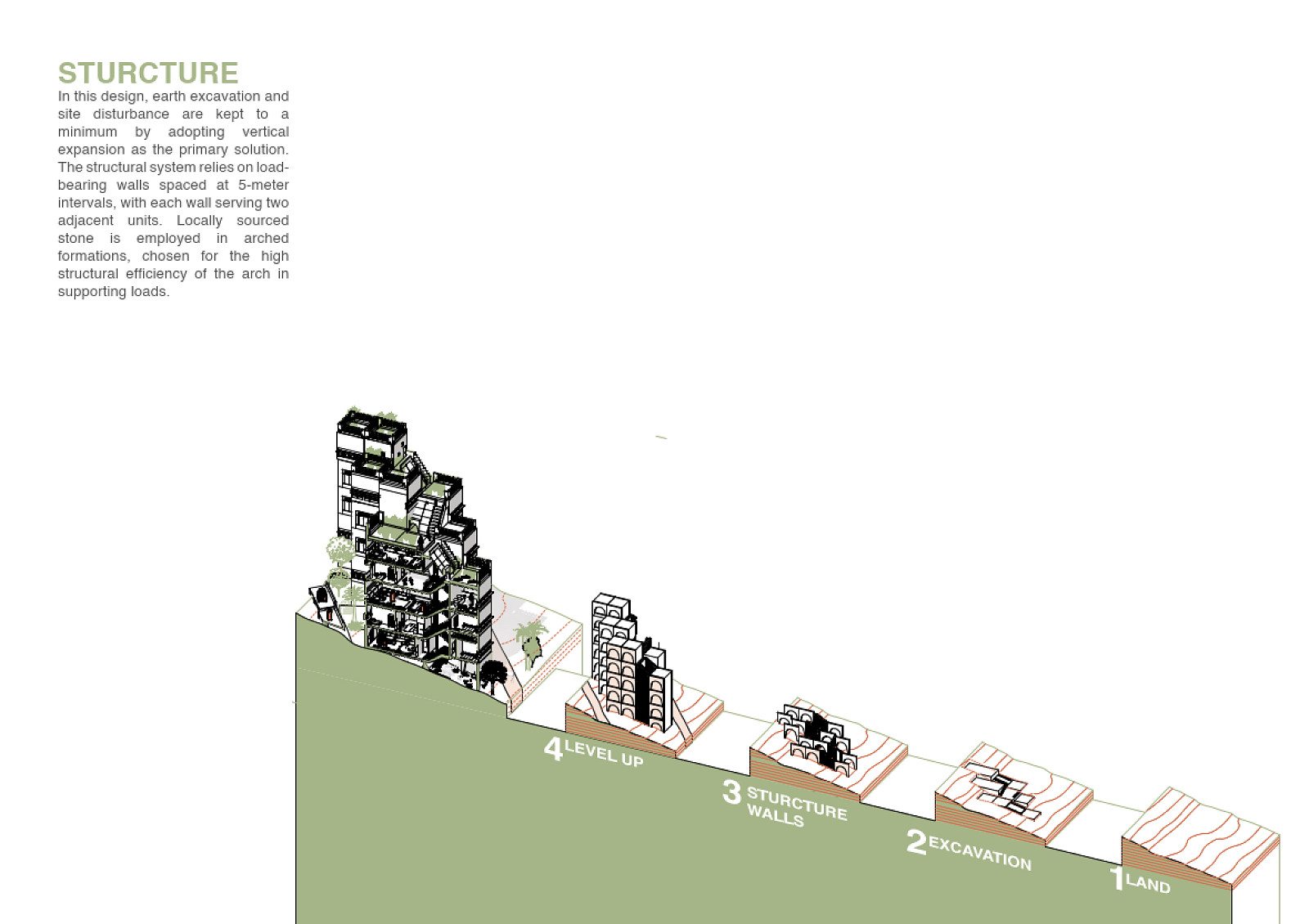
Cluster-based village layout responding to terrain
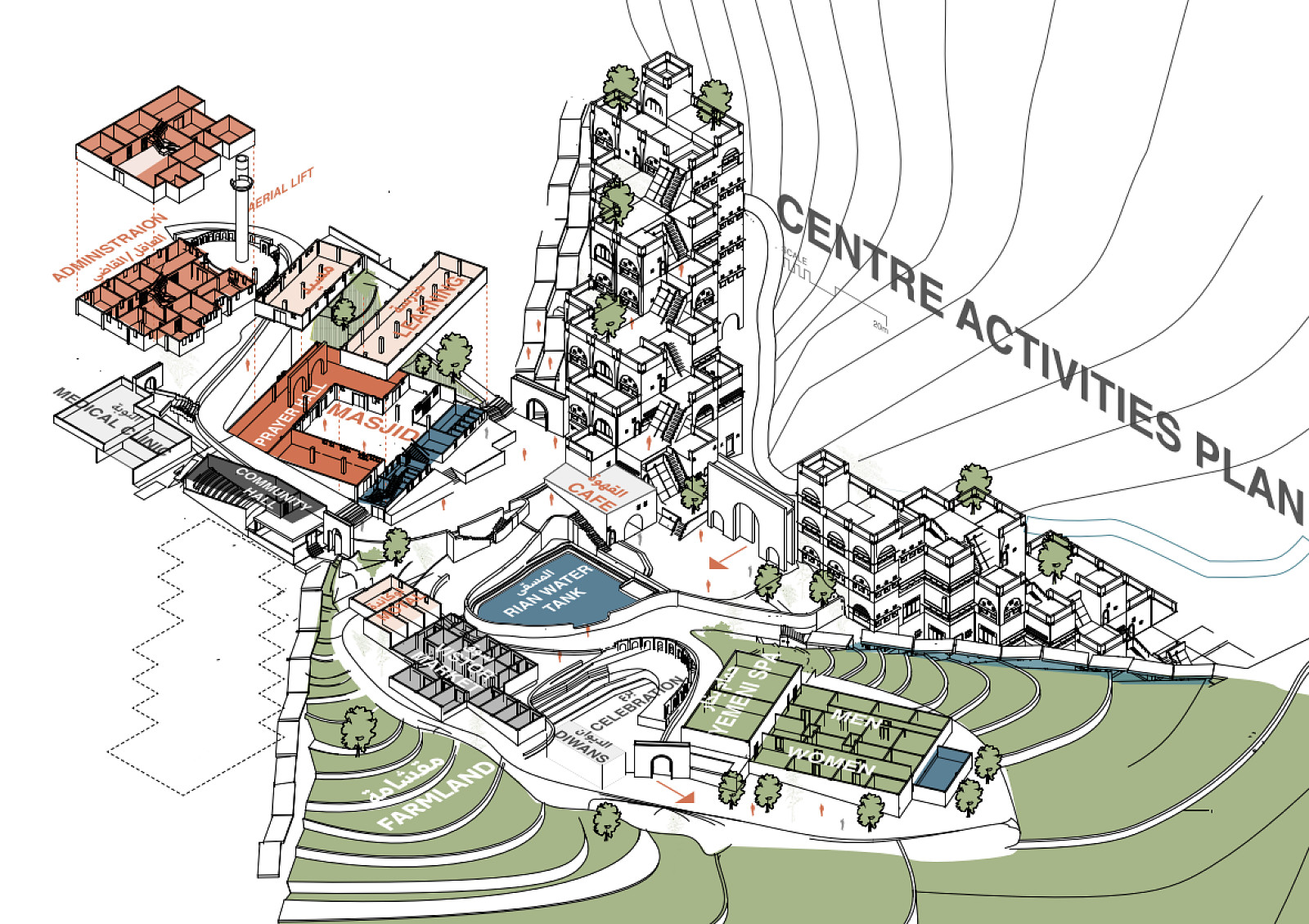
Integration of housing, agriculture, and services
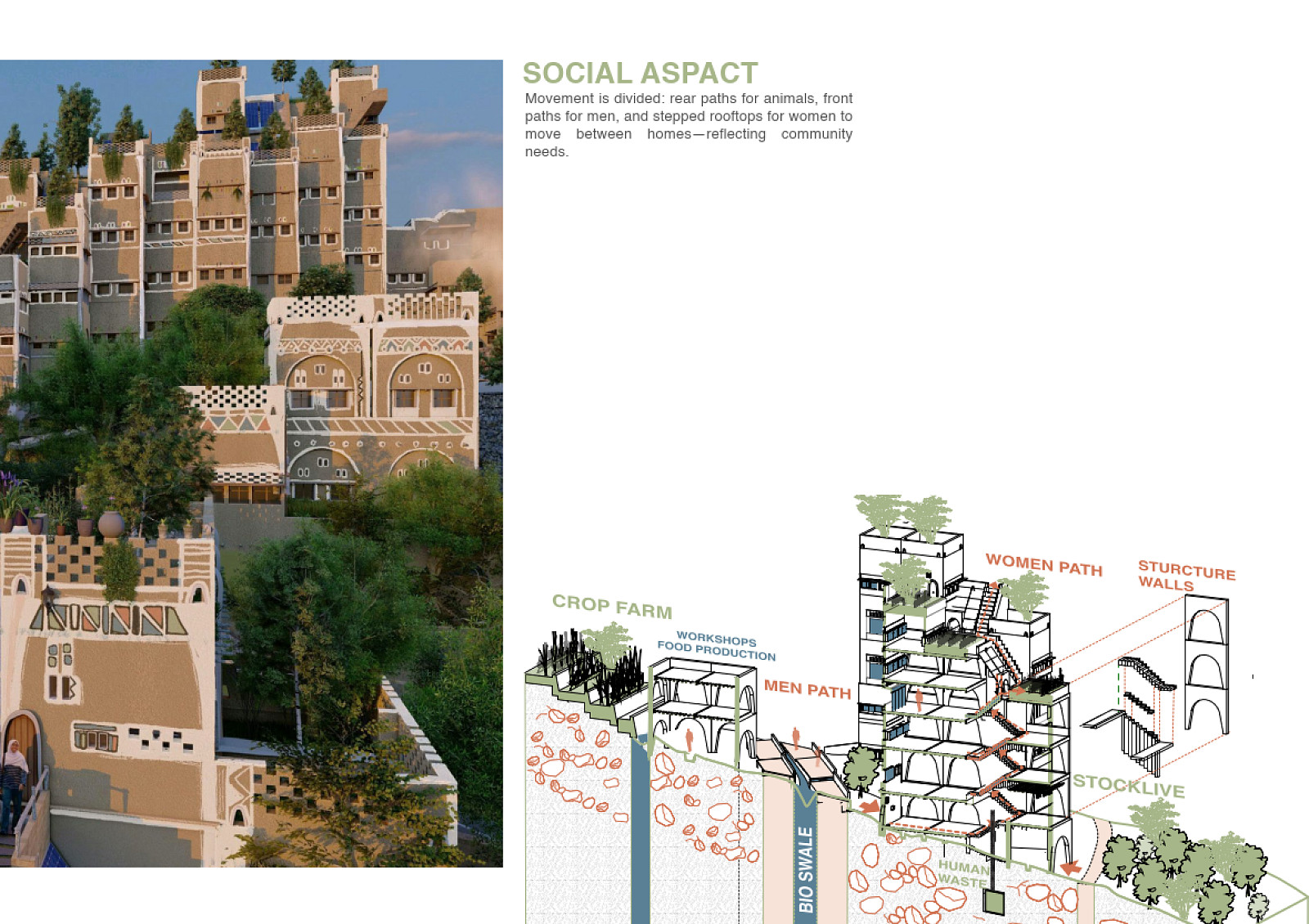
Separation of pedestrian and vehicular movement
Self-sufficient community model
Environmental Strategies
Water harvesting systems integrated into circulation
Passive solar design (orientation & shading)
Natural ventilation through layout and openings
Agricultural integration for food production
sustainability Features
Renewable energy use (solar potential)
Waste recycling systems
Reduction of urban sprawl on farmland
Promotion of self-sufficiency and local econom
infrastructure & Services
Internal road network for limited vehicular access
Pedestrian-friendly pathways
Community facilities (education, agriculture, services)
Water and waste management systems
Design Objectives
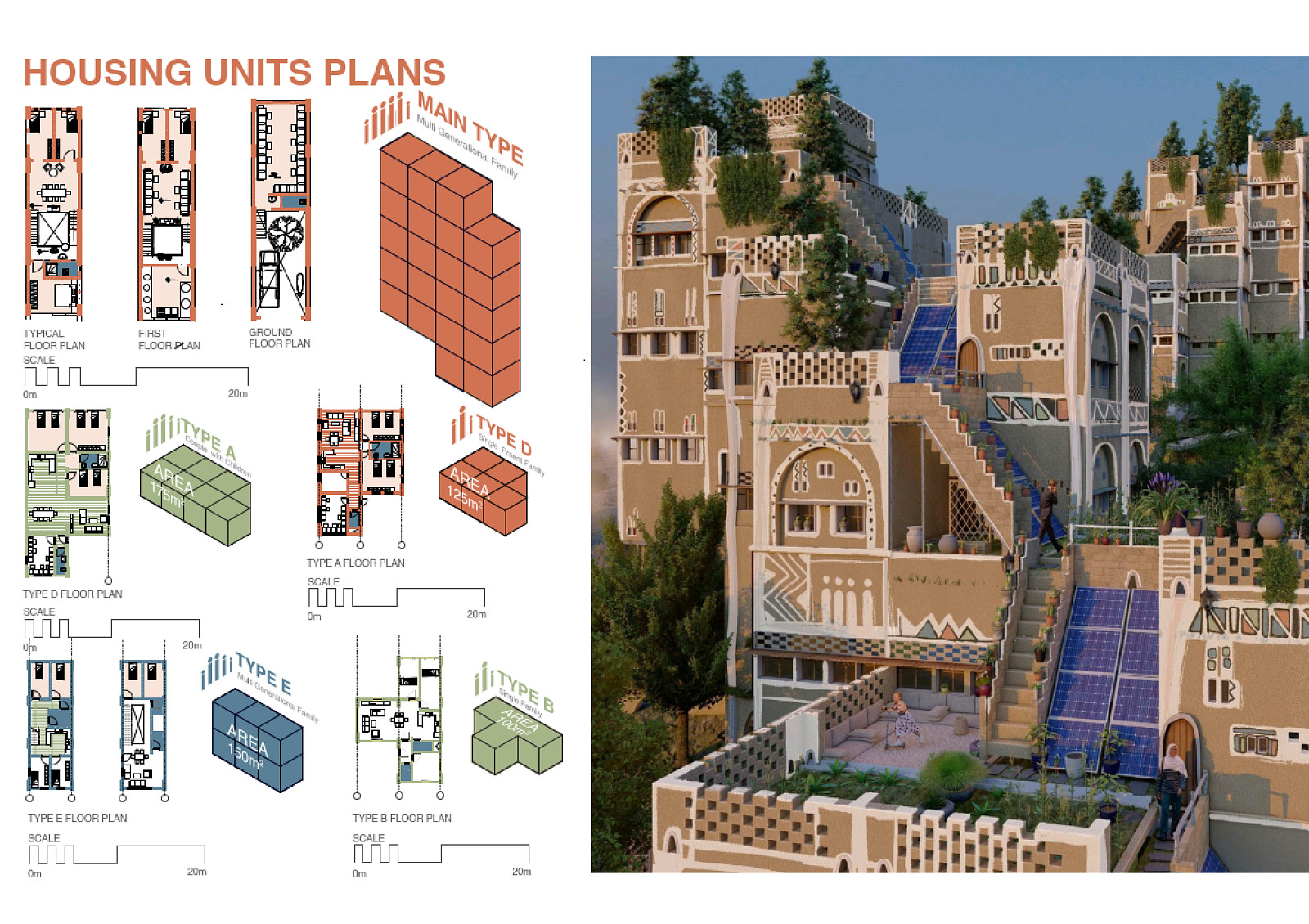
Provide affordable housing solutions
Reduce poverty and unemployment
Prevent desertification
Enhance quality of life and health

Copyright © 2026 INSPIRELI | All rights reserved. Use of this website signifies your agreement to the Terms of Use, Privacy Policy, and use of cookies.