Typological Re-generation of Terzo Palazzo


Project idea
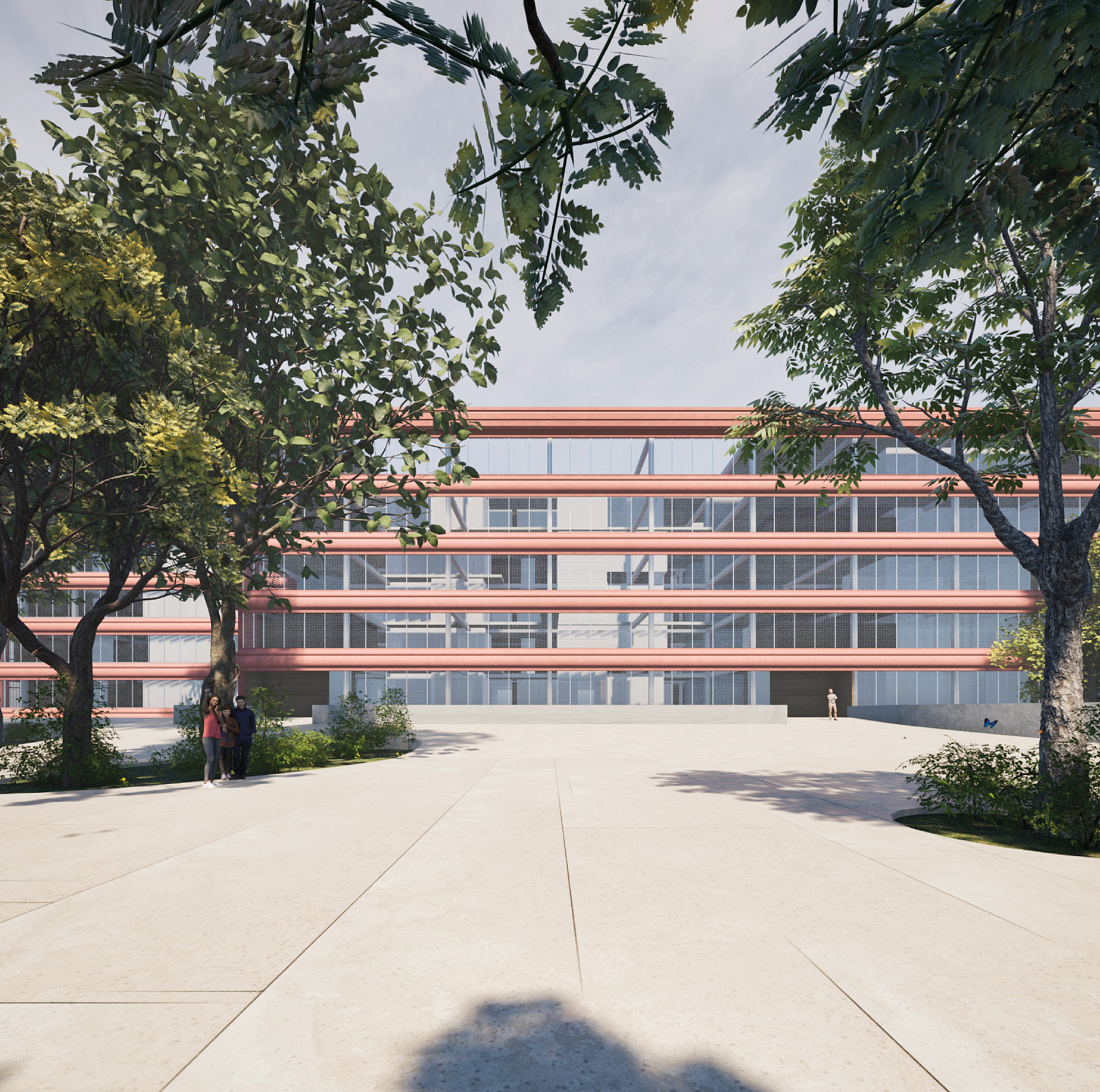
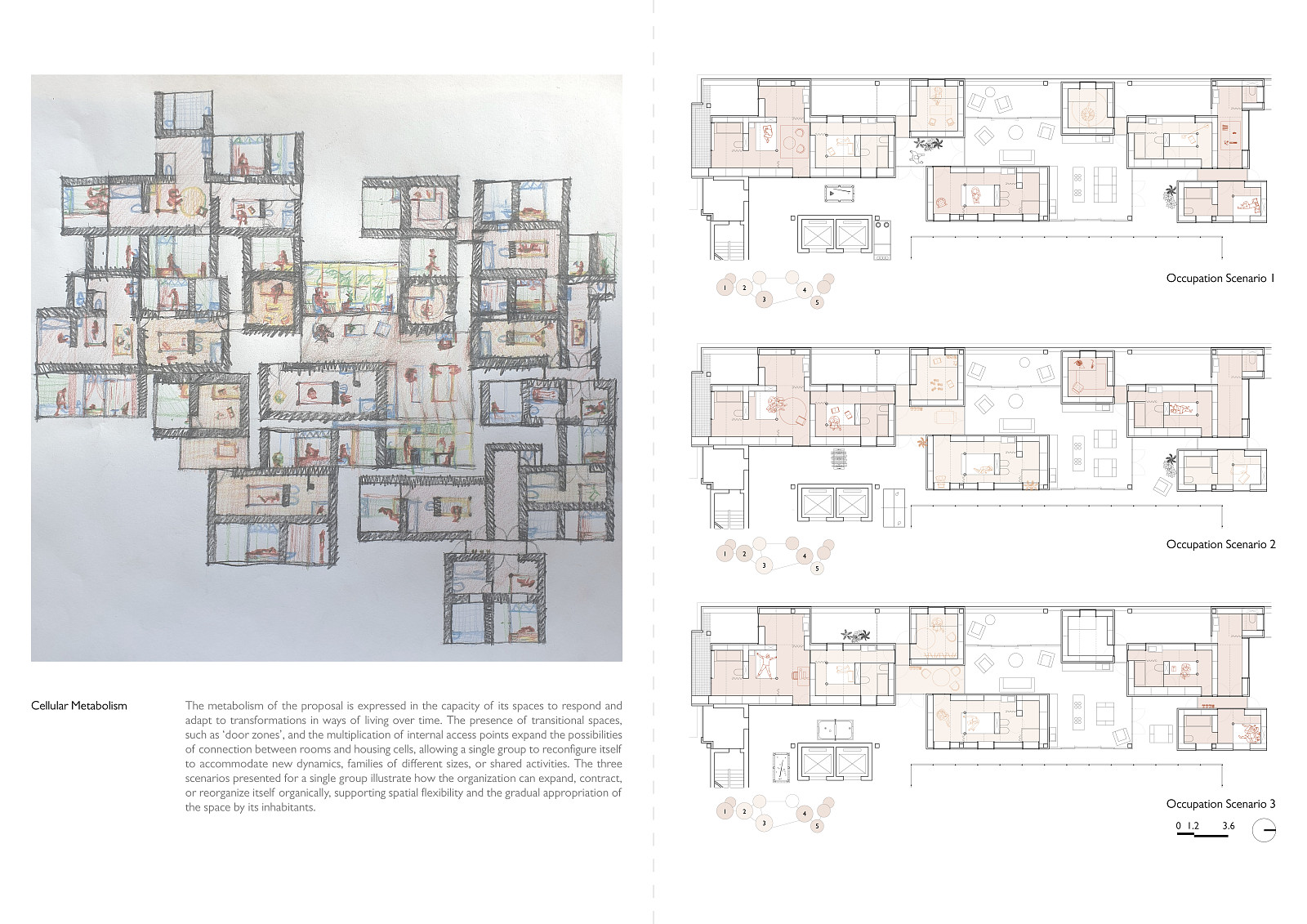
This project reimagines the 1973 Terzo Palazzo by Franco Albini, Franca Helg and Antonio Piva — a key building within ENI’s company town of San Donato Milanese — as a living organism capable of adapting to contemporary forms of dwelling. Developed as a Master’s Dissertation at FAUP within the UAH! – Unconventional and Affordable Housing research program, the project proposes circular, reversible and cooperative strategies that transform the existing structure from within. Rather than designing a new form, it cultivates new habits through intergenerational clusters, self‑built living cells and infrastructural ‘backbones’, enabling the building to evolve socially, spatially and metabolically over time.
Project description
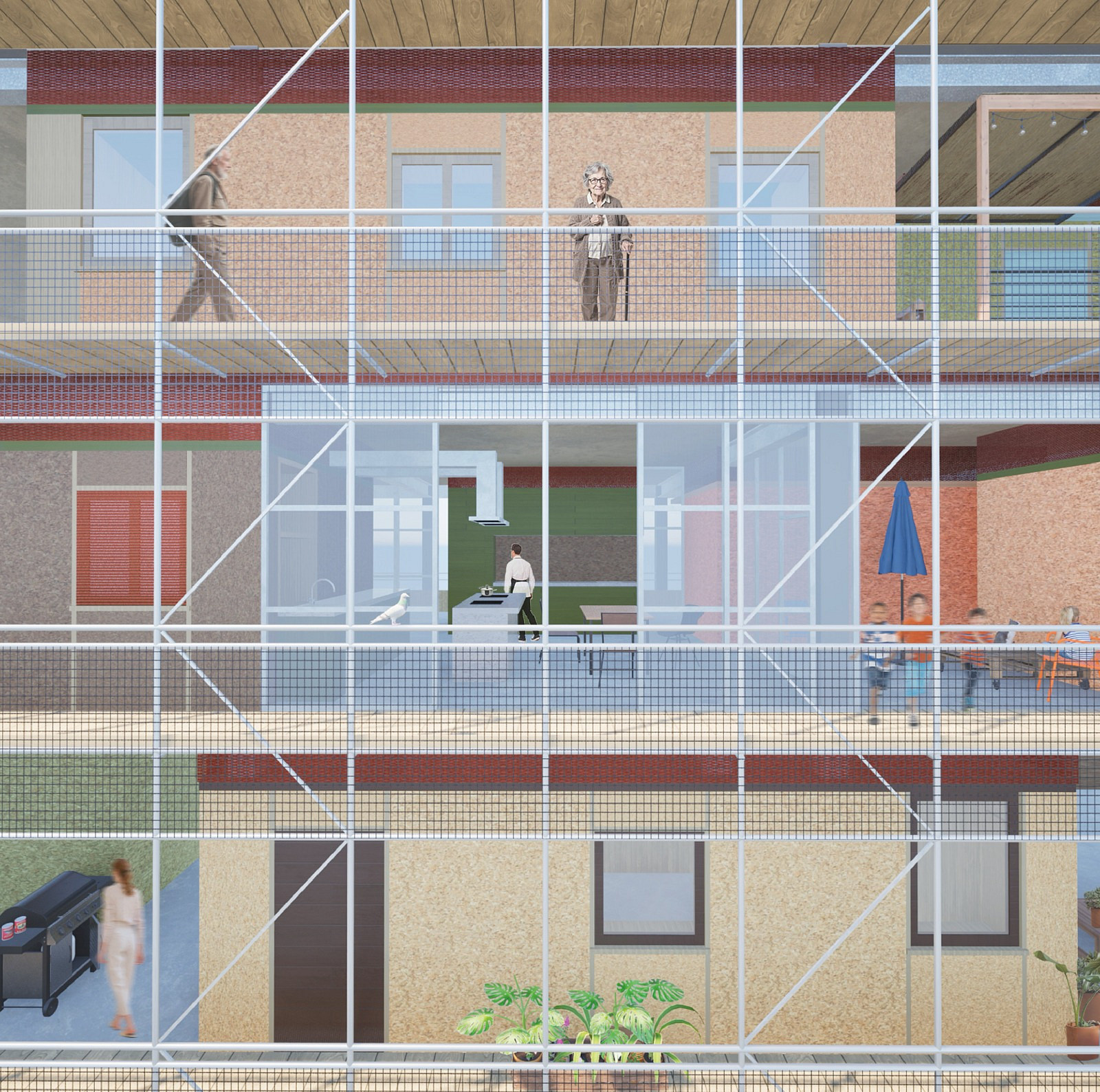
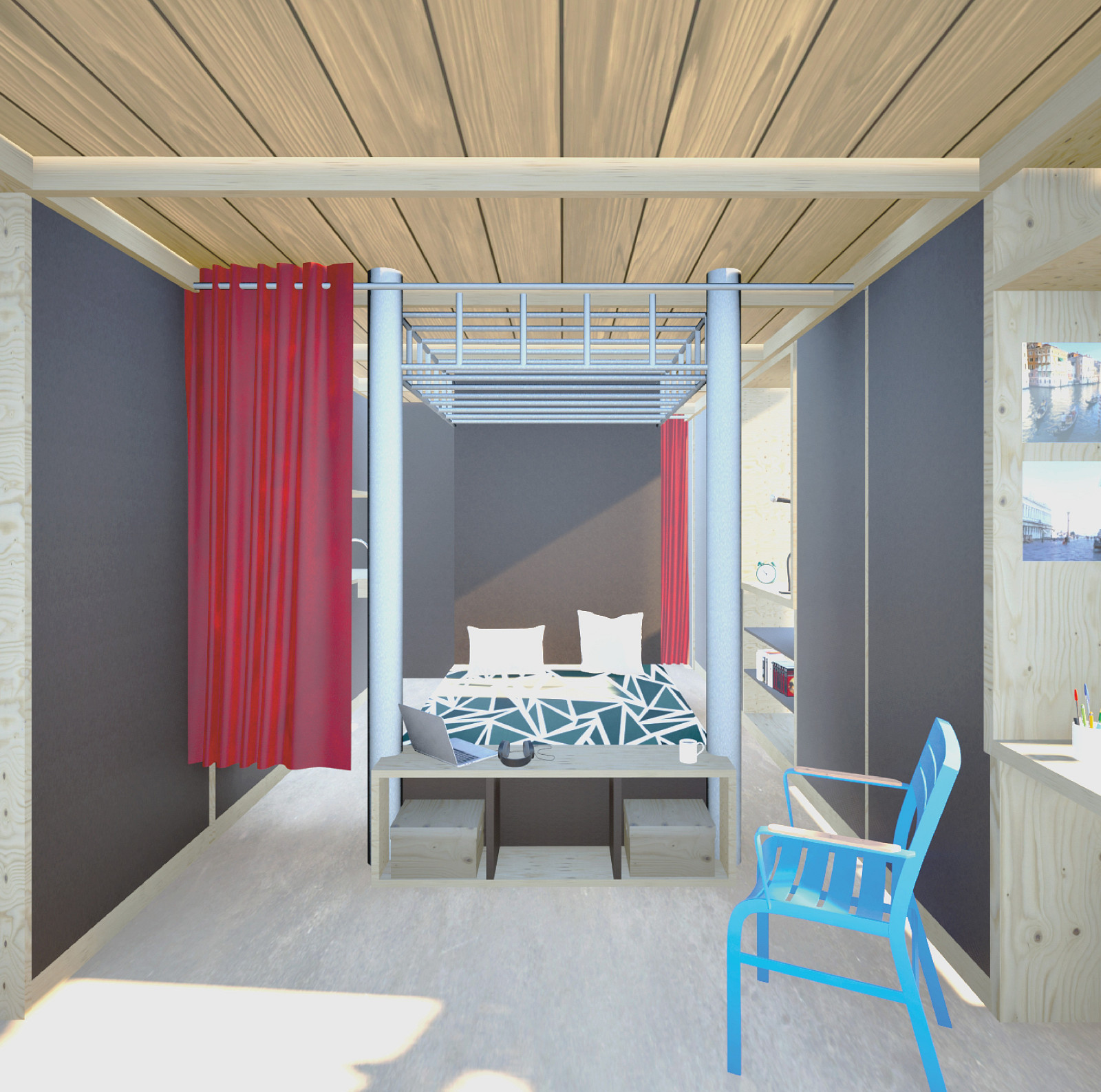
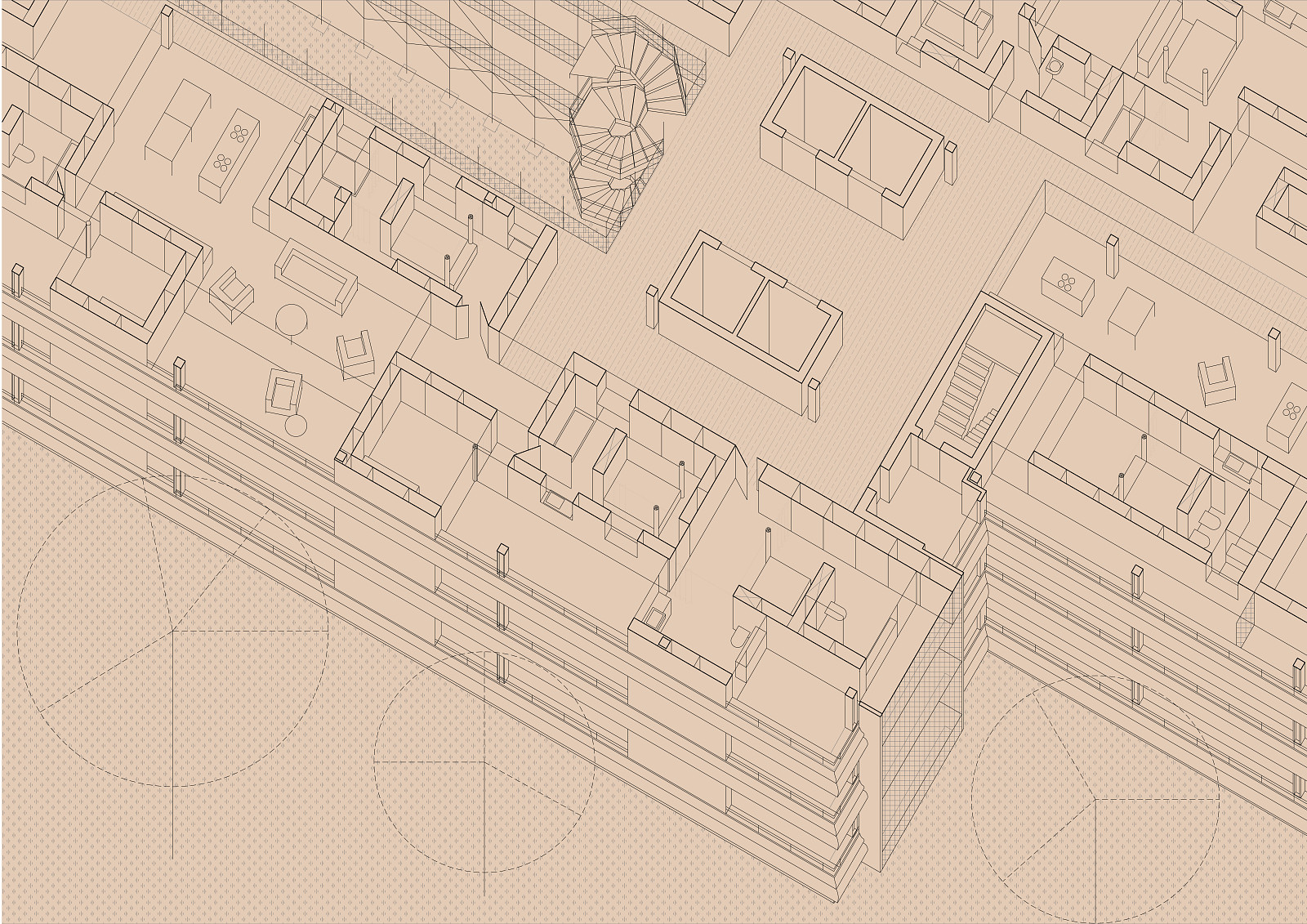
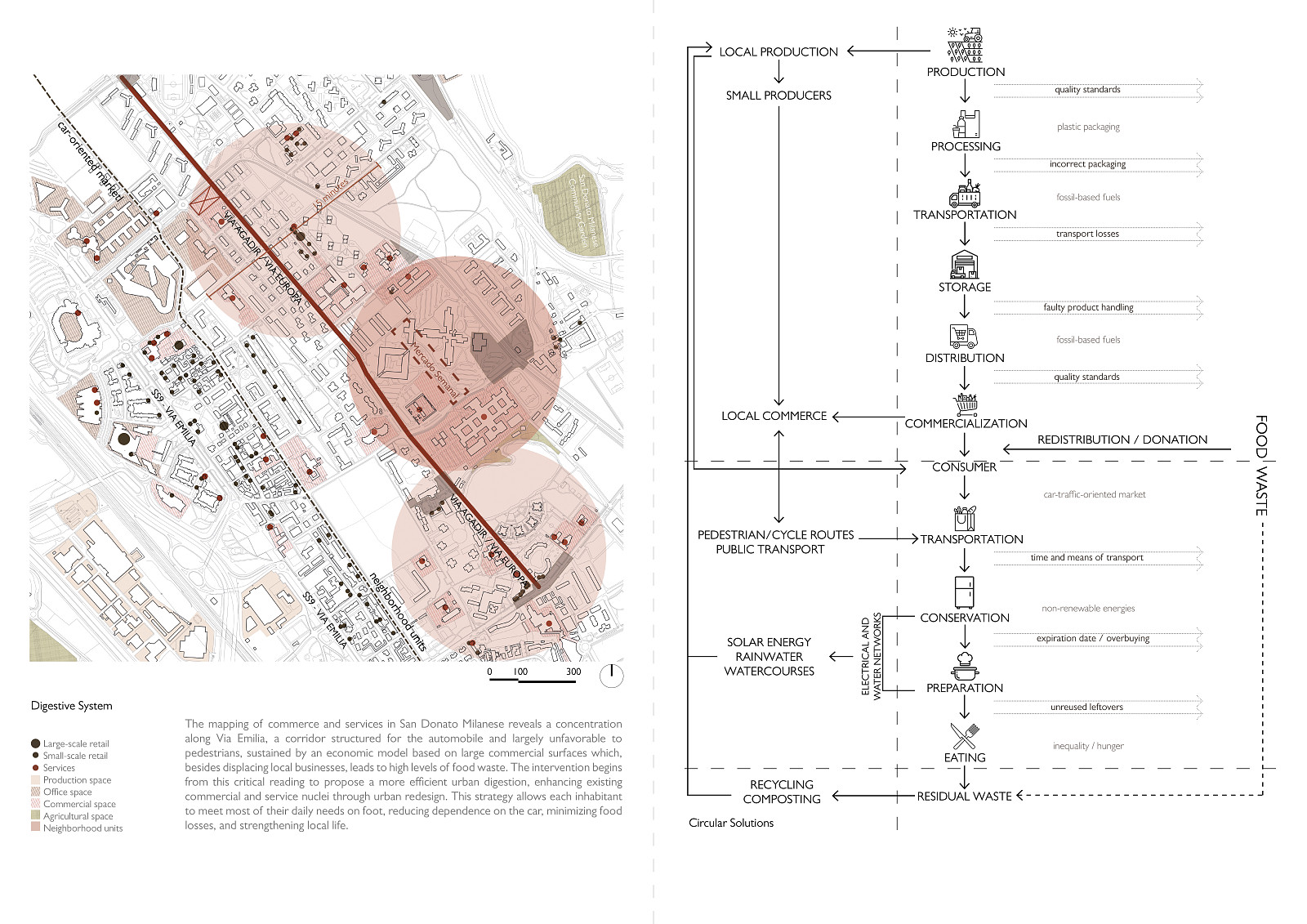
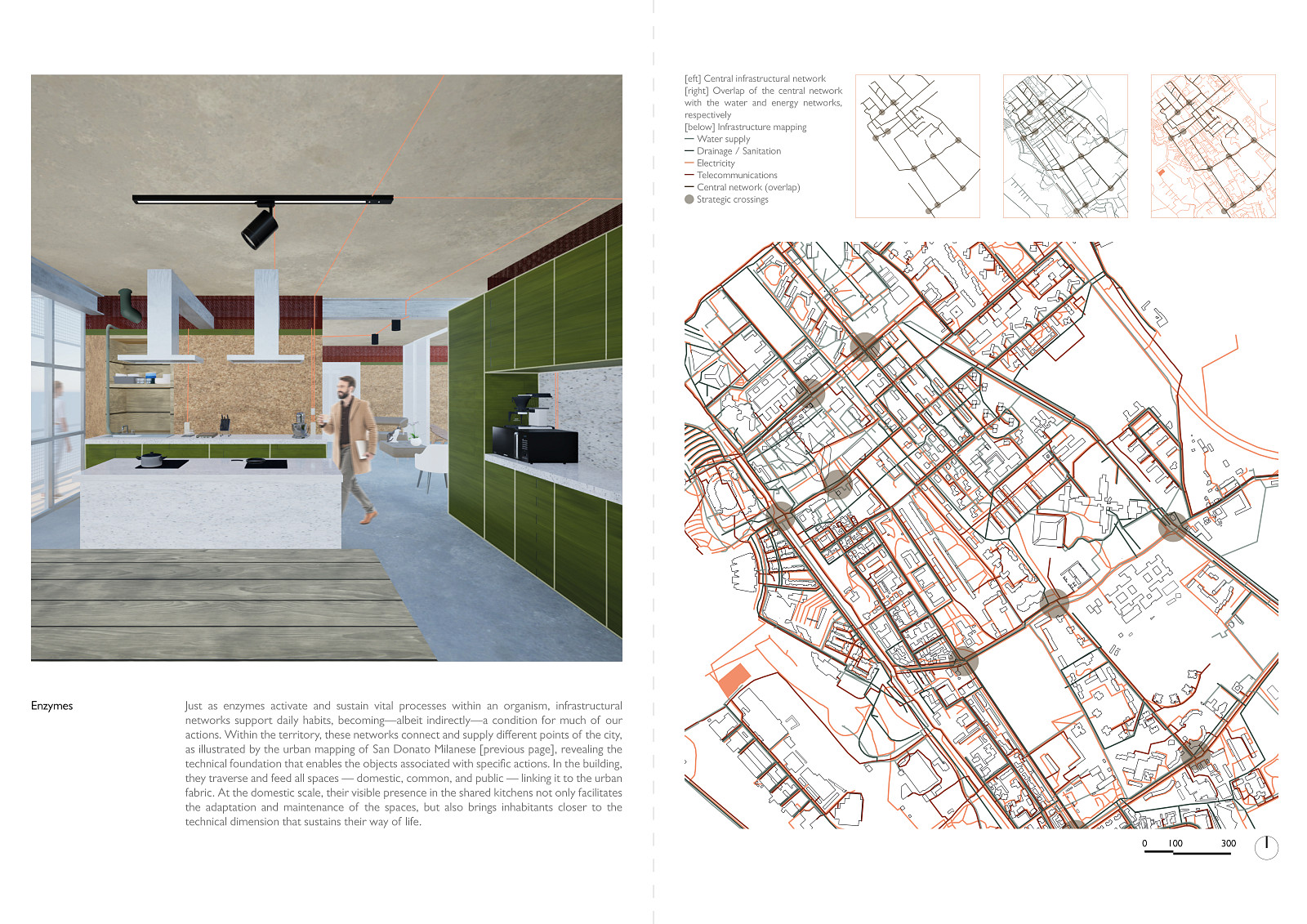
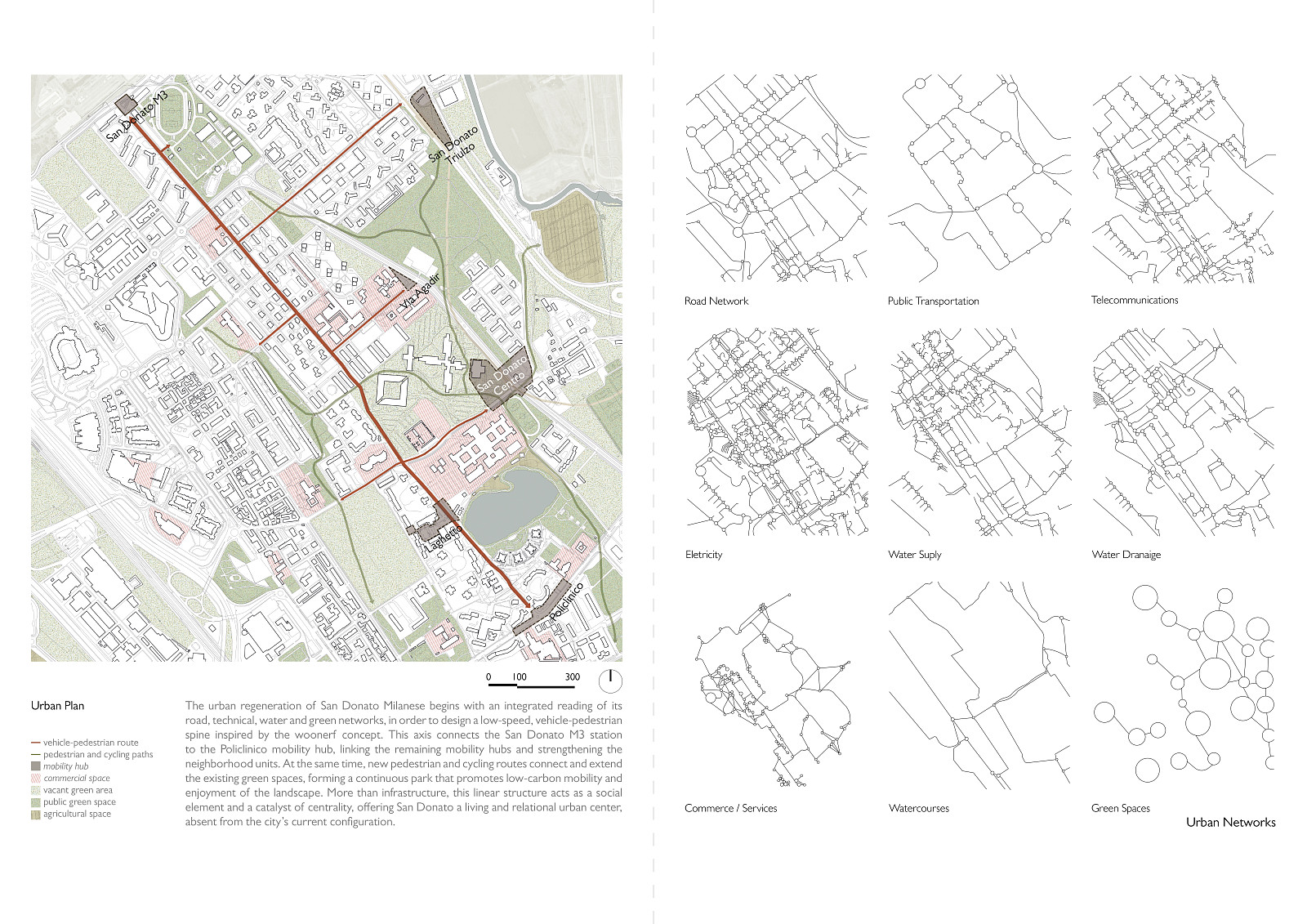
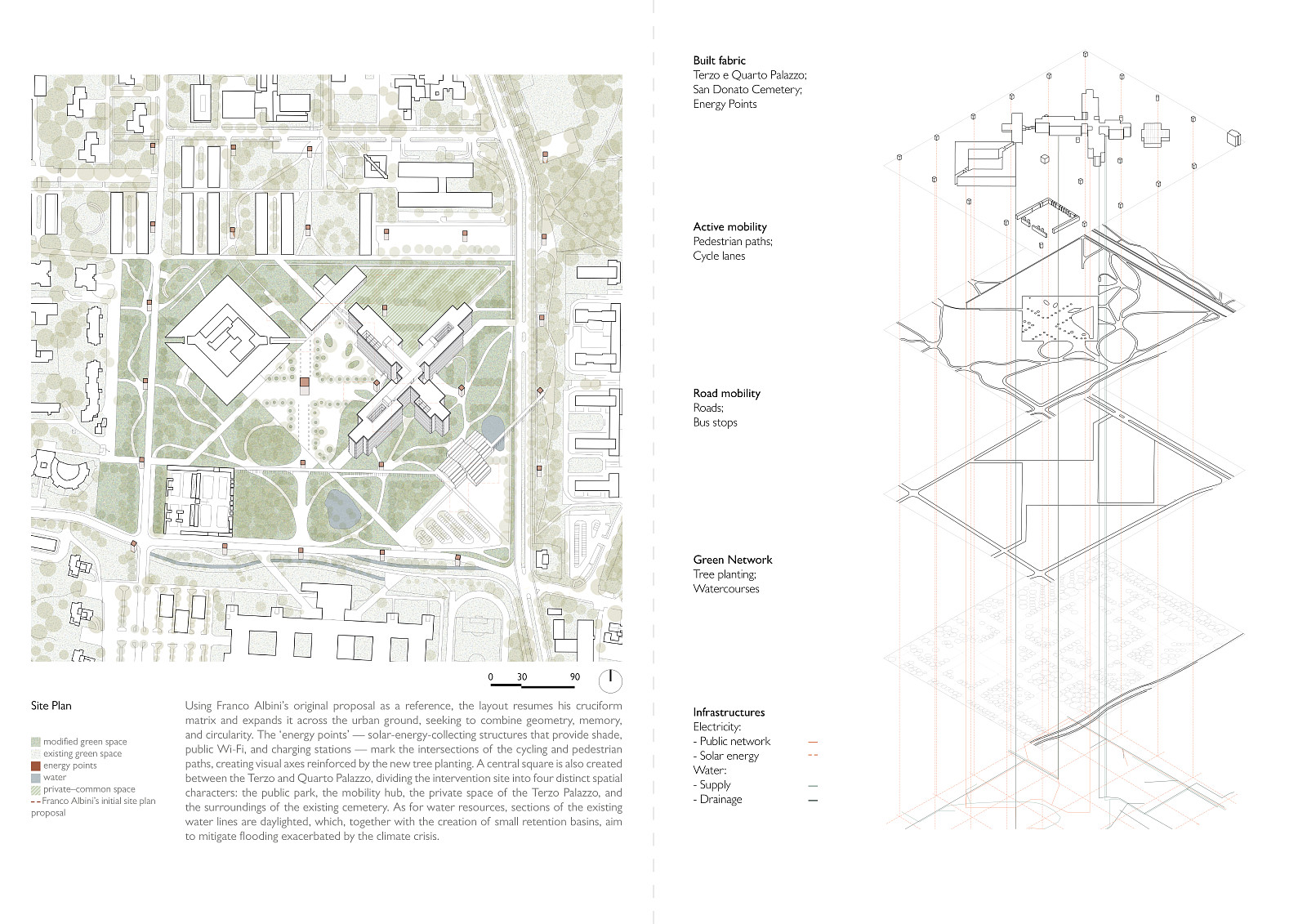
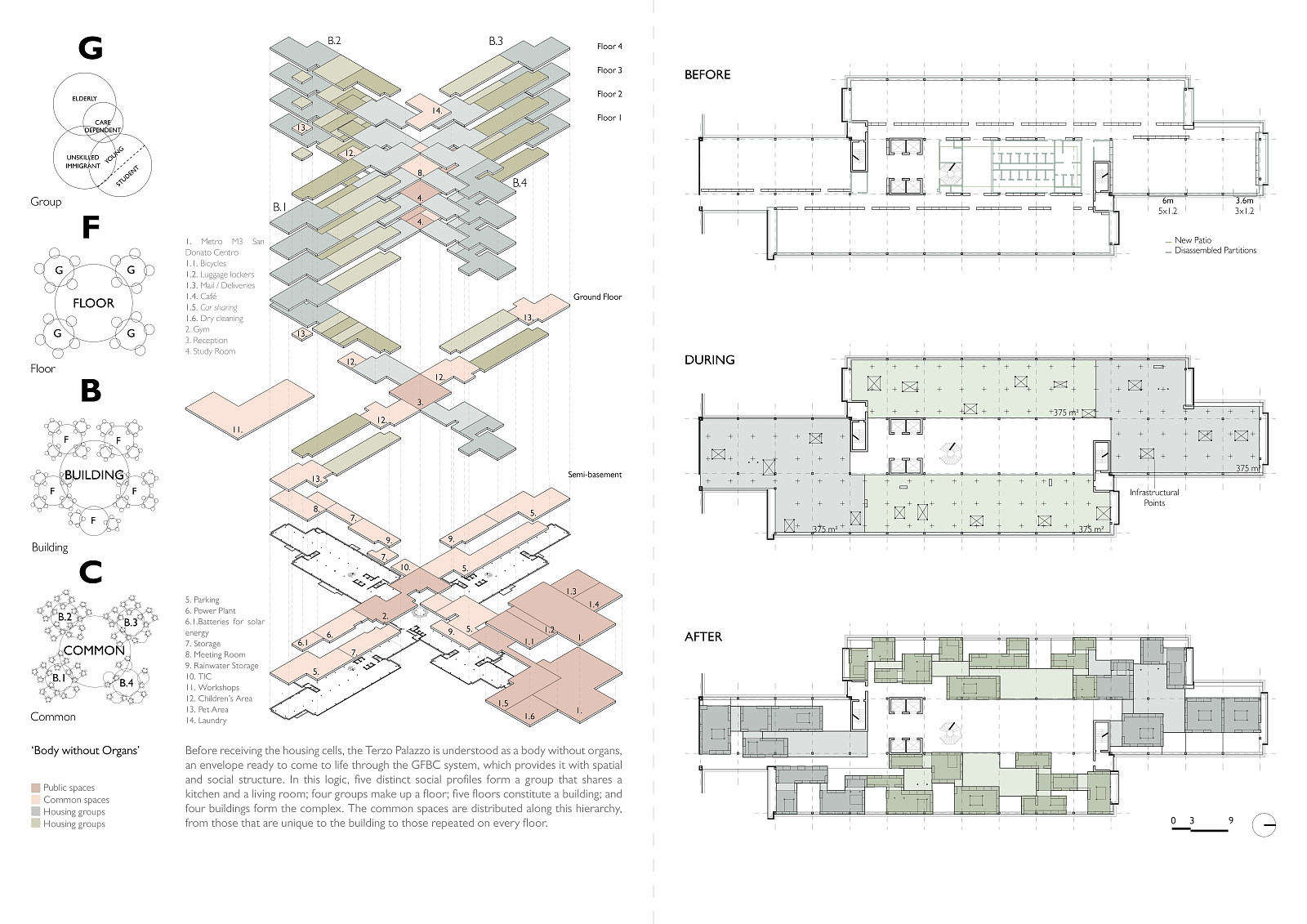
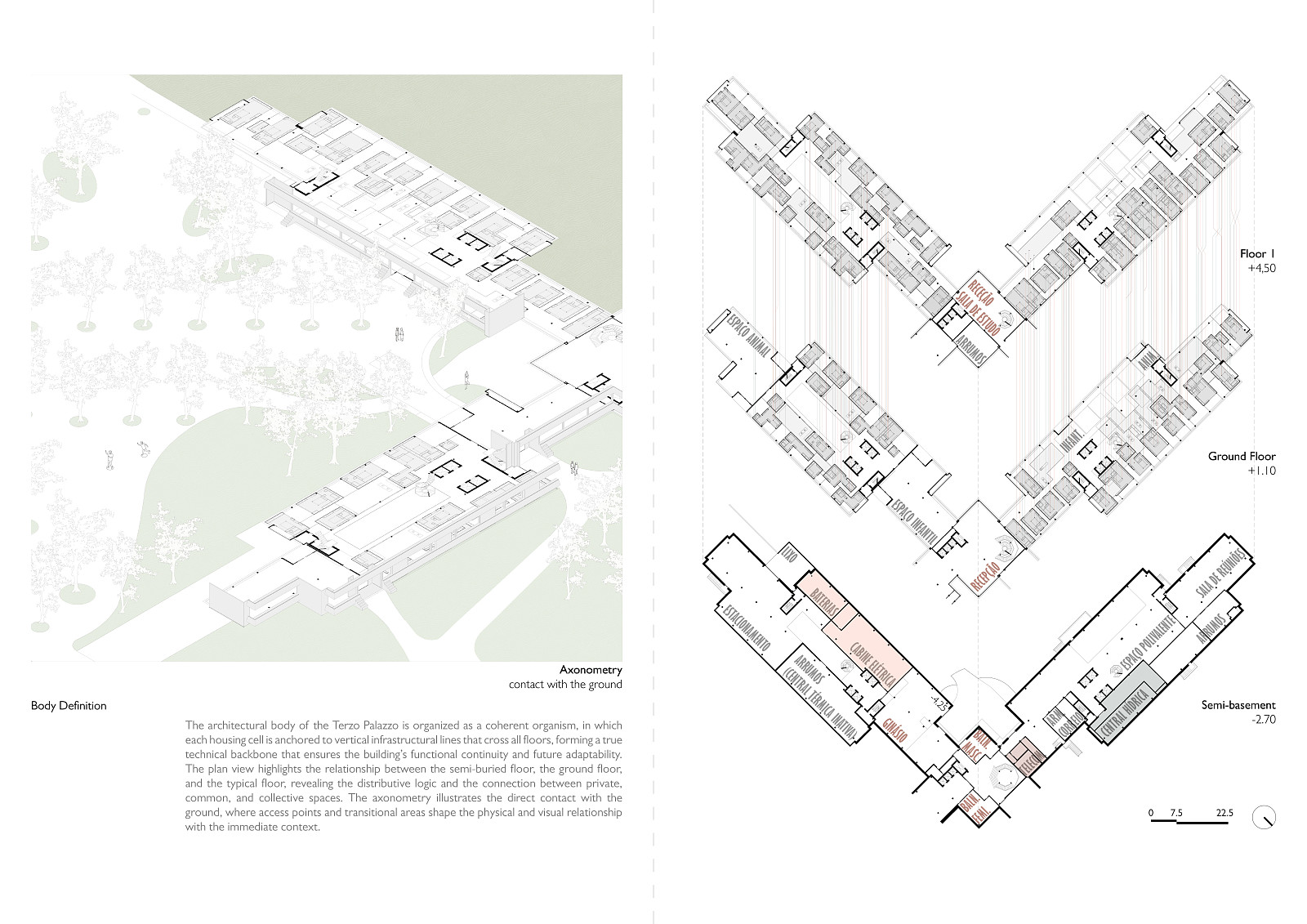
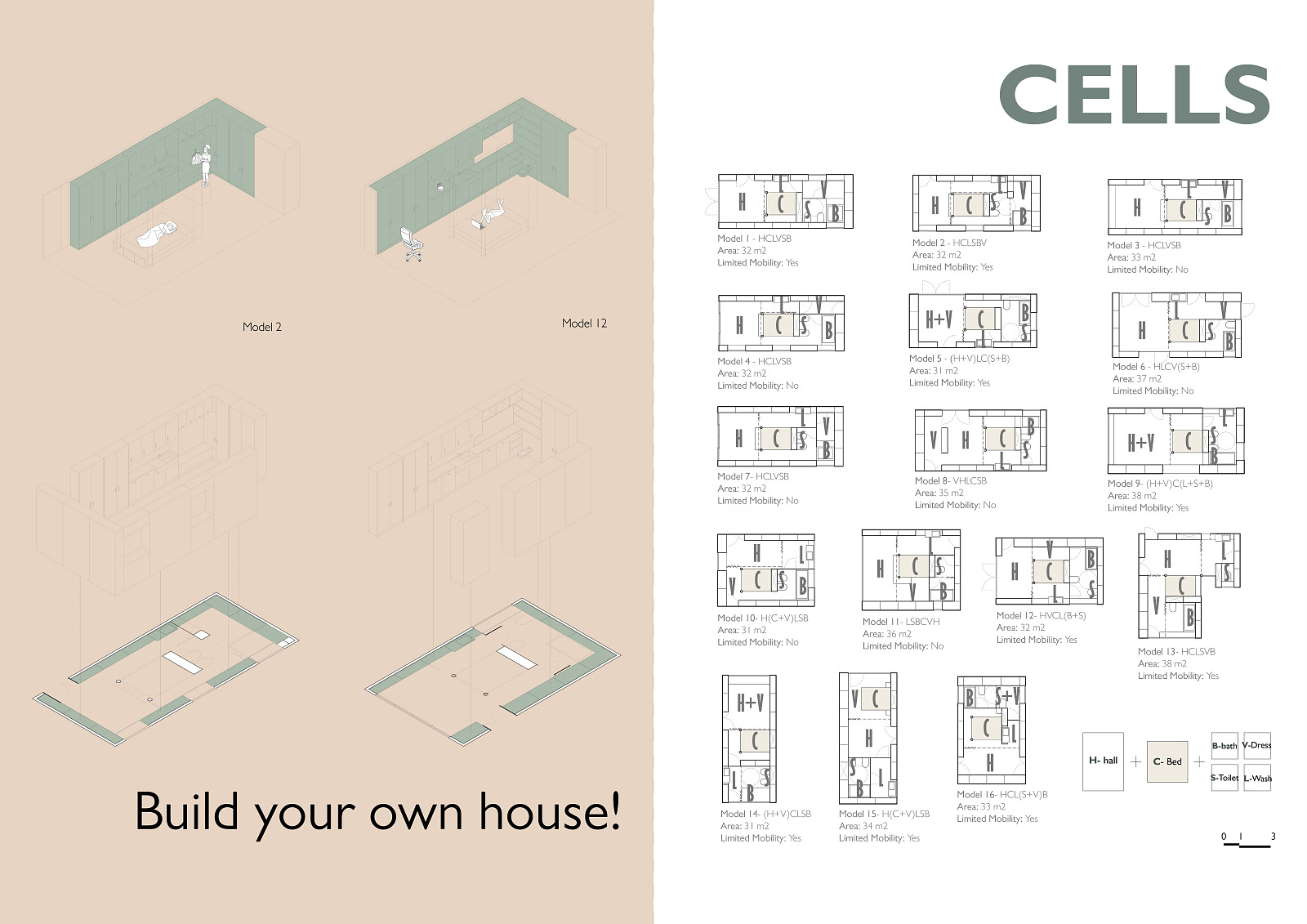
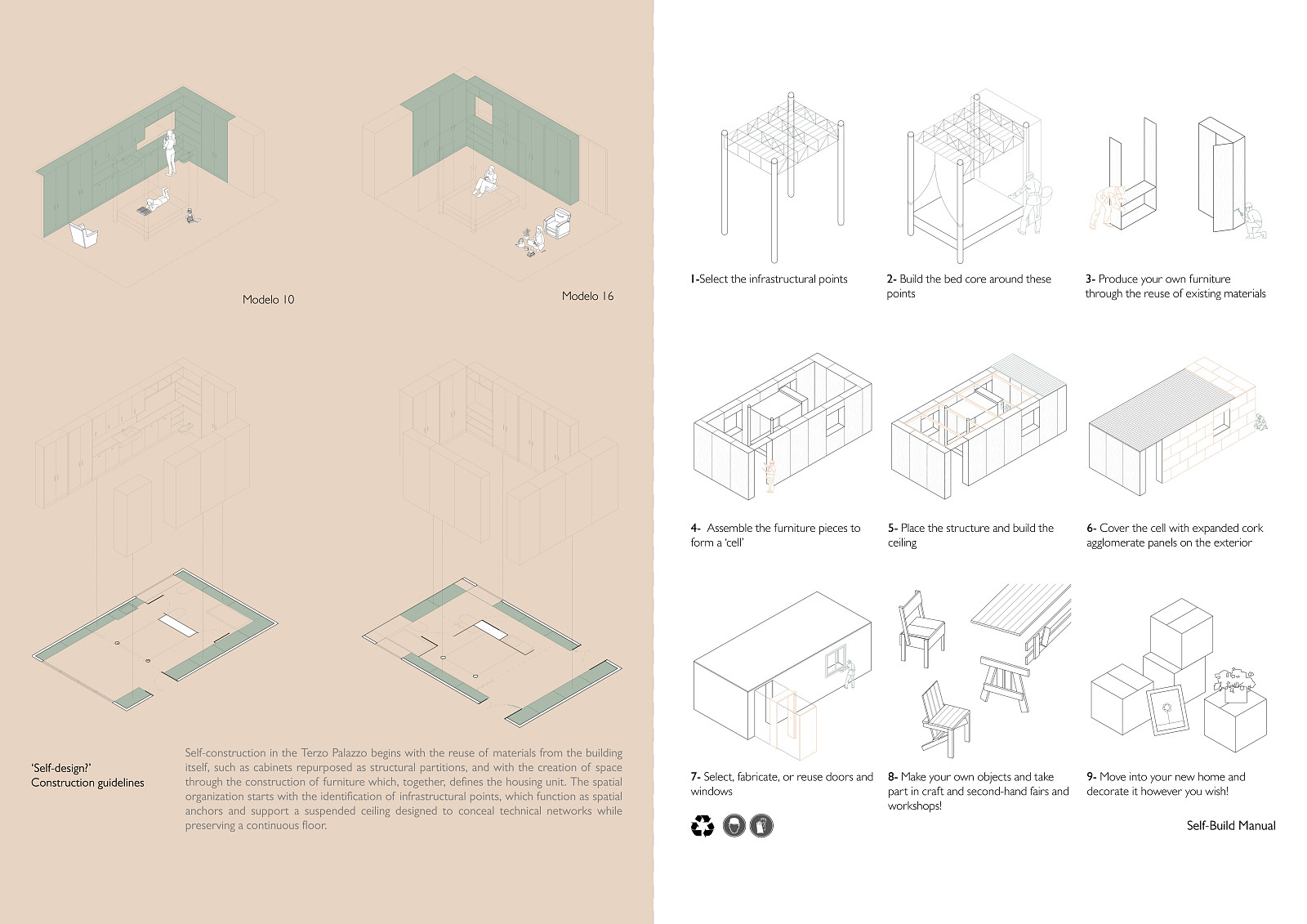
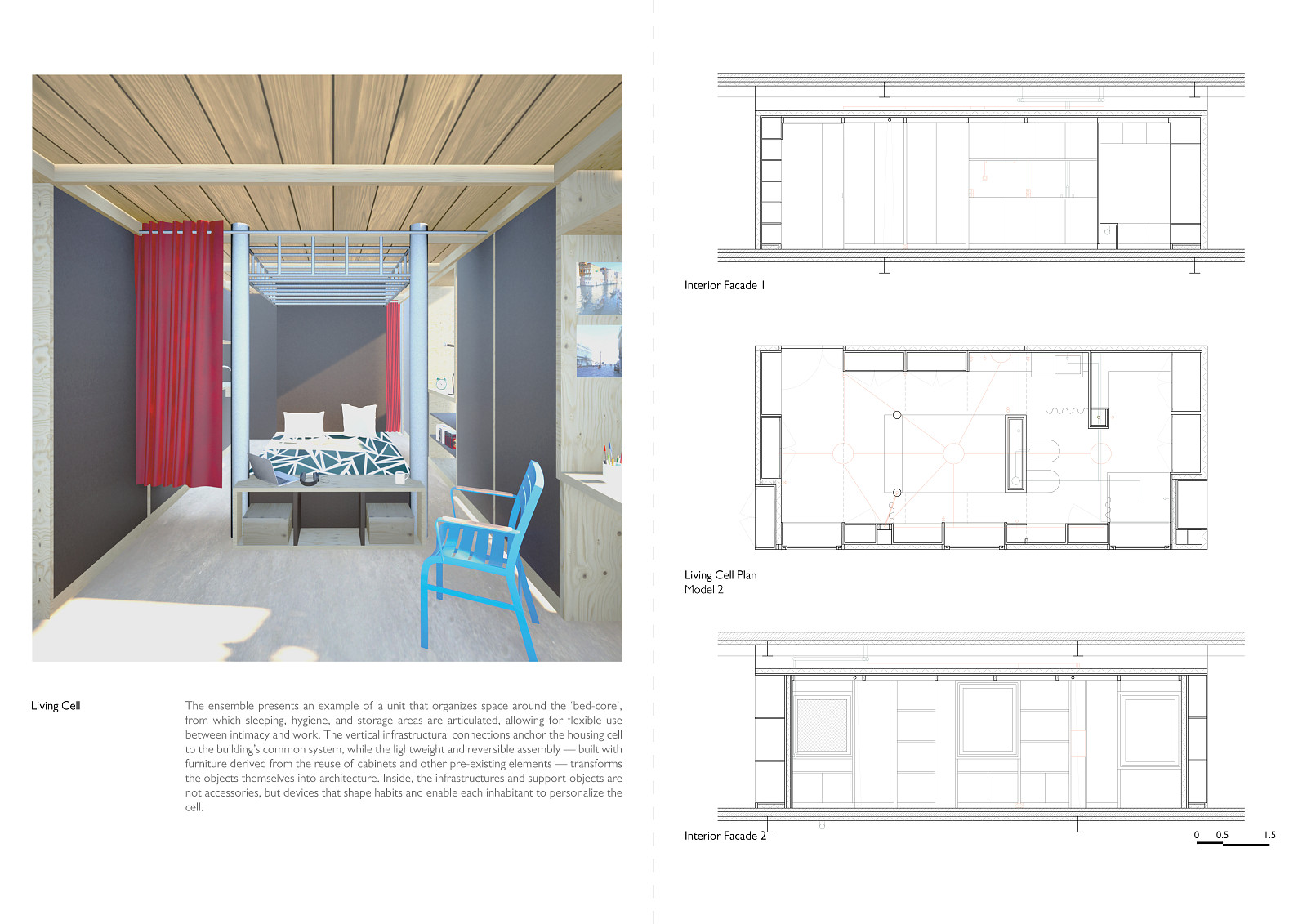
The proposal converts an obsolete ENI office complex into an adaptive residential system rooted in cooperation, care and spatial flexibility. The original cruciform geometry becomes a framework for clusters of five complementary social profiles who share kitchens, living rooms and collective facilities. Vertical infrastructure lines form a technical spine that anchors lightweight, self‑built dwelling cells made from reused furniture components, allowing continuous reconfiguration. Urban strategies reconnect the building to San Donato’s landscape through mobility hubs, pedestrian networks, restored watercourses and a continuous green system, echoing the city’s garden‑city foundations. Through minimal and reversible interventions, the Terzo Palazzo becomes a metabolic, evolving structure capable of absorbing changing social patterns while supporting low‑carbon, circular ways of living.
Technical information
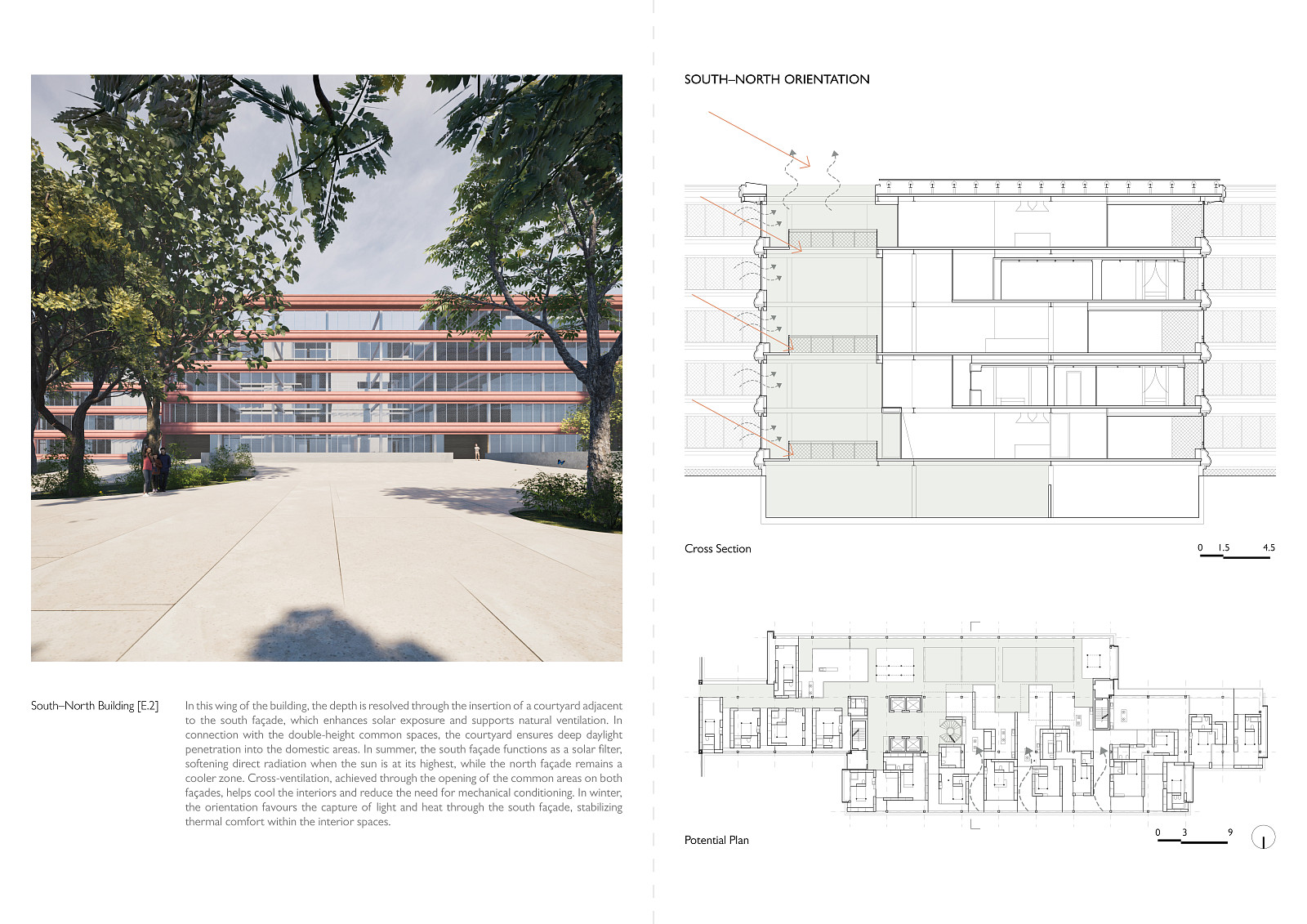
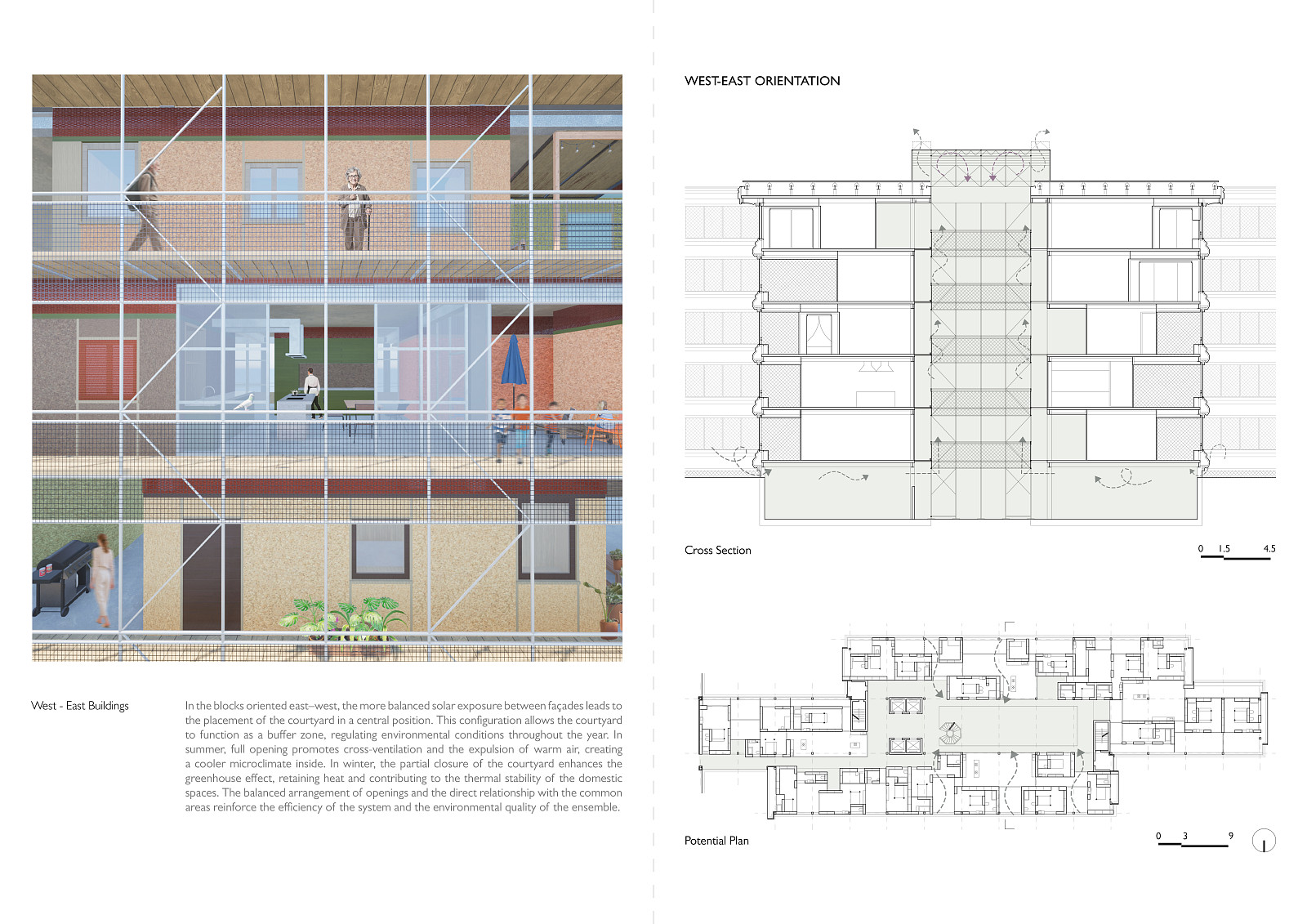
Construction relies on low‑impact, reversible and material‑reuse strategies: dwelling cells are assembled from repurposed cabinets and lightweight timber frames, insulated with expanded cork panels, and anchored to visible infrastructural runs for easy maintenance and future adaptability. Environmental systems include solar “energy points,” rainwater harvesting, daylight‑driven courtyards and cross‑ventilation tailored to each orientation of the cruciform plan. At the urban scale, technical measures include the daylighting of water lines, retention basins, and low‑speed pedestrian corridors inspired by woonerf principles. The entire system functions through circularity—minimal demolition, reuse of materials, participatory construction, and an infrastructure‑first logic that ensures long‑term flexibility and reduced ecological impact.
Created in:


Copyright © 2026 INSPIRELI | All rights reserved. Use of this website signifies your agreement to the Terms of Use, Privacy Policy, and use of cookies.
