Río Blanco: Eco-Tourism in Chile


Project idea
The project is located in Río Blanco, a small settlement in the Chilean Andes, shaped by its natural landscape and railway history. The concept is based on the idea of “railway logic as a branching system of circulation”, translating infrastructural growth into spatial organization.
Inspired by the historical railway station that once brought movement and development to the area, the project reinterprets this dynamic as an architectural strategy. A linear sequence evolves into a system of branching paths, reflecting both expansion and connection. The design aims to integrate landscape, movement, and history into a cohesive spatial experience.
Project description
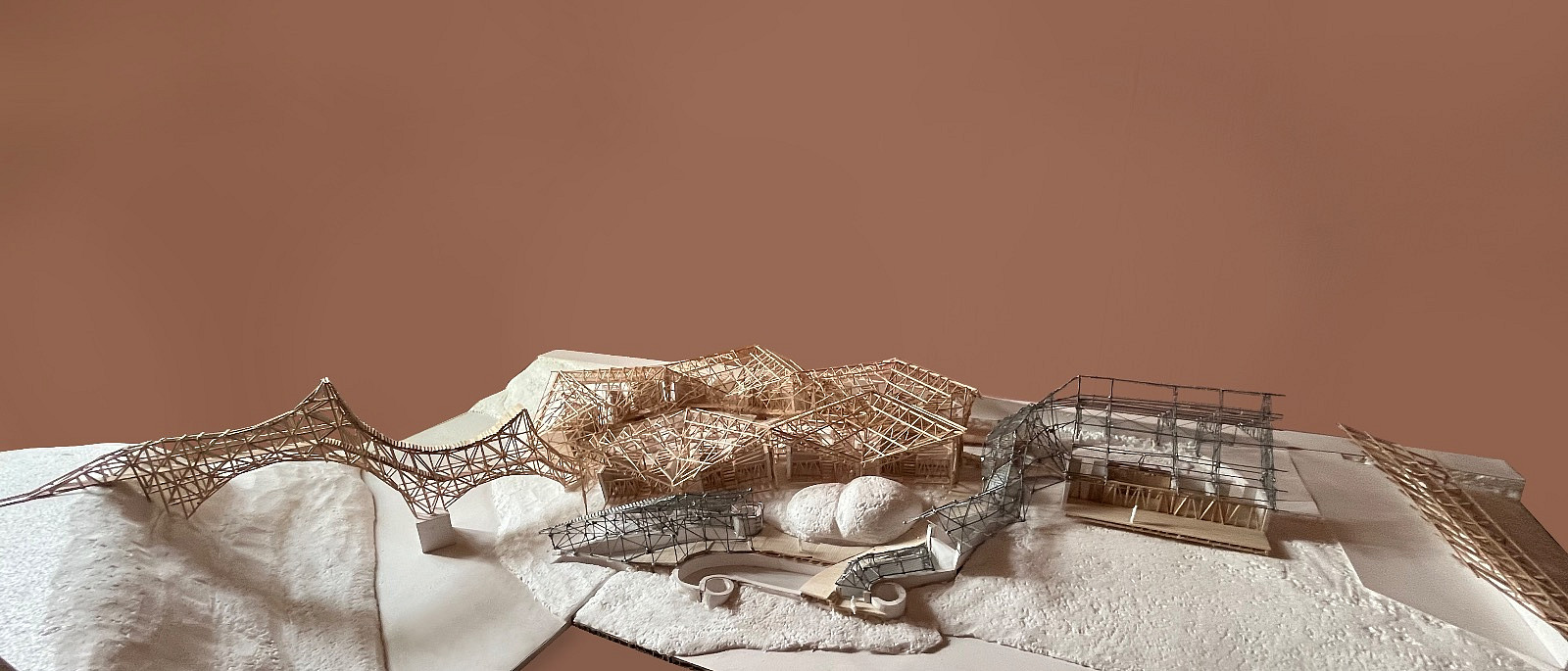
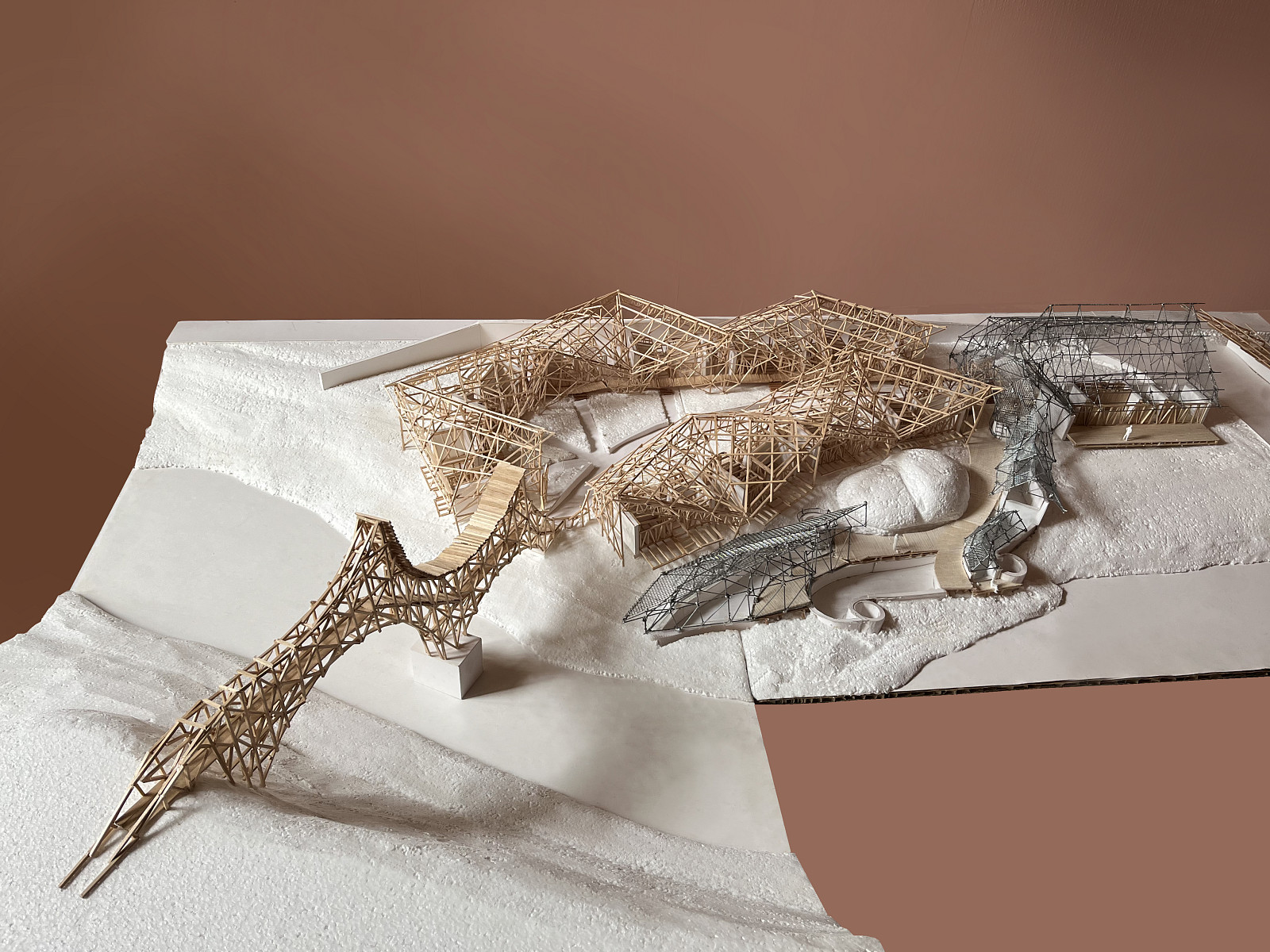
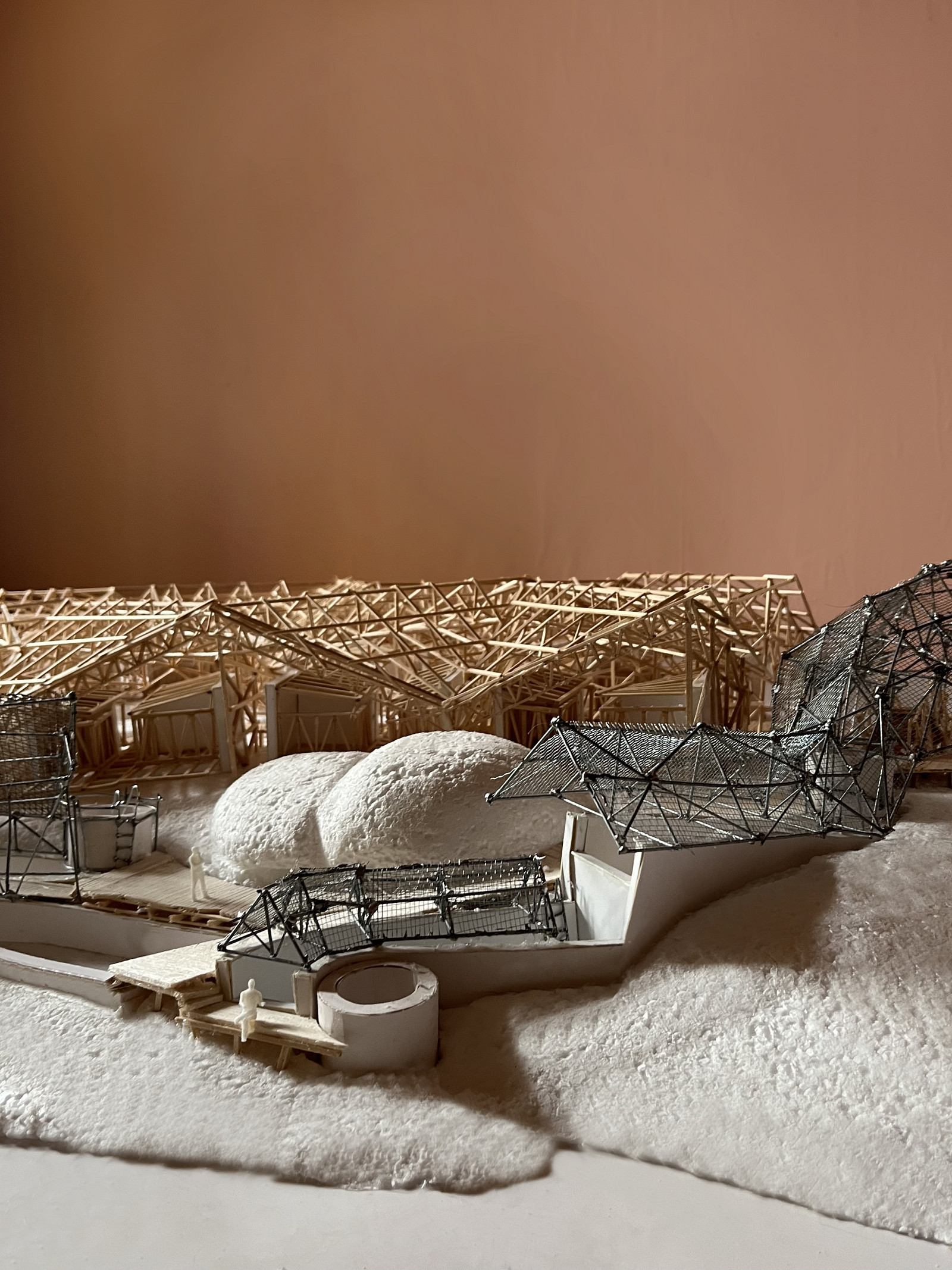
The project proposes an eco-tourism complex that combines accommodation, wellness, and cultural functions. The program includes lodging units for approximately 50 guests, a spa area located along the river, a reception and arrival zone, parking facilities, and a museum dedicated to the railway history of the region.
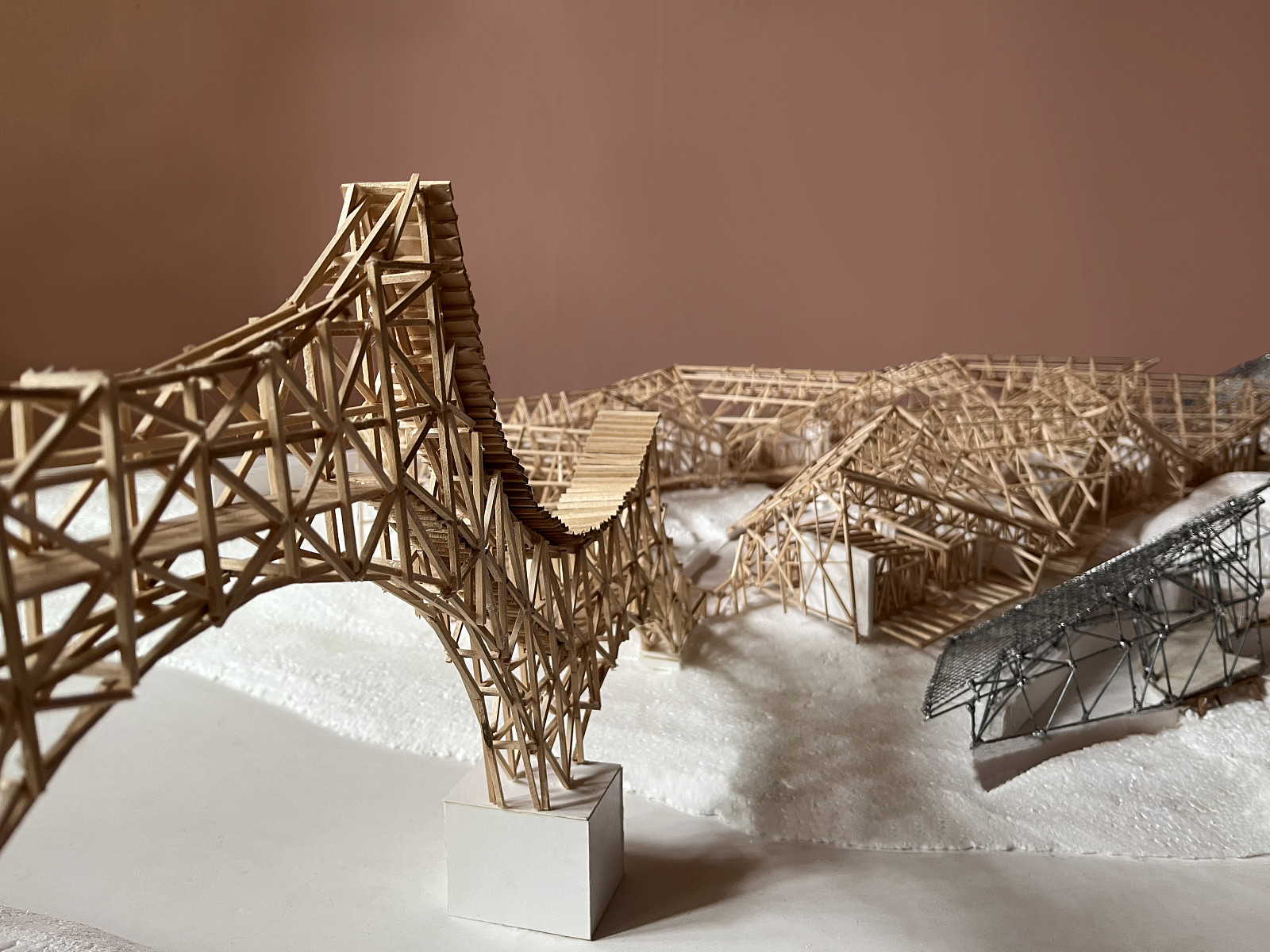
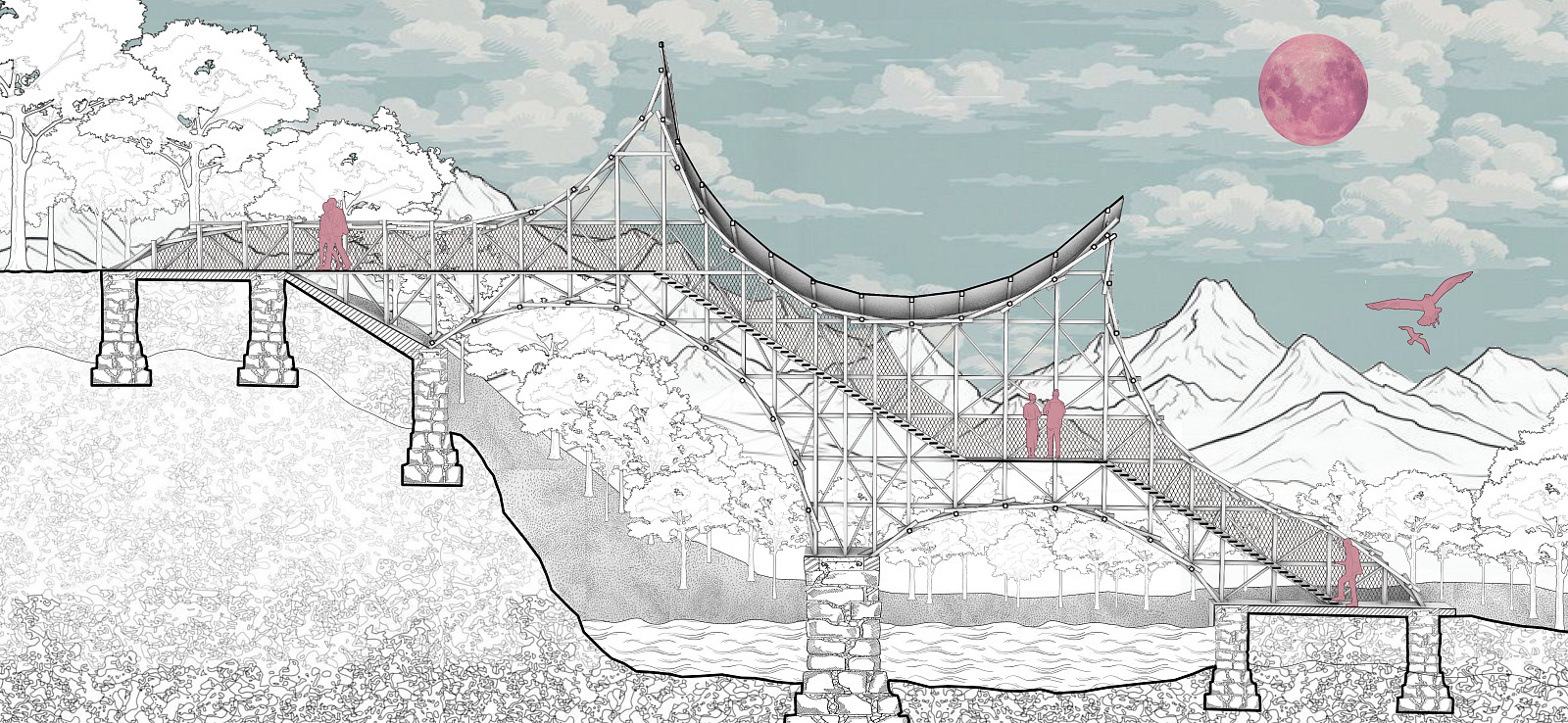
The spatial organization follows a clear sequence: from a defined point of arrival, the building gradually branches into different programmatic zones. Two main arms accommodate the lodging units, while another extends towards the river, forming the spa area. The composition culminates in a bridge that connects the site to the historic railway station across the river, acting as both a physical and conceptual climax of the project.
Technical information
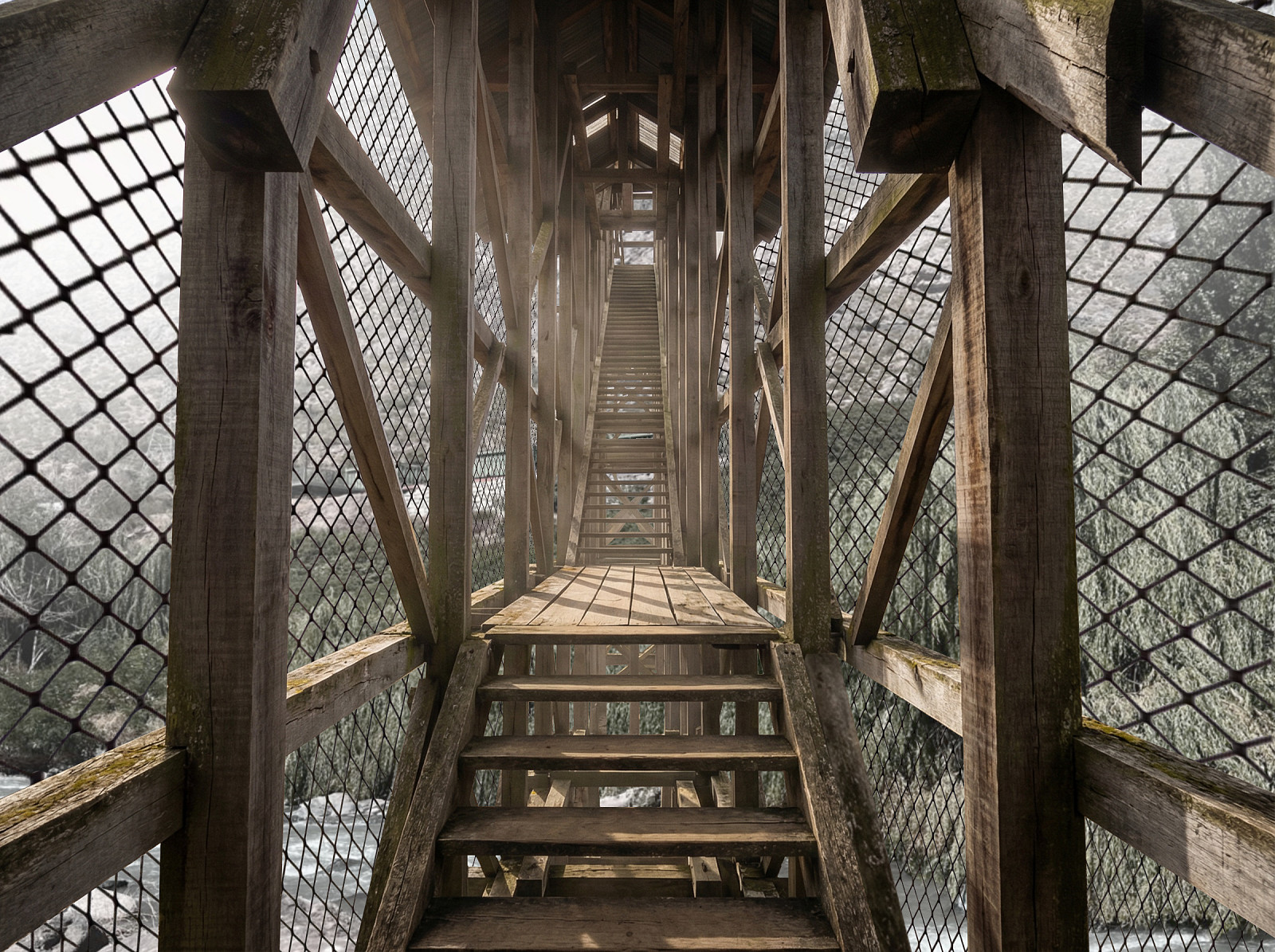
The project is primarily conceived as a timber construction, emphasizing sustainability and integration with the natural environment. Structural systems follow a modular logic, expressing growth and branching through repetitive elements.
In addition to timber, load-bearing stone walls and steel-glass structures are introduced to respond to specific functional and structural requirements. The overall construction strategy considers the seismic conditions of Chile, incorporating frame-based systems to ensure stability and flexibility.
The buildings are adapted to the extreme climate of the chilean pre-cordilleran zone. Extended roof structures provide shading against intense summer heat, while steep roof geometries allow for efficient snow shedding during winter.
The bridge is designed as a timber structure combining interlocking arch principles inspired by the bridge of Leonardo da Vinci with a braced framework system, supported by natural stone foundations. The architecture follows the topography, reinforcing the connection between built form and landscape.

Copyright © 2026 INSPIRELI | All rights reserved. Use of this website signifies your agreement to the Terms of Use, Privacy Policy, and use of cookies.