
Hospital(ity) — Adaptive Reuse of a Hospital Complex


Project idea
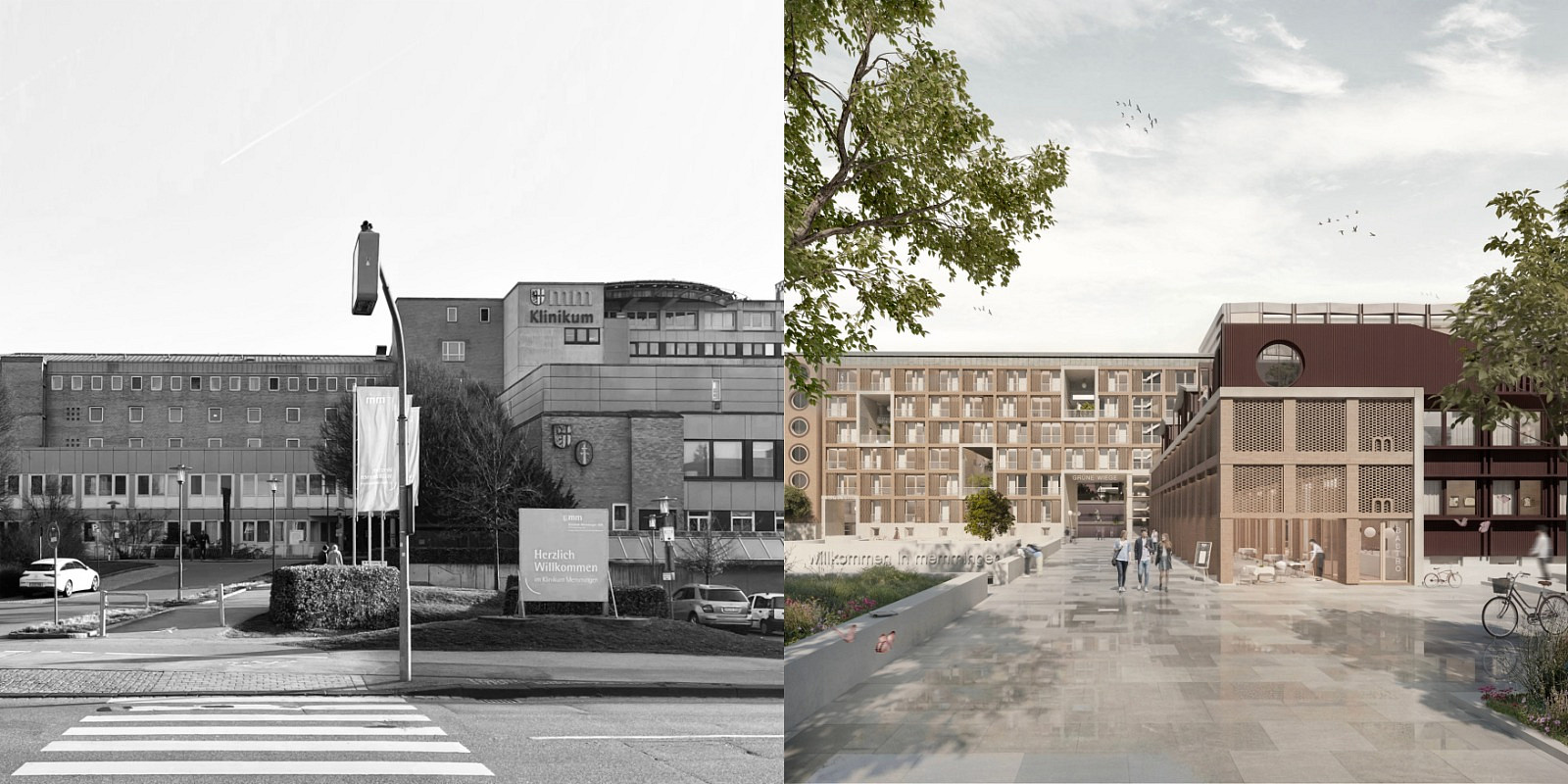
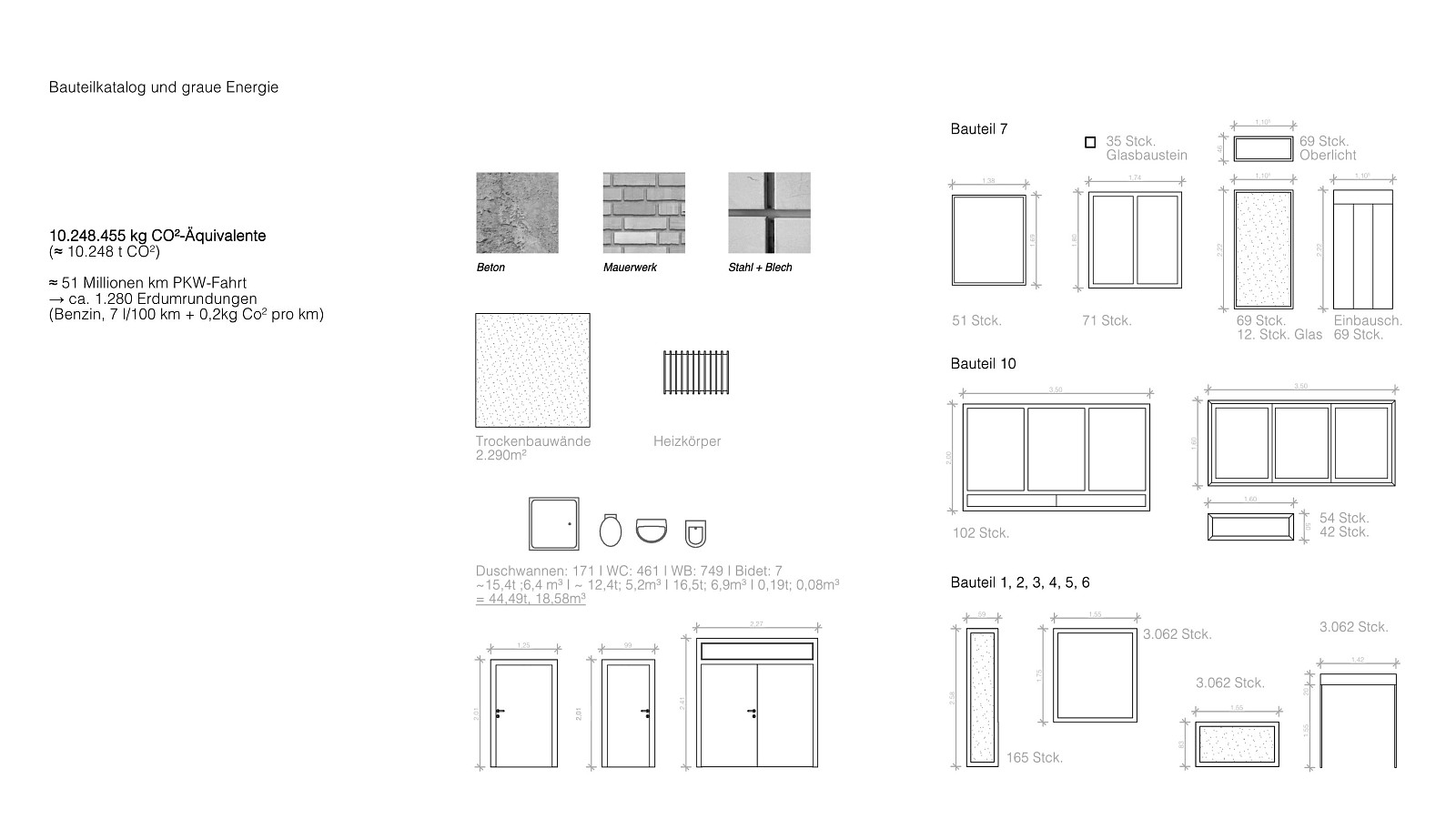
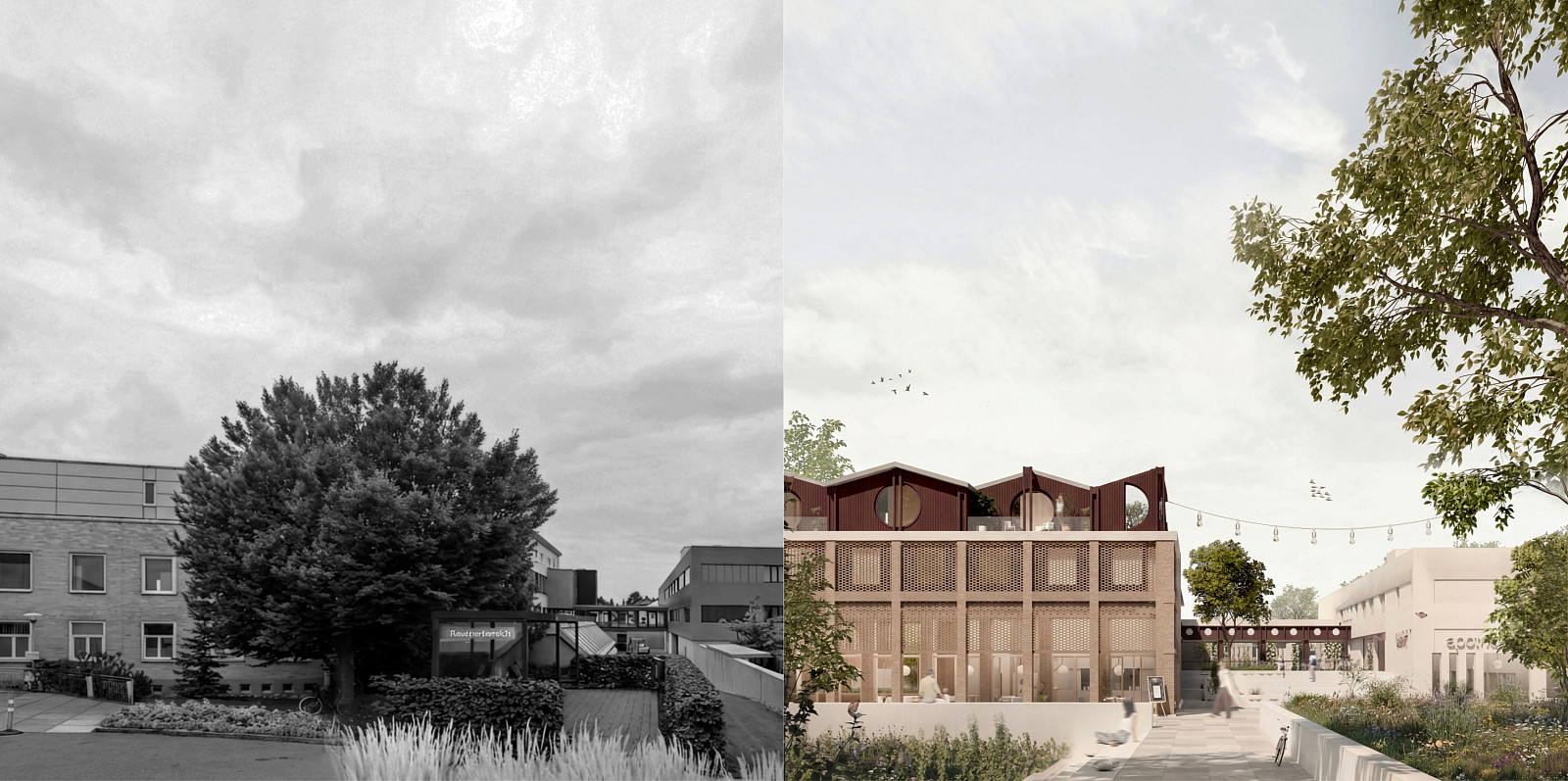
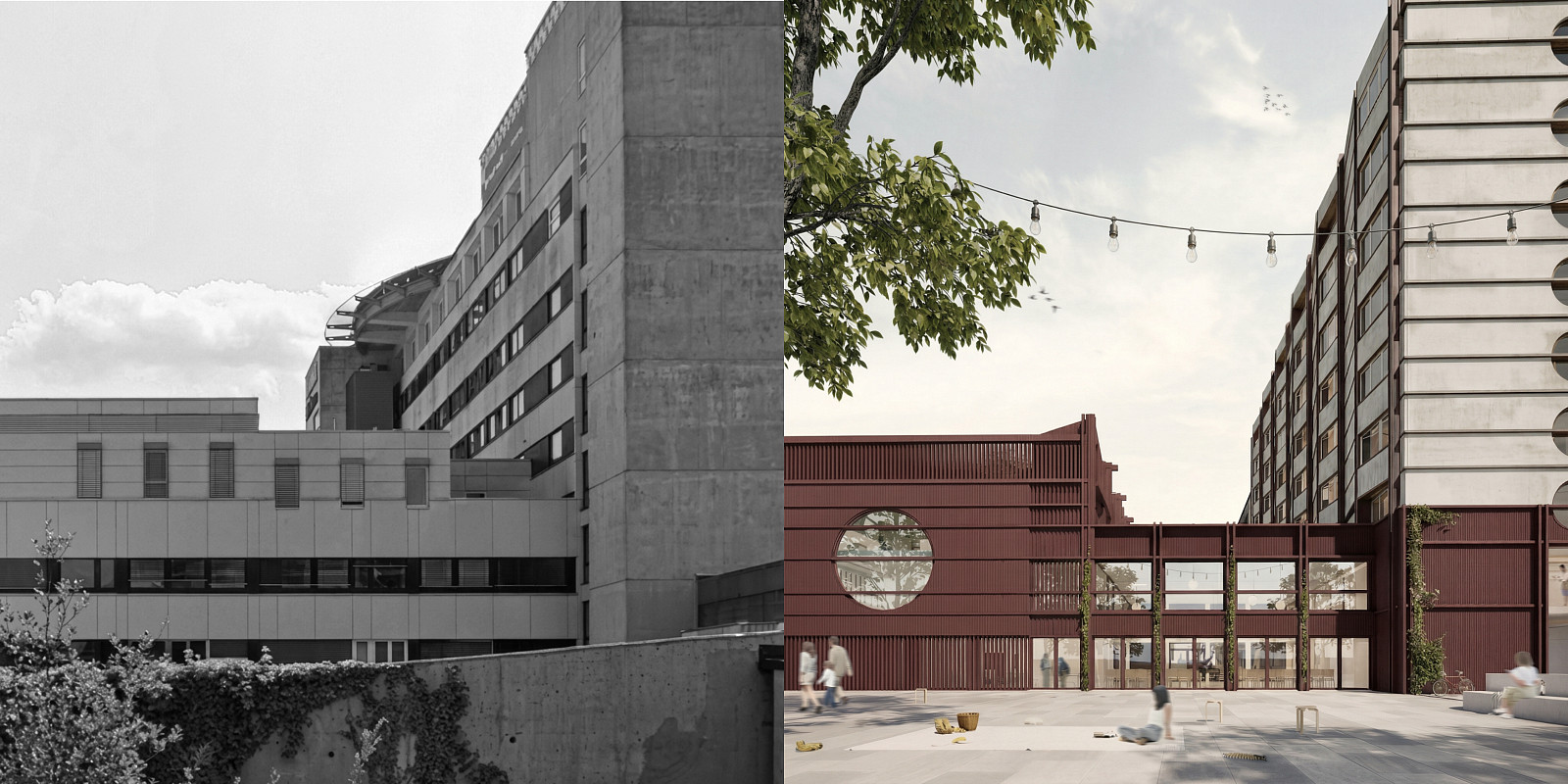
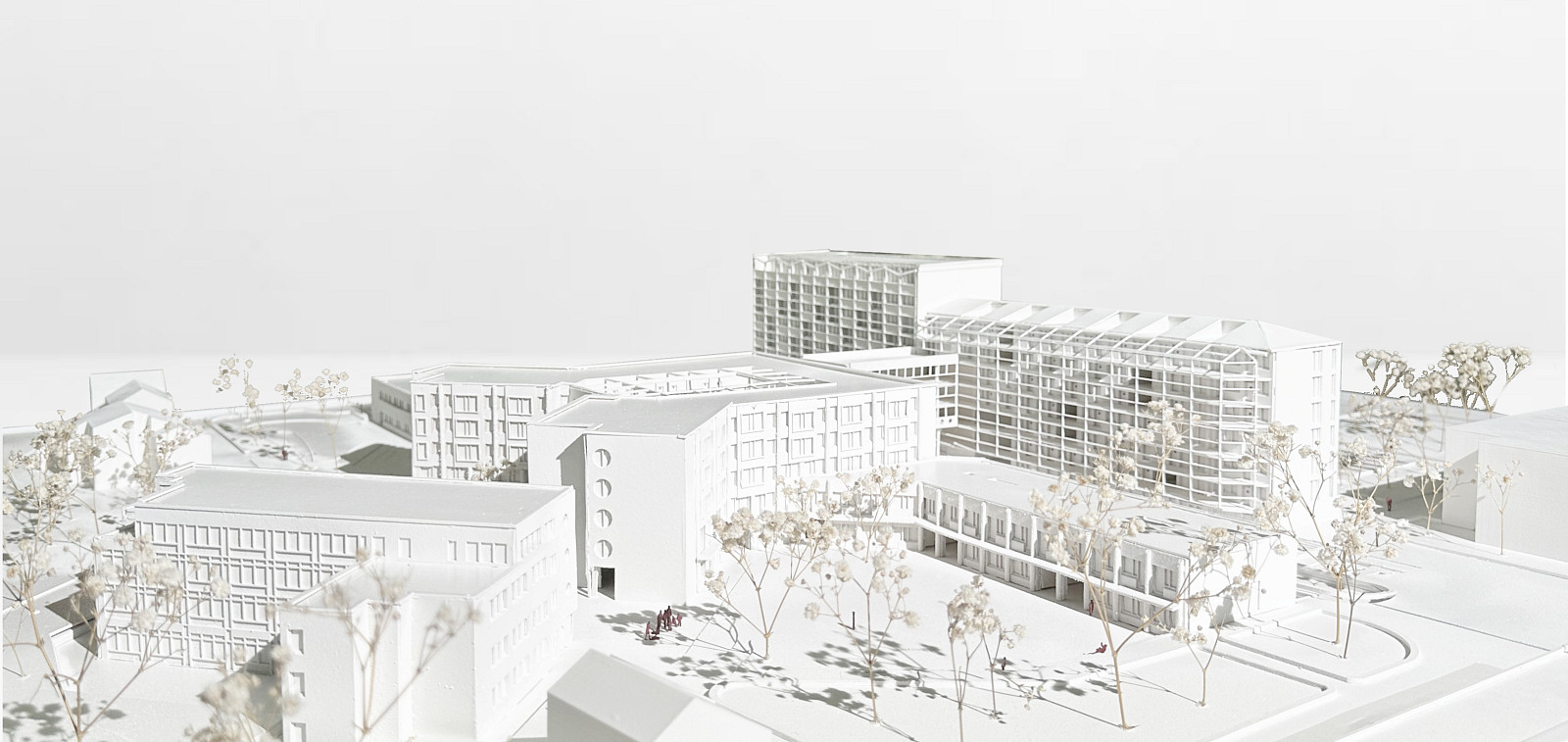
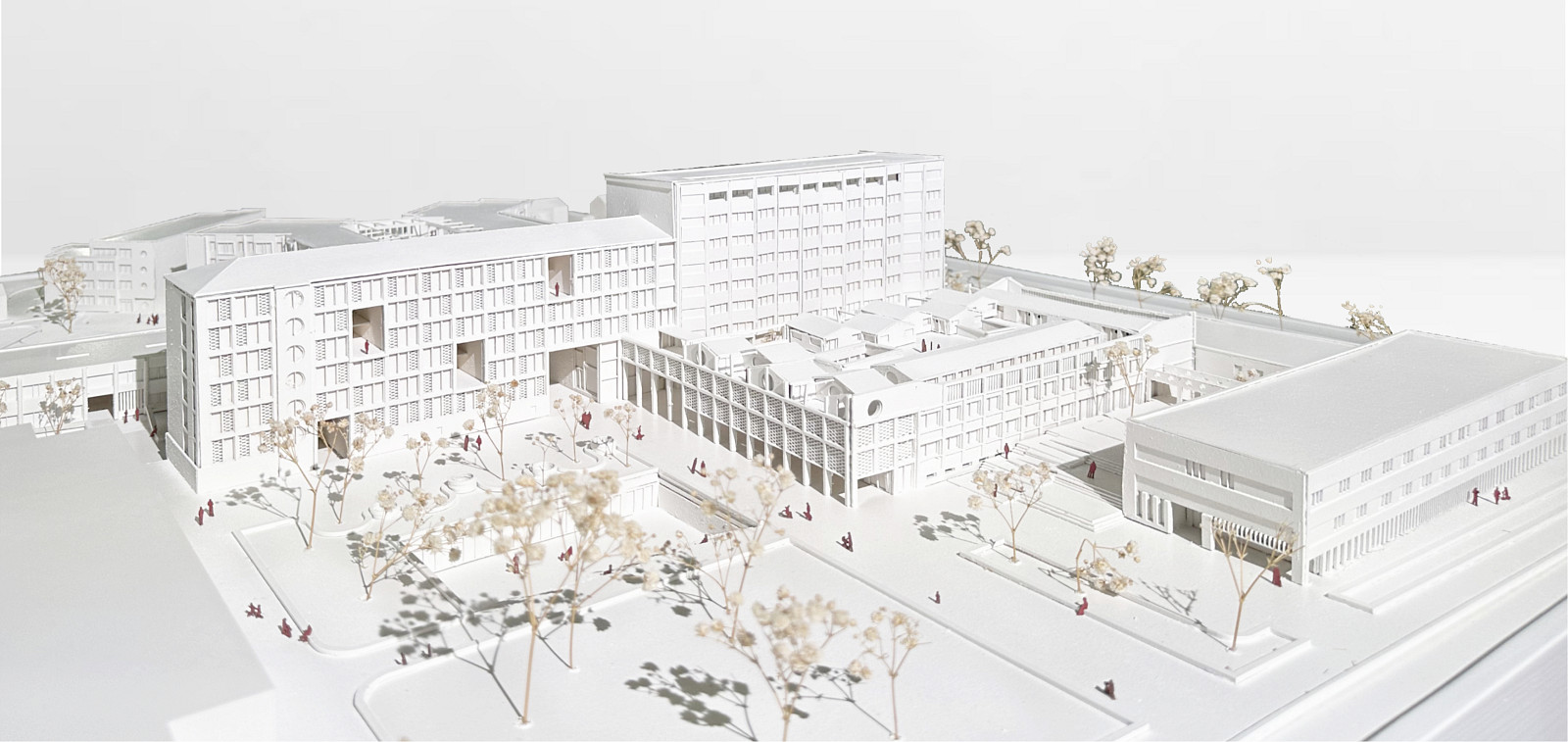
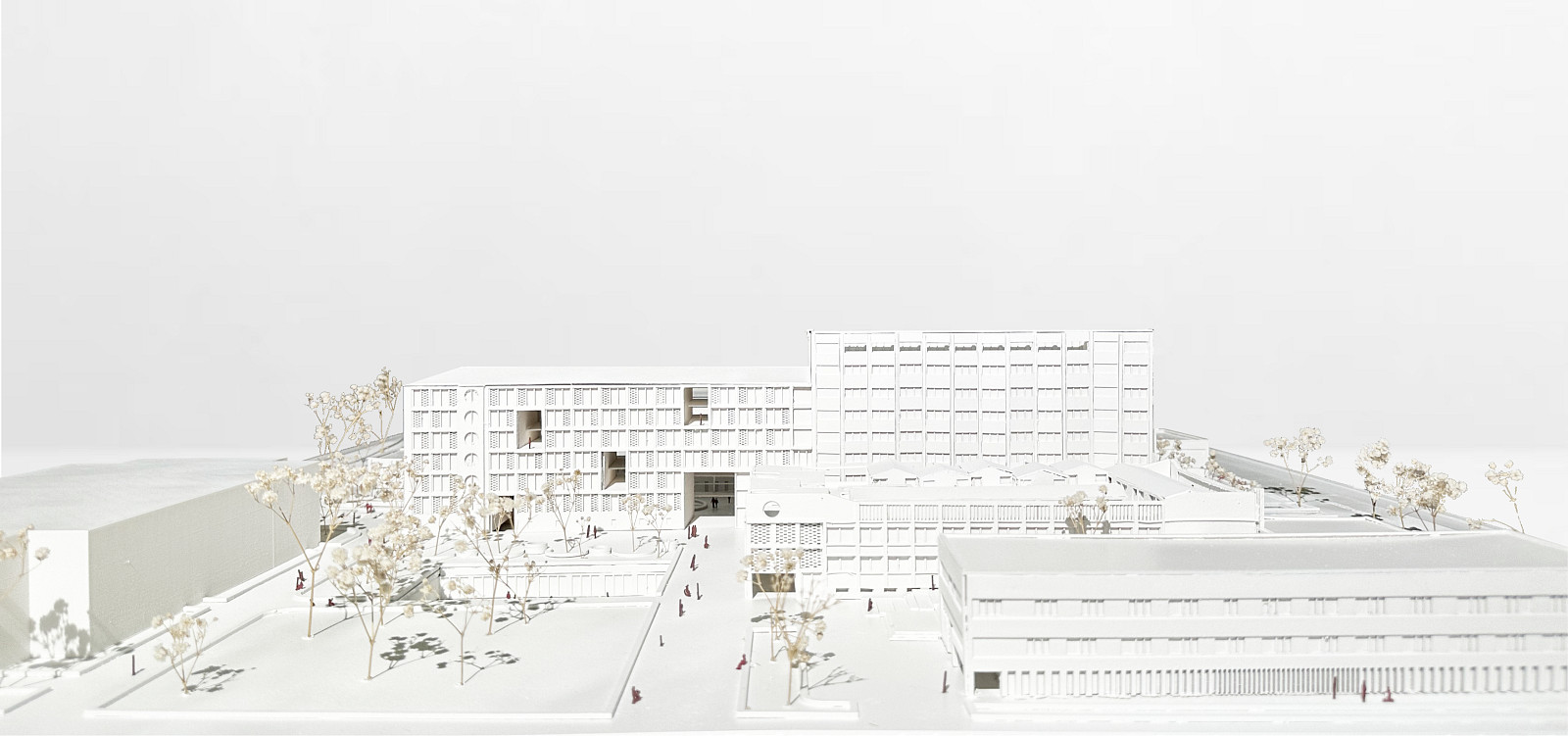
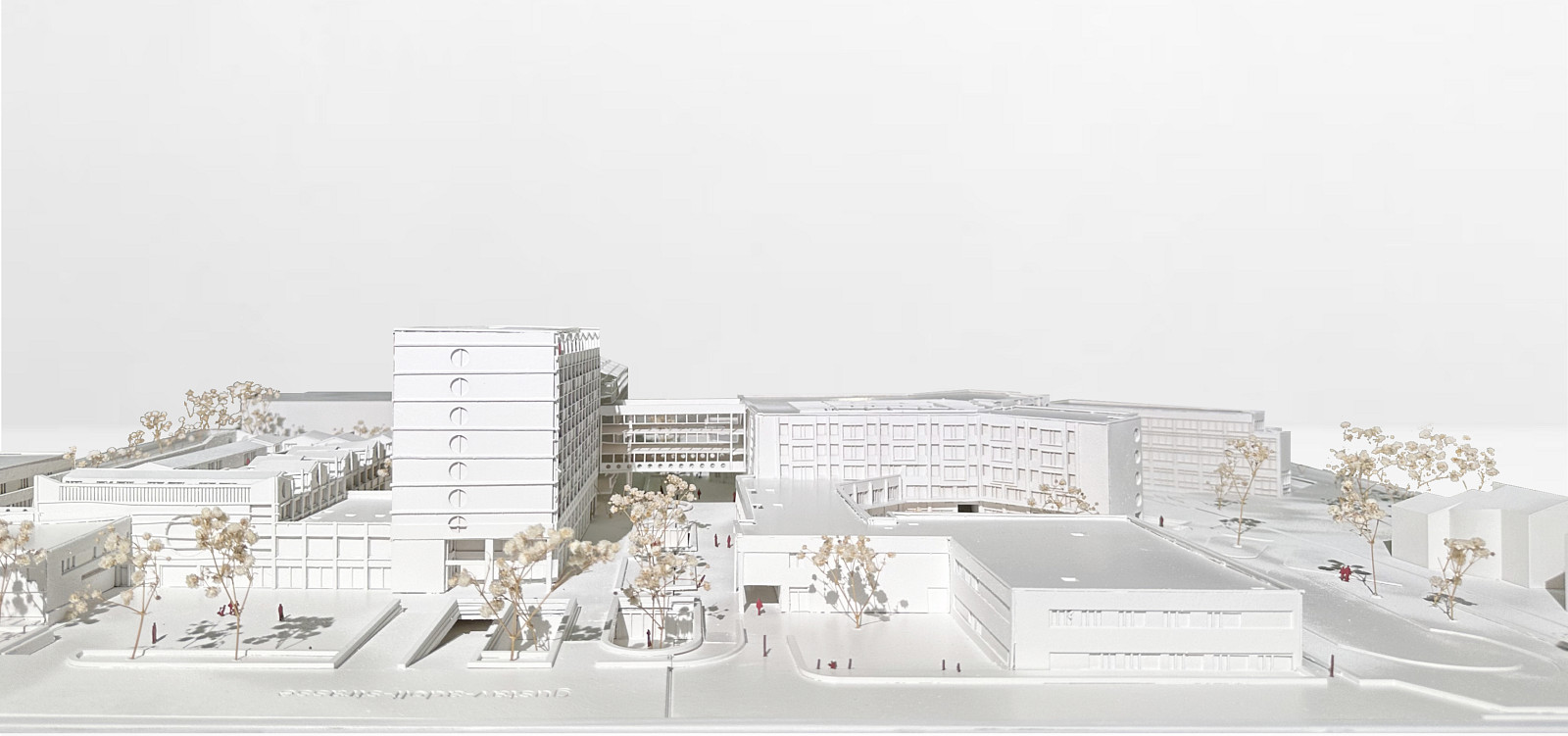
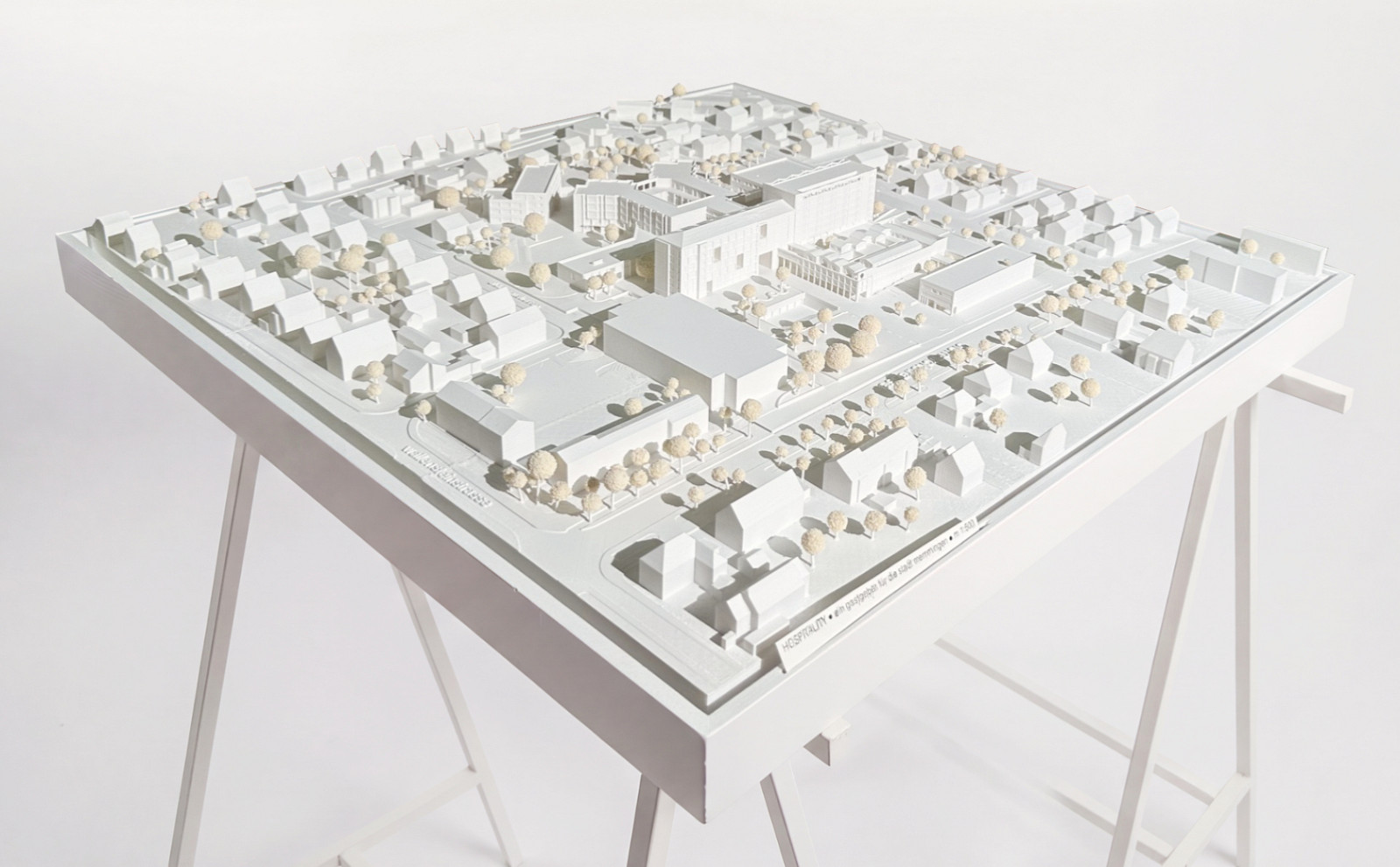
The Klinikum Memmingen, a hospital complex built in 1955 and expanded to 18 building components by 2016, is set to relocate by 2029. The 43,700 m² inner-city structure, with an embodied carbon of 10,248,455 kg CO₂-equivalent, holds enormous potential for adaptive reuse. The project transforms this former hospital into a vibrant, mixed-use residential quarter, reclaiming the original spirit of the hospital as a place of care, community and support.
Project description
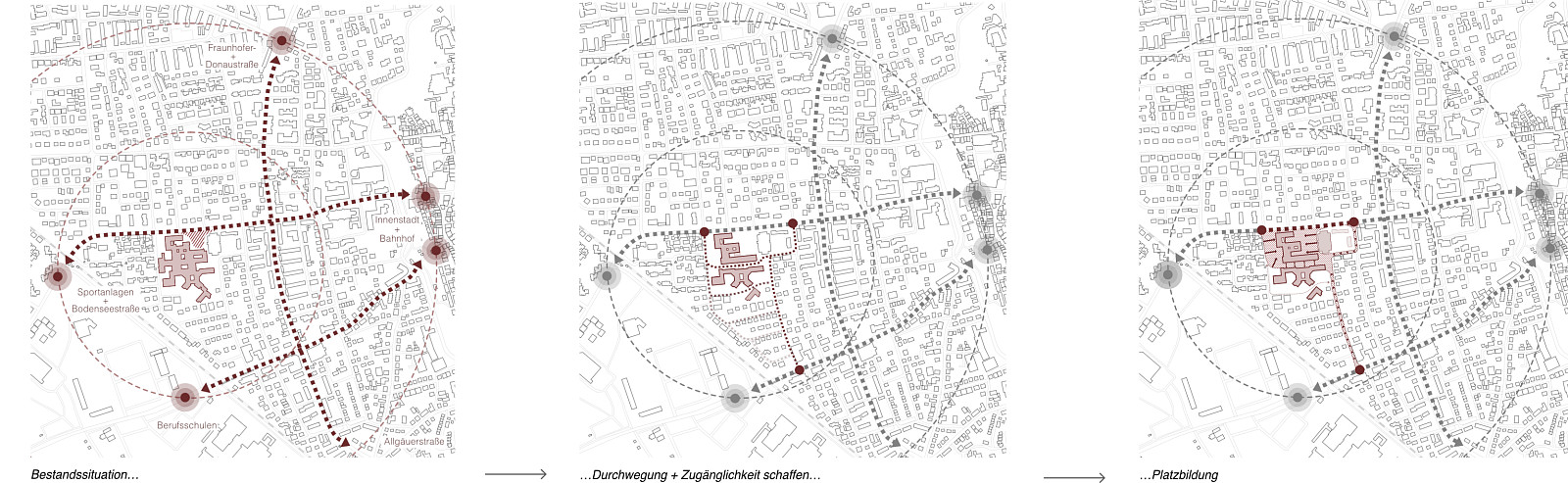
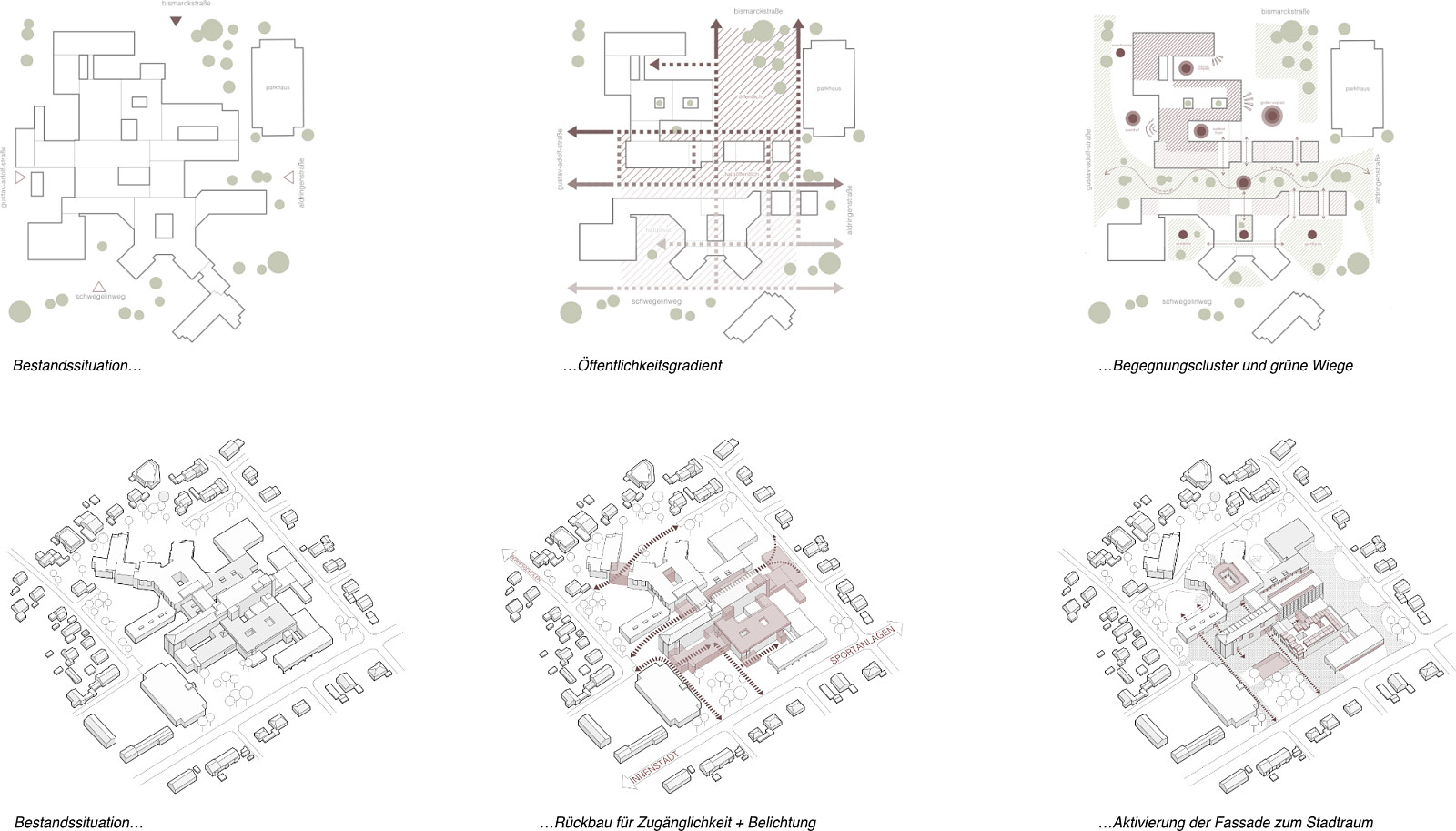
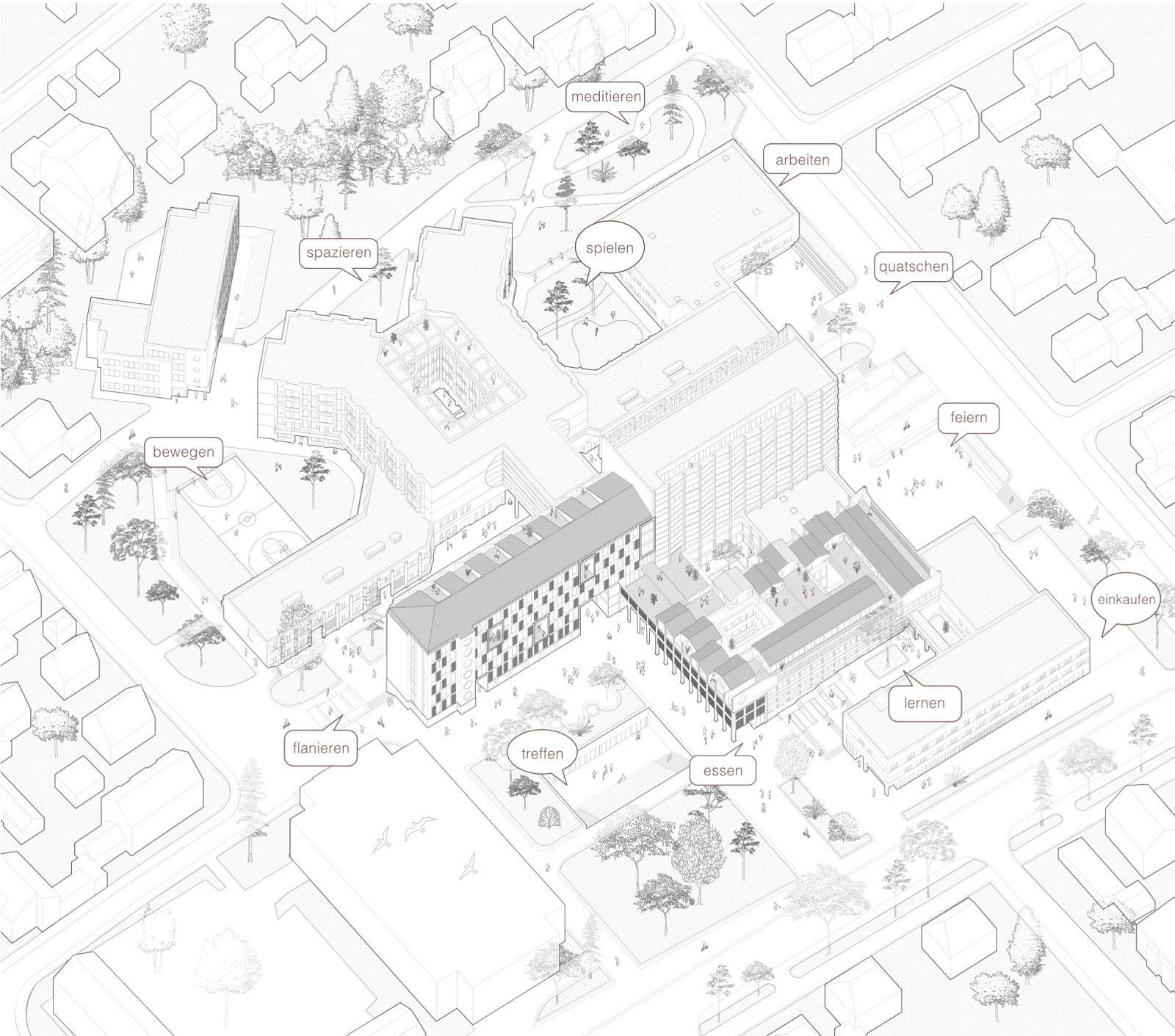
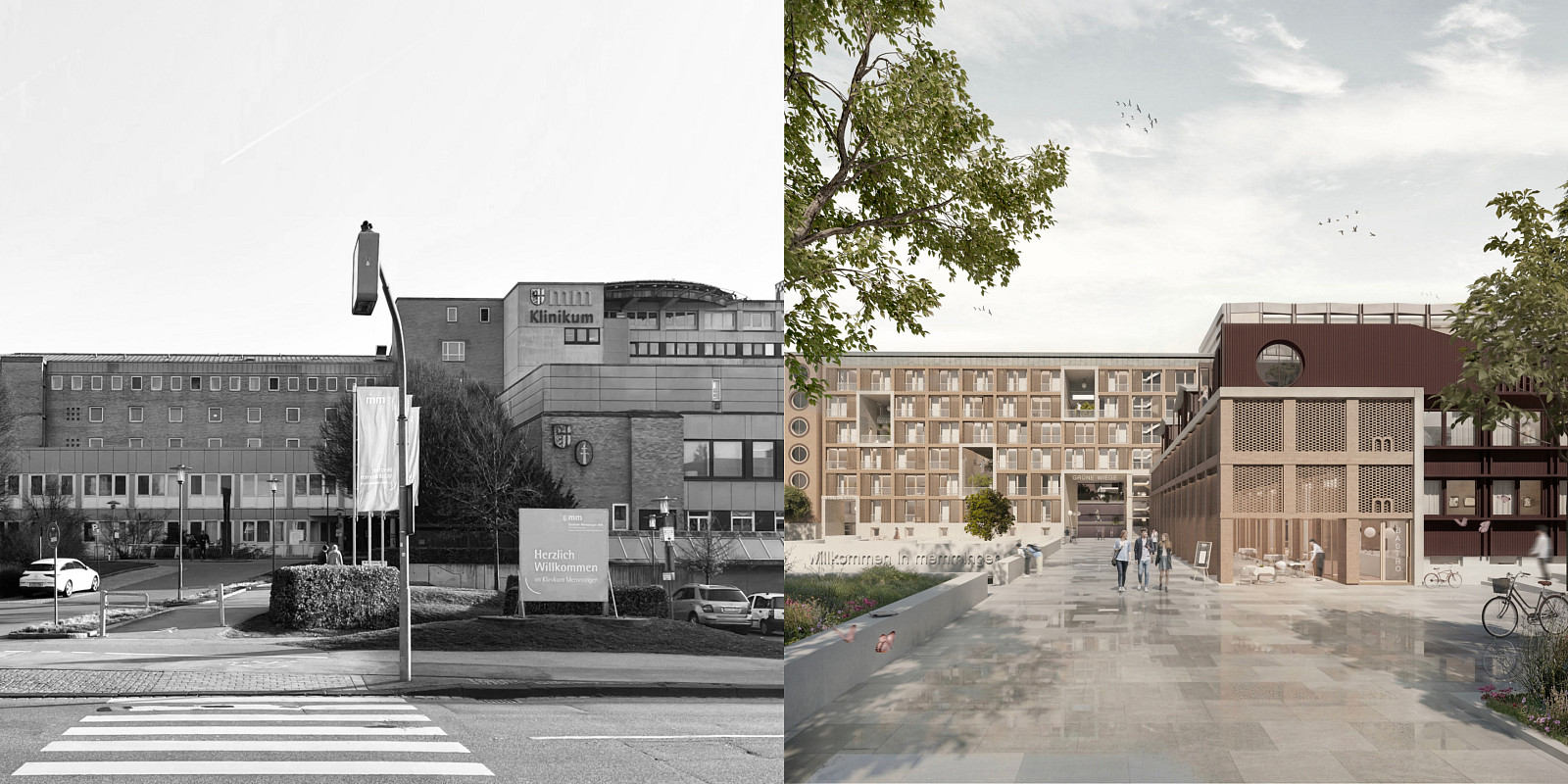
The transformation concept reads the complex as a new urban node within its surrounding pedestrian and social networks. Targeted openings and pathways integrate the site into the city fabric. The "Green Cradle", a landscaped connective corridor, opens the interlocked building structure and links the axis between the city centre, sports facilities and vocational schools. The former single-entrance approach is replaced by a system of access clusters that define meeting zones and graduated levels of publicness: a public zone along Bismarckstraße and semi-private thresholds towards the adjacent residential neighbourhoods.
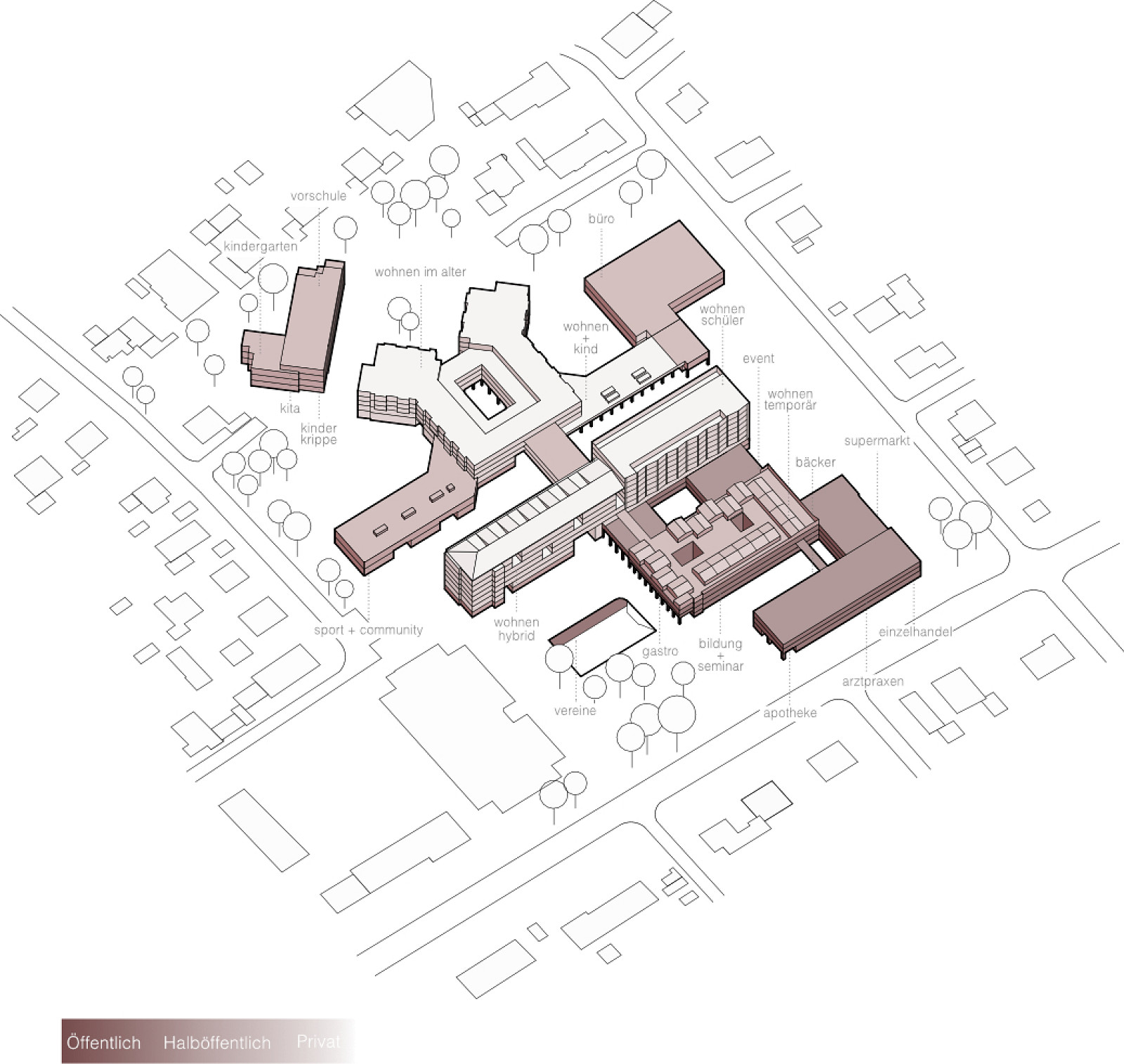
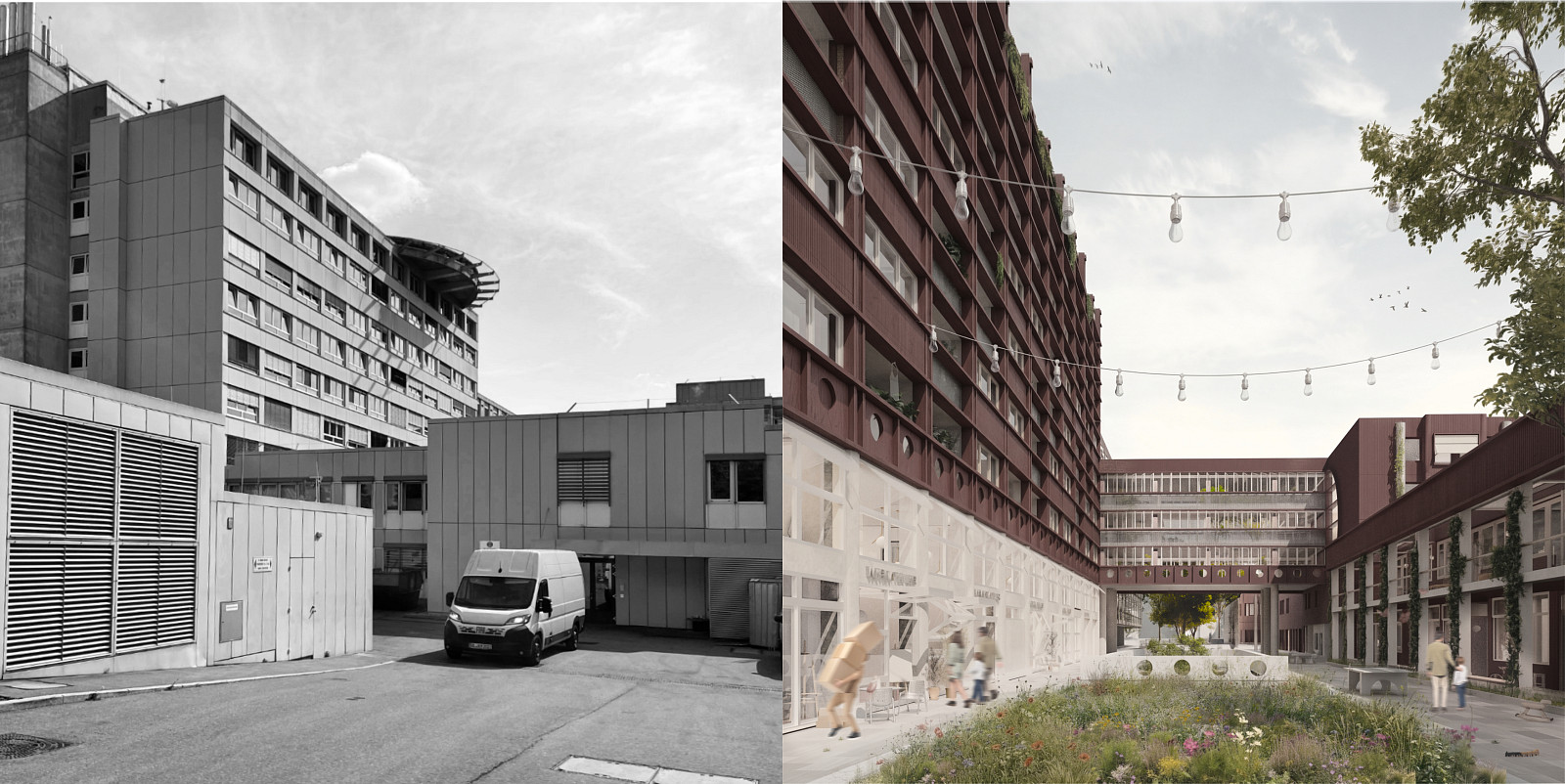
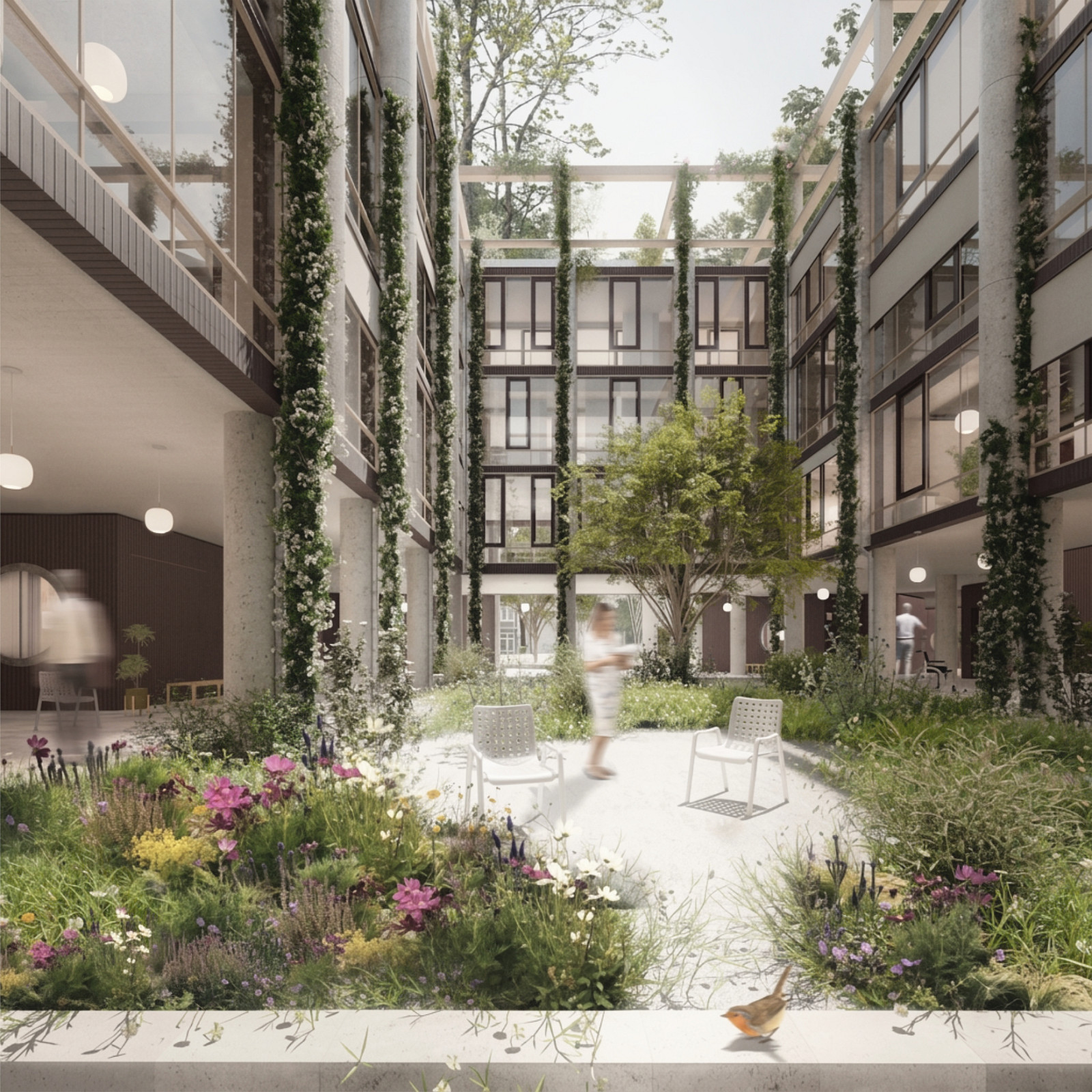
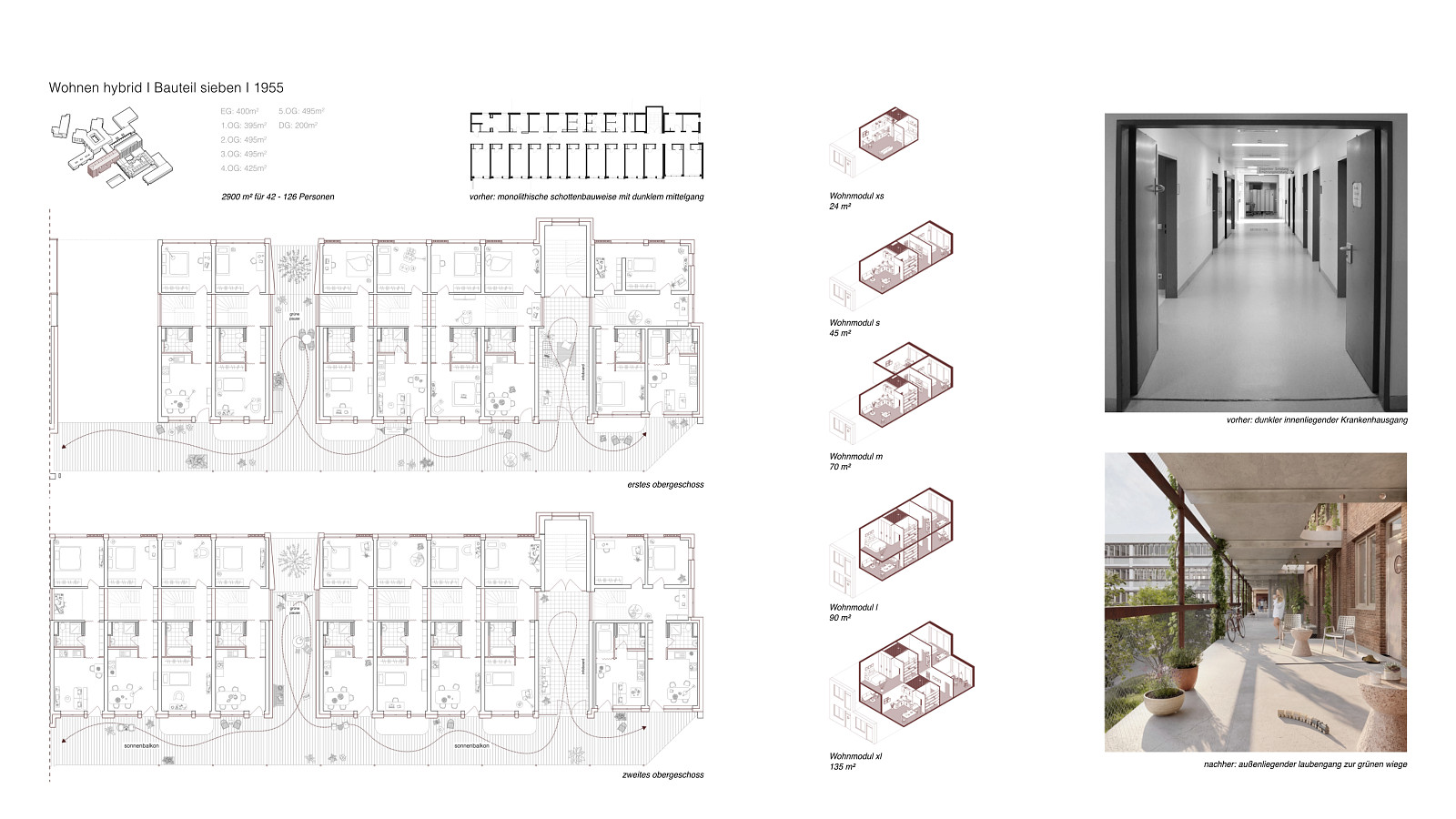
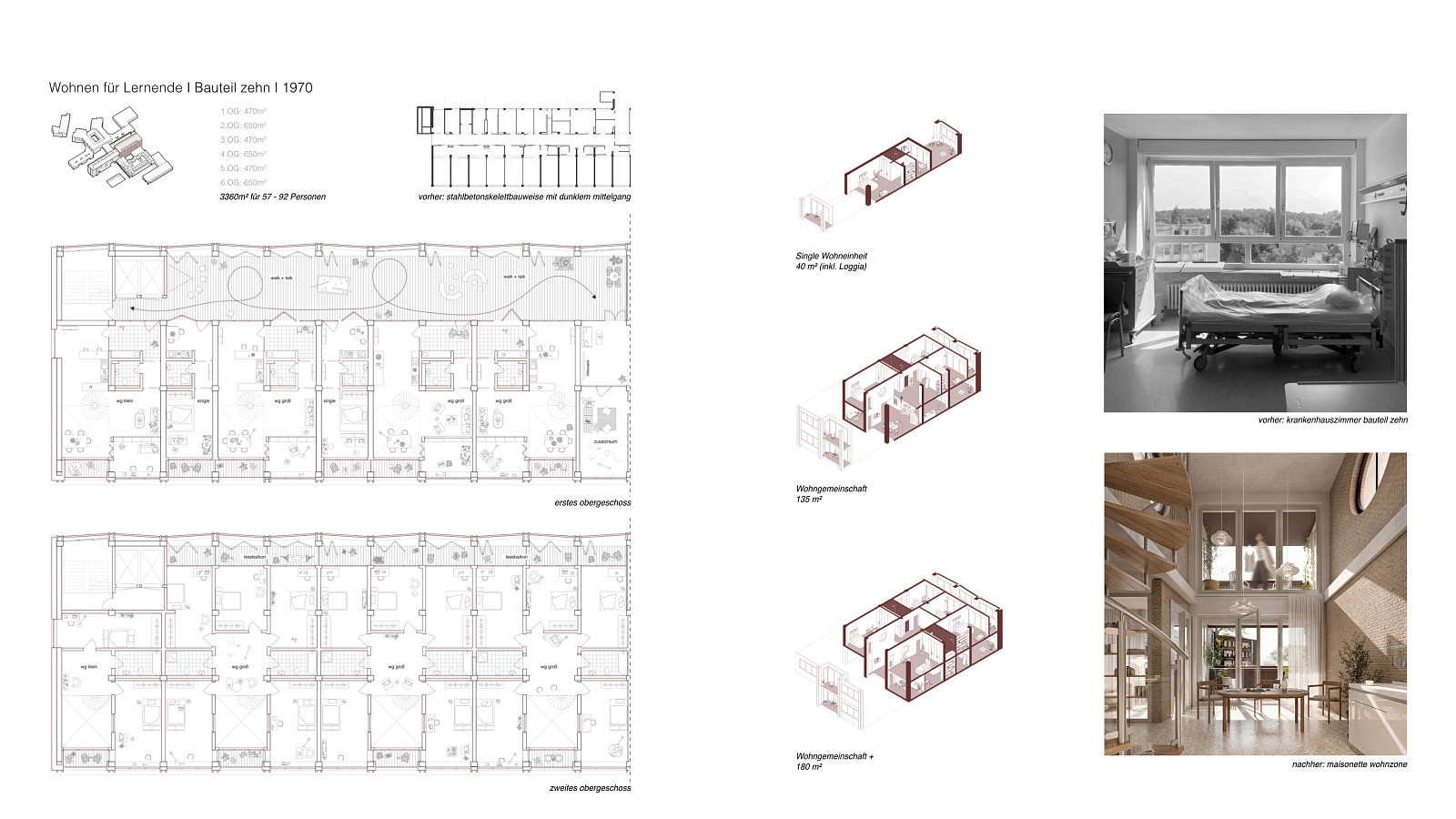
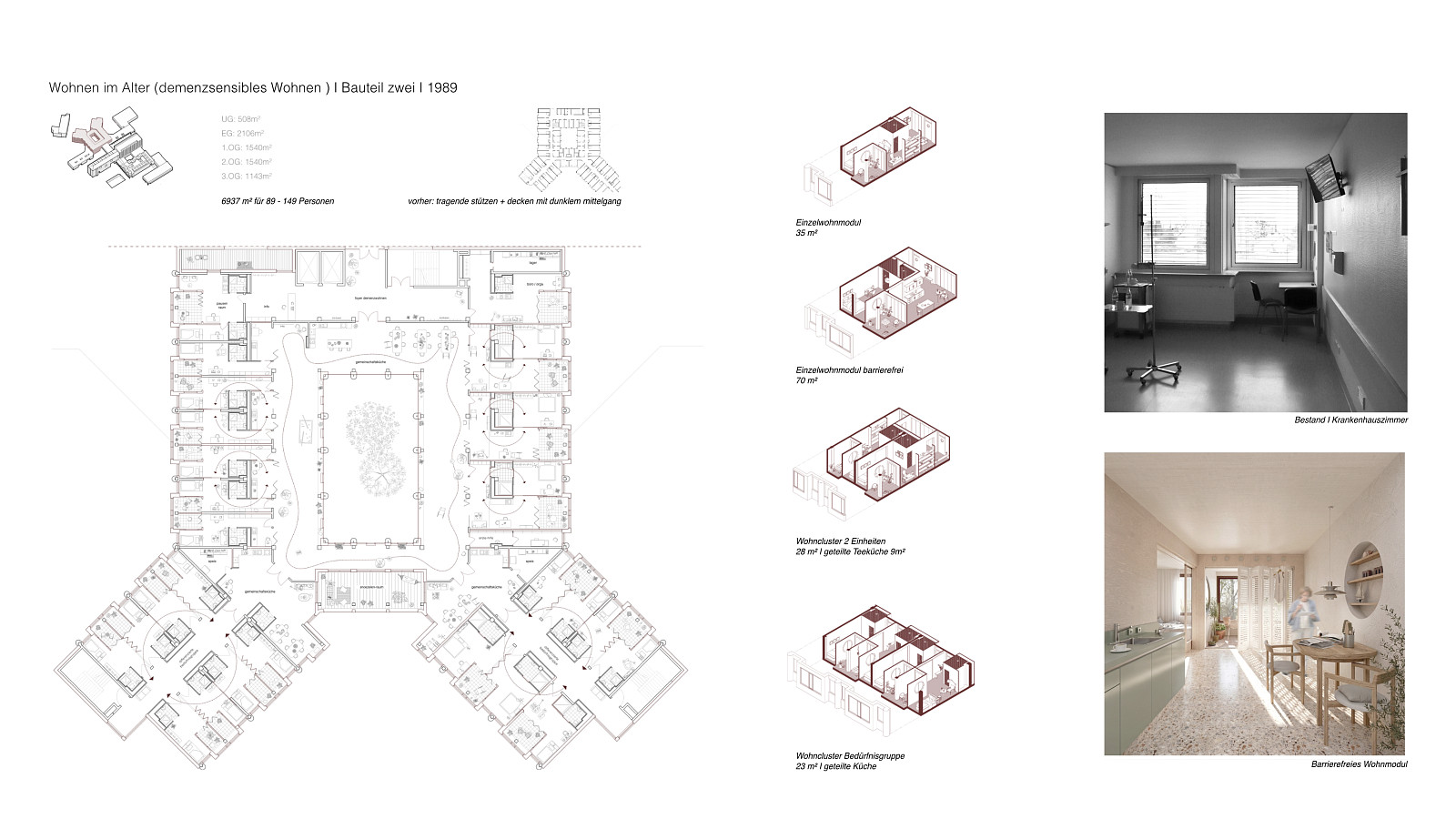
Ground floor zones open to the city and are activated with publicly accessible uses: gastronomy, event spaces and small-scale retail create urban quality, complemented by educational and healthcare facilities including seminar rooms, medical practices and a pharmacy. Upper floors offer a diverse range of housing typologies including student housing, micro-apartments, larger units for different household types, cluster housing, age-appropriate living and dementia-sensitive residential concepts with carefully calibrated privacy zones, communal movement spaces and green retreat thresholds.
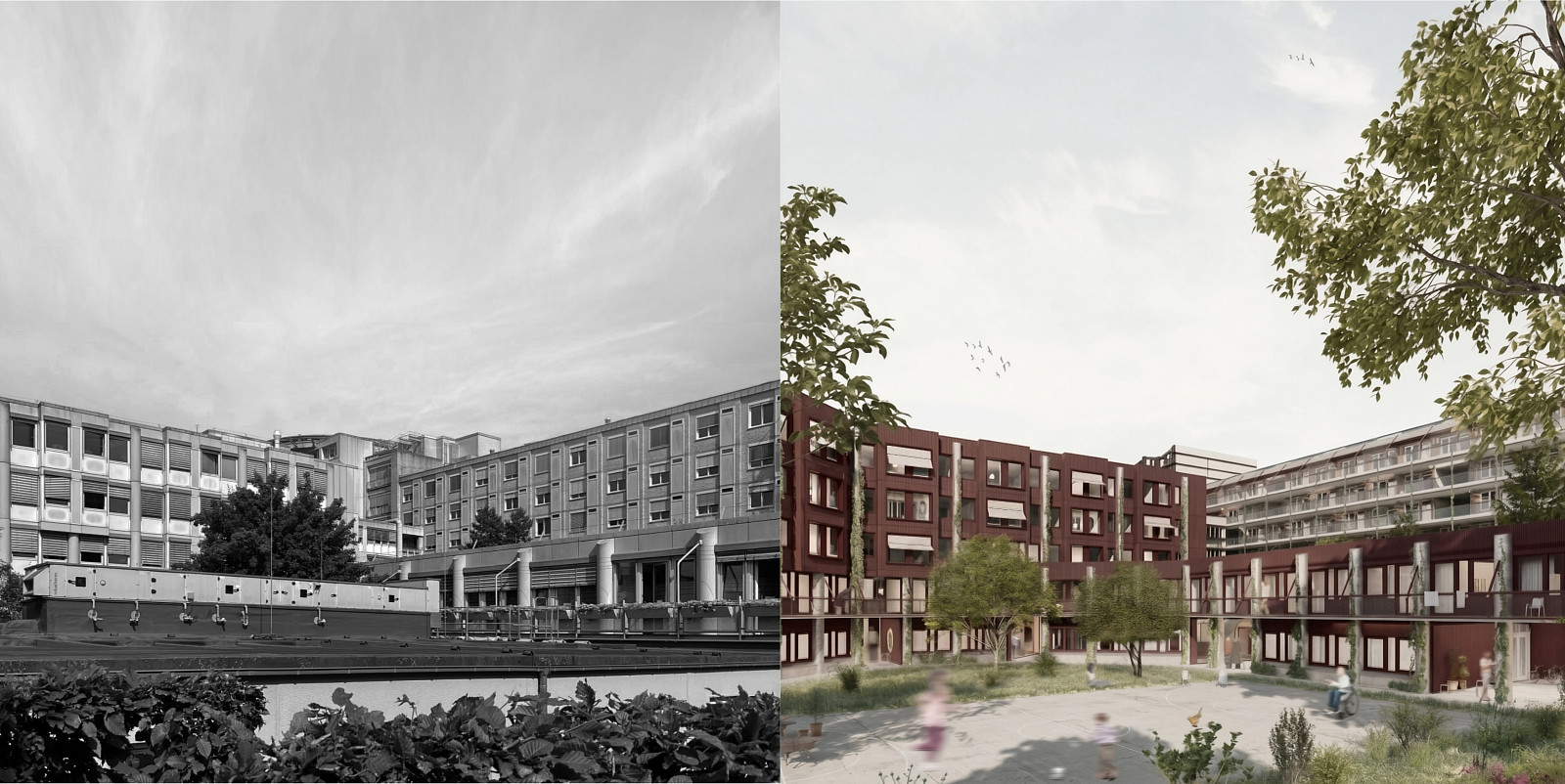
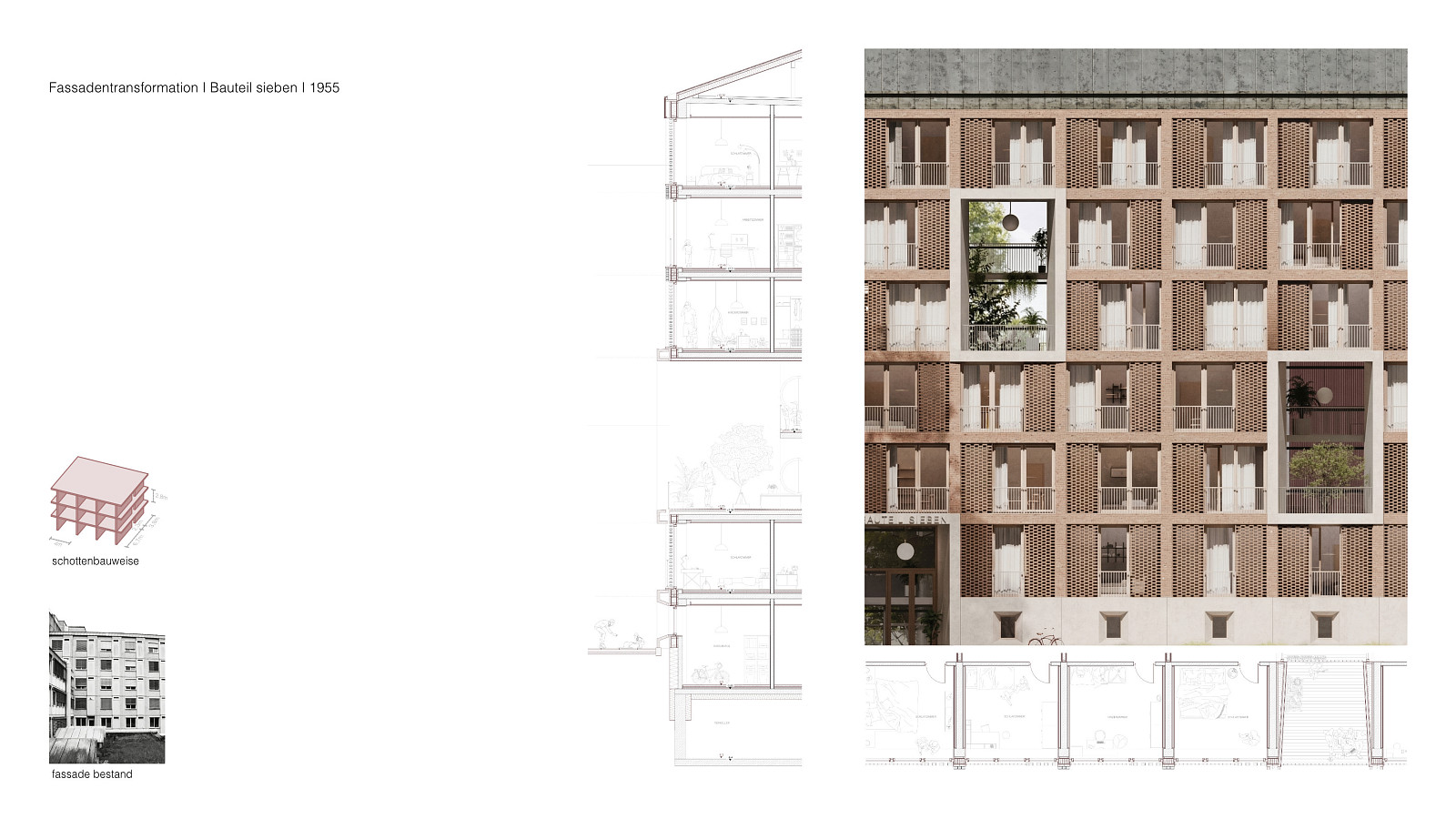
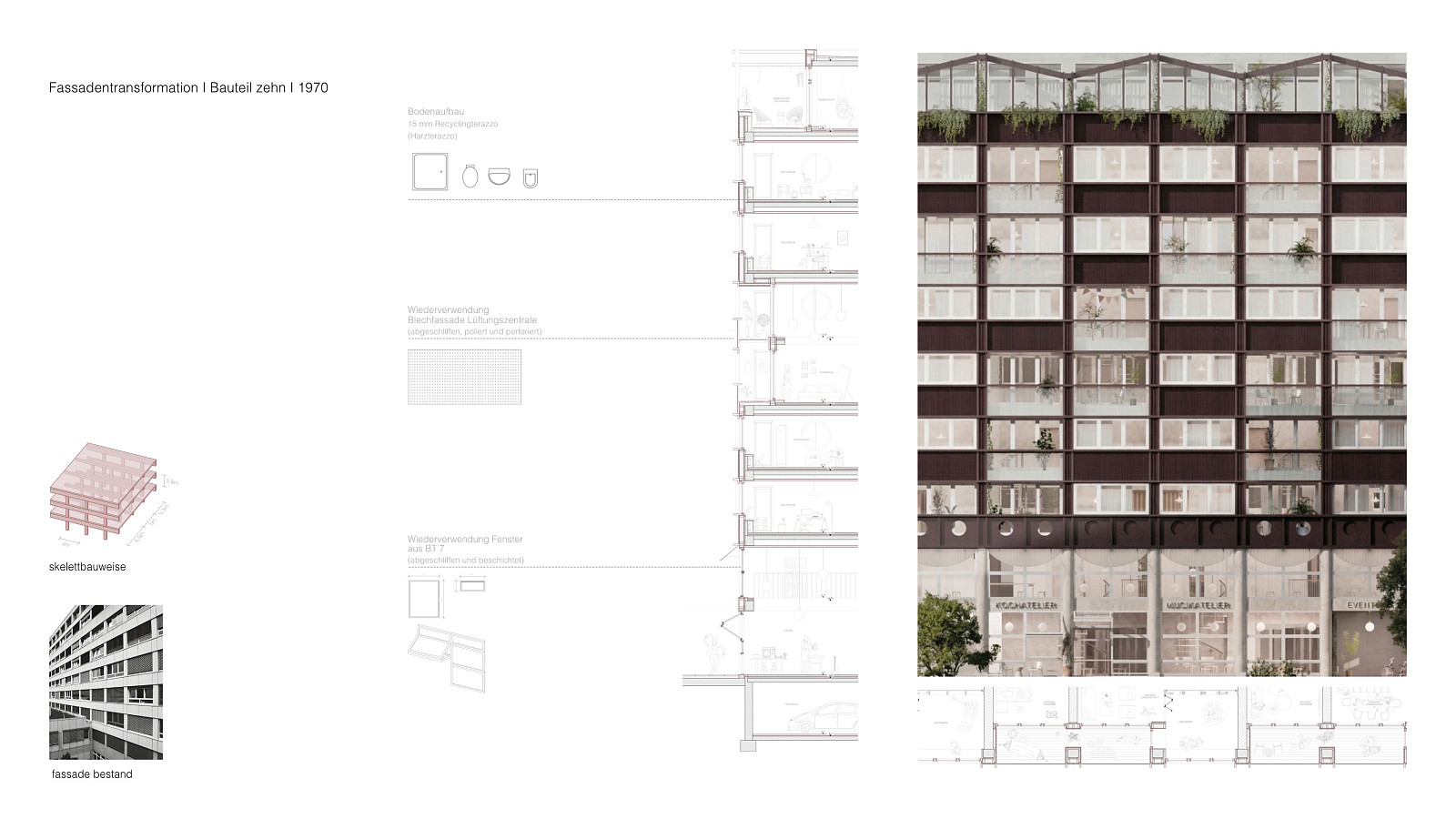
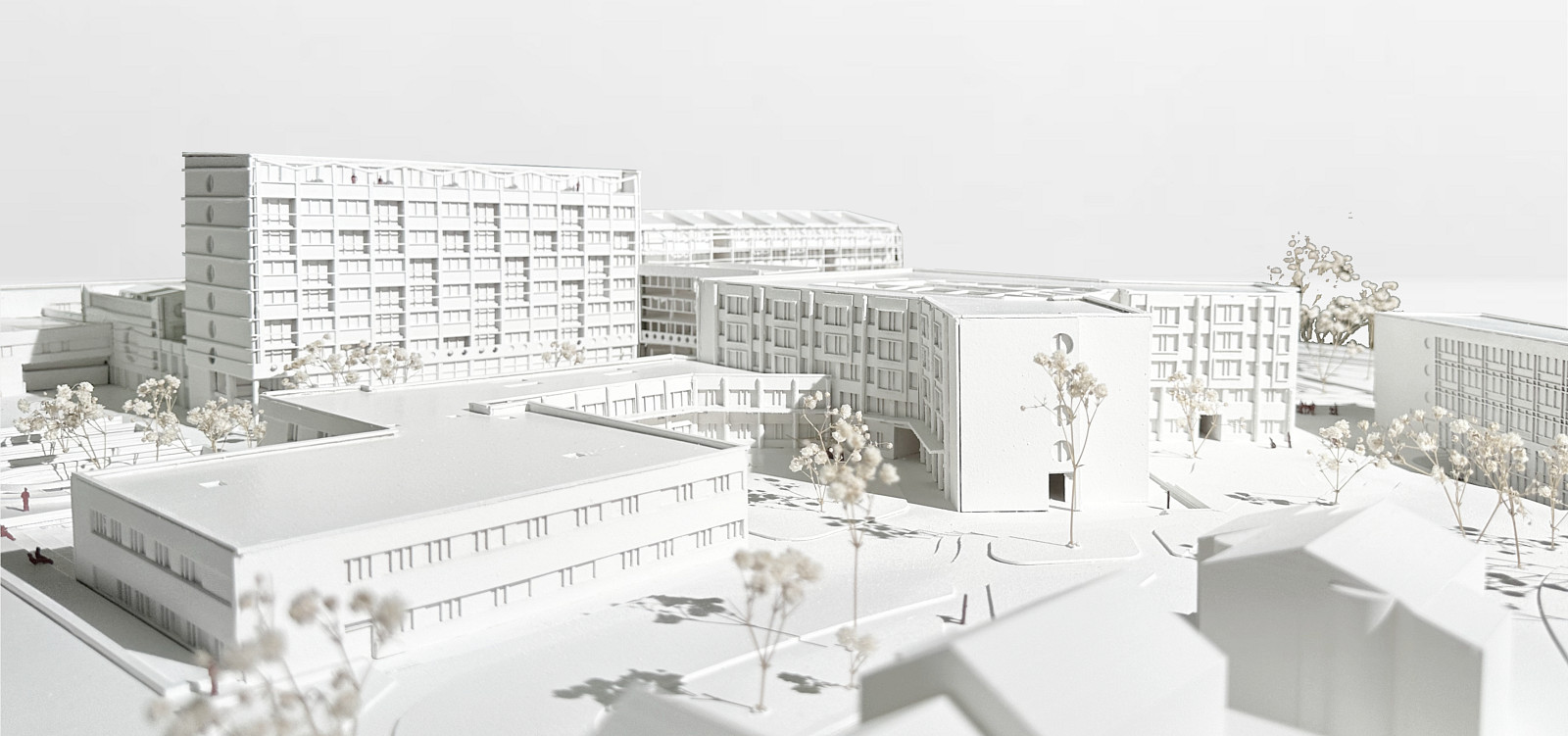
Three key building components are transformed in detail: Element 7 (1955) receives a new facade of reused bricks referencing its crosswall structure; Element 10 (1970) introduces maisonette typologies, walk-and-talk buffer zones and loggias opening to the Green Cradle; Element 2 (1989) is reorganised around a shared courtyard with radial circulation supporting orientation and cognitive activity for dementia residents.
Technical information
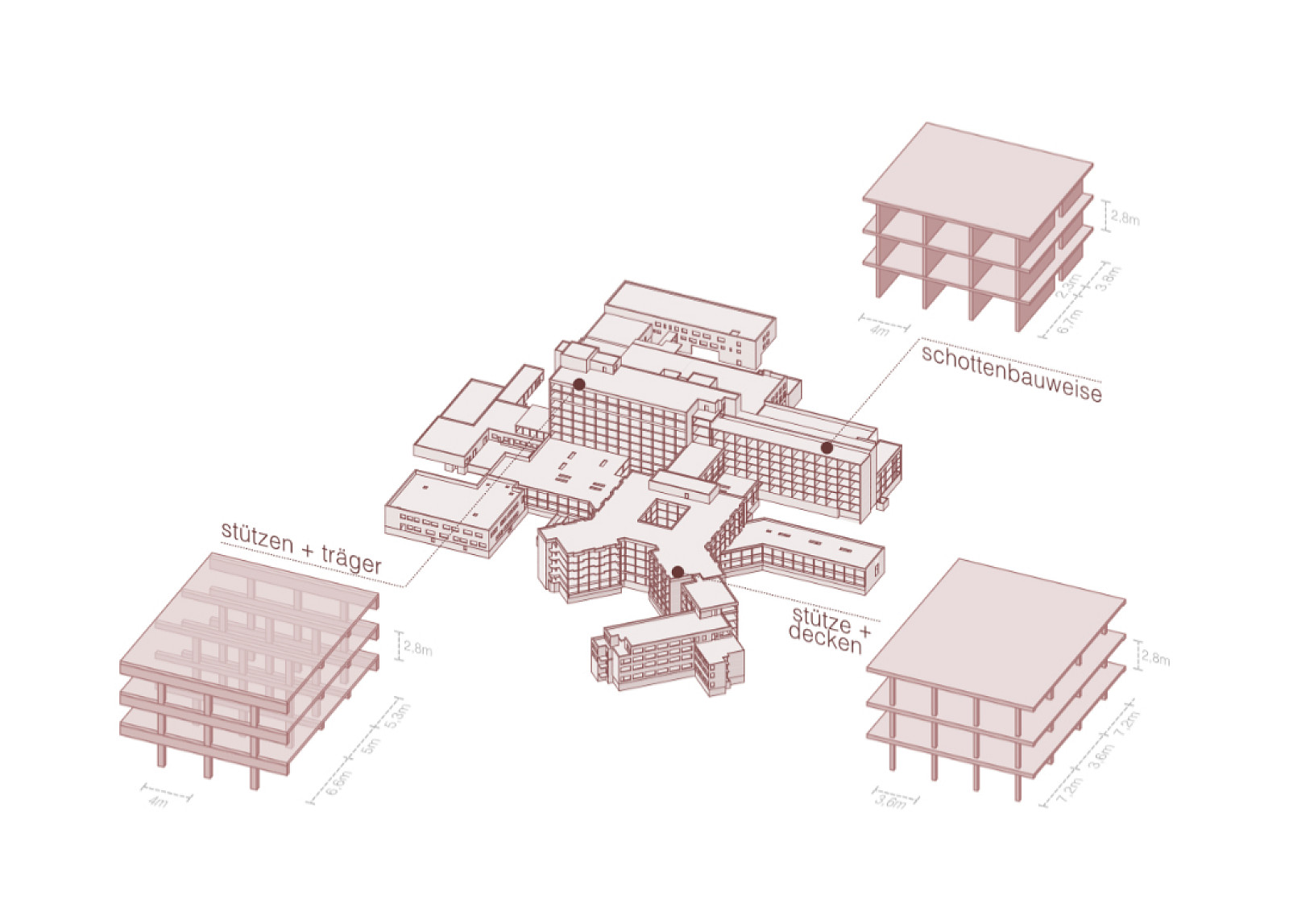
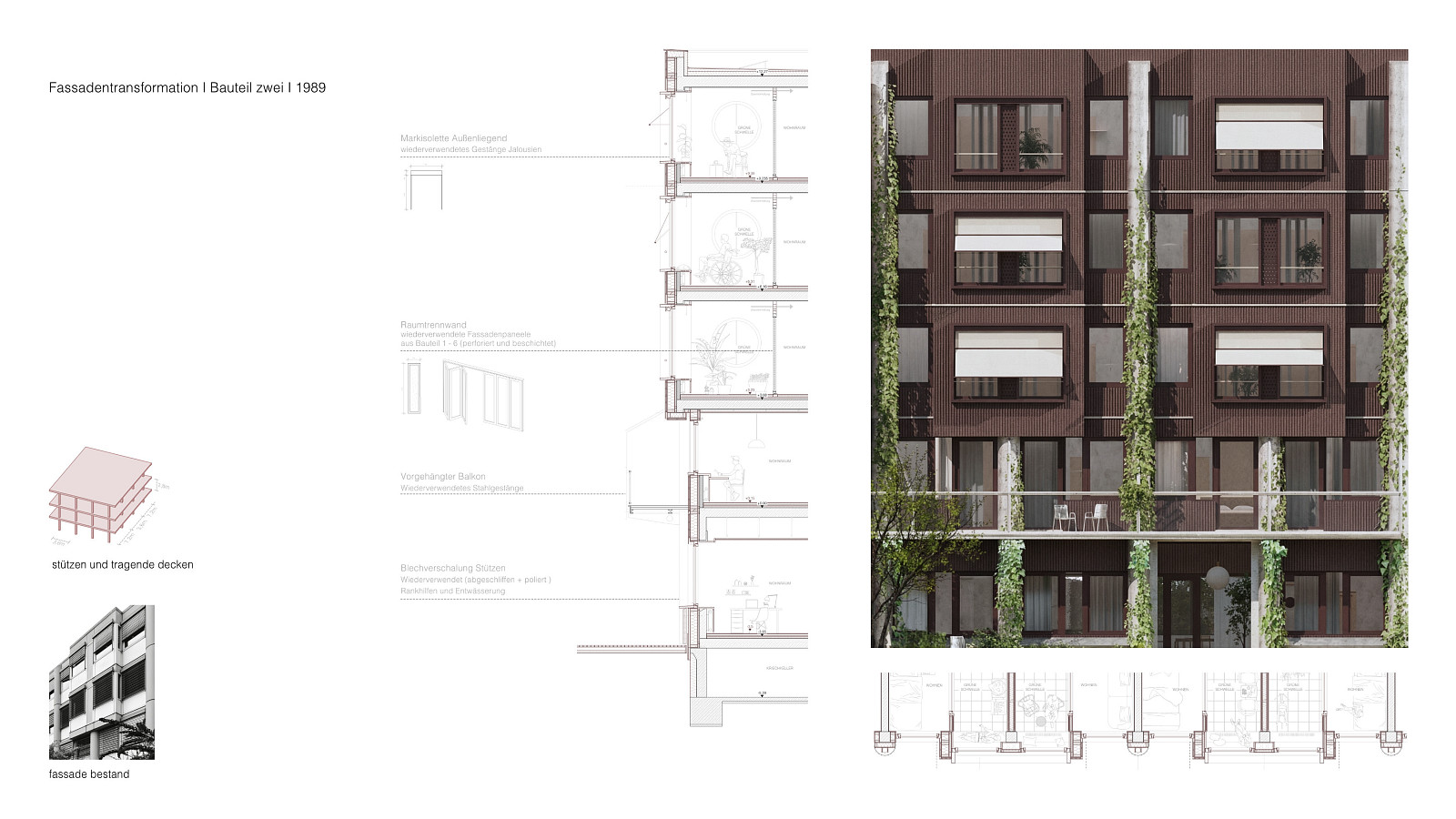
The existing structures from 1955 to the 1970s were built primarily in monolithic crosswall construction. The tallest building component at approximately 25 m is a reinforced concrete skeleton structure, while other parts use column-and-slab systems. Facade upgrades are carried out using prefabricated timber frame elements, adapted to each building component. Element 7 features a new facade layer of reused bricks from the existing building, referencing the inner crosswall logic. Element 10 uses reused facade components and window elements, with a jagged north facade dissolving the former megastructure's closed appearance. Element 2 incorporates folding walls made from reused building components enabling flexible zoning of living areas, ventilated via decentralised facade ventilation panels to provide fresh air without draughts in dementia care zones.
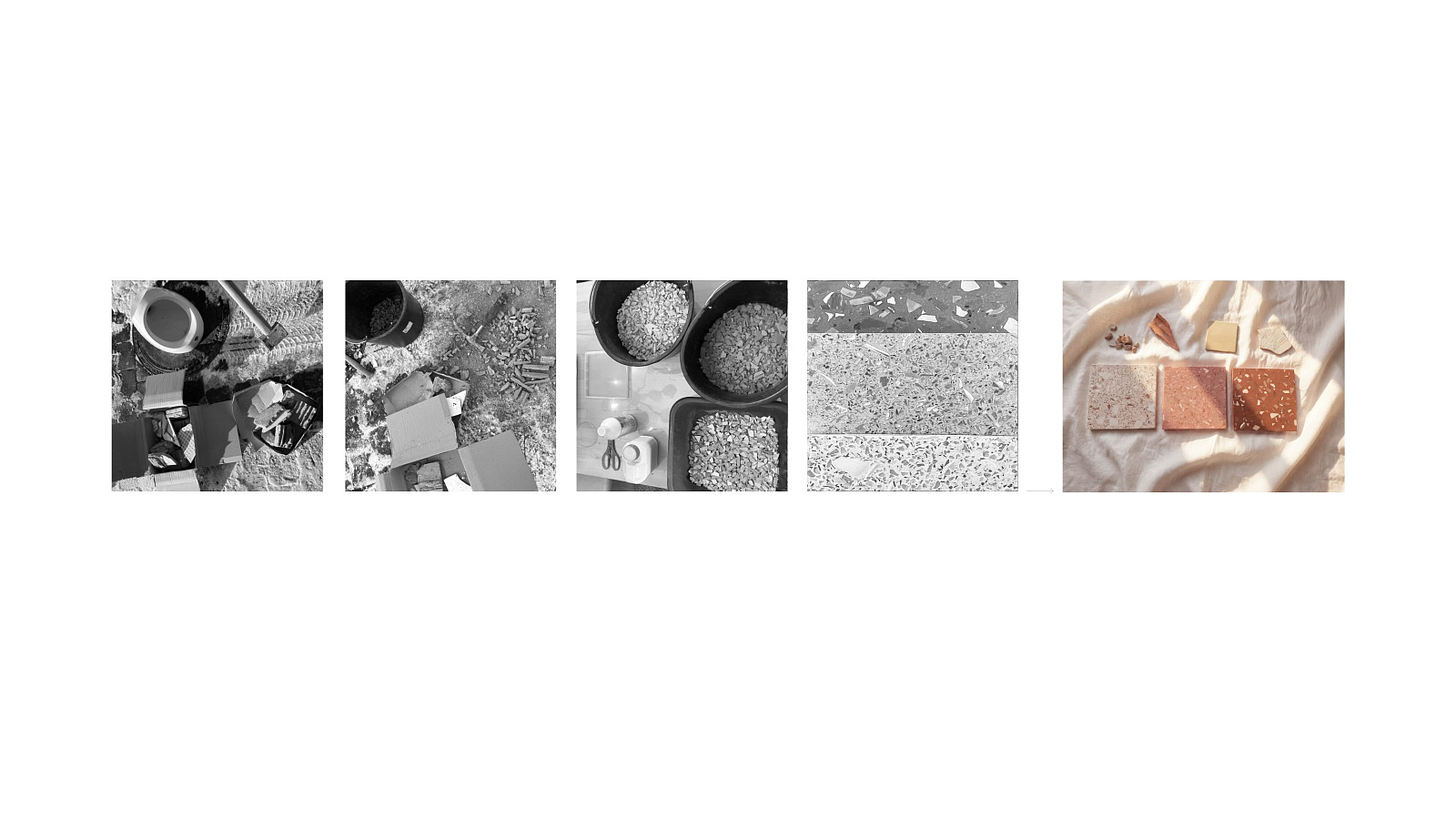
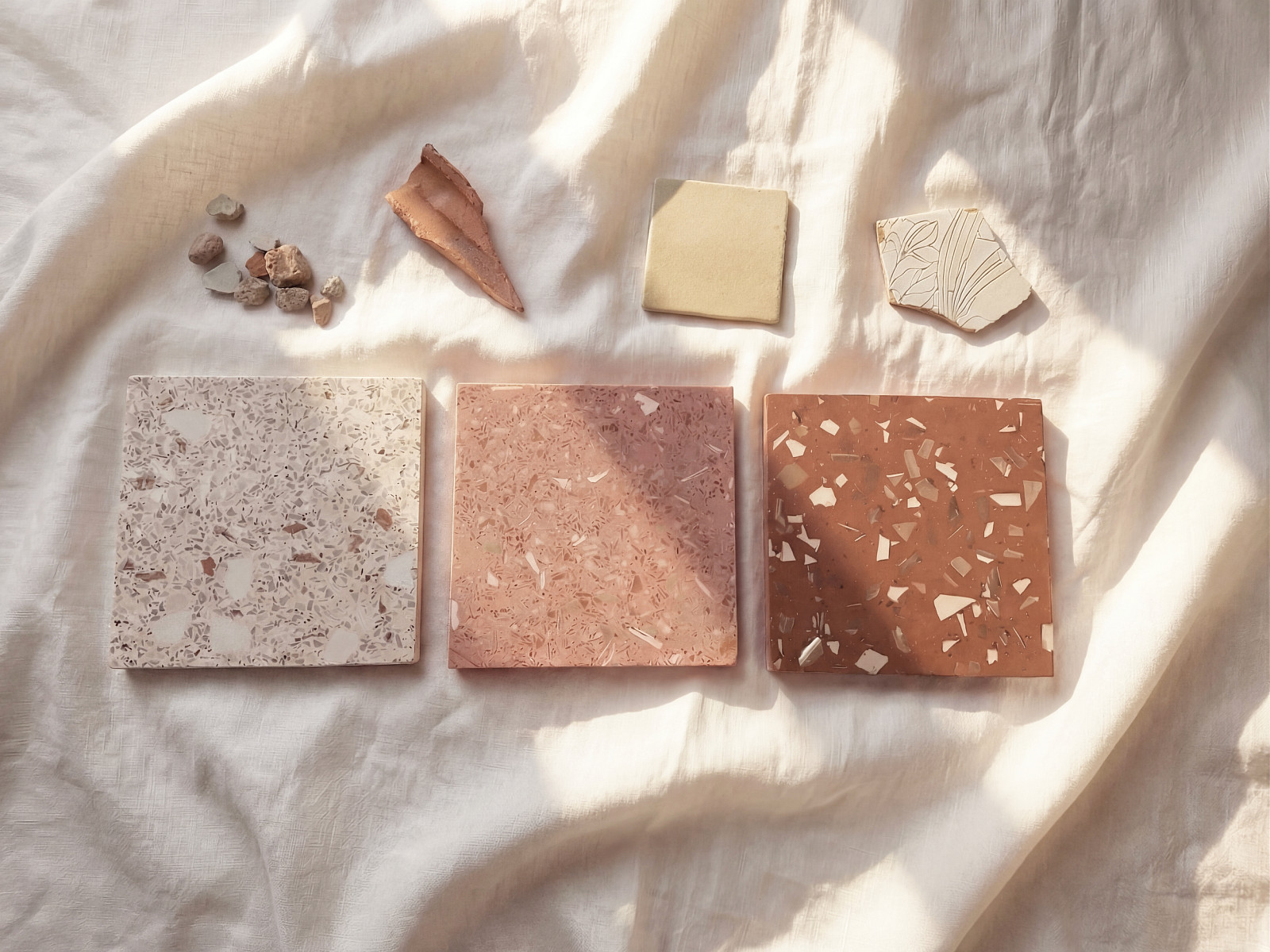
Material cycles are made visible throughout: recycled terrazzo floors are produced from brick fragments, glass, ceramic sanitary elements and existing tiles harvested from the building itself. Wall surfaces of recycled mortar and clay generate varying tactile qualities supporting spatial orientation. A chestnut-red colour tone referencing the 1955 brick facades marks public and communal zones. Round forms accentuate entrances and communal spaces, lending the former hospital a new positive identity rooted in late-modern and postmodern formal language, a deliberate counterpoint to the functionalist modernism from which the building originates.
Created in:


Copyright © 2026 INSPIRELI | All rights reserved. Use of this website signifies your agreement to the Terms of Use, Privacy Policy, and use of cookies.