Angan e Zan


Project idea
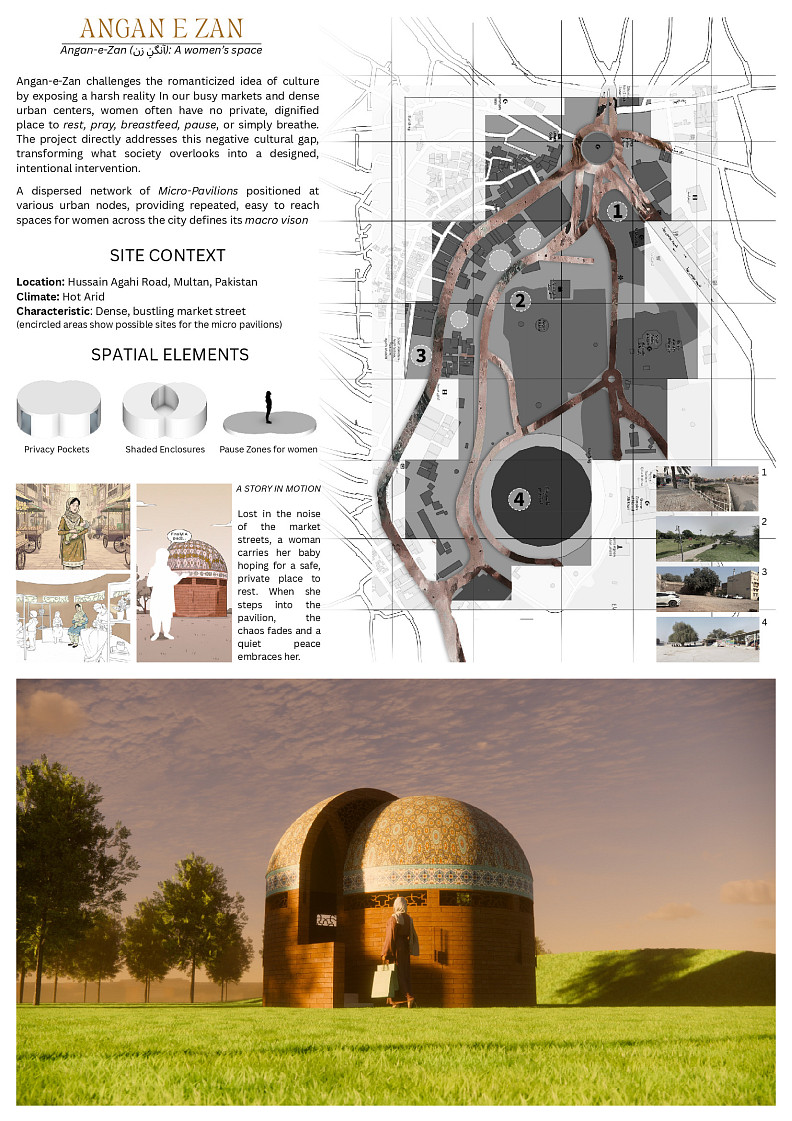
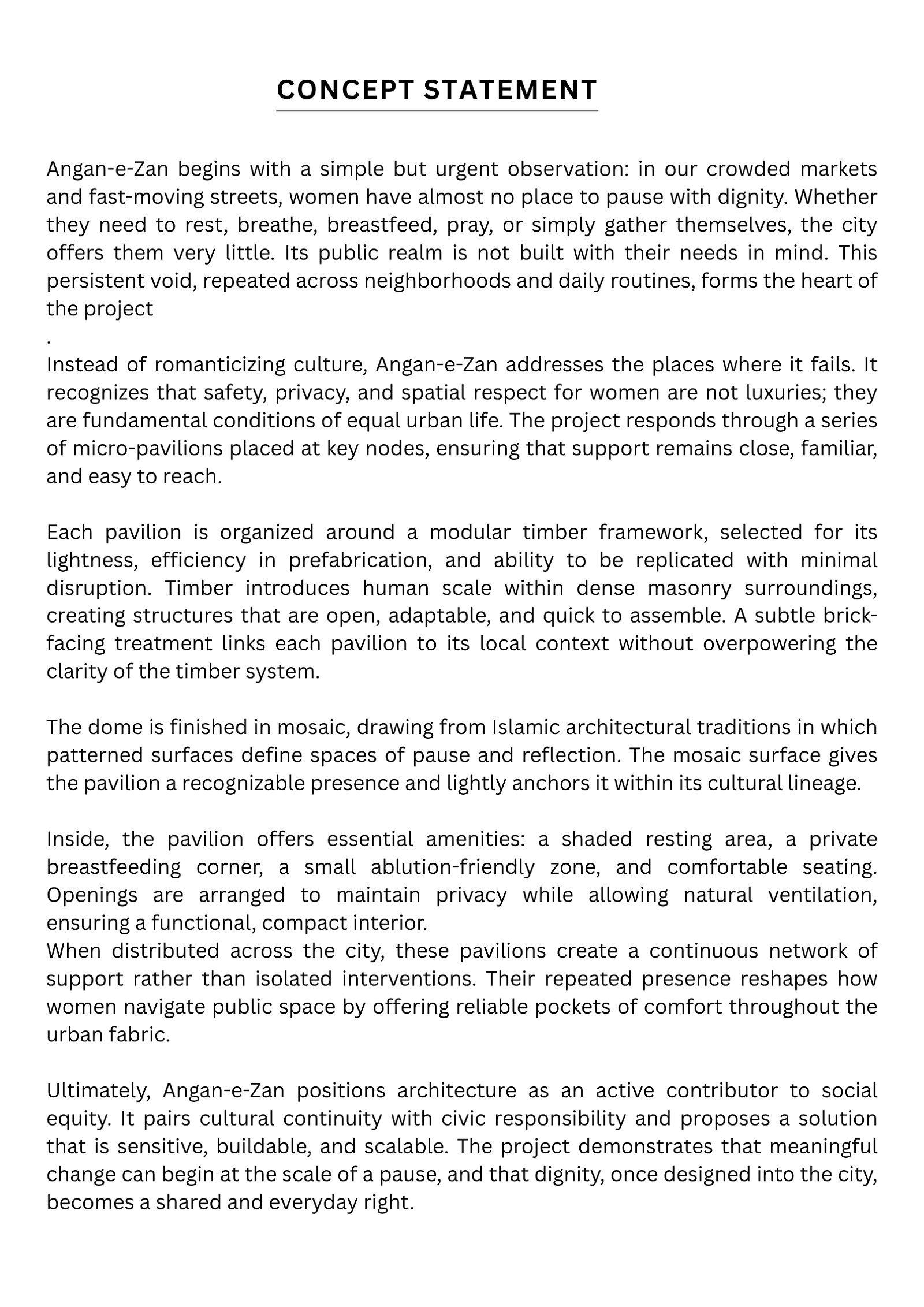
Angan-e-Zan addresses the pressing issue of social exclusion, limited mobility, and lack of accessible support infrastructure for women in Pakistan’s urban fabric. Women often face restricted access to safe communal environments, resulting in both physical and psychological challenges.
The project proposes a women-centered rest and community interaction space, designed as a safe and inclusive environment where women can pause, connect, and engage freely. It creates a supportive spatial framework that encourages social cohesion and everyday interaction while responding sensitively to cultural norms.
The concept draws inspiration from the traditional courtyard (angan), reinterpreted as a central organizing element that balances privacy with openness.
The need for such a space arises from the absence of dedicated environments that prioritize women’s presence and comfort in the public realm. Angan-e-Zan positions architecture as a catalyst for inclusivity, social well-being, and urban resilience.
Project description
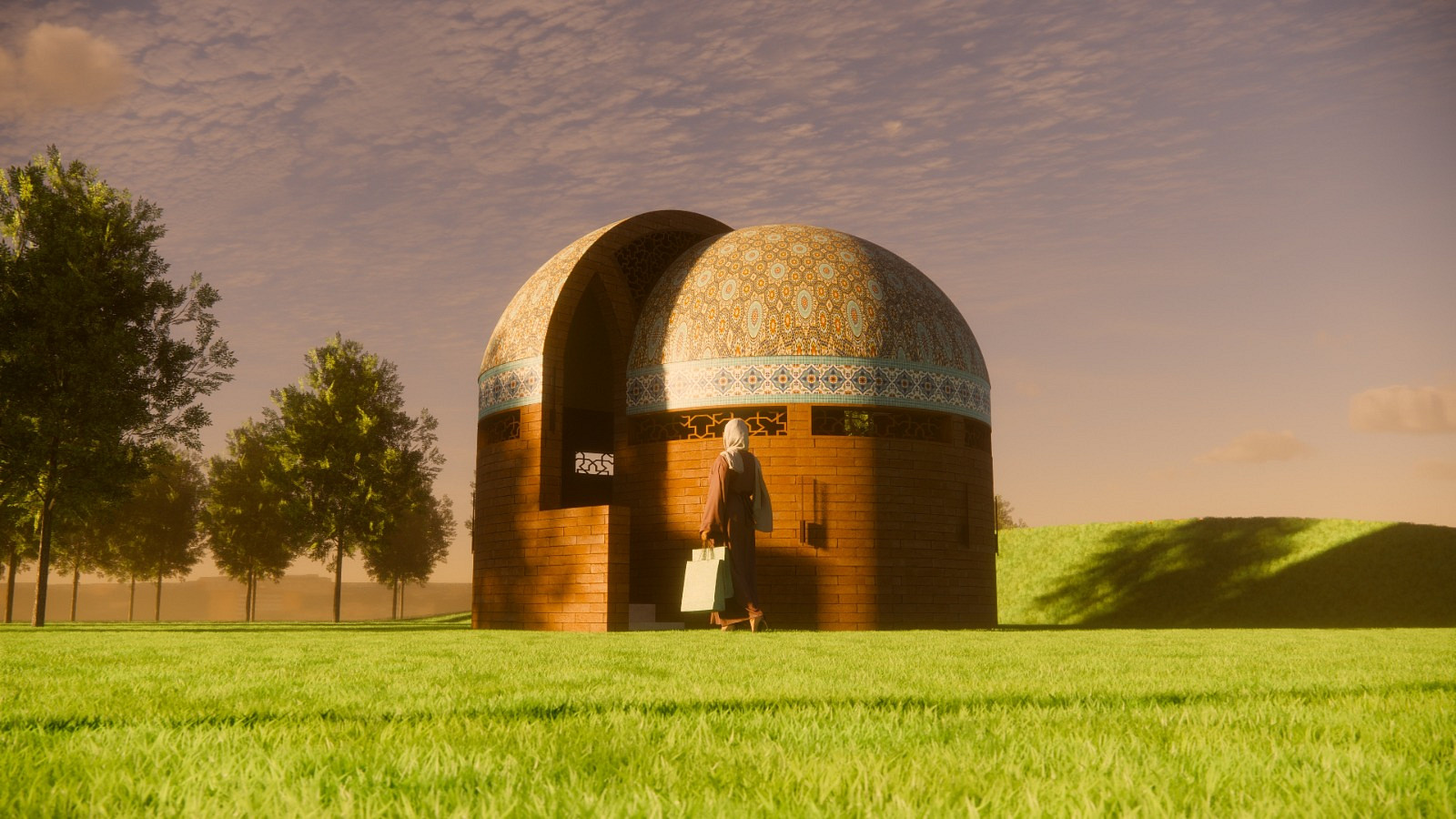
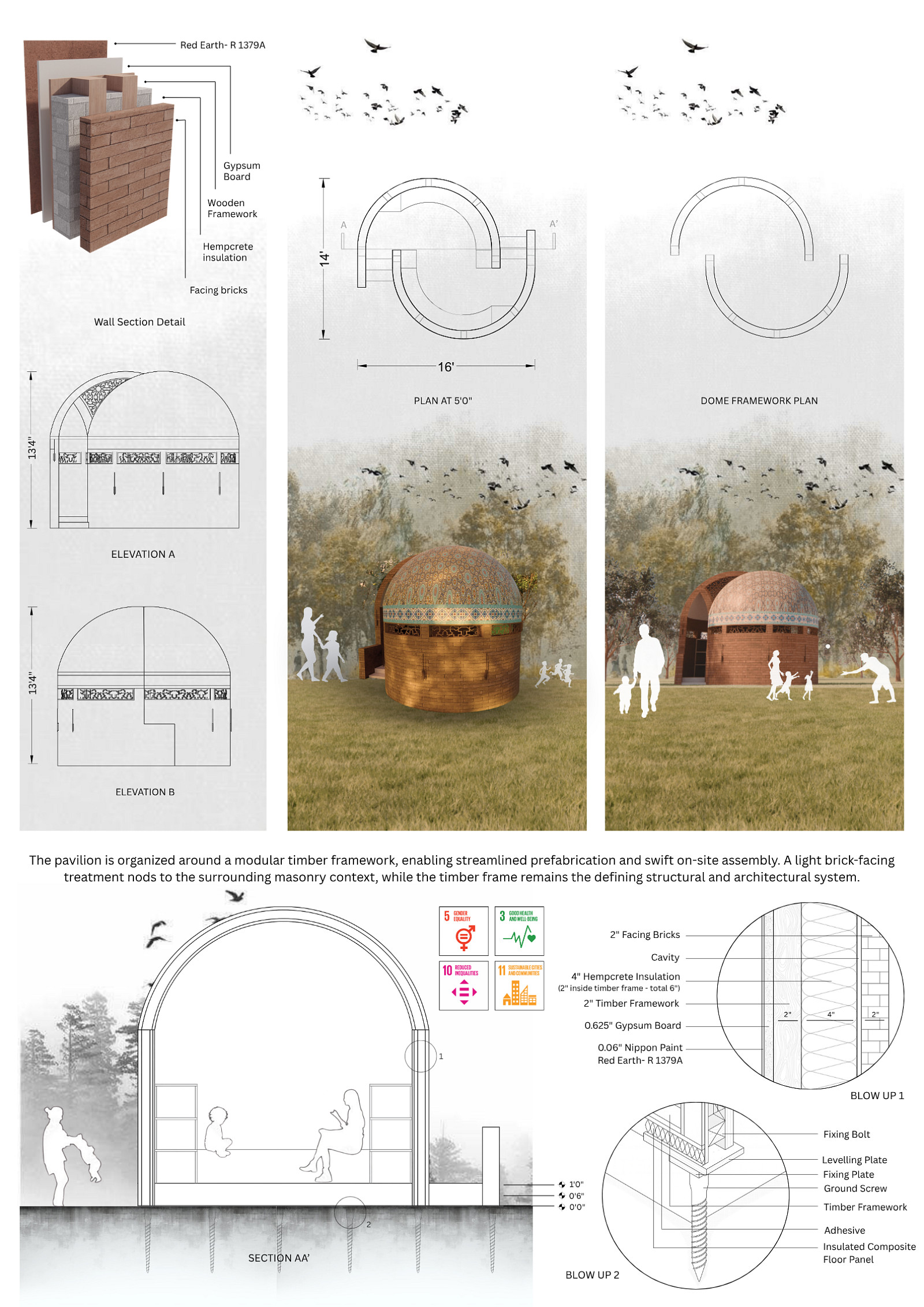
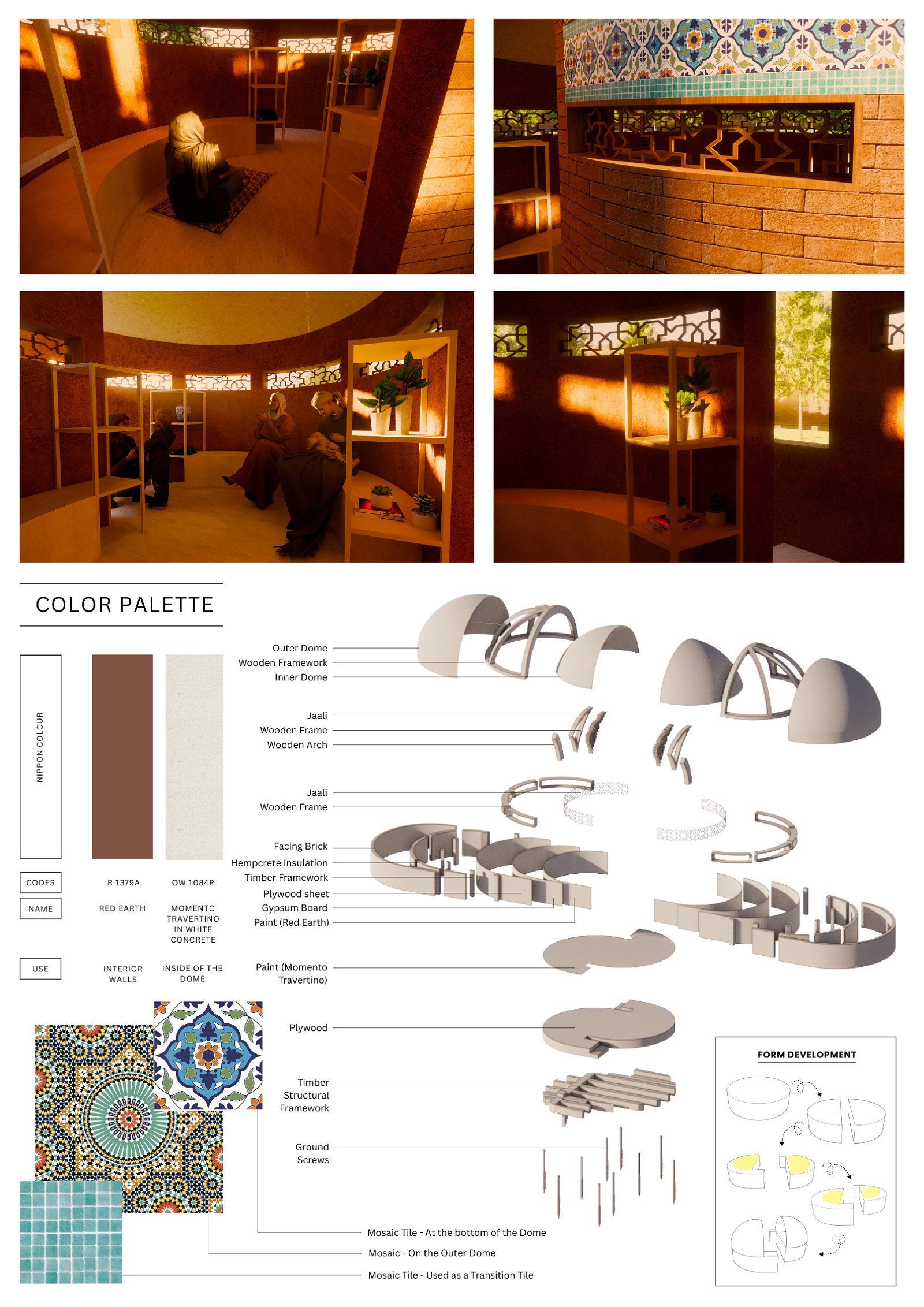
Angan-e-Zan is a women-centered architectural intervention designed as a safe rest and community interaction space within the urban fabric. The project focuses on creating an inclusive environment where women can pause from daily routines, rest, and engage in informal social interaction in a secure and comfortable setting. It's a network of micro-pavilions strategically placed at key urban nodes, ensuring the support is continuous, familiar, and easily accessible rather than isolated. Micro pavilions are constructed with the modular timber framework chosen for its lightweight, prefabricated, and replicable qualities which allow for efficient construction with minimal environmental impact. Angan-e-Zan defines its scope as a micro-urban public facility that prioritizes rest, safety, and social connectivity for women, while contributing to a more inclusive and humane public realm.
Technical information
Timber as a renewable material reduces embodied energy compared to conventional masonry and enables flexible installation in dense urban areas without significant disruption. The pavilions were finished with mosaic surfaces drawing from local cultural traditions to create a visually recognizable and socially resonant presence. The use of hempcrete, a low carbon, renewable material that stores CO2, reduces embodied energy and supports sustainable construction as an insulation within the pavilion, reinforces the project's commitment to environmentally responsible and socially inclusive urban design. Together, these material choices not only promote sustainability by reducing waste and energy use but also strengthen the community connection by embedding cultural identity into functional urban infrastructure, ensuring that each pavilion serves as both a practical amenity and a landmark.
The interesting thing about this project is its adaptability. The facade's material can be swapped based on the context of each area making it blend in with its surroundings
Documentation


Copyright © 2026 INSPIRELI | All rights reserved. Use of this website signifies your agreement to the Terms of Use, Privacy Policy, and use of cookies.