The 1001st Crane


Project idea
I was born on a snowy night, toward the end of the Iran–Iraq war, in Tehran.
My first encounter with this world was accompanied by the bombing of Tehran. It was as if the world told me, “Welcome to the Middle East.”
The city was filled with Islamic slogans, war, and an ideal that was supposed to symbolize independence for its citizens—but in reality, we were facing a nightmare. A nightmare that still continues.
I grew up in an environment full of deep contradictions. On one hand, I was raised at home in a non-religious atmosphere, and on the other hand, an authoritarian government had taken over the city and the social space of Iran. This painful contradiction was always with me—and, in a way, it became the code of my identity.
I was seven years old when, on the street, a police officer warned my mother that her daughter should not appear outside without a hijab. Those words alone were enough to make me search for freedom for the rest of my life. But in that geography, freedom does not come easily—you have to fight for it.
The jolt that officer gave me that day led me to become, to this day, a firm opponent of compulsory hijab.
I have always been fascinated by myths. Within them, I searched for a path—for a light that could be cast upon the darkness, a way forward.
A few years ago, during one of the darkest periods of my life, while I was struggling deeply with depression, I heard a legend about a thousand cranes.
They say that if you fold a thousand paper cranes, one of your wishes will come true. Naturally, I translated this legend for myself like this: if I make a thousand cranes, I can bring freedom to Iran.
With every fold I made, I thought of Iran, of Iranian women, and I savored the taste of freedom.
I imagined that one day these cranes would turn into the meaning of freedom. My thousand cranes were a thousand small hopes for liberation.
The day I made the thousandth crane, something strange happened. That day, I heard the news of the killing of Mahsa Amini—a girl who, like me and so many others, had been detained simply because of her hijab and was killed by the forces of the Islamic Republic. This news shook all of Iran. The streets filled with people demanding freedom.
I could see my thousand cranes in the city, fighting for a shared wish.
The coincidence of that moment and the thousand cranes taught me a great lesson:
we cannot achieve anything in our lives unless we try for it thousands of times. Perhaps the value of myths lies in this—that they symbolically remind us how to live in this world.
The movement that arose after Mahsa Amini, like every movement in Iran, was met with heavy repression by the government and left many families in mourning. For me, the suppression of that movement meant the end of a chapter—a chapter that closed with saying goodbye to my homeland.
My decision to migrate was not born of defeat. I had to fly—to better understand my world.
I had to find hope.
Did you know that there is also a legend about hope?
Perhaps you have heard of One Thousand and One Nights. Scheherazade told the king a story every night to stay alive. She told a thousand stories and did not lose hope—and her thousand-and-first story saved her. After that final story, the king decided not to kill her.
1001 is a symbol of resistance—a symbol of staying on a path, a symbol of hope.
Think about the number 1001. It is not a round number; it signifies continuation.
These days, I see myself as the thousand-and-first crane—a storyteller who still carries hope.
I still hope that we, Iranian women, will one day achieve freedom, and I believe that we must continue.
Every human being has a story of perseverance that deserves to be heard.
Perhaps these very stories, these acts of continuing, these small hopes, can one day change our world.
Thank you for listening to my story. And now I want to ask you:
If you were the thousand-and-first crane, for what wish would you fly?
Project description
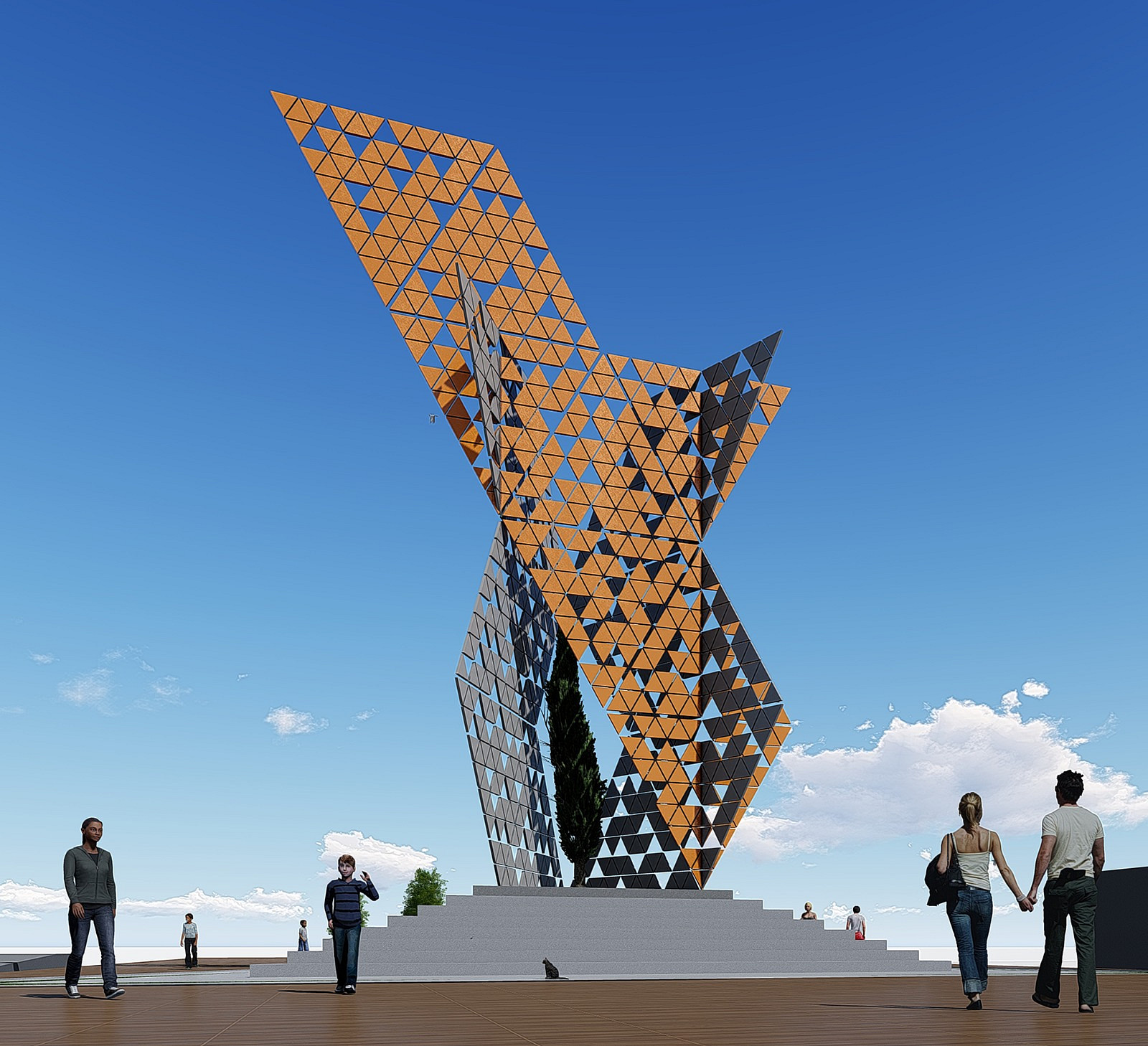
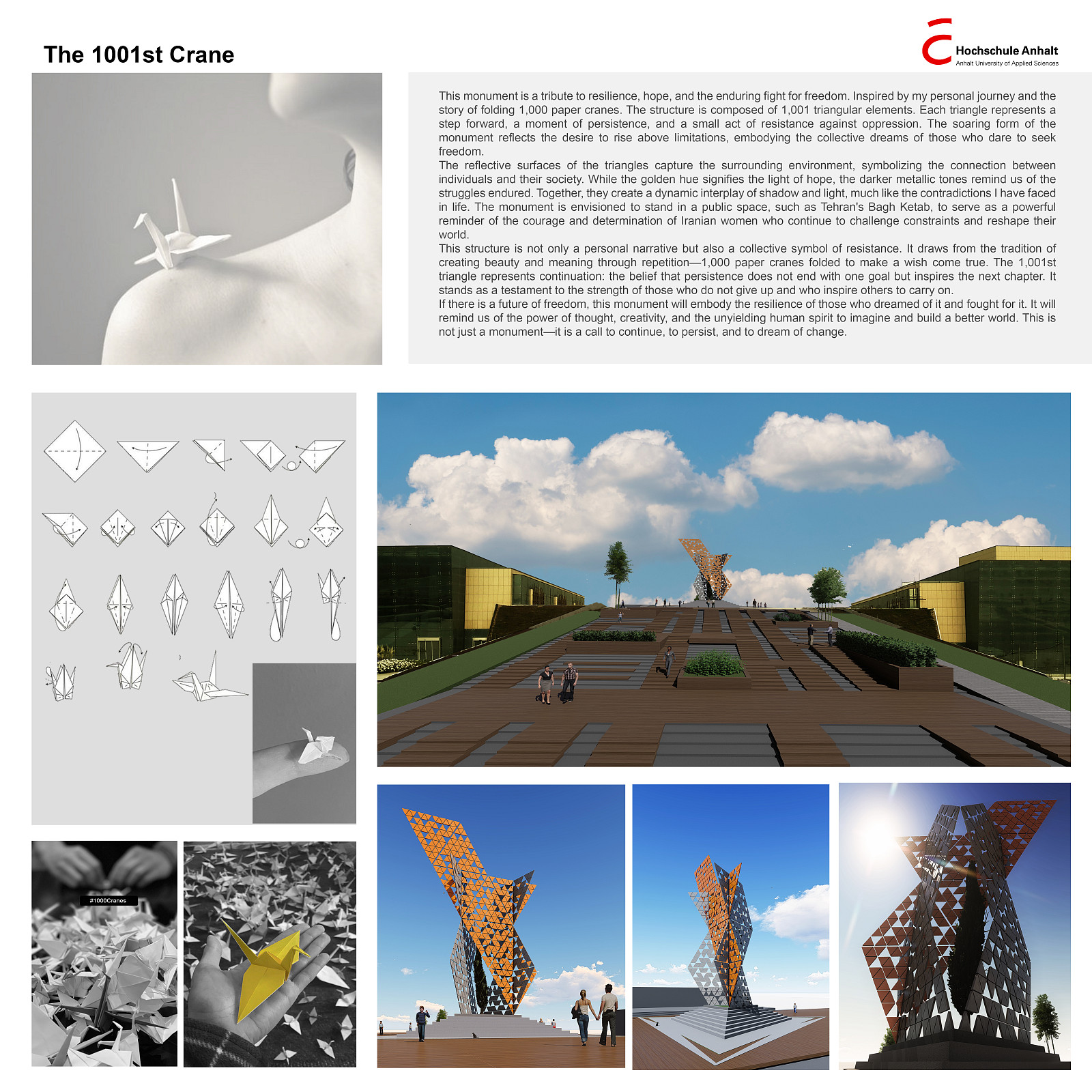
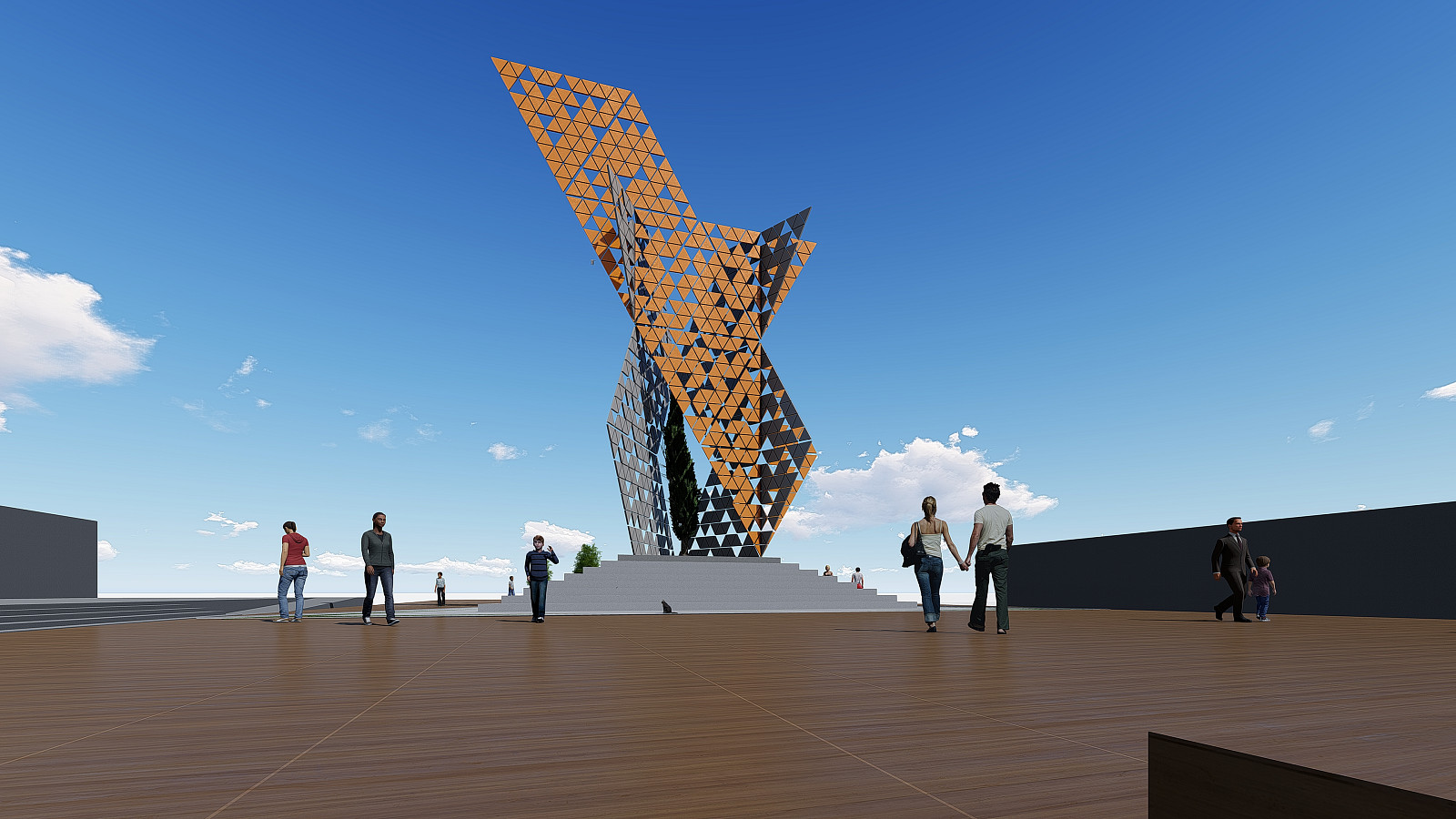
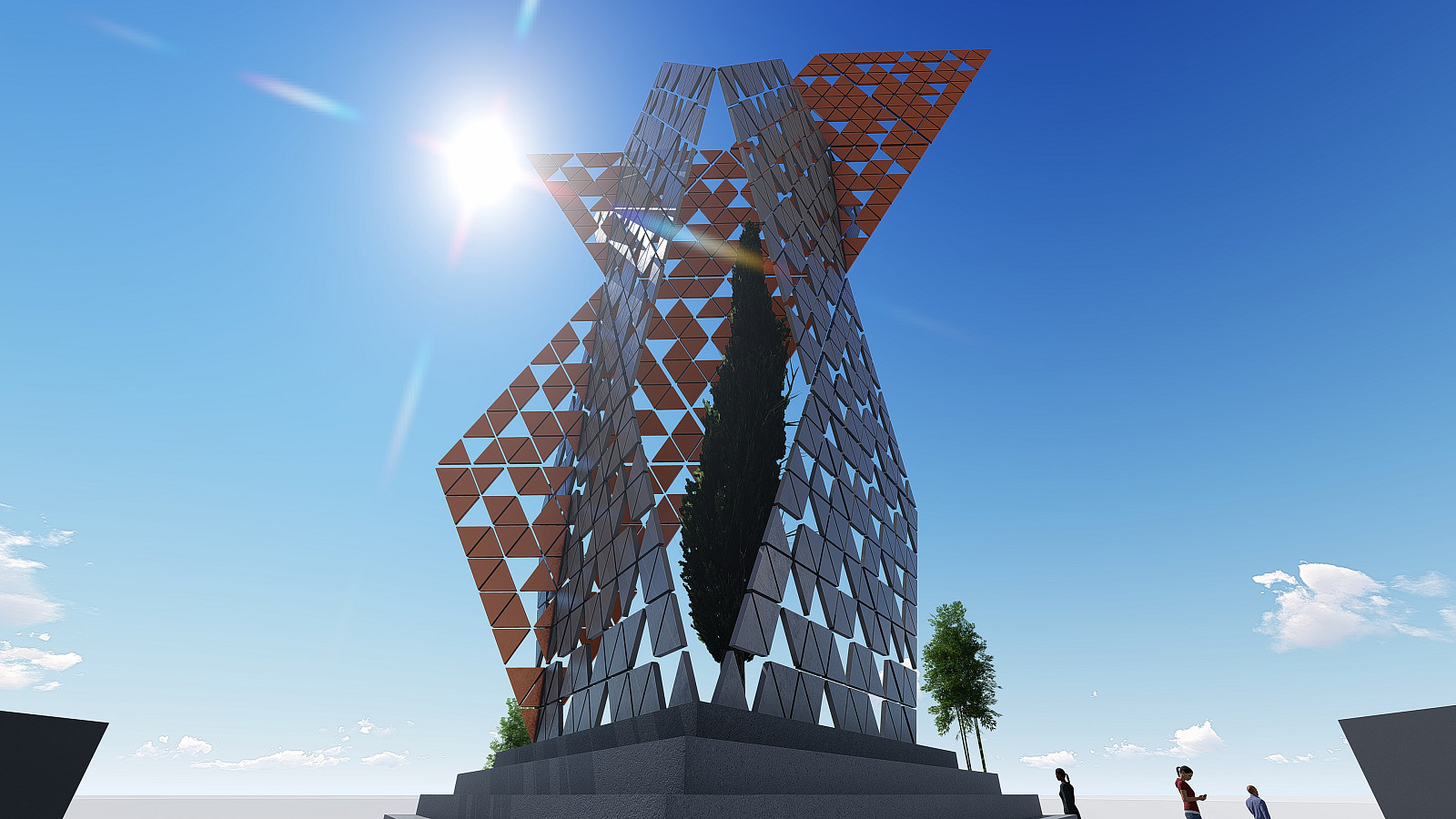
This monument is a tribute to resilience, hope, and the enduring fight for freedom. Inspired by my personal journey and the story of folding 1,000 paper cranes, the structure is composed of 1,001 triangular elements. Each triangle represents a step forward, a moment of persistence, and a small act of resistance against oppression. The soaring form of the monument reflects the desire to rise above limitations, embodying the collective dreams of those who dare to seek freedom.
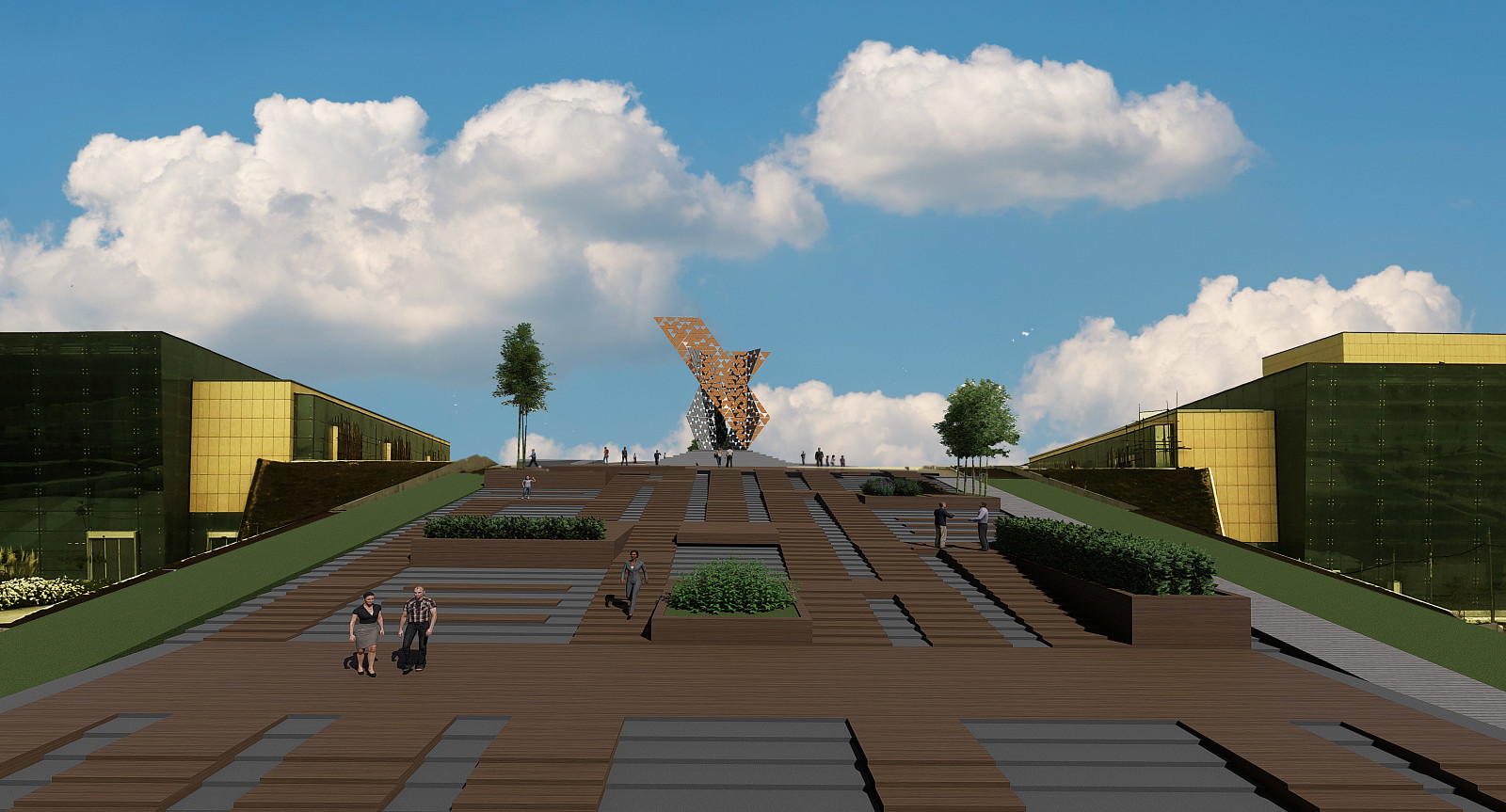
The reflective surfaces of the triangles capture the surrounding environment, symbolizing the connection between individuals and their society. While the golden hue signifies the light of hope, the darker metallic tones remind us of the struggles endured. Together, they create a dynamic interplay of shadow and light, much like the contradictions I have faced in life. The monument is envisioned to stand in a public space, such as Tehran's Bagh Ketab, to serve as a powerful reminder of the courage and determination of Iranian women who continue to challenge constraints and reshape their world.
Technical information
This structure is not only a personal narrative but also a collective symbol of resistance. It draws from the tradition of creating beauty and meaning through repetition—1,000 paper cranes folded to make a wish come true. The 1,001st triangle represents continuation: the belief that persistence does not end with one goal but inspires the next chapter. It stands as a testament to the strength of those who do not give up and who inspire others to carry on.
If there is a future of freedom, this monument will embody the resilience of those who dreamed of it and fought for it. It will remind us of the power of thought, creativity, and the unyielding human spirit to imagine and build a better world. This is not just a monument—it is a call to continue, to persist, and to dream of change.

Copyright © 2026 INSPIRELI | All rights reserved. Use of this website signifies your agreement to the Terms of Use, Privacy Policy, and use of cookies.
