Flow of Recovery


Project idea
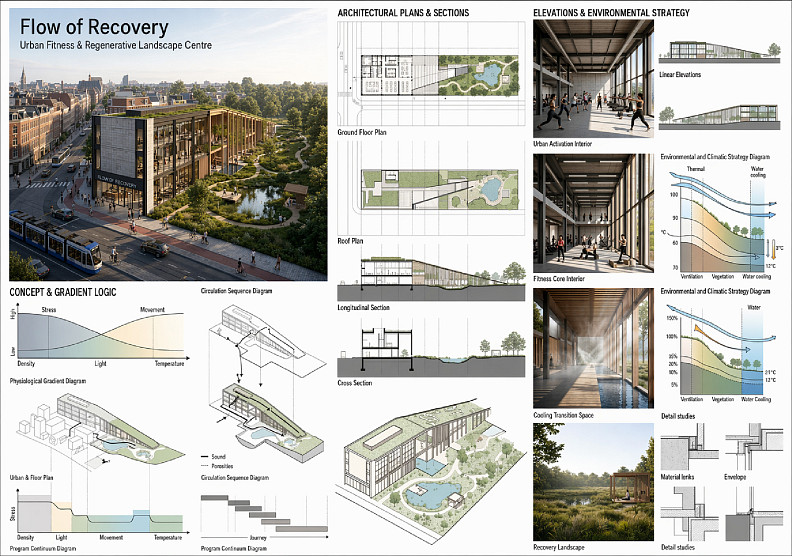
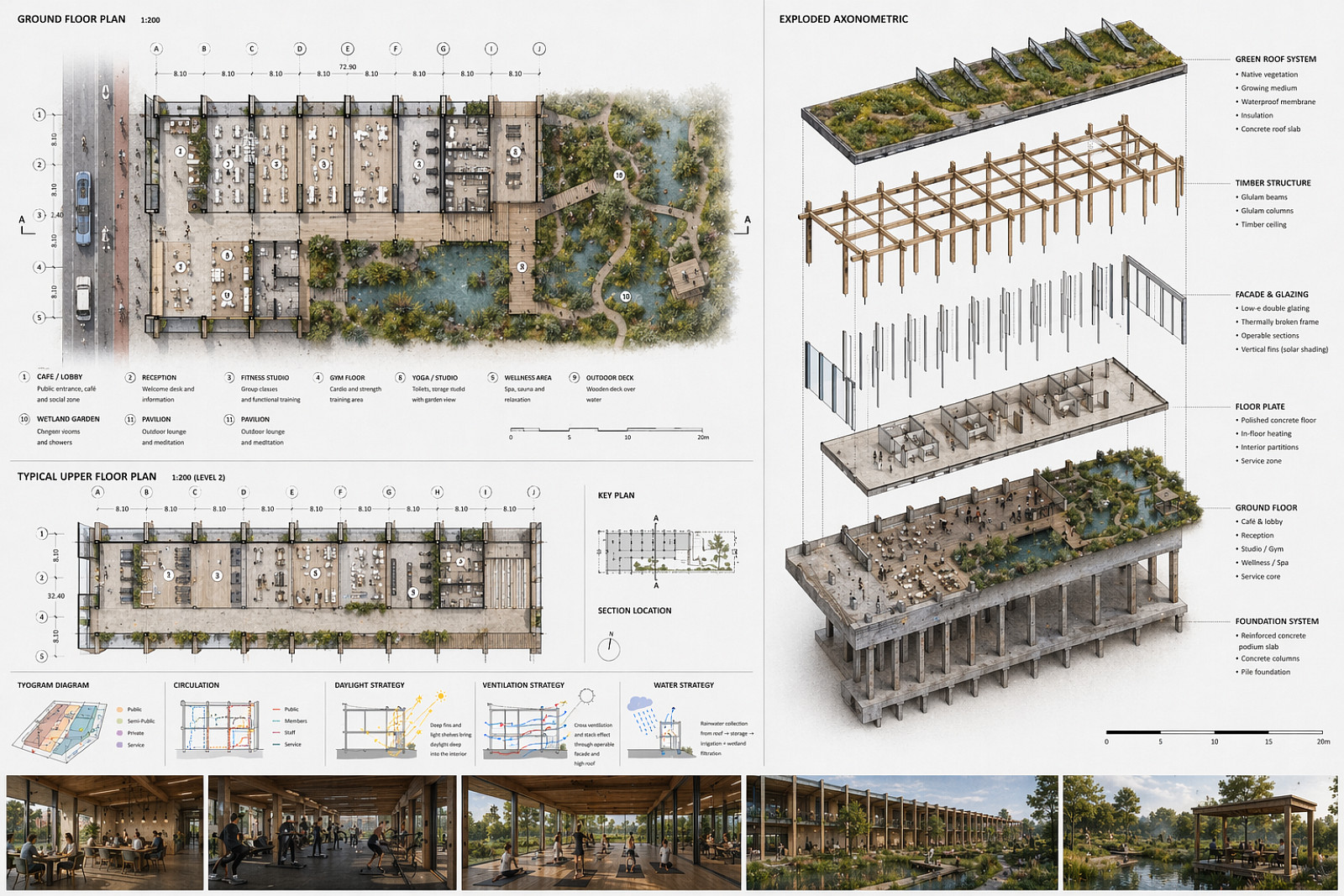
Flow of Recovery rethinks the urban fitness centre as a continuous spatial system rather than a collection of isolated rooms. The project responds to the contemporary city, where density, speed, and constant stimulation create physical and mental imbalance. Instead of reinforcing this condition through spaces focused only on performance and intensity, the proposal introduces a controlled architectural gradient that allows the body to move gradually from effort to recovery.
The building is conceived as an interface between the demands of the city and the needs of the body. It organizes movement, atmosphere, and environmental conditions into a clear sequence that begins with activity and compression and slowly opens toward rest, light, water, and landscape. The goal of the project is to create a new typology of urban wellbeing, in which architecture does not simply contain fitness functions, but actively regulates intensity, pace, and recovery through space itself.
Project description
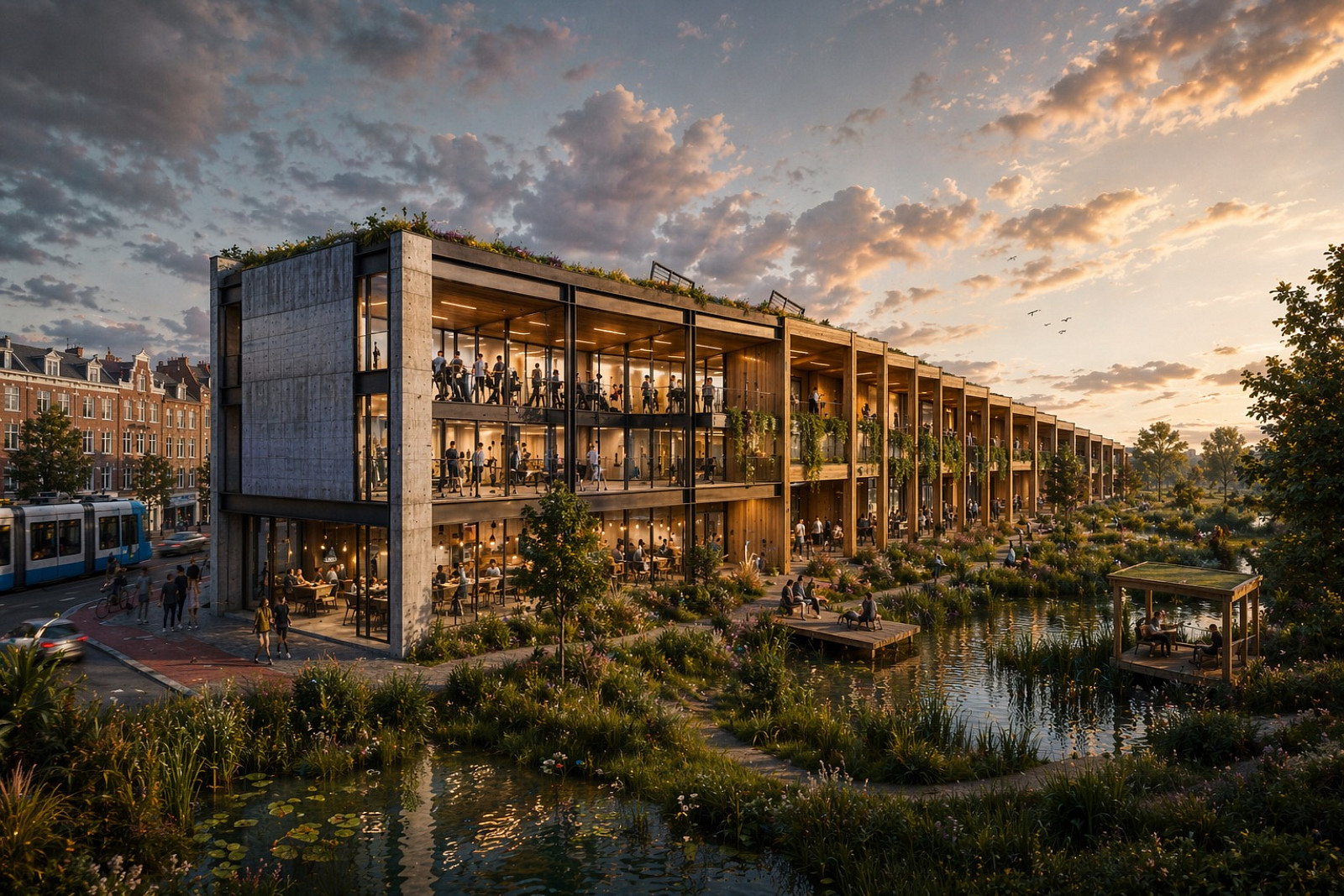
The project is organized as a linear spatial sequence extending from the urban edge toward a more open and regenerative landscape condition. At the street front, the architecture is compact, structured, and aligned with the logic of the city. Entry, circulation, and collective training spaces are denser and more active, reflecting the speed, visibility, and intensity of the urban condition.
At the center of the building, the main fitness and movement functions are arranged within a clear structural system that allows openness, flexibility, and visual continuity across different activities. From this point onward, the project shifts gradually in atmosphere and spatial character. Transitional zones introduce vegetation, filtered daylight, water, and softer boundaries between interior and exterior. These spaces are not defined only by program, but by their role in slowing movement, reducing stress, and preparing the body for recovery.
Toward the end of the sequence, architecture becomes increasingly open and secondary to the environment. The project dissolves into a landscape of water, planting, paths, and resting areas, where the focus moves from exercise to breathing, restoration, and passive occupation of space. Flow of Recovery therefore proposes wellbeing not as a set of isolated functions, but as a relationship between spaces and the transitions that connect them.
Technical information
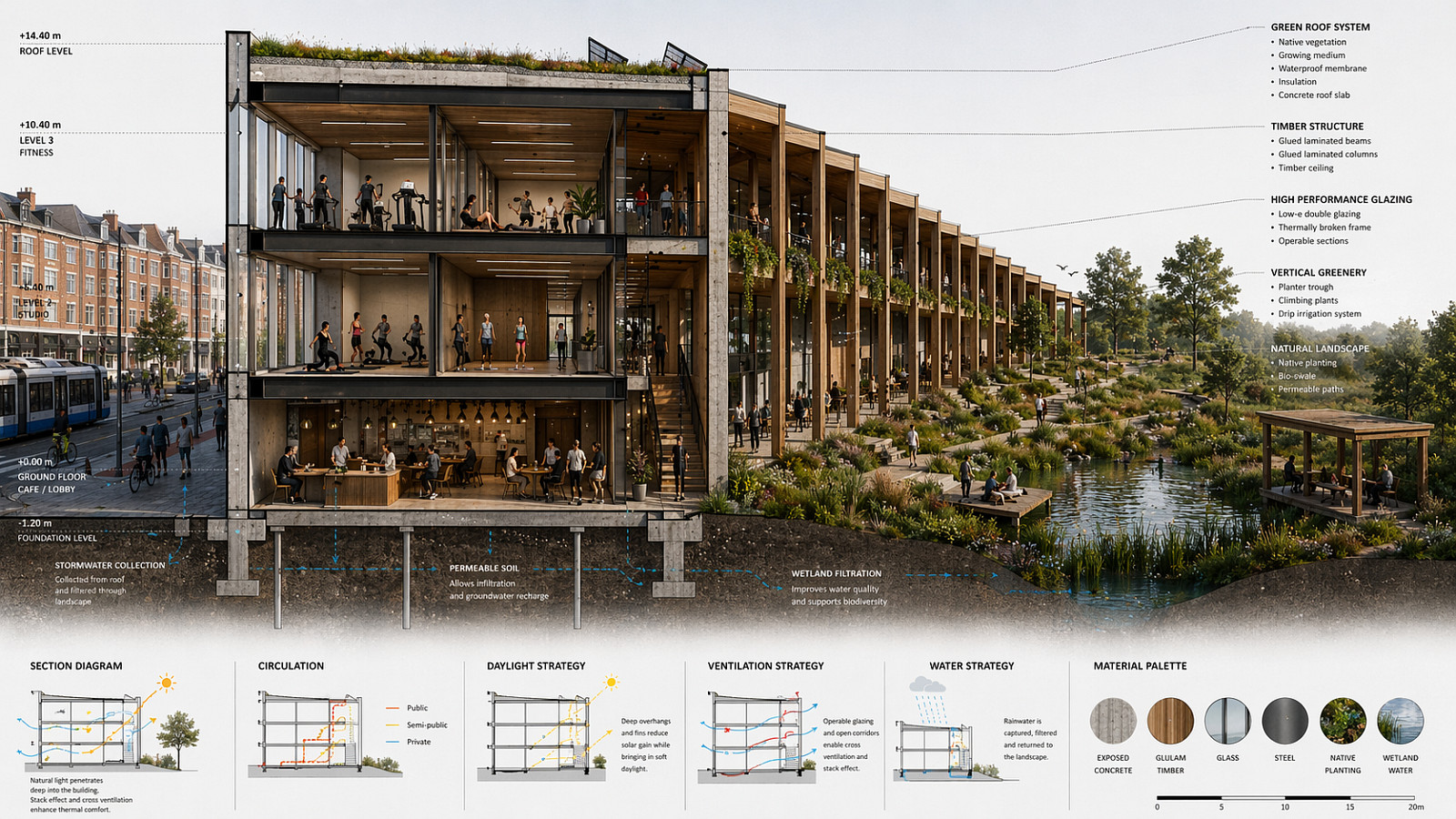
The project is conceived as a low-rise linear building integrated with a regenerative landscape system. Its structure is based on a clear architectural rhythm that supports large open training spaces at the urban front and more permeable transitional zones toward the landscape. The building combines enclosed fitness areas, shaded semi-open spaces, and exterior recovery environments within one continuous system.
Environmental performance is achieved through passive and spatial strategies. The elongated section supports gradual changes in daylight, temperature, and openness. Deep overhangs, planted edges, operable openings, and water elements improve shading, ventilation, evaporative cooling, and microclimatic comfort. The landscape is not treated as decoration, but as an active environmental and therapeutic infrastructure. Materiality combines durable mineral surfaces, warm timber elements, transparent facades, and vegetation in order to create a gradual shift from urban intensity to restorative calm.
Documentation

Copyright © 2026 INSPIRELI | All rights reserved. Use of this website signifies your agreement to the Terms of Use, Privacy Policy, and use of cookies.