
Room Within a Room


Project idea
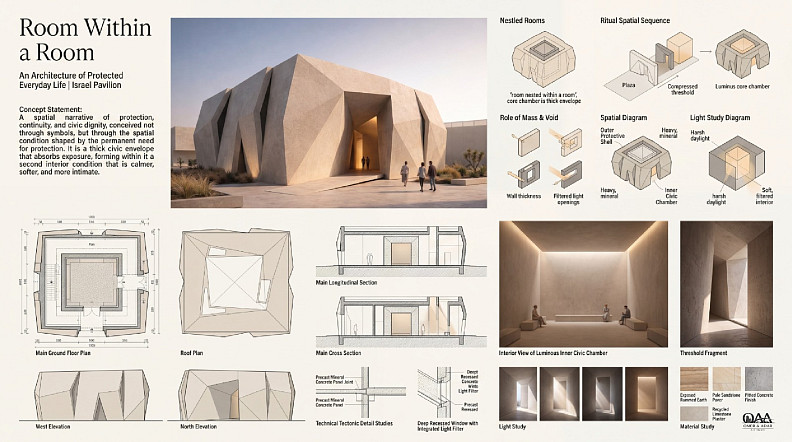
Room Within a Room proposes an architecture of protected everyday life. Rather than representing identity through symbols, monuments, or slogans, the project gives form to a spatial condition: the persistent need to sustain dignity, continuity, and collective life within pressure. It begins from the idea that protection should not remain hidden as infrastructure or be treated as a temporary emergency, but can become space itself.
The project is conceived as a sequence of nested rooms organized through mass, threshold, shadow, and filtered light. A thick outer shell absorbs exposure, uncertainty, noise, and heat, while within it a quieter and more intimate civic interior emerges. The goal of the project is to create a restrained yet powerful architecture in which protection is expressed not as fear or spectacle, but as care, presence, and shared interiority.
Project description
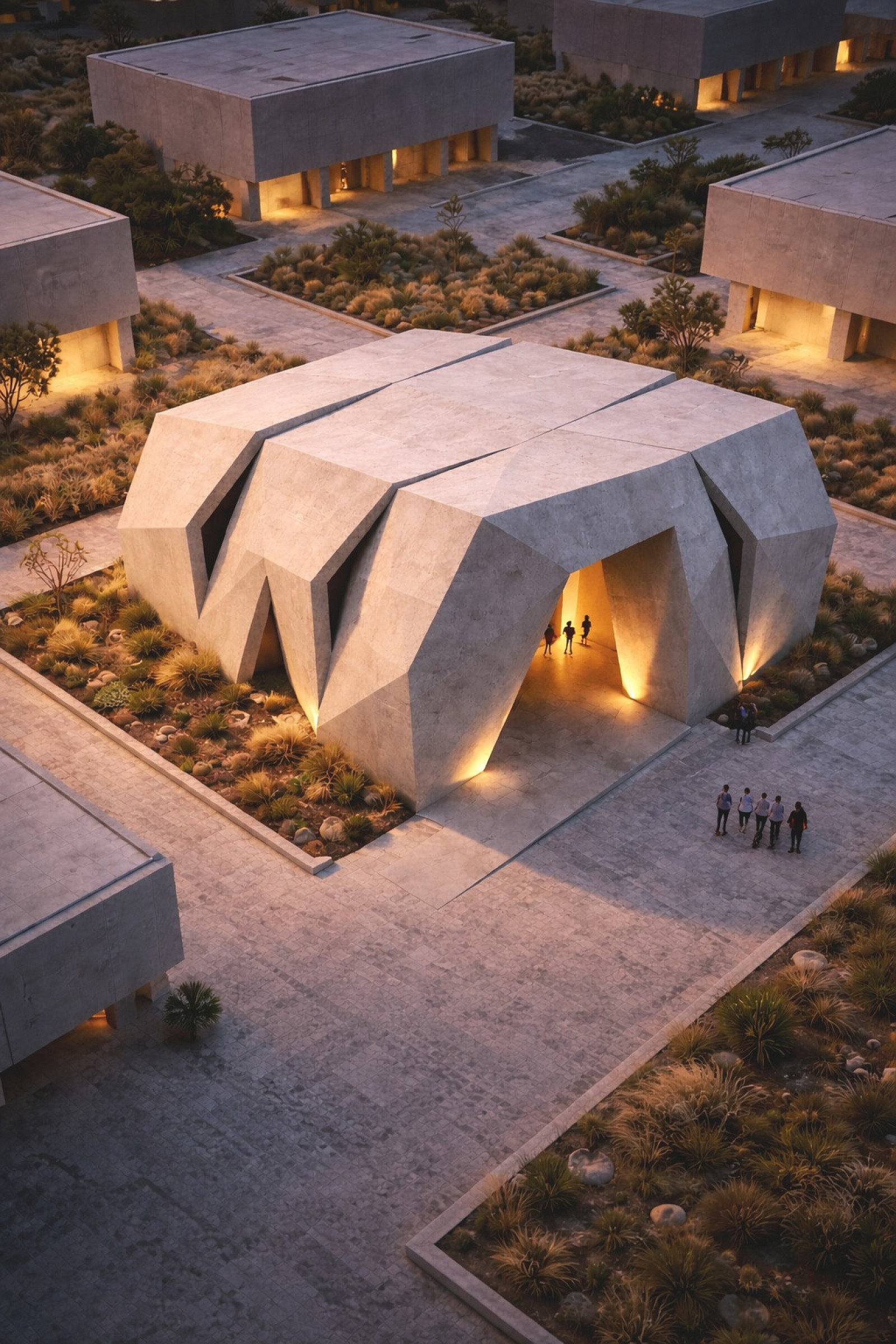
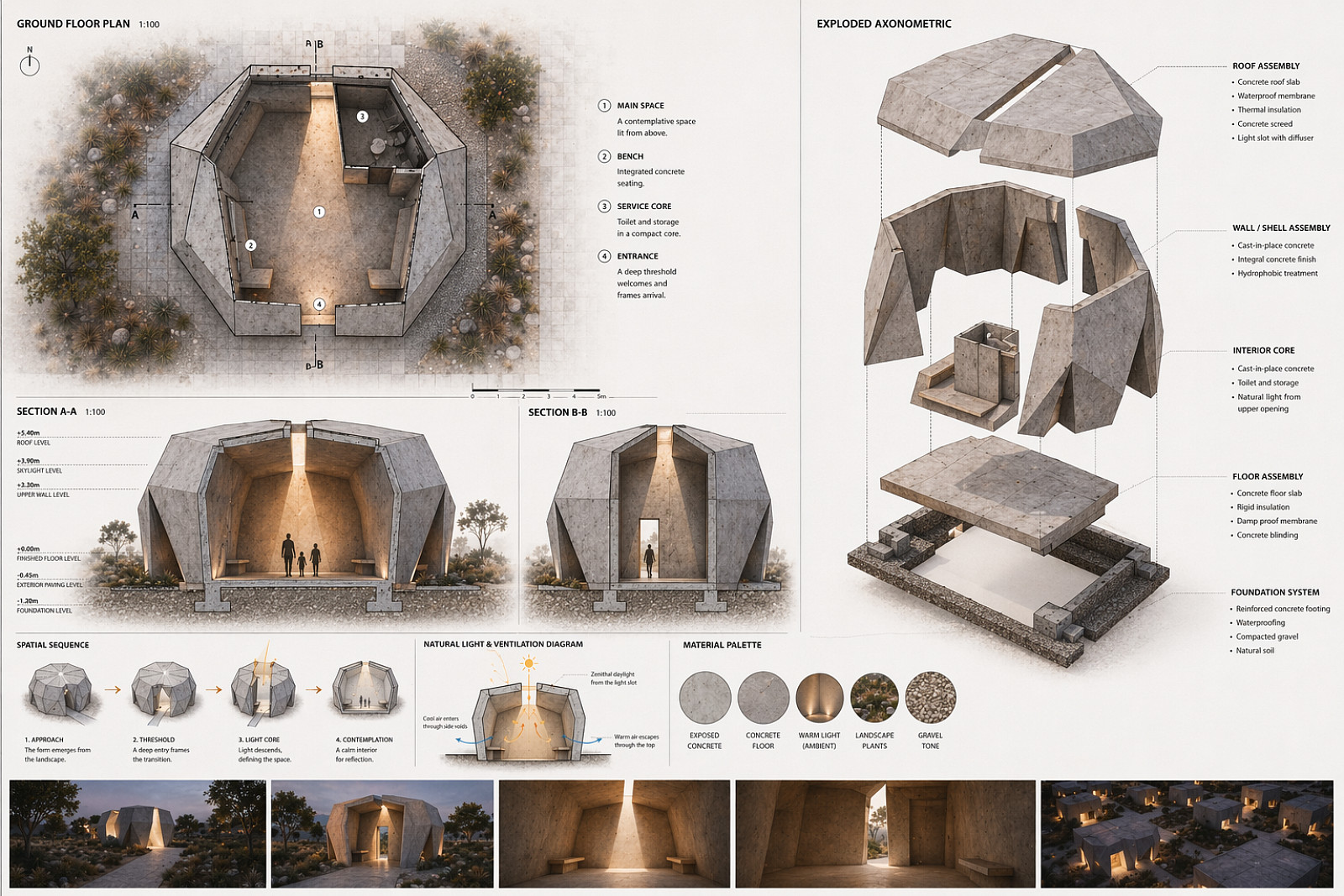
The project is organized as a compact monolithic pavilion structured around the relationship between an outer protective envelope and an inner luminous chamber. Rather than functioning as a singular open hall, the architecture is conceived as a sequence of spatial thresholds that lead from exposure toward concentration, stillness, and collective presence. Entry is compressed and heavy, delaying full release until the inner core is reached.
The outer shell is thick, mineral, and protective. Its geometry is carved to create deep openings, shadowed thresholds, and a sense of spatial weight. Within this shell, a second room is formed: quieter, softer, and more carefully lit. This inner civic chamber becomes the emotional and spatial center of the project. It is not conceived as a monument to conflict, but as a place of pause, dignity, and proximity, where architecture frames a shared interior condition rather than a public image.
Room Within a Room therefore proposes protection as an architectural principle. The project does not rely on symbolism or explicit narrative representation, but on spatial experience itself. Through mass, filtered light, enclosure depth, and the ritual sequence of entry and arrival, the pavilion creates an atmosphere in which resilience is understood as restraint, care, and the possibility of remaining together within uncertainty.
Technical information
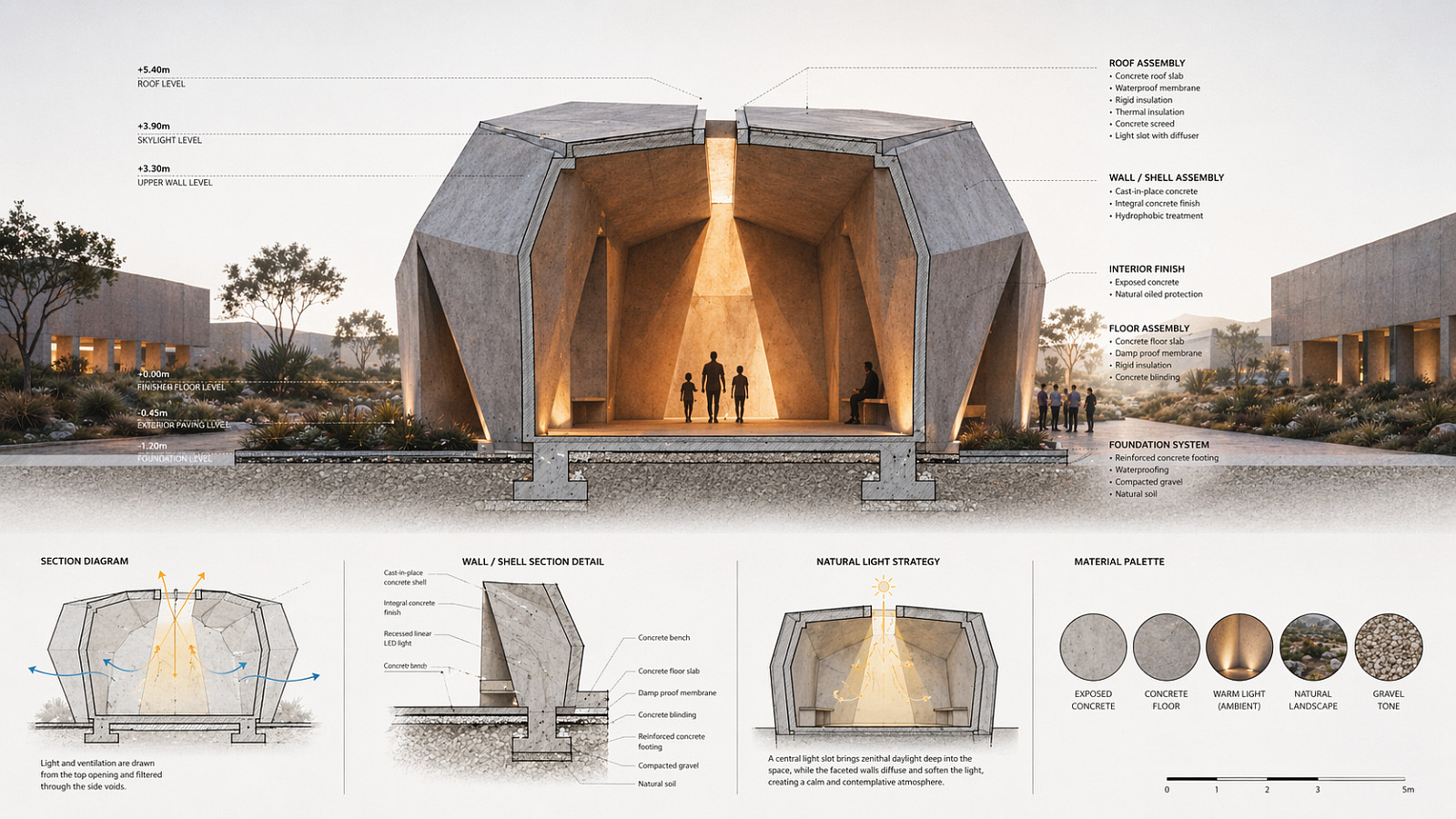
The project is designed as a compact freestanding pavilion formed through a thick outer structural shell and an inner protected chamber. The architectural system is based on a monolithic mineral envelope with deep openings, recessed thresholds, and controlled points of light entry. This outer mass provides thermal buffering, shade, and spatial protection, while the inner room is shaped as a more refined and luminous civic interior.
Environmental performance is achieved through mass, enclosure depth, filtered daylight, and passive shading. Openings are carefully positioned to reduce direct exposure while allowing soft light to penetrate the interior. The material strategy emphasizes mineral and concrete-based construction with restrained finishes, expressing permanence, calm, and durability. Through the contrast between outer weight and inner lightness, the project creates a clear tectonic and atmospheric hierarchy that supports its spatial concept.
Documentation

Copyright © 2026 INSPIRELI | All rights reserved. Use of this website signifies your agreement to the Terms of Use, Privacy Policy, and use of cookies.
