
The Edited Home


Project idea
The Edited Home begins from a simple yet radical premise: the crisis of minimal living is not only spatial, but perceptual. As cities become denser and domestic space continues to shrink, architecture is often forced into a defensive position, compressing more functions into less area. This project challenges that logic and proposes an alternative. Instead of treating the microhome as a reduced version of a conventional dwelling, it redefines it as an instrument that edits experience.
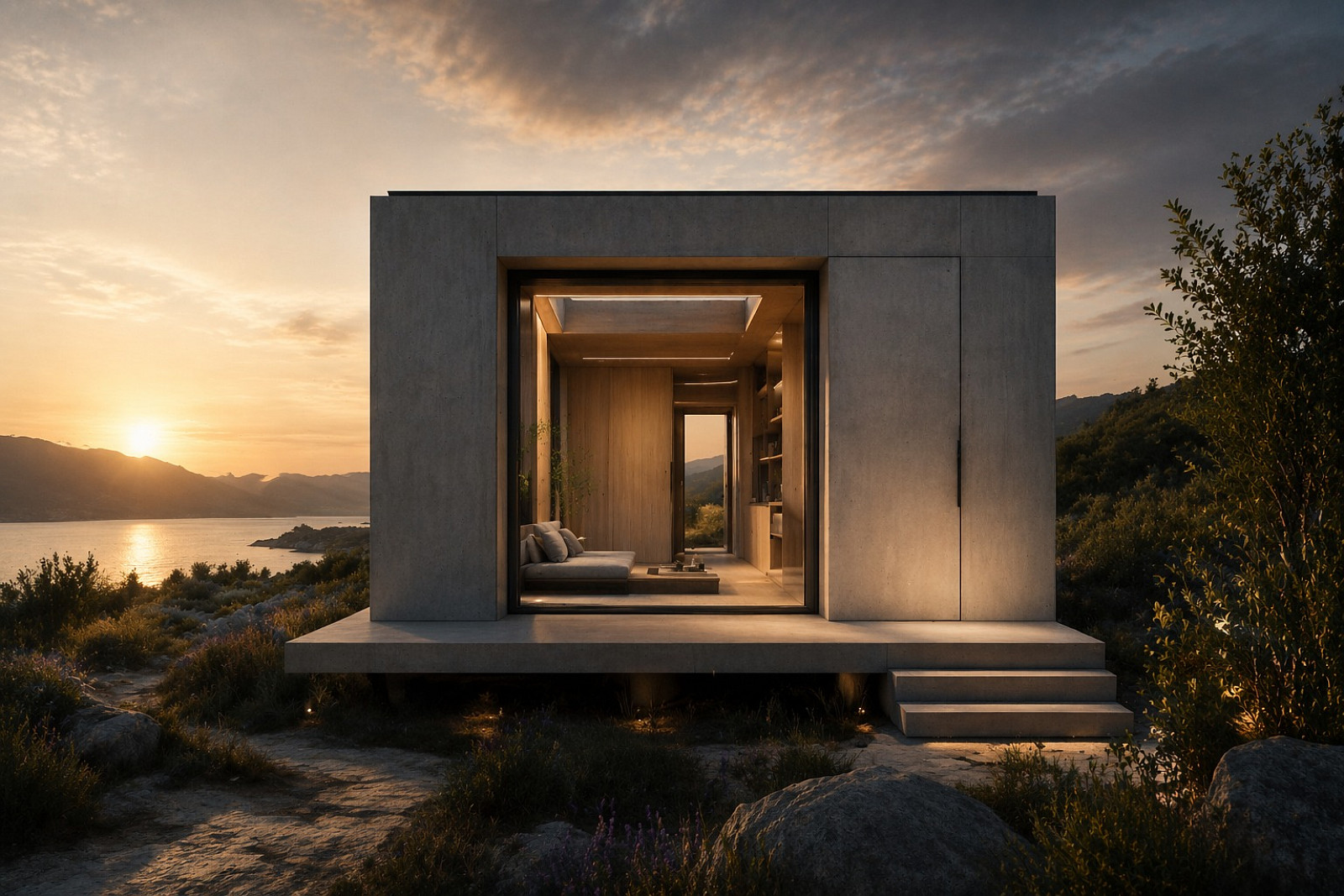
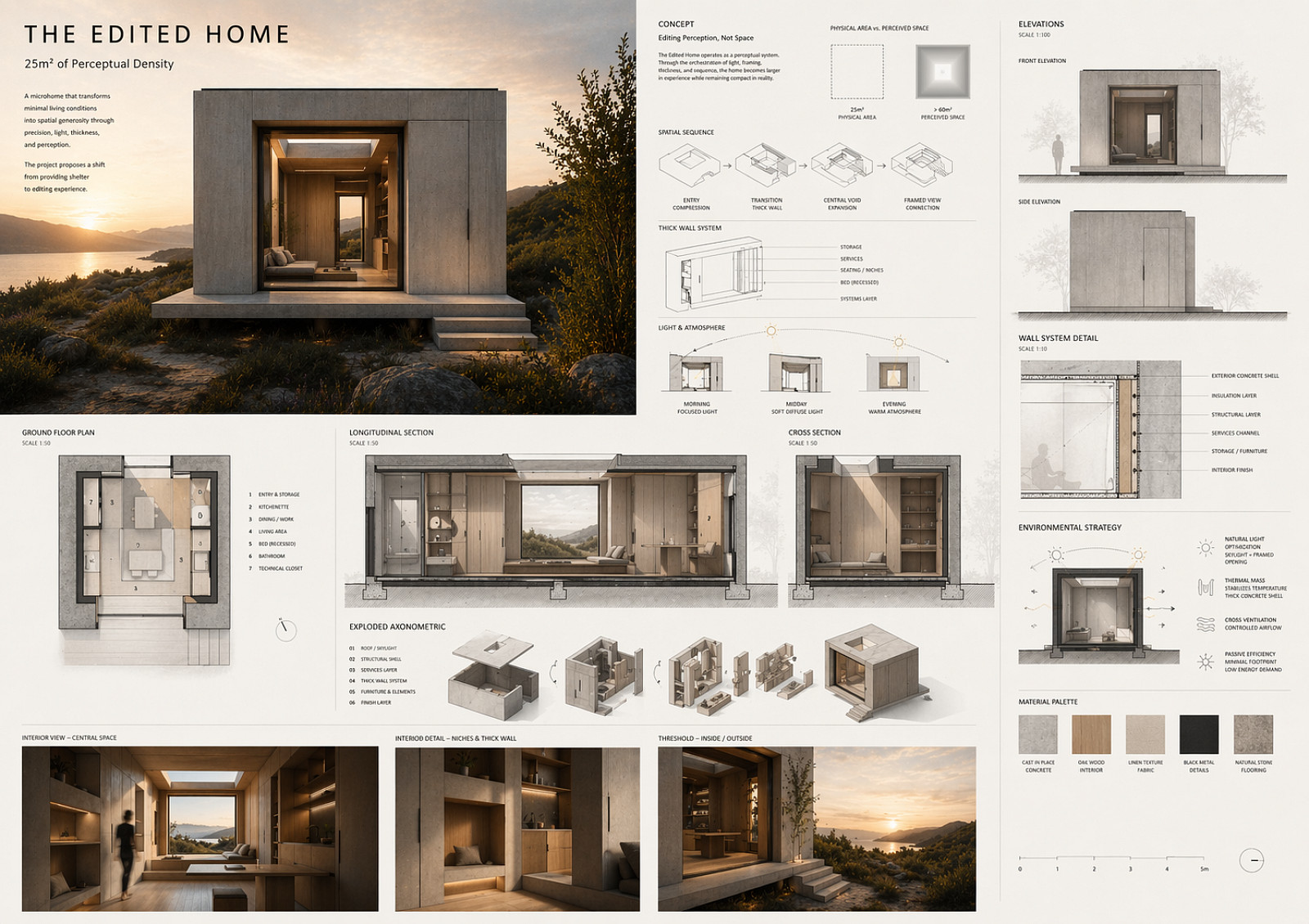
The project proposes a compact 25 square meter home organized not through room multiplication, but through precision, thickness, and carefully framed perception. A thickened architectural envelope integrates storage, infrastructure, and inhabitable depth, while light becomes the main design medium. The goal of the project is to show that architectural generosity can emerge not from increasing quantity, but from refining the spatial experience of living.
Project description
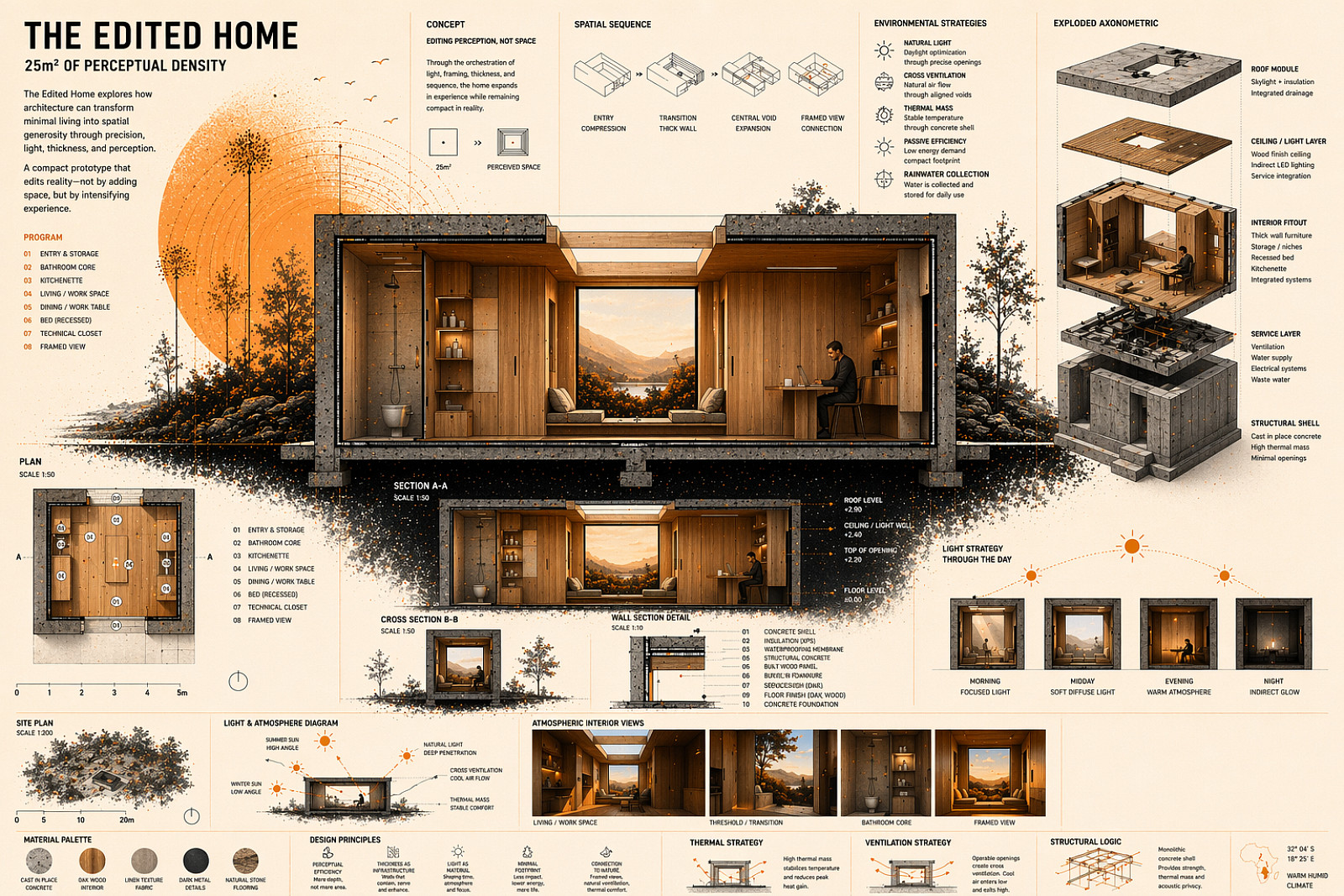
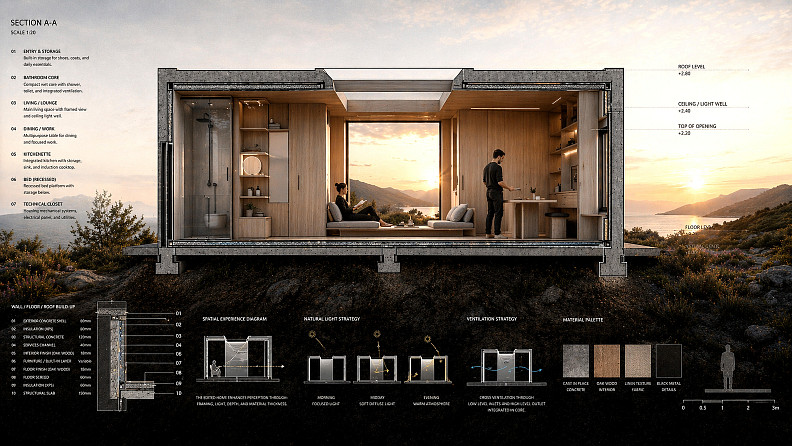
The project is conceived as a compact dwelling structured around a continuous interior field rather than a collection of separate rooms. Its 25 square meter footprint is organized through a thick wall system that absorbs storage, services, and secondary functions into the architectural envelope, allowing the central living space to remain open, calm, and spatially continuous. In this way, necessity is transformed into depth rather than clutter.
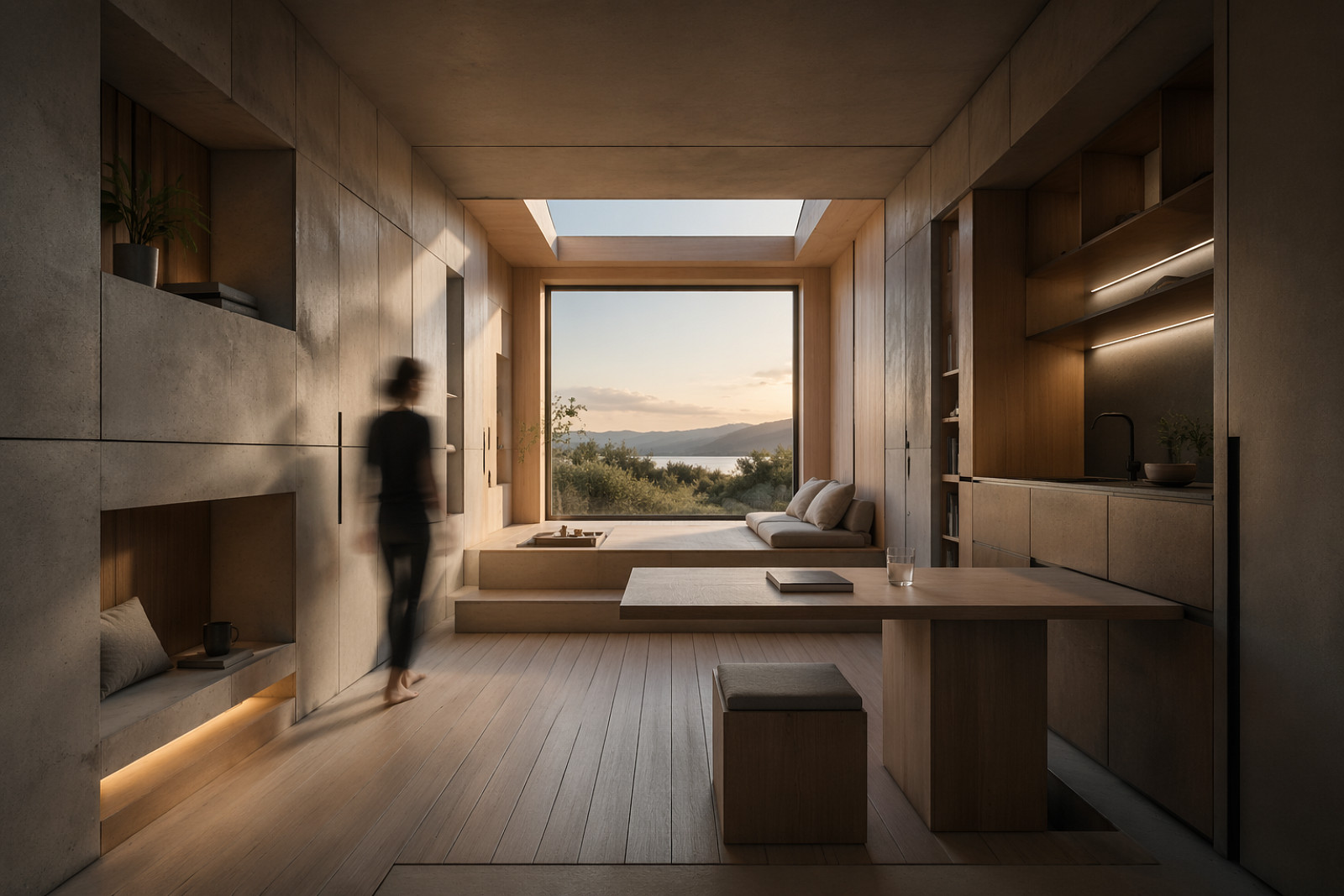
The architecture operates through sequence and perception. Entry begins in a compressed condition, followed by a gradual thickening and release toward the central void and the framed landscape view. The inhabitant does not occupy a fixed arrangement of rooms, but a series of changing spatial conditions that shift with light, movement, and use throughout the day. Living, working, resting, and dining are not rigidly separated, but carefully orchestrated within one continuous interior.
Light plays a primary role in shaping this experience. Openings are precisely positioned to frame the landscape, draw light deep into the house, and alter the perception of scale over time. As daylight shifts, the same compact volume expands, contracts, and transforms atmospherically. The Edited Home therefore proposes a new model of compact living, in which less physical area can still produce depth, calm, and a strong sense of spatial generosity.
Technical information
The project is designed as a compact freestanding microhome based on a thickened concrete shell, integrated service core, recessed interior fitout, and a carefully controlled system of openings. The structural logic combines a cast-in-place outer shell with insulated layers, internal timber lining, built-in furniture, and concealed technical systems. This allows storage, utilities, and inhabitable niches to be embedded within the wall thickness rather than occupying the central floor area.
Environmental performance is based on passive architectural strategies. A roof light well draws daylight deep into the interior, while the framed opening establishes a precise visual and climatic relationship with the surrounding landscape. Thermal mass in the concrete shell helps stabilize internal temperature, and operable openings enable cross ventilation through low-level inlets and high-level outlets. Rainwater collection and integrated service distribution are built into the compact roof and wall system. Materiality combines exposed concrete, oak wood, soft interior finishes, and restrained detailing to create a calm, durable, and spatially rich environment.
Documentation

Copyright © 2026 INSPIRELI | All rights reserved. Use of this website signifies your agreement to the Terms of Use, Privacy Policy, and use of cookies.