The Edited Home


Project idea
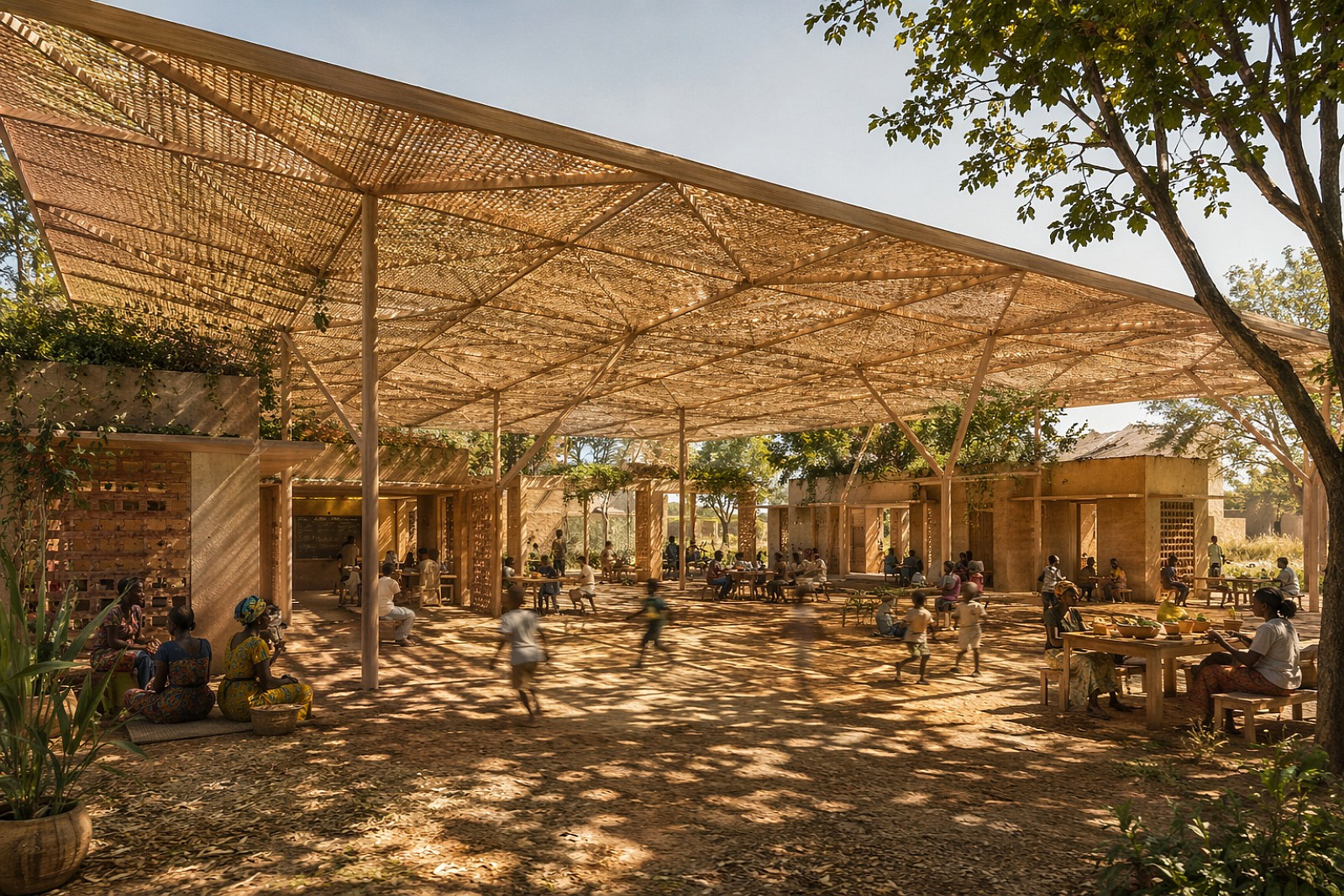
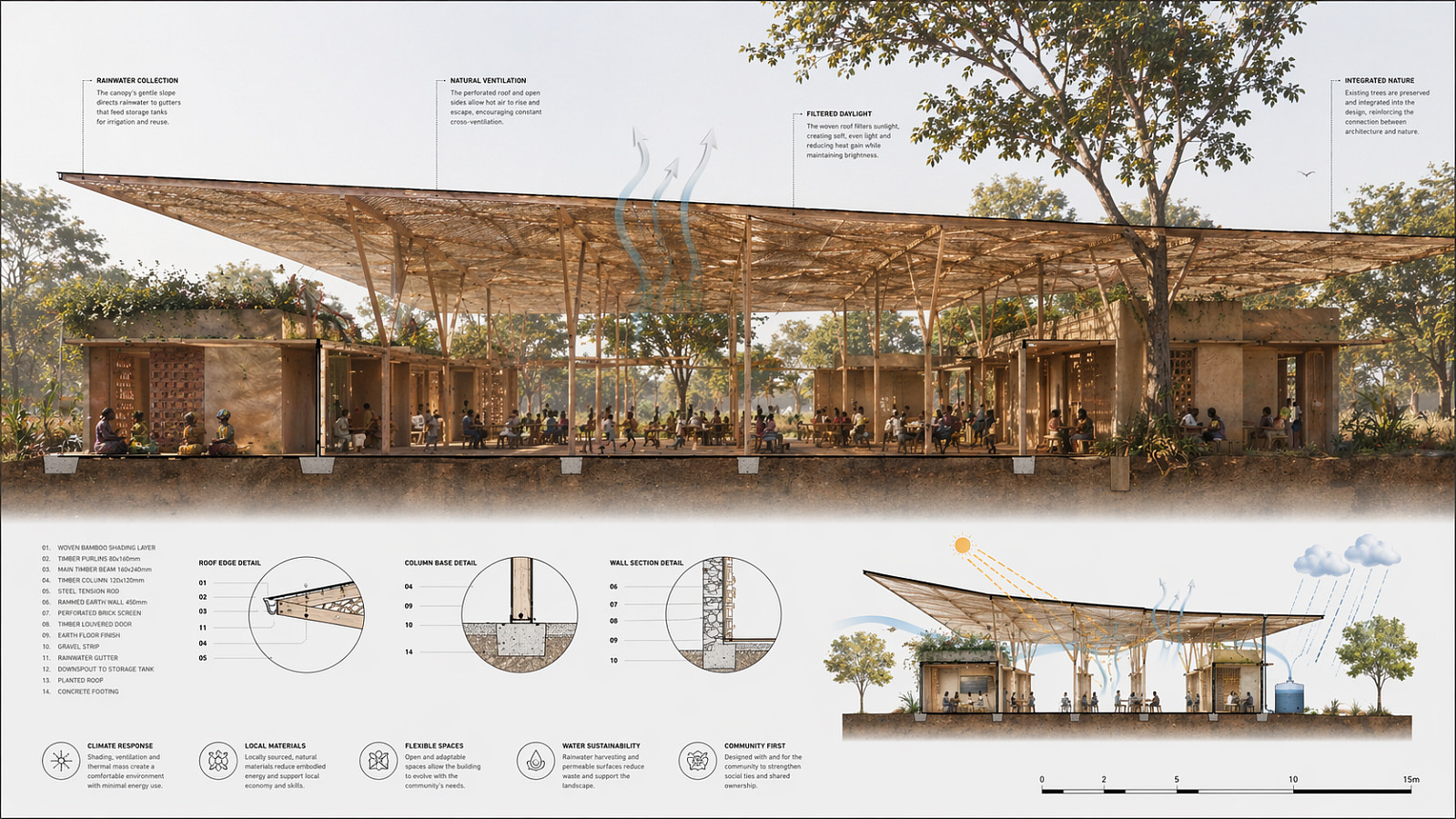
Under One Shade is conceived not as a building, but as a shared condition. In climates where the sun defines the limits of daily life, architecture begins with the act of creating shade. Rather than proposing the community center as an enclosed object, the project introduces a unifying canopy a light, elevated structure that gathers people beneath it and allows everyday life to unfold in a continuous open field.
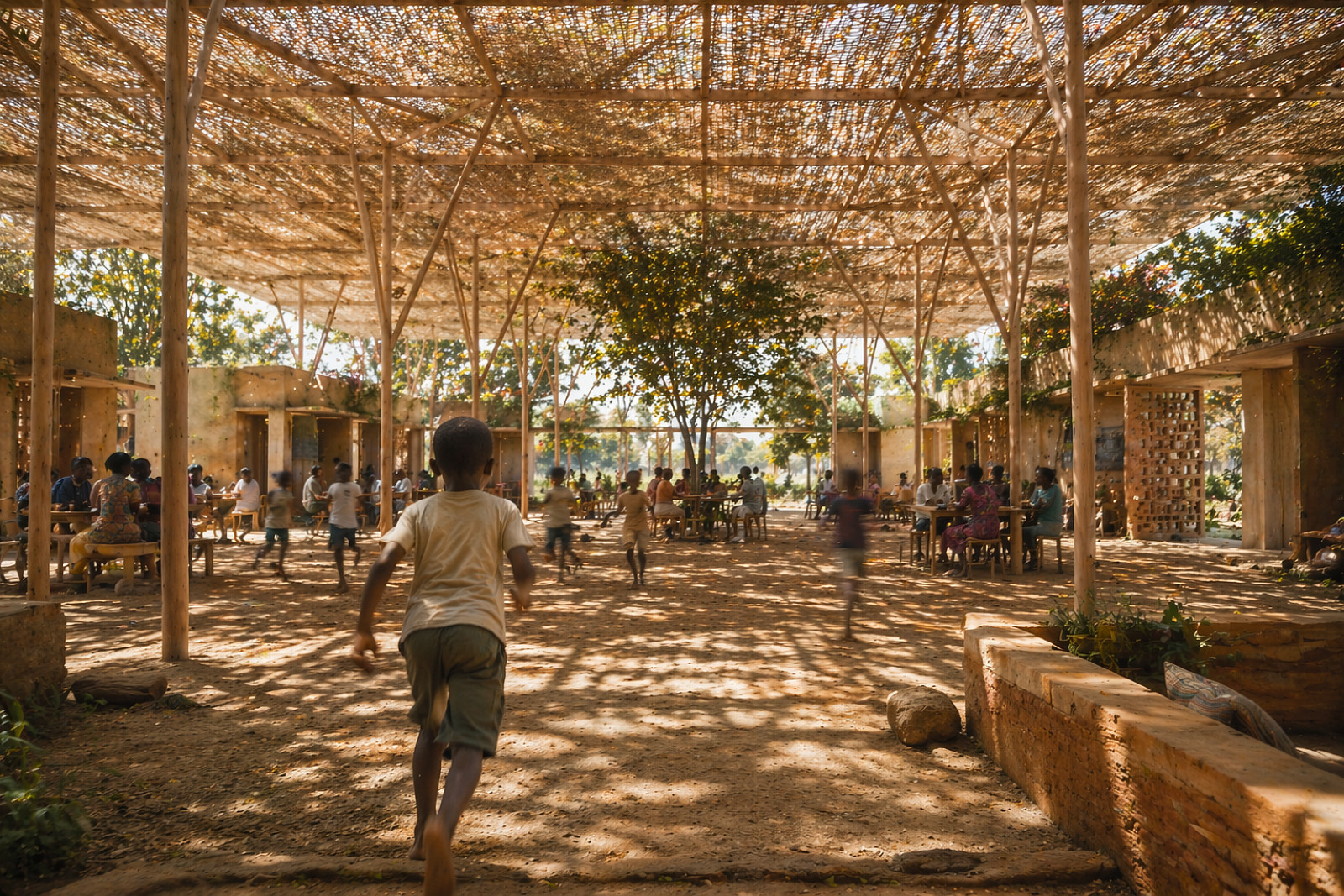
The canopy acts as both an environmental and social device. It filters sunlight, reduces heat, enables natural ventilation, and establishes a comfortable microclimate, while also creating a shared horizon under which learning, meeting, resting, playing, and celebrating can coexist. The goal of the project is to redefine the community center as an open civic structure that enables belonging, adaptability, and collective life through climate-responsive architecture.
Project description
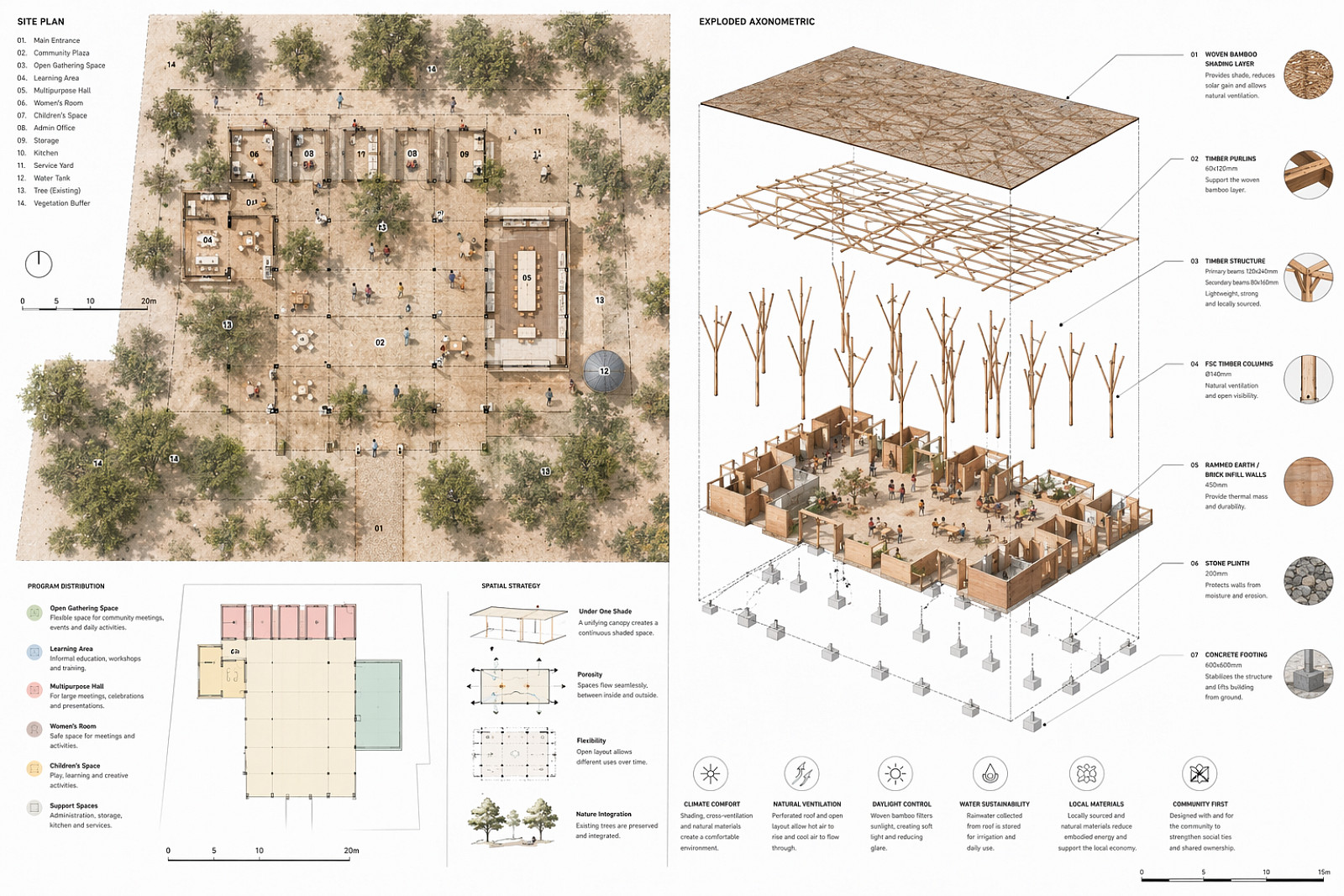
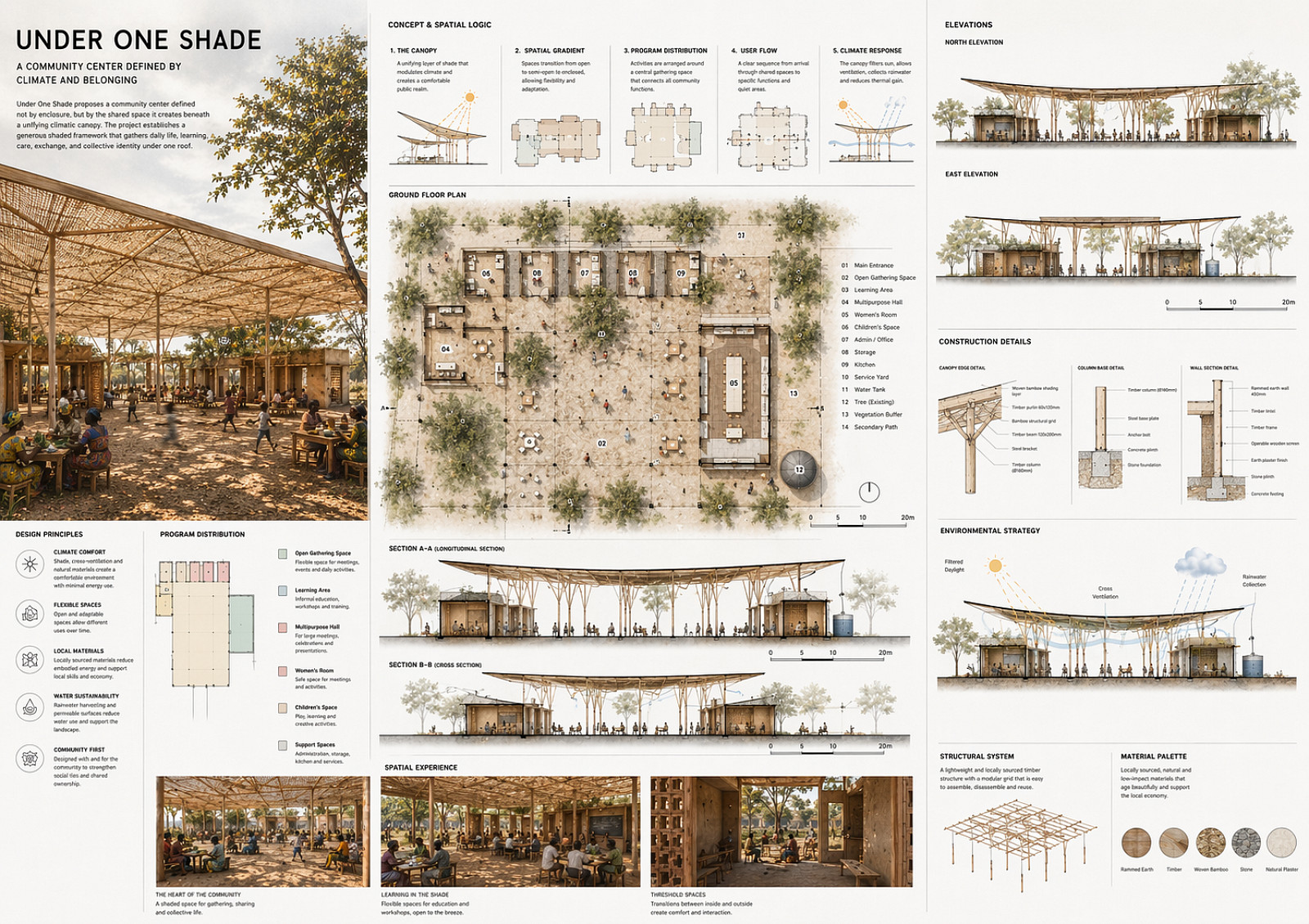
The project is organized around a large shared canopy that defines the primary public realm. Beneath this roof, a series of smaller volumes are arranged as an open system rather than a closed composition. These built elements accommodate specific programmatic needs such as learning spaces, support rooms, gathering areas, and community functions, yet they remain secondary to the central shaded field that acts as the heart of the project.
Spatially, the architecture operates through gradients rather than boundaries. The ground remains continuous and accessible, while thresholds replace rigid separations between inside and outside. This allows the community to move freely across the site and to appropriate the space in different ways over time. The central shaded area functions as a flexible civic platform where different daily and collective activities can overlap without losing clarity.
Under One Shade therefore proposes an architecture of possibility rather than imposition. It does not represent community through formal monumentality, but enables it through openness, climatic comfort, and shared use. The project creates a generous and adaptable environment in which architecture supports life by doing only what is necessary: providing shade, structure, and a framework for collective presence.
Technical information
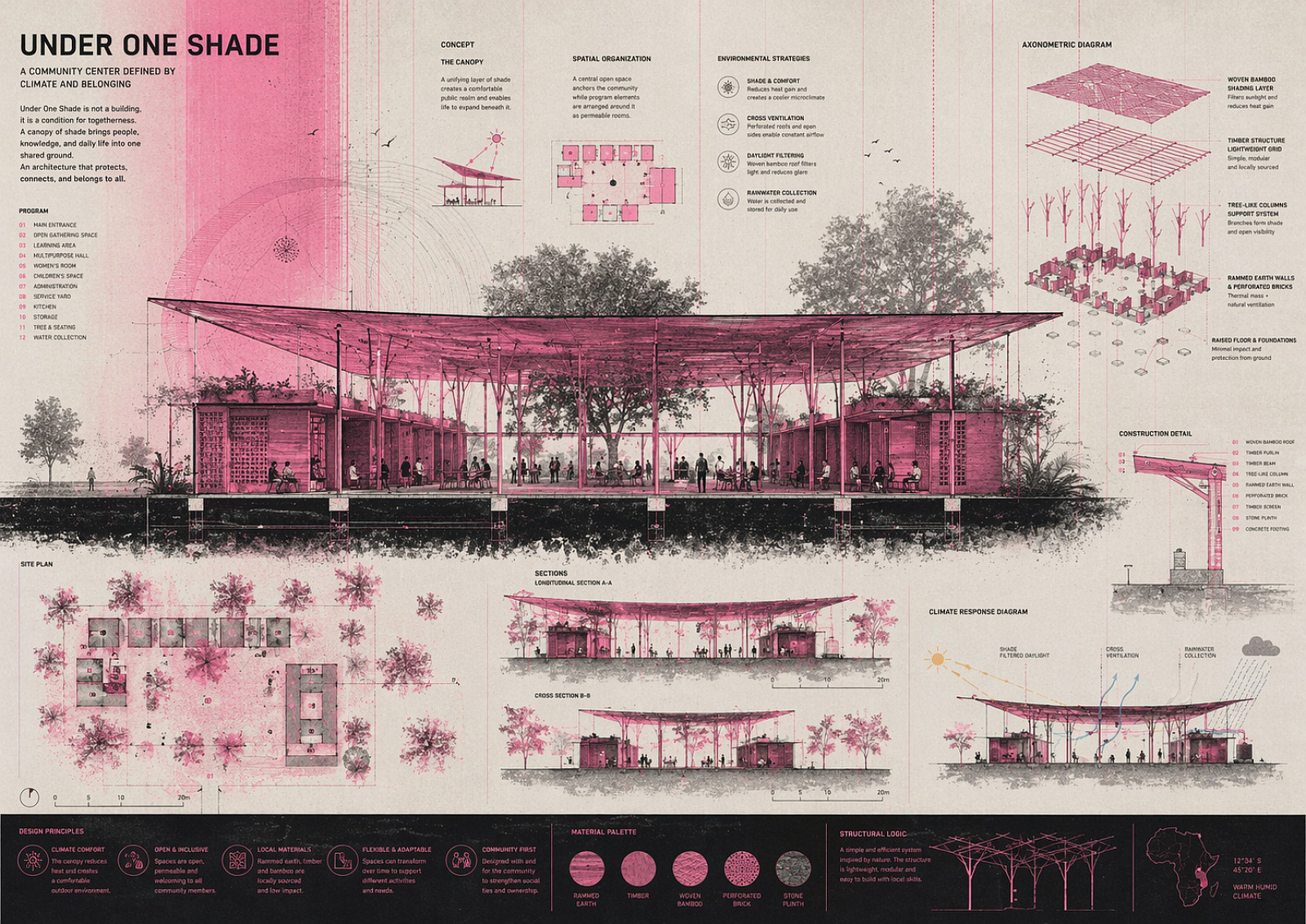
The project is designed as a lightweight climate-responsive structure composed of a large elevated canopy, simple timber or bamboo roof framing, vertical support elements, and a series of small enclosed volumes positioned beneath it. The architectural system is based on local materials, intuitive construction methods, and a clear structural logic that can be built, repaired, and maintained with community participation. The primary enclosure is minimal, allowing the project to remain open, breathable, and adaptable.
Environmental performance is achieved through passive strategies integrated into the form of the project. The canopy filters direct solar radiation, creates extensive shaded zones, and supports continuous air movement beneath the roof. The open organization of the plan encourages cross ventilation and reduces thermal buildup, while the lighter roof structure minimizes material use and heat gain. Local materiality, raised or protected floor construction, and simple joinery contribute to durability, low embodied energy, and long-term resilience. In this way, the project combines environmental comfort, social flexibility, and constructional clarity within one coherent system.

Copyright © 2026 INSPIRELI | All rights reserved. Use of this website signifies your agreement to the Terms of Use, Privacy Policy, and use of cookies.
