HOUSE OF SHADE


Project idea
HOUSE OF SHADE begins from a simple proposition: the future of vernacular architecture is not imitation, but interpretation. In the Negev, building has always been a negotiation with heat, glare, dryness, exposure, and distance. Vernacular intelligence emerged here not as style, but as necessity through mass, shadow, thickness, courtyard, threshold, and the careful calibration between shelter and landscape. The project asks how this intelligence can be reactivated today in a contemporary civic form.
The proposal is conceived as a civic learning commons rooted in the environmental logic of the desert. Organized around a shaded central courtyard and built from earth-based construction, it transforms inherited climatic knowledge into a public space for gathering, reading, making, resting, and exchange. The goal of the project is to propose a new continuity between vernacular intelligence and contemporary public life, where climate, matter, and collective space are treated as one architectural system.
Project description
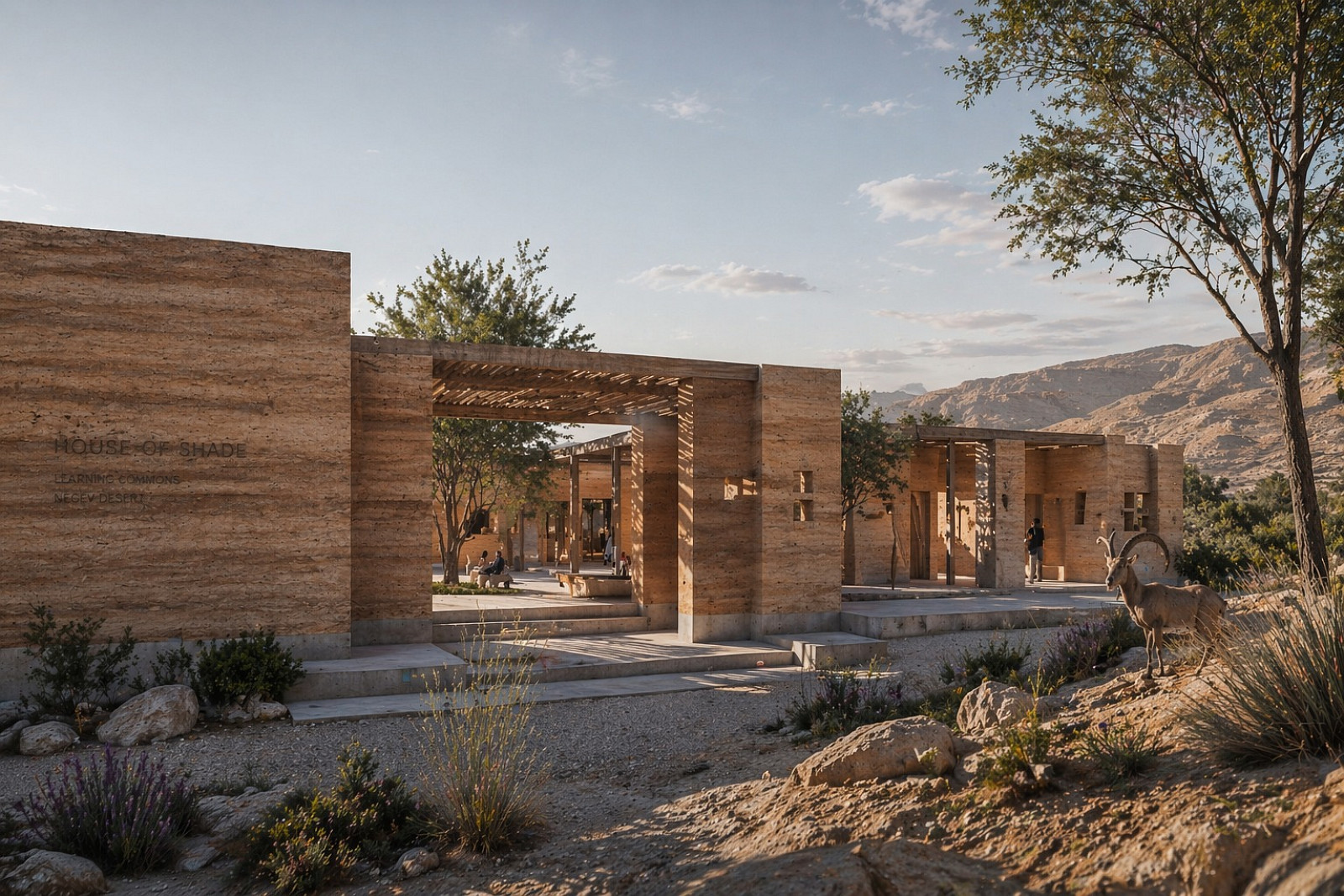
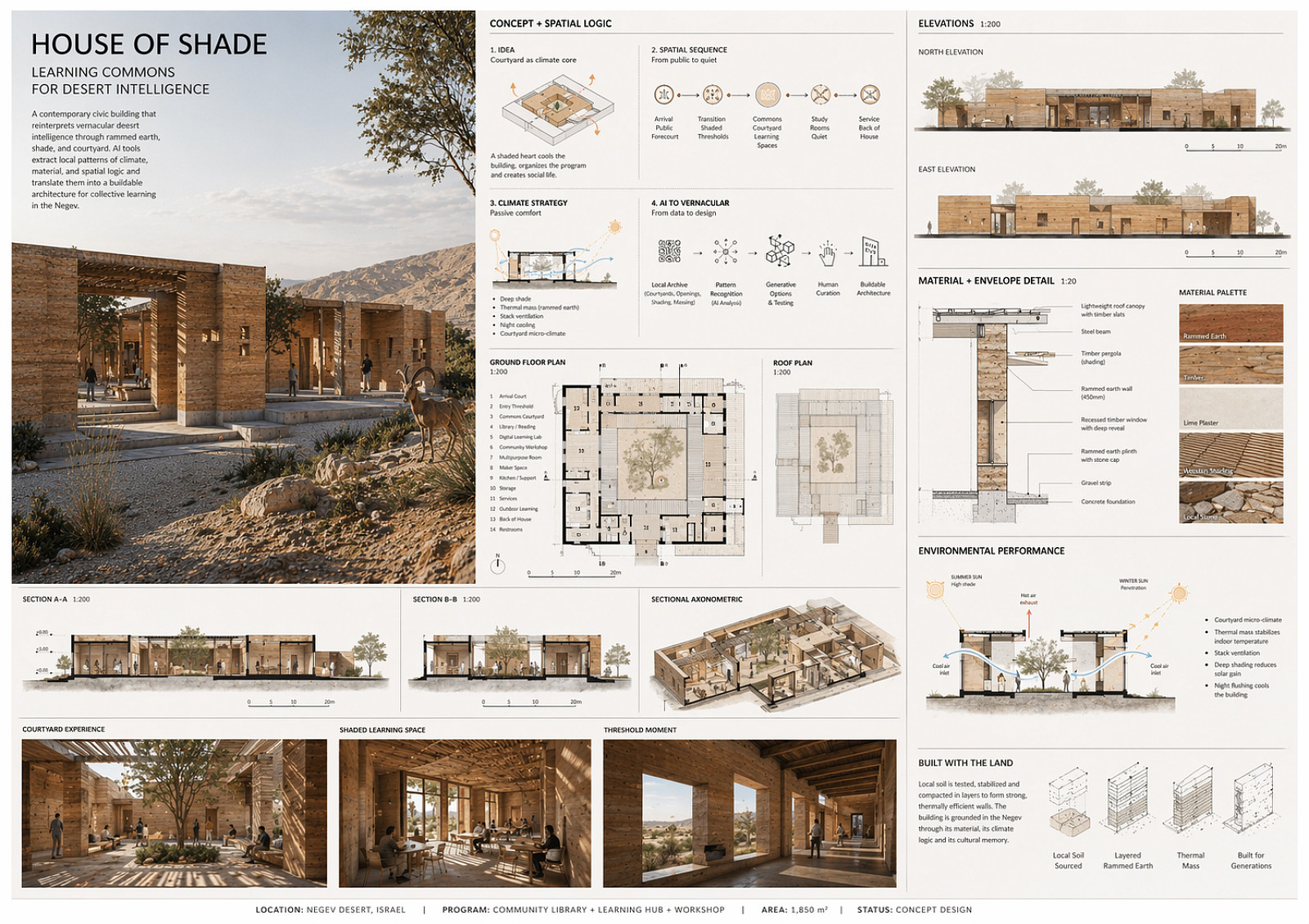
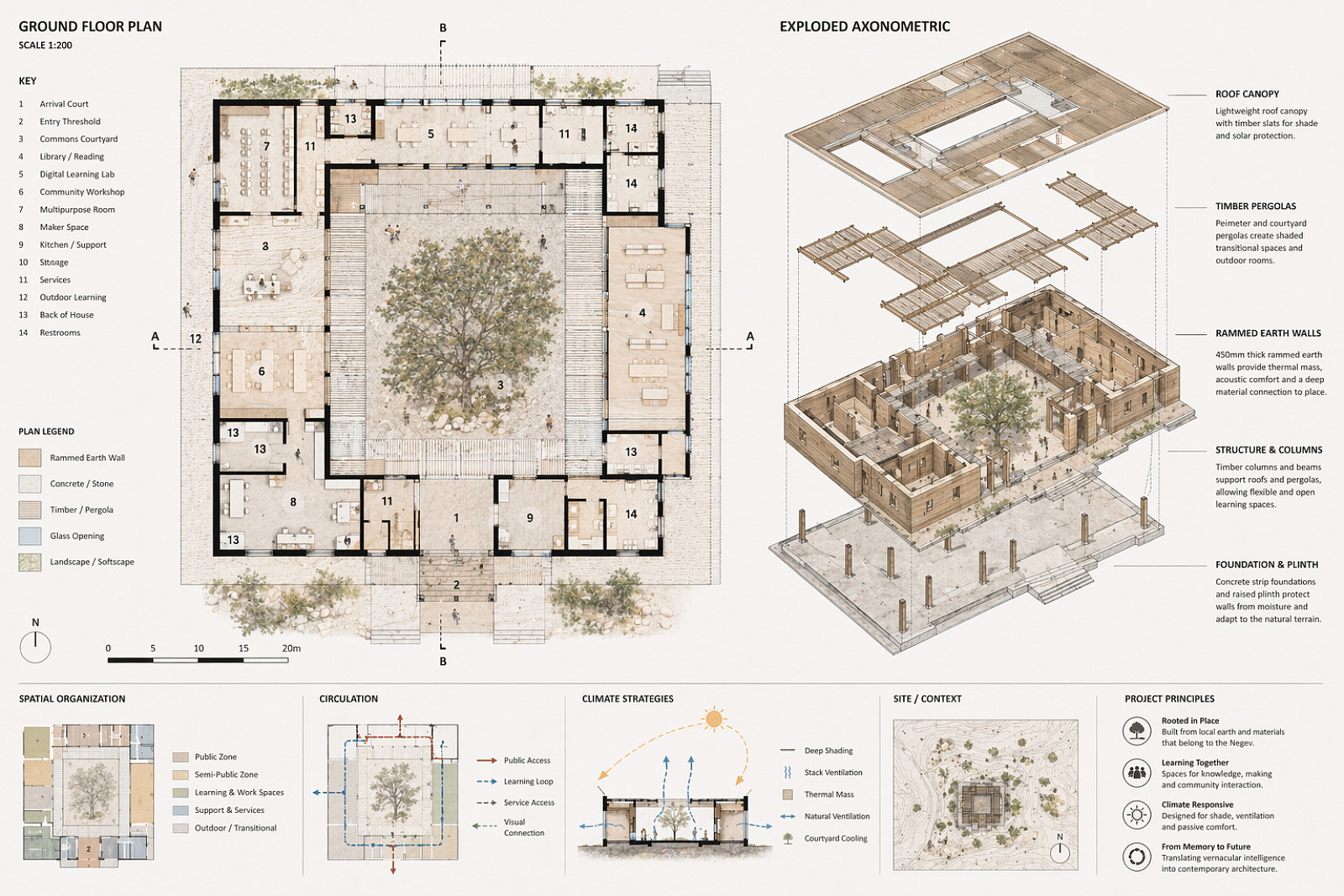
The project is organized around a central shaded courtyard that acts as both climatic device and social condenser. Around this open heart, a ring of learning, gathering, reading, and making spaces is arranged through thick load-bearing walls, deep openings, and carefully calibrated thresholds. Rather than functioning as an isolated object, the building extends the thermal, material, and spatial logic of the desert into a contemporary civic setting.
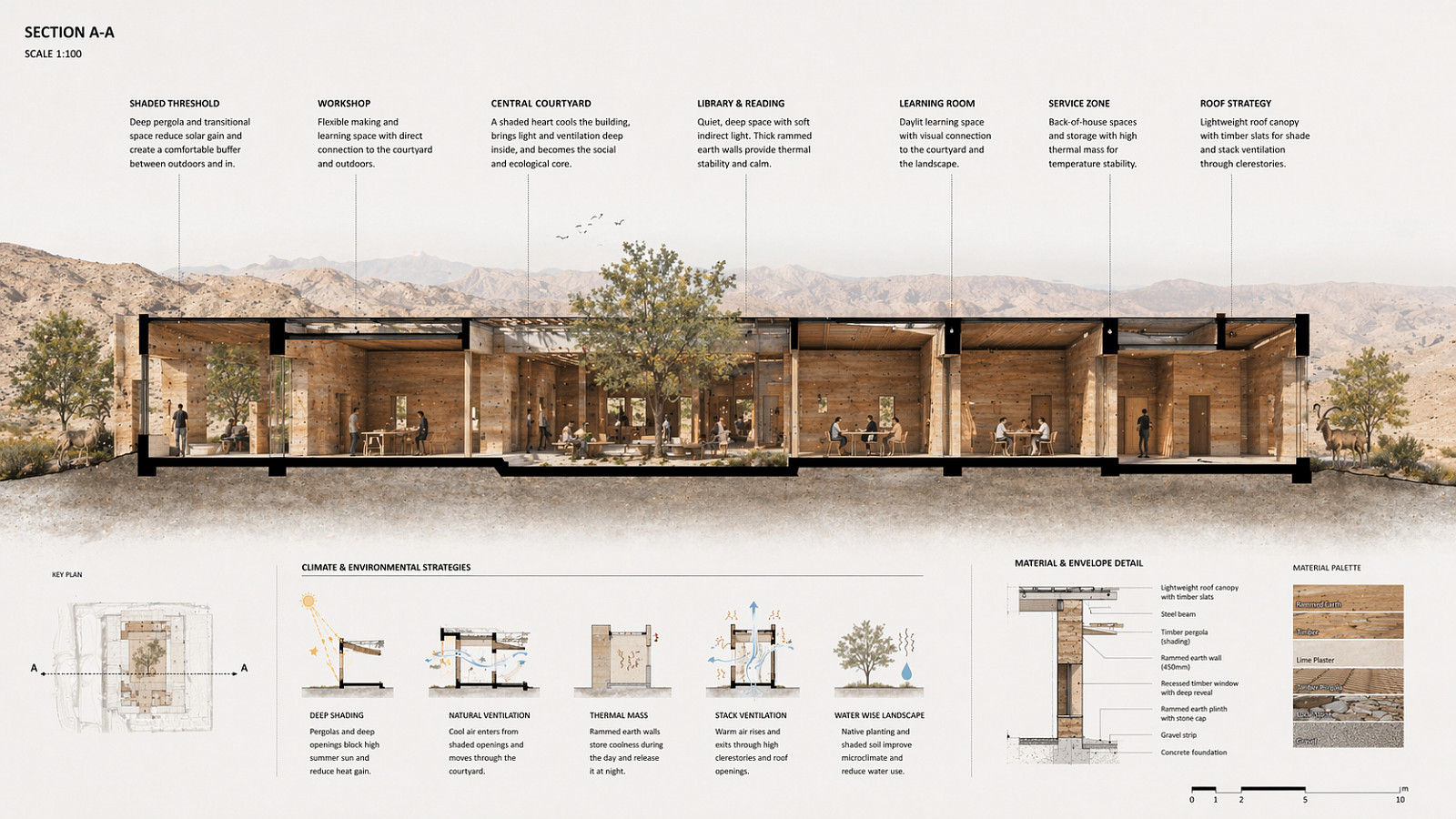
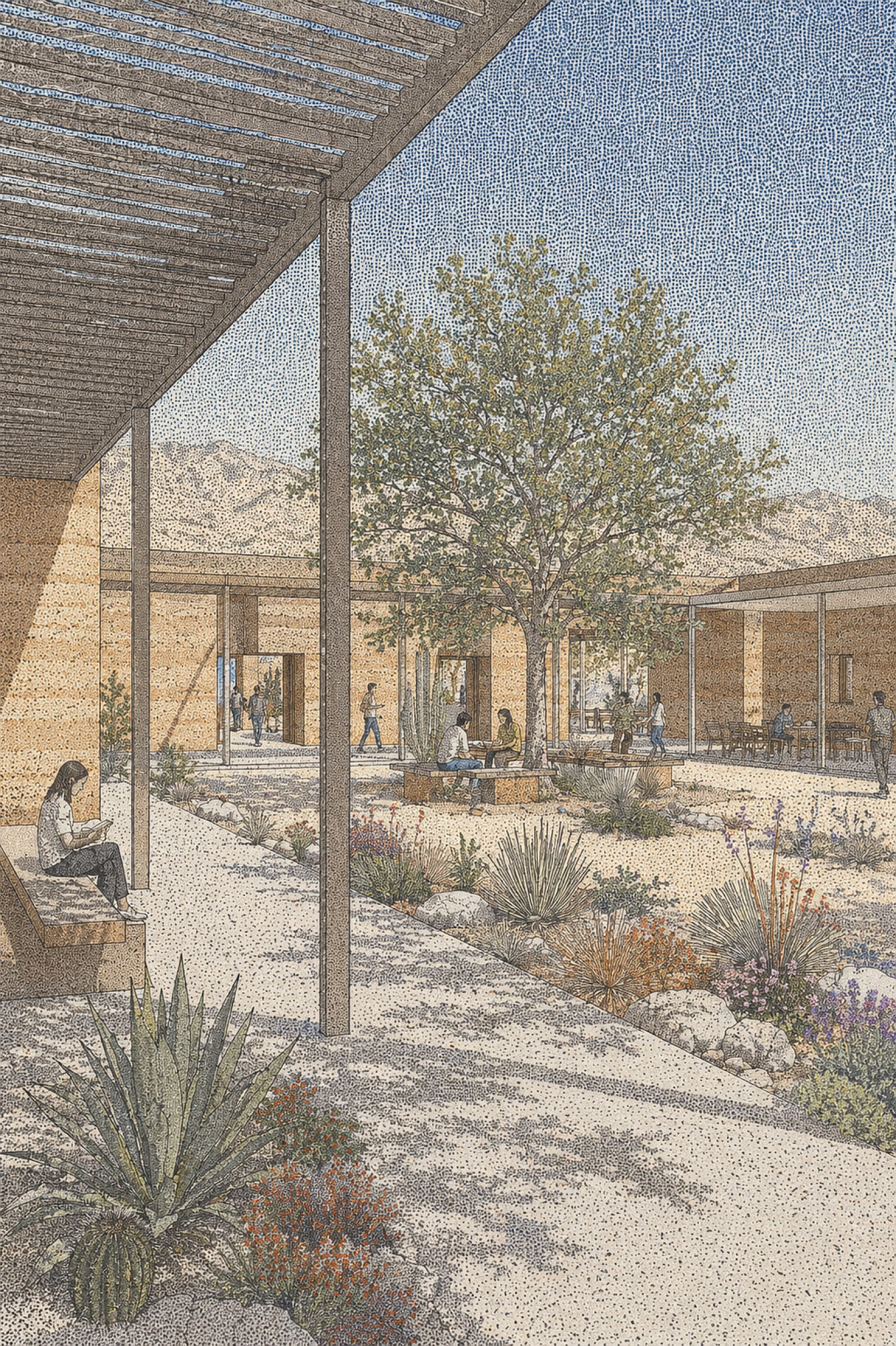
The architecture relies on mass and depth rather than sealed enclosure. Rammed earth walls provide thermal stability, spatial weight, and a direct relationship between construction and place. Shaded passages and recessed openings mediate between exposure and refuge, while the courtyard creates a protected microclimate that supports everyday collective life. In this way, climate is not treated as an external problem to be solved by technical systems alone, but as a primary force shaping form, section, and use.
HOUSE OF SHADE therefore proposes a contemporary public building grounded in vernacular intelligence without reproducing the past. It reworks inherited knowledge through present-day spatial needs, materials, and tools, creating a civic architecture that is both rooted and forward-looking. The project suggests that innovation can emerge not only from novelty, but from the intelligent transformation of memory into form.
Technical information
The project is designed as a low-rise civic complex based on a courtyard typology, earth-based load-bearing walls, shaded circulation zones, and passive environmental control. Its primary architectural system combines rammed earth construction, deep-set openings, shaded colonnades or transitional spaces, and a central open courtyard that supports ventilation, daylight moderation, and social use. The building is conceived as a thermally stable structure in which material mass and spatial depth reduce heat gain and improve comfort in the desert climate.
Environmental performance is embedded in the architectural form. Thick walls provide thermal inertia, recessed openings reduce glare and direct solar exposure, and the courtyard supports air movement, shade, and microclimatic moderation. Materiality emphasizes earth, mineral finishes, timber or light secondary elements, and low-impact construction strategies that reinforce the relationship between architecture and site. The project combines climatic intelligence, structural clarity, and civic openness within one coherent desert architecture.

Copyright © 2026 INSPIRELI | All rights reserved. Use of this website signifies your agreement to the Terms of Use, Privacy Policy, and use of cookies.