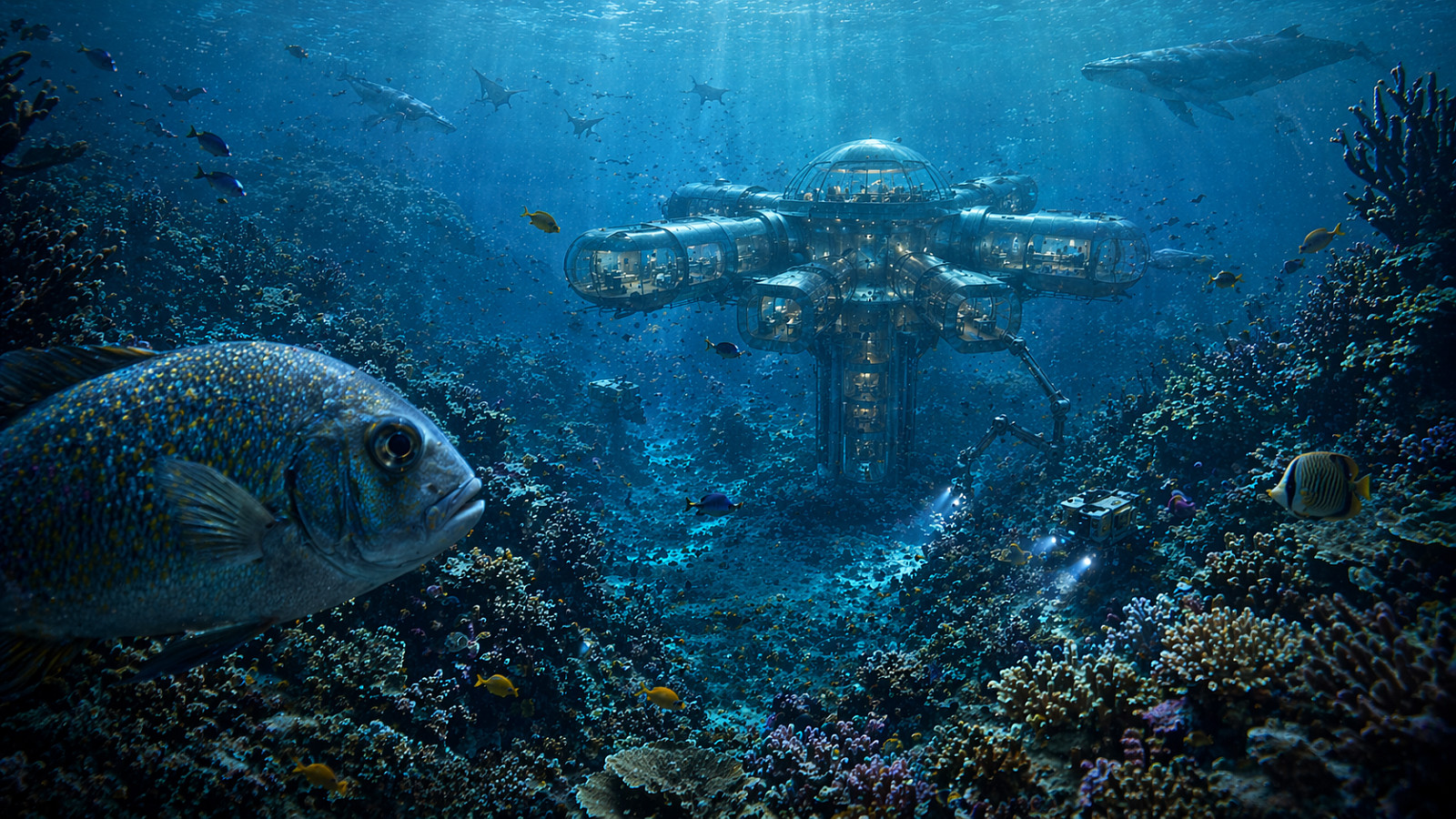

Living Seabed Observatory


Project idea
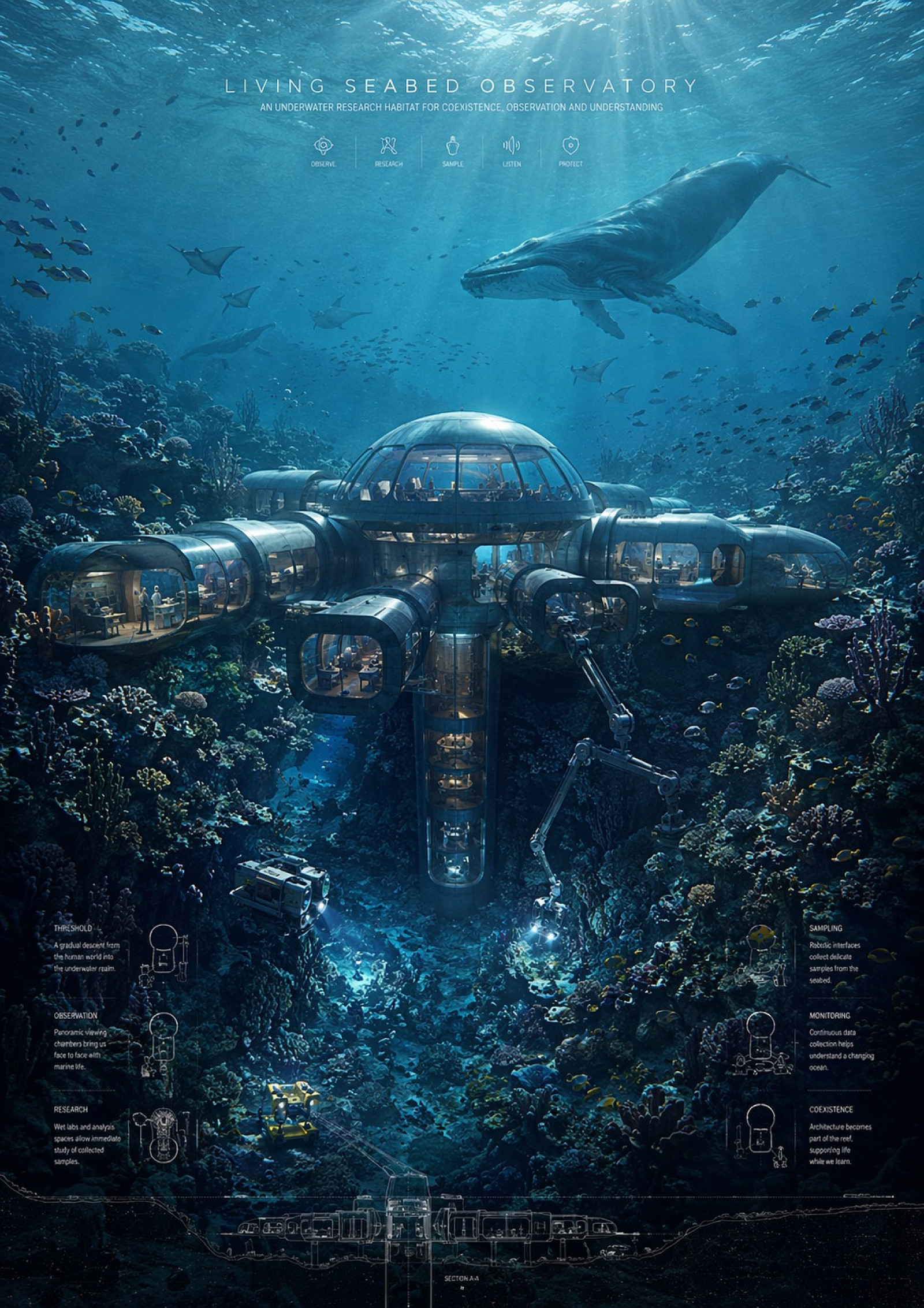
Living Seabed Observatory begins from the recognition that the sea has long been understood from above. We cross it, map it, and observe it from a distance, while its most complex realities unfold below the surface within a living system shaped by pressure, light, currents, and time. The project asks how architecture can enter this world without imposing itself upon it.
Rather than positioning architecture as an object placed in the ocean, the proposal is conceived as a calibrated interface that allows humans to descend, observe, and learn from within a submerged ecosystem. The goal of the project is to transform architecture into a medium of proximity, care, and ecological awareness, enabling direct engagement with marine environments while acknowledging the limits of human presence.
Project description
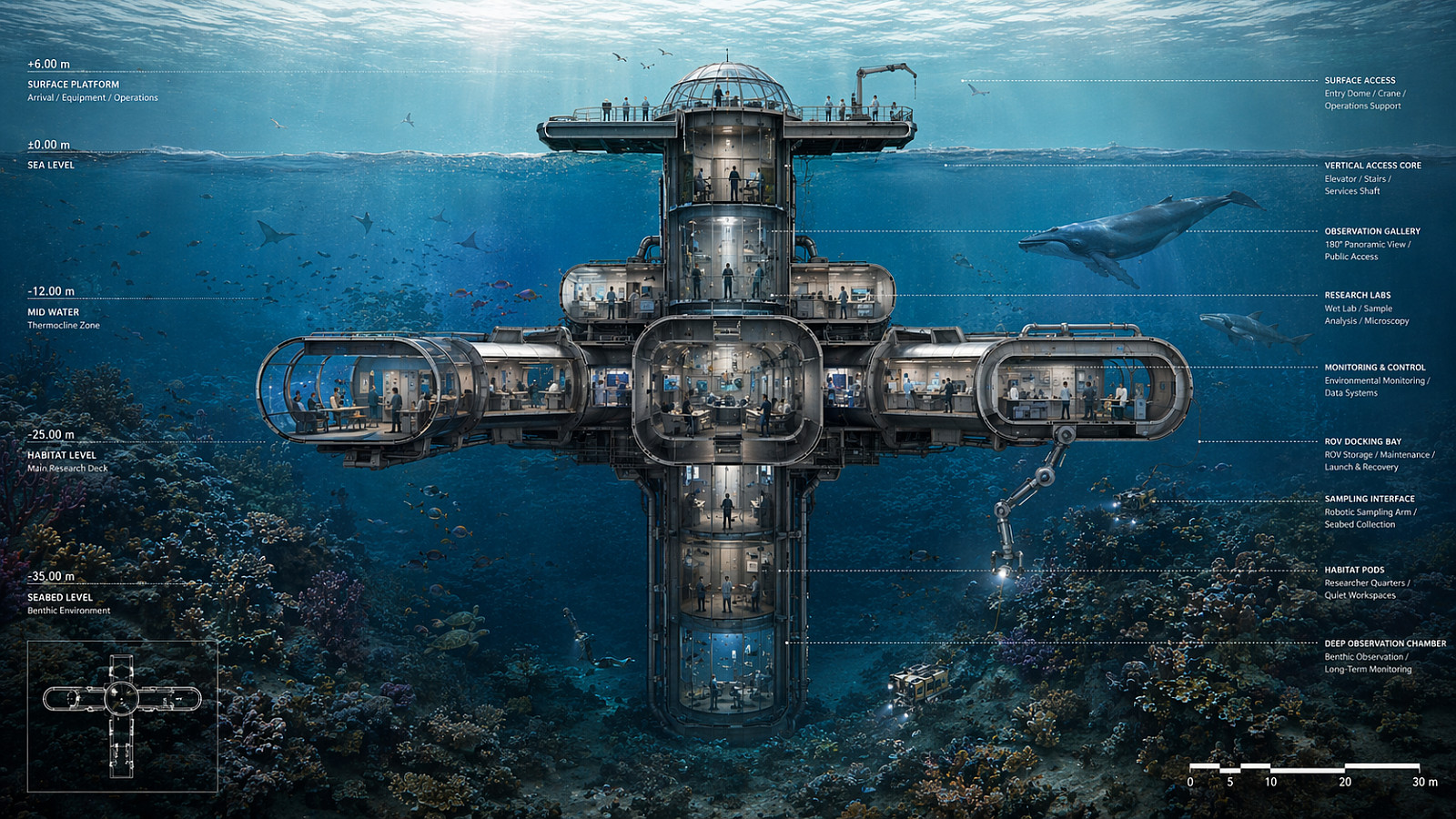
The project is organized as a controlled spatial descent from the familiar human environment above the water to a compact research and observation structure below the surface. This descent is both physical and perceptual. As the body moves downward, light fades, sound softens, and the spatial experience changes, gradually shifting the human position from one of external observer to one of temporary participant within an unfamiliar medium.
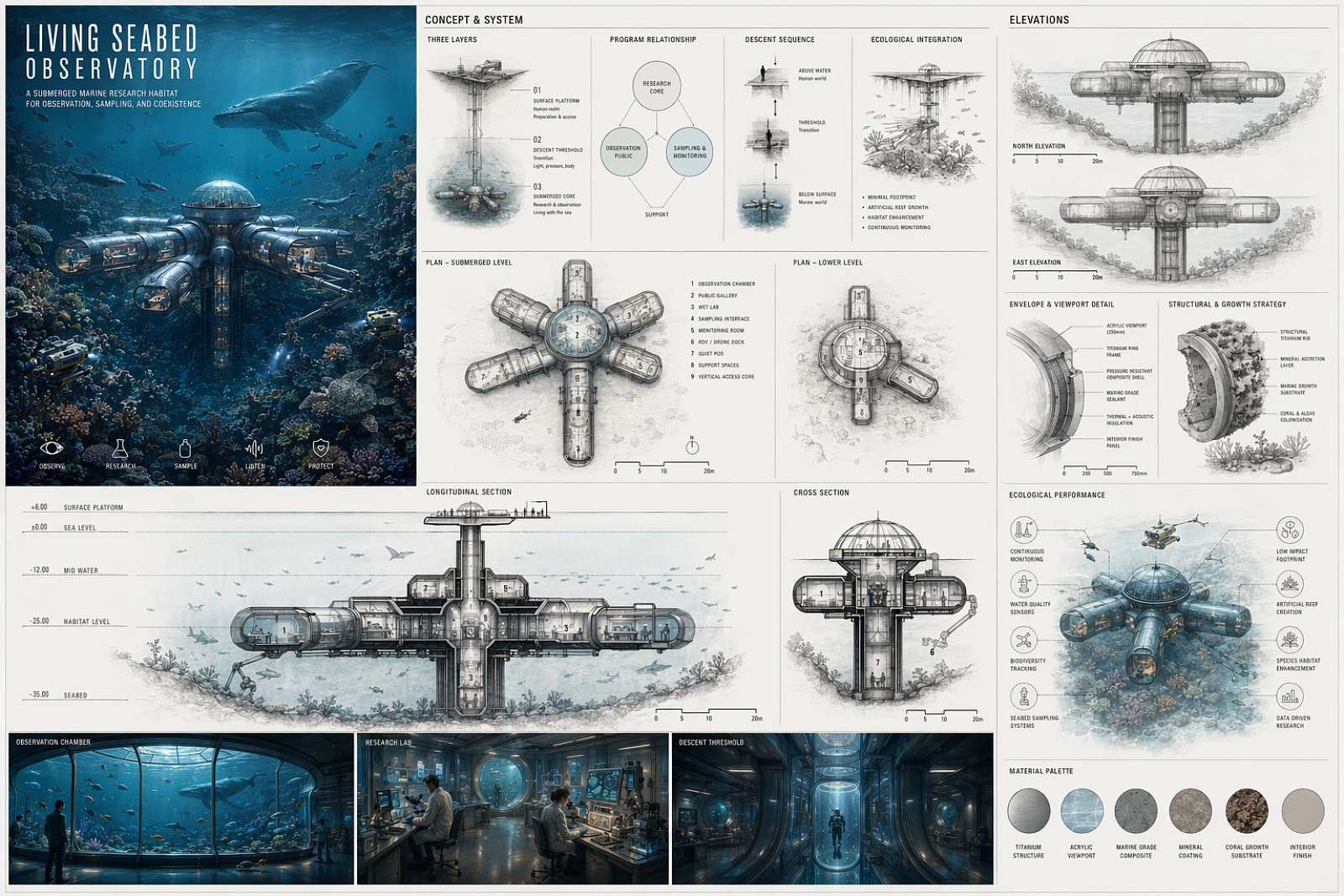
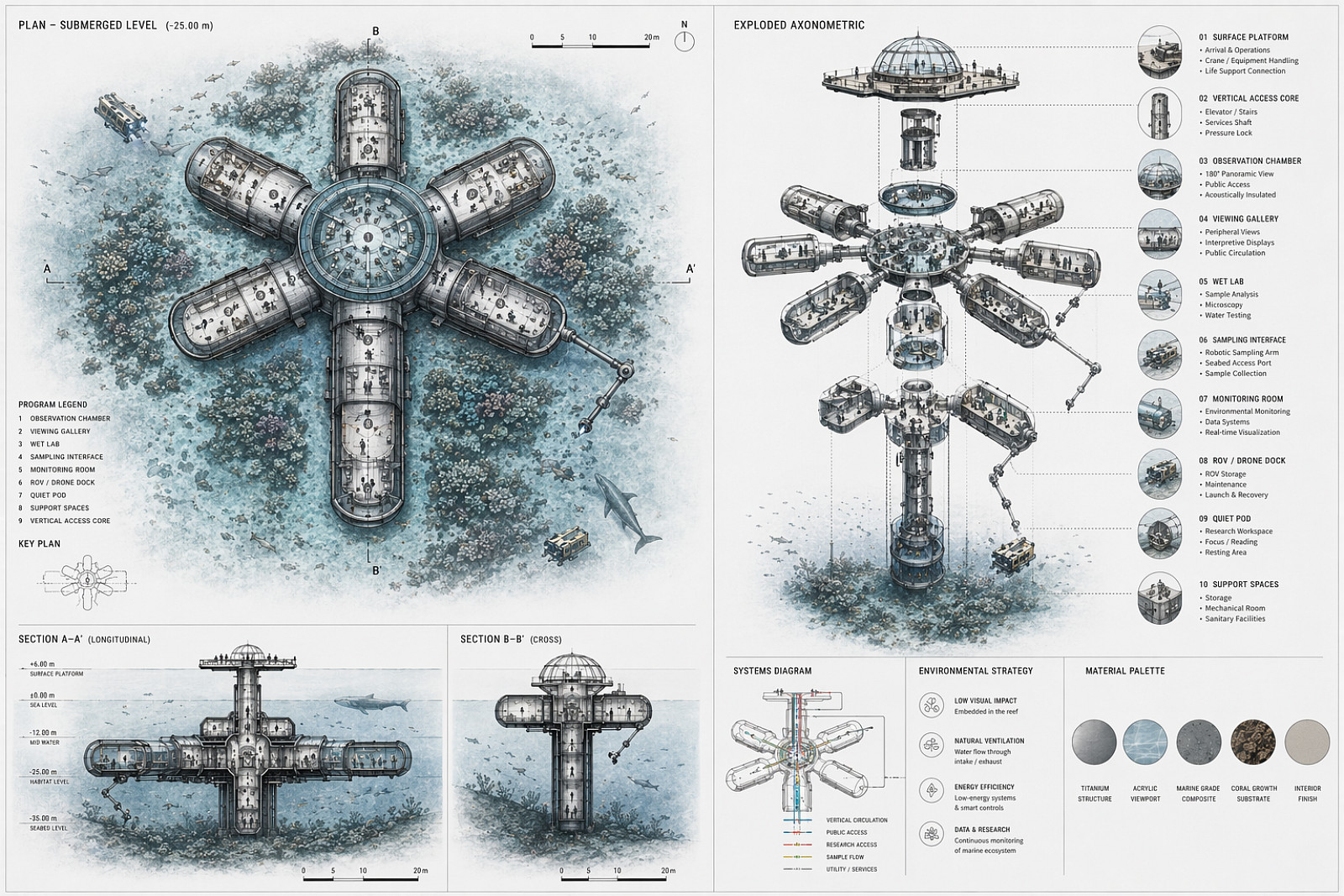
Below the surface, the architecture becomes an instrument for research and awareness. It contains observation chambers, laboratories, sampling interfaces, and monitoring systems that allow direct engagement with marine life, seabed conditions, and ecological patterns in real time. The project supports scientific study while also framing the underwater world as a place of fragility, complexity, and independent life rather than as a neutral environment for occupation.
The structure is intentionally compact, precise, and restrained. It does not aim to control the ocean or dominate its surroundings, but to coexist with them. Its presence is minimized so that marine systems can continue, adapt, and potentially inhabit the architecture over time. Living Seabed Observatory therefore proposes a shift in the role of architecture: from intervention to listening, from distance to proximity, and from observation of nature as an external object to temporary entry into a living system.
Technical information
The project is designed as a compact submerged research structure connected to the surface through a controlled access system that supports descent, circulation, and life-safety requirements. Its architectural system combines a pressure-resistant structural shell, limited and carefully positioned openings, technical research spaces, observation chambers, and interfaces for sampling and environmental monitoring. The organization prioritizes structural precision, operational clarity, and minimized environmental footprint within a demanding underwater context.
Environmental performance is based on restraint and coexistence. The structure is dimensioned to reduce disturbance to marine life and seabed conditions, while material and surface strategies allow long-term durability and potential biological colonization over time. Openings, lighting, and technical systems are controlled to minimize ecological disruption and maintain internal research functionality. The project integrates scientific monitoring, sampling, and observation infrastructure within an architecture that remains compact and carefully calibrated to the physical conditions of pressure, light reduction, currents, and long-term exposure to the marine environment.

Copyright © 2026 INSPIRELI | All rights reserved. Use of this website signifies your agreement to the Terms of Use, Privacy Policy, and use of cookies.
