SEMI-OLYMPIC POOL IN KOSOVA


Project idea
The project investigates the potential of a semi-Olympic swimming facility in Gjilan to transcend its purely functional role and emerge as a civic condenser, where sport, social interaction, and spatial experience converge.
At its core, the proposal is driven by the notion of fluidity as an architectural generator—not only as a formal expression derived from water, but as a spatial and experiential principle guiding movement, perception, and structure. The building is conceived as a lightweight, permeable pavilion, in which transparency and structural articulation establish a dialogue between interior activity and the surrounding landscape.
Project description
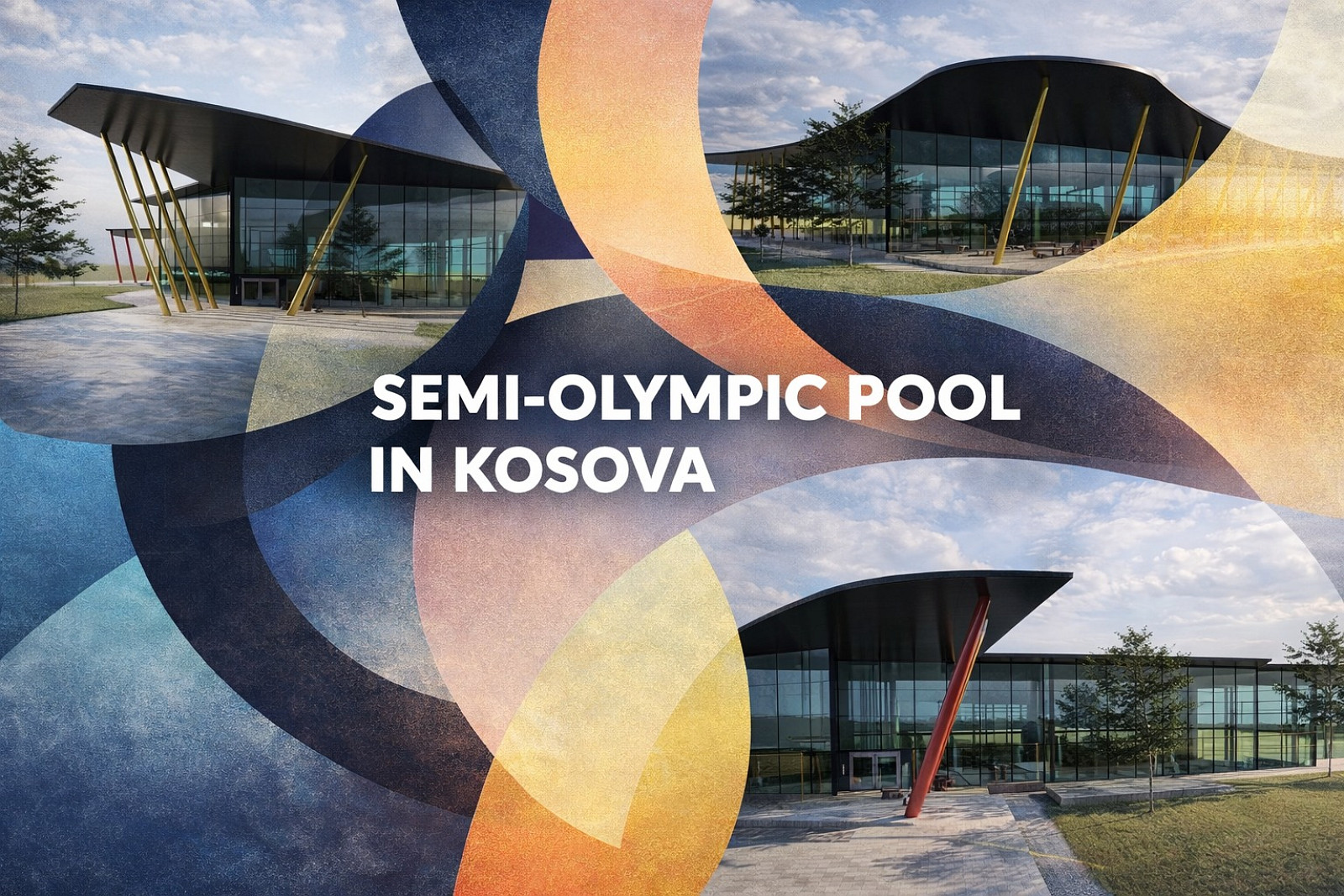
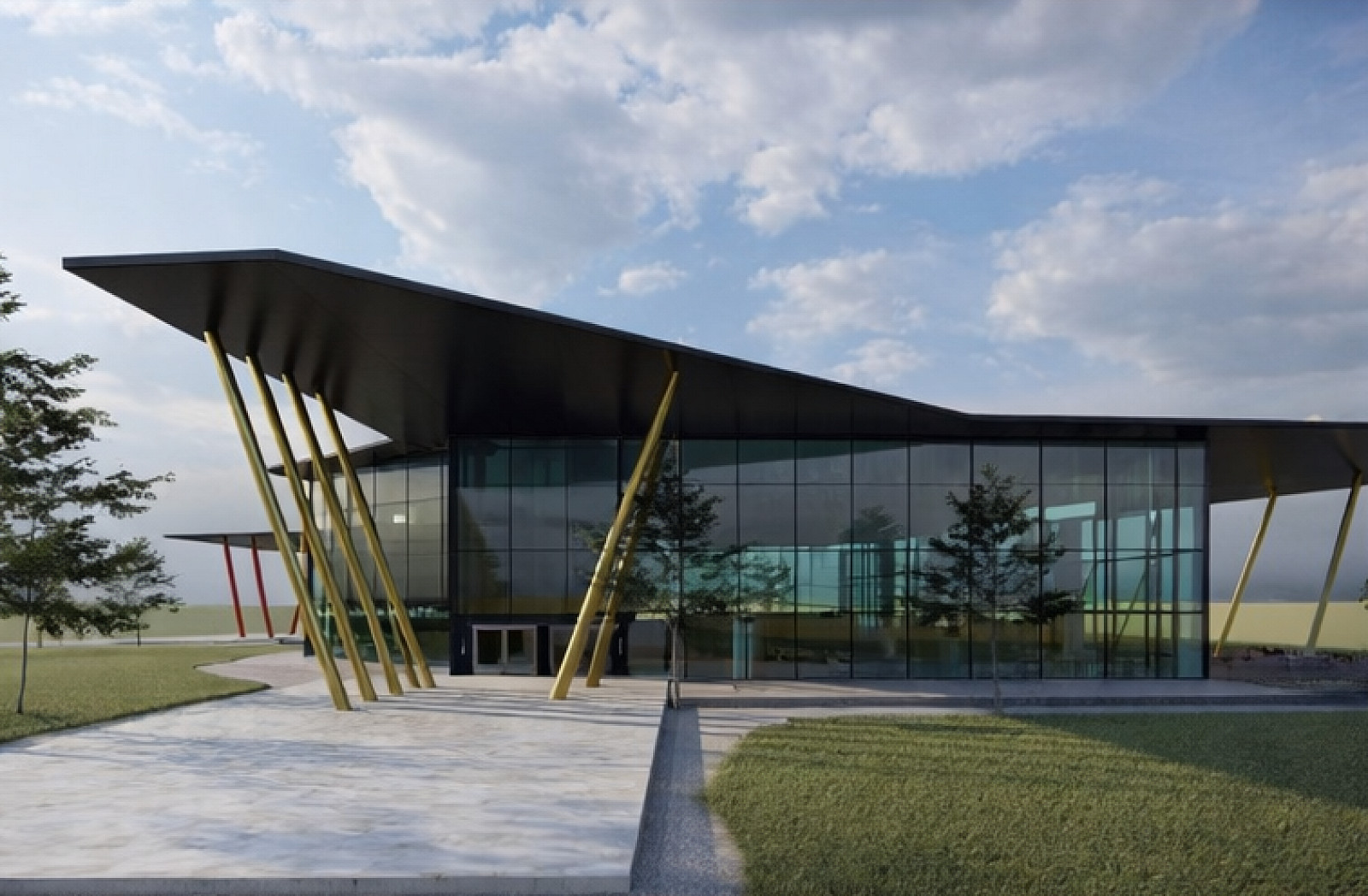
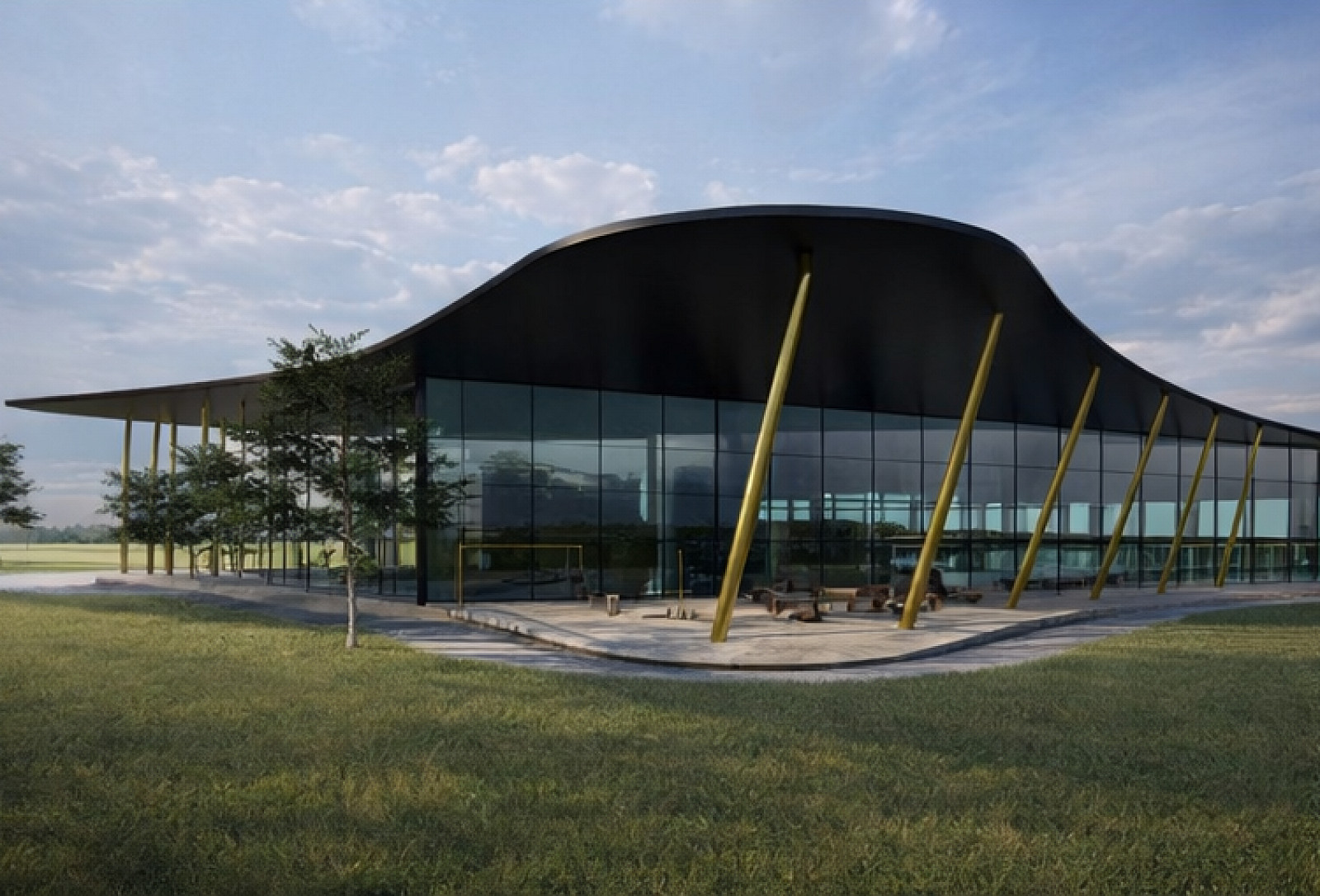
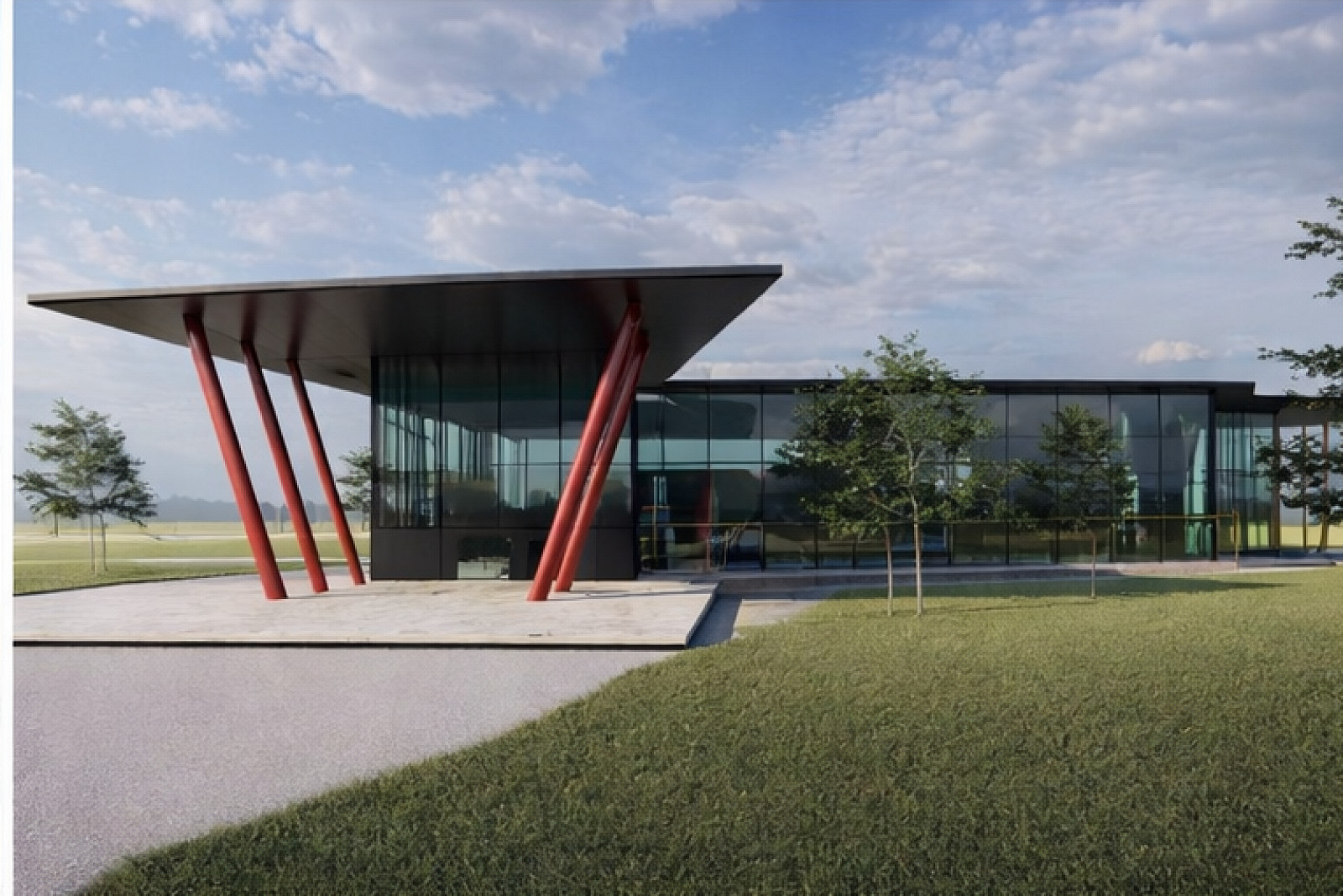
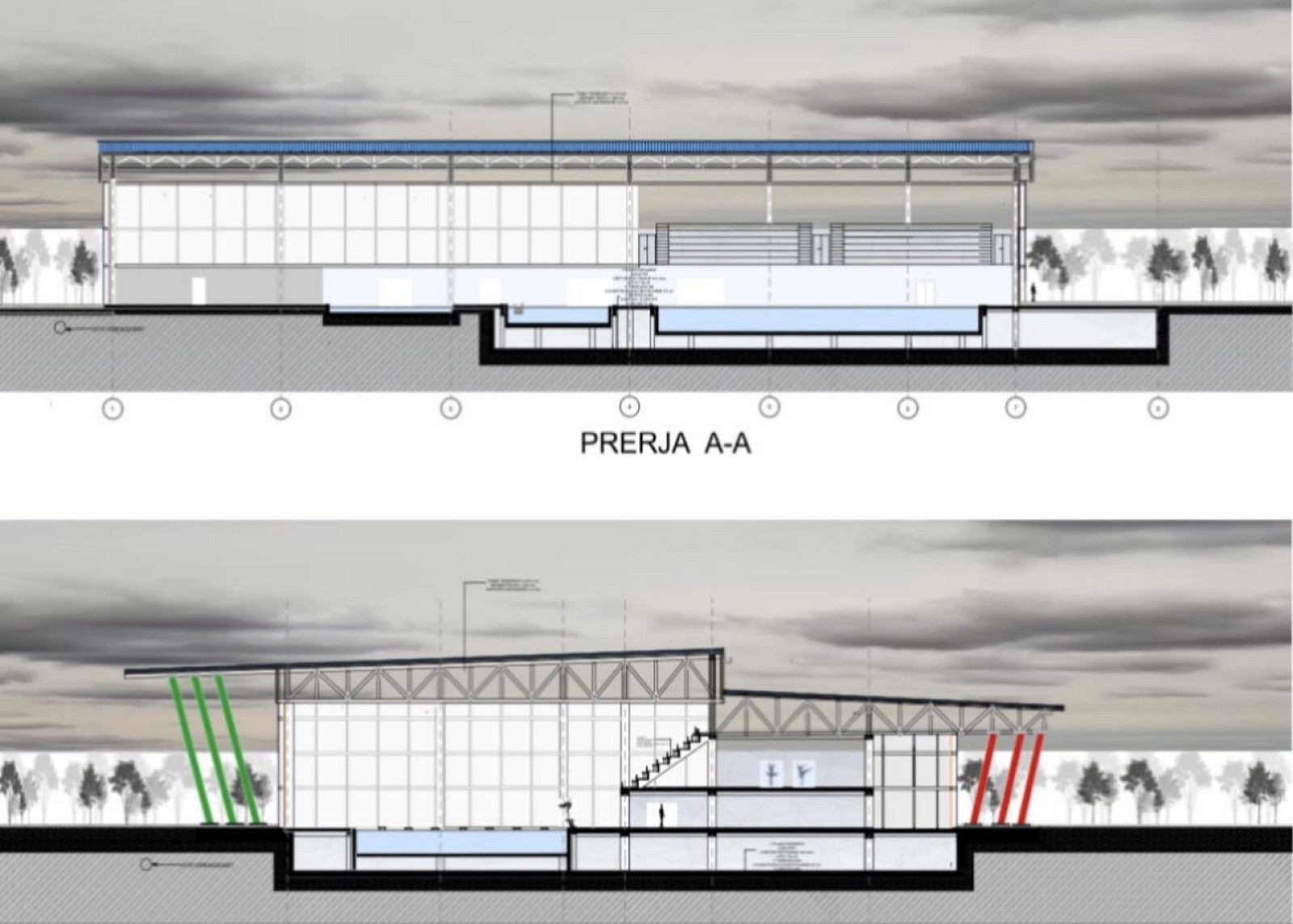
The architectural composition is defined by a horizontal, transparent volume anchored within an open landscape, where the boundary between inside and outside is deliberately minimized. A continuous glazed envelope allows the interior life of the building—movement, light, and water—to become visually accessible, reinforcing the building’s public character.
Hovering above this transparent base, a cantilevered roof plane acts as the project’s primary formal and environmental device. Its fluid, curvilinear geometry evokes the dynamics of water while simultaneously responding to climatic conditions through deep overhangs that provide shading and protection. The apparent lightness of the roof contrasts with its structural complexity, creating a tension between mass and levitation.
The roof is supported by a sequence of inclined structural columns, whose deliberate deviation from verticality introduces a sense of dynamism and directional force. These elements transform structural necessity into architectural expression, articulating rhythm, movement, and load transfer in a legible manner.
Internally, the spatial organization is centered around the semi-Olympic pool, conceived as both the functional nucleus and the primary experiential void. Programmatic elements—including changing facilities, spectator zones, and social spaces—are arranged peripherally, maintaining visual continuity and ensuring intuitive circulation. The openness of the plan allows for flexibility while preserving clear spatial hierarchy.
The project ultimately positions the swimming facility as an inclusive public infrastructure, where architecture enhances both performance and experience, fostering a sense of community while engaging with its environmental context.
Technical information
The structural system is based on a steel frame construction, selected for its capacity to achieve large spans and support the expressive cantilever of the roof. Inclined steel columns act as primary load-bearing elements, transferring forces to a reinforced concrete foundation system while contributing to the building’s architectural identity.
The building envelope is realized through a high-performance curtain wall system, ensuring optimal daylight penetration, thermal efficiency, and visual transparency. The roof structure consists of a lightweight steel framework clad in metal panels, designed for durability, weather resistance, and constructability.
The semi-Olympic pool is added to standard dimensions (25m x 12.5m) and is supported by a comprehensive set of mechanical systems, including:
Advanced water filtration and circulation systems
Integrated heating systems for consistent thermal conditions
Mechanical ventilation and humidity control, critical for indoor aquatic environments
Environmental performance is enhanced through passive design strategies, including solar control via extended roof overhangs, maximized natural daylighting, and the potential integration of renewable energy systems.
The project demonstrates a synthesis of structural clarity, environmental responsiveness, and spatial quality, ensuring both technical efficiency and a refined architectural expression.
Created in:



Copyright © 2026 INSPIRELI | All rights reserved. Use of this website signifies your agreement to the Terms of Use, Privacy Policy, and use of cookies.
