KHEPRA


Project idea
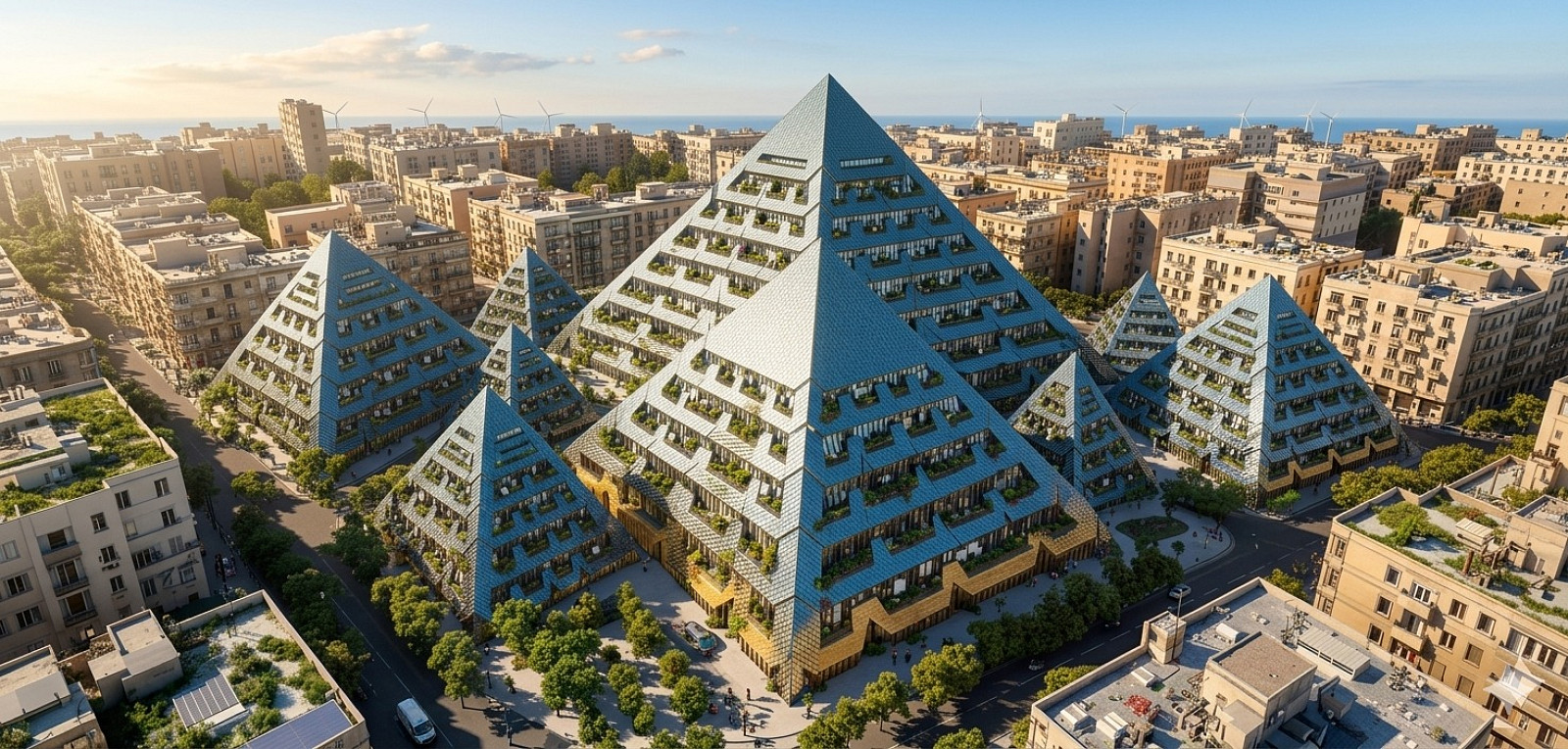
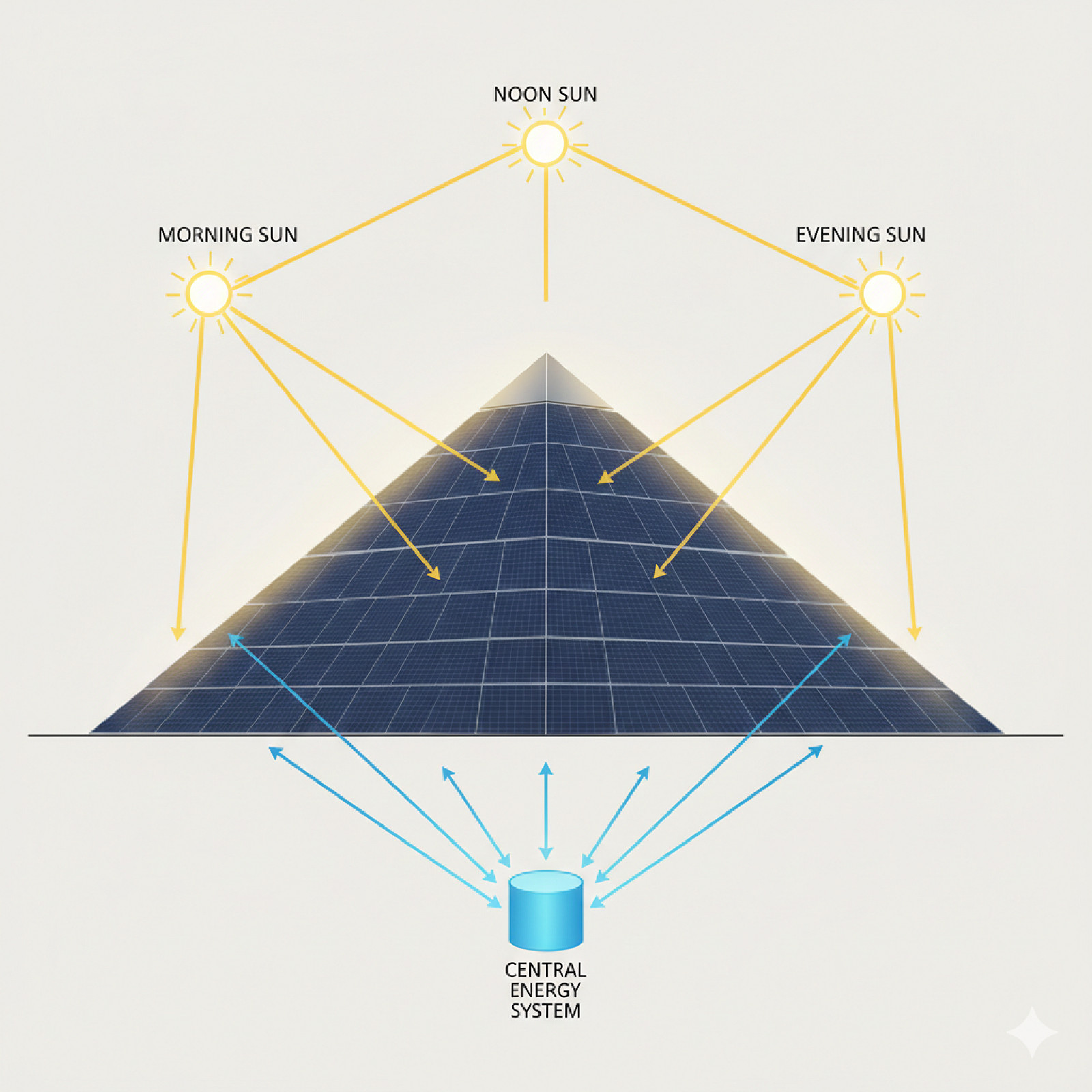
The idea of this project is to ask whether pyramid geometry, one of Egypt's oldest architectural forms, can be reimagined as a sustainable housing model for modern Cairo. Egypt receives some of the highest solar exposure in the world, yet residential solar integration remains minimal. Most apartment buildings have flat roofs, which capture sunlight effectively only during limited midday hours. At the same time, Egypt's cities are overcrowded, and informal construction has produced buildings that lack safety, planning, and energy efficiency. The pyramid form naturally creates four sloped surfaces facing different directions, which could generate electricity from morning to evening as the sun moves across the sky. The name KHEPRA comes from the ancient Egyptian god of the rising sun, representing rebirth and transformation. It also resembles the Arabic word khebra meaning experience. The goal is to produce the first quantitative comparison of pyramid geometry versus flat roof design for solar residential architecture, providing evidence for architects and urban planners in hot, sunny climates.
Project description
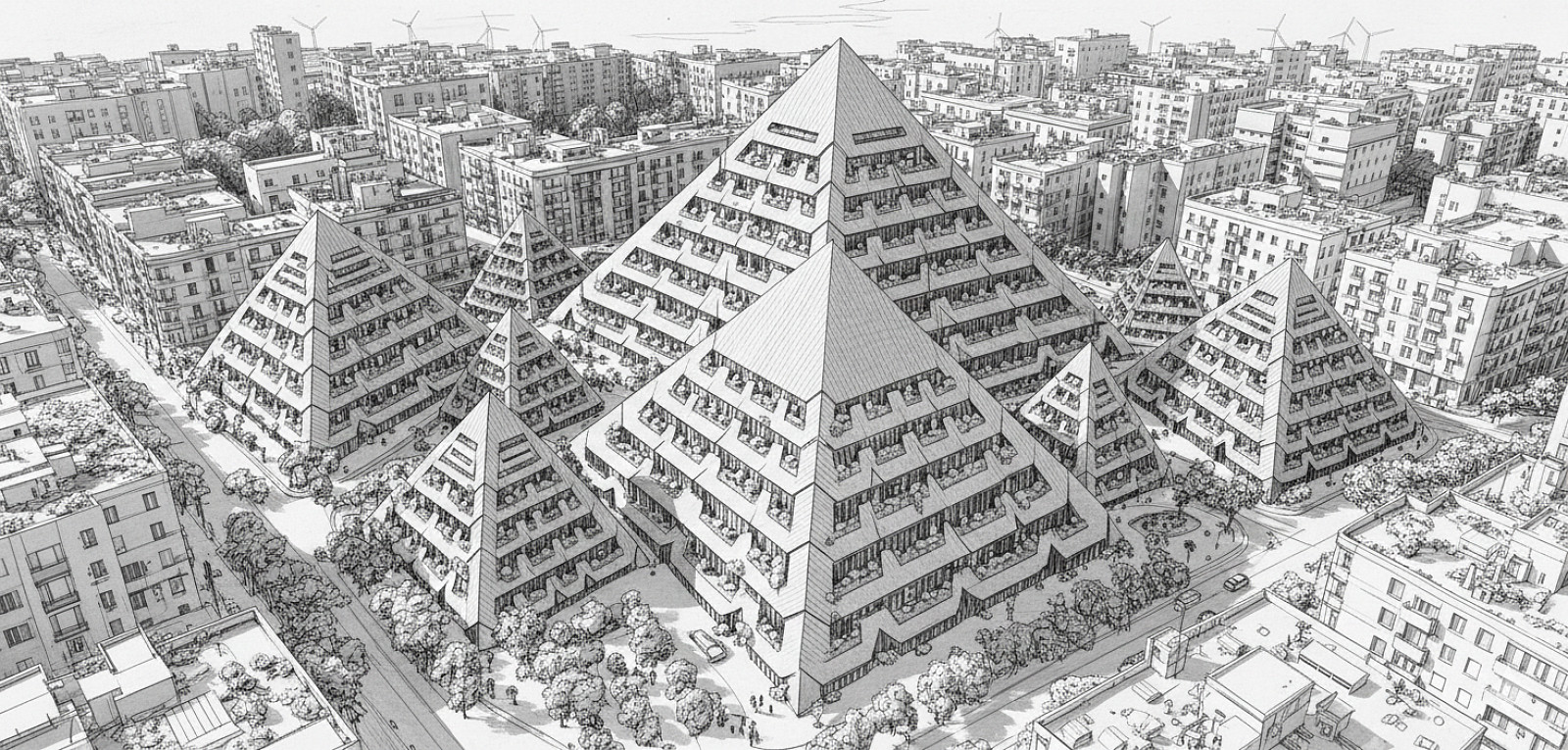
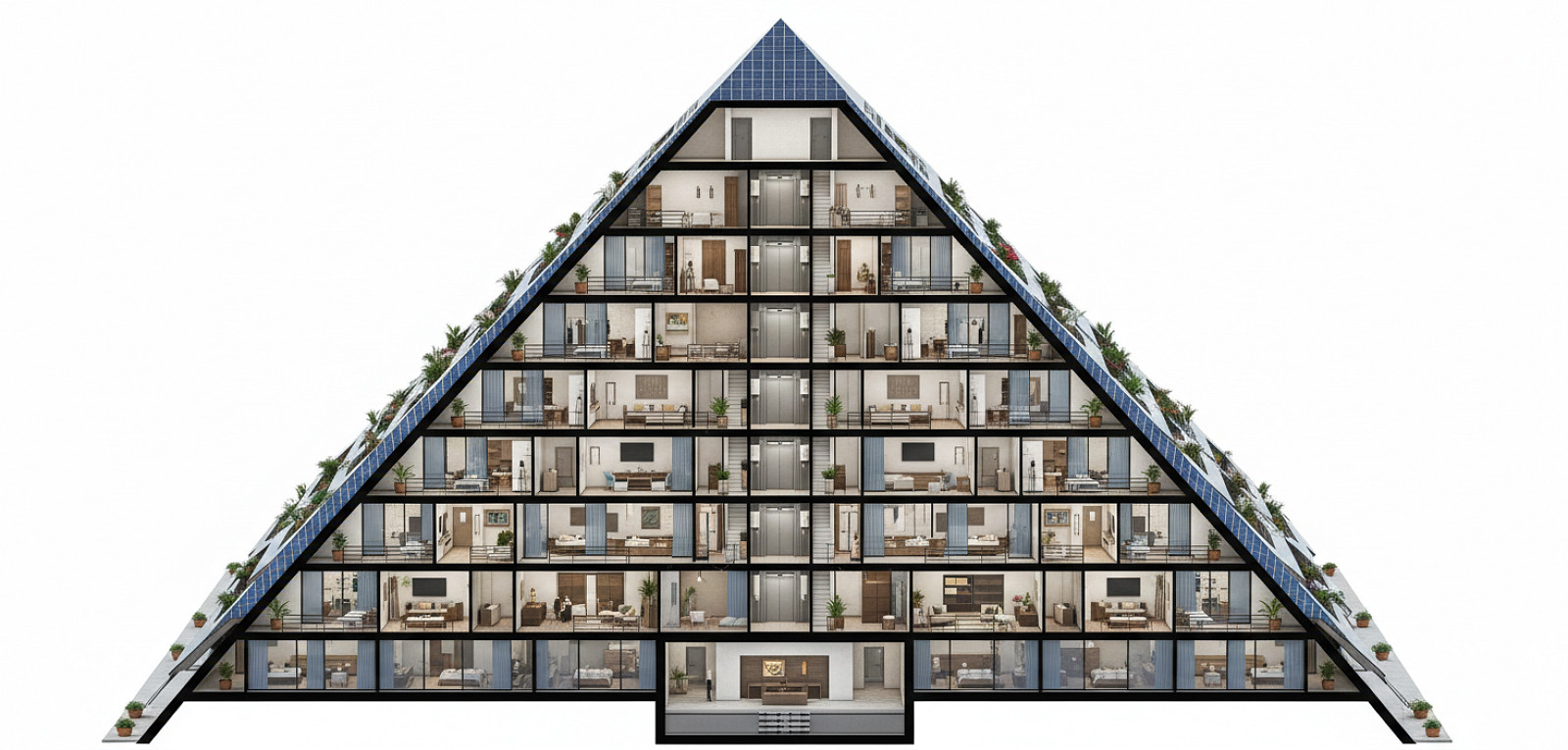
This project consists of three research directions. The first is a solar performance simulation comparing a pyramid shaped apartment building to a standard flat roof rectangular block in Cairo. Both buildings have the same total floor area of approximately 1800 square meters. The pyramid has a square base of 25 meters by 25 meters tapering upward over six stepped levels. The baseline building has a rectangular footprint of 20 meters by 15 meters with six floors and a flat roof. The second direction is a thermal comfort simulation comparing indoor temperatures during the hottest week of July without mechanical cooling. The third direction is a construction cost estimate to assess economic feasibility. The pyramid uses reinforced concrete with insulated concrete block walls and building integrated photovoltaics on all four faces. The stepped terraces create outdoor balcony spaces and provide self-shading for the floors below. The final deliverables are a research report of 3000 to 4000 words and schematic architectural drawings including site plan, floor plans, sections, and elevations.
Technical information
The pyramid building has a square base of 25 meters by 25 meters. The height is approximately 30 meters over six stepped levels. Each level is 5 meters in height. The base level has the largest floor area. Each higher level is reduced by approximately 15 percent on each side, creating the stepped terrace form. The slope of each face is approximately 45 degrees. The total floor area is 1800 square meters distributed across six levels.
The baseline rectangular building has a footprint of 20 meters by 15 meters. The height is approximately 18 meters over six floors. Each floor is 3 meters in height. The total floor area is also 1800 square meters.
Both buildings use reinforced concrete structural frames. Exterior walls use insulated concrete blocks with a thickness of 250 millimeters. Windows are double glazed with a U value of 1.8 watts per square meter Kelvin. The pyramid uses building integrated photovoltaics covering all four sloped faces with a total area of approximately 1500 square meters. The baseline building uses flat roof photovoltaics covering 300 square meters.
Solar simulation uses Ladybug Tools within Rhino and Grasshopper. Climate data is typical meteorological year data for Cairo at 30 degrees north latitude. Thermal simulation uses EnergyPlus with July as the analysis month. The output metrics are total annual kilowatt hours per square meter of land area for solar performance, and average indoor temperature plus hours above 28 degrees Celsius for thermal comfort.
Documentation

Copyright © 2026 INSPIRELI | All rights reserved. Use of this website signifies your agreement to the Terms of Use, Privacy Policy, and use of cookies.
