
CLIFF HARBOR


Project idea
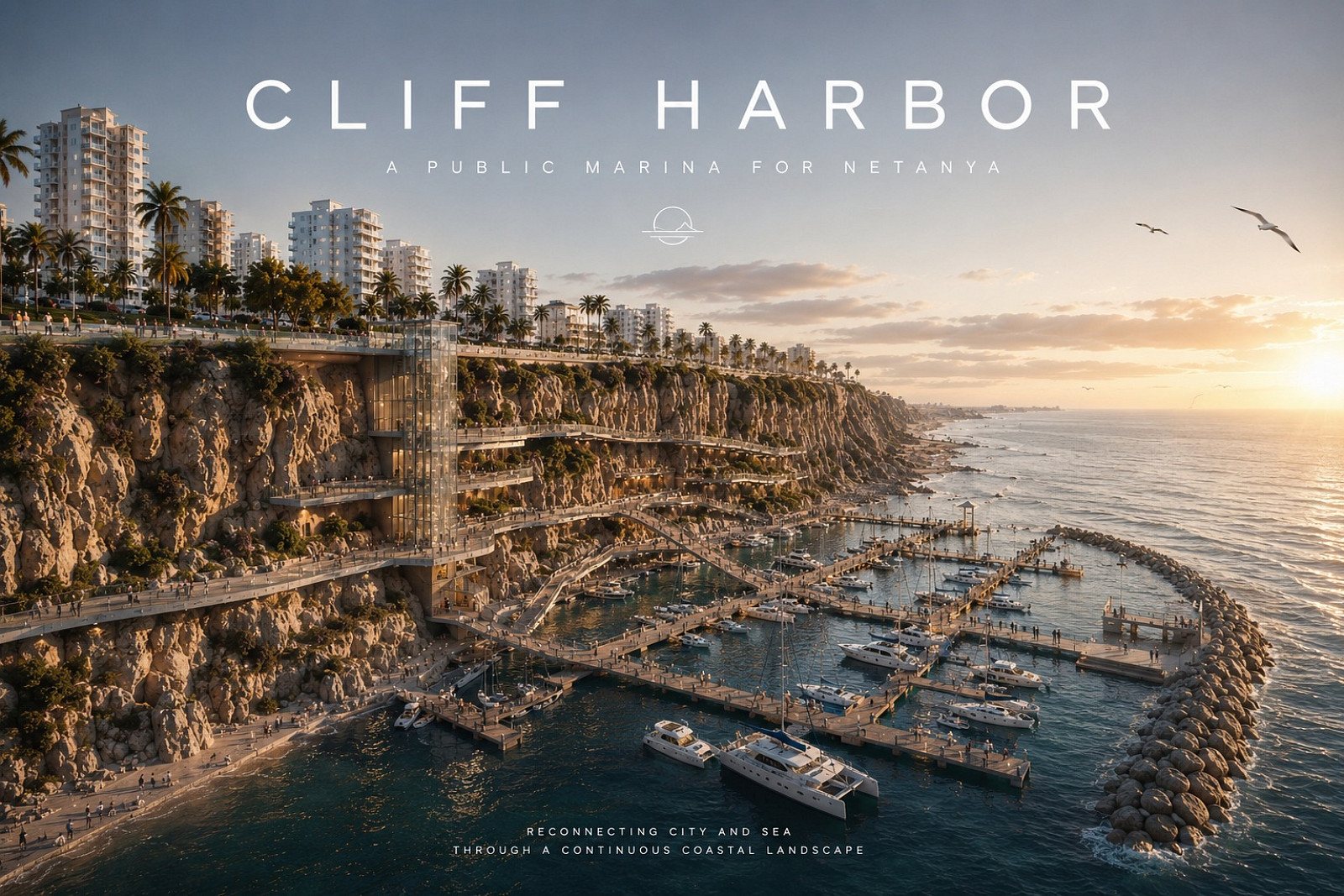
CLIFF HARBOR begins from the recognition that the contemporary coastline is too often treated as a line — a boundary between land and water, city and nature, public life and private infrastructure. In Netanya, this condition is intensified by the dramatic cliff, which frames the Mediterranean horizon while also separating the urban fabric from the sea below. The project therefore asks how the edge might be transformed from a limit into an inhabitable field.
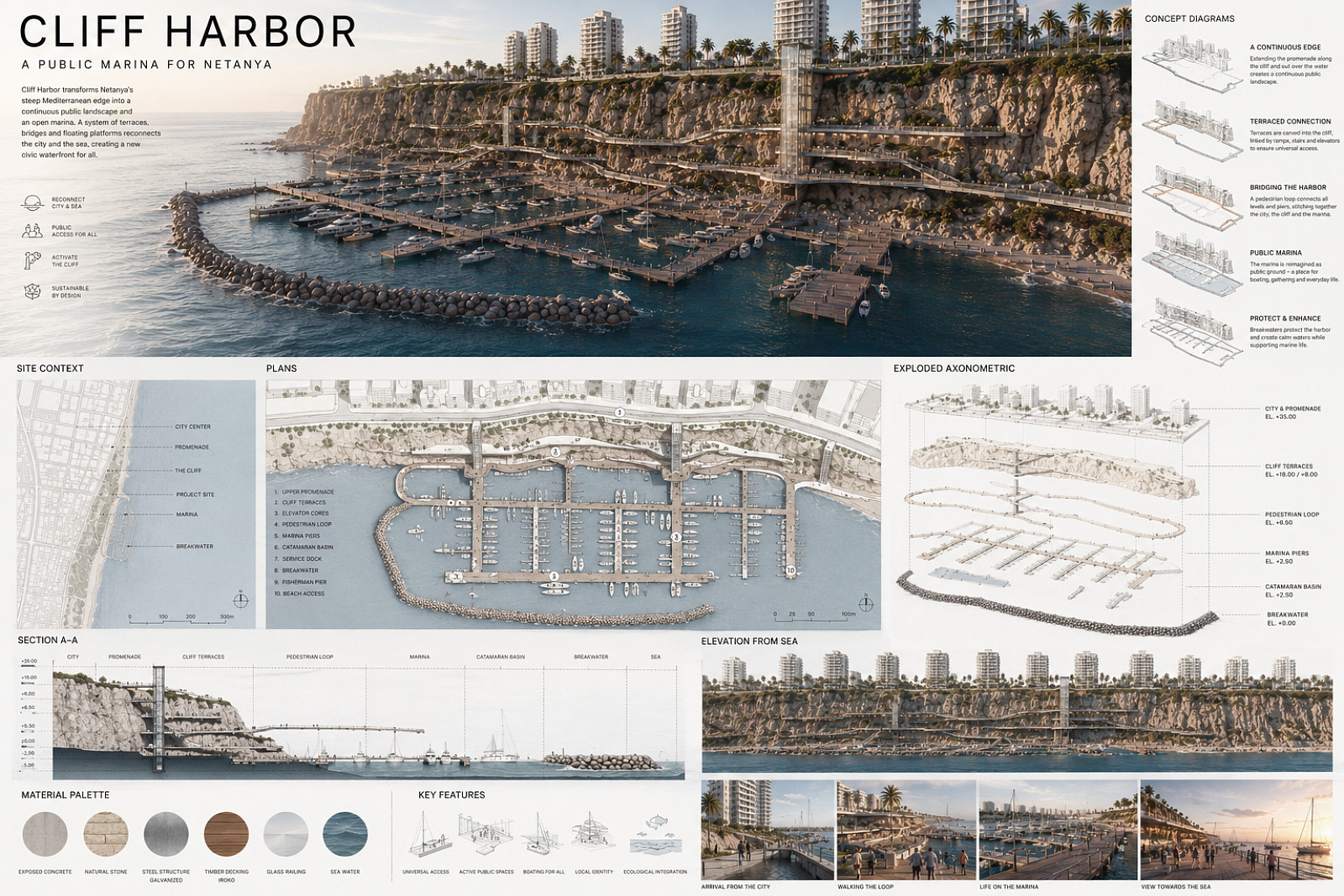
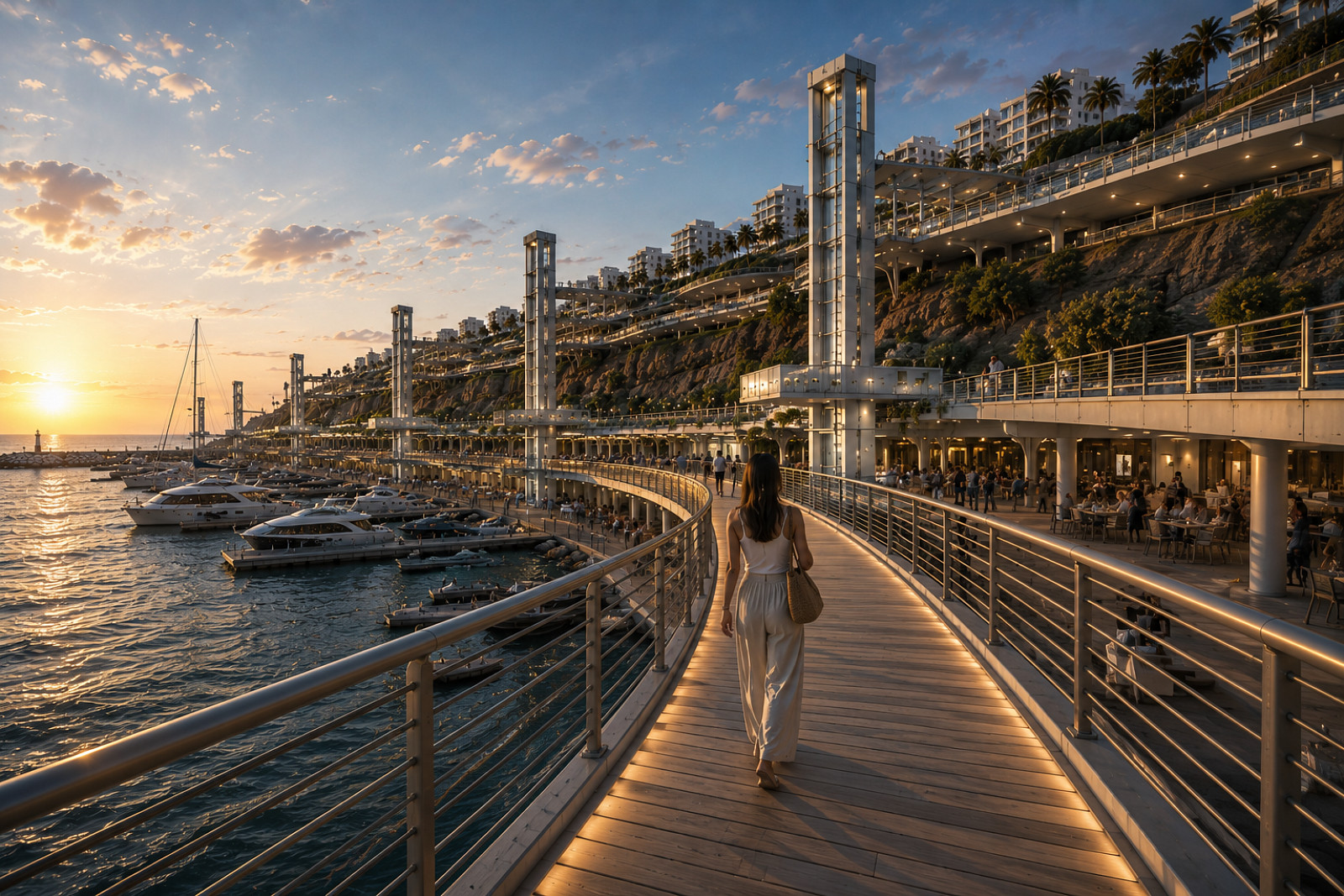
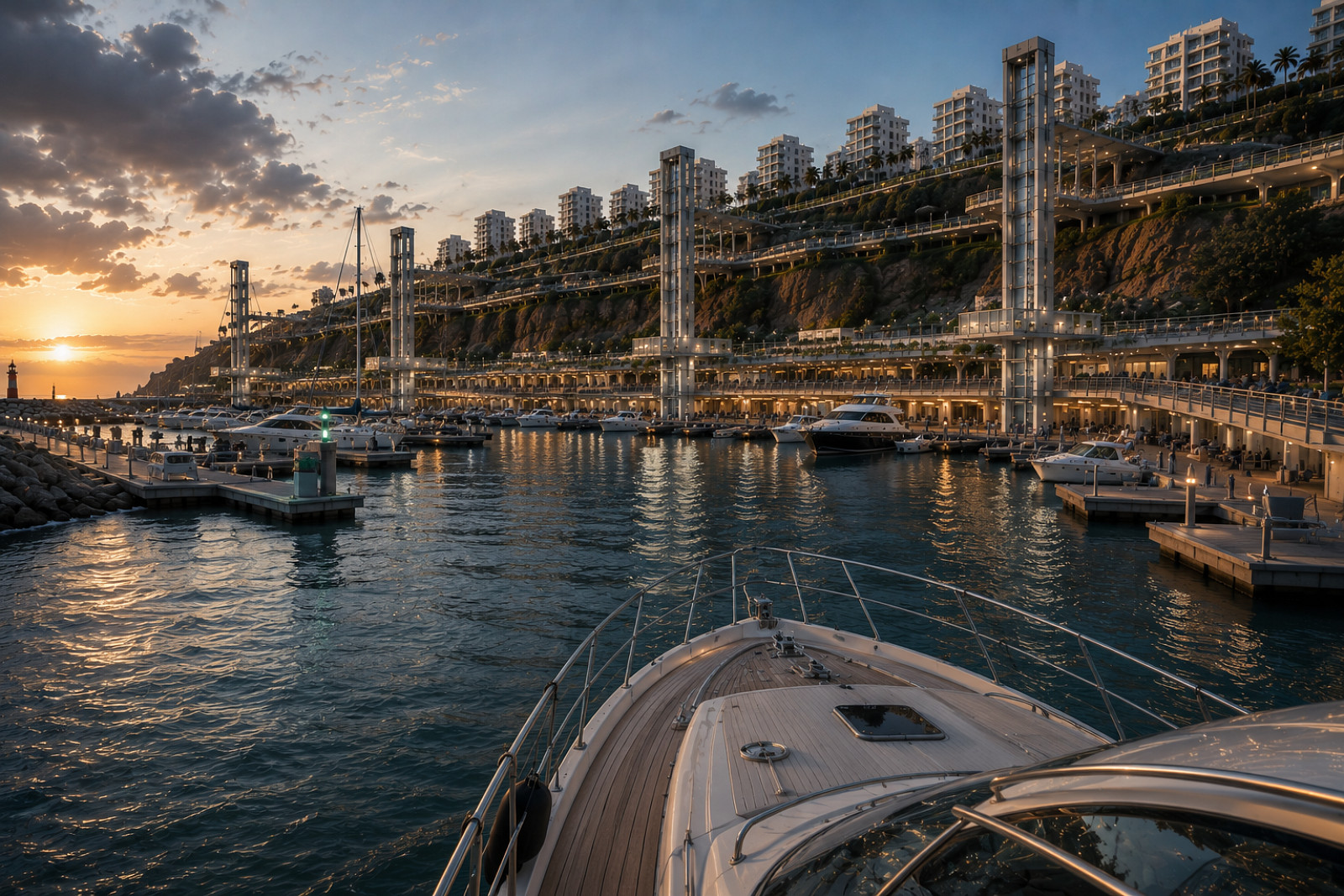
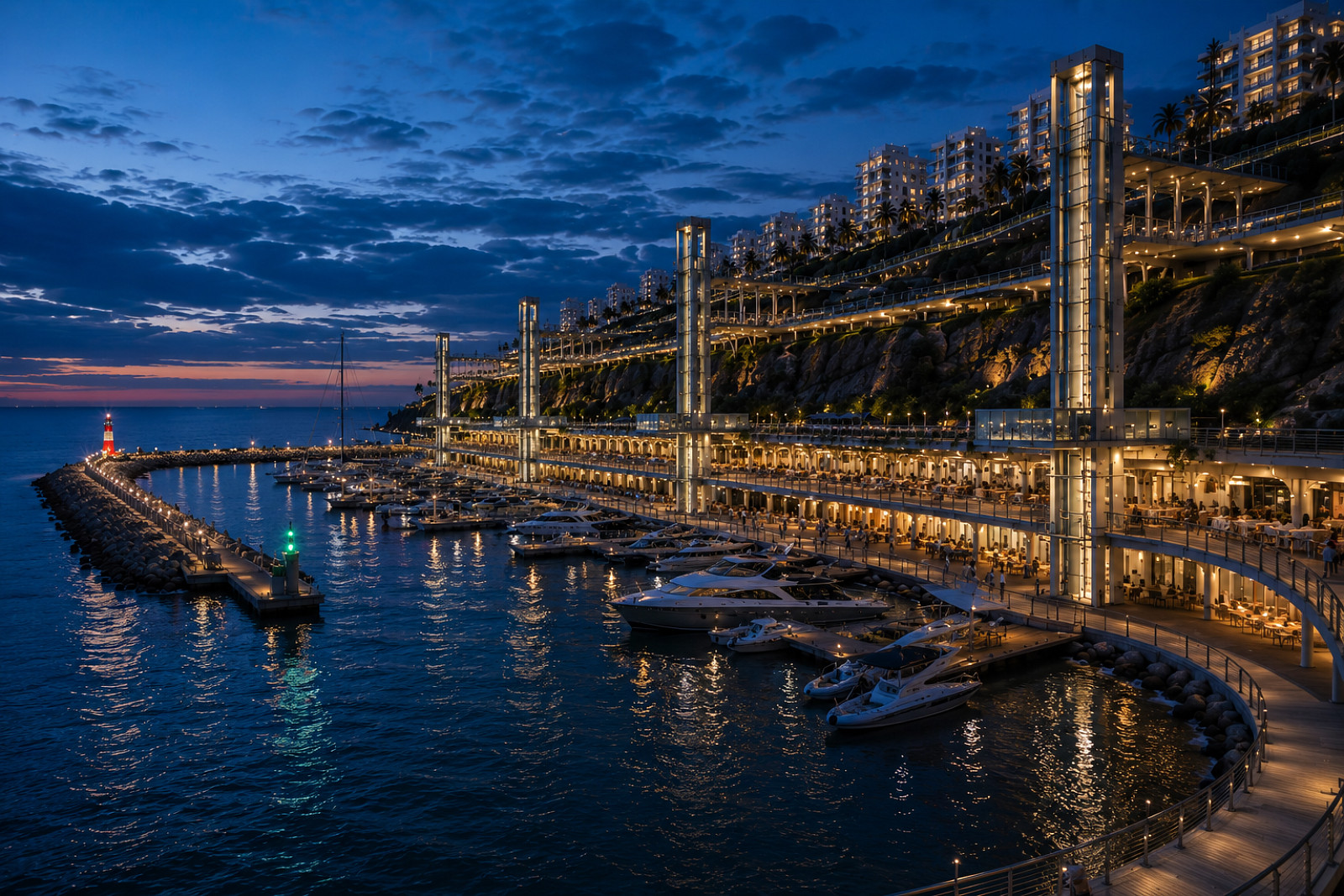
Rather than reinforcing the separation between city and sea, the proposal dissolves it through a new coastal system of descending terraces, suspended bridges, and floating public platforms. The marina is redefined not as a gated enclave for boats, but as shared ground where public life, movement, and water-based activity coexist. The goal of the project is to create a new relationship between city and sea in which infrastructure becomes public architecture and the coastline becomes inhabitable.
Project description
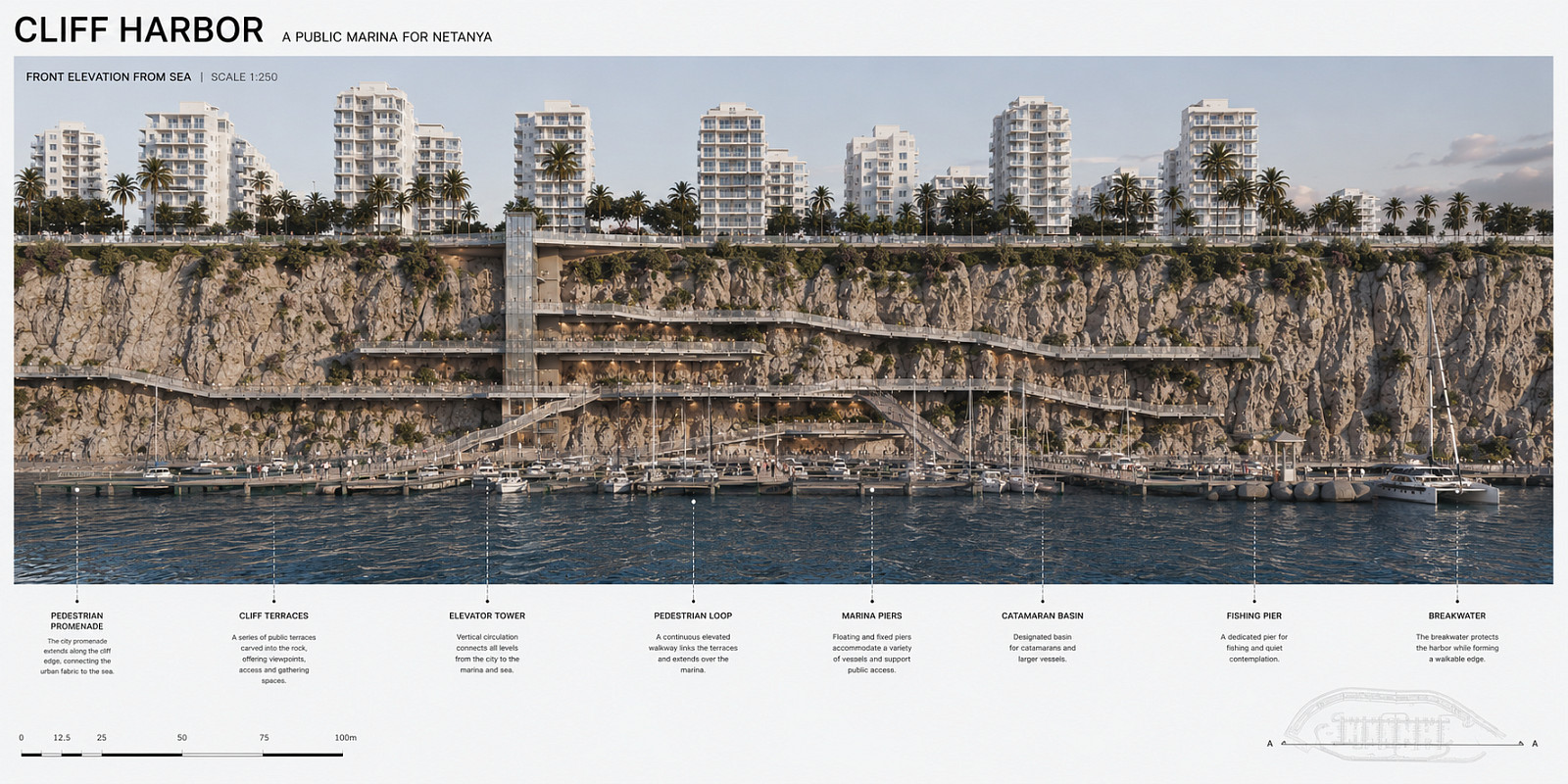
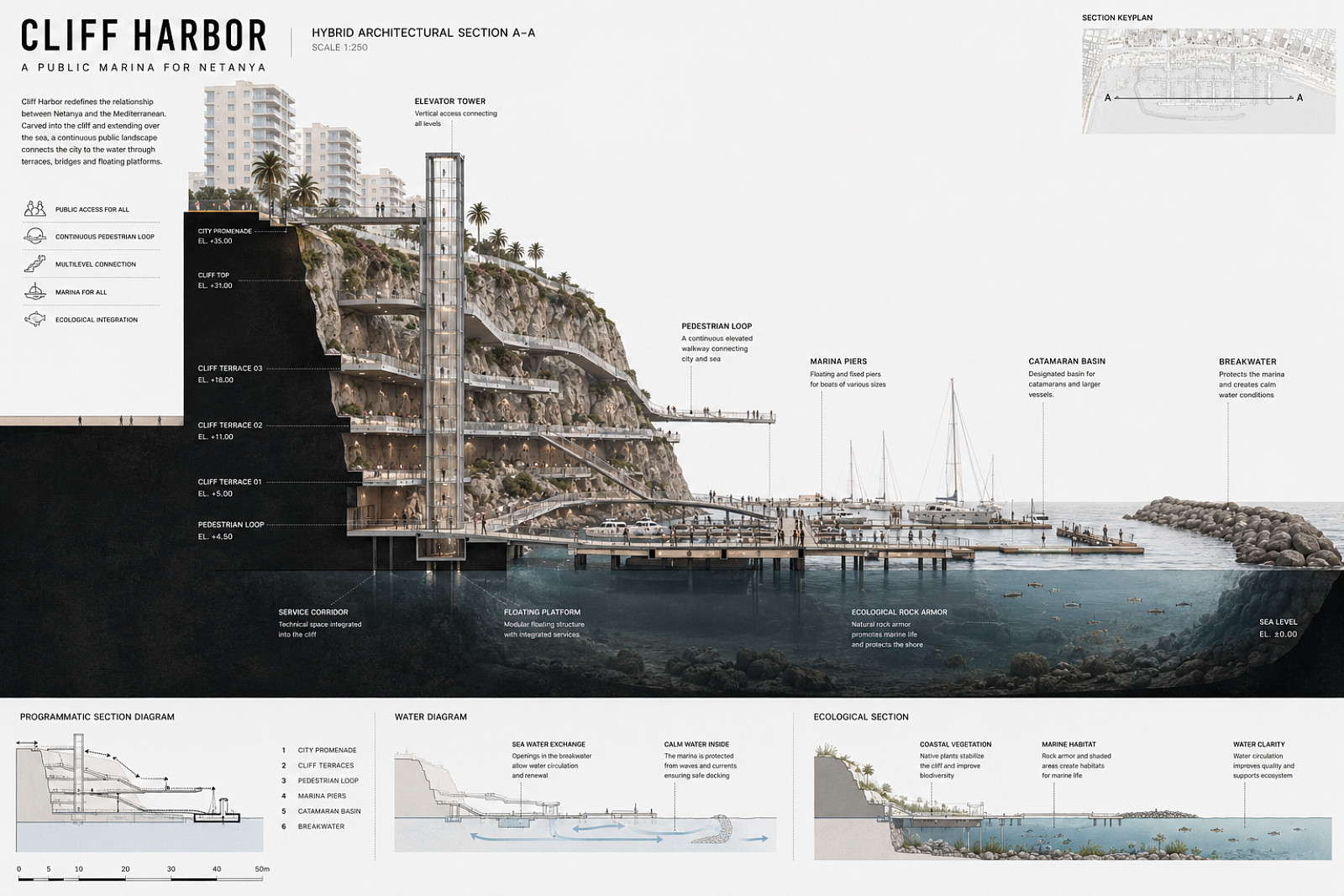
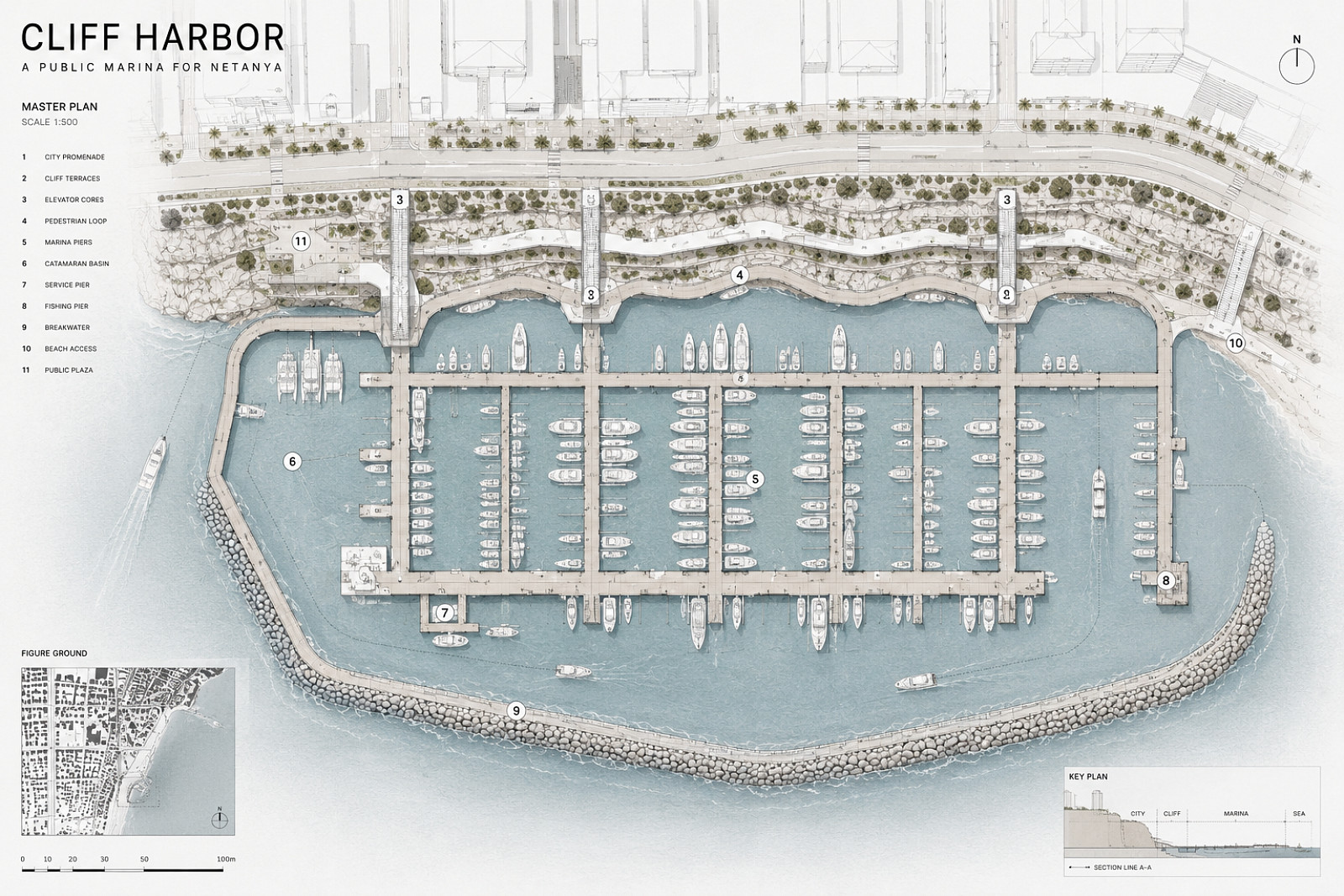
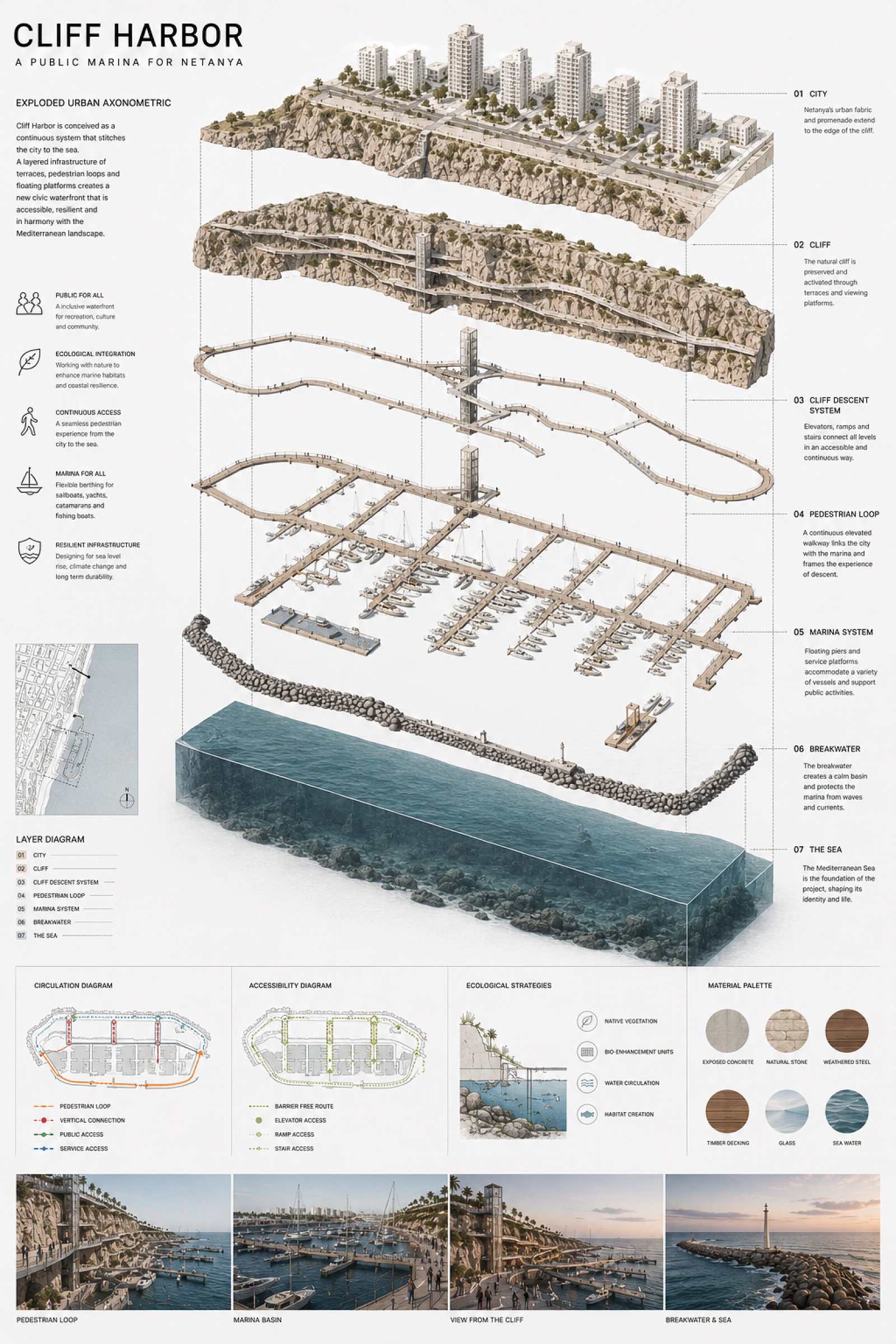
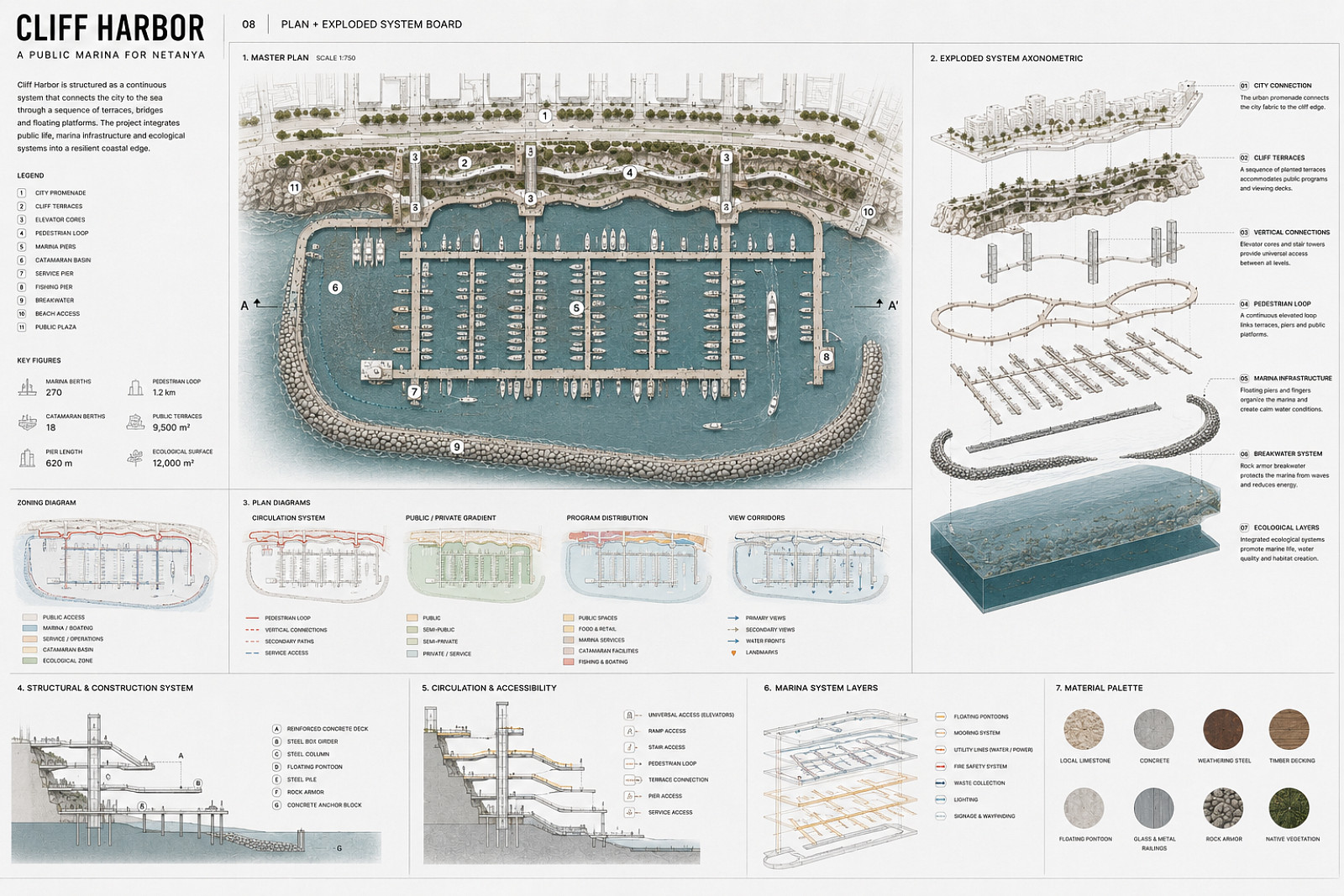
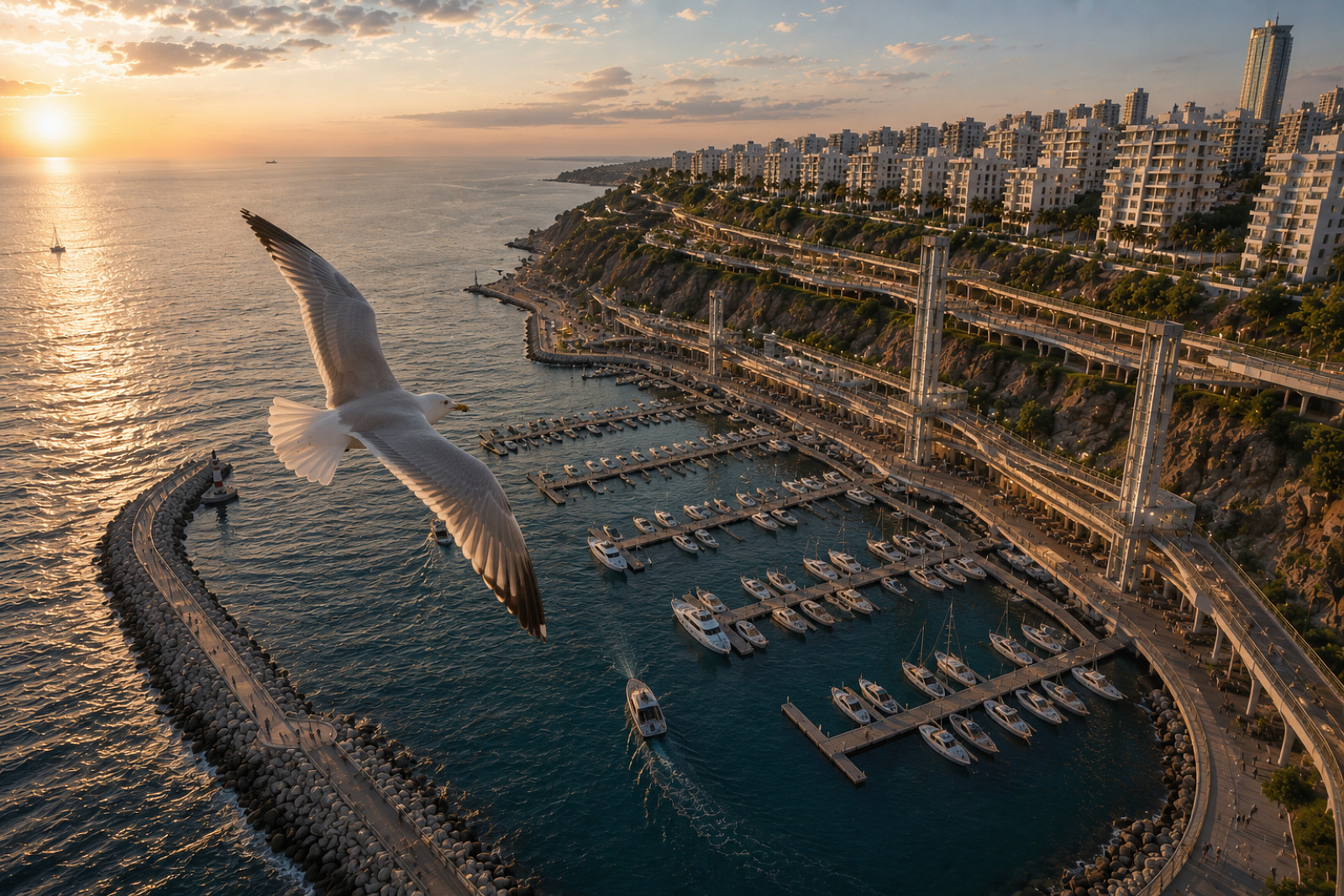
The project is organized as a continuous coastal sequence extending from the urban promenade down through the cliff and outward into the marina and open water. Rather than focusing on a singular building or fixed destination, CLIFF HARBOR unfolds as an inhabited section — a layered field of terraces, ramps, bridges, piers, and floating platforms that allow the city to descend, spread, and engage with the sea in multiple ways. The cliff is no longer treated as a separating edge, but as a vertical landscape of access, movement, and public life.
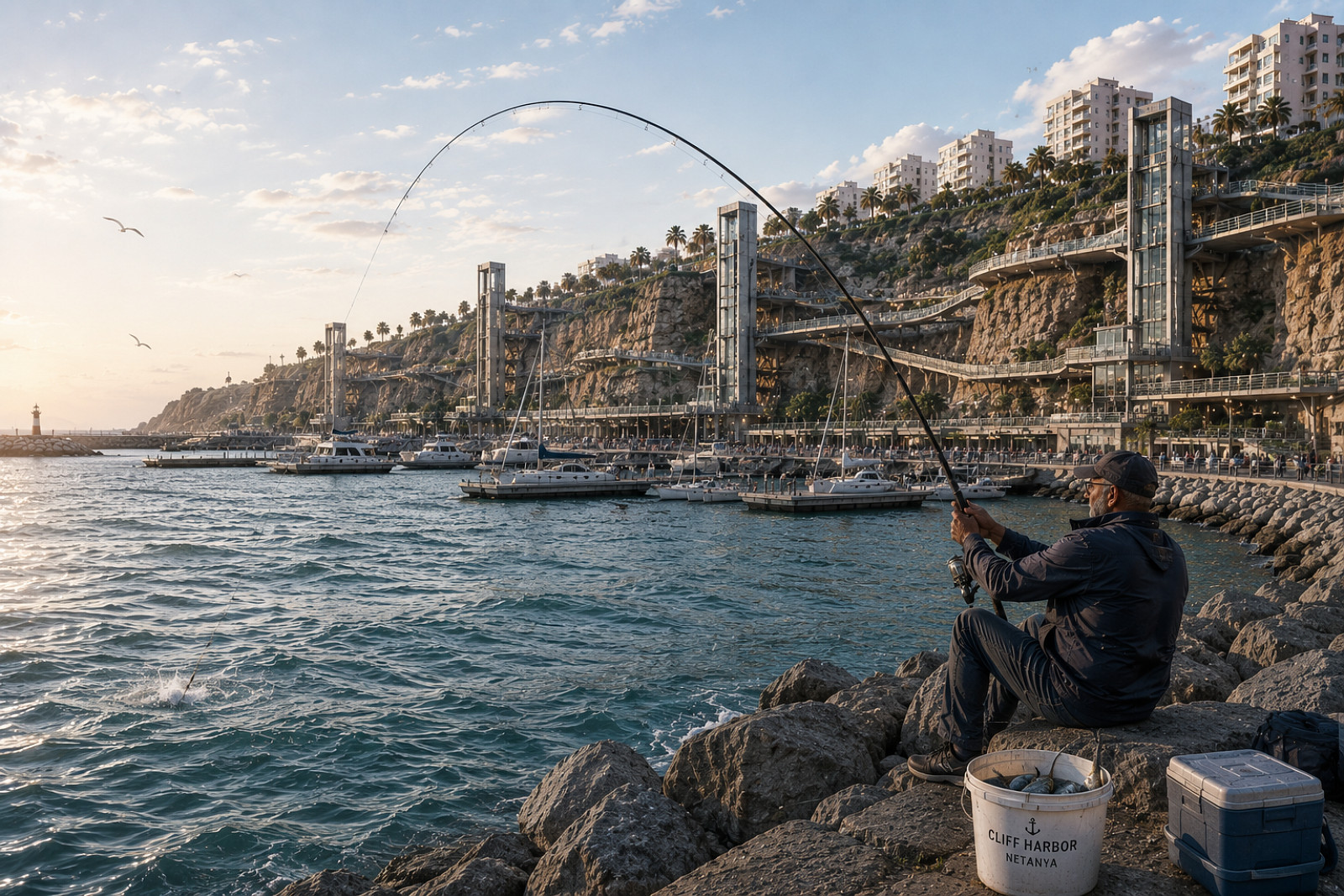
The marina itself is redefined as public ground. Instead of functioning as a restricted enclave for docking infrastructure, it becomes a shared spatial network where pedestrians, fishermen, sailors, and visitors coexist. Movement replaces arrival as the defining condition of the project. There is no single entrance and no singular endpoint; rather, the architecture operates as a continuous journey through changing gradients of accessibility, from dense urban public space to more intimate zones of docking, pause, and direct interaction with the water.
Infrastructure is not hidden or treated as secondary. Ramps, breakwaters, piers, and circulation systems are exposed, inhabited, and celebrated as architectural experiences. Public space extends beyond the shoreline and occupies the water itself. CLIFF HARBOR therefore proposes a porous coastal field where landscape, infrastructure, and civic life are merged into one continuous system, redefining the relationship between city and sea as one of shared inhabitation rather than visual distance.
Technical information
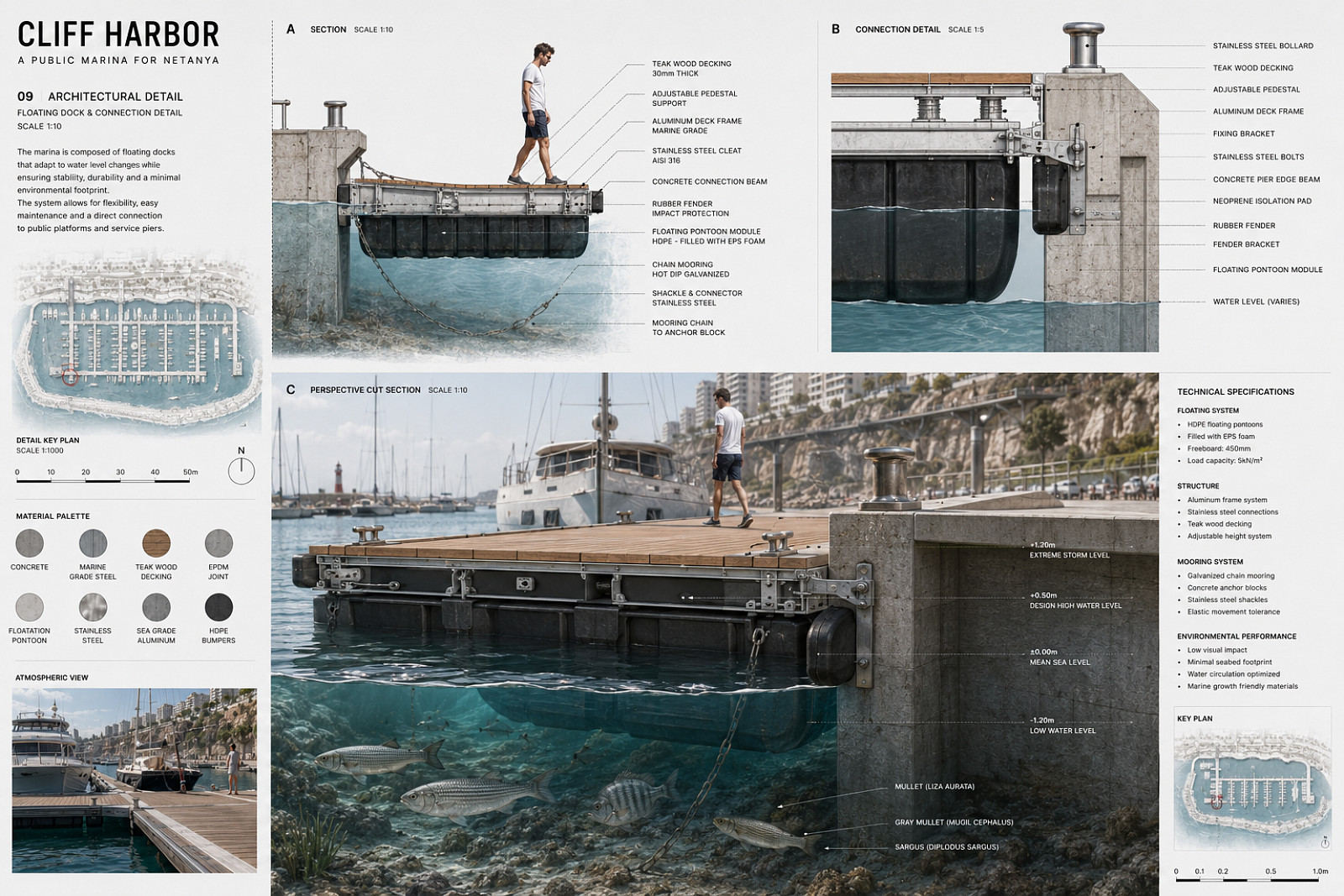
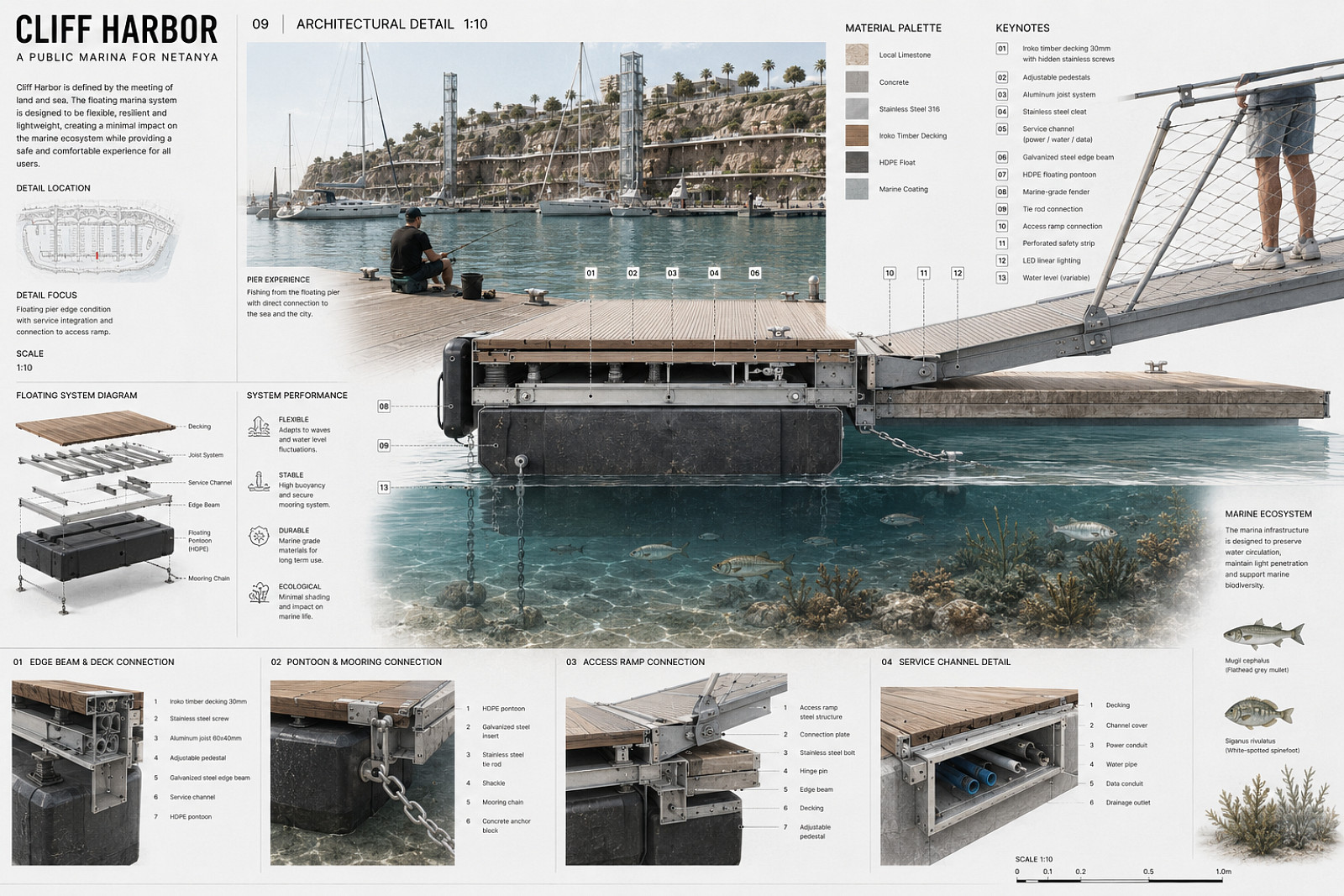
The project is designed as a multi-level coastal infrastructure system composed of terraced cliff interventions, accessible ramps, suspended bridges, marina piers, floating public platforms, and integrated breakwater elements. Its architectural logic is based on sectional continuity, allowing movement between the city, cliff, marina, and sea to occur through a connected spatial framework rather than through isolated access points. Structural systems combine anchored cliff elements, lightweight bridge construction, marine-grade platform systems, and durable waterfront surfaces adapted to changing water conditions and coastal exposure.
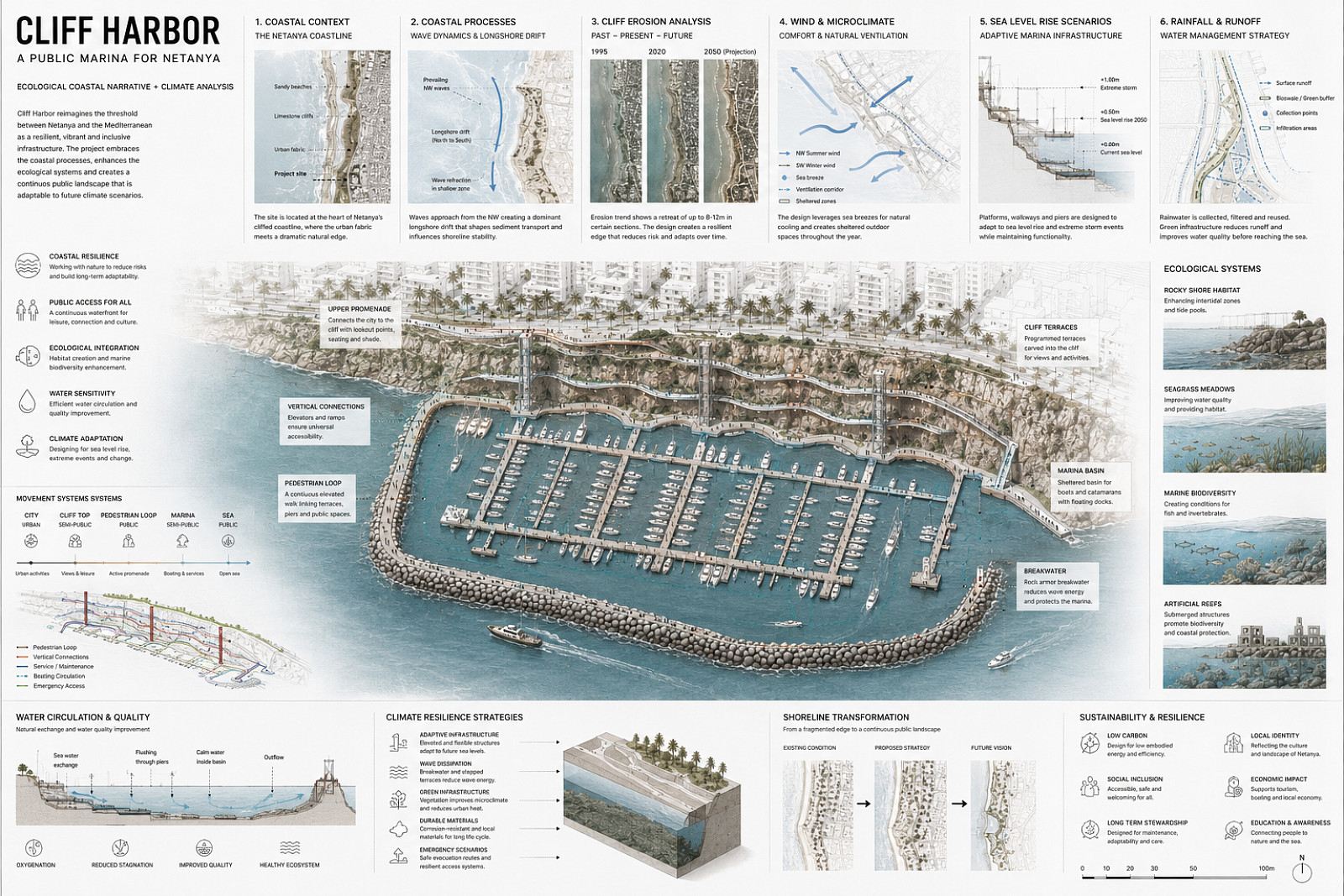
Environmental performance is embedded in the relationship between landform, water, and public use. Terraced interventions reduce abrupt separation between city and sea while allowing controlled drainage, erosion response, and long-term stability along the cliff condition. Floating and marine-edge systems are designed to adapt to changing sea levels and shifting coastal dynamics, while shaded platforms, planted edges, and open circulation improve microclimatic comfort along the waterfront. Materiality emphasizes durability, corrosion resistance, and public robustness through concrete, steel, timber or composite deck surfaces, and carefully detailed marine interfaces. In this way, the project combines coastal infrastructure, civic access, and spatial continuity within one integrated architectural system.

Copyright © 2026 INSPIRELI | All rights reserved. Use of this website signifies your agreement to the Terms of Use, Privacy Policy, and use of cookies.