AGRO-TECHNOLOGY RESEARCH CENTRE AND KNOWLEDGE TRANSFER HUB


Project idea
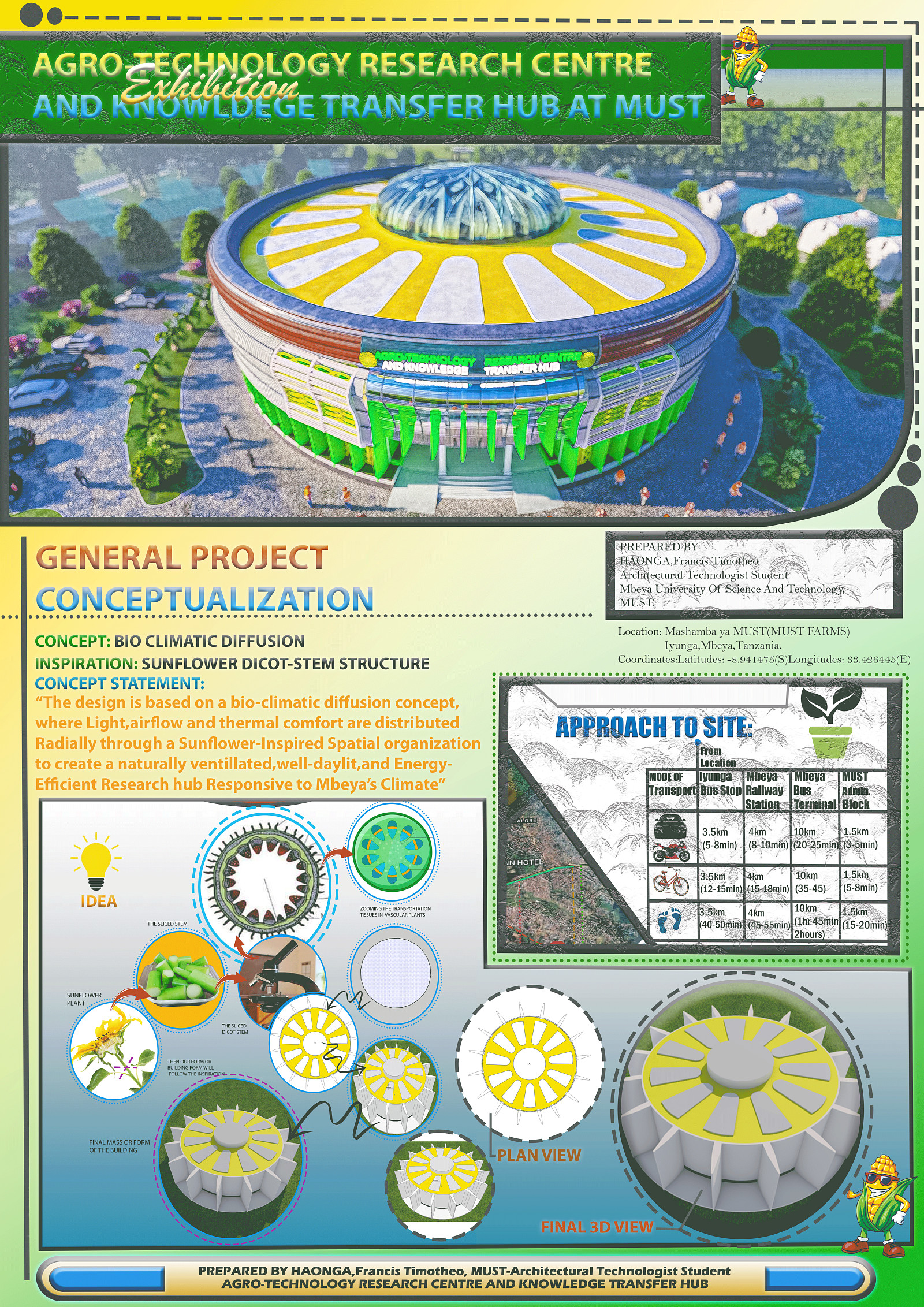
The idea of this project is driven by the current limitation of agro-research facilities at Mbeya University of Science and Technology(MUST),Mbeya,Tanzania. where existing centre are fragmented, small-scale, and mainly limited to demonstration farms, a few greenhouses, and basic storage. These conditions restrict innovation, collaboration, and effective knowledge transfer between researchers, farmers, and the community. There is therefore a clear need for an integrated, climate-responsive environment that brings research, learning, and application into one unified system.
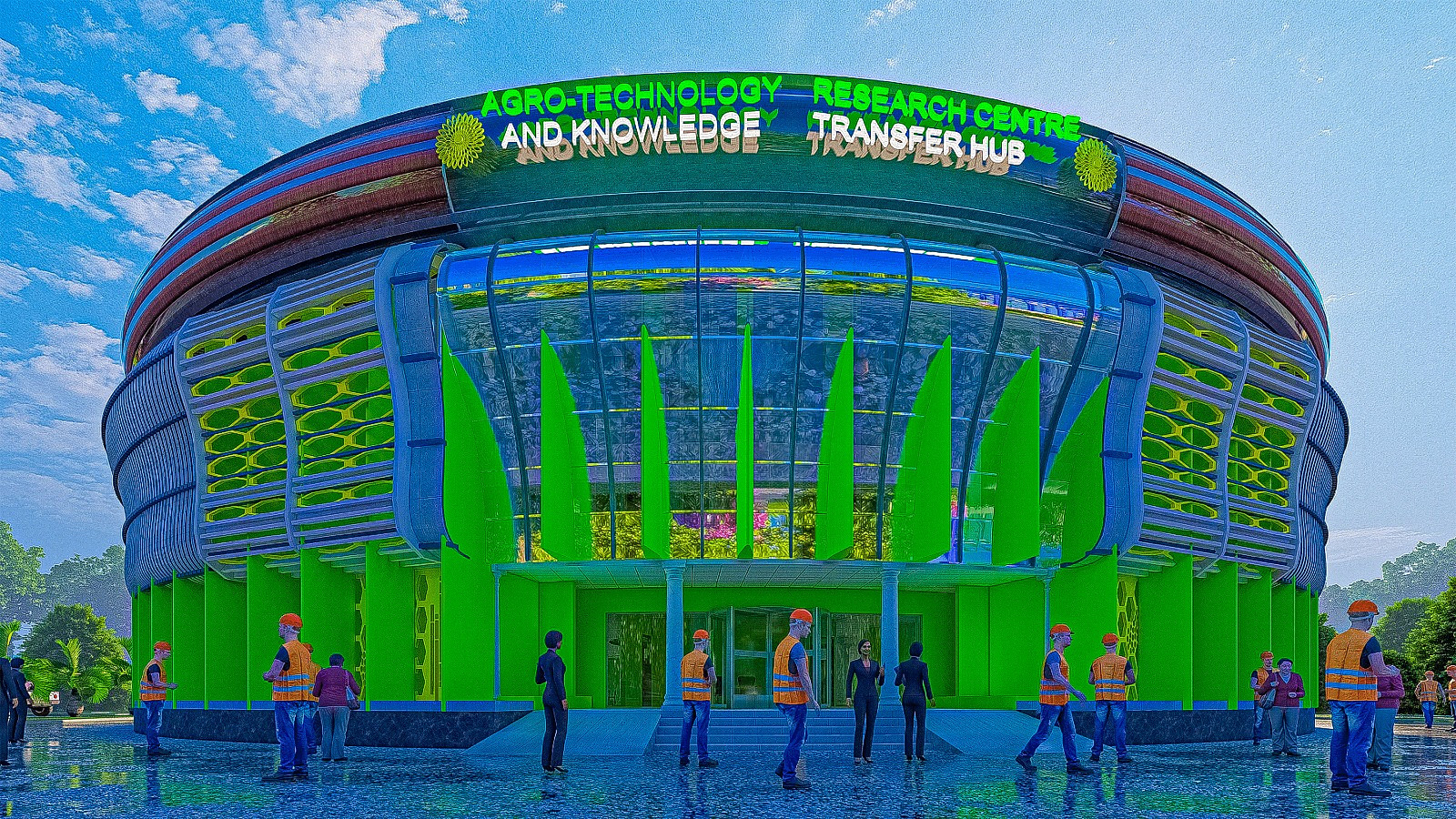
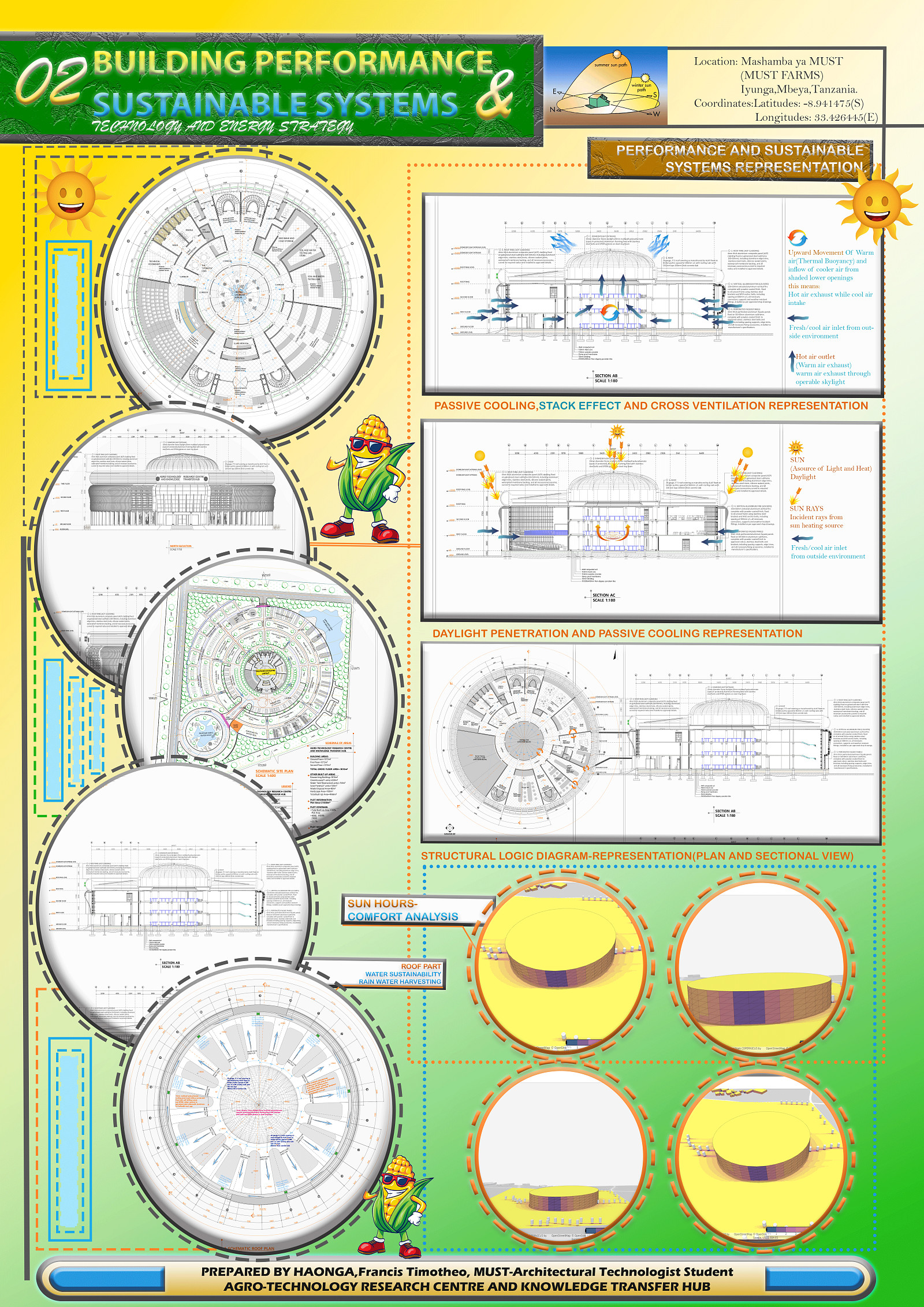
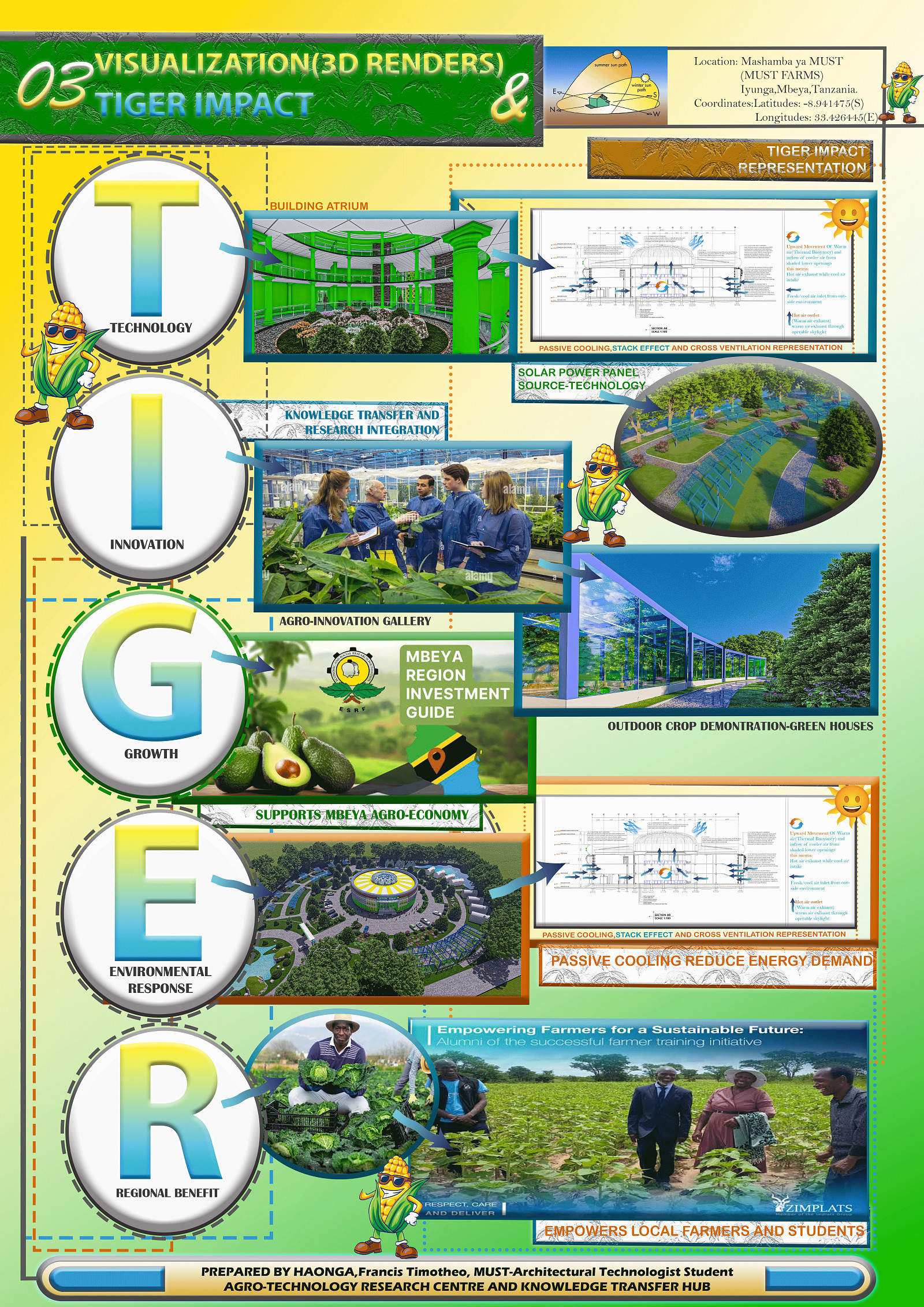
In response, this project proposes a centralized Agro-Technology Research and Knowledge Transfer Hub that enhances interaction, experimentation, and dissemination of agricultural knowledge. The design is inspired by the sliced sunflower dicot stem, where nutrients are distributed radially through an efficient vascular system. This biological principle is translated architecturally into a radial spatial organization that diffuses environmental resources-light, air, and thermal energy-through a central atrium.
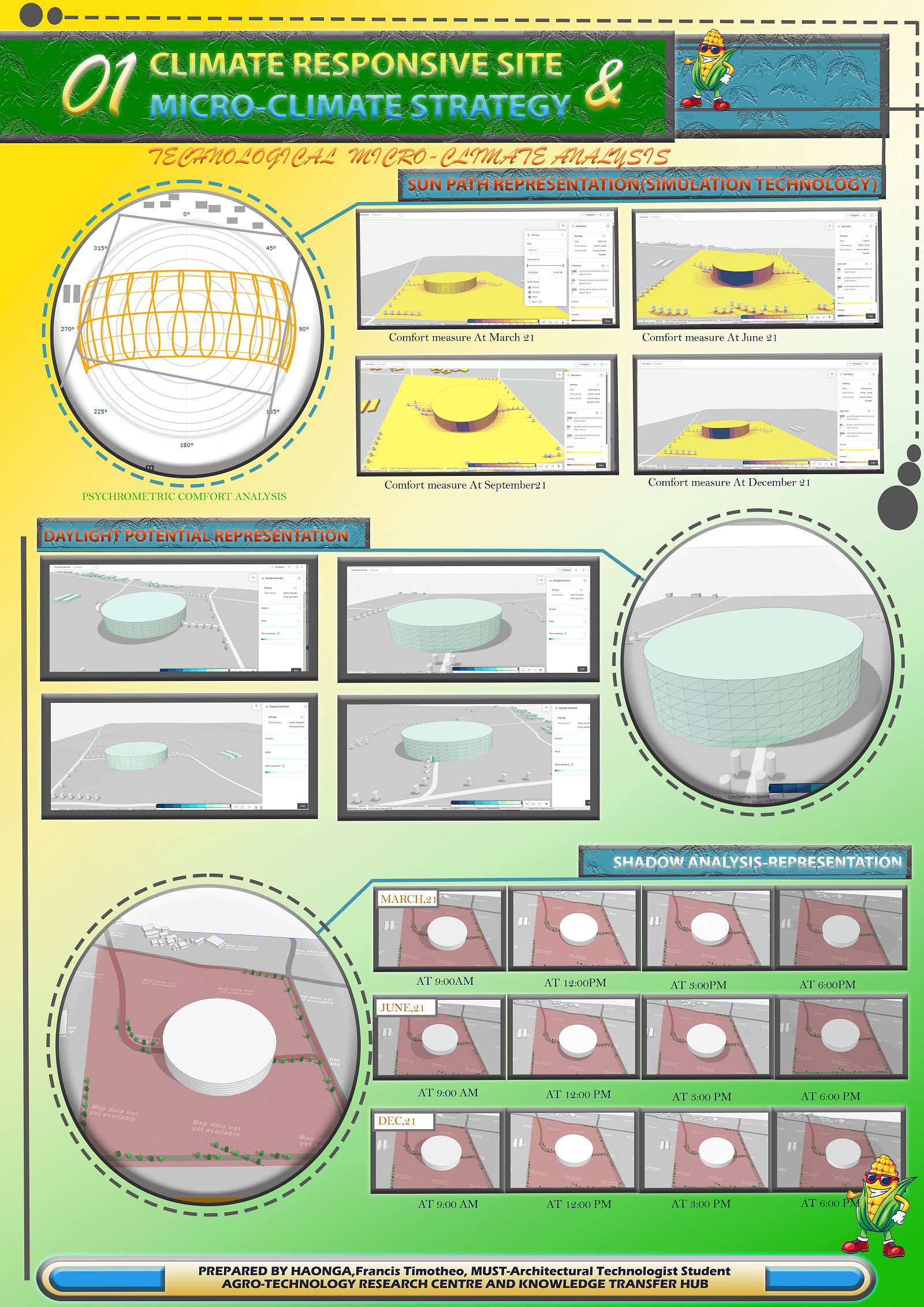
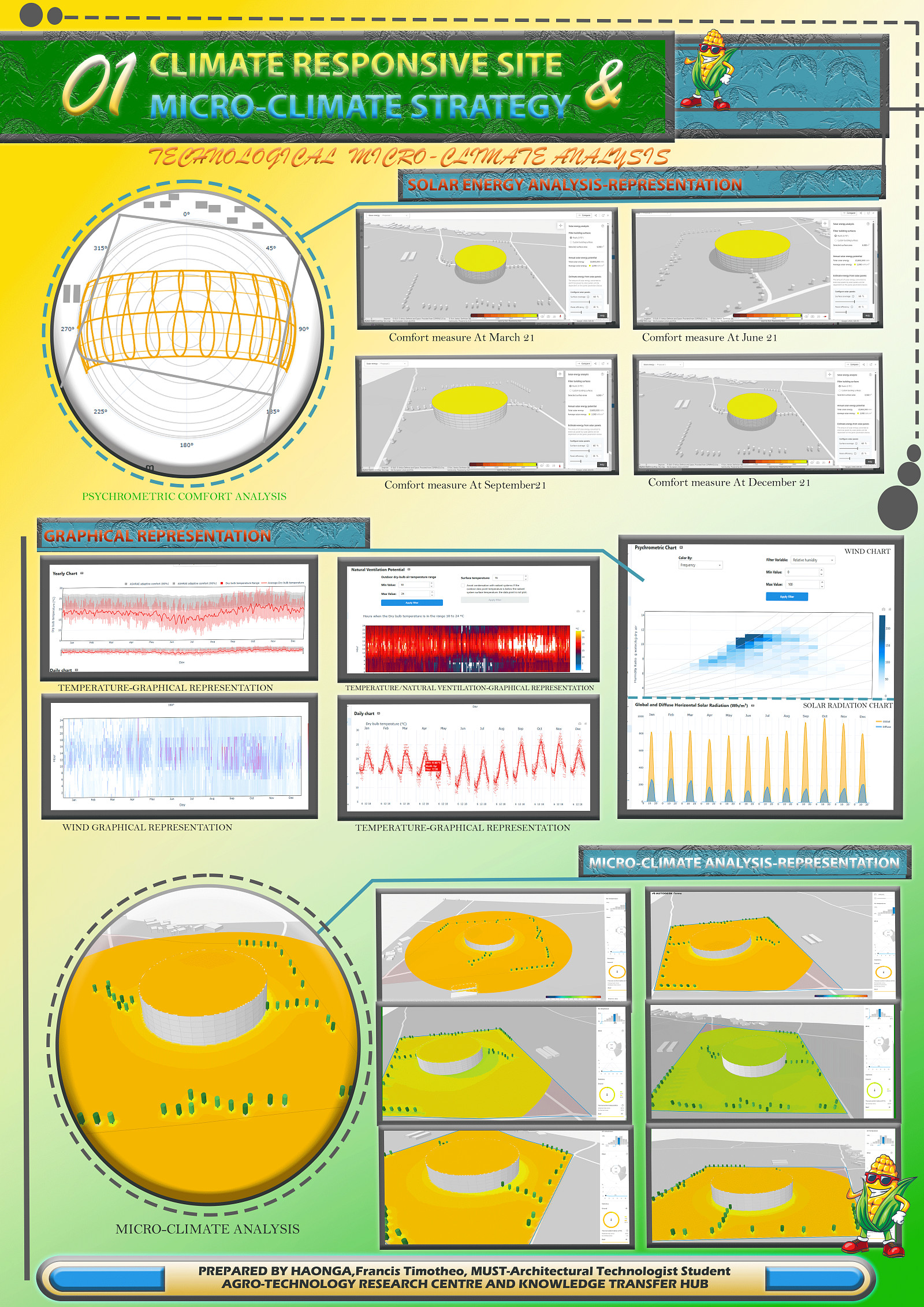
The building operates as a living laboratory, where spaces for research, demonstration, and training are interconnected to promote continuous learning and innovation. Through this approach, the project aims to achieve passive thermal comfort, maximize natural daylighting, enable cross and stack ventilation, and create a sustainable platform for agricultural advancement and community engagement at Mbeya University of Science and Technology and whole Mbeya region.
Project description
This project consists of the following components:
1. Main Research Building
A circular(42mm diameter), multi-storey structure organized around a central atrium, accommodating:
*Research laboratories
*Offices and administration
*Training and seminar spaces
*Exhibition and knowledge transfer areas
2. Demonstration and Experimental Zones
*Outdoor crop demonstration fields
*Agroforestry and test plots
*Irrigation demonstration systems
3. Greenhouse Facilities
*Controlled-environment structures for advanced agricultural research and plant propagation.
4. Water Management System
*Irrigation reservoir
*Rainwater harvesting system
*Stormwater drainage integration
5. Renewable Energy Zone
*Solar power generation units supporting building operations
6. Waste Management Area
*Designated waste collection and processing point for sustainable operation
7. Landscape and Public Realm
*Farmer training gardens
*Shaded learning spaces
*Pedestrian circulation networks
*Assembly and gathering areas
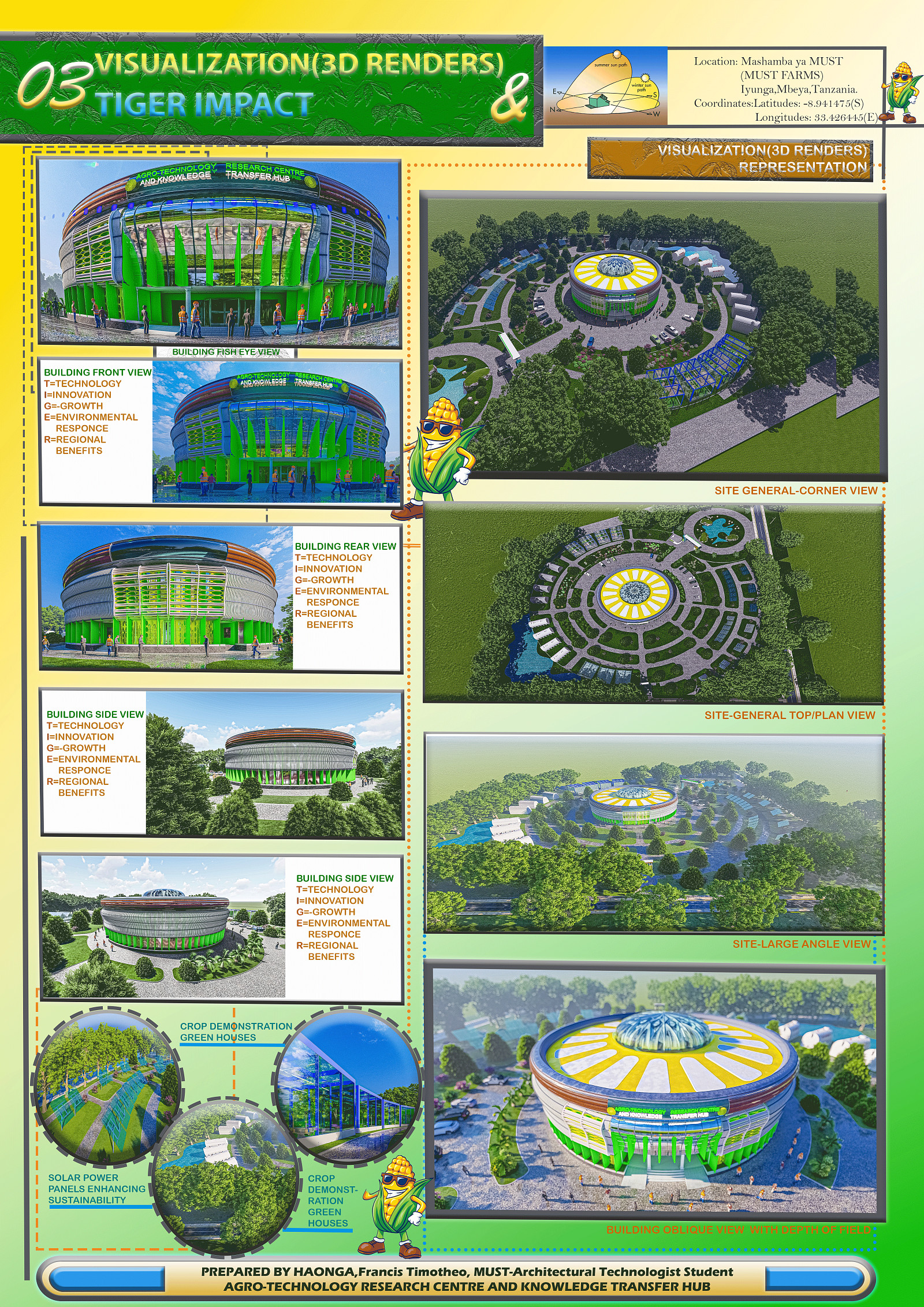
The overall layout follows a radial zoning strategy, reinforcing the concept of knowledge diffusion and environmental integration.
Technical information
The construction of the building is composed of the following systems:
1. Structural System
*Reinforced concrete frame (columns, beams, slabs)
*Circular ring beam supporting roof and dome
*Steel elements for façade and roof structure.
2. Roof System
*16–20mm multiwall polycarbonate translucent roofing panels (UV protected)
*12m diameter dome skylight for atrium (polycarbonate system)
*Steel radial roof framing
3. Façade System
*Aluminium curtain wall system with double glazing (6mm + 12mm air gap + 6mm)
*Perforated aluminium façade panels for shading
*Vertical aluminium fins (louvers) for solar control
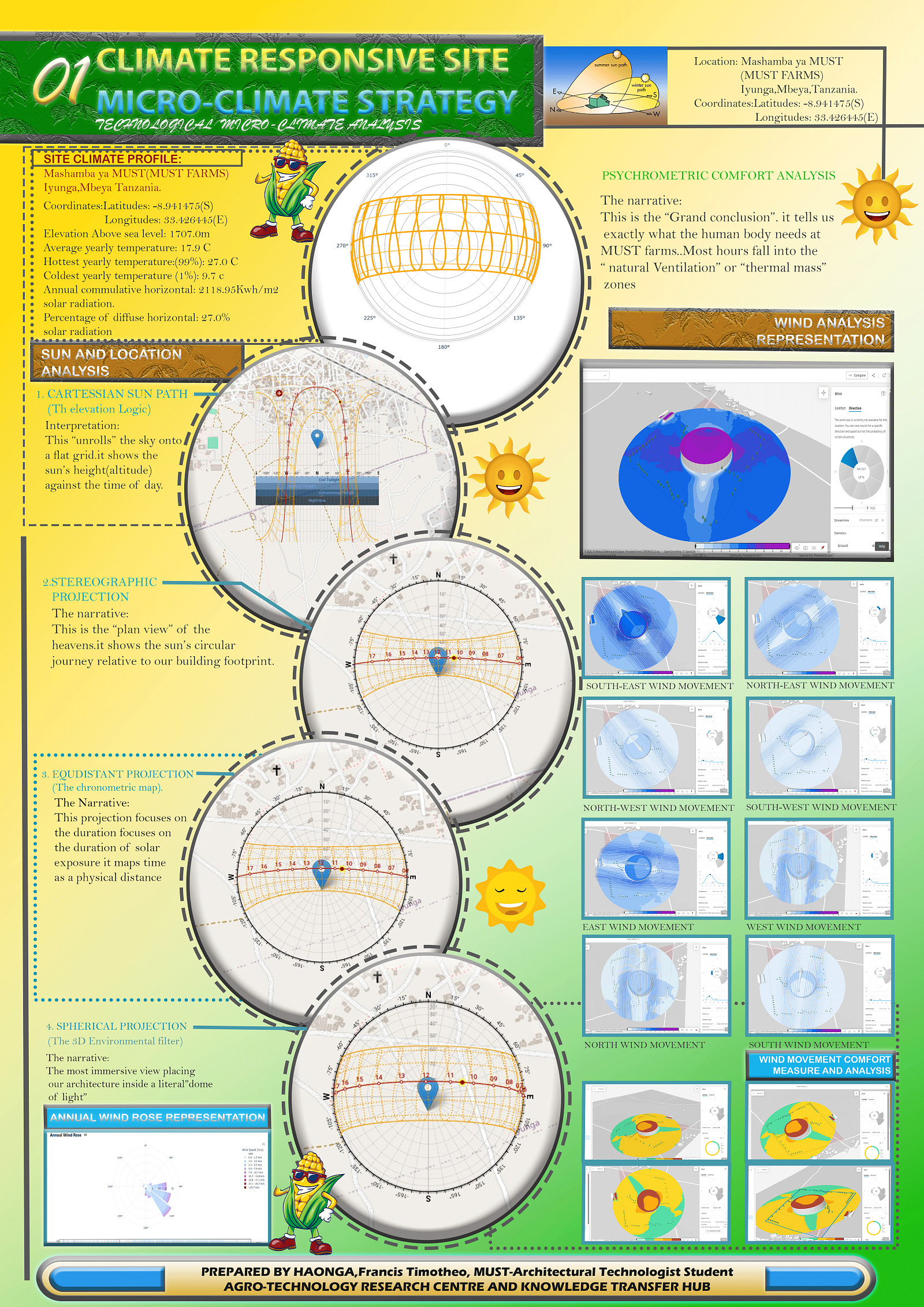
4. Environmental Design Systems
*Natural ventilation through Stack Effect
*Daylighting through atrium and translucent roofing
*Solar shading using façade fins and screens
5. Drainage System
*150mm gutters with 100mm downpipes
*Stormwater drainage connected to site system
6. Materials
*Aluminium (façade systems)
*Glass (curtain wall glazing)
*Polycarbonate (roofing and skylight)
*Reinforced concrete (primary structure)
7. Sustainability Strategy
*Passive cooling and daylighting
*Rainwater harvesting
*Solar energy utilization
*Integration with landscape for microclimate control
Created in:


Copyright © 2026 INSPIRELI | All rights reserved. Use of this website signifies your agreement to the Terms of Use, Privacy Policy, and use of cookies.