Petroleum Research and Studies Center

Project idea
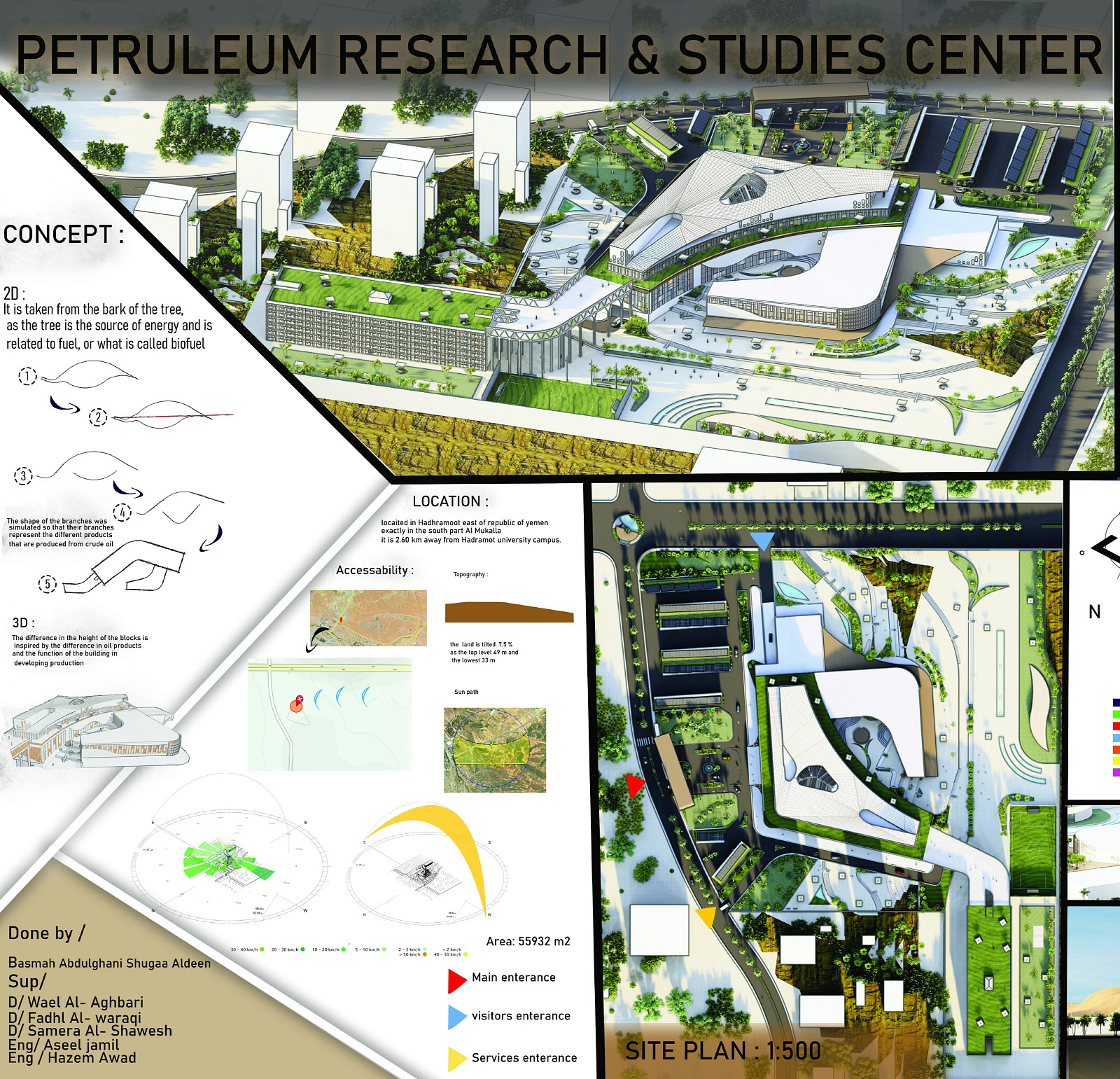
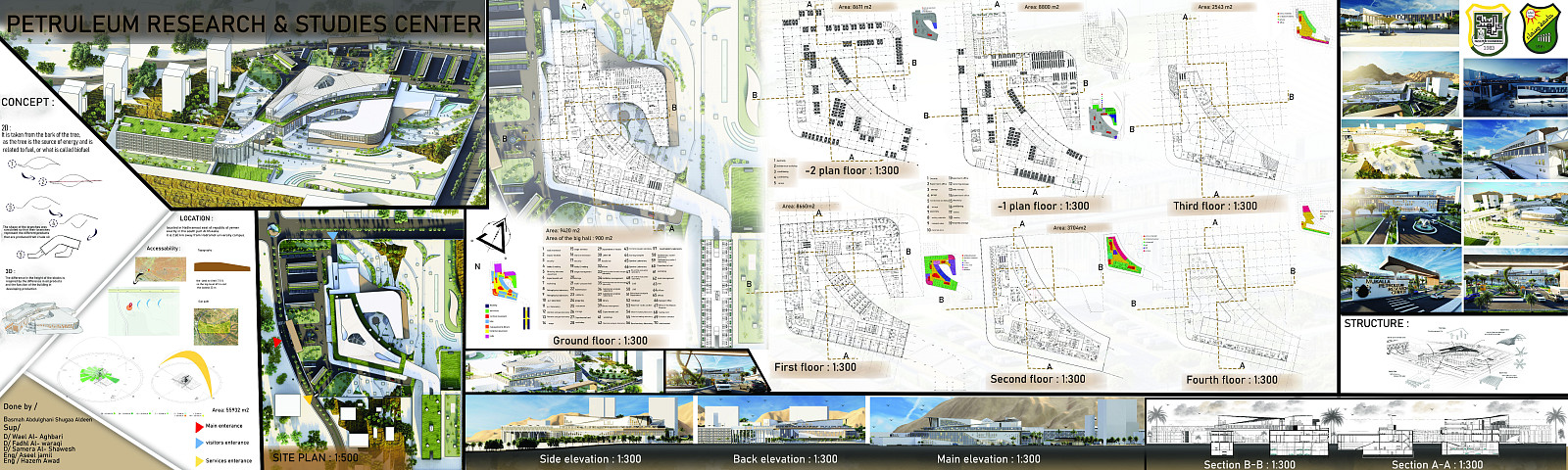
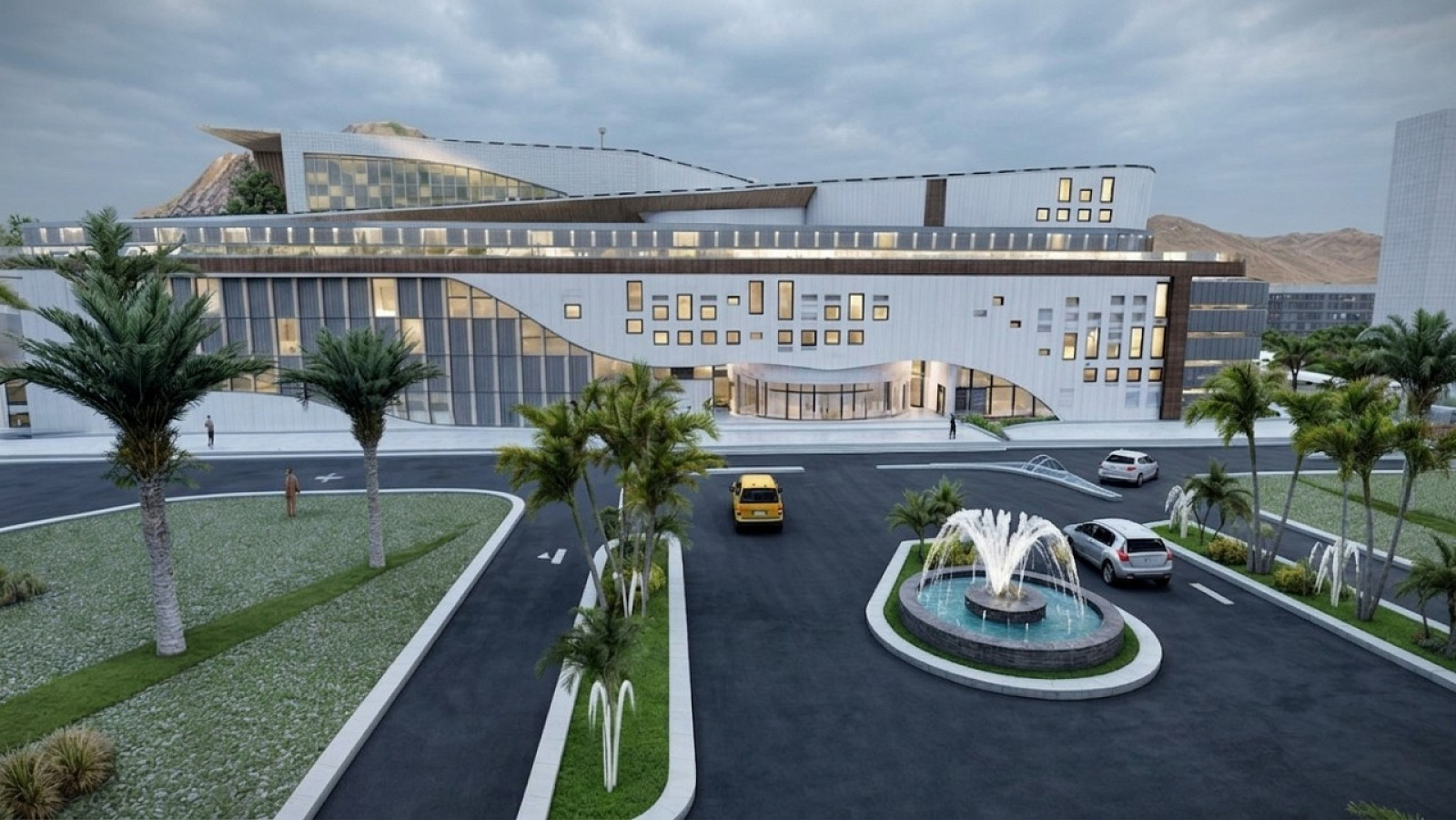
The Petroleum Research & Studies Center is a specialized facility dedicated to petroleum research and studies, aiming to provide an integrated scientific environment that brings together research, development, and practical application in the field of energy. The project is conceptually rooted in the connection between science and nature, as the design is inspired by the bark of a tree, considering that the tree is a source of energy and is related to fuel, or what is known as biofuel. This concept has been translated into an architectural language through the use of organic and fluid lines that mimic the formation of tree bark, along with interlocking masses that reflect natural growth, and dynamic spaces that express the flow of energy throughout the project.
The project addresses several key challenges, including the lack of integrated and specialized research environments in the petroleum sector, the weak connection between natural energy sources and modern scientific applications, and the shortage of spaces that encourage interaction and innovation among researchers. Additionally, it responds to the reliance on conventional architectural designs that fail to reflect the identity of the energy sector. Therefore, the project presents a contemporary architectural model that combines function and identity, embodying sustainability through nature-inspired design. The tree bark symbolizes growth and continuity, while the concept of biofuel represents the transformation of natural energy into usable energy, ultimately expressing the idea that energy begins in nature and evolves into knowledge and innovation within the center.
Project description
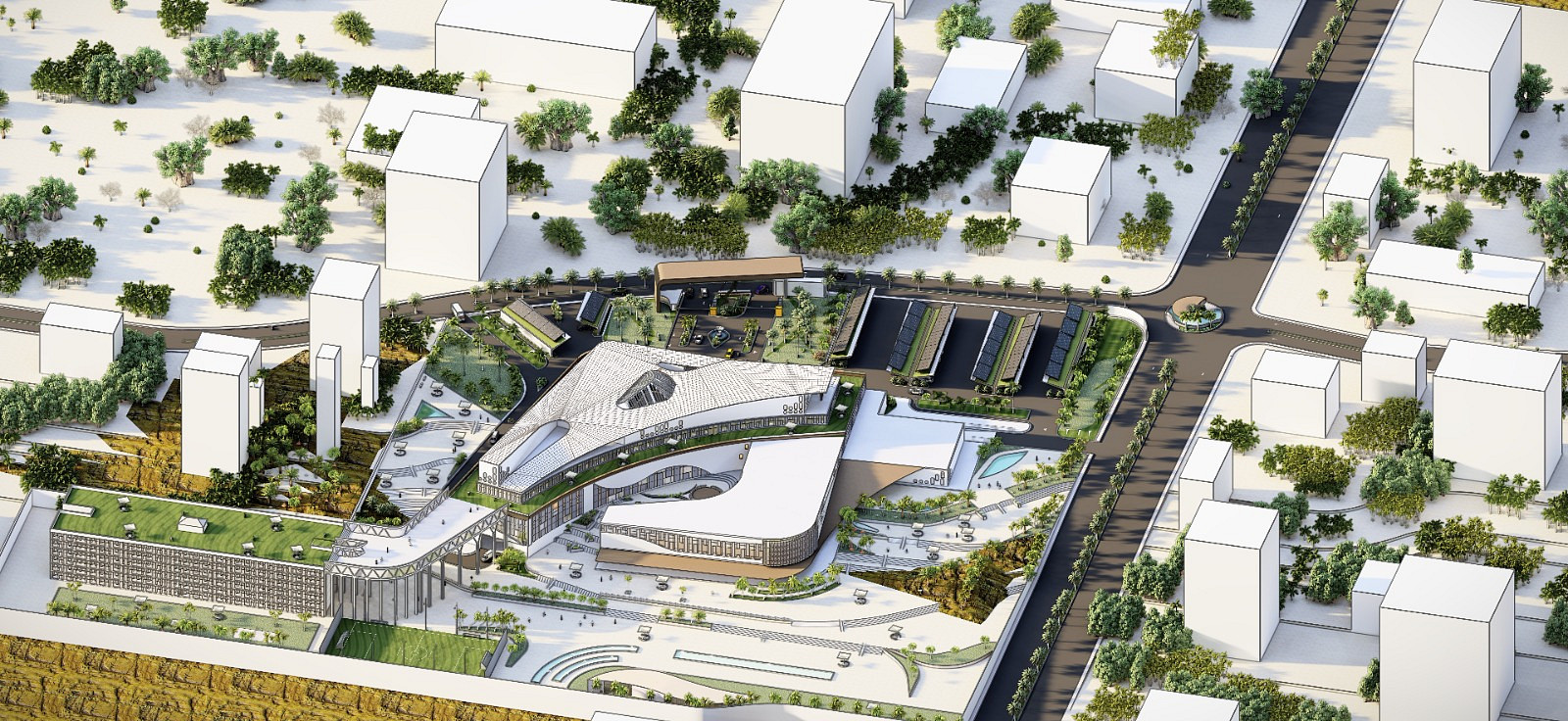
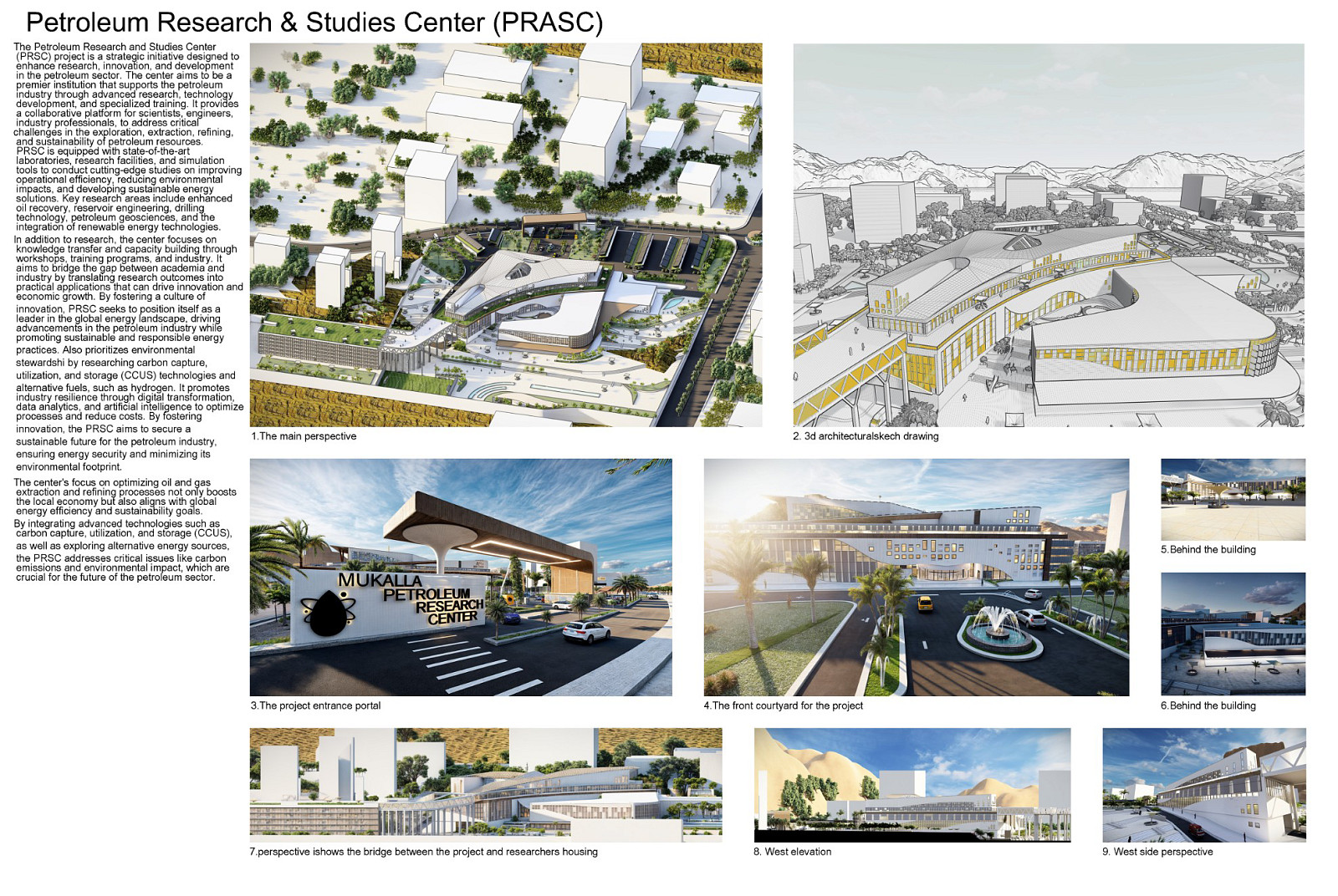
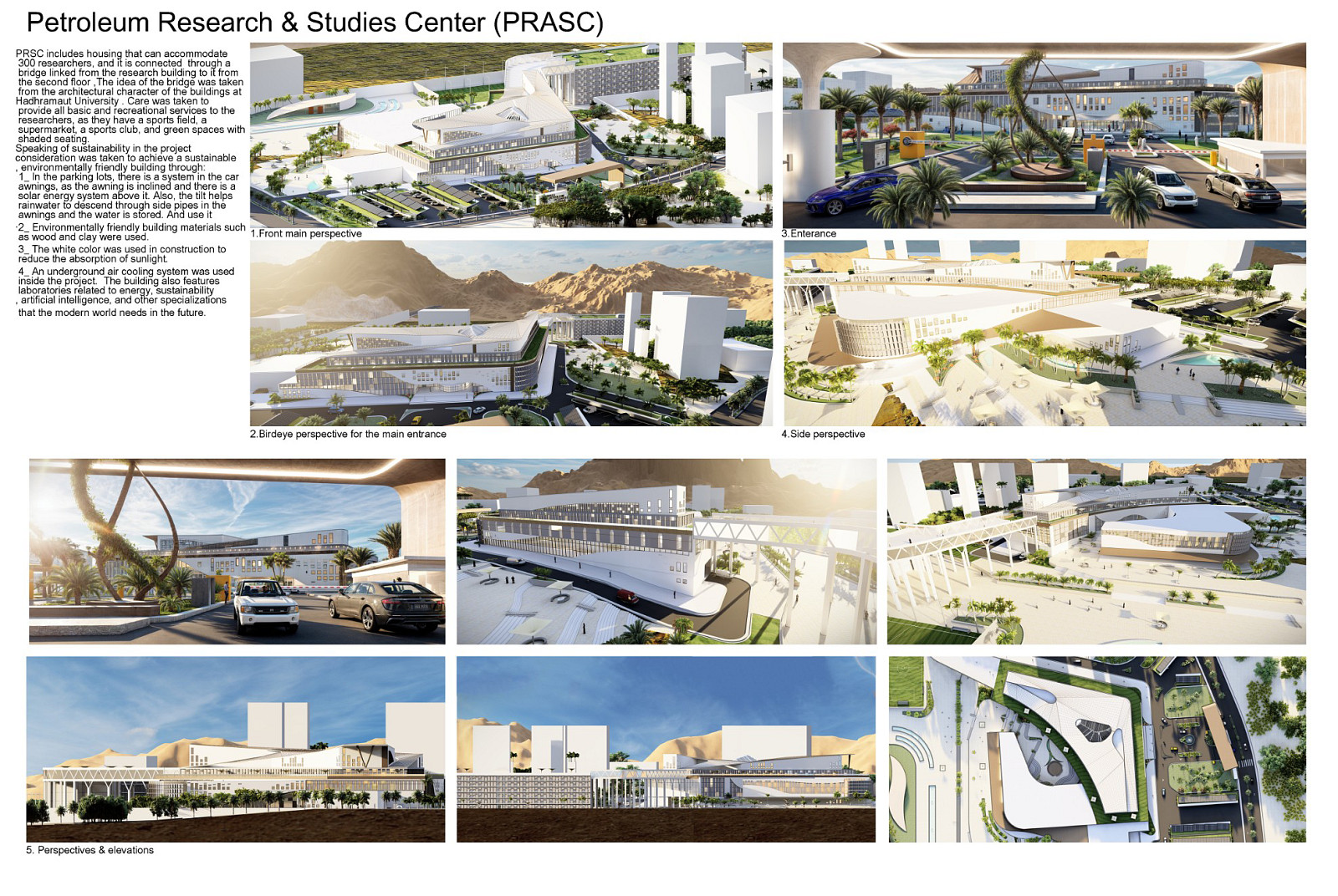
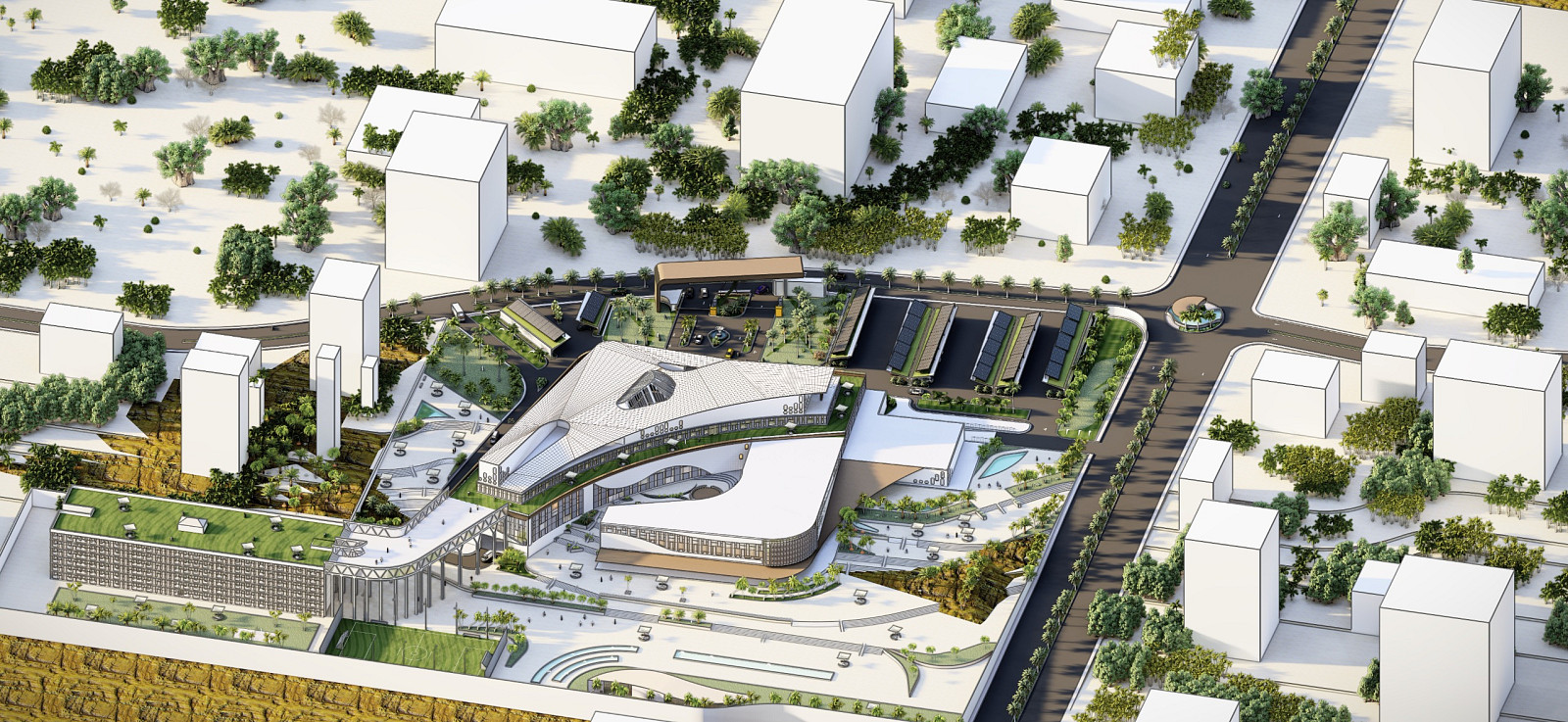
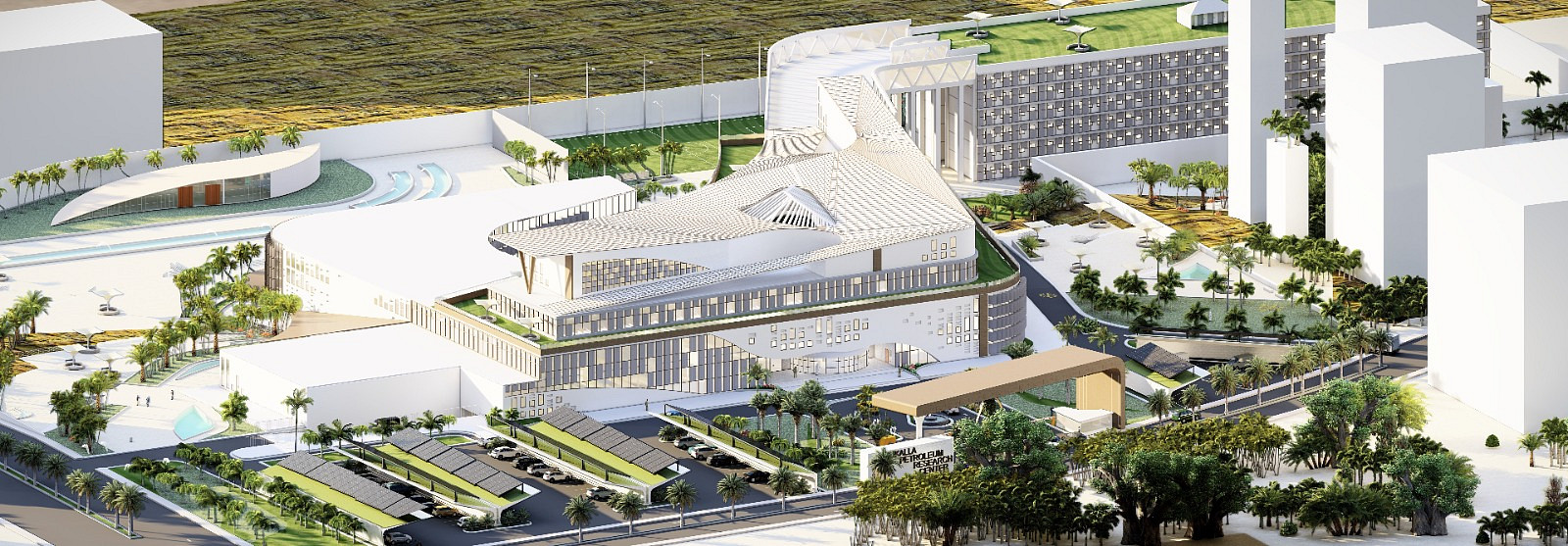
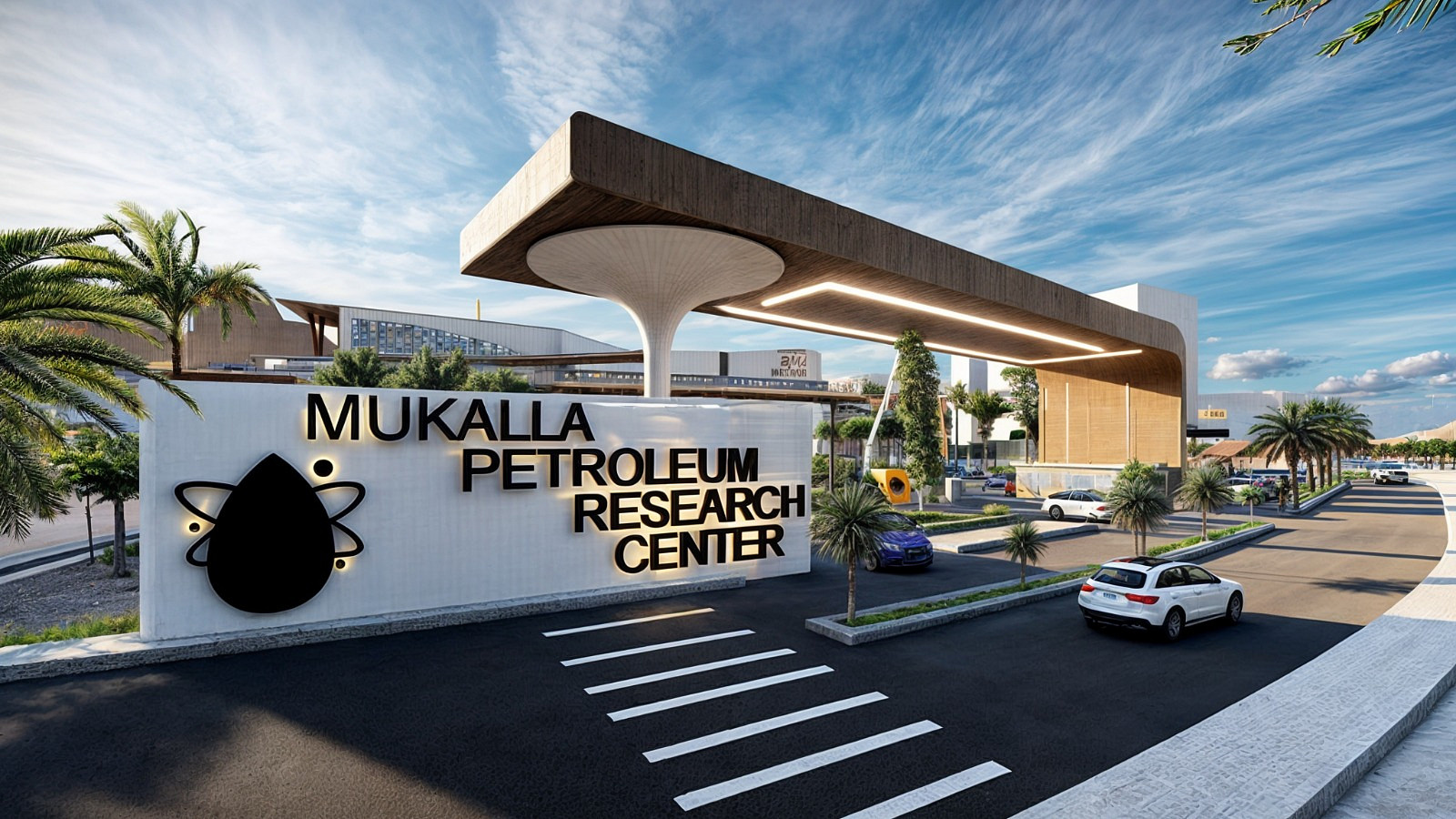
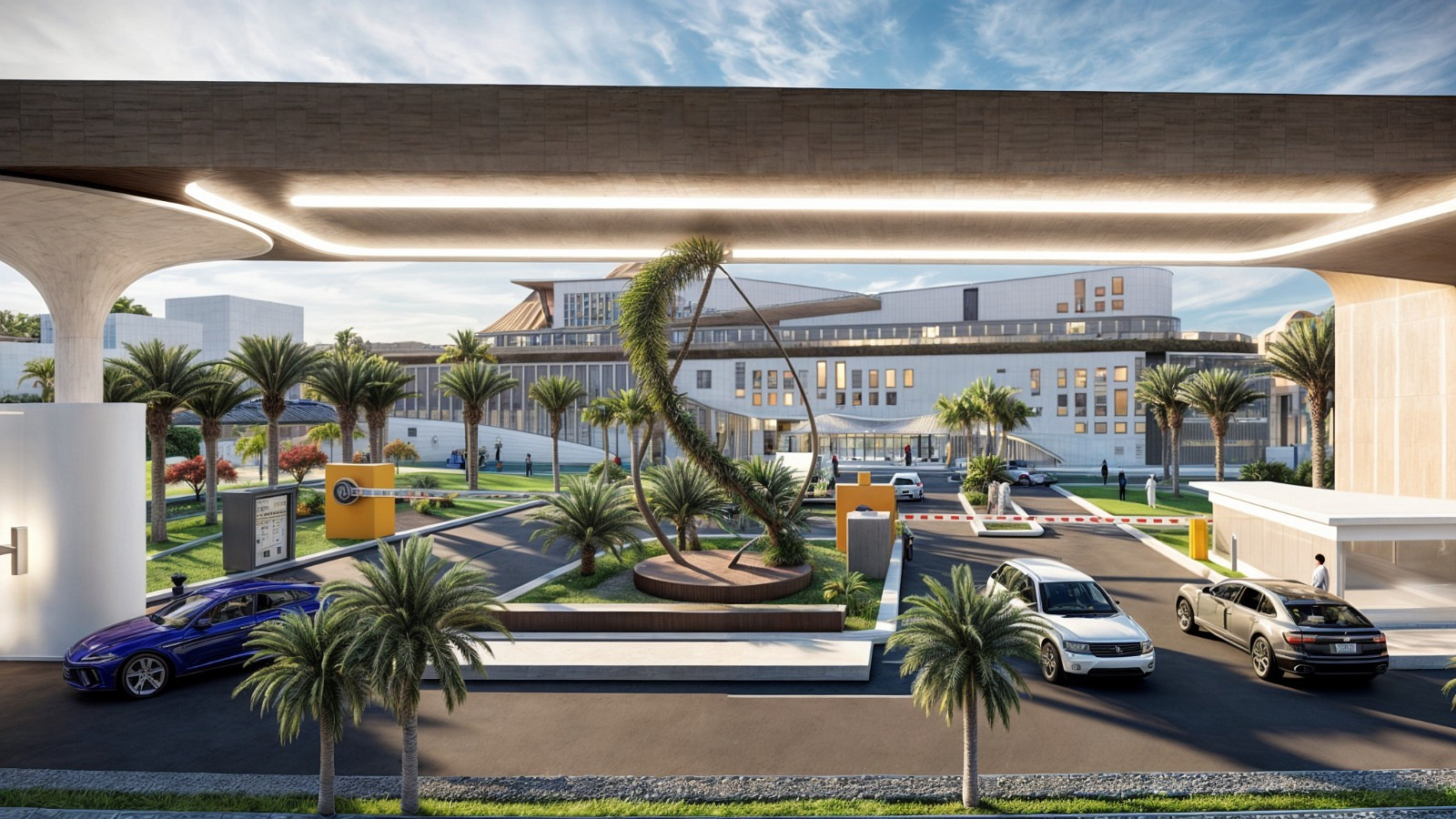
The Petroleum Research & Studies Center is a specialized facility dedicated to petroleum research and studies, designed with a contemporary architectural vision that integrates both function and identity. The overall form of the building is organic and fluid, inspired by nature specifically the bark of a tree reflecting concepts of growth, flow, and continuity. The project is located on a large site of approximately 55,932 square meters in Mukalla, and is carefully planned to include a main building surrounded by landscaped green areas and open spaces, along with a well-organized circulation network that separates visitors, staff, and service entrances. Parking areas are strategically distributed along the site edges to reduce congestion and improve accessibility.
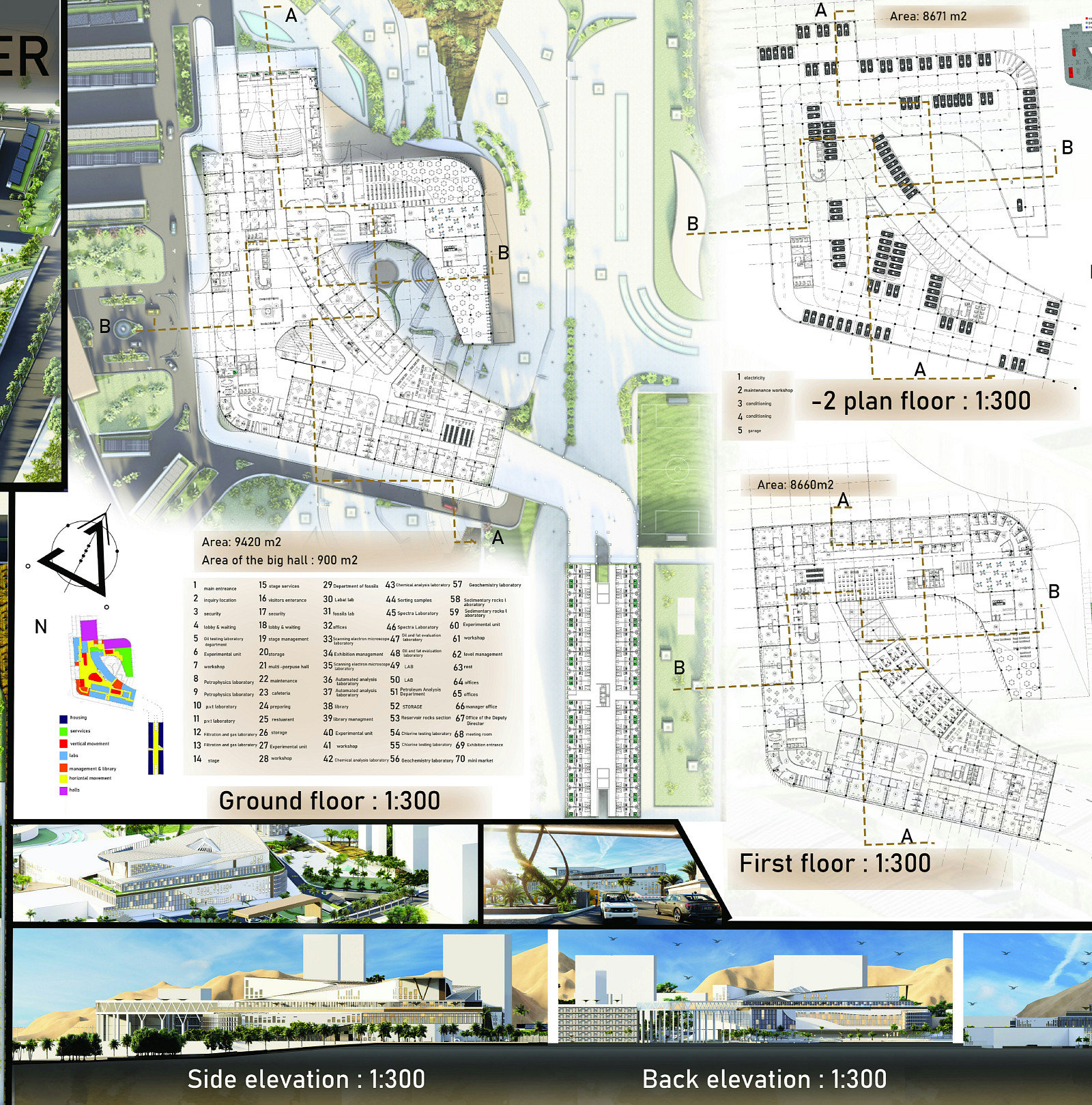
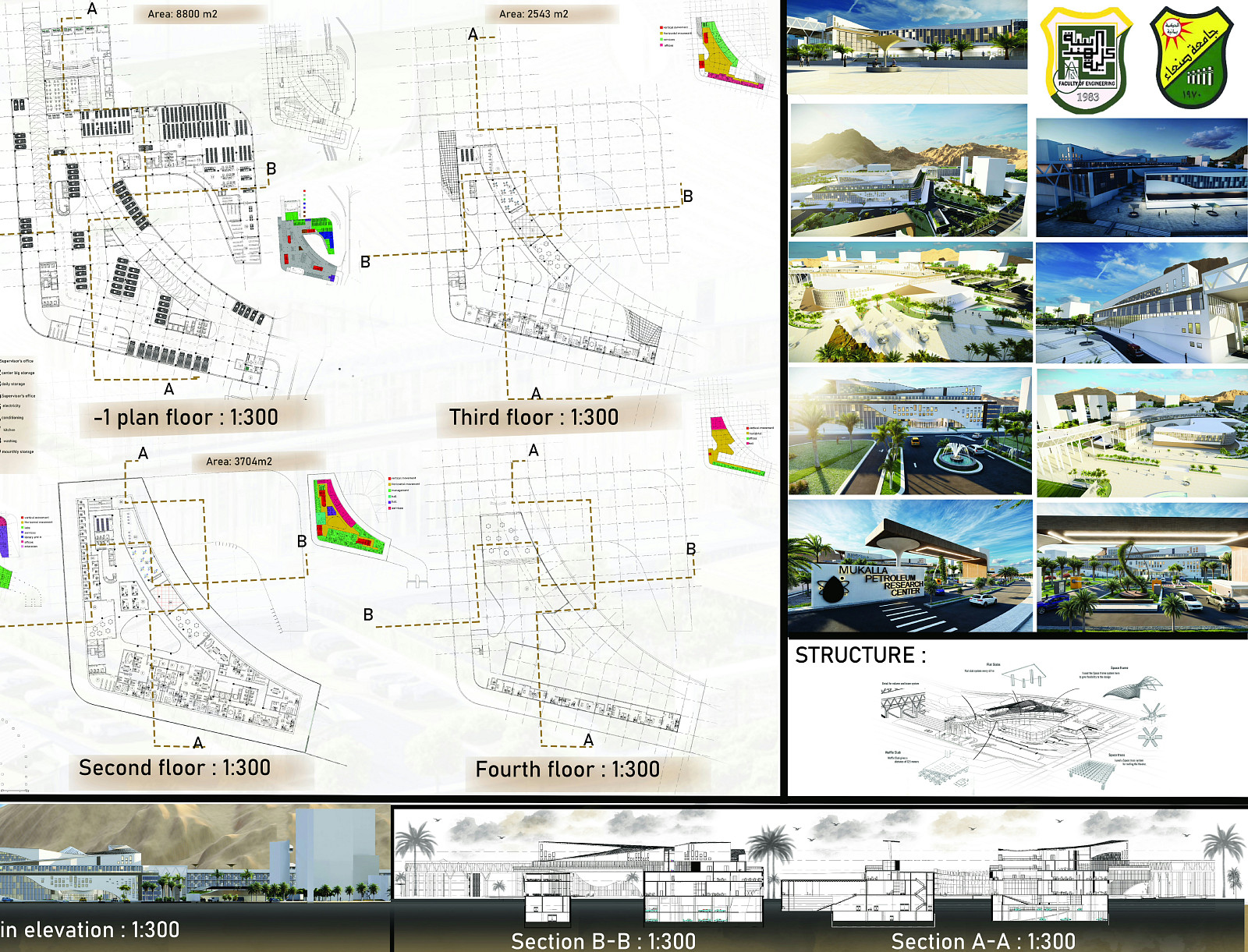
The project consists of multiple levels arranged in a stepped massing configuration. The two basement levels are dedicated to researchers’ parking, in addition to storage areas and maintenance facilities, ensuring a complete separation between service functions and public spaces. The ground floor serves as the main hub of the project, featuring a spacious main lobby that acts as a central distribution point, as well as a large multi-purpose hall of approximately 900 square meters, and interactive exhibition spaces that reflect the identity of the center and provide a welcoming experience for visitors. The upper floors accommodate a range of spaces with increasing levels of privacy, starting from semi-public areas such as training rooms and administrative offices, to more private zones including researchers’ offices and specialized laboratories, creating a clear and efficient functional hierarchy that enhances both work and research environments.
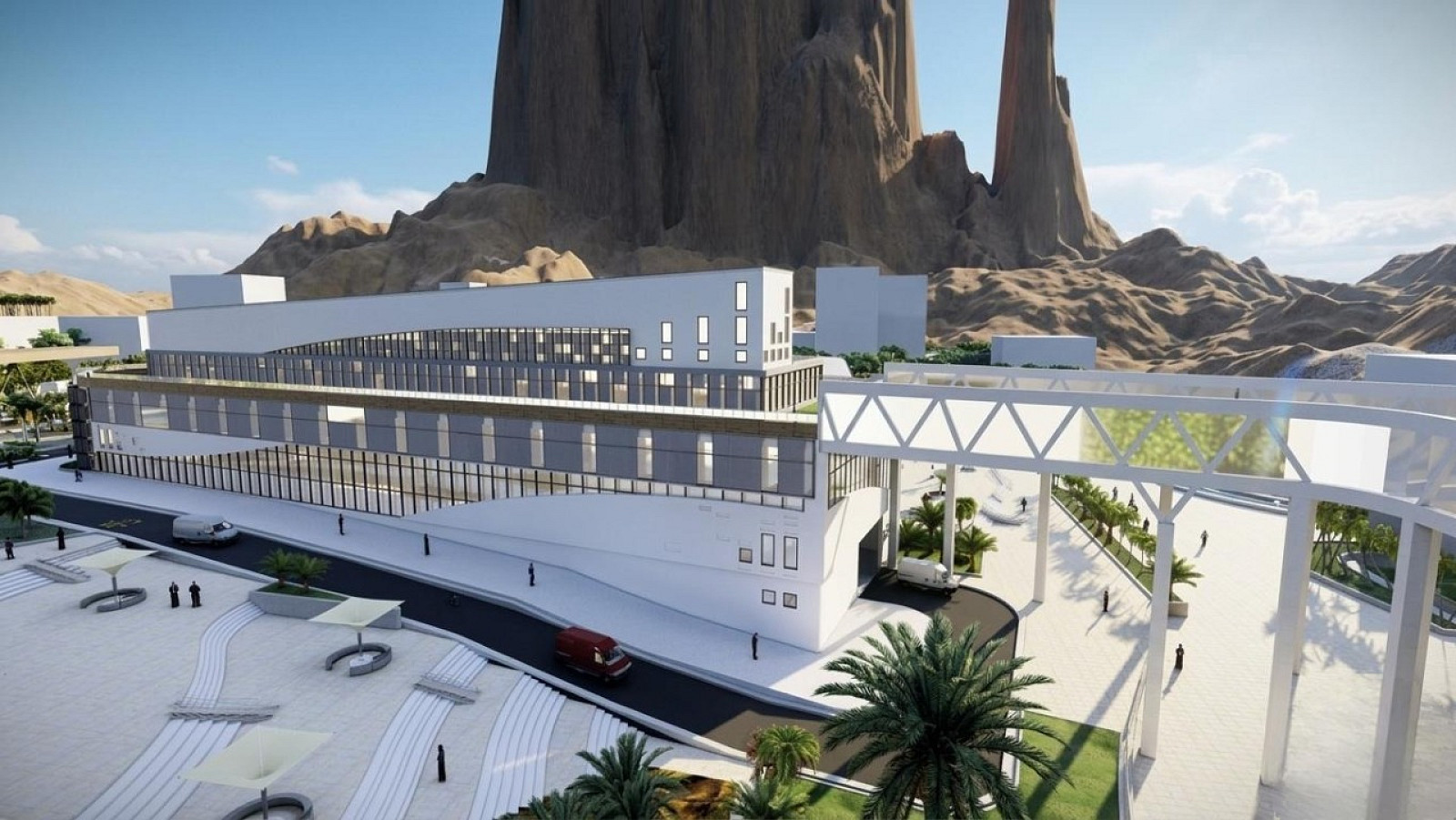
The center includes a comprehensive range of specialized laboratories, including industrial, geological, environmental, sustainable development, and energy labs, making it a fully integrated platform for studying various aspects of the petroleum and energy sectors. The design emphasizes smooth and non-linear circulation paths that enhance the user experience, supported by clearly defined vertical cores that efficiently connect all levels. The architectural façades reflect a balance between solid masses and transparent glass elements, allowing natural light to penetrate the interior while strengthening the visual connection with the surrounding environment.
Overall, the project represents a modern architectural model for research centers, combining innovative design with functional efficiency, and embodying sustainability through nature-inspired concepts, ultimately expressing the idea that energy originates from nature and transforms into knowledge and innovation within this center.
Technical information
The Petroleum Research and Studies Center in Mukalla, Yemen is a large scale institutional development with a total site area of approximately 55,932 square meters. It is designed as an integrated facility that brings together research, administrative, and support functions within a unified architectural composition. The building extends over two basement levels, a ground floor, and several upper floors, each planned to meet specific operational needs.
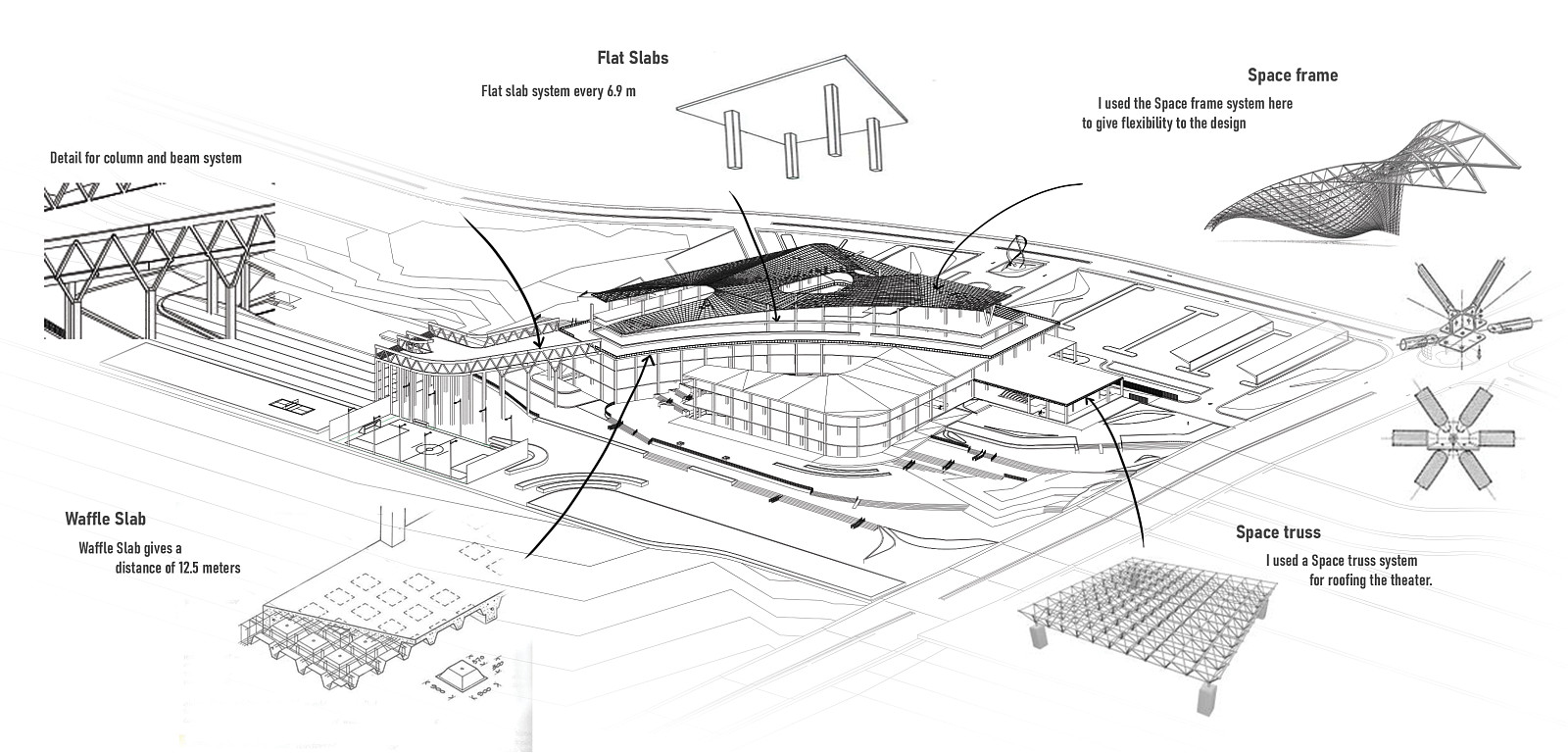
The structural system is primarily based on a reinforced concrete frame arranged on a regular grid, providing both stability and flexibility while supporting the building’s organic and interconnected form. Different structural solutions are applied throughout the project according to functional requirements.
The upper floors utilize a flat slab system with a span of approximately 6.9 meters, allowing for open layouts, ease of services integration, and faster construction. At the top level, a space frame system is used to create a lightweight roof capable of covering large spans without internal supports, offering greater freedom in architectural expression.
Large halls and public spaces are covered using a space truss system, which enables wide column free areas suitable for auditoriums and multipurpose functions. In some halls, a waffle slab system is applied to enhance structural efficiency, reduce material use, and improve vibration performance while adding visual depth to the ceiling.
The bridge connecting the research center with the residential zone incorporates a refined column detail system that ensures smooth load transfer while maintaining a light and elegant structural appearance.
Overall, the Petroleum Research and Studies Center achieves a balanced integration of structural efficiency, functional flexibility, and architectural identity through the use of multiple coordinated structural systems.

Copyright © 2026 INSPIRELI | All rights reserved. Use of this website signifies your agreement to the Terms of Use, Privacy Policy, and use of cookies.