Re-Weaving: A memory of longing traces


Project idea
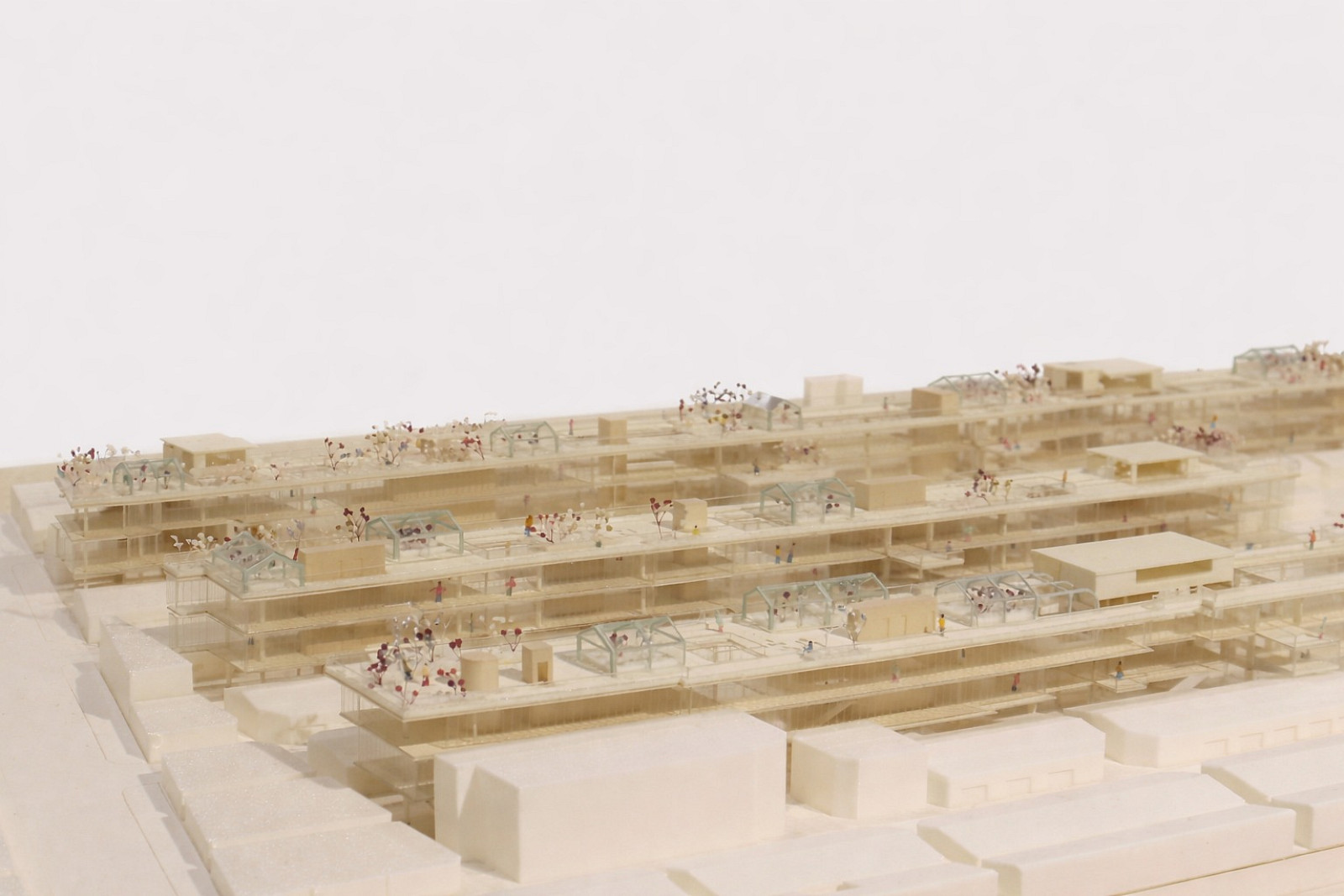
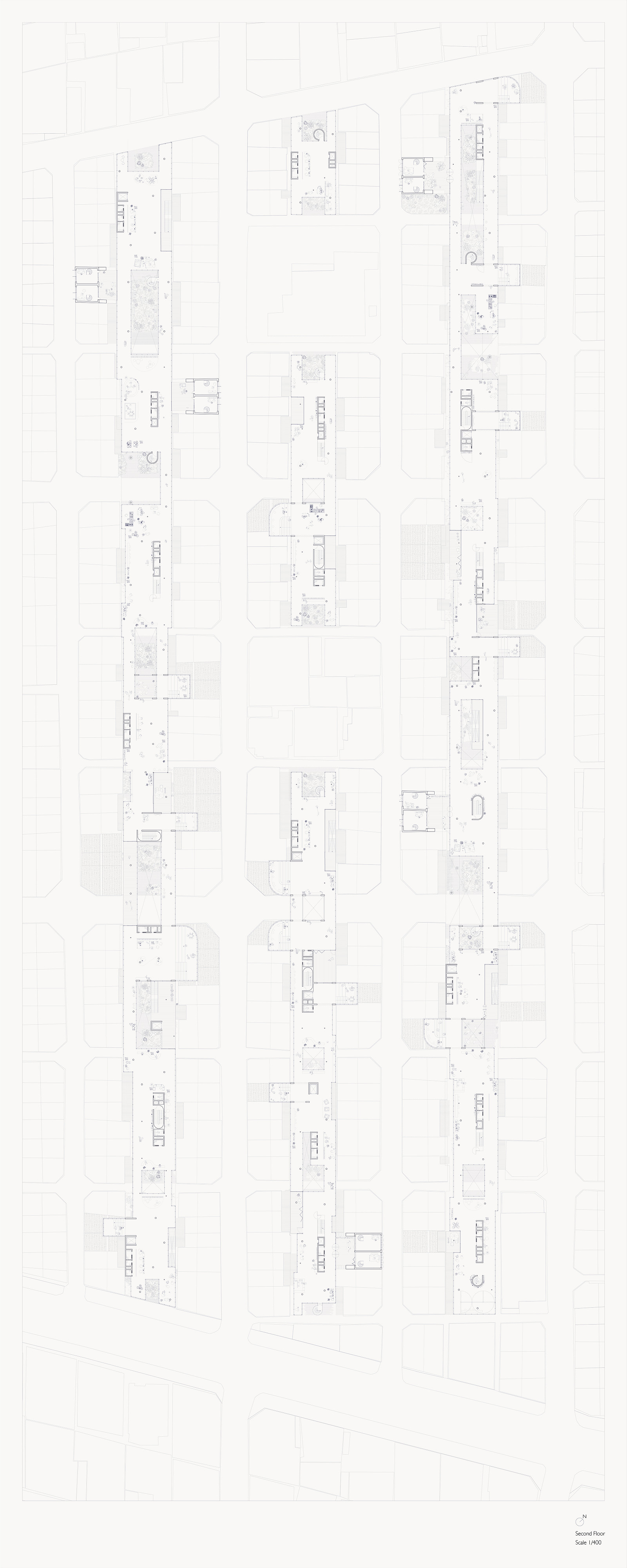
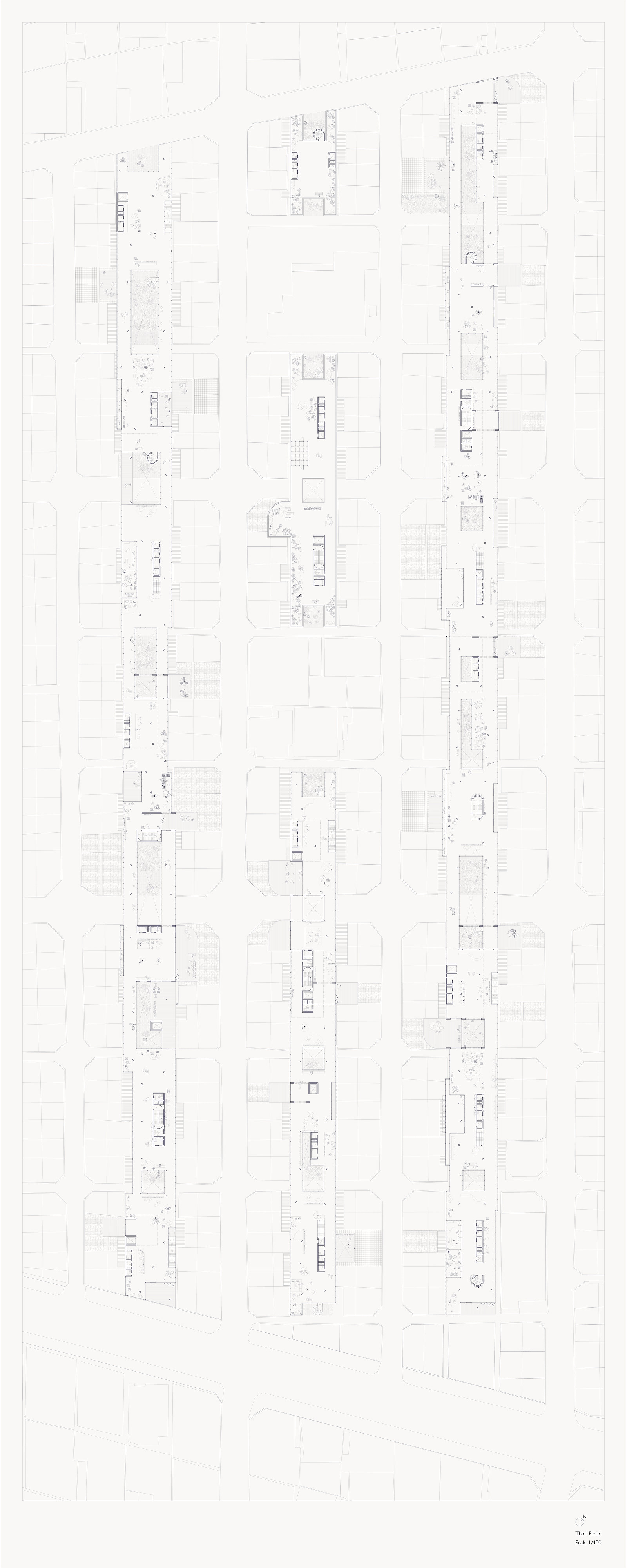
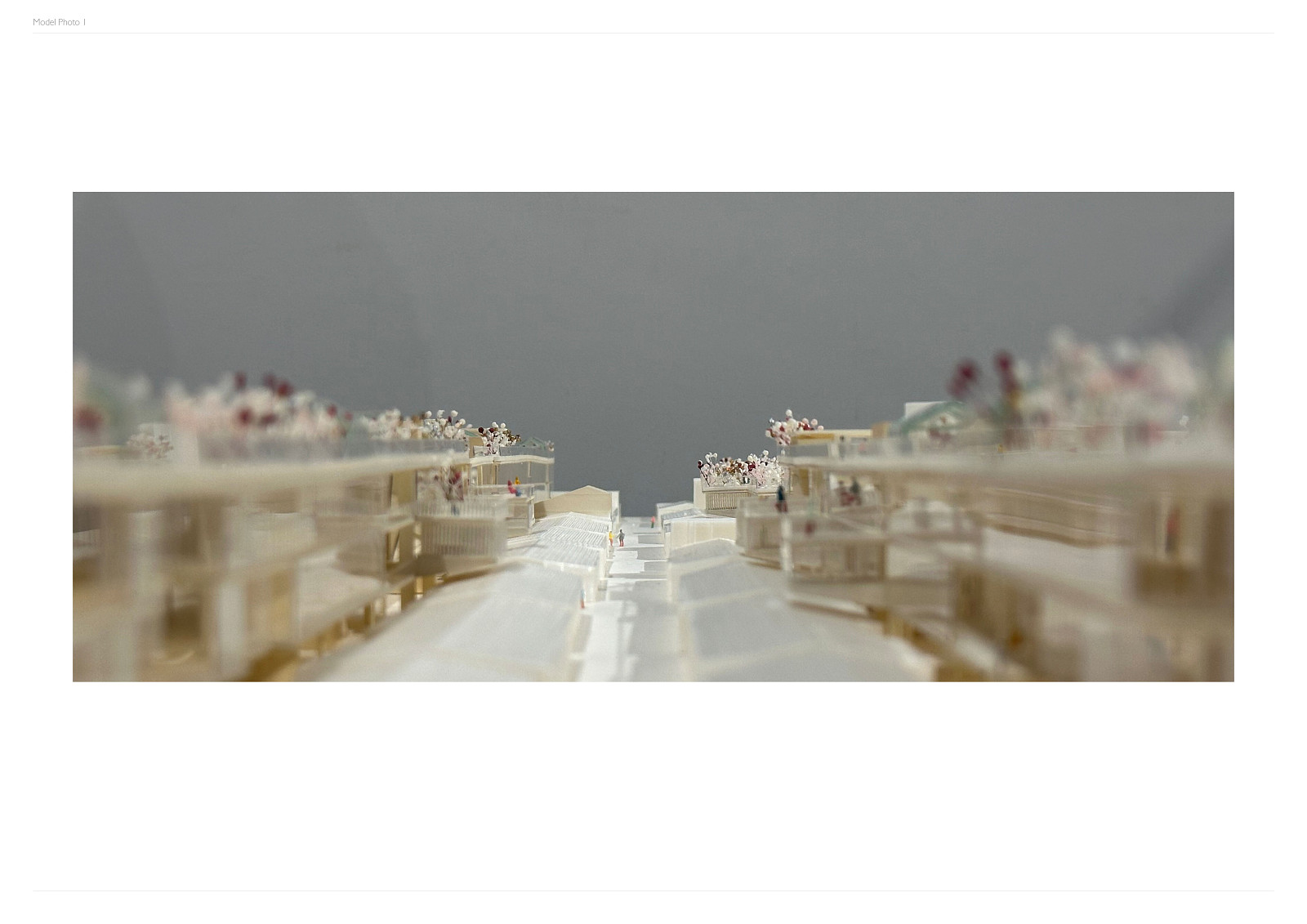
The project proposes a new type of public space—soft non-places—inserted above existing industrial districts. Instead of replacing industry, a lightweight, elevated structure introduces a second ground where anonymous, unprogrammed public life can unfold. By separating production below and public presence above, the project allows coexistence without conflict, creating a porous environment where people can move, linger, and connect without fixed roles or expectations.
Project description
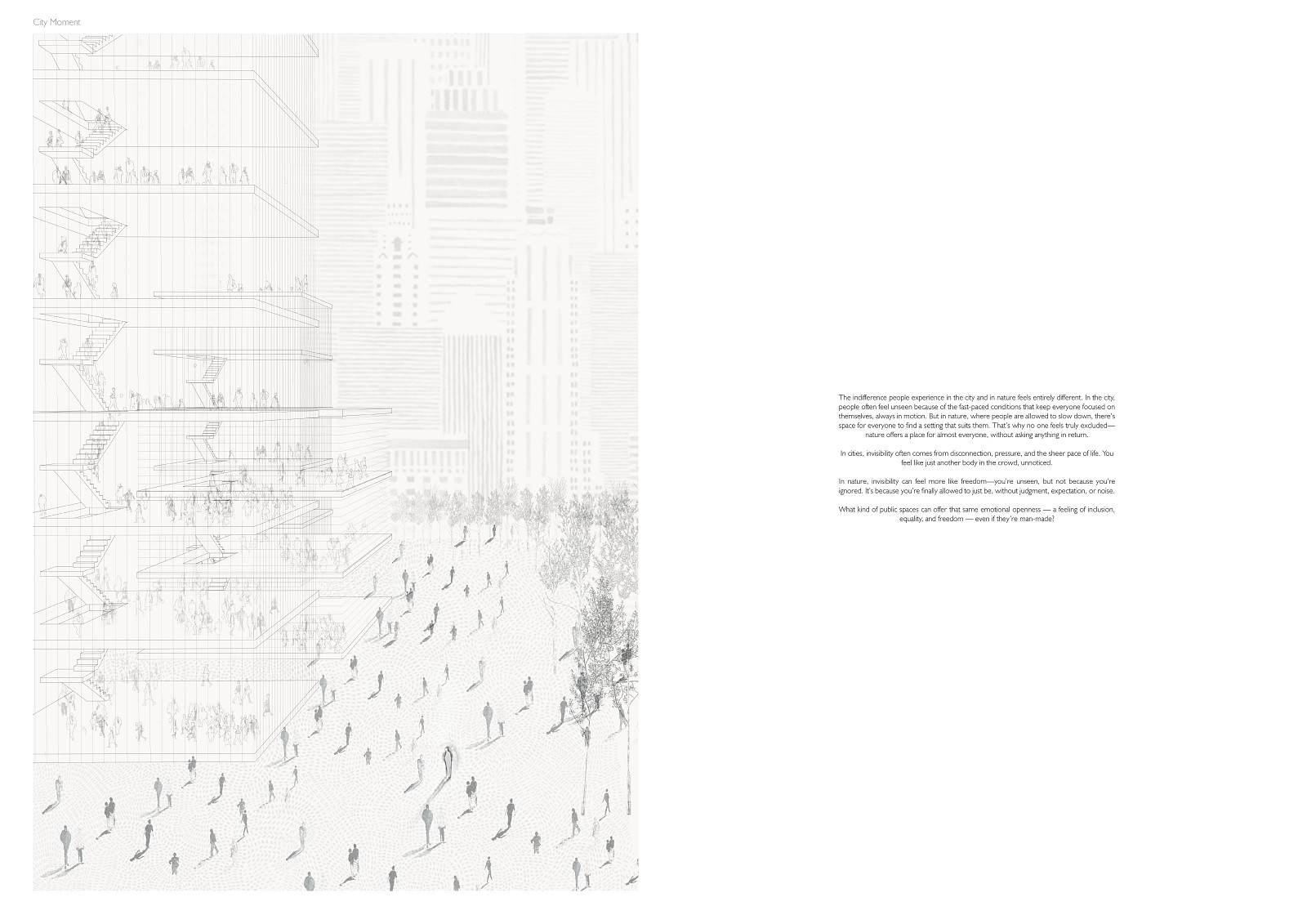
My project explores how non-places—often defined as anonymous and transient—can be reinterpreted as soft public spaces where anonymity and individuality coexist. Rather than spaces of disconnection, these environments allow people to be present together without obligation, performance, or fixed identity.
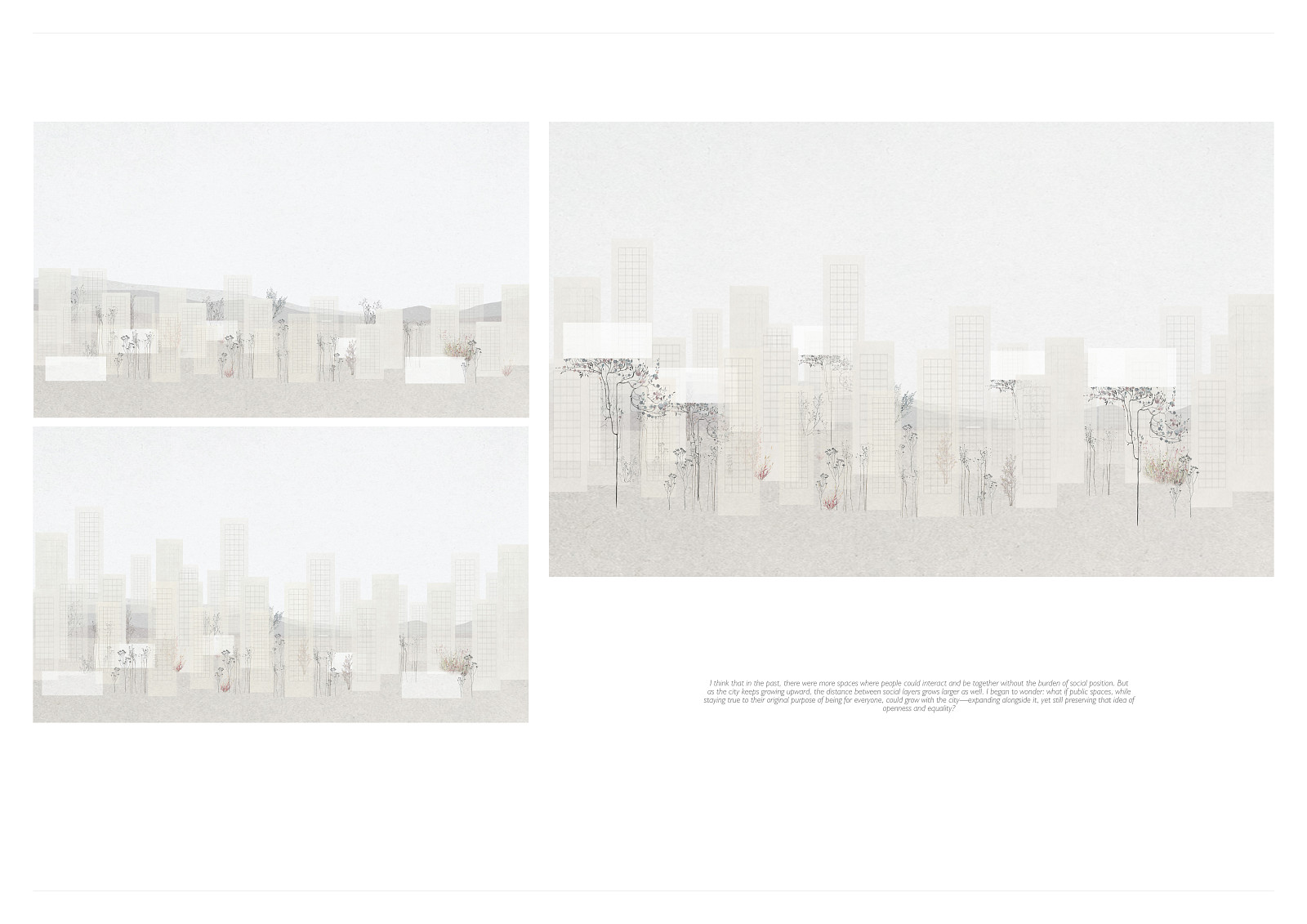
As cities expand, many public spaces become increasingly functional and programmed, losing their capacity to support informal, everyday presence. This raises a key question: how can public space evolve without becoming overwhelming or exclusionary?
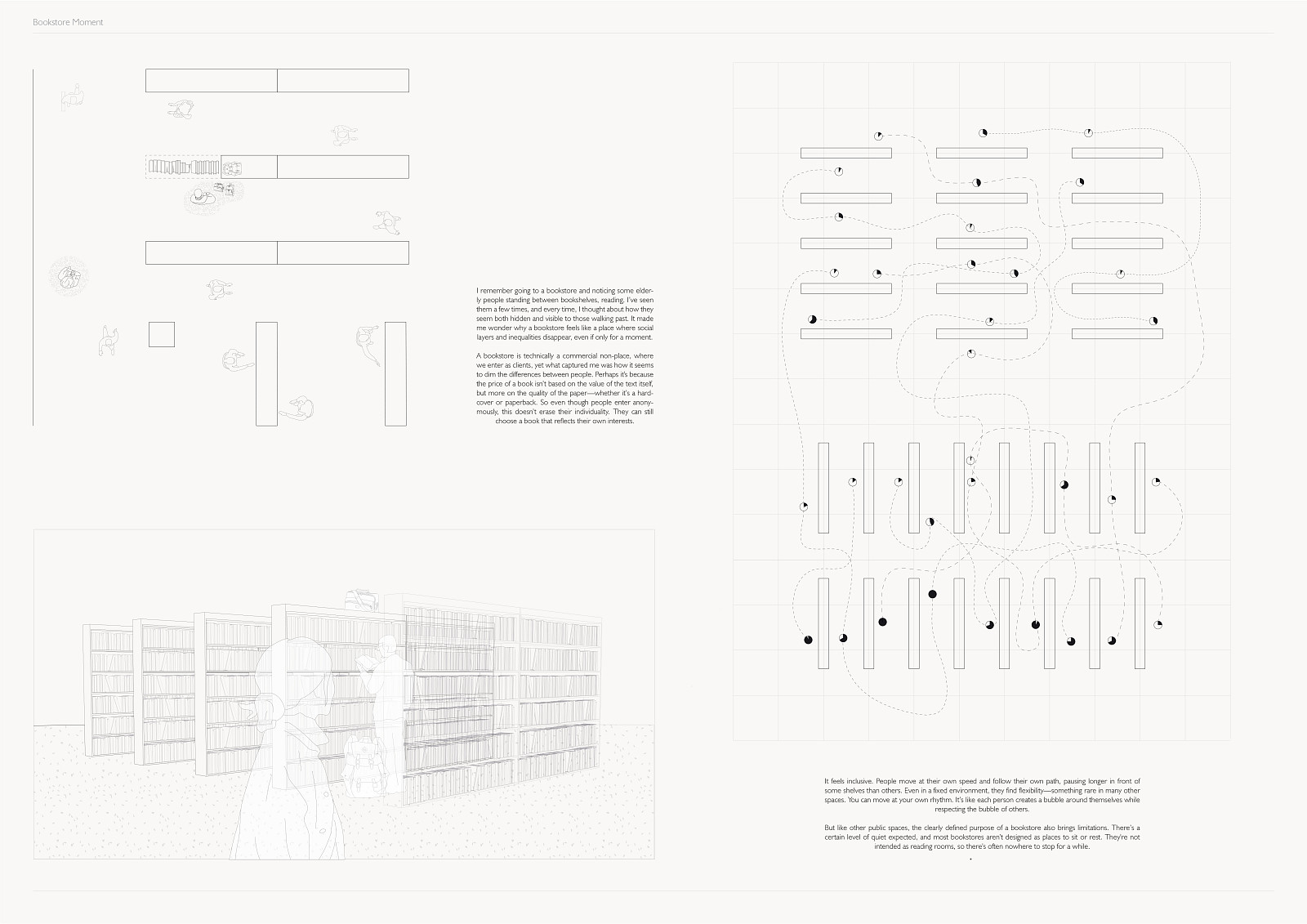
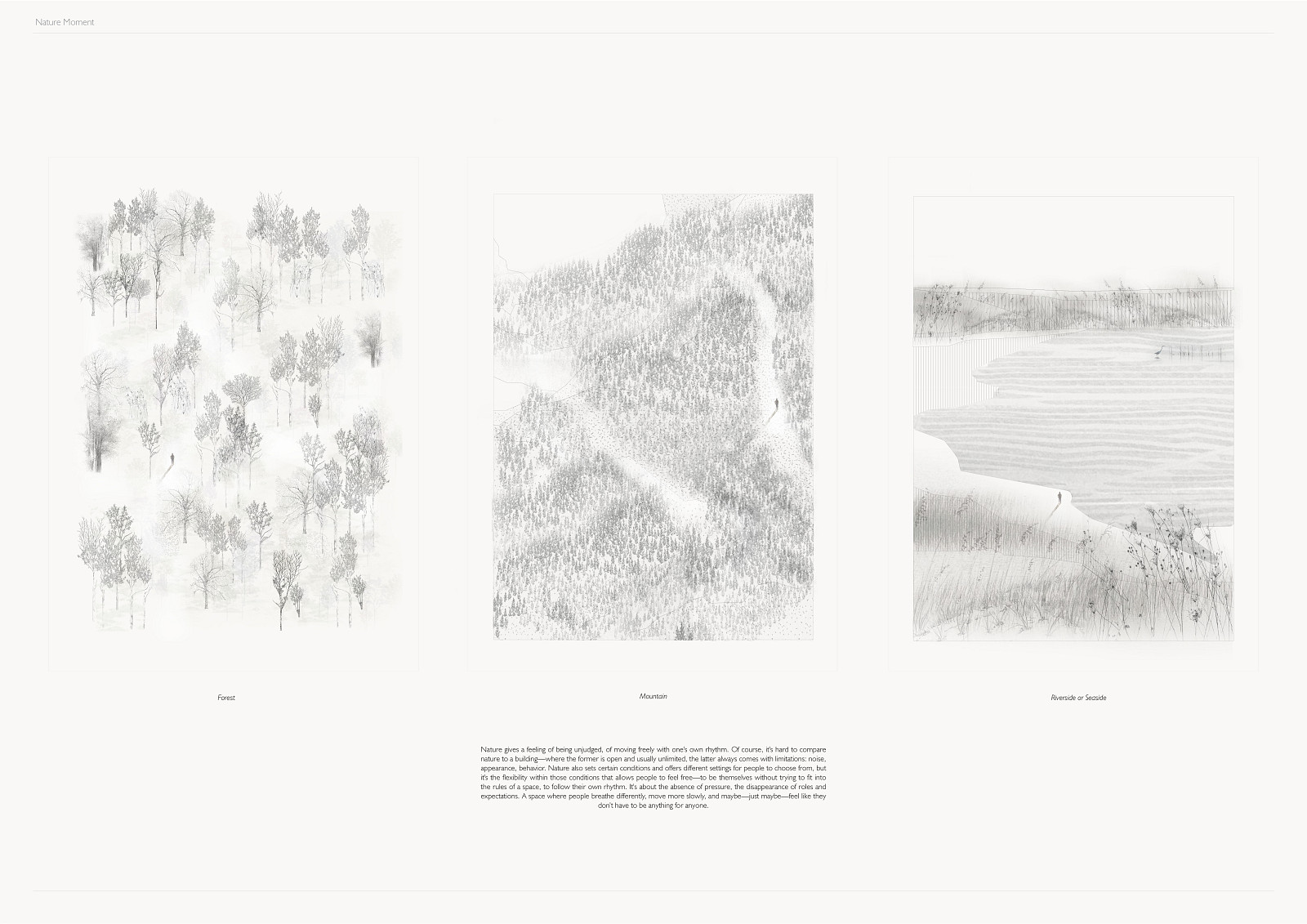
I found a spatial parallel in bookstores and natural environments. In both, people move at their own rhythm, guided by conditions rather than instructions. These spaces offer a gentle form of anonymity—where one can belong without needing to participate.
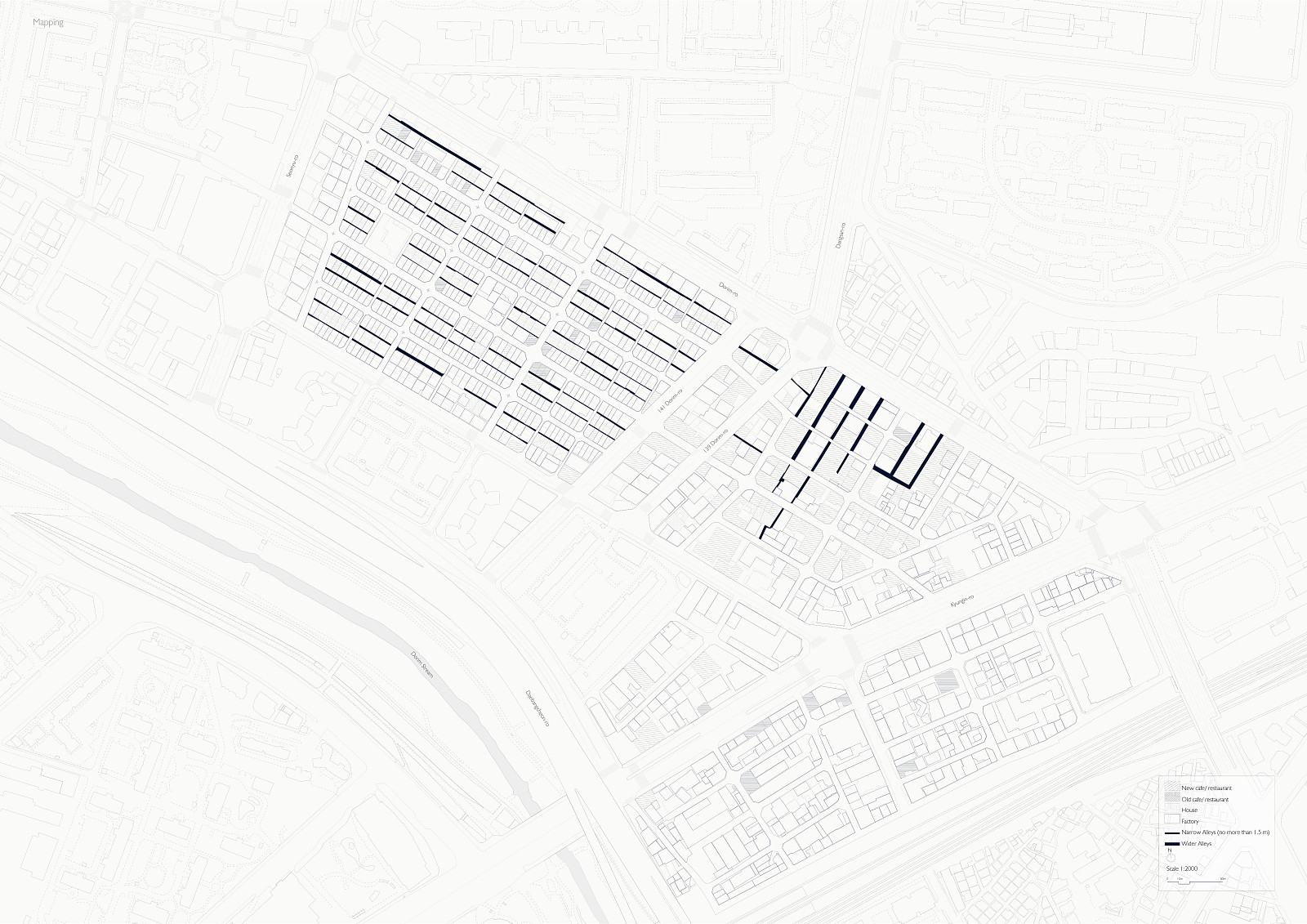
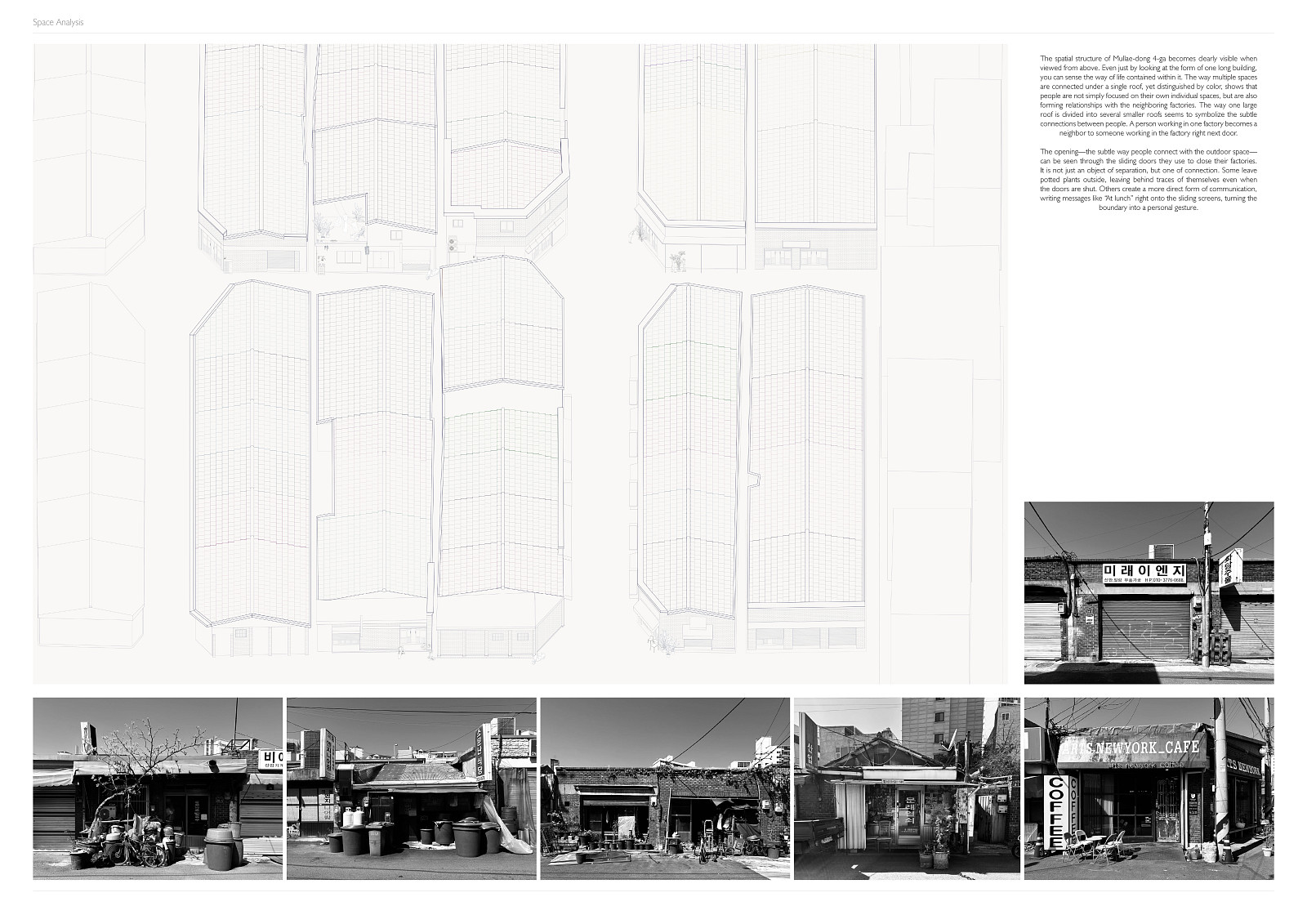
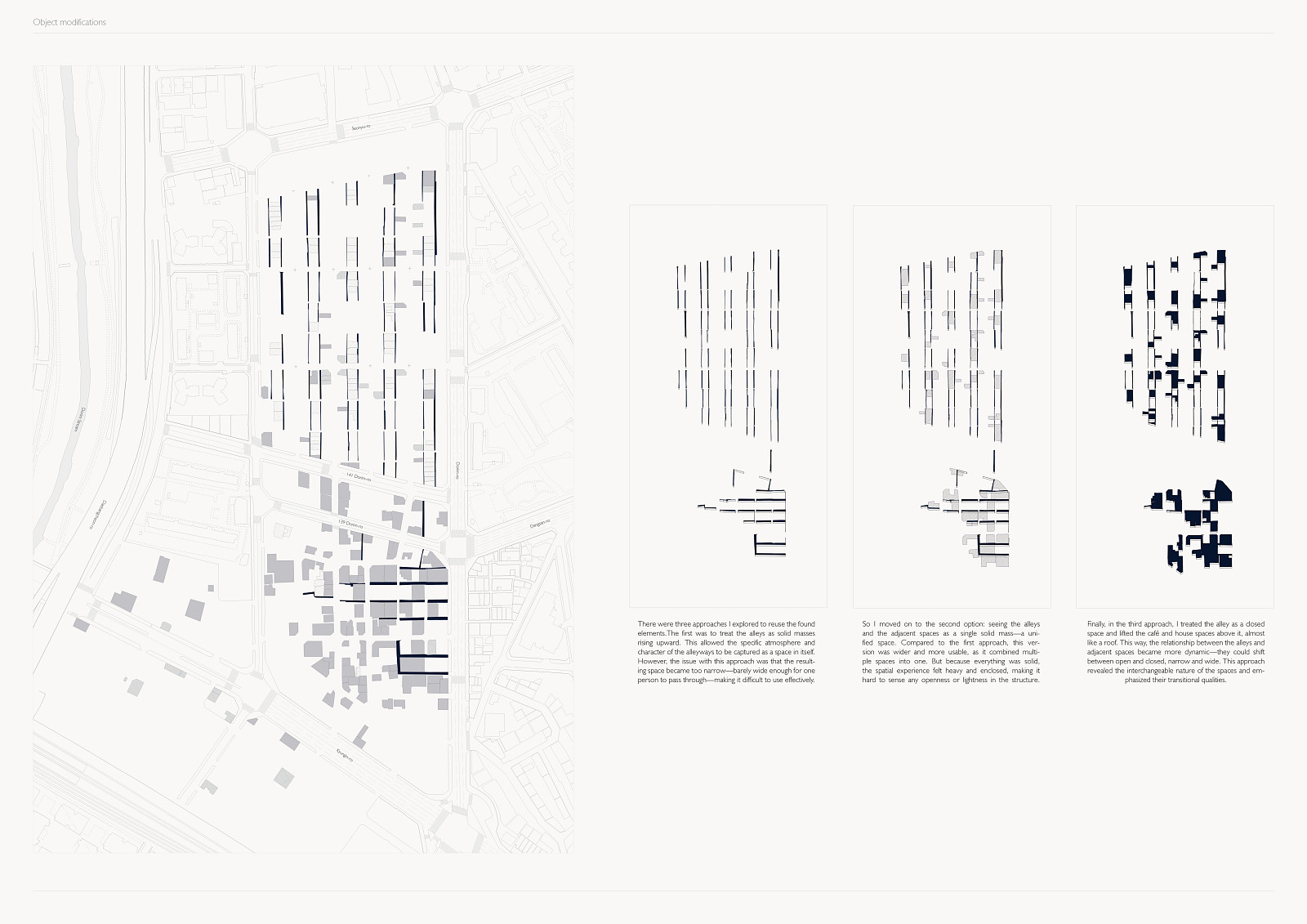
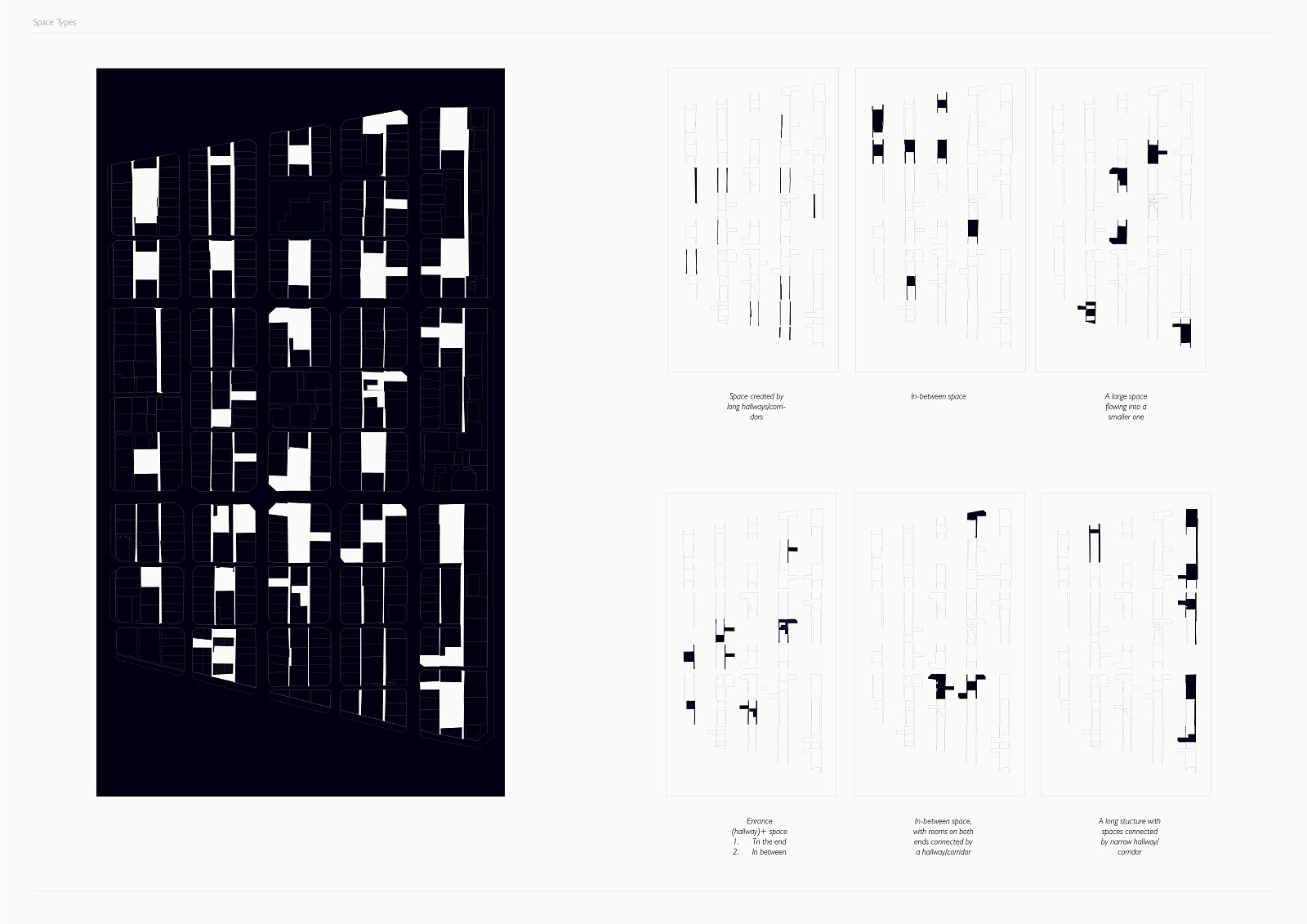
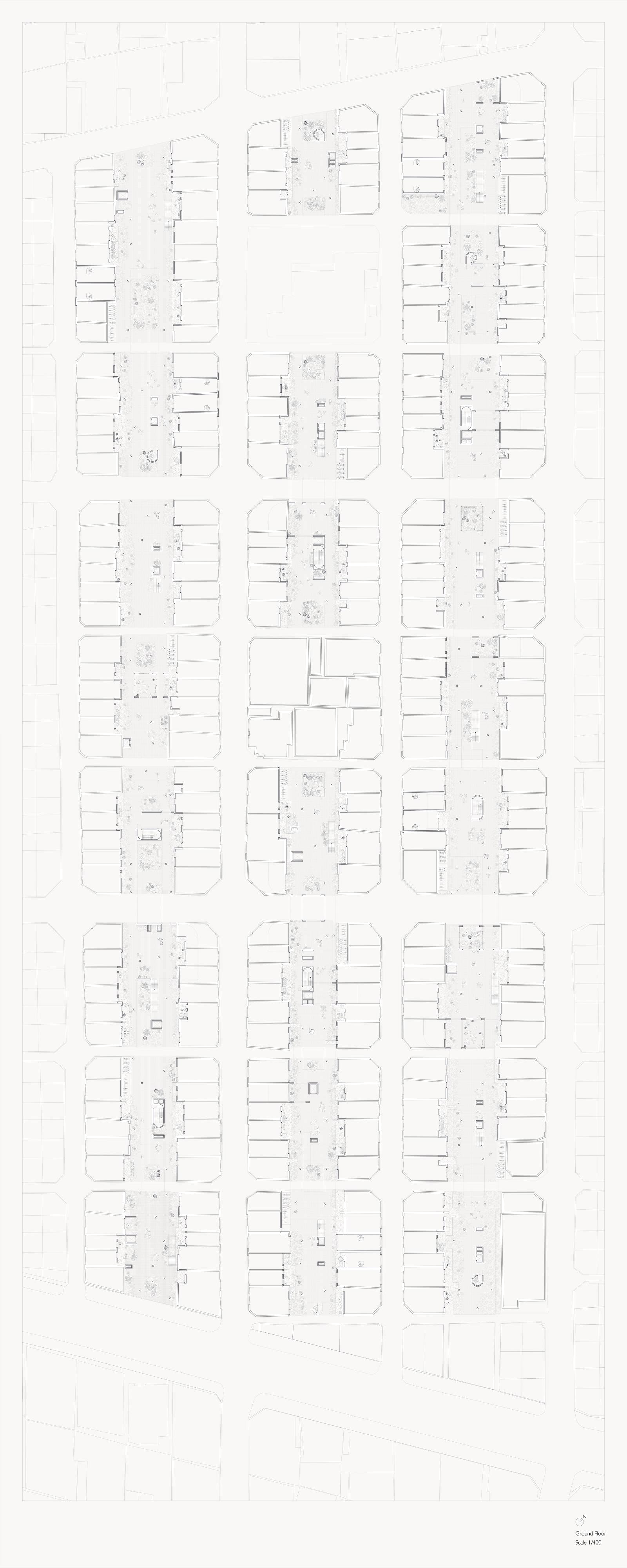
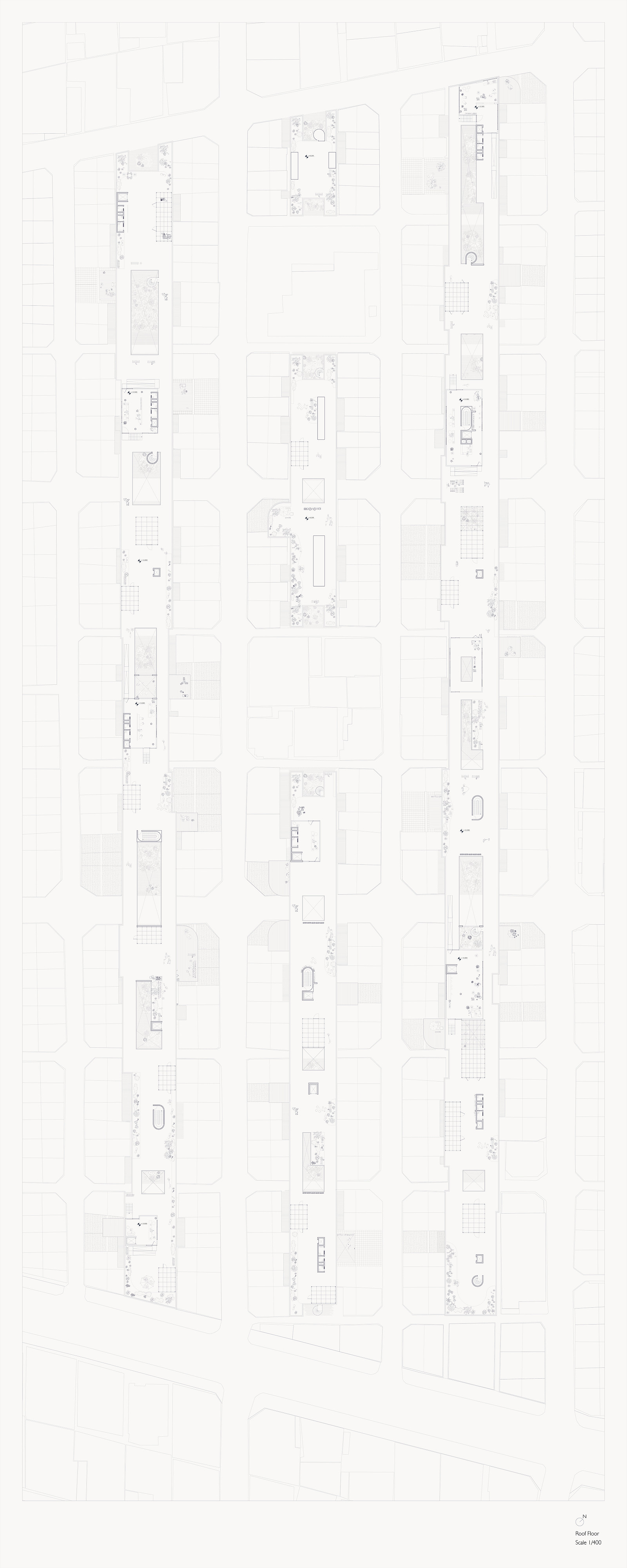
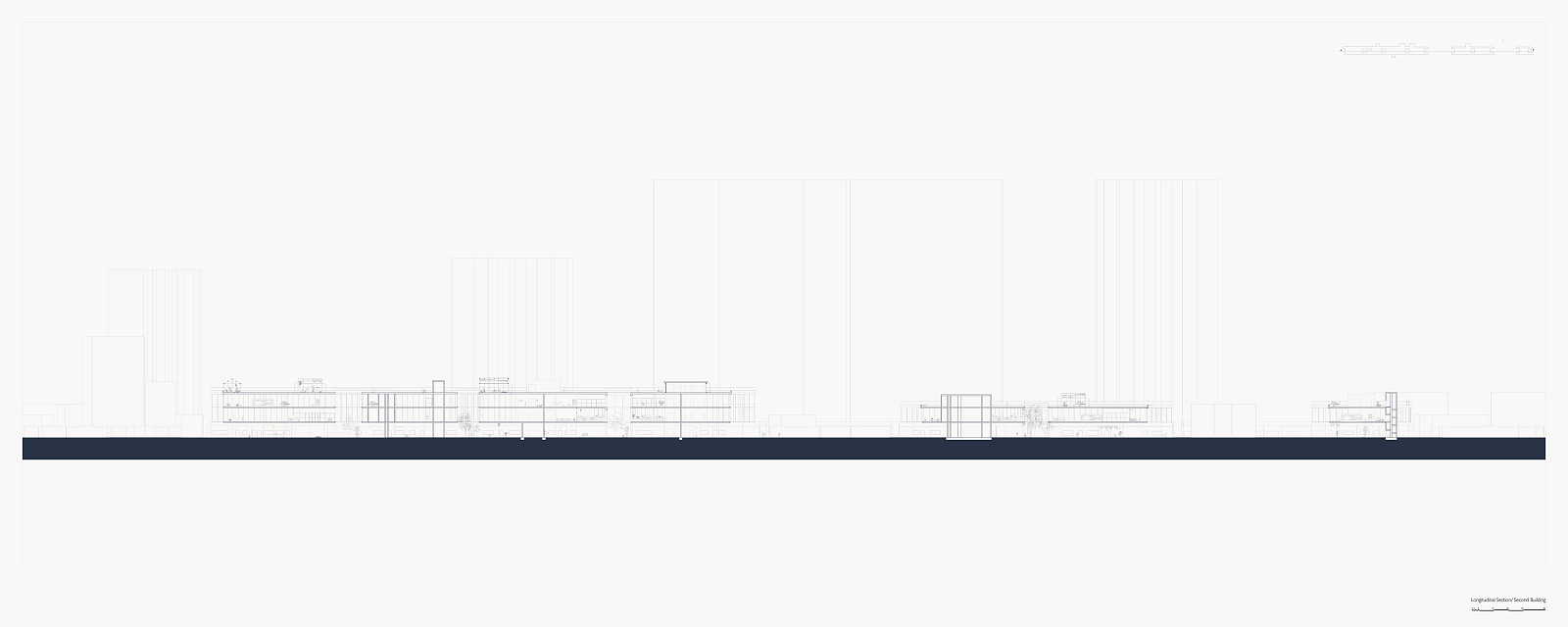
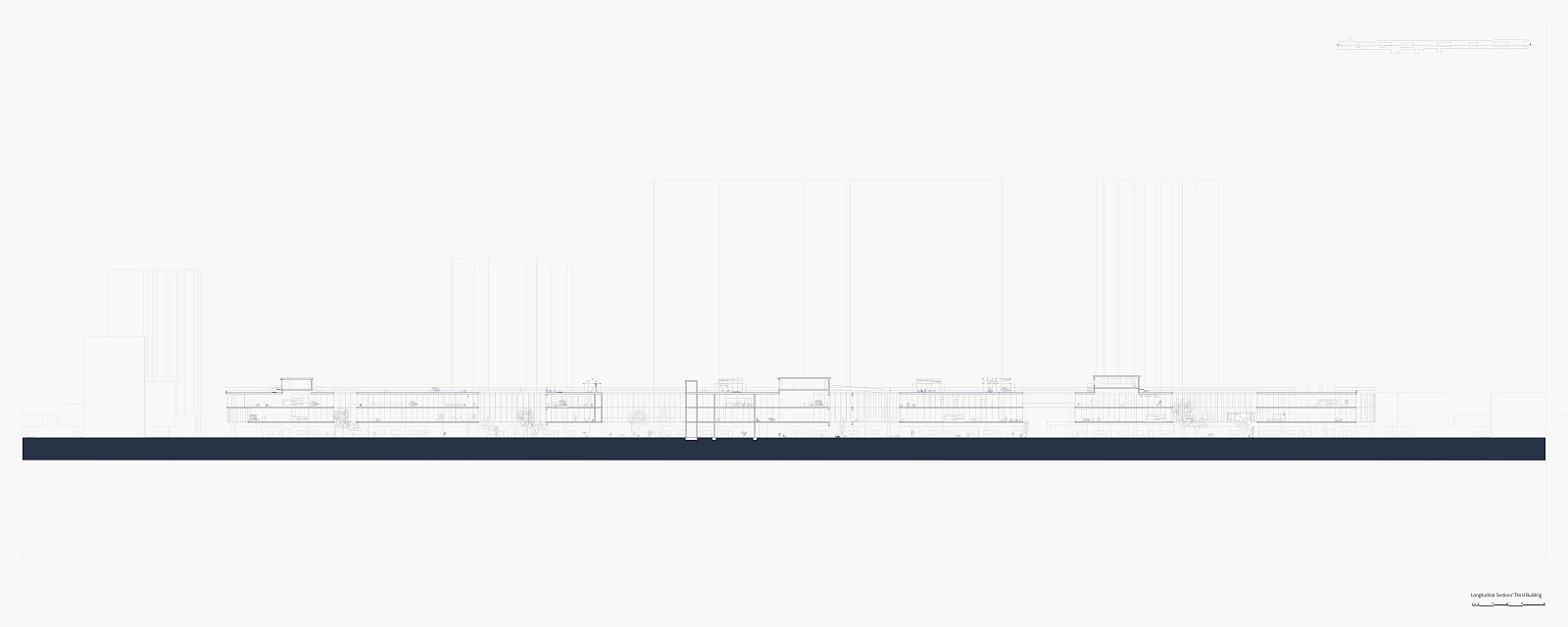
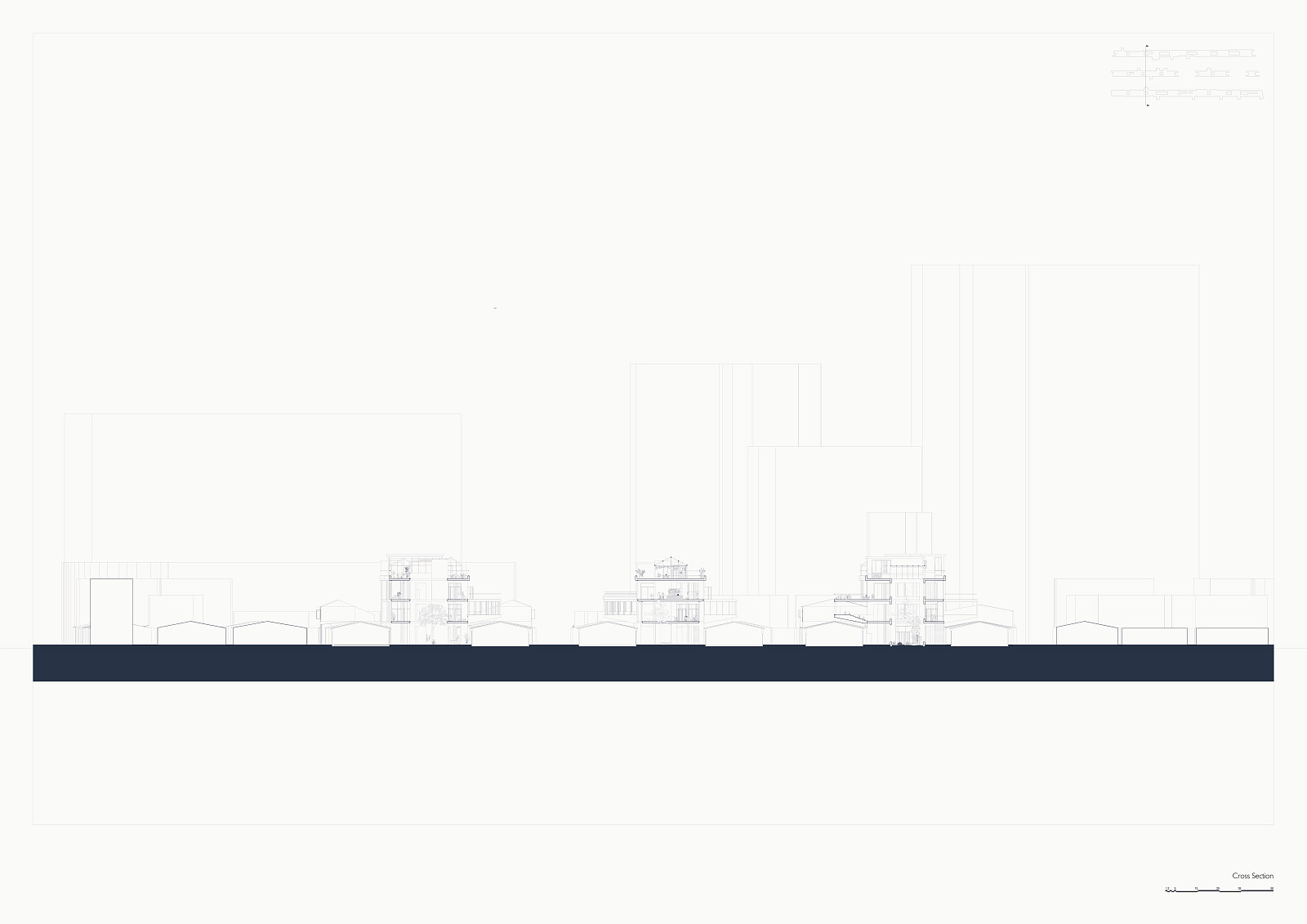
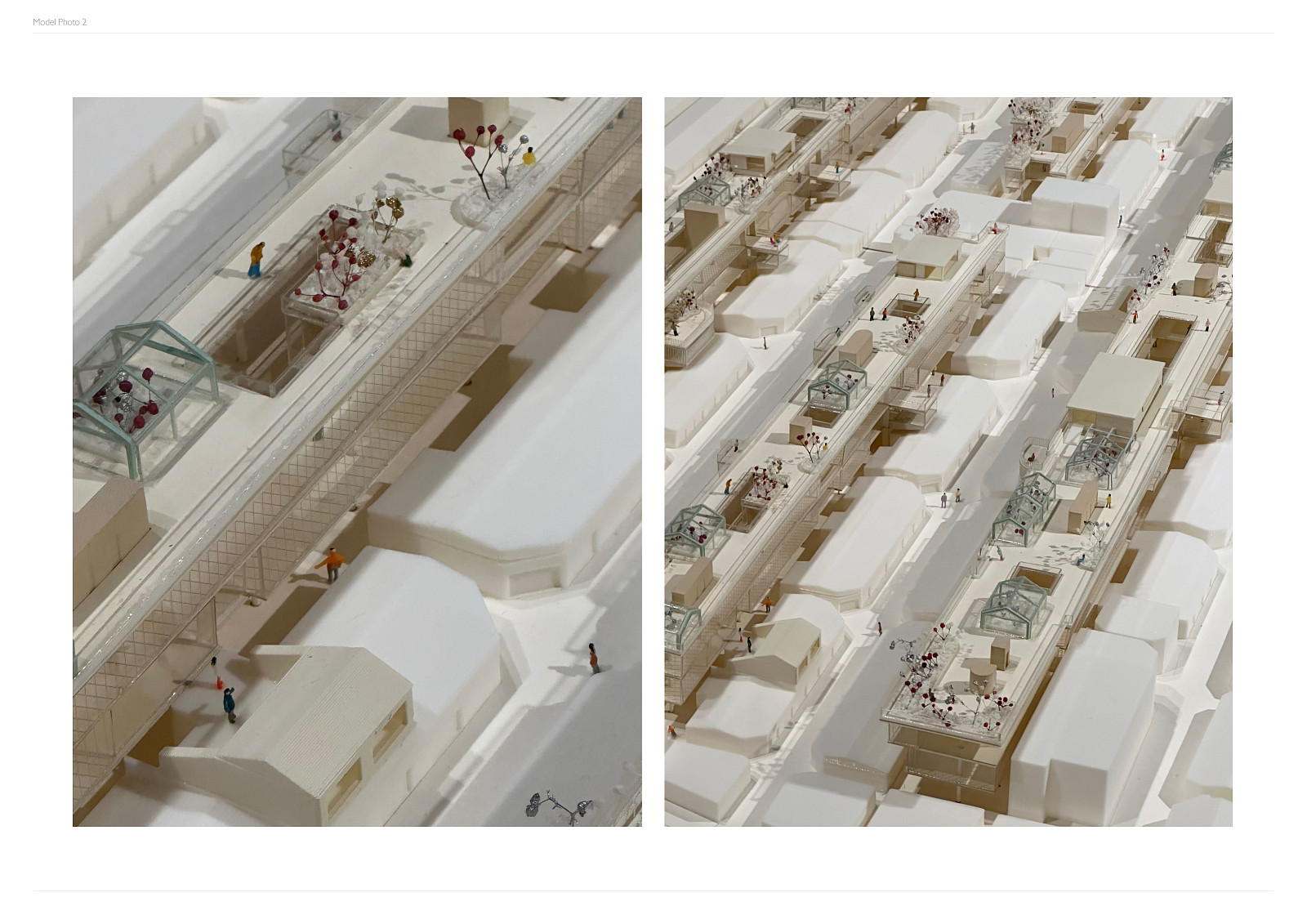
The project applies this idea to Mullae-dong 4-ga, an industrial area in Seoul that still retains its original structure of long buildings subdivided into small units, connected by narrow alleys and shared working spaces. This existing condition already contains a layered spatial logic: corridors, workspaces, and informal shared zones. However, the central parts of these blocks are extremely dense, poorly lit, and difficult to open to the public without disrupting industrial activity. Instead of inserting public space at ground level, the project proposes to lift it above. The intervention removes portions of the dense interior and introduces a new structural layer that spans across multiple plots. This creates a shared framework rather than isolated developments. Industry remains on the ground, while a new public realm emerges above it.
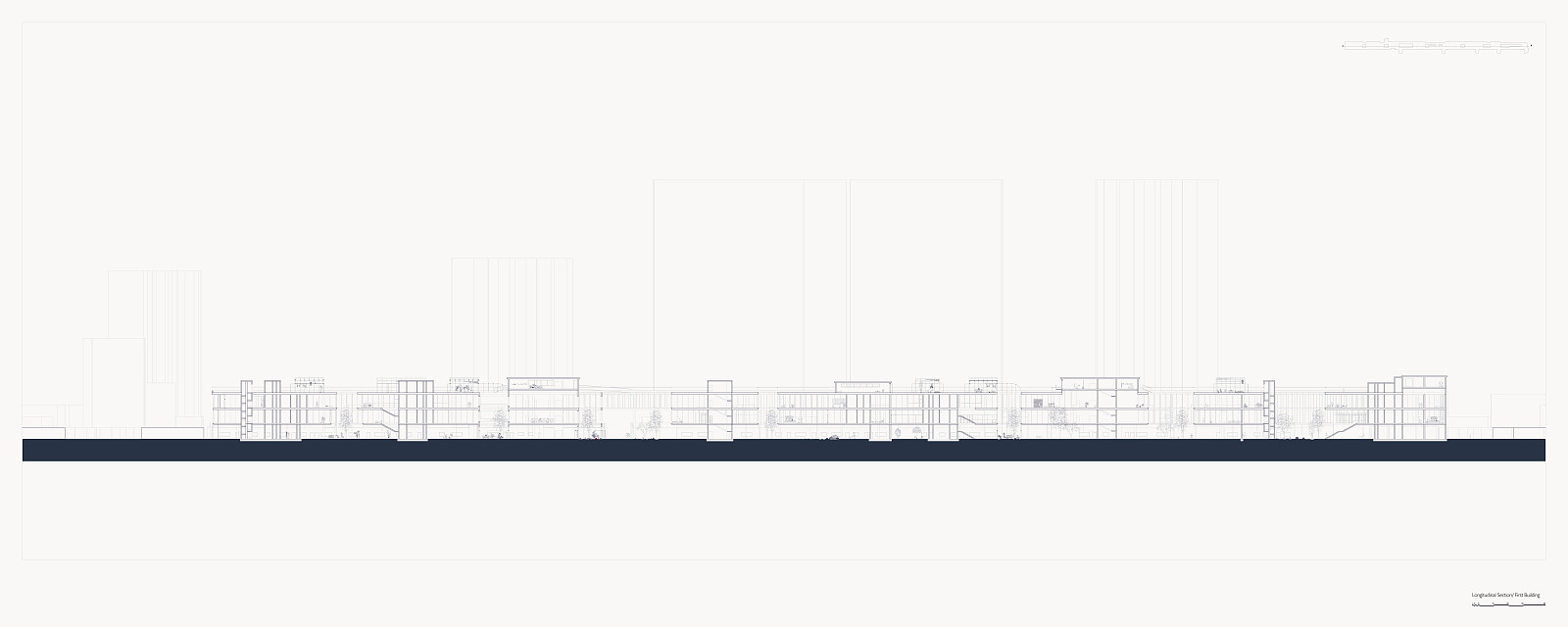
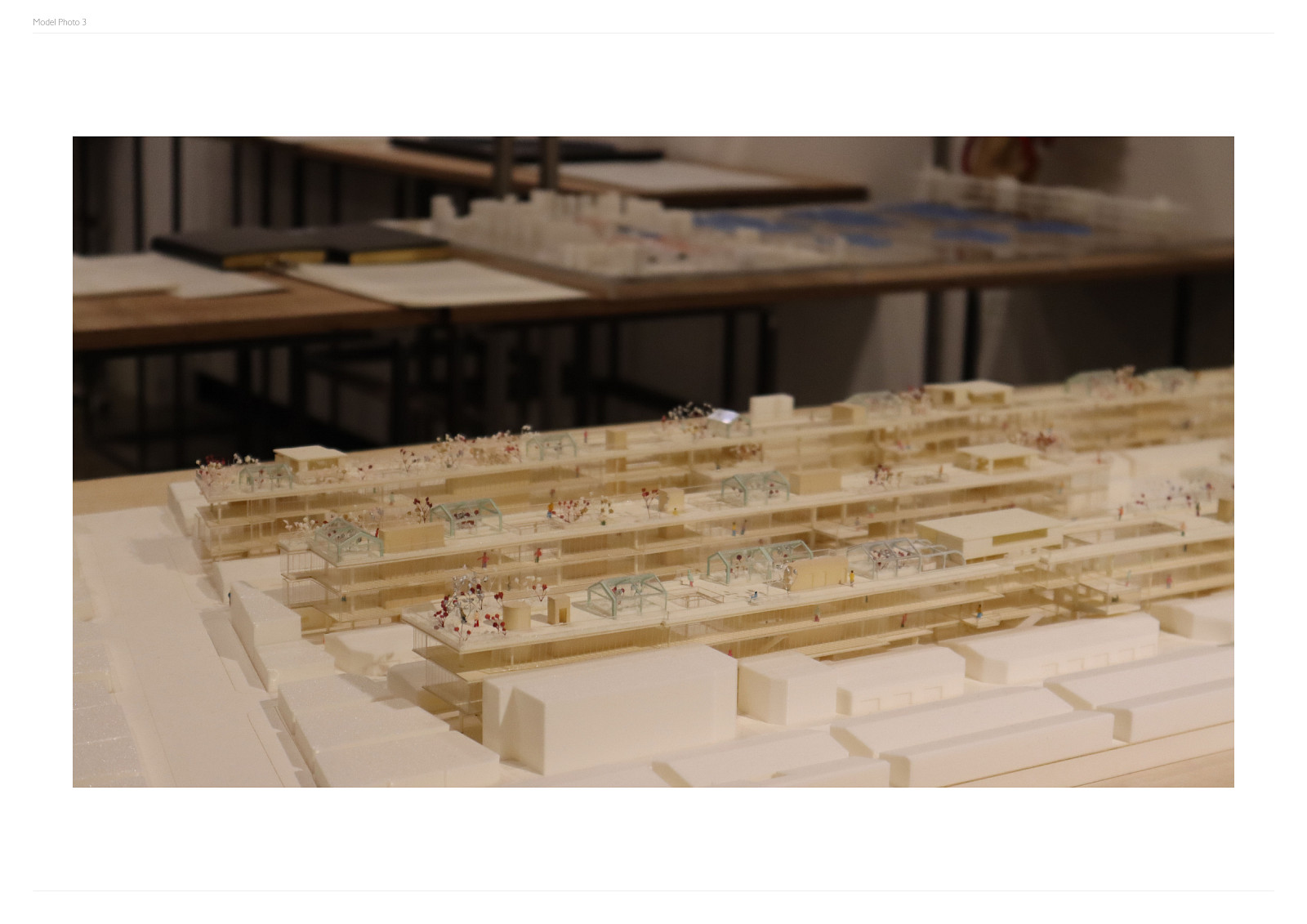
The project is organized in section:
- The ground level remains industrial and productive
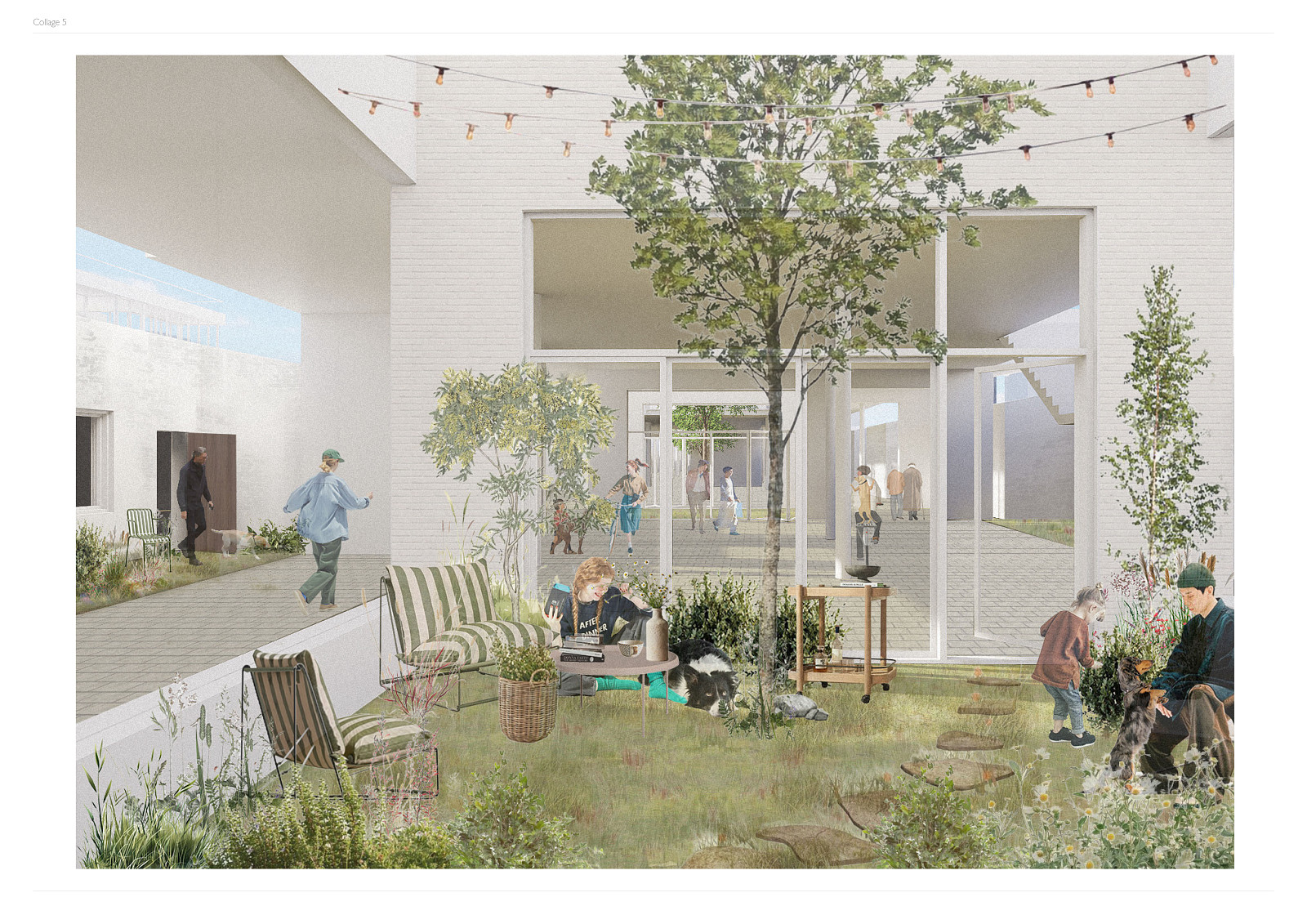
- The second level acts as a porous transition, with narrow voids and passages that reinterpret existing alleys
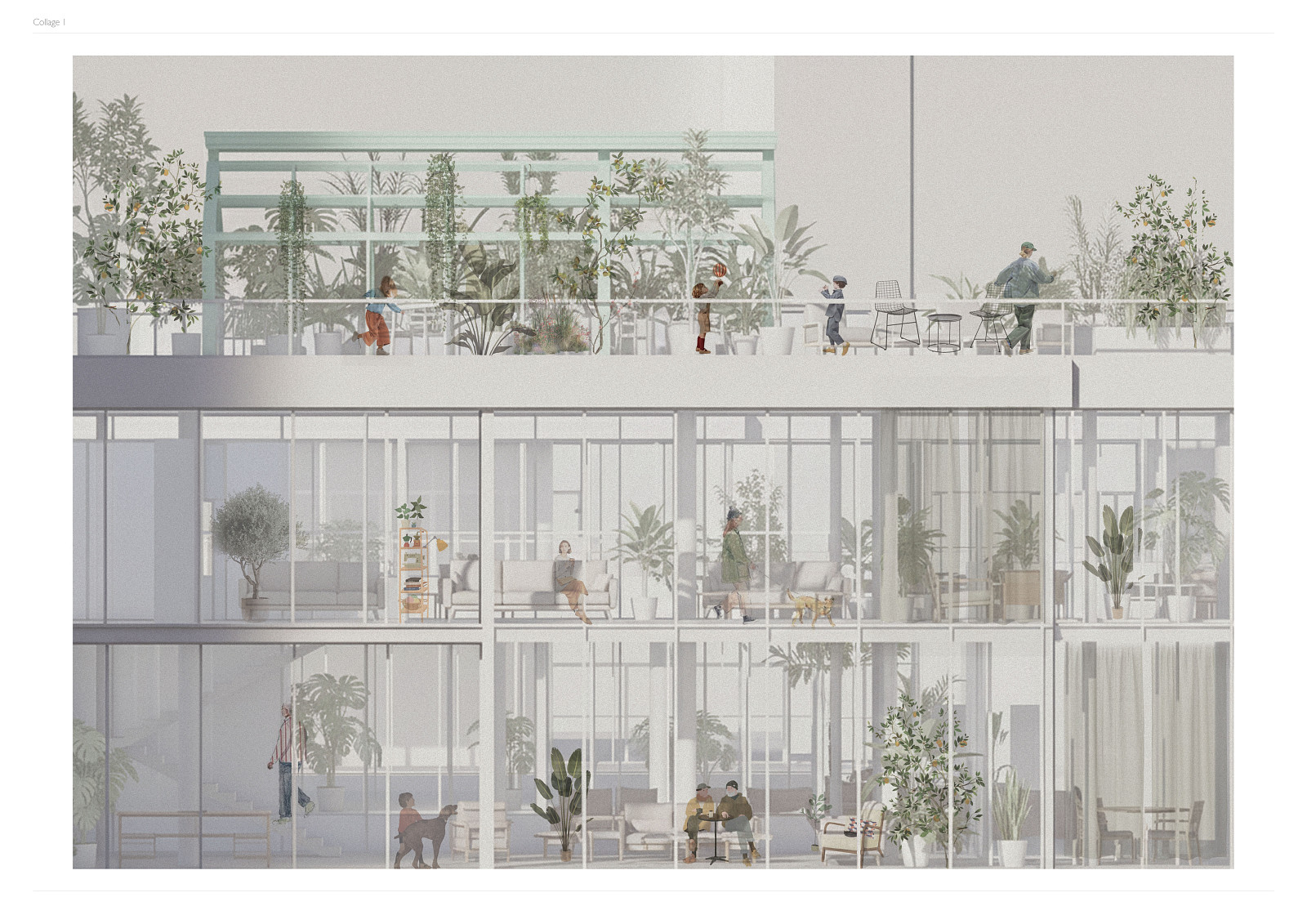
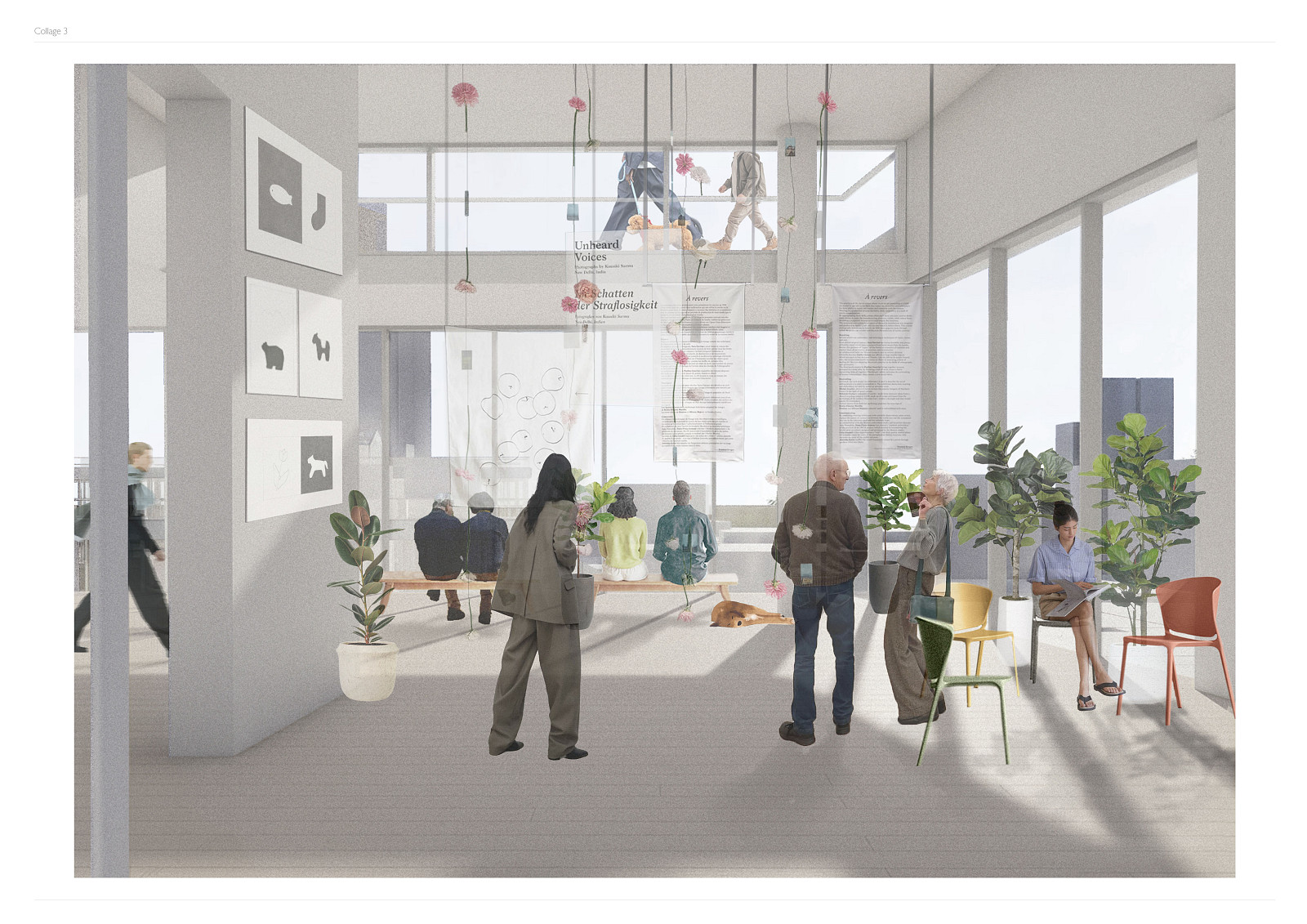
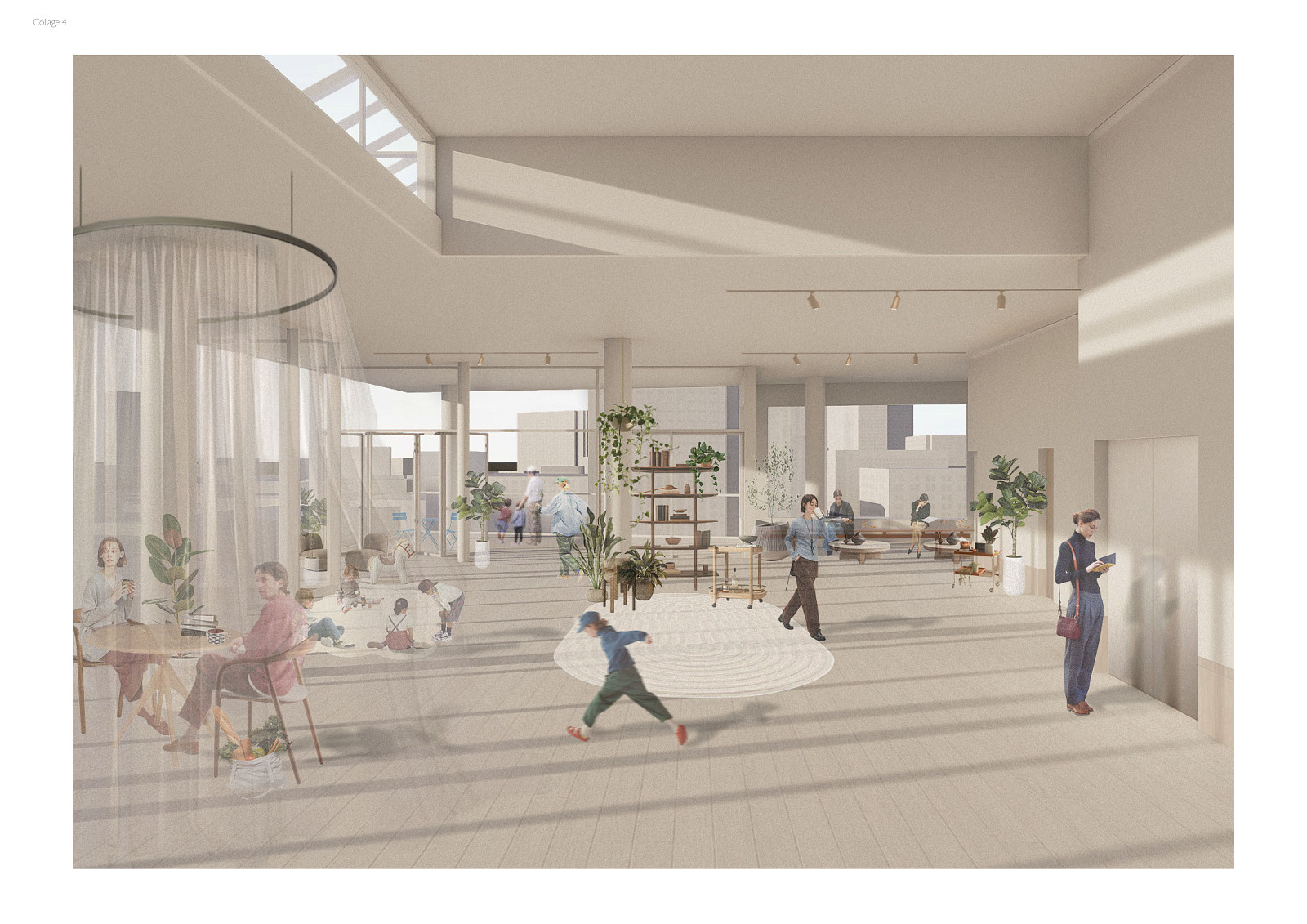
- The third level becomes a continuous elevated ground for slow movement, gathering, and observation
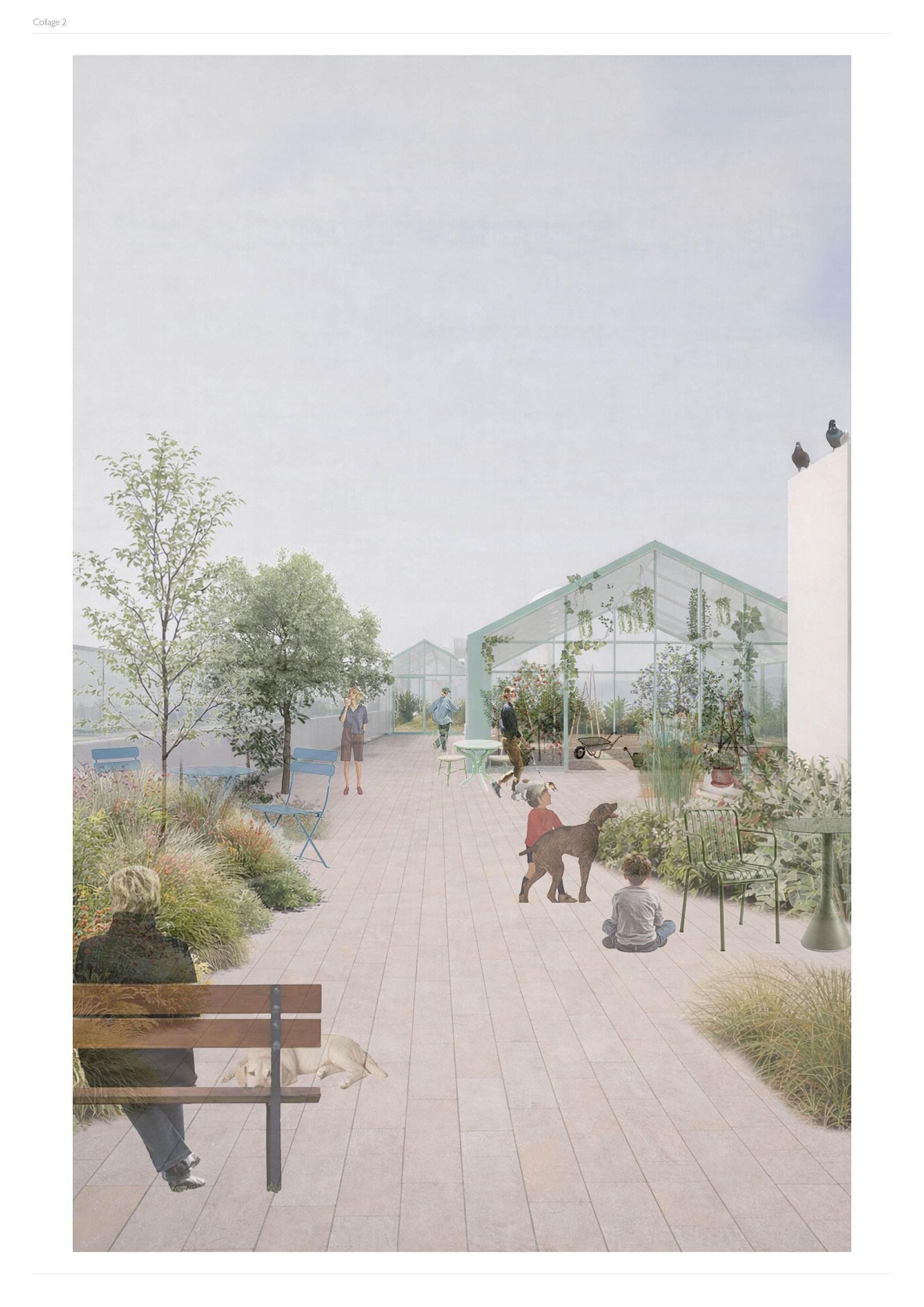
-The roof introduces greenhouses as productive and seasonal spaces
Rather than assigning fixed programs, the structure supports a range of uses—from workshops and small gatherings to quiet individual occupation. Factory workers can extend their activities upward, while visitors can inhabit the space without obligation. Circulation unfolds both vertically and horizontally, gradually revealing new perspectives of the industrial landscape. Movement becomes exploratory rather than goal-oriented.
This approach separates economic evolution from physical erasure. Industry is not replaced by culture; instead, culture grows on top of it. The project enables gradual transformation without displacement. Ownership is also rethought. By spanning multiple properties, the structure encourages shared use and distributed value. Landowners can participate by opening parts of their property, receiving alternative forms of income through shared usage rather than traditional rent. Seen this way, vacancy is not treated as failure, but as a flexible condition that allows new relationships between public use, ownership, and everyday life.
Creating a structure — a space that does not impose but rather offers the possibility of sudden encounters — may become a way to not only connect the owners with one another, but also to form small moments of connection between passersby and the people working there. The disappearing landscape — or rather, a landscape that may one day disappear — could thus be seen in another way through this structure: not merely as an industrial space, but as a unique environment shaped by the ways people connect with each other.
Technical information
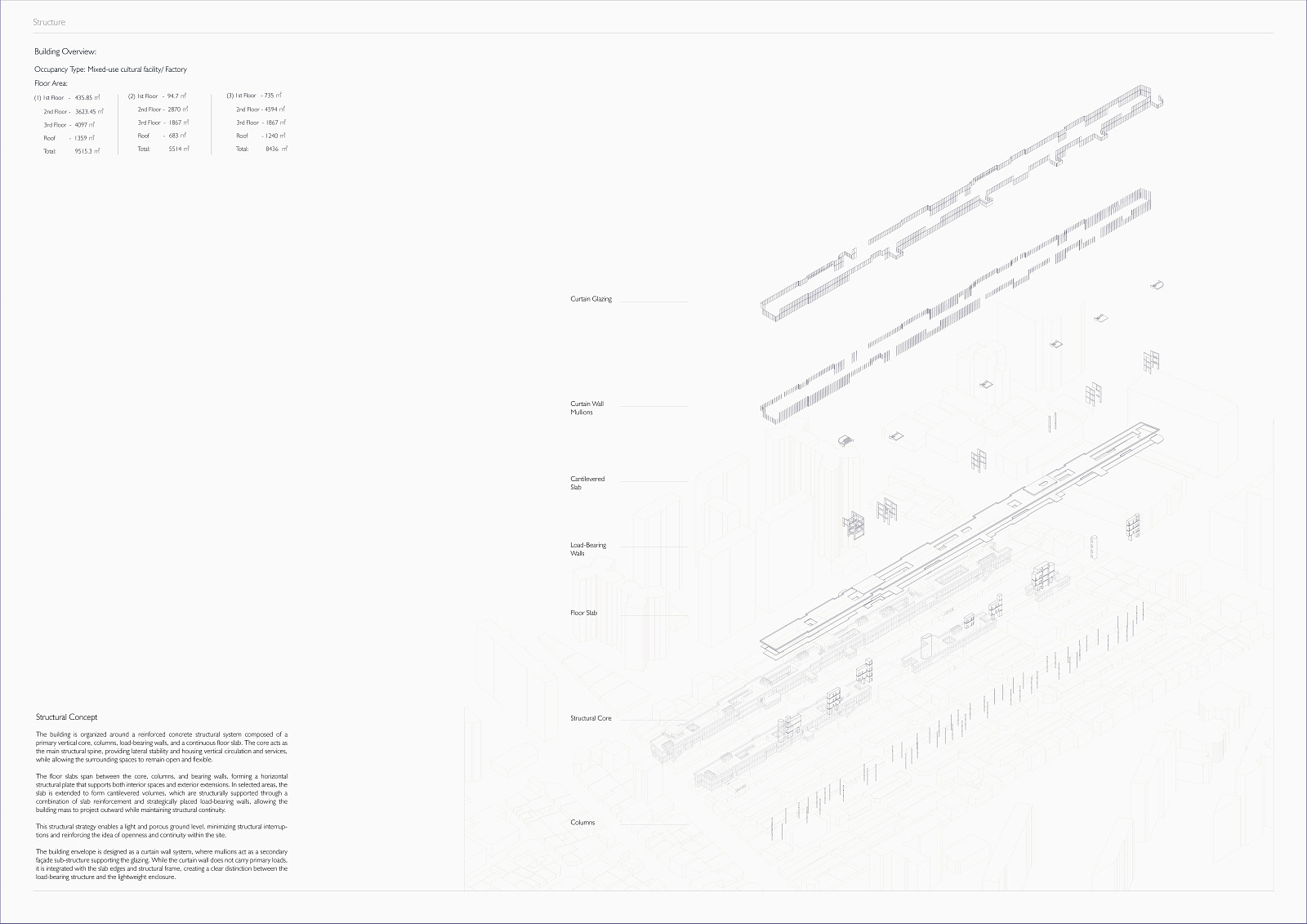
The building is organized around a reinforced concrete structural system composed of a primary vertical core, columns, load-bearing walls, and a continuous floor slab. The core acts as the main structural spine, providing lateral stability and housing vertical circulation and services, while allowing the surrounding spaces to remain open and flexible.
The floor slabs span between the core, columns, and bearing walls, forming a horizontal structural plate that supports both interior spaces and exterior extensions. In selected areas, the slab is extended to form cantilevered volumes, which are structurally supported through a combination of slab reinforcement and strategically placed load-bearing walls, allowing the building mass to project outward while maintaining structural continuity.
This structural strategy enables a light and porous ground level, minimizing structural interruptions and reinforcing the idea of openness and continuity within the site.
The building envelope is designed as a curtain wall system, where mullions act as a secondary façade sub-structure supporting the glazing. While the curtain wall does not carry primary loads, it is integrated with the slab edges and structural frame, creating a clear distinction between the load-bearing structure and the lightweight enclosure.

Copyright © 2026 INSPIRELI | All rights reserved. Use of this website signifies your agreement to the Terms of Use, Privacy Policy, and use of cookies.