THE SPACE (IN)BETWEEN


Project idea
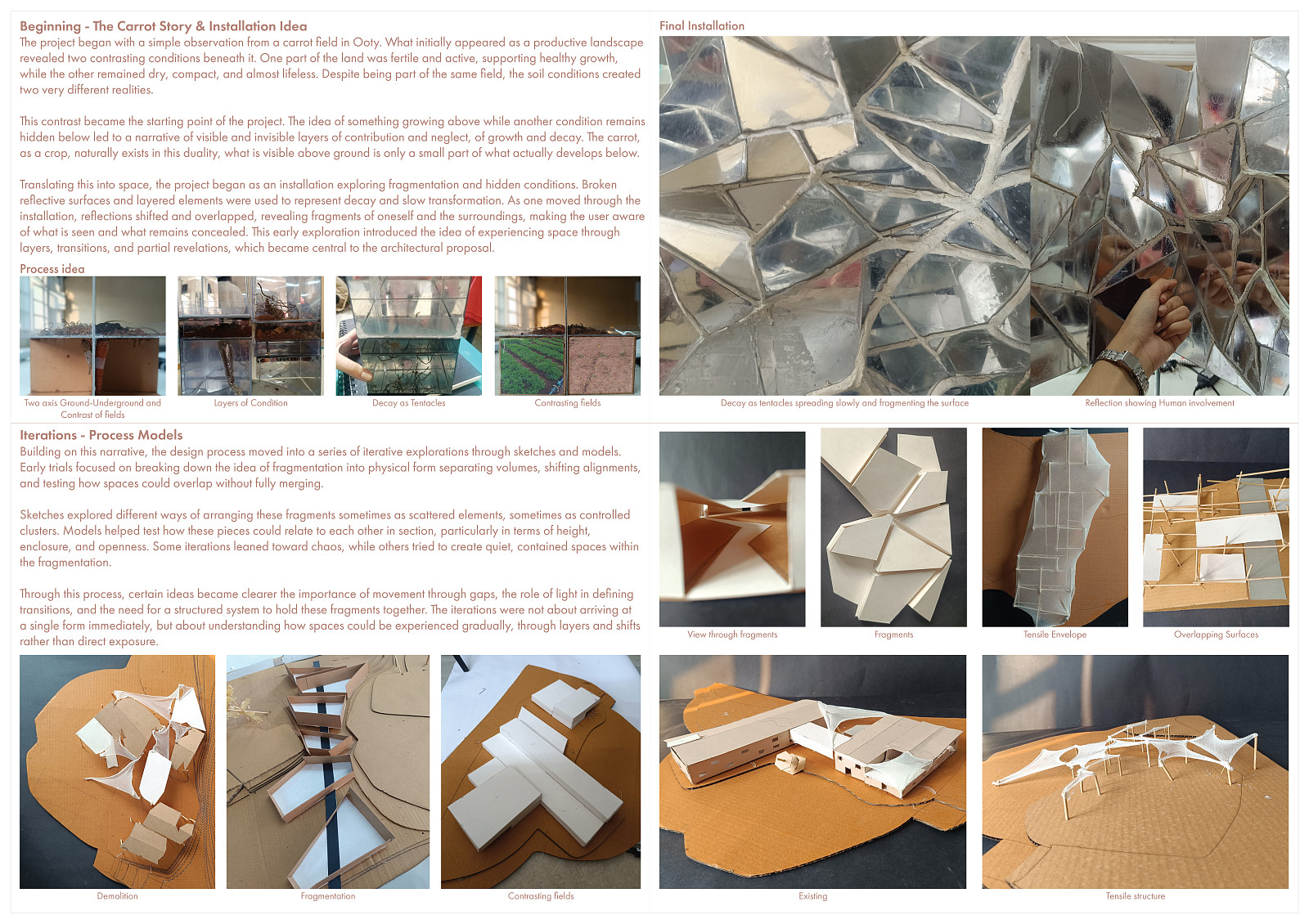
The project explores the idea of hidden conditions beneath visible surfaces, inspired by contrasting soil qualities observed in a carrot field. While the surface appears uniform, underlying layers reveal differences in fertility, decay, and growth.
This duality becomes the basis for a spatial exploration of what is seen versus what remains concealed. Through fragmentation, reflection, and layered interventions, the design reveals hidden spatial conditions and creates a sequence of experiences that gradually unfold.
The project aims to translate this invisible complexity into an architectural language where space is not immediately understood, but discovered through movement, light, and transitions.
Project description
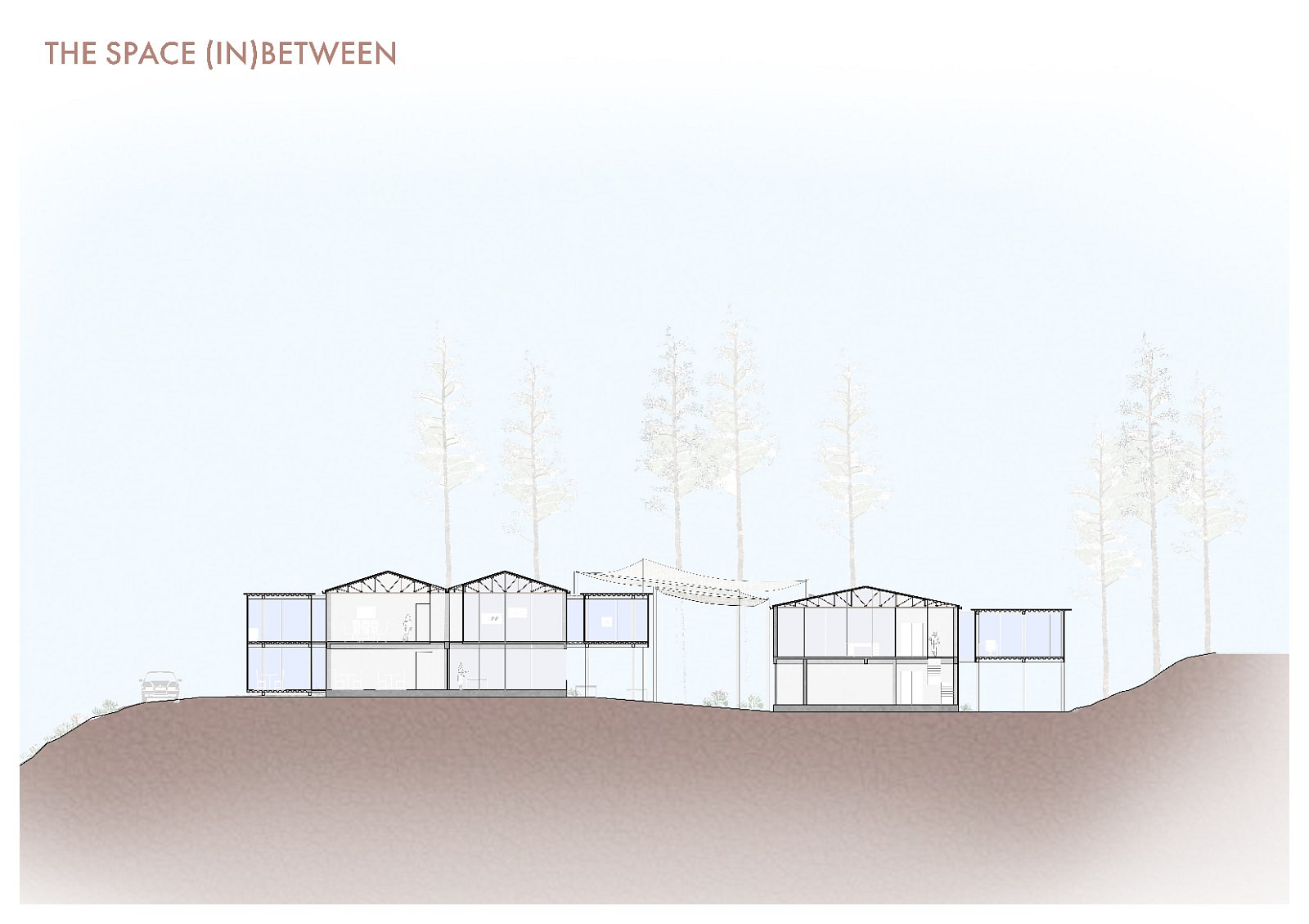
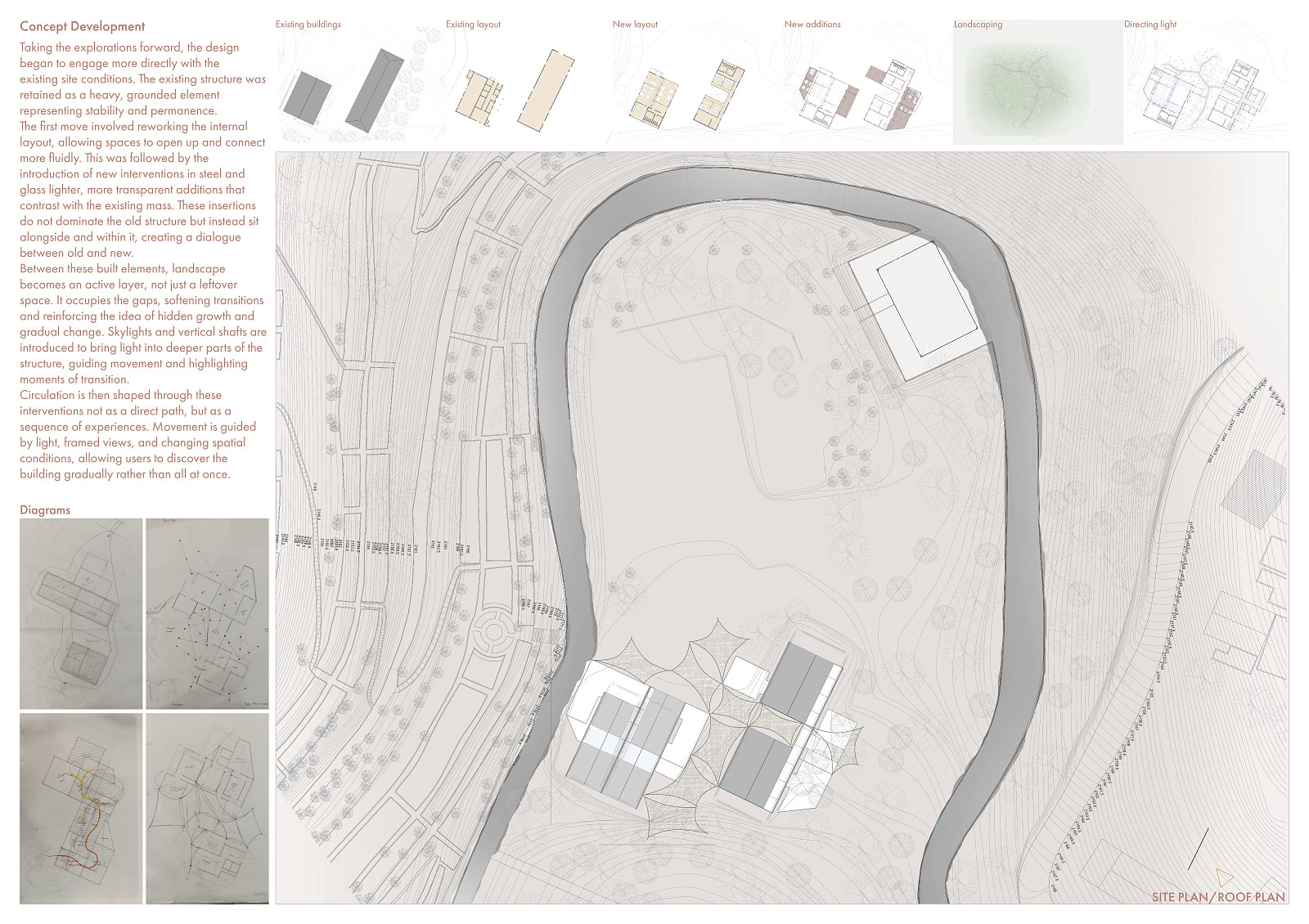
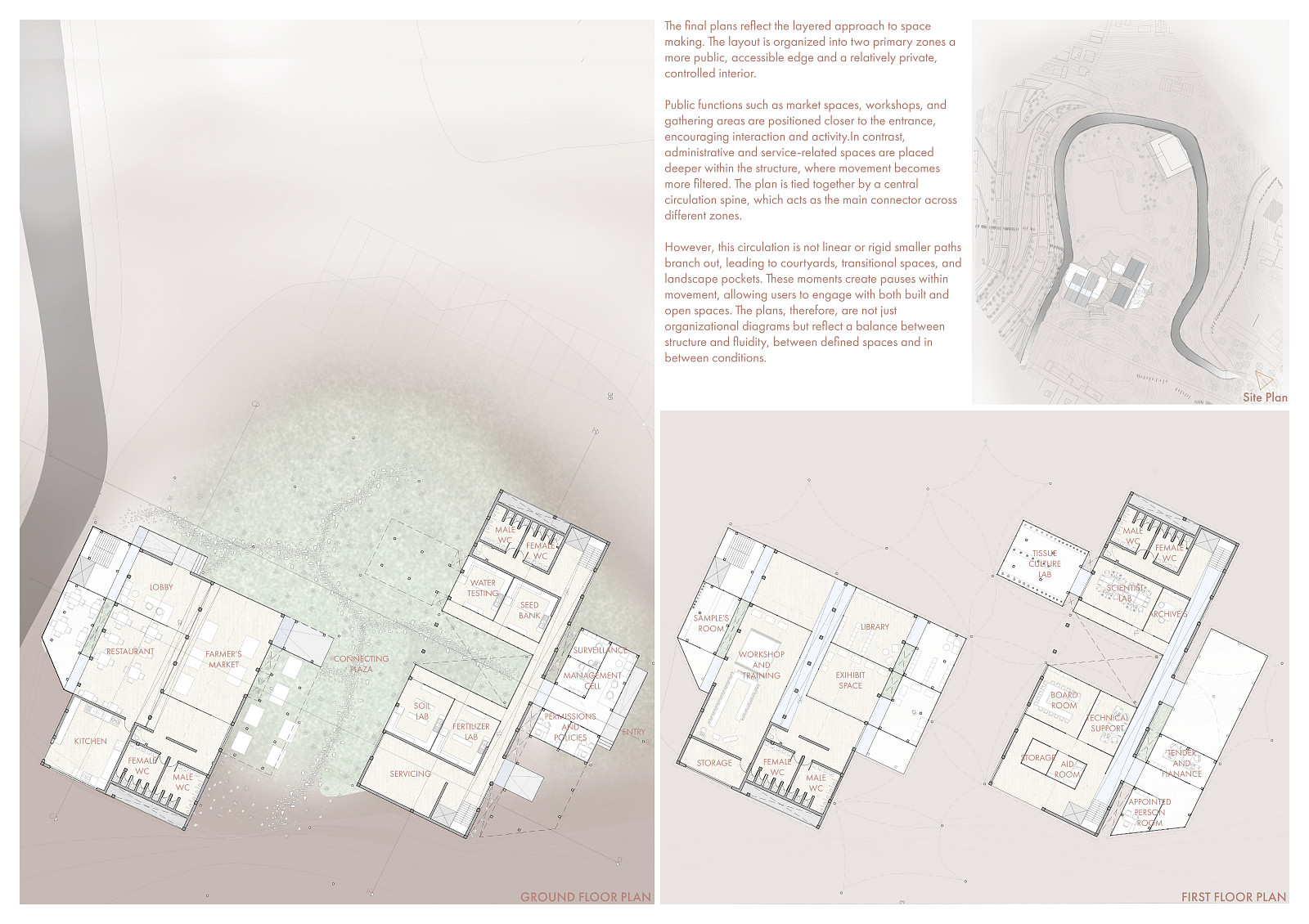
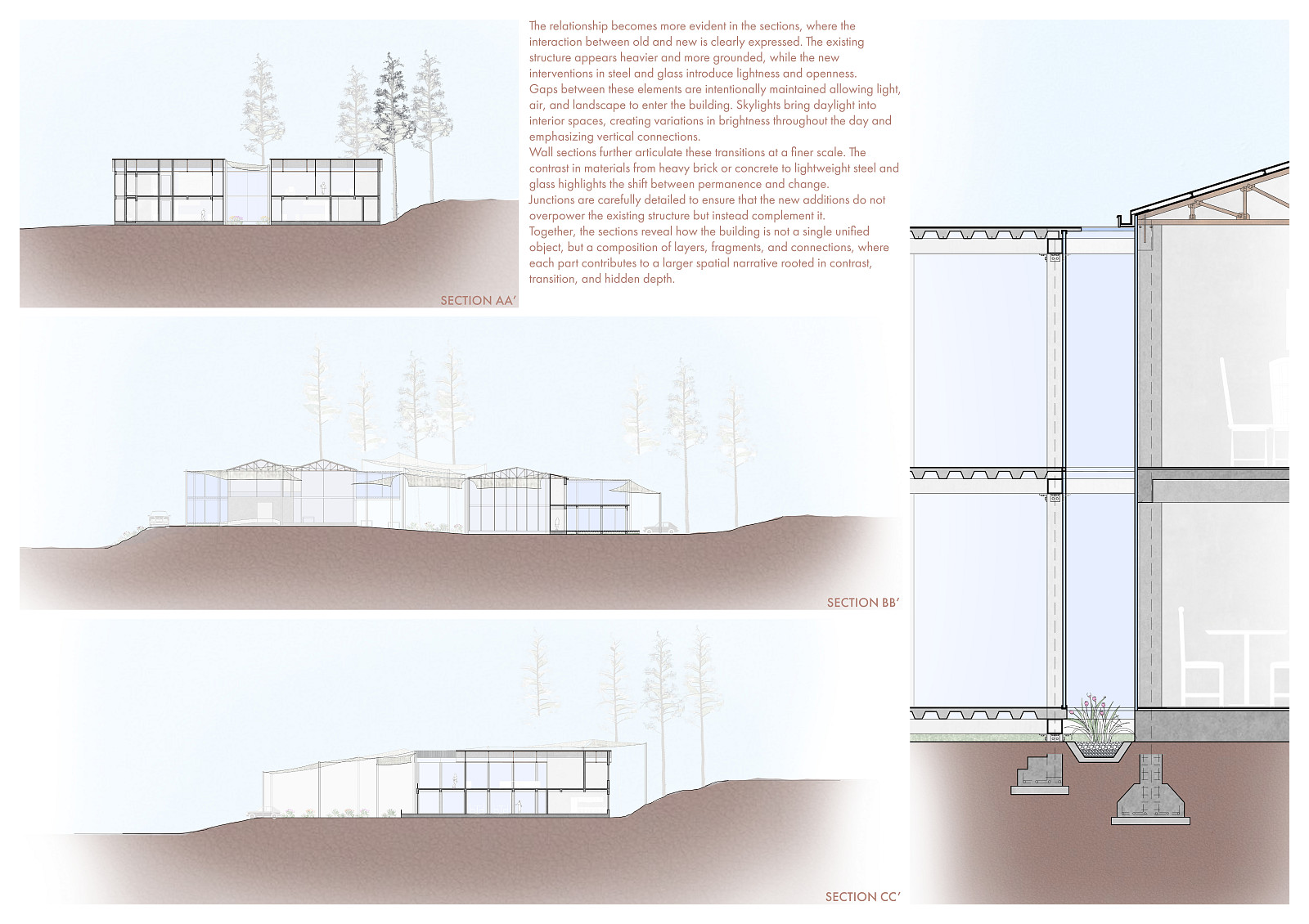
The project is developed as a public horticulture and community space that integrates existing structures with new interventions. The design retains the original built form as a heavy, grounded element and introduces lighter additions in steel and glass to create contrast.
The layout is organized into public and semi-private zones, including market areas, workshops, and administrative spaces. Circulation is designed as a continuous path that moves through fragmented volumes, courtyards, and transitional spaces, allowing users to experience shifts in light, openness, and enclosure.
Landscape is introduced within the gaps between built forms, reinforcing the concept of growth and hidden layers. Skylights and vertical openings bring natural light into deeper parts of the structure, guiding movement and enhancing spatial experience.
The project creates a balance between existing and new, solid and light, visible and hidden, forming a layered architectural environment.
Technical information
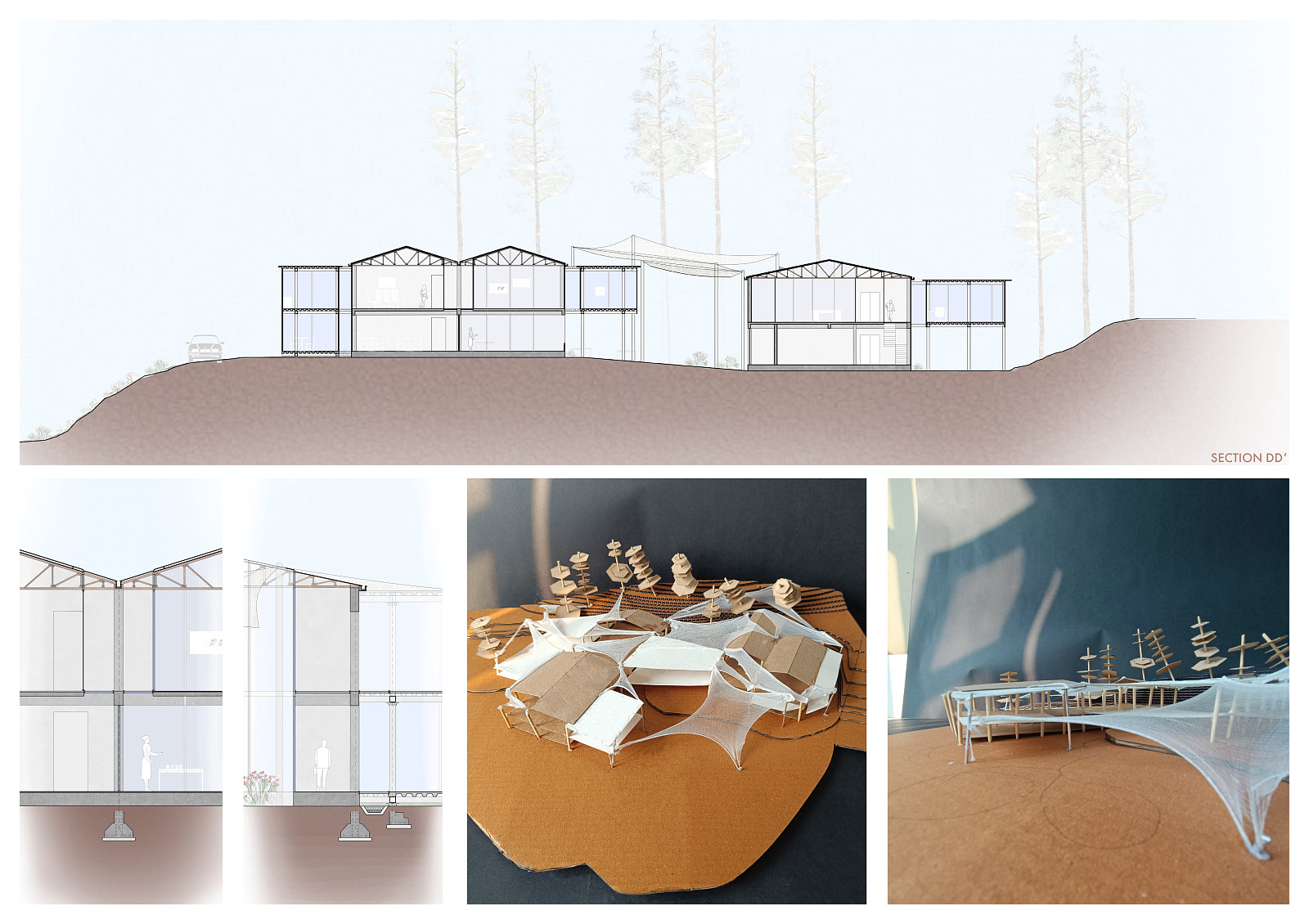
The existing structure is retained using masonry and concrete elements, providing a stable and heavy base, without disturbing existing New interventions are introduced using lightweight steel frameworks and glass surfaces to create visual and structural contrast.
Tensile fabric systems are incorporated in selected areas to provide shading and create fluid spatial connections. Skylights and light shafts are integrated to enhance natural lighting and reduce dependence on artificial systems.
The design considers material transitions carefully, using joints and separations to distinguish between old and new elements. Landscape integration also contributes to environmental performance by improving microclimate conditions and permeability.

Copyright © 2026 INSPIRELI | All rights reserved. Use of this website signifies your agreement to the Terms of Use, Privacy Policy, and use of cookies.