Old Mill Primary School


Project idea
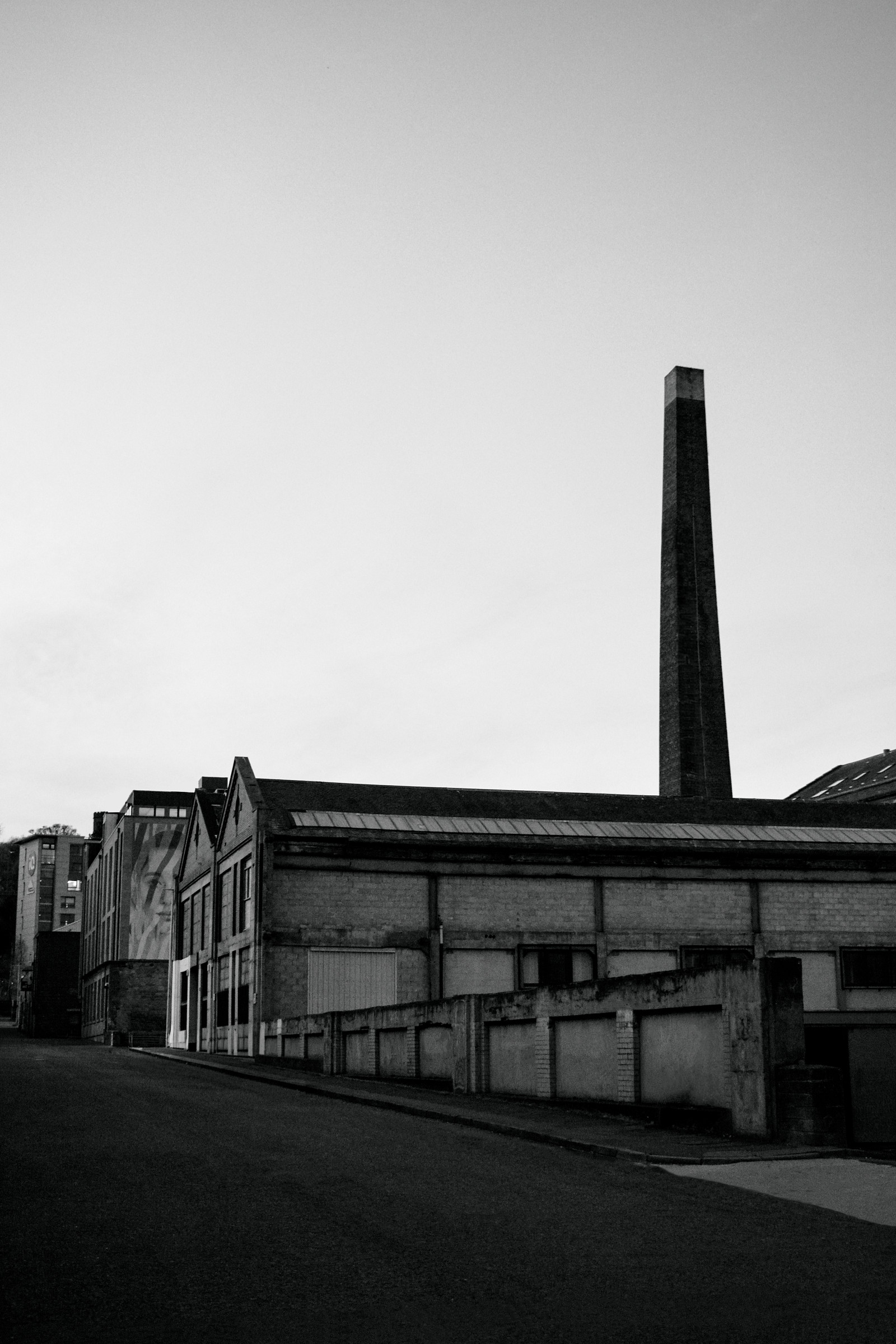
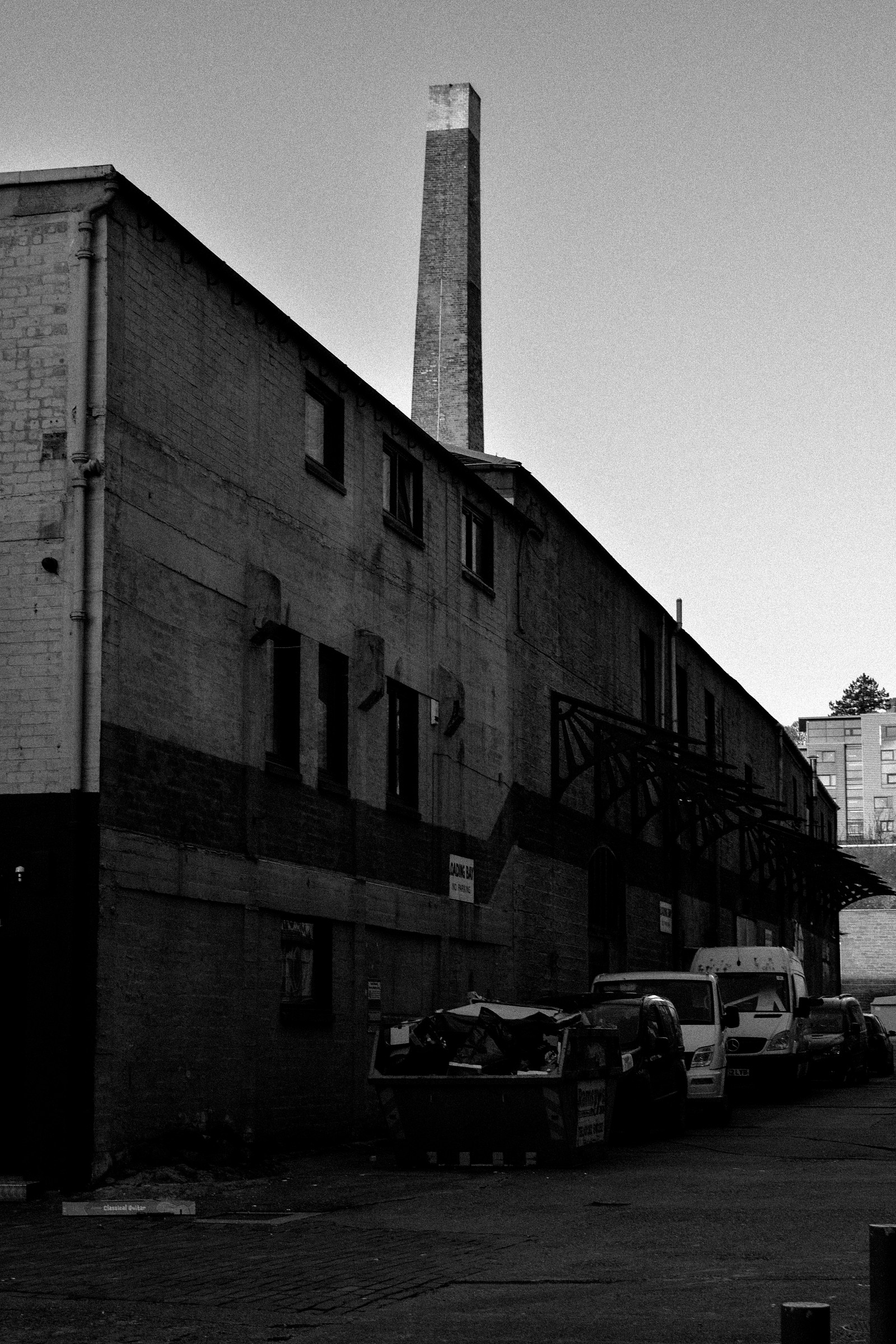
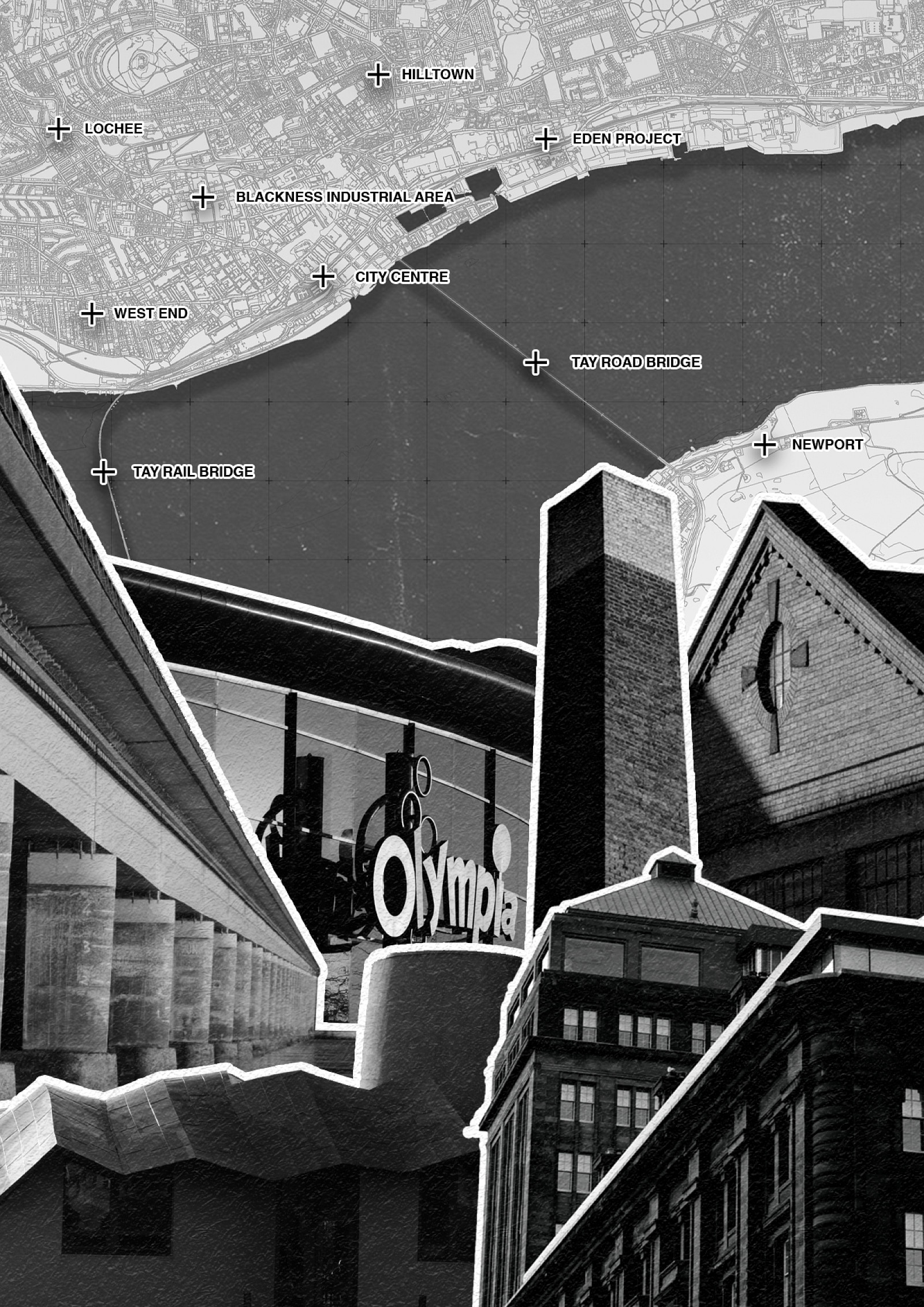
Based in the Blackness Conservation Area, in the heart of Dundee, the ‘Old Mill Complex’ stands as a remnant of Dundee’s industrial past. Once the second biggest centre for industry in Scotland in the 19th century, it’s decline in the early 2000s lead the city towards a focus on design, science and technology, with it becoming the United Kingdom’s only UNESCO ‘City of Design’ in 2014.
The site currently sits as an ‘Urban Moat’, disconnected from the wider city - fostering an unwelcoming, hostile, and car-centric environment. Sites like this, whilst being highlighted in recent wide scale local development plans, have been left for ruin whilst the surrounding cityscape is being redeveloped.
The identity of Blackness is undoubtedly a major asset going forward. It’s rich industrial typology alongside a diverse activity of commercial, religious and creative uses gives the district a unique and distinct character.
By identifying derelict and underdeveloped sites such as the ‘Old Mill Complex’, an opportunity is provided to meaningfully regenerate an integral piece of Dundee’s industrial past, ensuring that the character of the complex, and the wider Blackness Industrial area is preserved, and reaches it’s full development potential.
Project description
Through thorough site analysis, a wider master-plan was formed in the aim of promoting a livable, workable and distinctive space in central Dundee. Implementing the ‘Transform, Never Destroy.’ ideology, three sub-group strategies combined to create a dense, intense and diverse area in the heart of the Blackness Industrial Estate.
These strategies focused on implementing vibrant co-housing proposals, enhancing existing working spaces, promoting dedicated design areas, and integrating the existing blue and green networks around the area in the aim of promoting active natural social spaces that reconnect the existing ‘moated’ island to the wider city.
The following individual proposals all exist within the same wider strategy, whilst they provide the justification for each other to exist, there is an existing requirement for these spaces within Blackness - you can’t implement a primary school proposal without the local pupils to attend it, you can’t have families living in the area without places for work, you can’t have places to work without the surrounding places to relax and socialise.
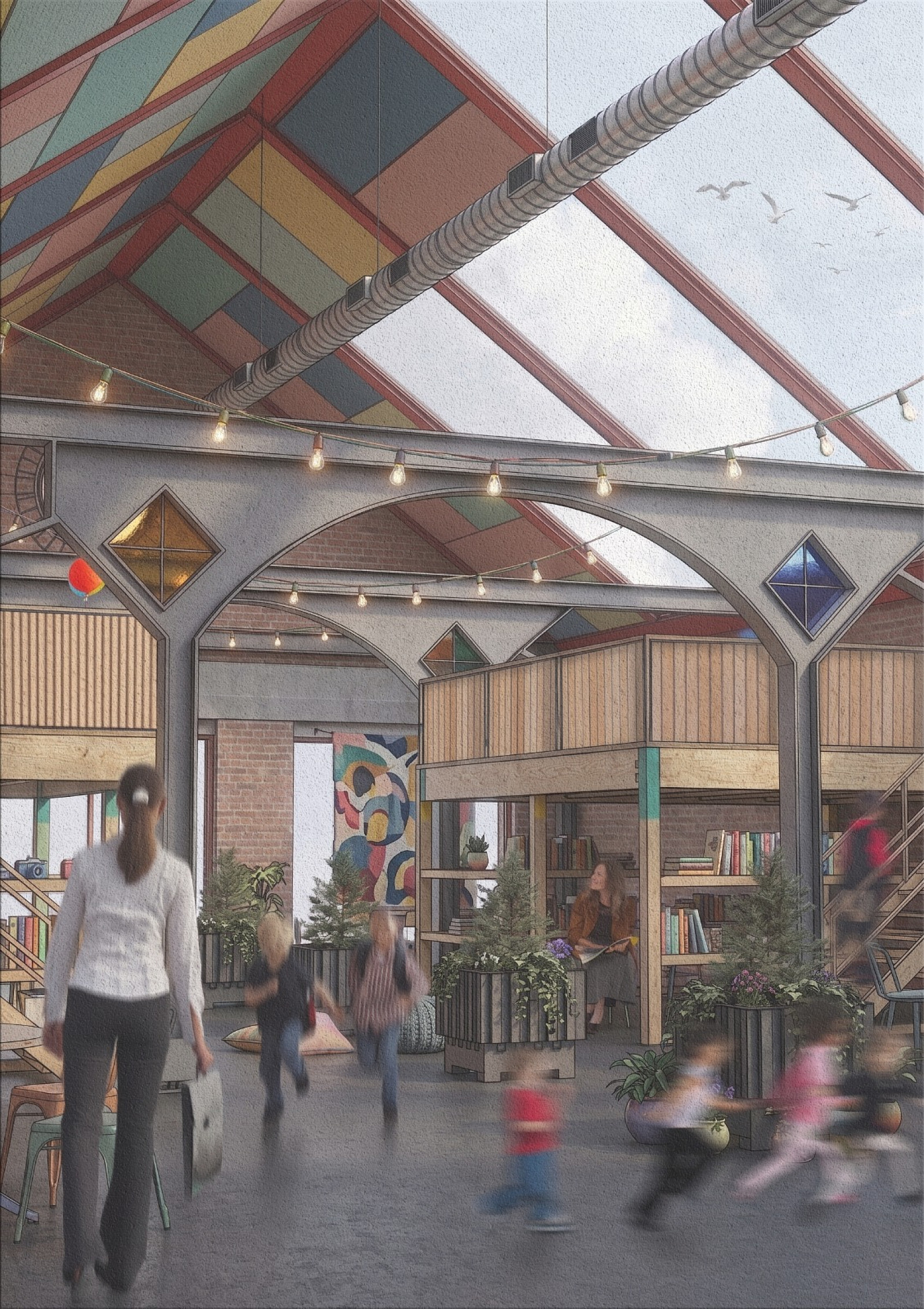
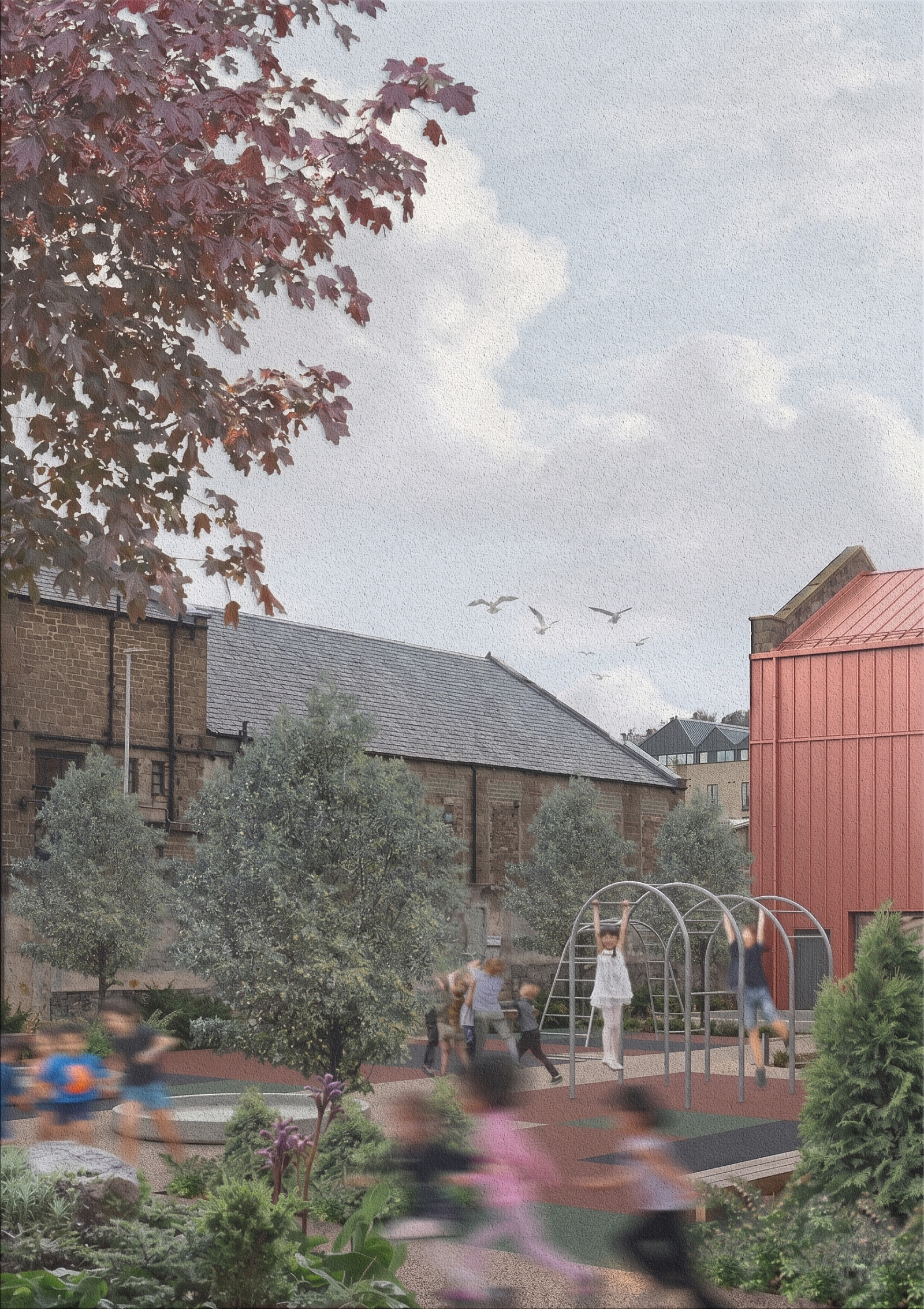
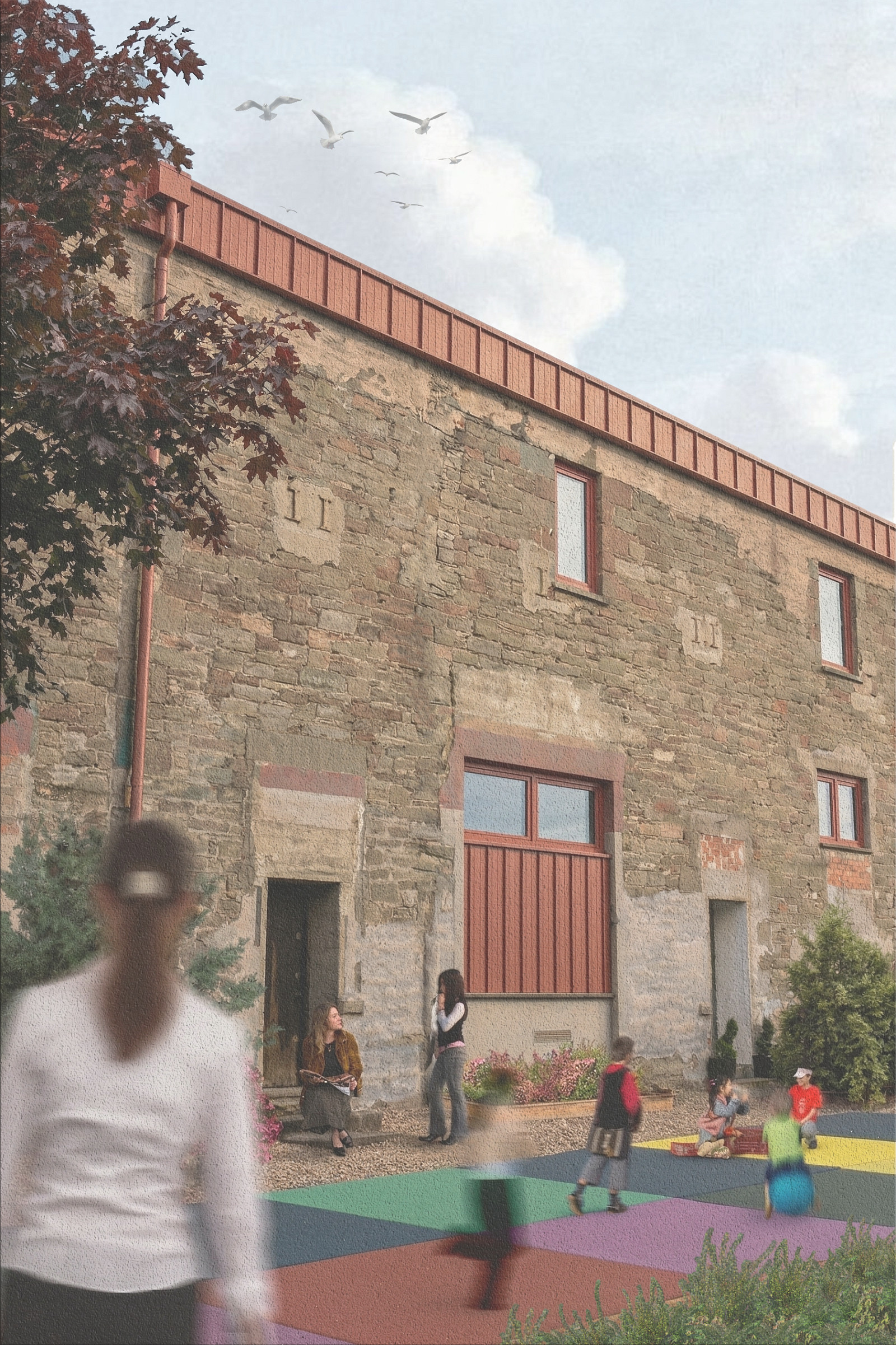
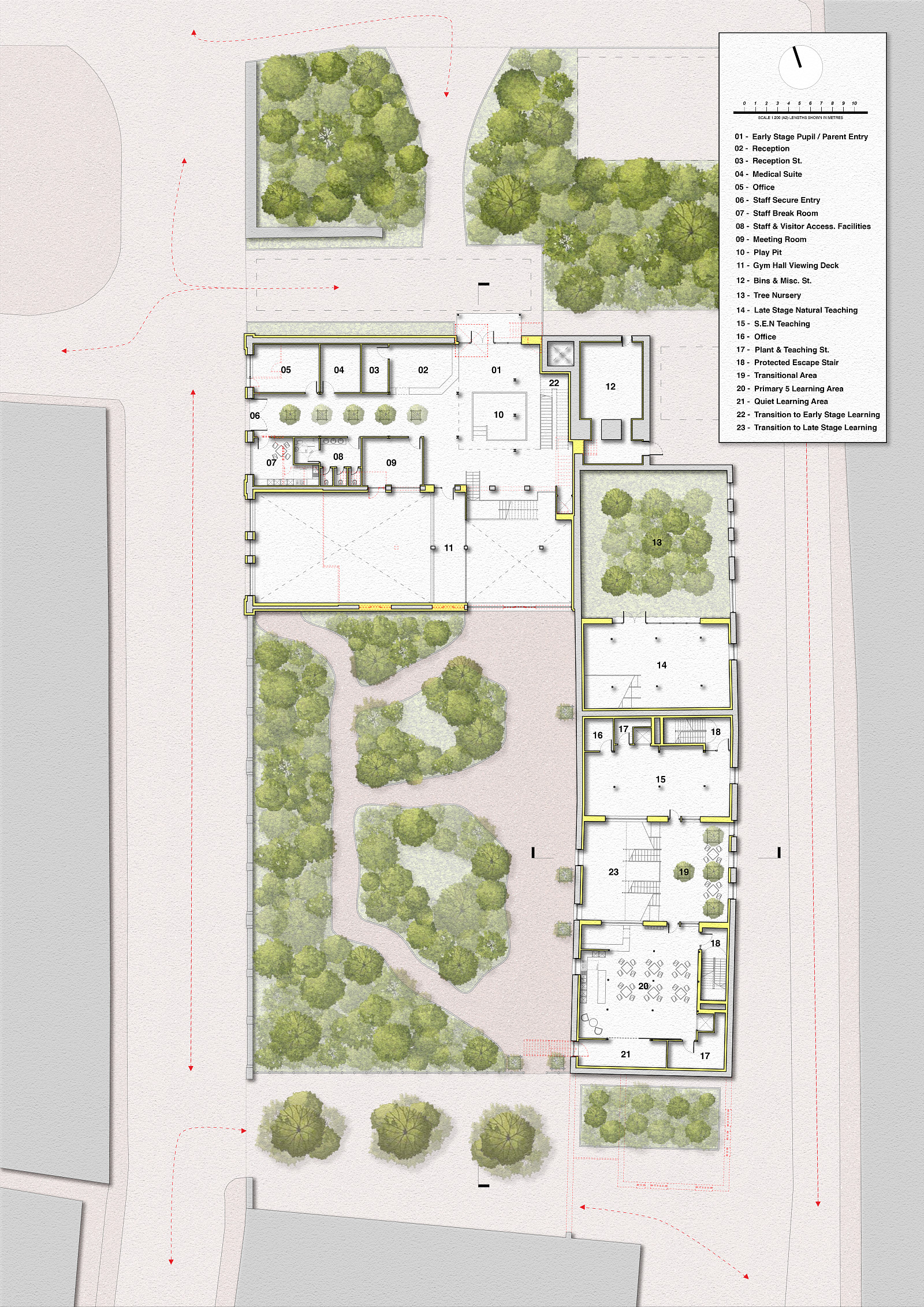
In the case of the ‘Old Mill Complex’, due to the increase of density in the area, there is a requirement for an early stage learning centre with a focus on natural and flexible teaching. This site becomes the perfect place to implement this, largely due to the proposed natural social spaces being introduced from the Blue and Green Infrastructure’s sub-group strategy, creating an opportunity for proposed natural external play areas for the school children that acts as a community asset that can be used outwith the standard 9am to 5pm.
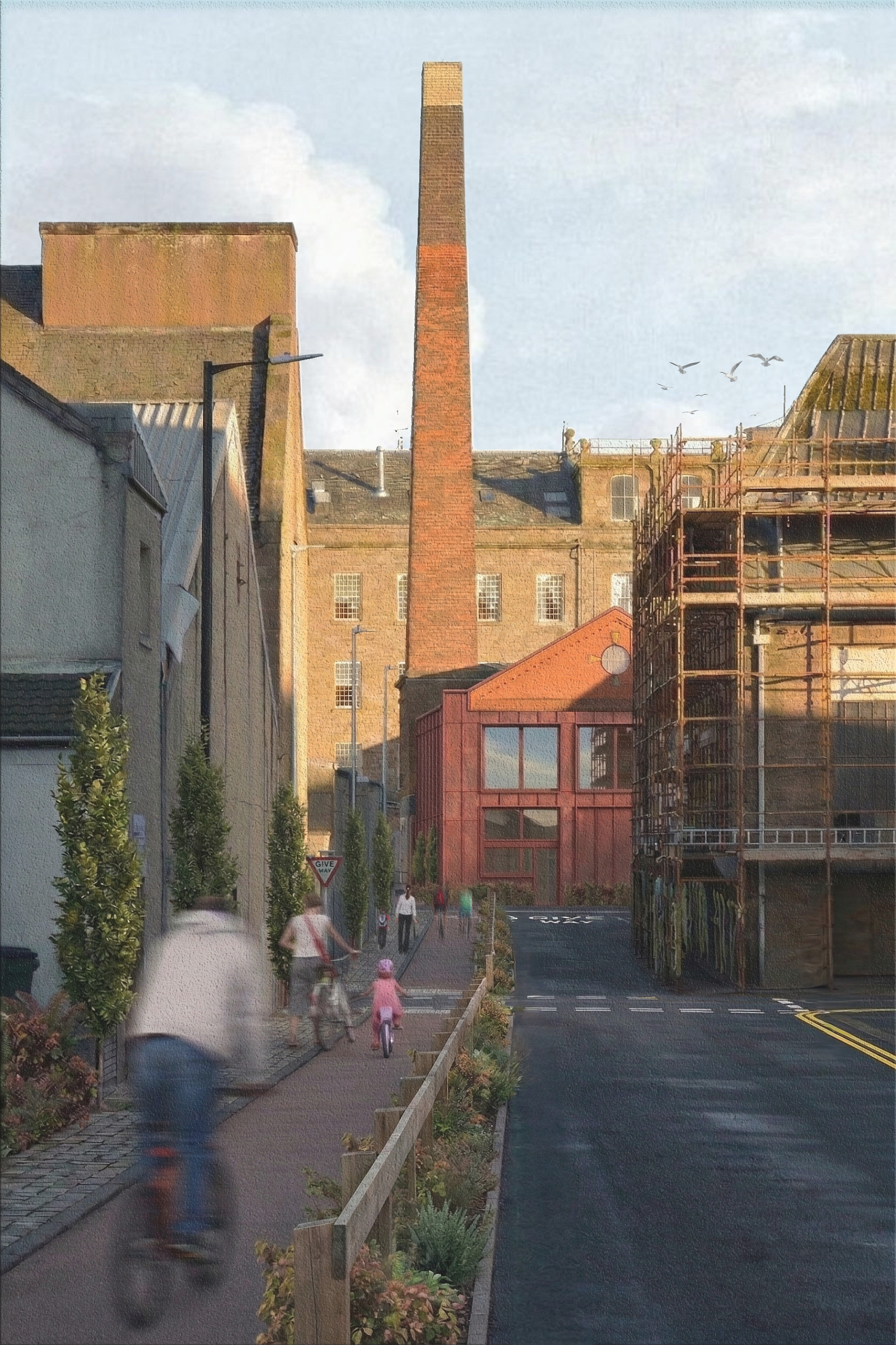
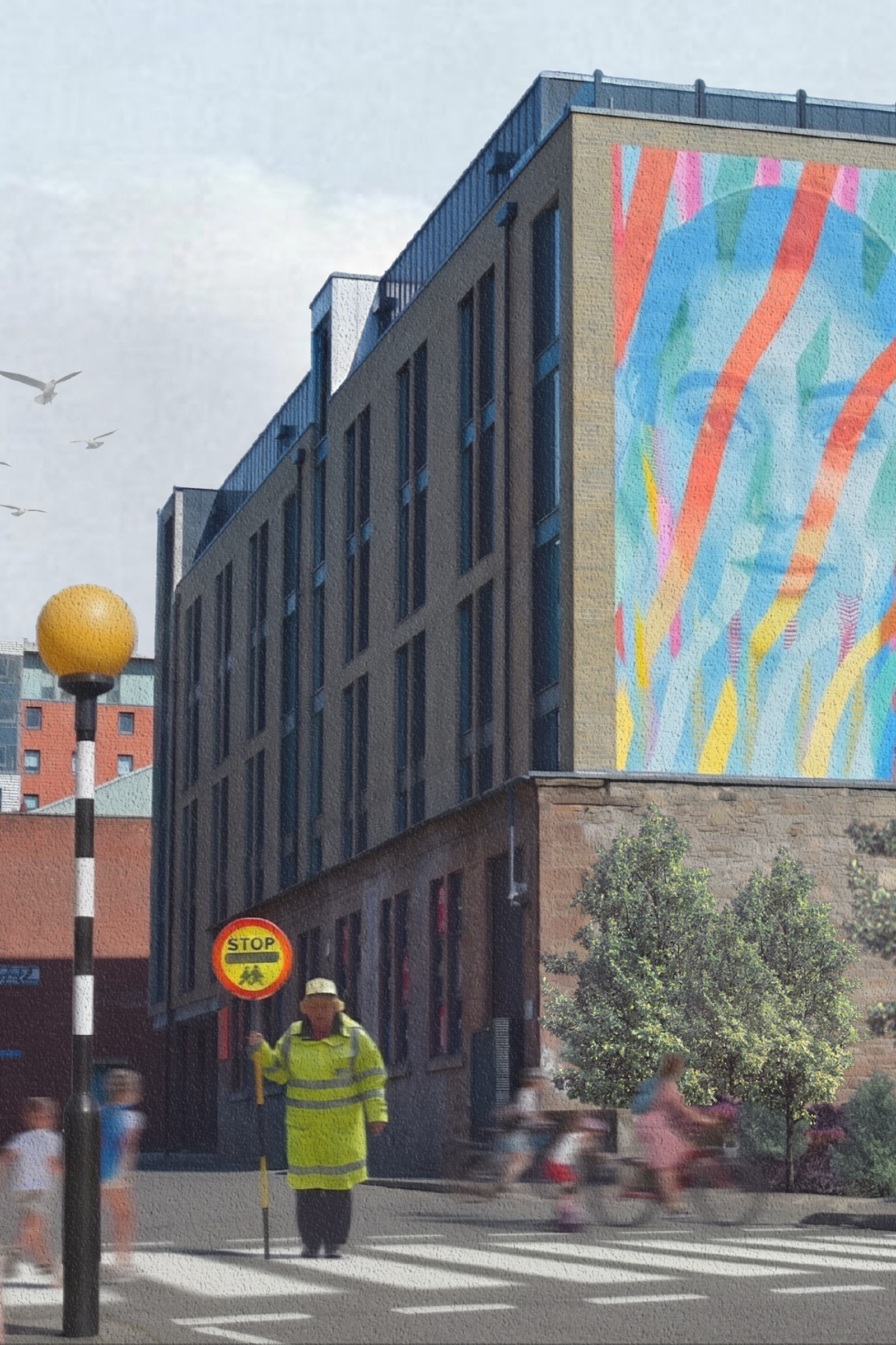
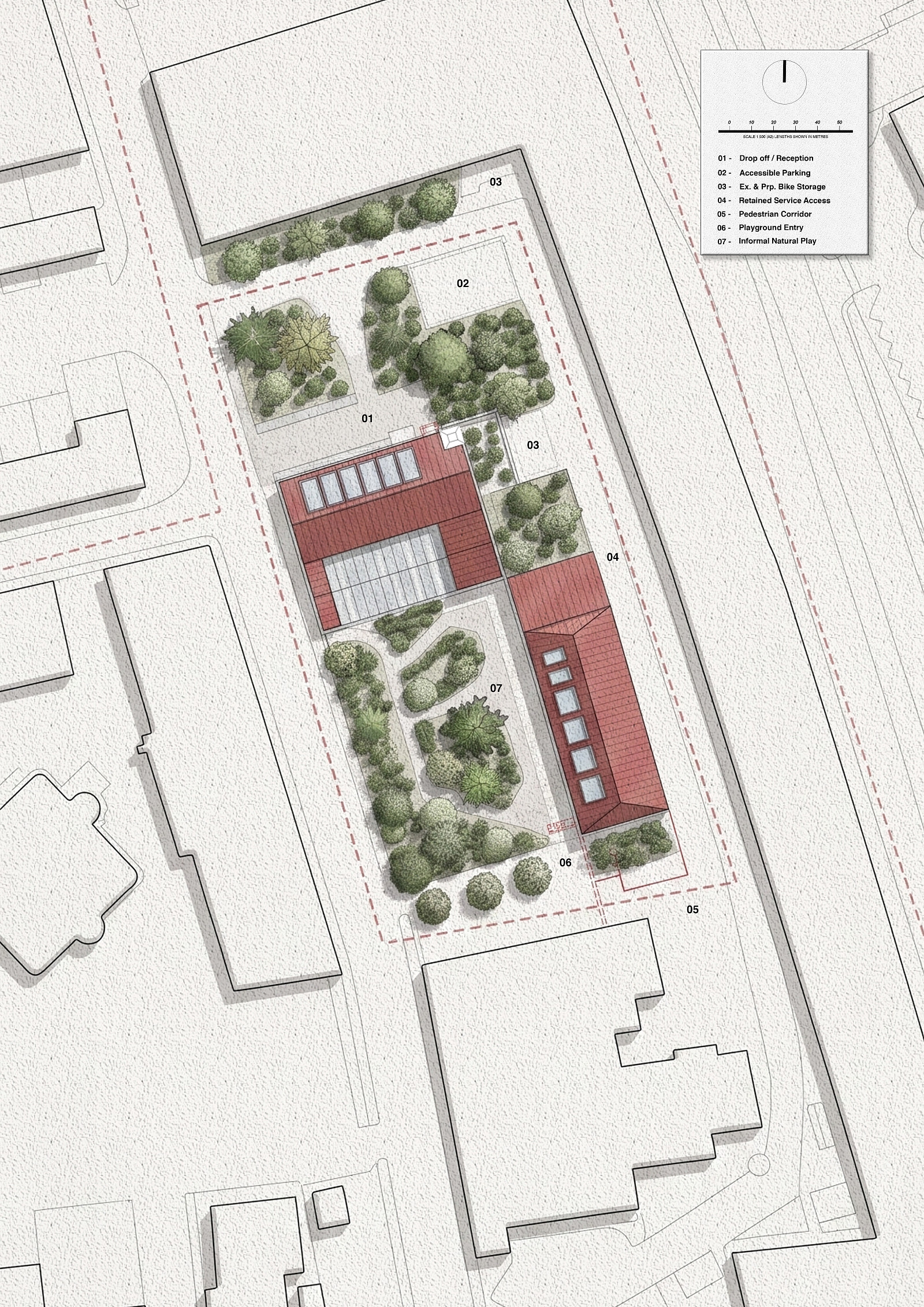
The proposed school plays an important part in reshaping the harsh urban environment of the Blackness Industrial Area. Small interventions surrounding the site can be implemented to create a safe and natural space for children and parents walking or cycling to school.
The car centric nature of the area is to be phased out over the span of the development, with streets becoming smaller - integrating cycle lanes, pourus walking paths and zebra crossings to ensure children get to school safely whilst enhancing the character of the surrounding area. Natural plantings are formed around the site, creating pathways towards the school that are easily recognisable for children starting to understand their routes around the city.
Members of staff act as crossing guards before 9am and after 3.30pm to safeguard semi-independent children meeting parents in designated pickup areas, as well as pupils who are beginning to walk or cycle to school by themselves, ensuring that there are always eyes on the street and that children are safe in the surrounding cityscape.
The school itself cannot exist in a vaccum, it needs to integrate itself within it’s physical and metaphysical environments - it can do this by connecting with existing parent lead community groups such as ‘Friends of Blackness’ as well as the proposed ‘Old Mill’ Parent Council who will act as the parent voice of the school, participating in discourse between the pupils, teachers, school administration and Dundee City Council.
Forest Schools originated from traditional outdoor Scandinavian education in skovbørnehaver (forest kindergartens) and has since expanded throughout the United Kingdom. With the natural environment becoming the classroom, emphasis is put on experimental learning and aims to support children by encouraging independence, resilience, and social interaction. This plays a role in modern education by providing an alternative learning provision, often employing trained staff who understand child development and how to facilitate learning in an outdoor environment, and offering a range of learning sessions on a weekly basis in natural spaces surrounding the school.
By dedicating large external areas of the school to dense greenspace, as well as being in close proximity to some of Dundee’s largest central open green areas in Dudhope and Balgay Parks, the school has the opportunity to become a registered Forest School with teaching staff becoming trained in outdoor learning activities - with the nearest substitute being in Glasgow.
Traditional education is primarily teacher-centric and curriculum-driven, organized around age and standardized learning outcomes. This philosophy historically translates into highly structured environments. The built environment is designed for efficiency, order, and the passive reception of information. Modern primary school education should look to supersede this, with the classroom, and the school environment becoming joyful, with a mix of educational ideals.
In Montessori Schools, the classroom acts as a ‘prepared environment’ with mixed ages of children socialising and learning in the same spaces, promoting freedom to choose what to learn through a medium of different materials. Flexible floor plans and differentiated learning zones are created to ensure children have their own independence, with the surrounding learning environment being prepared and scaled to their liking. Steiner-Waldorf Schools aim to foster creativeness and imagination, with the learning environment becoming a place where children can focus on their artistic and spiritual development.
Traditional Schools box nature out; Montessori Schools bring in highly curated natural elements into the prepared environment; and Steiner-Waldorf Schools create organic built spaces that reach out toward nature. Forest schools, and ‘Old Mill’ Primary School in particular, is an inversion of all three. In this case the landscape is the architecture and the teacher. Here, children are given license to learn, make mistakes, immerse themselves both indoors and out, and make the most of their primary education leading into further development.
Technical information
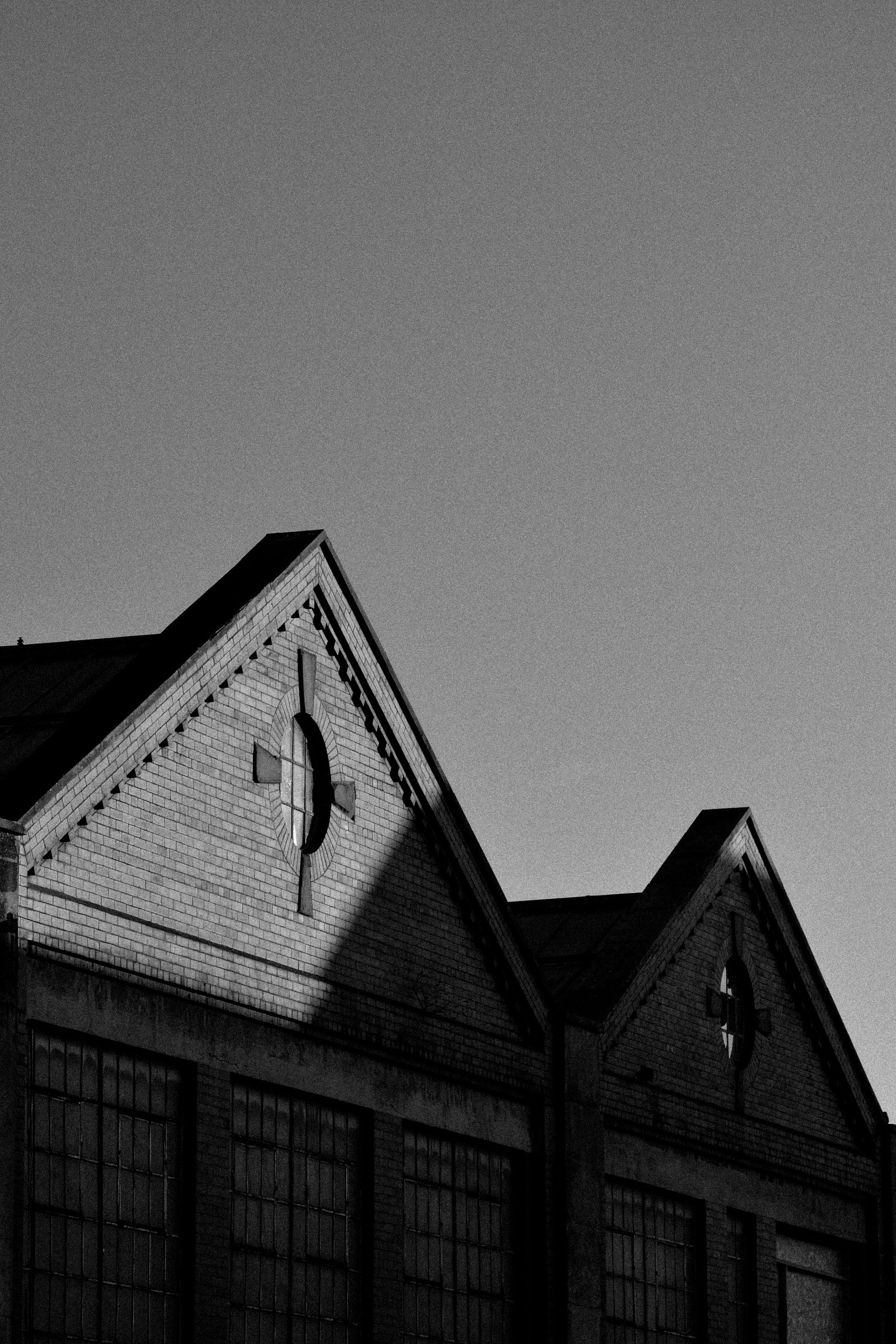
‘Retrofit First’ was at the forefront of design when addressing the requirements of the brief and proposed site. Careful and rigorous site surveys were undertaken to assess the character of the site. A historical investigation took place to understand what was originally there during it’s first construction back in 1851 - where it was constructed as the engine house for the first power-loom factory at Tay Works - and also assess what currently exists on the site as it stands after years of poor treatment and changes to the historic fabric.
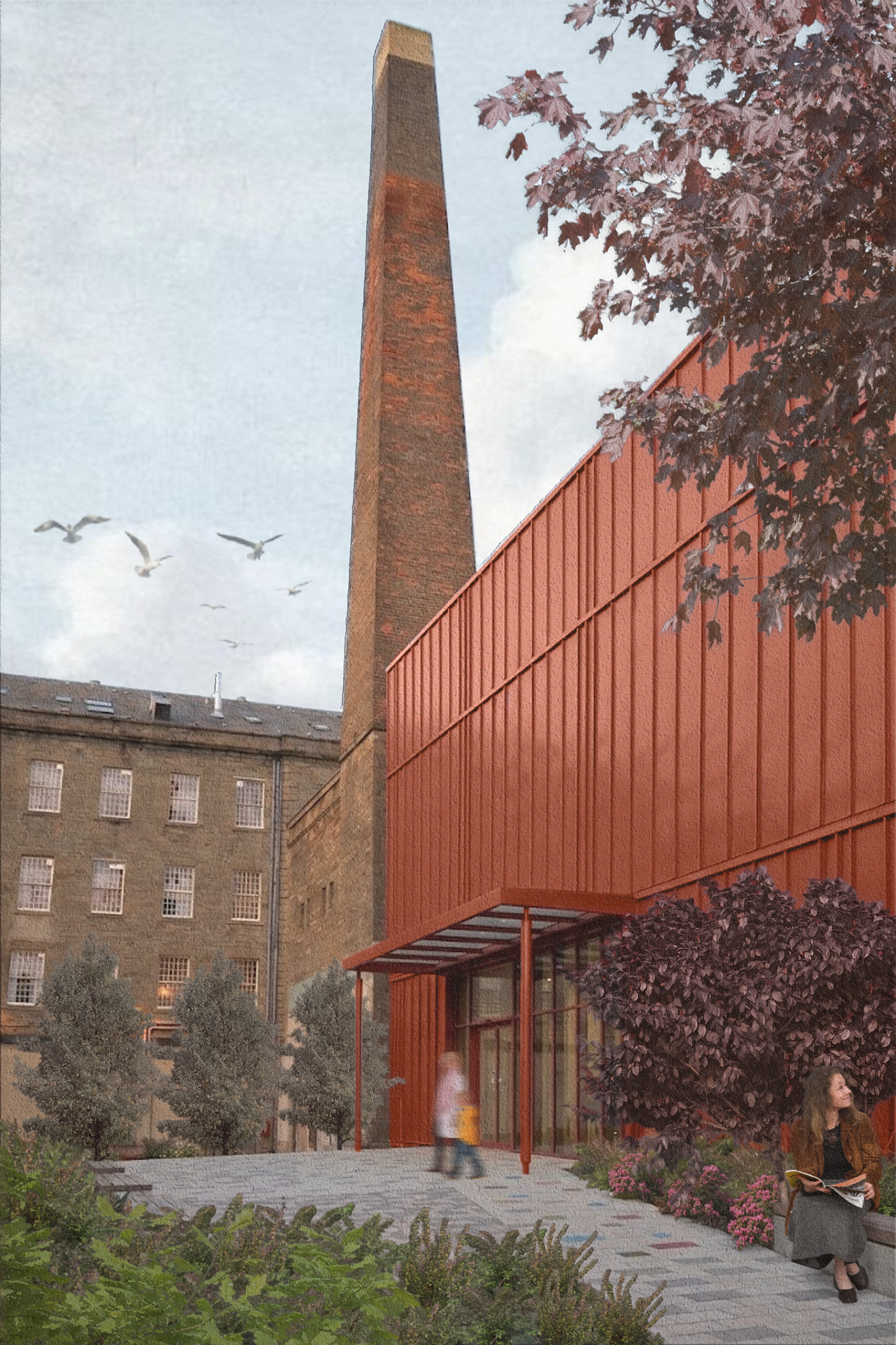
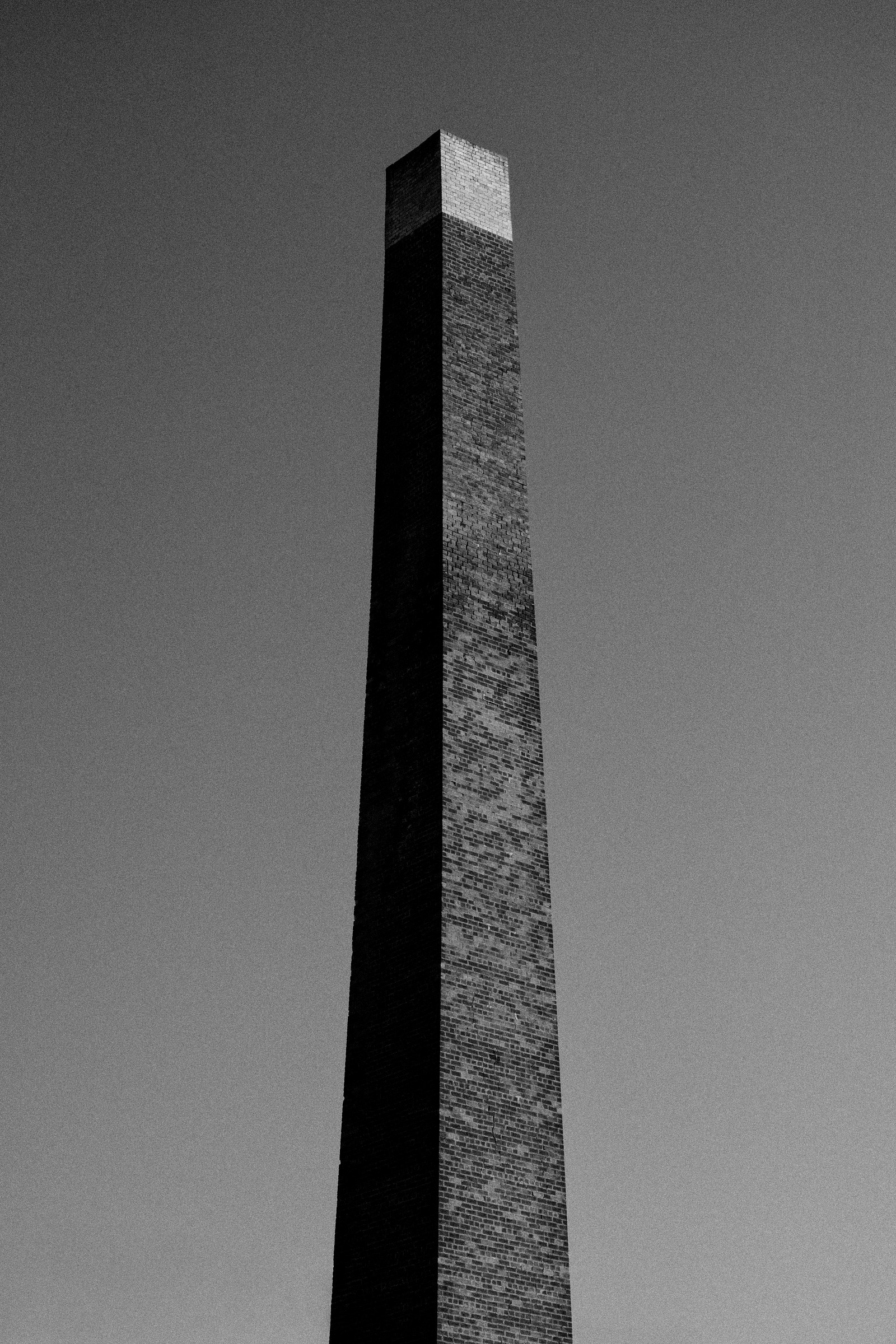
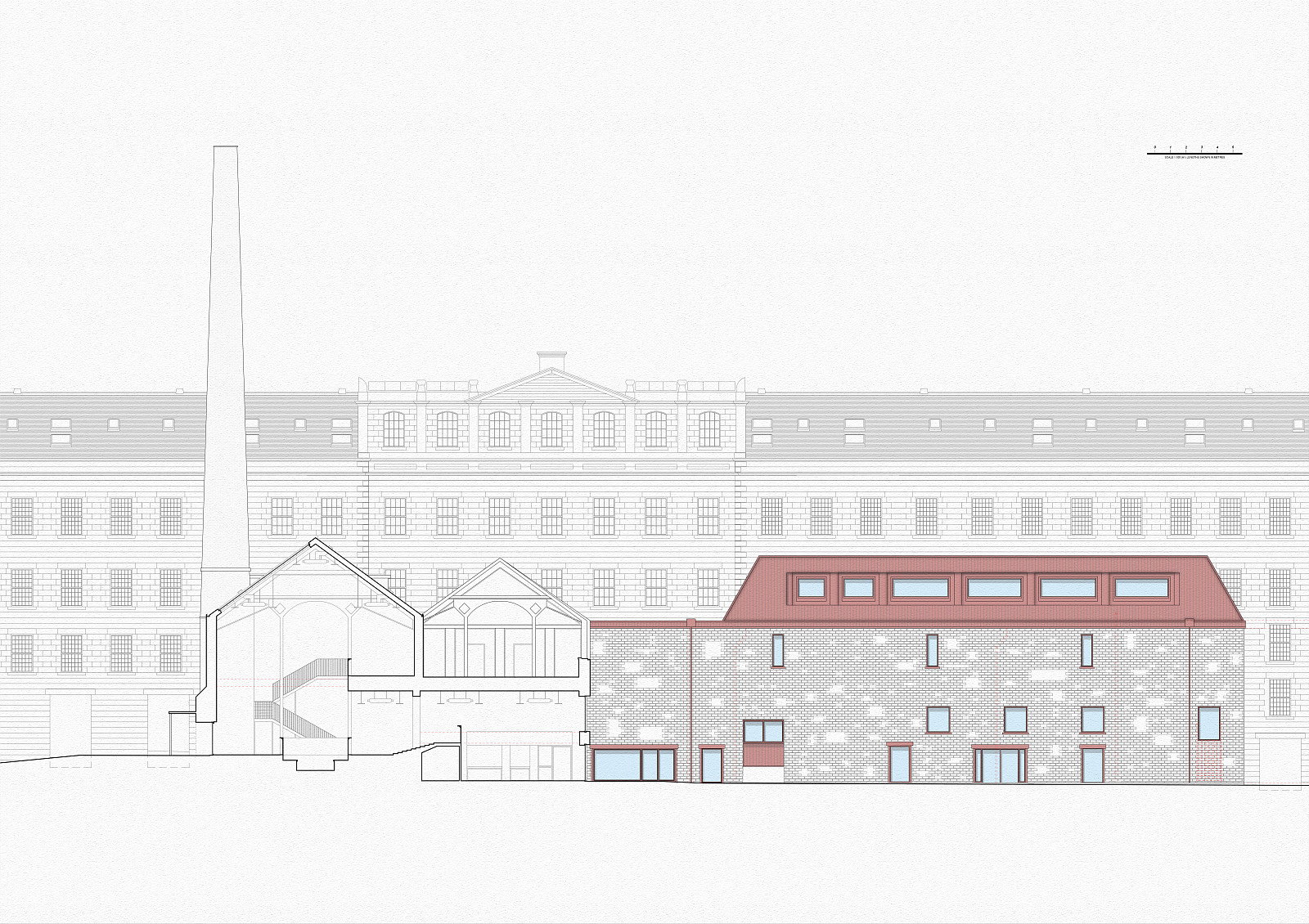
Whilst the Tay Works structures are category A listed, there are only a few elements from the Engine House site that are relevant to the listing, such as the ‘Stack’, the round-headed windows, and the external steel cornicing. An active choice was made to retain these elements as well as the key façades on the North face of the inner courtyard that reads as a patchwork brick tapestry as well as the form of the Brown Street elevation.
The existing site was more than large enough to accommodate the proposal, and whilst the existing structures required large-scale interventions to create the proposed primary school, the majority of these affected the inner shell of the building. Where existing façades have been retained, an internal timber kit has been fitted to bring the structure up to modern standards.
Where there are major interventions, such as opening up void spaces of the early and late stage learning area and replacing the shell of the roofs - which are in incredibly poor condition, the proposed red zinc standing seam cladding attempts to harmonise the structure’s new use with it’s industrial past.


Copyright © 2026 INSPIRELI | All rights reserved. Use of this website signifies your agreement to the Terms of Use, Privacy Policy, and use of cookies.
