Rehabilitation centre for orphans with PTSD

Project idea
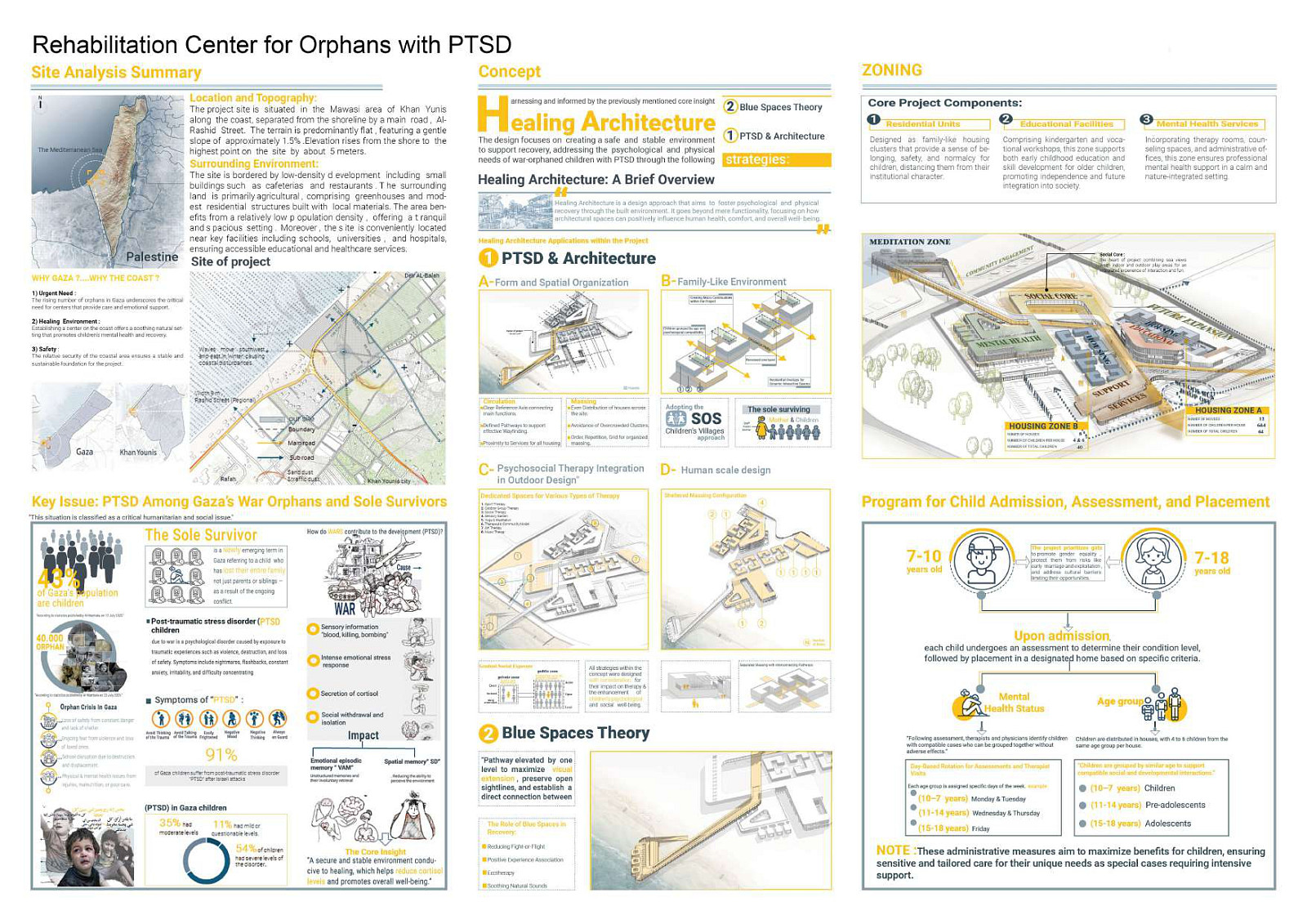
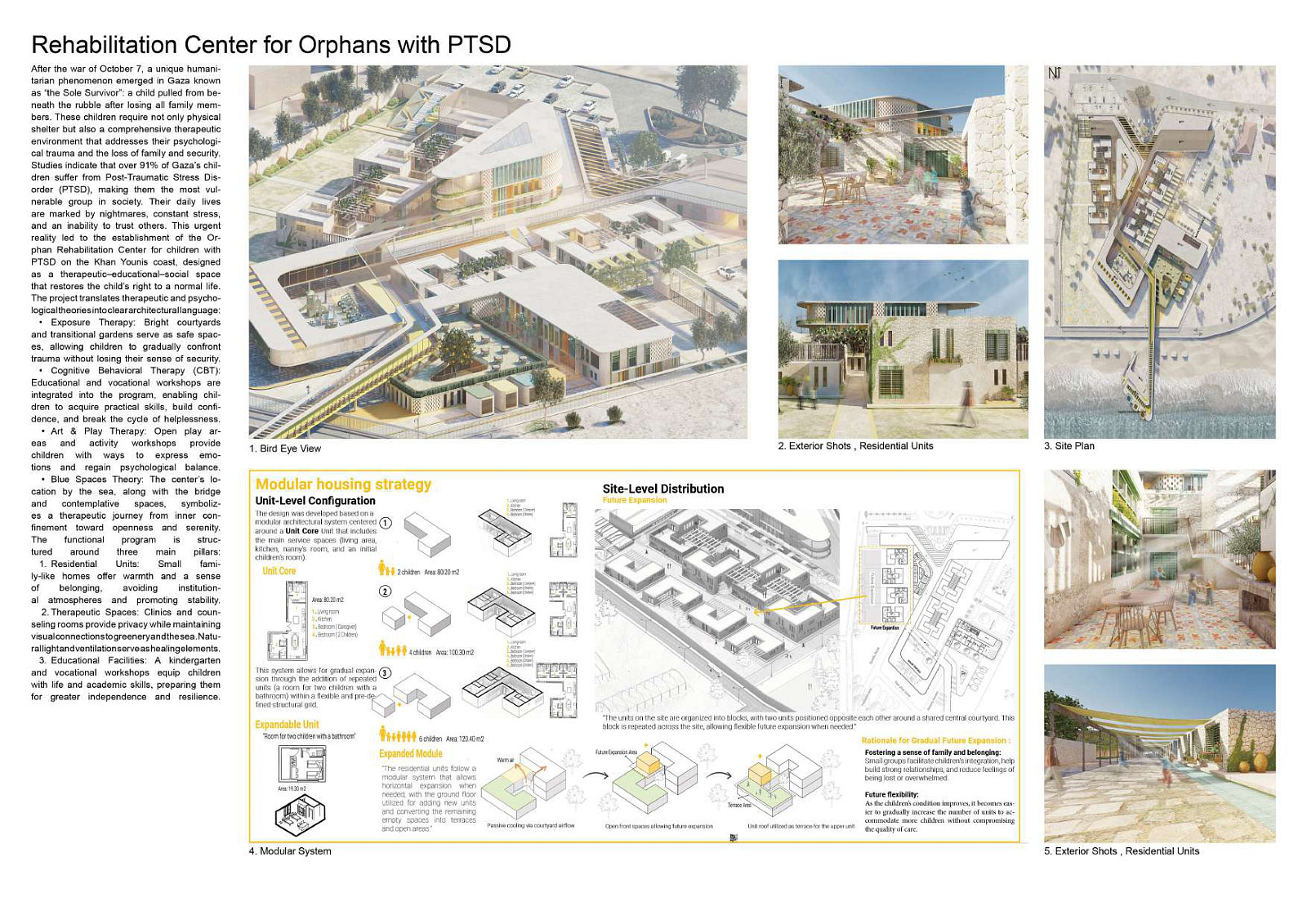
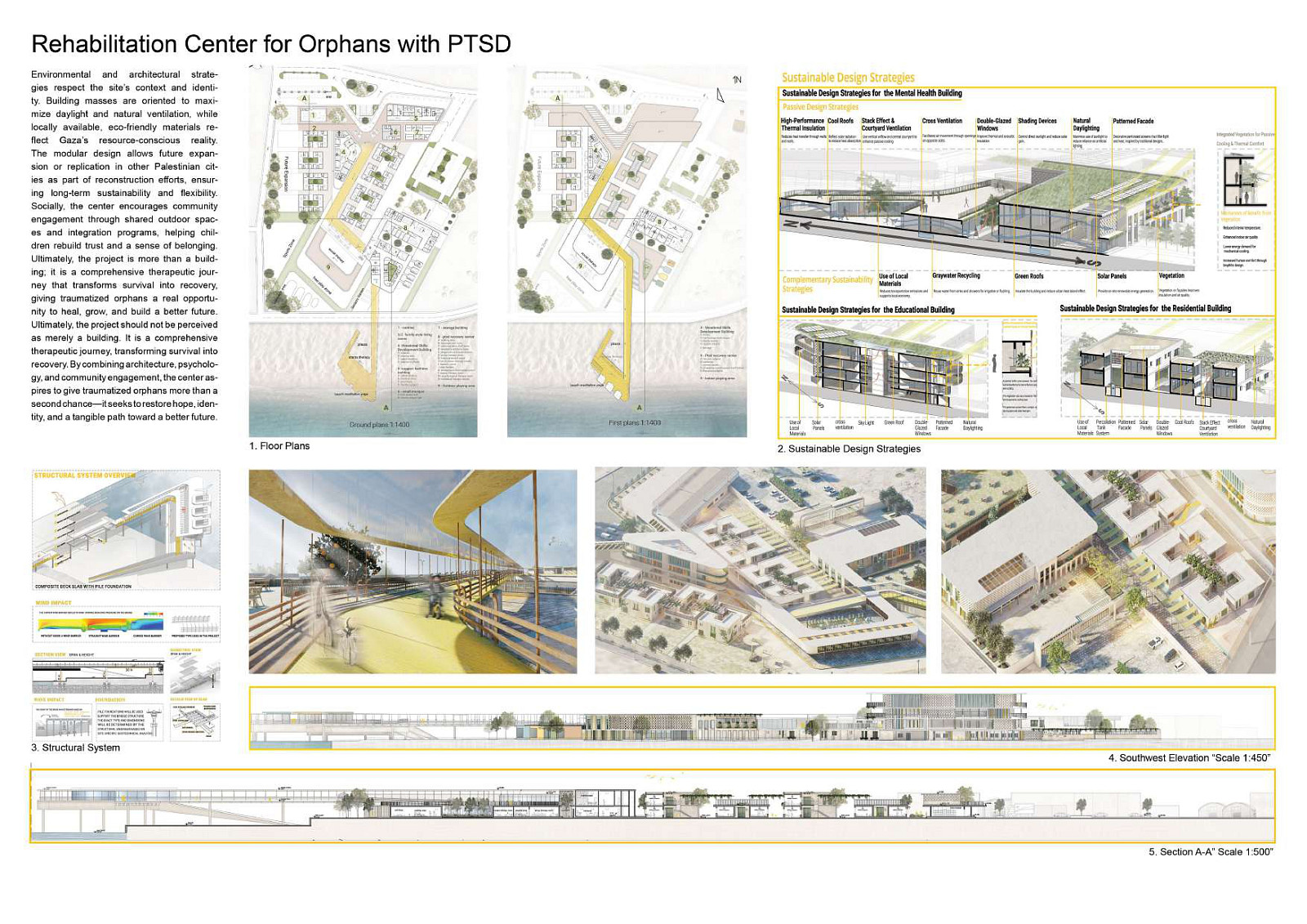
In post-war Gaza, where the phenomenon of the 'sole survivor' has emerged, this project addresses the urgent need for more than just shelter. The concept is a therapeutic–architectural journey designed to rebuild the spirit of children who have lost their entire family roots.
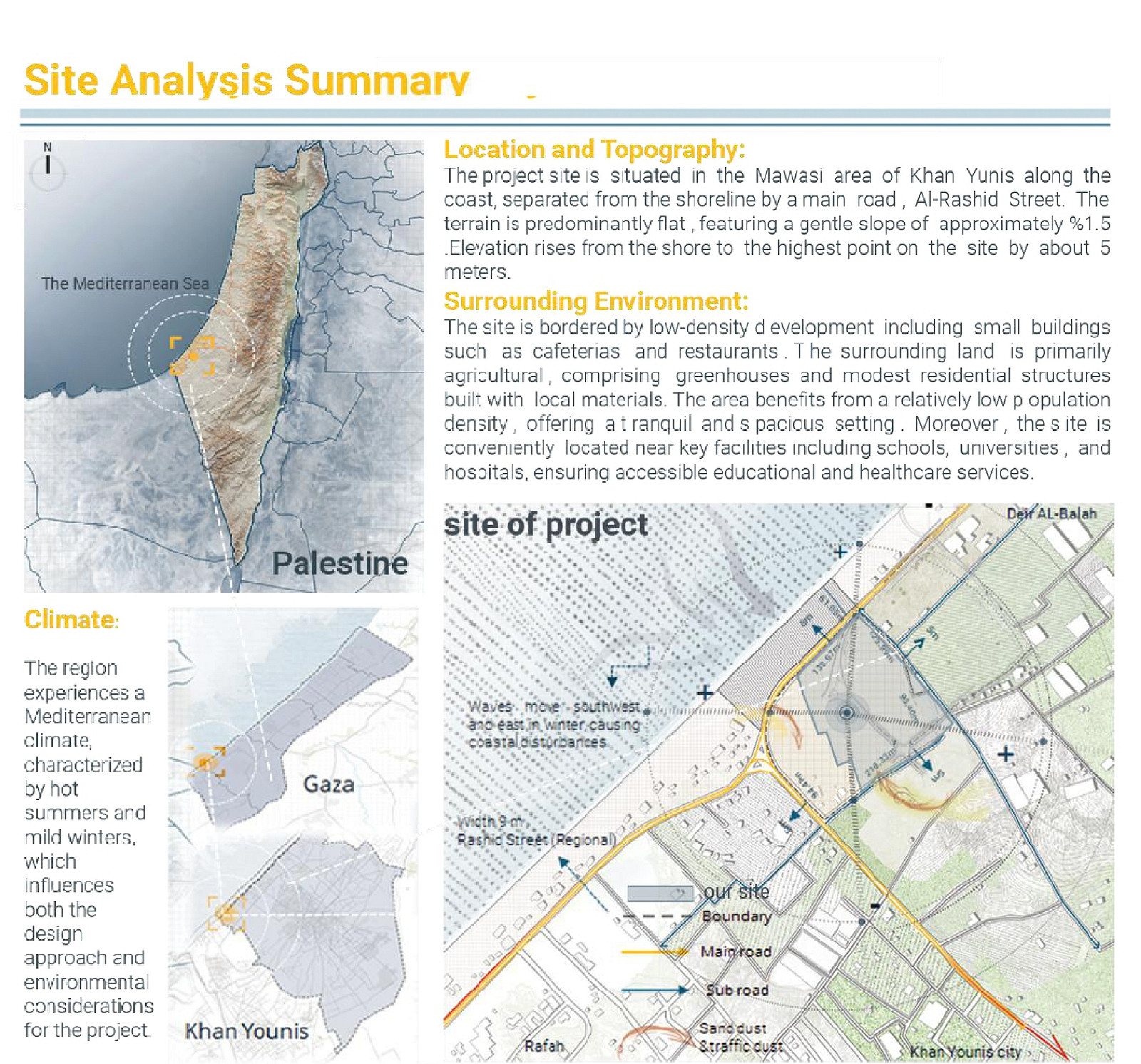
Located on the coast of Khan Younis, the design moves beyond alternative housing to a future-oriented model that restores belonging and growth. It rests on three key pillars:
Healing Architecture: Organizing spaces to reflect a recovery path, transitioning from isolation in private therapy to social integration.
Blue Spaces Theory: Utilizing the seafront site as a therapeutic tool to enhance calmness and openness.
Social Innovation: Introducing 'substitute mothers'—women who have also experienced loss—to create mutual healing and warmth.
The center uses a modular, expandable design, redefining survival as an opportunity for healing and planting new childhoods amid the ruins.
Project description
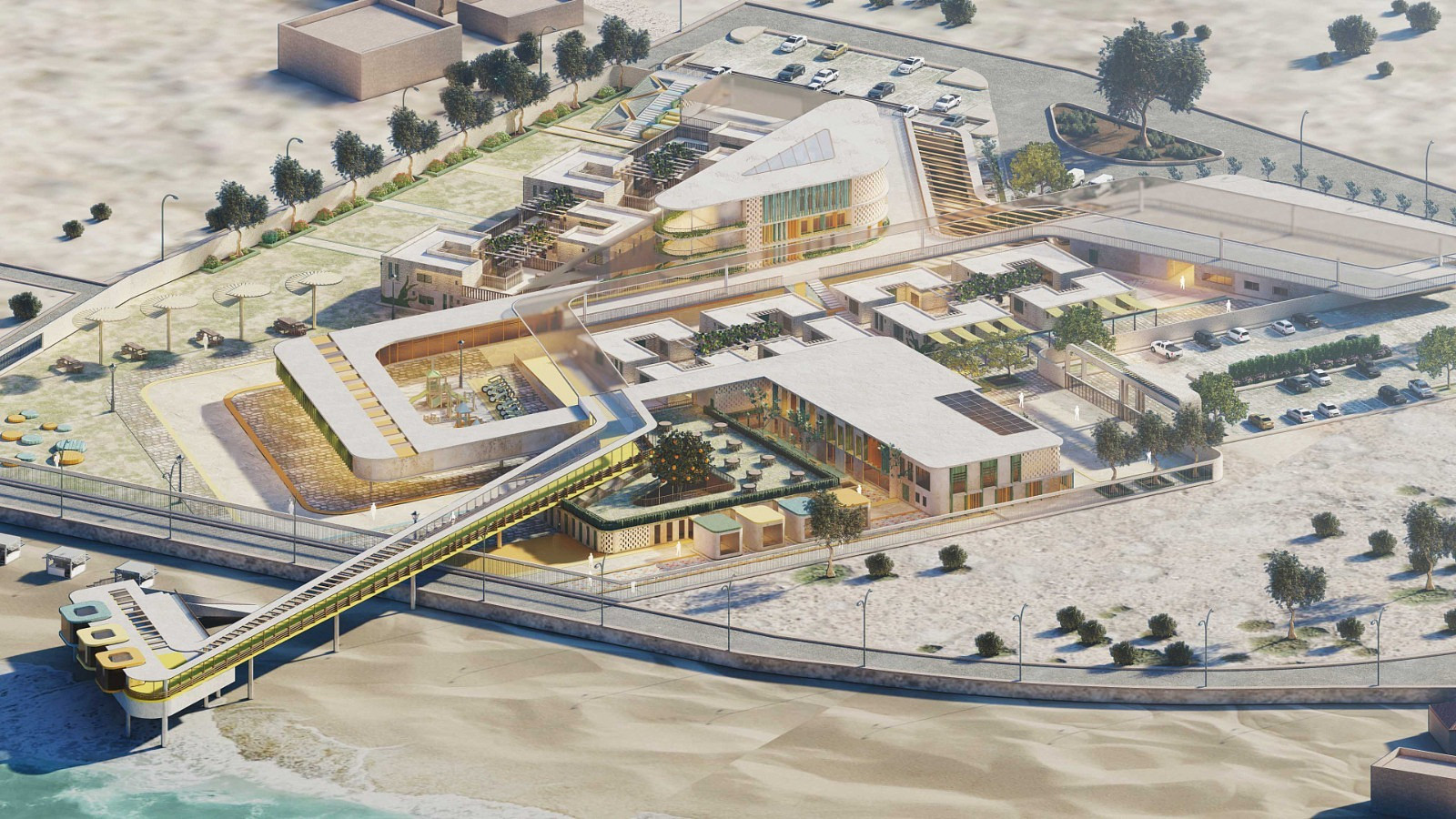
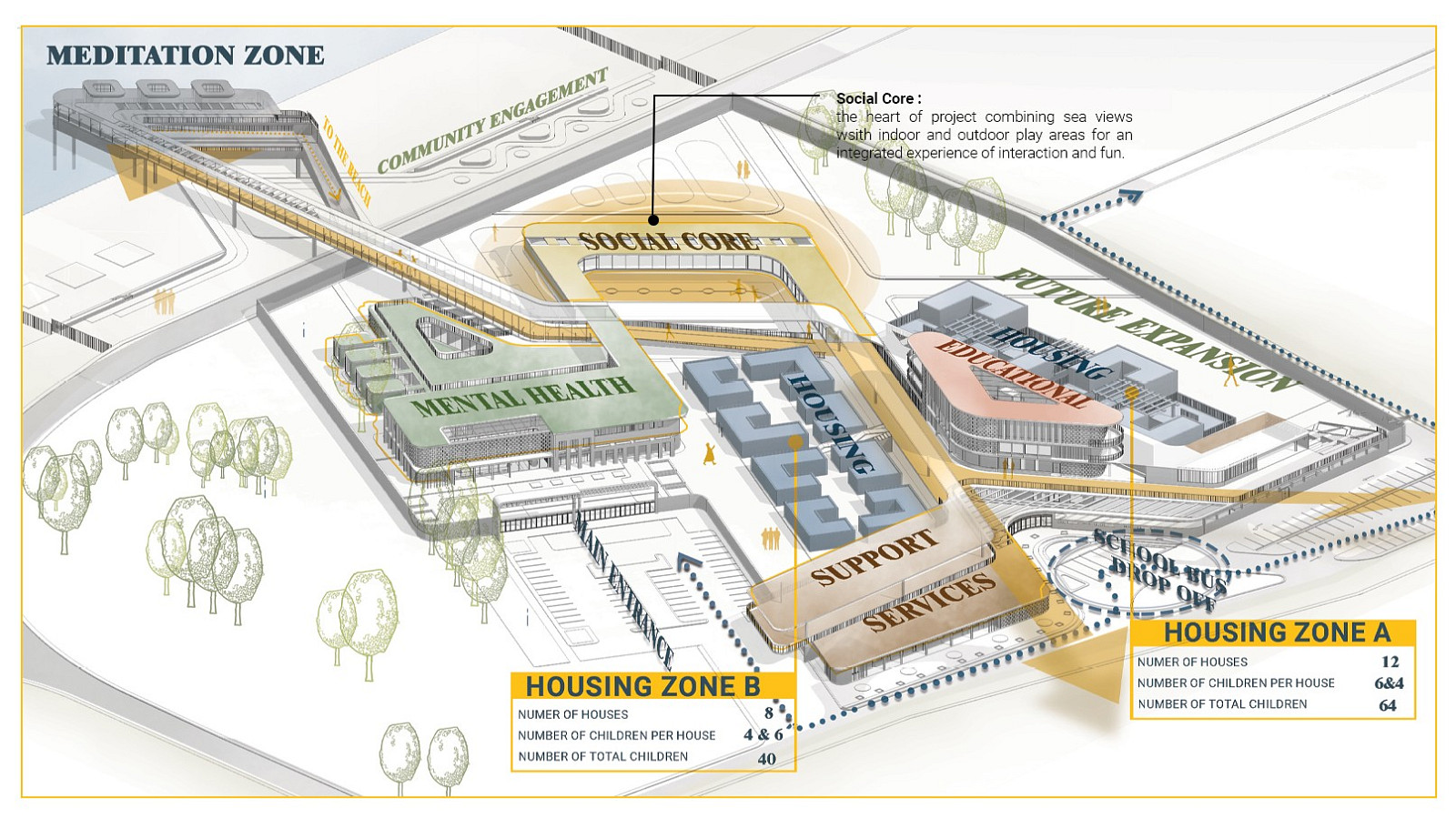
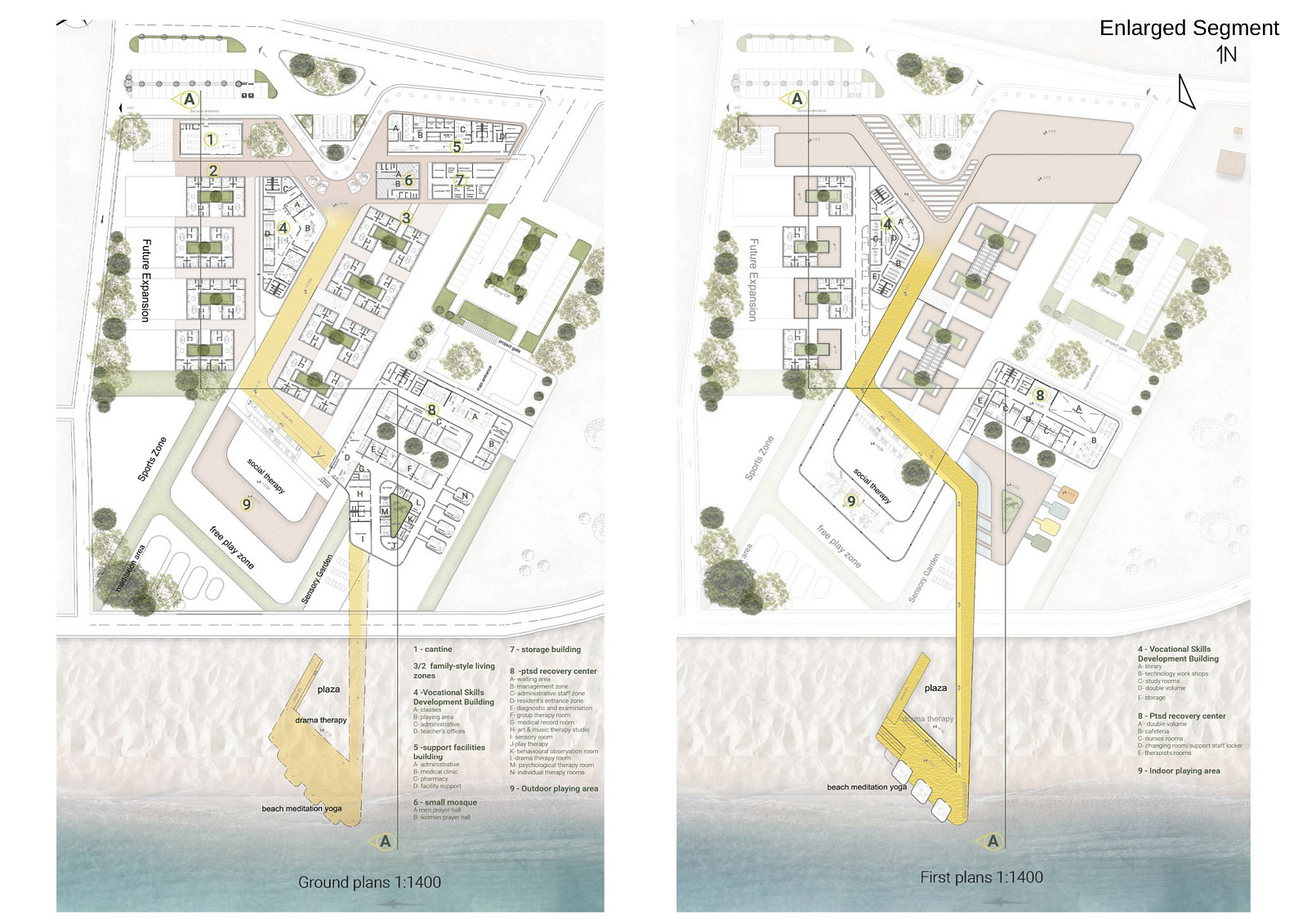
The project is a specialized rehabilitation center designed to provide a comprehensive therapeutic environment for orphans. The scope of the solution includes several integrated zones:
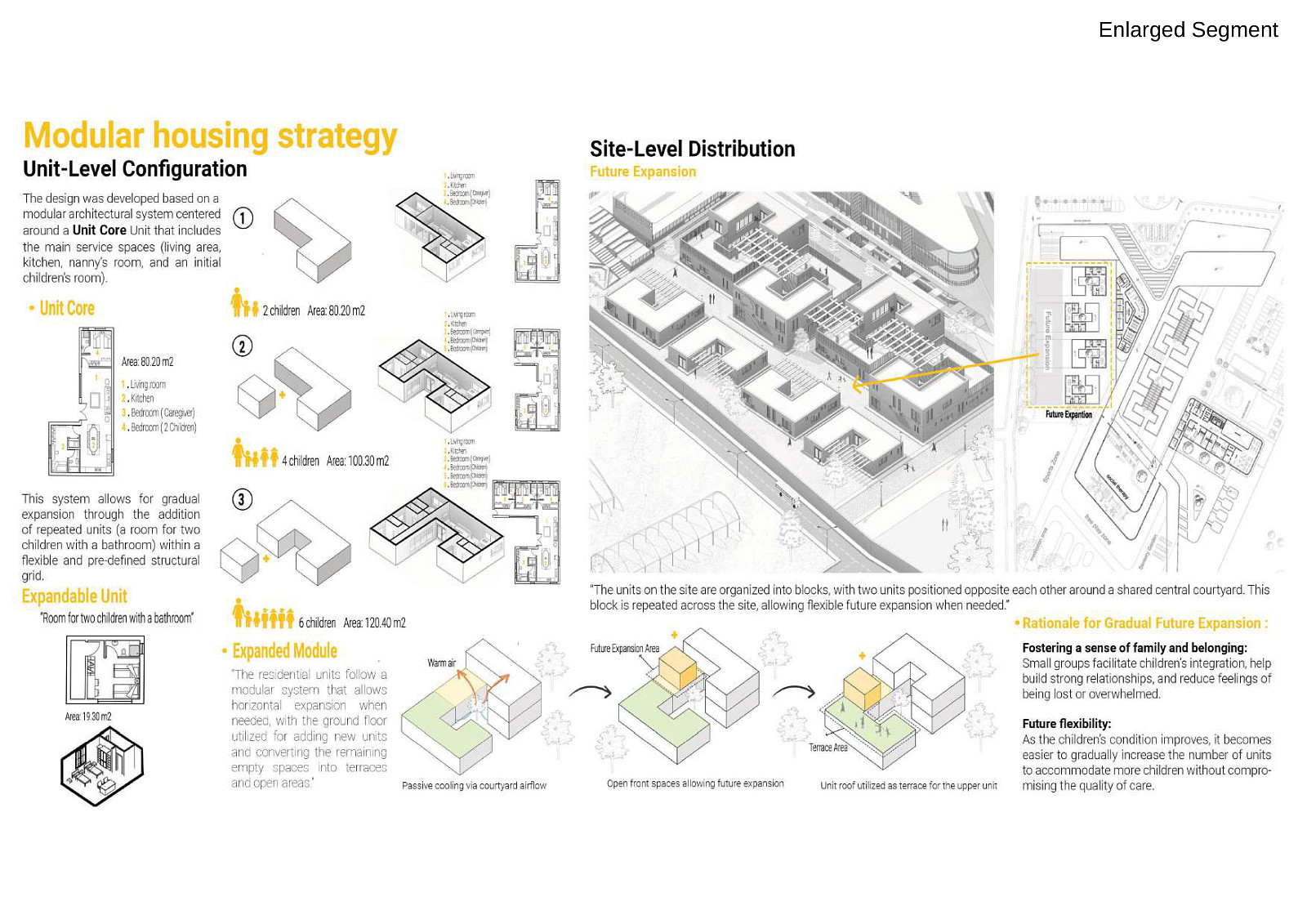
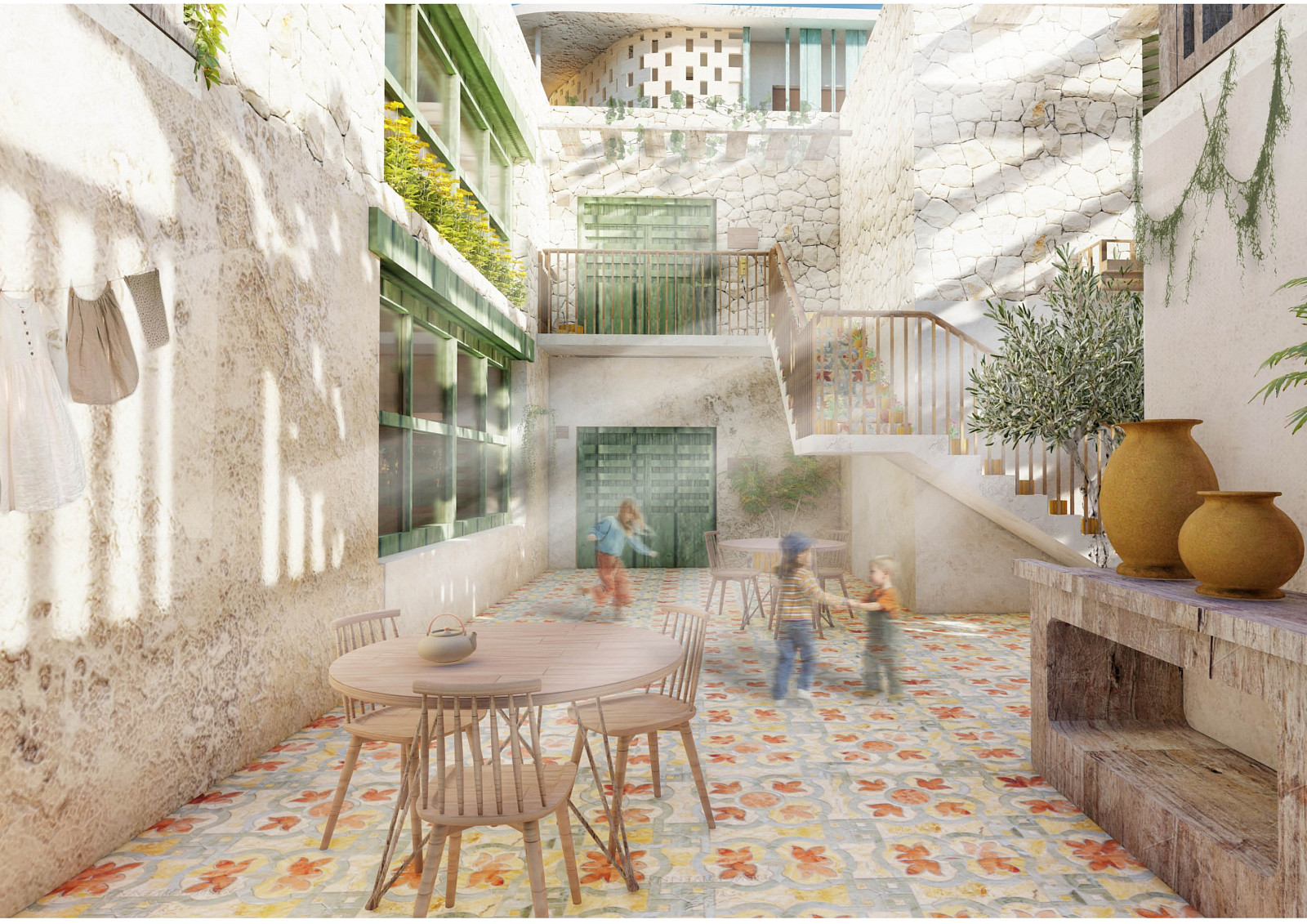
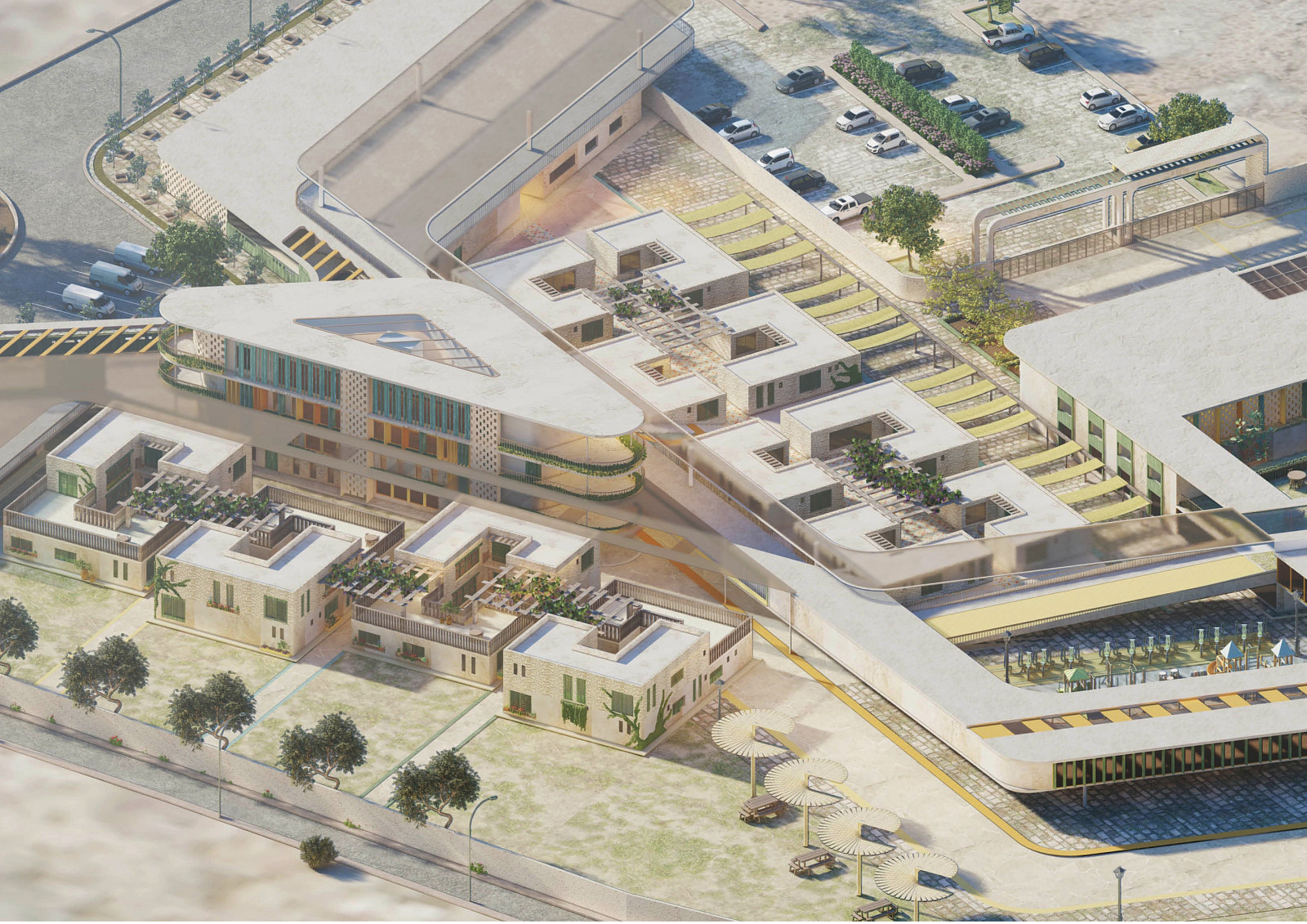
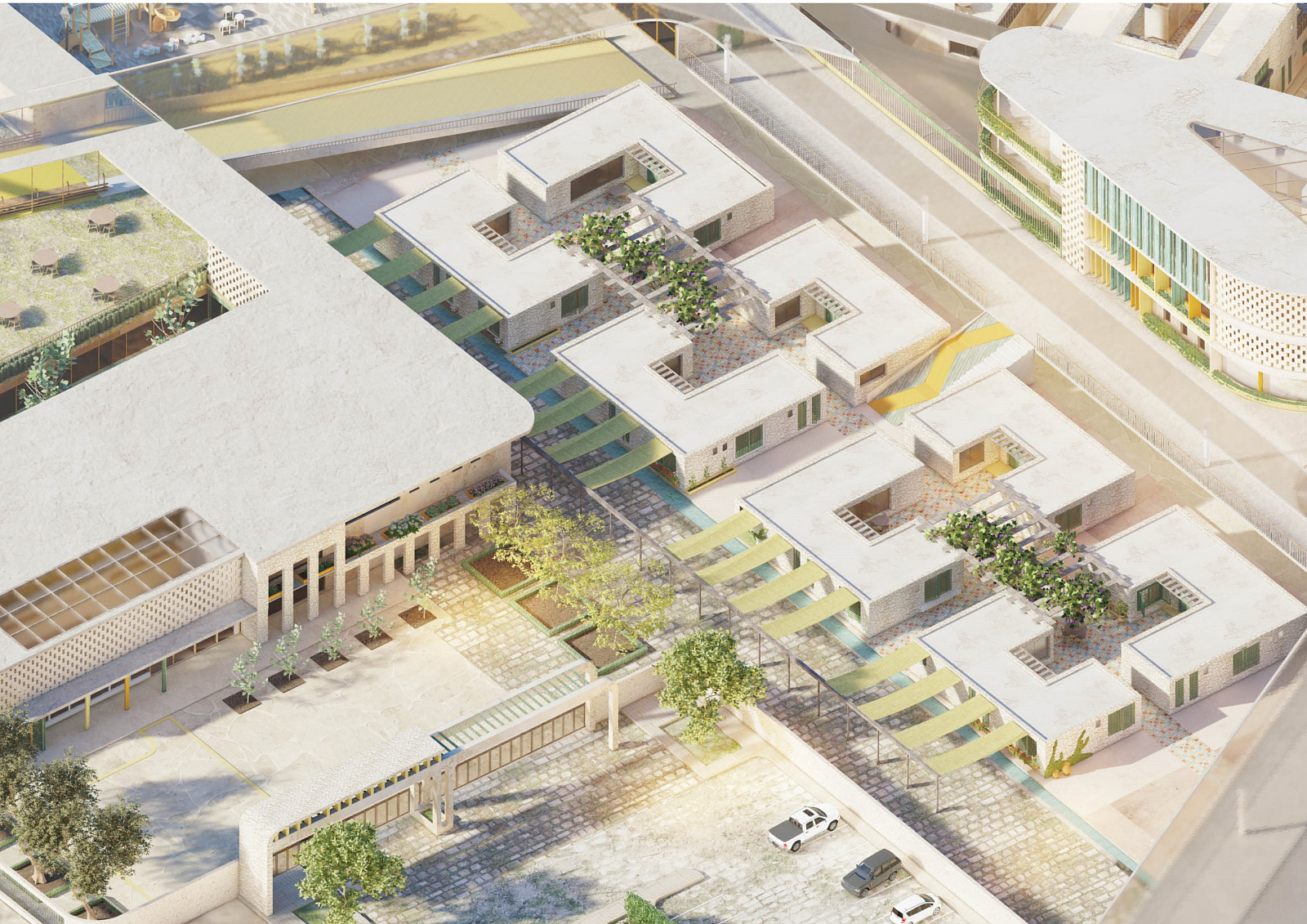
Residential Units: Designed as modular, family-like settings to foster a sense of belonging.
Therapeutic Zones: Includes private therapy rooms for CBT and spaces for art and play therapy.
Vocational Training Center: A dedicated facility where orphans learn local crafts and professions prevalent in the region, empowering them toward future self-reliance.
Community Interaction & Micro-Economy: A supervised beachfront space is integrated into the center for displaying and selling products created during training. This fosters controlled interaction with the local community and provides a sense of accomplishment.
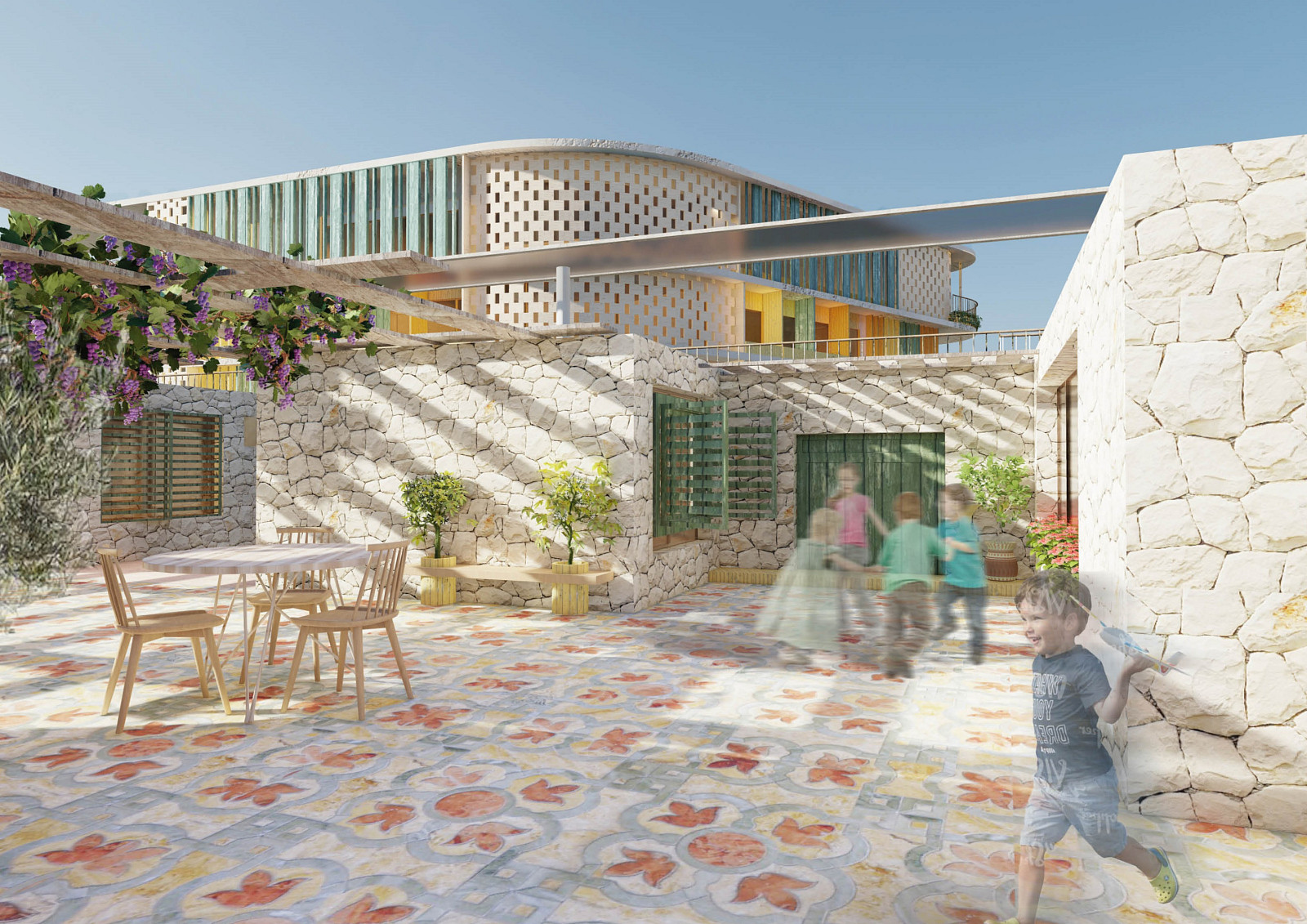
Environmental Integration: The layout utilizes open facades and sea views to incorporate the coastal context into the healing process.
Technical information
The project employs technical solutions tailored to its coastal and post-war context:
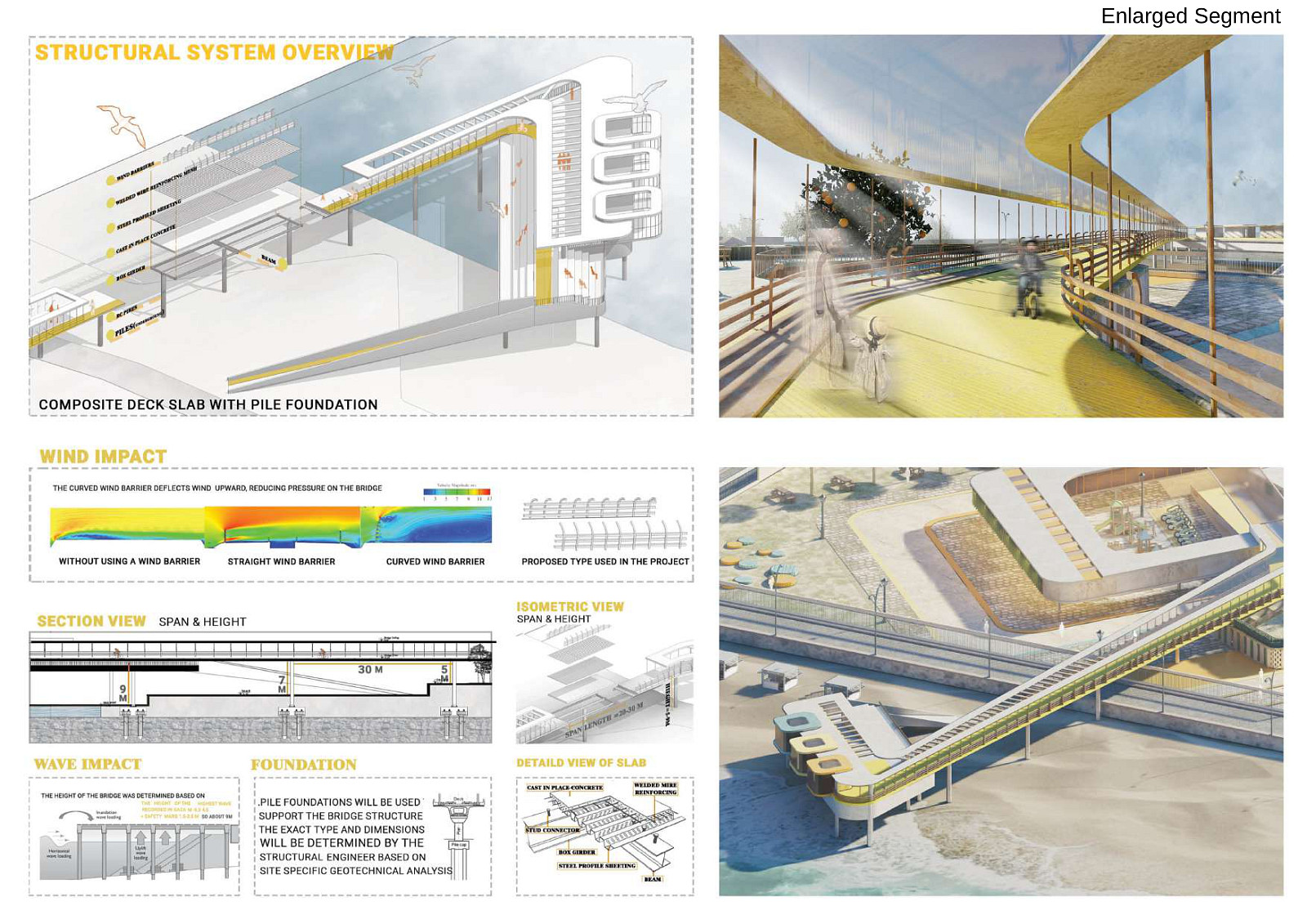
Structural System: A modular design approach is used, allowing for flexibility, ease of construction, and future expansion as needs grow.
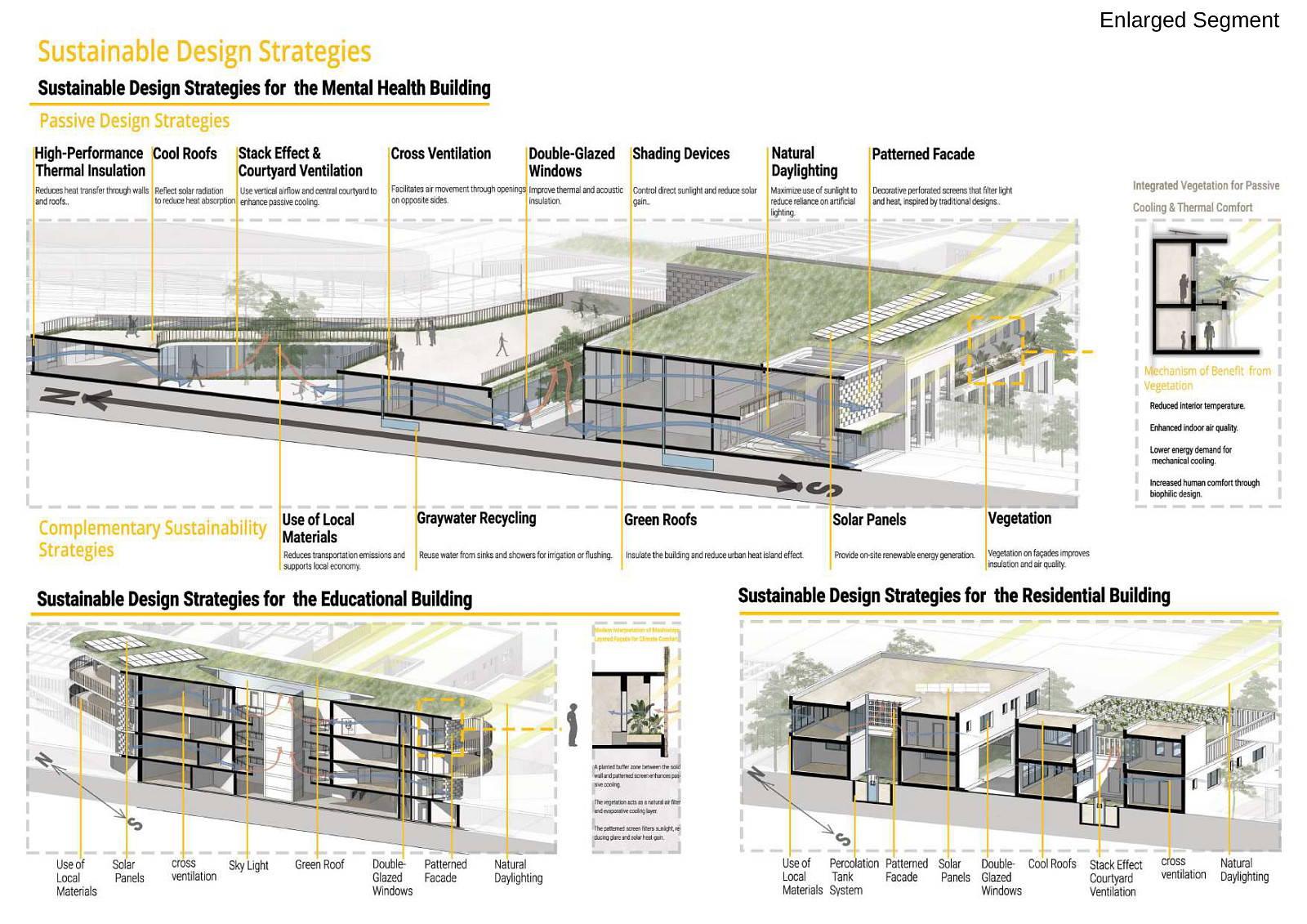
Environmental Strategy: The building utilizes natural ventilation and open facades to suit the coastal Mediterranean climate, reducing reliance on mechanical cooling.
Materiality & Context: The design respects the local context of Gaza, using durable materials suitable for the sea-salt environment while providing a supportive, comforting atmosphere.
Healing Layout: The spatial configuration is technically structured based on 'gradual exposure therapy,' transitioning from isolated private zones to integrated communal spaces.

Copyright © 2026 INSPIRELI | All rights reserved. Use of this website signifies your agreement to the Terms of Use, Privacy Policy, and use of cookies.