"Pangalengan Coffee" Takes Command


Project idea
The idea of this project is to reimagine the coffee production landscape of Pangalengan, West Java, through architecture. Today, smallholder farmers produce value through land, labour, seasonal knowledge, and care, yet much of the recognition and economic control is captured downstream by processors, buyers, and markets. The project responds to this bottleneck by proposing a collective infrastructure system that makes the hidden work of coffee production more visible, teachable, and shared. Rather than treating architecture as a single building, the thesis explores how small structures distributed across the mountain can support farming, processing, gathering, learning, and local identity. The goal is to create a more resilient rural landscape where architecture strengthens livelihood, ecological care, and collective recognition.
Project description
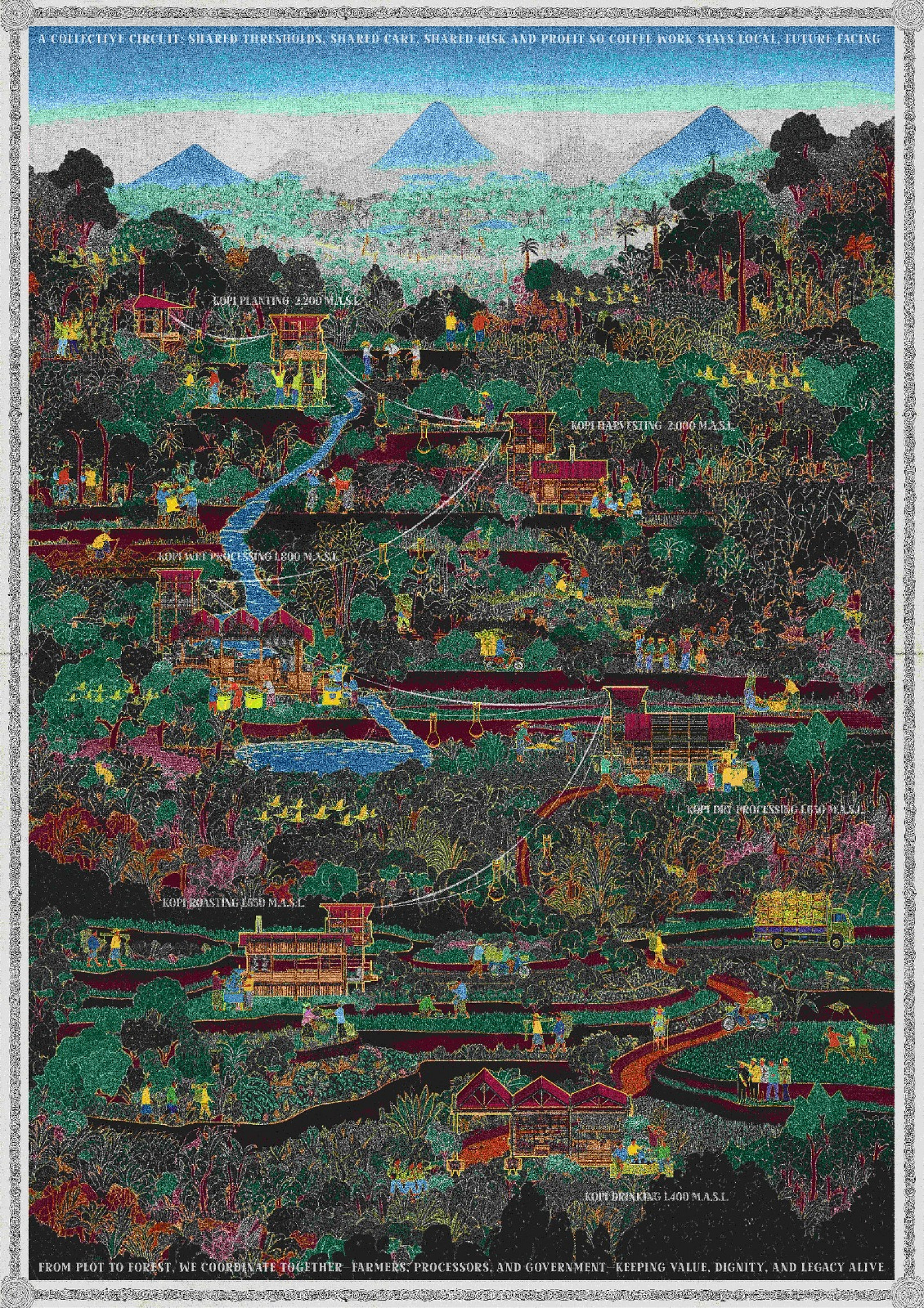
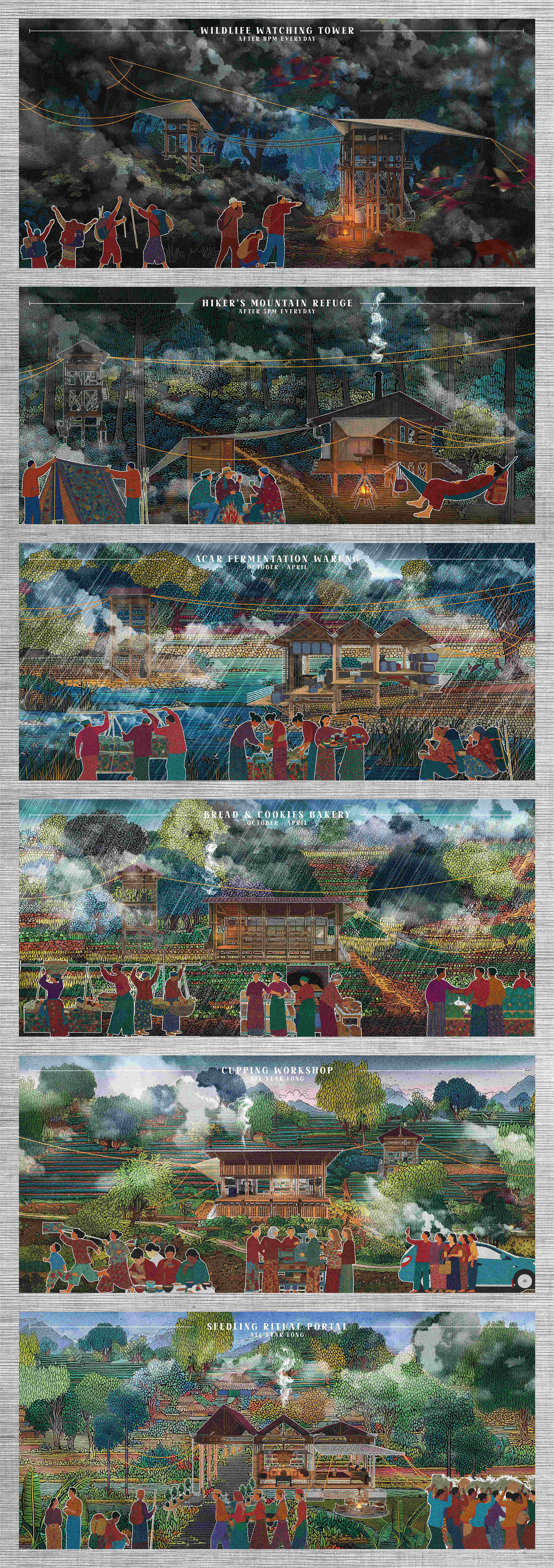
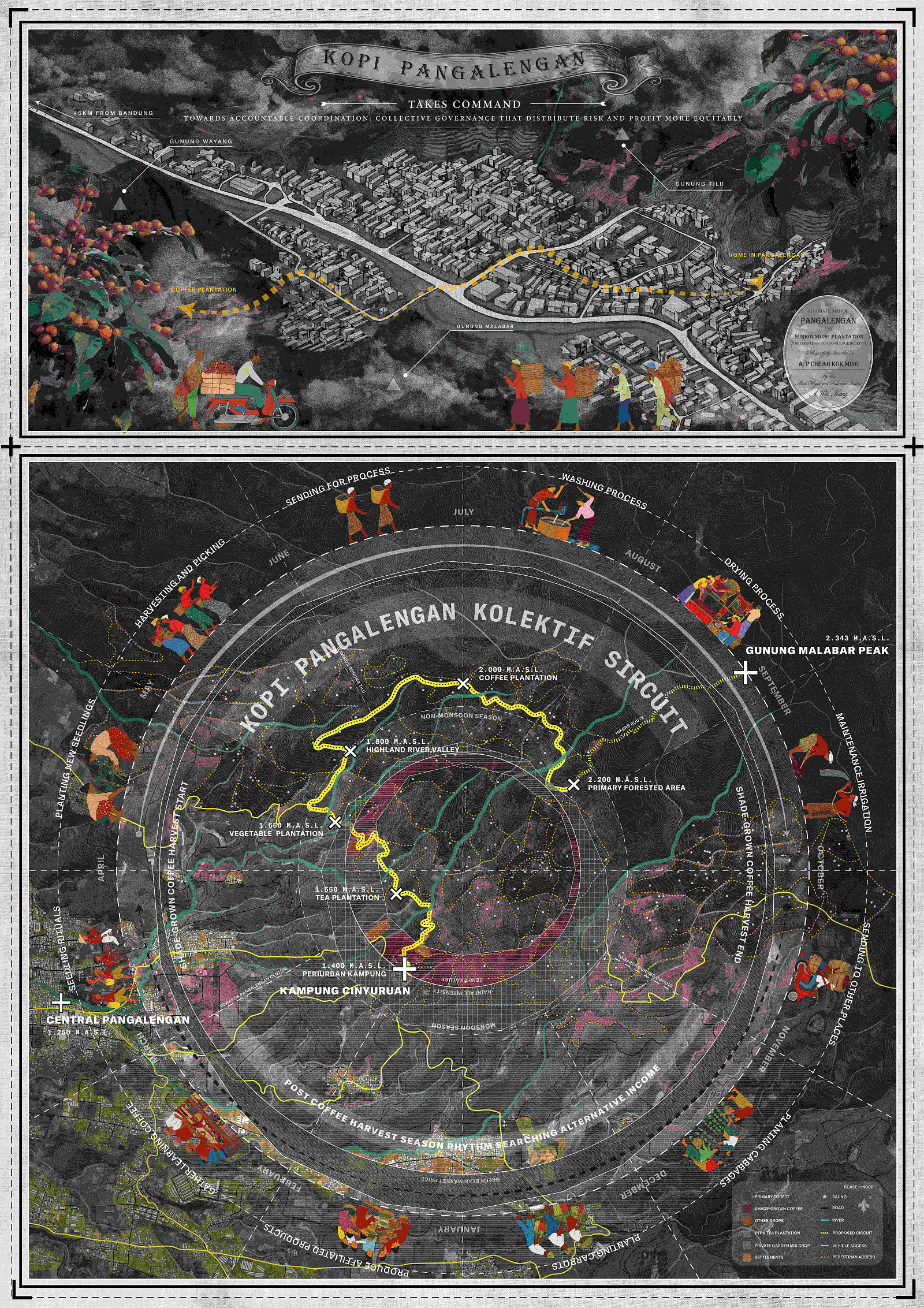
This project consists of six highland coffee infrastructure typologies distributed along a coffee trail in Pangalengan. These include a trail basecamp, coffee roastery, drying facility, washing facility, farmer resting saung, and manual highline transport system. Each typology is located within a different site condition, from kampung edges and tea terraces to vegetable plots, river valleys, shade-grown coffee areas, and primary forest. Together, they form a collective circuit that supports the full rhythm of coffee production: planting, harvesting, transporting, washing, drying, roasting, drinking, resting, and gathering. The project combines production infrastructure with social spaces, allowing farmers, visitors, processors, and local communities to meet, exchange knowledge, and participate in the making of coffee as both a livelihood and a cultural landscape.
Technical information
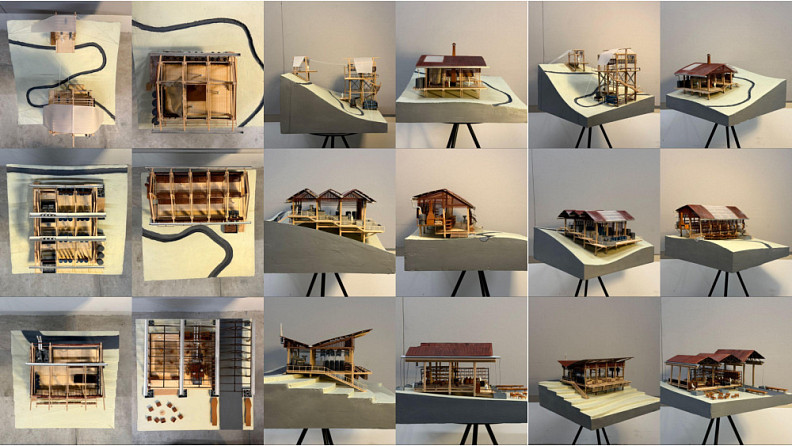
The project is designed as a series of lightweight, low-impact structures adapted to steep highland terrain. The construction uses simple local materials and familiar rural elements, including timber frames, pitched roofs, zinc sheets, canvas tarps, raised drying racks, brick hearths, water tanks, pipes, gutters, and manual cable systems. The infrastructure relies on passive and low-energy strategies where possible, such as gravity-fed water flow, natural ventilation, solar drying, rainwater management, and manual transport. Each structure is intentionally small in scale, allowing it to be built, repaired, and maintained locally. The design avoids heavy permanent intervention in the landscape and instead works with existing paths, slopes, water lines, saung structures, and farming routines. Its technical logic is based on adaptability, repairability, seasonal use, and collective maintenance.
Documentation


Copyright © 2026 INSPIRELI | All rights reserved. Use of this website signifies your agreement to the Terms of Use, Privacy Policy, and use of cookies.
